
From one kitchen to what comes next.
X, Y and Z describe three scales of the same idea: bringing fresh food closer to where people eat. X begins in the home. The other directions look beyond it, with their current stages explained here.
The same problem, at three sizes.
Growing close to the table can shorten the time between harvest and eating. A home, a restaurant and a remote site need different equipment to make that possible.
- Luya X: the home system
- The countertop device. Luya X-1 is the model we are building now: eight trays, two climates, about seven days from seed to harvest. It is pre-production, with Founder 100 Program recruiting households.
- Luya Y: the commercial system
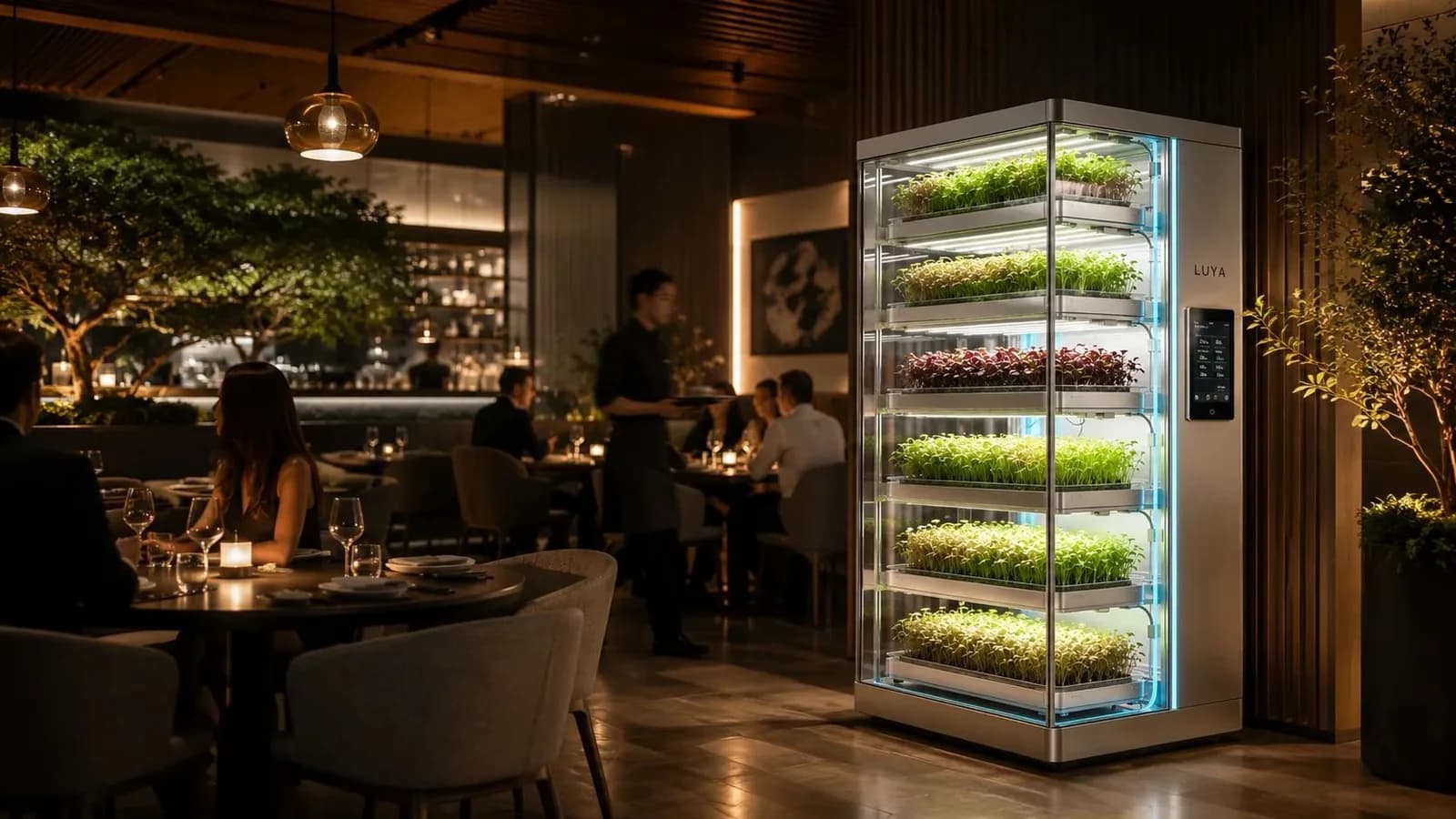
- A larger cabinet for kitchens that serve other people, restaurants, hotels, grocers. Same growing logic, different duty cycle and different economics. A prototype exists and its specification is settled; it is not on sale.
- Luya Z: the container system
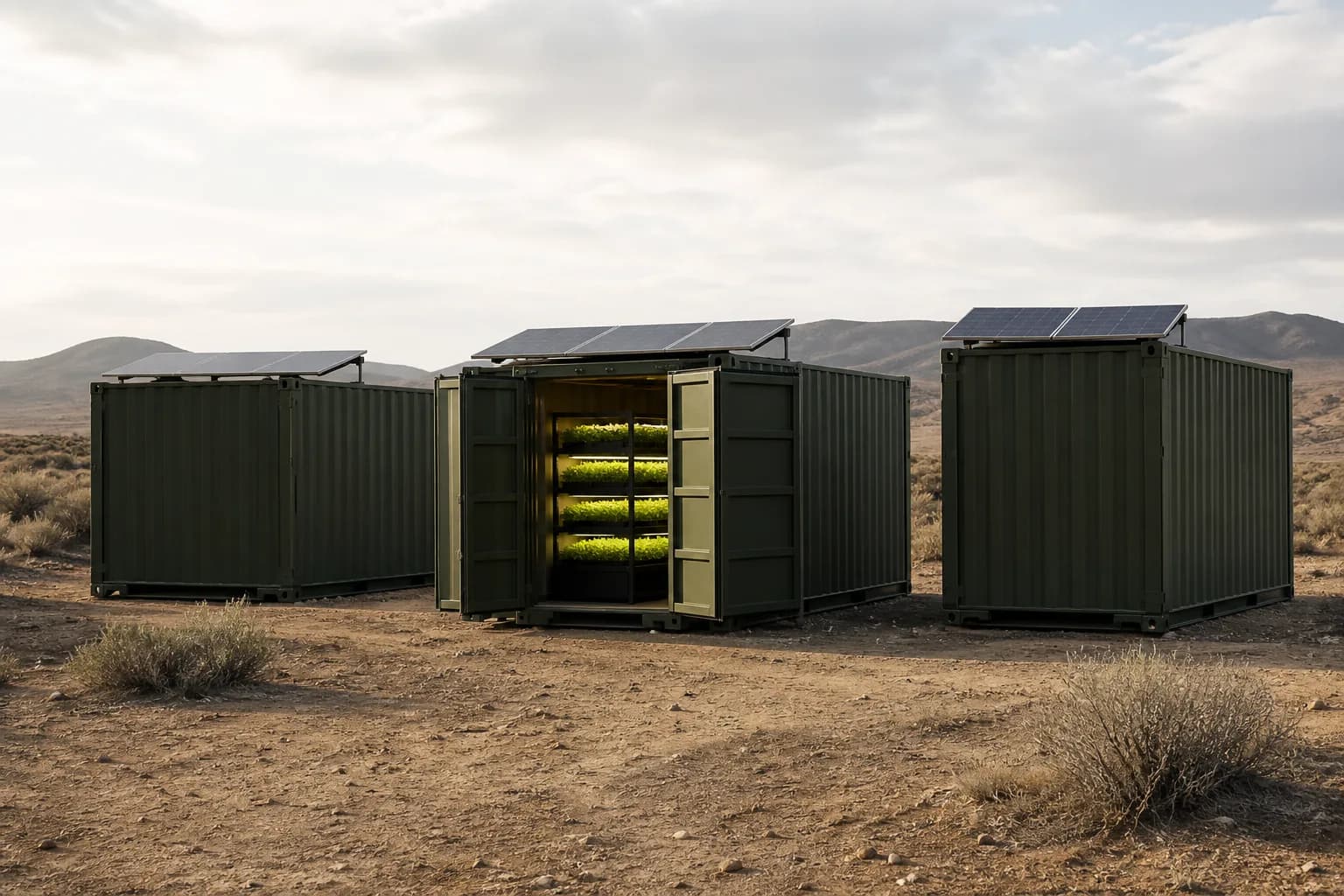
- Growing at the scale of a shipping container, for places at the end of a supply line or off it entirely. Not built.
Luya Z does not exist: no prototype, no specification, no date, no price. Luya Y has reached prototype and its specification is settled, but it is not on sale, has no shipping date, and nothing on this page is an offer to sell it. The product LUYA is bringing to market is Luya X-1.
The smallest machine is the one that teaches the others.
The obvious way to build this company is top-down: start with the container farm, prove the technology at scale, then shrink it. We are doing the opposite, and the reason is data.
A container farm in a desert is one growing environment. Ten thousand kitchens are ten thousand growing environments — different temperatures, different humidity, different water, different light leaking in from different windows, and people who forget to refill the tank. That is a far harder test, and a far richer one.
Every Luya X-1 records what it did and what grew. Those records are what a growing recipe improves against. Learning from homes could inform later systems. Each new setting will still need its own testing; success in a kitchen would not validate a restaurant or container system.
What exists today, and what comes next.
The wider system is a long-term direction. Here is the work available to build on today.
- Household testing is ahead
- Recipes today are improved from our own bench trials, not from customer devices. Founder 100 Program is the first cohort that will produce real household data at all.
- Participation and privacy
- What a device records, what leaves the device and what a participant can decline are governed by the privacy policy and the Founder 100 Program terms, not by this page.
- What recipe testing can establish
- A recipe improves yield, timing and consistency. Nothing here says a crop grown on a newer recipe is more nutritious for you.
Microgreens are the beginning, not the point.
Microgreens are where a home system can start: dense, fast, forgiving, and still alive at the moment they are cut. Seven days is short enough that a household gets a result before it loses interest, which matters more than it sounds.
But the goal was never a microgreen company. It is fresh nutrition produced where it is eaten — and the crop list is a consequence of what a kitchen-sized machine can grow reliably today, not a statement about what it should grow forever.
Our vision, in full →