
Some kitchens are four months from a salad.
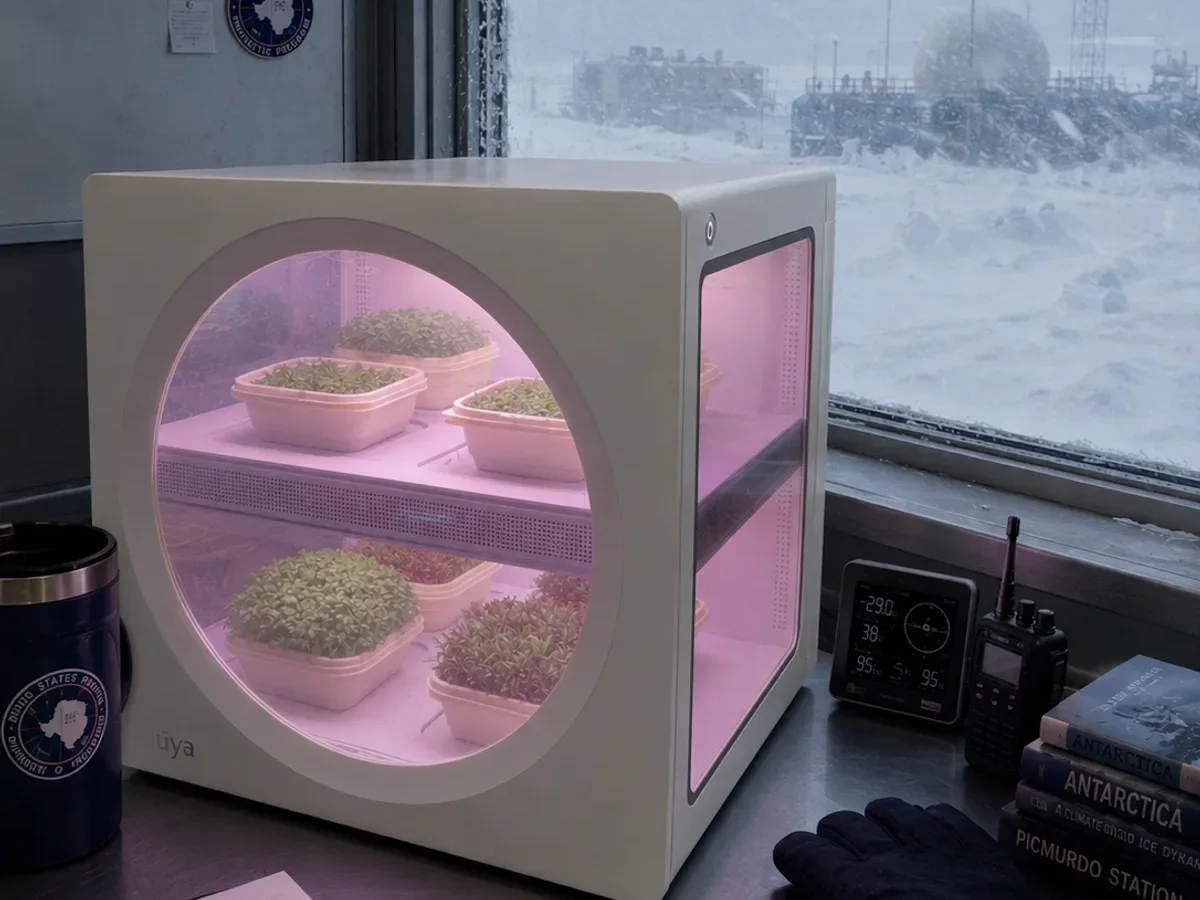
A research station in winter. A vessel three weeks from port. A camp at the end of a supply chain that only runs when the weather allows. If you run a place like that, we would like to put a growing system in it, at our cost, and publish honestly what happens.
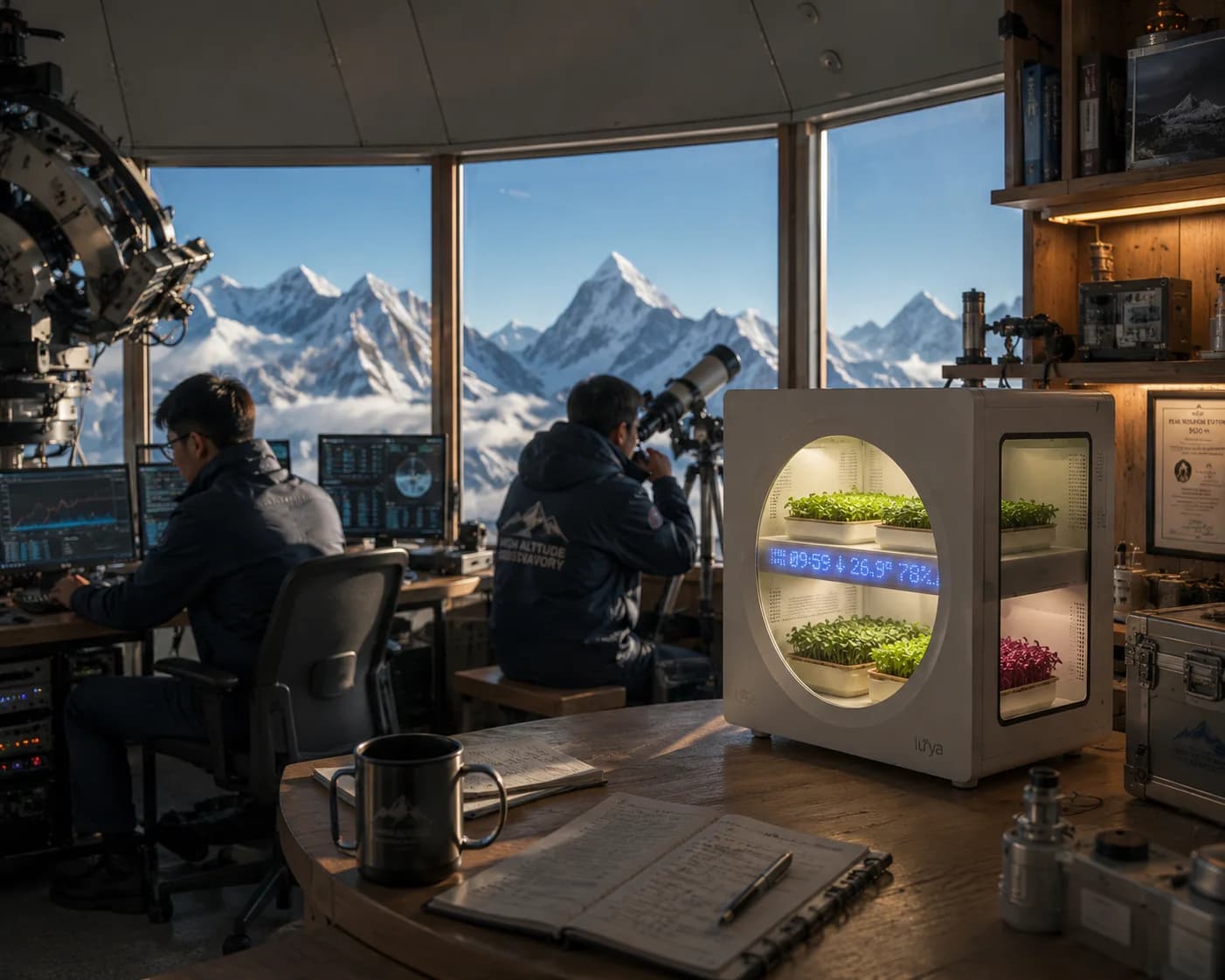
The hardest case makes the everyday case better.
Every part of what LUYA does is easier in a warm kitchen with a supermarket down the road. The engineering only proves itself somewhere the failure has consequences: where the power budget is fixed, the air is dry, the space is measured in centimetres, and nobody is coming to fix it.
We are also not the first to notice that fresh food is a morale problem as much as a nutrition one. People who spend months on stored rations talk about the taste of something green long before they talk about vitamins. We would like to know whether a small closed system meaningfully changes that, and we would rather find out from you than assert it in a brochure.
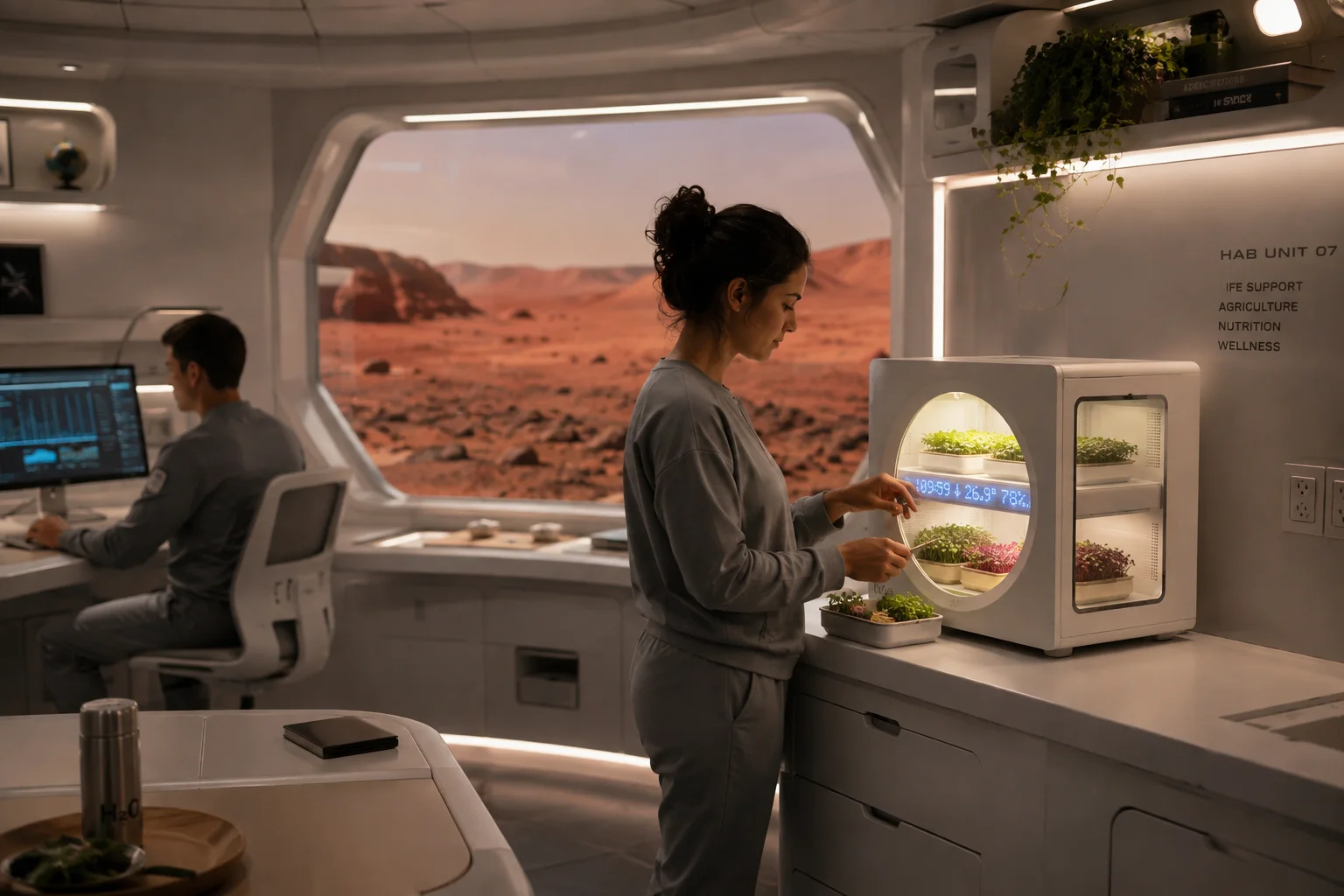
Settings where fresh produce is a logistics problem.
These sites share a practical challenge: fresh produce can run out long before the next resupply arrives.
- Polar and remote research stations
- Overwintering crews, field bases, and any site where the resupply season closes for months.
- Research and expedition vessels
- Long deployments where fresh produce runs out well before the voyage does.
- Closed-habitat and analogue programmes
- Isolation studies, habitat analogues and life-support research groups working on closed-loop food.
- Remote industrial and field camps
- Mining, energy, survey and construction sites supplied by air, ice road or barge.
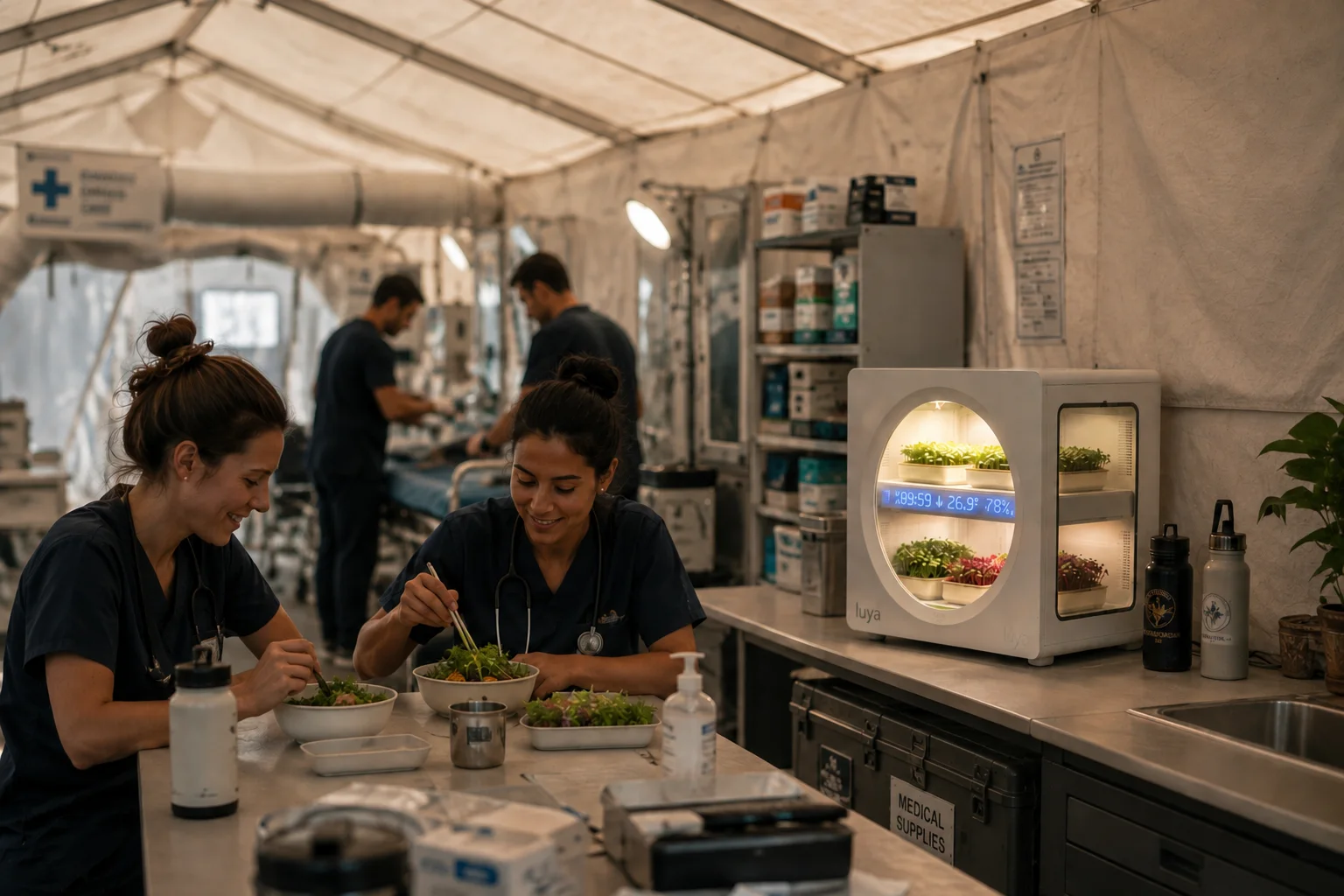
- Field medical and humanitarian posts
- Clinics and response teams operating where the cold chain is unreliable.
- High-altitude and desert outposts
- Anywhere thin air, extreme heat or no arable ground makes growing outdoors a non-starter.
The hardware and the seed are on us.
This is not a discount and it is not a sponsorship. We supply the system and the consumables for the deployment period, and a named engineer who answers when something goes wrong, including at inconvenient hours in an inconvenient time zone.
- The system, at no cost
- One or more Luya X-1 units supplied for the agreed deployment period.
- Seed trays for the whole period
- Shipped ahead in one consignment so a resupply gap never ends the trial.
- A direct line to an engineer
- A named contact on our side, not a support queue.
- Setup built around your constraints
- Power budget, footprint, ambient temperature and crew time, agreed before anything ships.
Run it properly, and let us publish the truth.
The whole value of a lighthouse deployment is that it happened somewhere real and was reported without editing. So the ask is small in hours and firm in principle.
- Someone who owns it
- One person on site responsible for running cycles, a few minutes a week, not a second job.
- A basic record
- What you sowed, what you harvested, what failed, and what the crew thought of it.
- Permission to publish
- Including the failures. A deployment that went badly is still a result worth publishing.
- Honest constraints up front
- Tell us the power, space and temperature reality before we ship, not after.
We will not ask you to endorse the product, appear in advertising, or approve a conclusion in advance. You approve the text about your own site before it publishes; you do not approve our findings.
Current stage and deployment requirements.
LUYA has no space-agency contract, no mission and no flight hardware, and nothing on this page should be read as one. The Luya X-1 is a consumer appliance designed for a kitchen. It is not certified for spaceflight, not rated for any regulated environment, and has not been qualified against any institutional standard.
No lighthouse deployment has been completed yet, so there are no case studies here to read. When there are, they will state the setting, what each side contributed, what happened, and what the case cannot be used to conclude.
If your site has certification, safety or procurement requirements, and most institutional sites do, tell us early. We would rather find out in the first conversation that we cannot meet them than in the fourth.
No partner, institution or location is ever named publicly without a signed agreement and their explicit approval of the published text.
From a first message to a running tray.
- 1 · You tell us about the site
- The form below. Ten minutes, and the constraints matter more than the story.
- 2 · A real conversation
- A call to work out whether it is feasible, and what would make it worth doing.
- 3 · Written agreement
- Scope, duration, what we supply, what gets published and who approves what.
- 4 · Deployment and reporting
- Hardware and seed ship together; the record starts on day one.
Prefer email, or need to loop in a procurement or safety office? Write to partner@luyaxyz.com and a person will answer.
If a deployment is not feasible we will tell you why rather than going quiet. If it is, the next step is a written scope; nothing ships before both sides have signed one.
Or write directly to partner@luyaxyz.com.