
Grown in your dining room, not just on your menu.
A living microgreens cabinet for the front of house: greens growing where guests can see them, cut at the table. The prototype is built. Before we put it into production, we want to hear from the people who would have to run it during service.
The prototype is built; it is not on sale. The specification below is settled and we expect a price around $5,500, but there is no production run and no shipping date yet. This page is how we choose the restaurants we design that run around.
Talk to us before we build it
Thirty minutes, no pitch. We want to know how your room actually works.
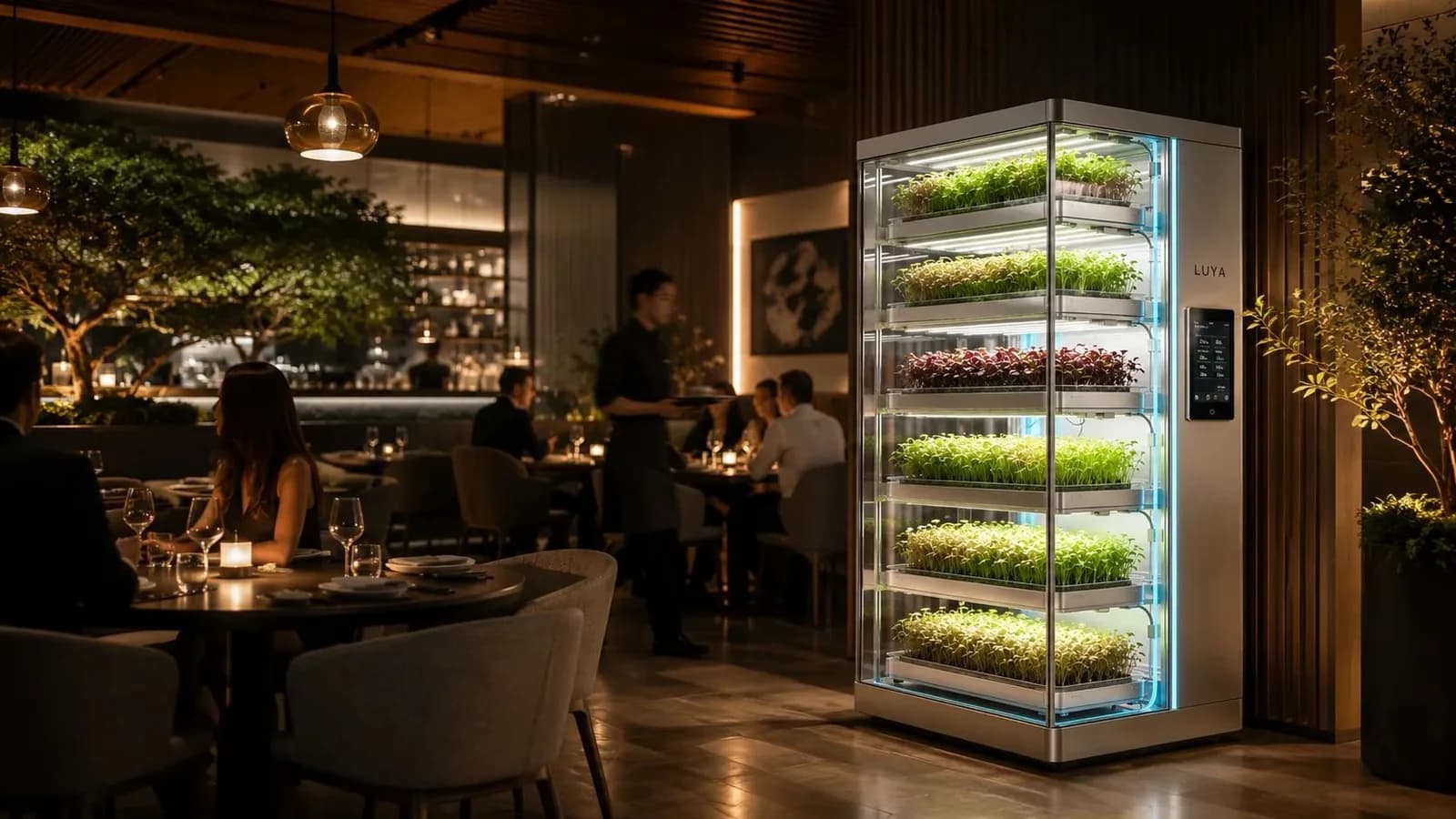
A room that reads as more expensive
A lit, living cabinet signals care the moment someone walks in. It is the kind of detail that makes a room feel worth its prices, before the food arrives to justify them.
Farm-to-table nobody has to take on trust
Greens growing in the room, cut when the order is placed. Every other version of this claim asks the guest to believe a supply chain they cannot see.
Something guests want to photograph
We are not going to promise you virality. But a glowing wall of living greens is a more photographable object than a menu insert about local sourcing.
Nothing for your staff to remember
It waters, lights and regulates itself, so it never becomes another line on a service checklist. What we have not tested is a real dining room over months, with real staff turnover, which is what we want to talk to you about.
- Dining room
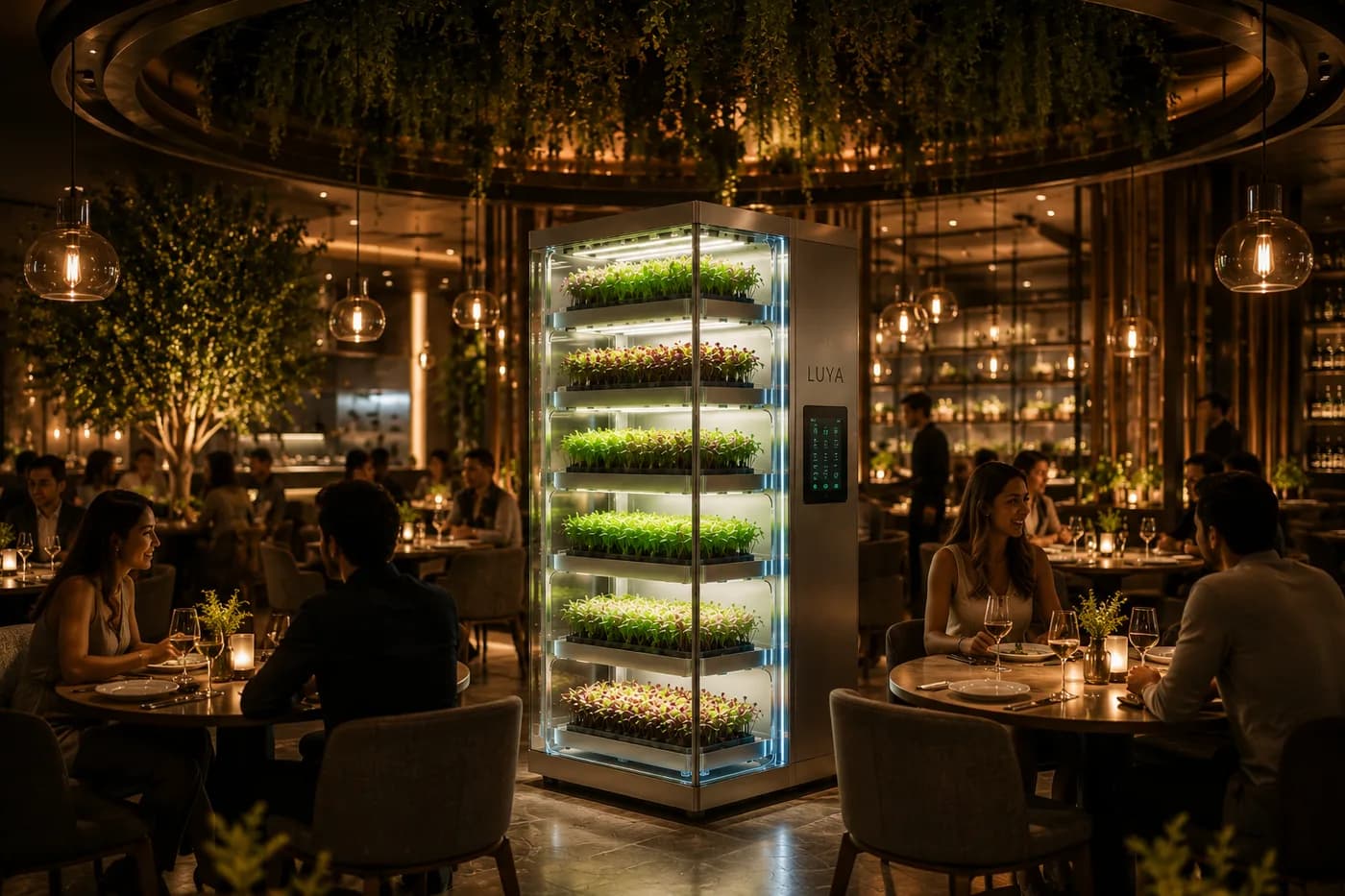
- Open kitchen
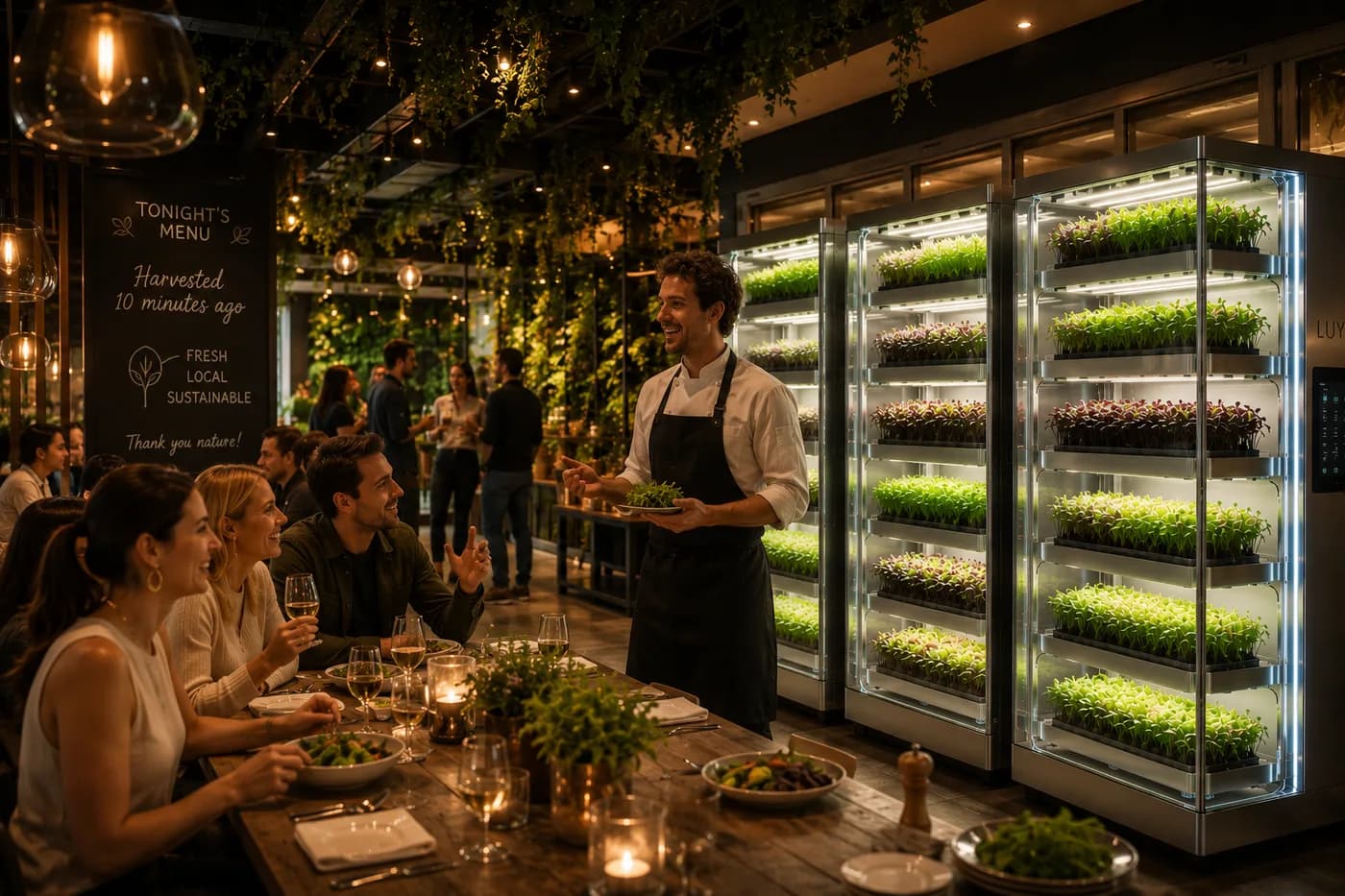
- Counter service
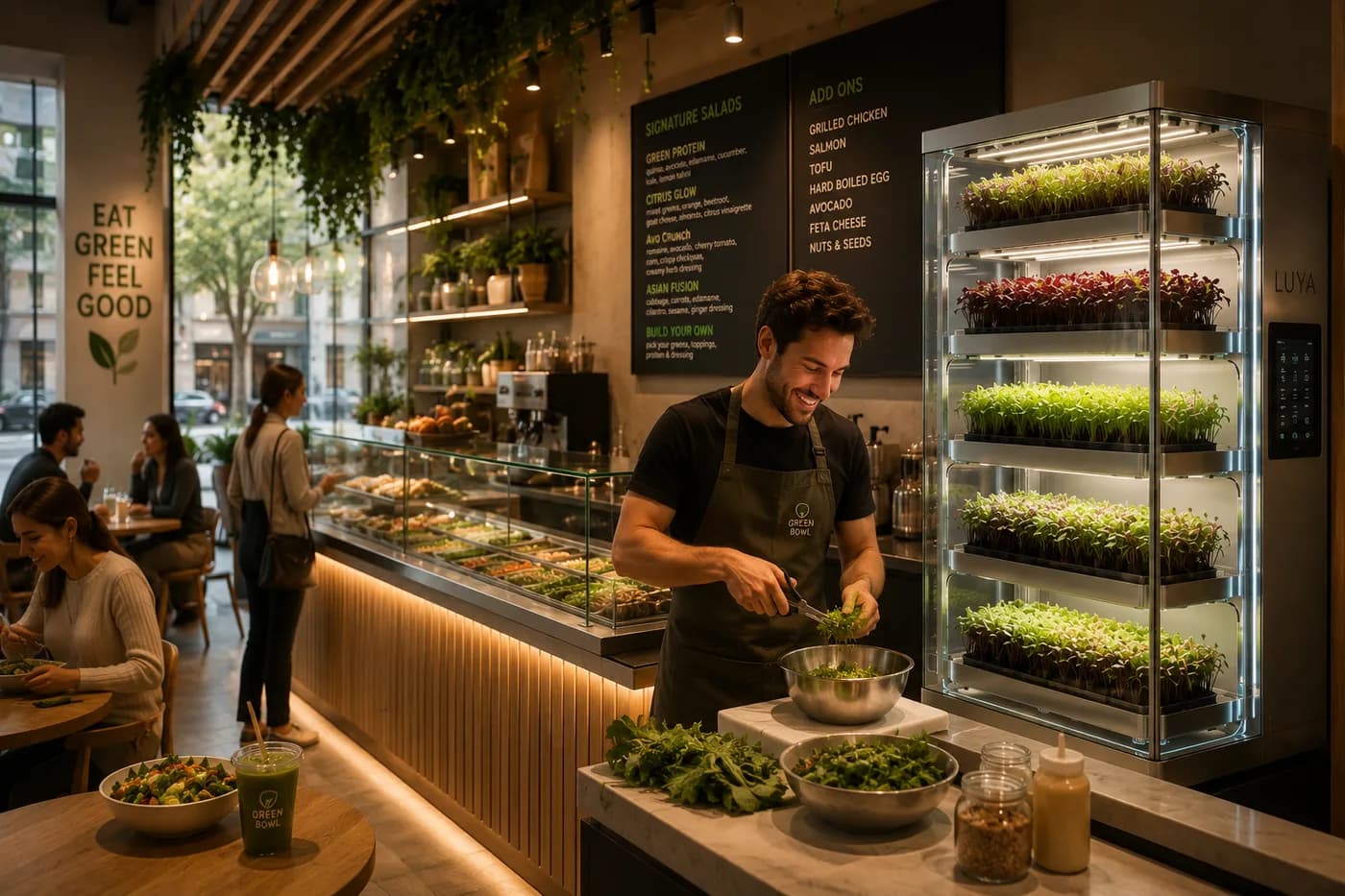
- Family casual
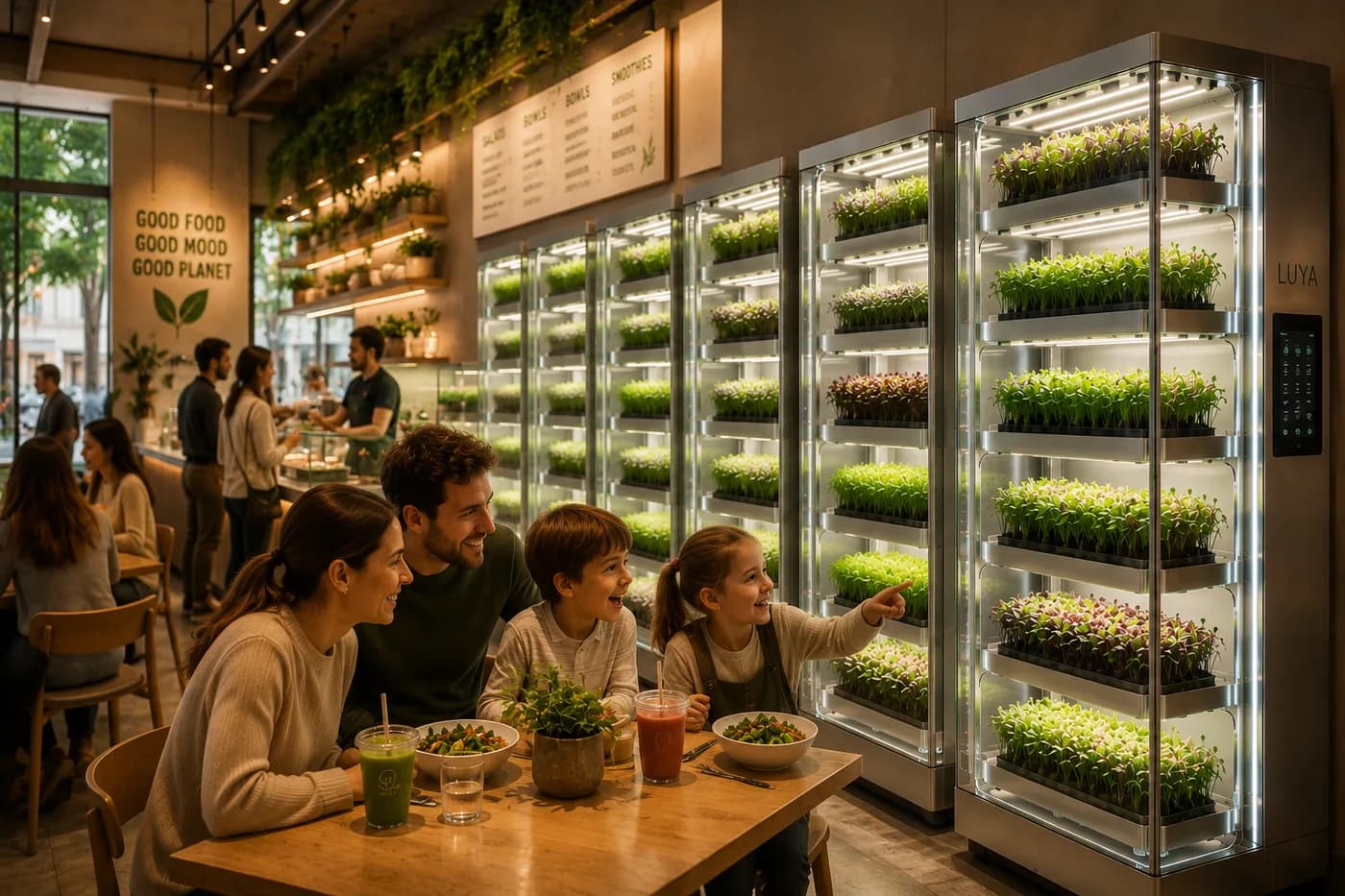
- Seen from the street
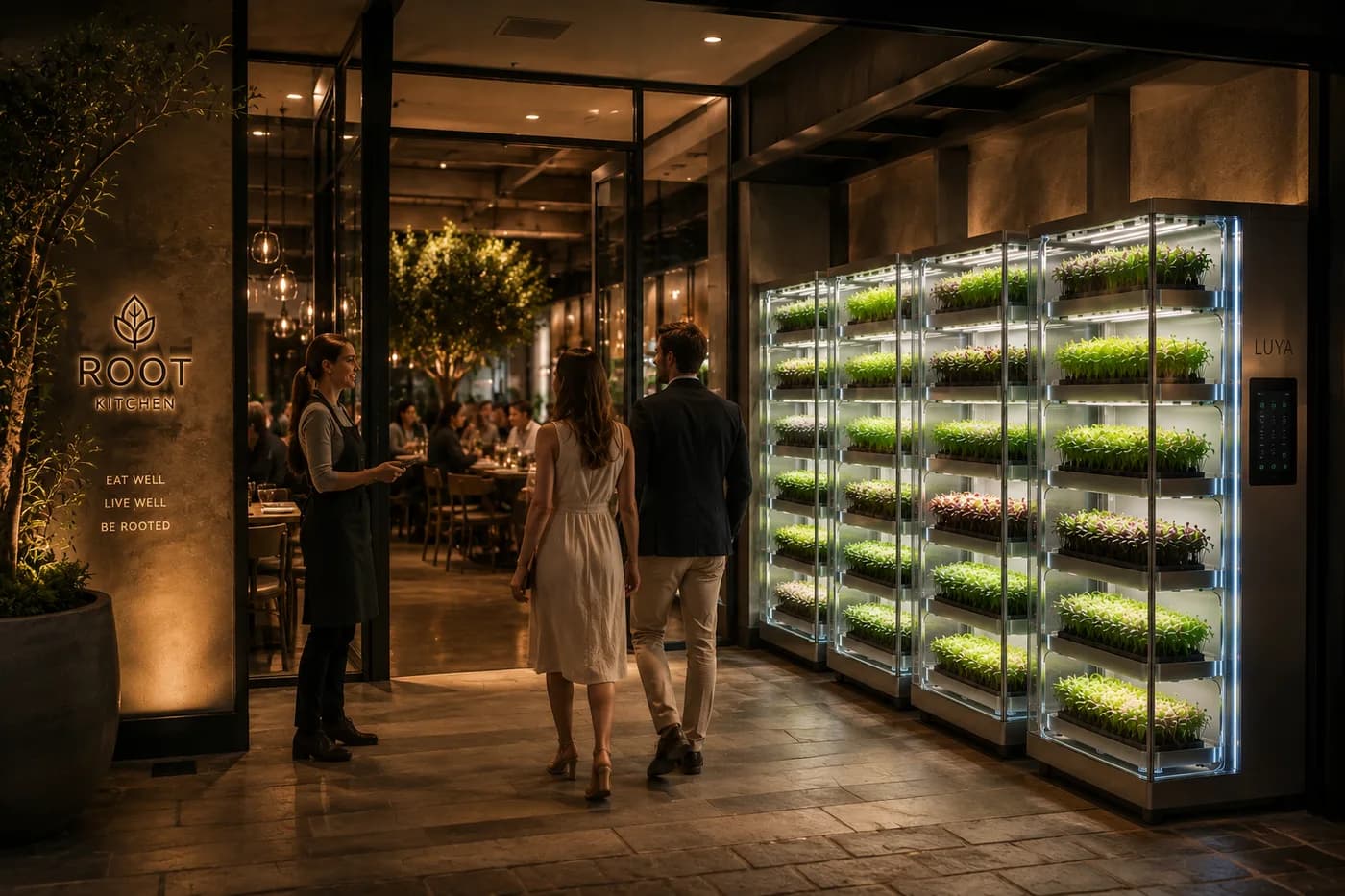
All five are visualisations rather than photographs. Which of these rooms is yours — and which of them we have got wrong, is one of the things we would ask you on a call.
- Size
- 6 ft tall, 30 × 20 in footprint
- Finishes
- Silver, Black, Champagne Gold
- Noise
- Under 40 dB, quieter than conversation
- Power
- Standard 110 V outlet. No plumbing or electrical work; a water line is optional
- Cycle
- 7-10 days from seed to harvest, depending on crop
- Output
- About six trays a week
- Crops
- Purple radish, broccoli, pea shoots, mustard, basil and signature mixes
- Substrate
- Coconut and hemp fibre. Soil-free, so no soil mess and nothing for pests to live in
- Expected price
- Around $5,500
It passes a health inspection
Fully enclosed and soil-free. That is the difference between this and the potted herbs that fail an inspection: no soil, no standing damp, no habitat for pests.
Your staff do almost nothing
Light, temperature and humidity are automatic. Someone refills the water about once a week and cleans the tank about once a month. Servers cut at the table when a guest orders.
It pays for itself in about five and a half months
Six trays a week, each roughly equal to eight 2 oz retail boxes at $4.79 — about $230 a week, or $1,000 a month, of produce you no longer buy. That figure counts produce value only: it does not net off trays, seed or electricity, so treat it as the ceiling rather than the number.
If a tray fails in the first three months, we replace it
Trays are professionally pre-seeded for consistency. For the first three months, any tray that does not grow is replaced free. You are never left with an empty display in a dining room.
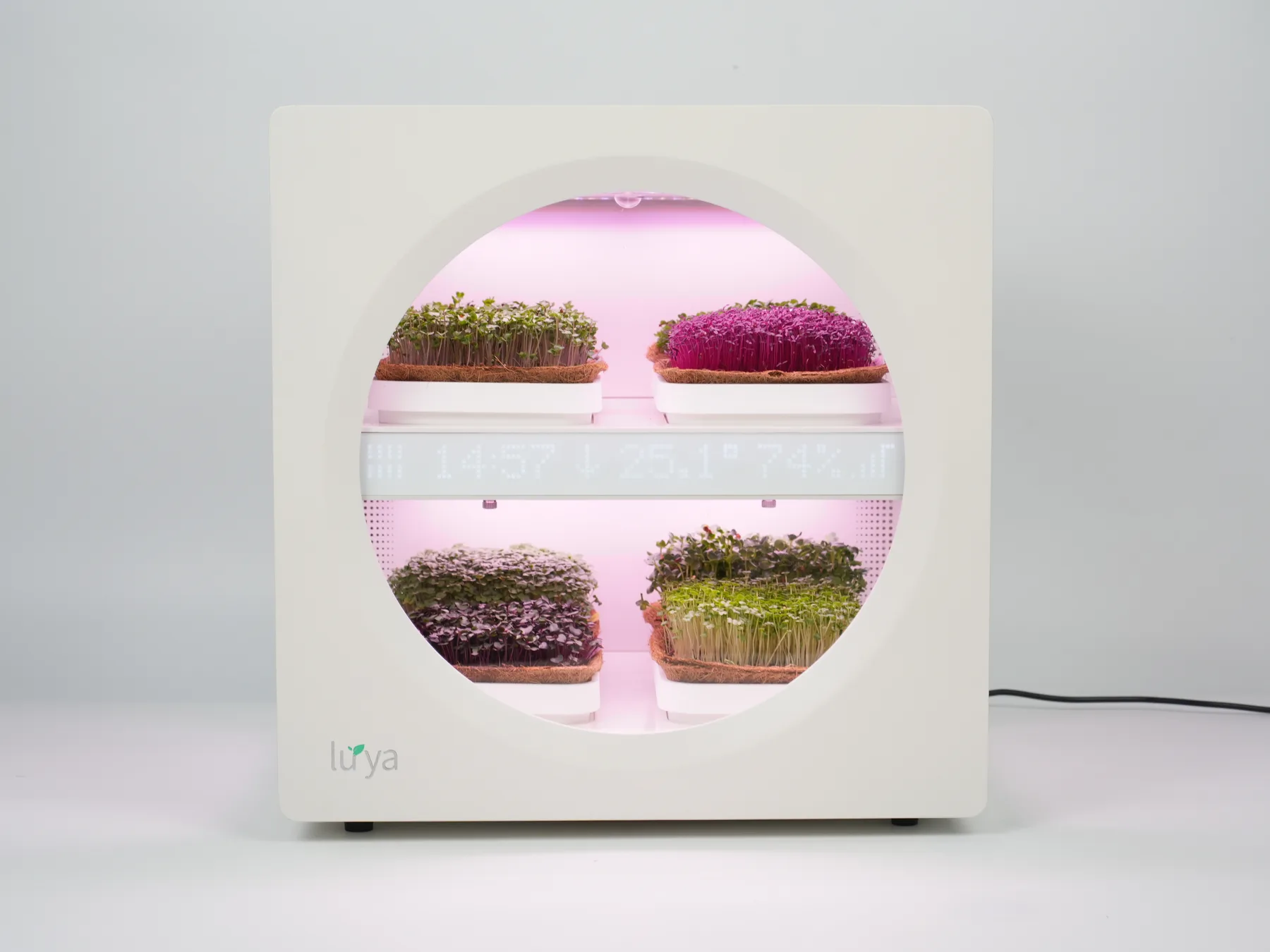
We built the small one first, and it is the proof.
What exists
- A working Luya Y prototype, with the specification above settled.
- Luya X-1, the countertop system it descends from — photographed, shipping to the first cohort, and running real growing cycles.
- Published bench trials on substrate, nutrient and density, including the treatments that lost.
What does not
- A shipping date. Luya Y is not on sale and we will not invent a date to make this page feel firmer.
- Production units. What exists is a prototype, which is a different thing from a product you can order.
- A restaurant deployment. Nobody has yet run one through a service, which is exactly what these conversations are for.
Can I buy one?
Not yet. A prototype exists and the specification is settled, but Luya Y is not in production and there is no shipping date. This page exists to find the restaurants we design the production version around.
Then what am I signing up for?
A short call, usually about thirty minutes, about how your room works and what a growing cabinet would have to do to earn its floor space. The restaurants we talk to first are the ones we come back to first.
What will it cost?
We expect around $5,500. That is the prototype's figure rather than a price list, and it is one of the things we want to test in these conversations — including whether the payback maths holds up against how your kitchen actually buys produce.
Is growing food in a dining room a health-code problem?
The system is fully enclosed and soil-free, which is the property inspectors care about: no soil, no standing damp, nothing for pests. Codes vary by jurisdiction, so which one you are inspected against, and what your inspector would want to see, is high on the list of things we want to hear from you.
How do I know you can build it at production quality?
You do not have to take it on trust. Luya X-1 is real, photographed on this site rather than rendered, and its growing record is published under Science, including the trials where a treatment lost. Luya Y is the same growing system at a different size.
If you run a room, we would like thirty minutes.
We are not selling you anything, because there is nothing to sell. We are trying to find out whether this is worth building at all, and the only people who can answer that are the ones who would have to run it during service.
Start a conversation