
How we test, and what we learn.
A useful result comes with its method. Here is how we record growing conditions, distinguish our own trials from published research, and decide what a finding supports.
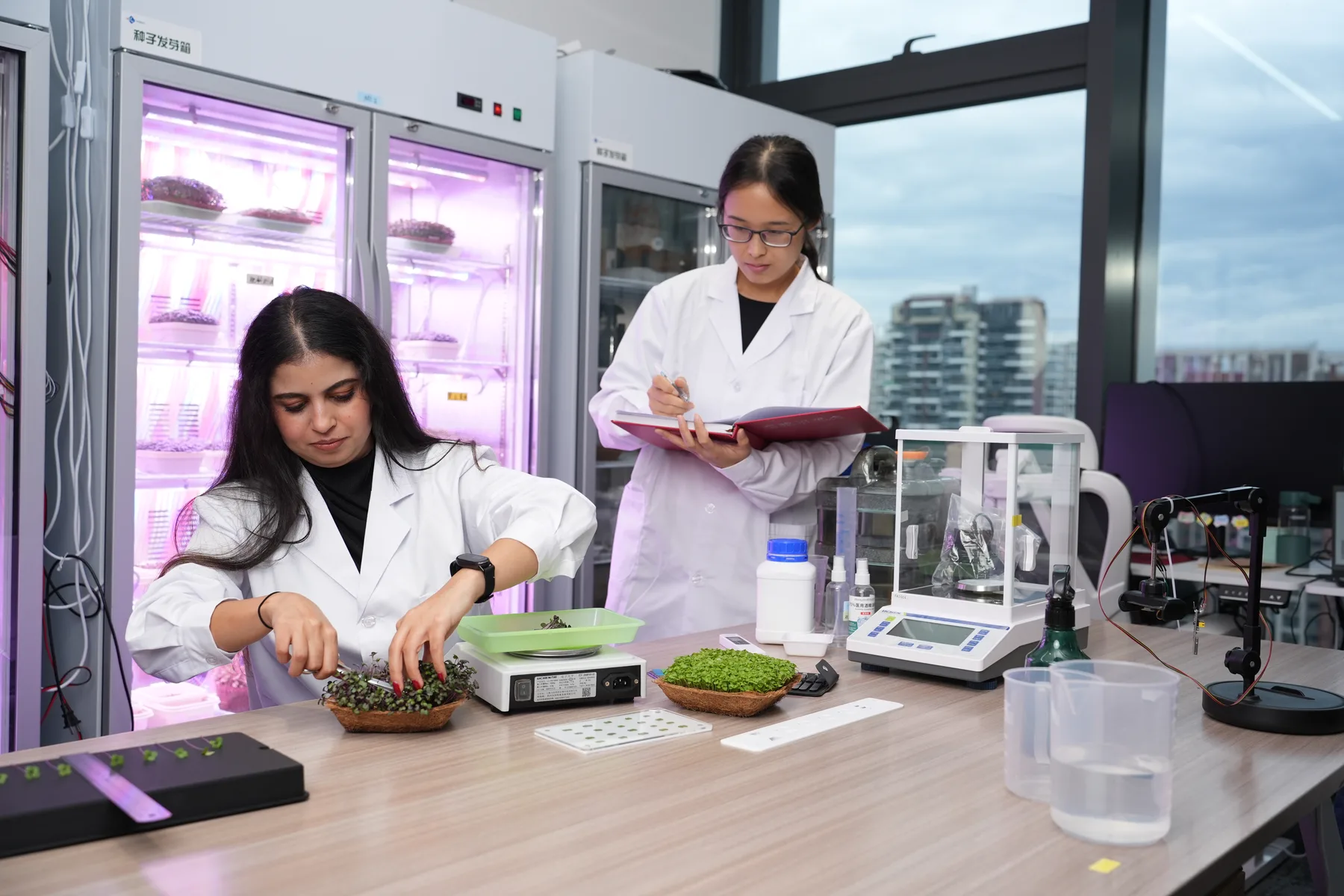
A reference sample. A real distinction.
Our portion explorer uses published fresh-weight measurements. It scales one identified sample to the portion you choose. It does not combine different cultivars or treatments into an expected Luya range. Published results can differ substantially between studies.
Each reference keeps its sample identity and source. Opal radish is not Rambo; green Genovese basil is not purple basil. Where no cultivar match is established, we say so.
- Everyday nutrients
- FDA Daily Values provide comparison references, not personalized intake targets. Vitamin A estimates from food β-carotene use 12 µg β-carotene per 1 µg RAE.
- Plant compounds
- We describe glucosinolates, anthocyanins, betalains and other compounds without inventing daily targets. Precursor content, formation during preparation and absorption are different measurements.
- Fresh weight matters
- Dry-weight results cannot be placed beside fresh-weight values without a measured moisture basis. We keep those results separate.
- A whole food
- Equal amounts of one nutrient do not make two foods interchangeable. Microgreens do not outperform mature vegetables in every nutrient.
What was actually studied?
The 2023 broccoli microgreen study followed sulforaphane metabolites after a single serving in 11 adults. It studied absorption, not long-term health outcomes. A 2025 crossover trial in 24 adults explored daily red cabbage and red beet microgreen consumption, feasibility and tolerability.
Laboratory chemistry, animal studies and human outcomes answer different questions. We do not turn an antioxidant assay or a finding in mice into a promised benefit from a Luya serving.
Read the human feasibility trial →From published samples to Luya harvests.
Our next evidence priorities are crop-specific harvest measurements: vitamins and carotenoids, glucosinolate profiles, and relevant composition questions such as nitrate and oxalate. These are measurement priorities, not published Luya results.
Future light-recipe comparisons need the same cultivar, harvest age, fresh-weight basis and recorded growing conditions. Until results are available, our explorer remains a guide to published research.
See the growing research →From published research to product testing.
A published crop study, an internal growing trial and an independent product test answer different questions. We identify which kind of evidence supports each finding.
- Industry background
- Published research about the crop category in general. Supports context, not a statement about LUYA.
- Internal testing
- LUYA's own measurements. Real, but not independent; always reported with hardware and recipe versions.
- Independent verification
- Testing or measurement by an outside party. Reported with who did it and under what scope.
- Peer-reviewed
- Published and reviewed research. Linked to the original source, never paraphrased into a stronger claim.
What we track for every factual statement.
Each claim used on the site carries a record: what exactly is being stated, which domain it belongs to, its evidence level, its source, the scope it applies to, the scope it explicitly does not apply to, its review status, and its expiry date.
- Scope is mandatory
- Crop, hardware version, environment and region — a result outside its scope is not a claim, it is an extrapolation.
- Non-applicability is published too
- What a result cannot be used to conclude sits next to the result itself.
- Claims expire
- A dated claim goes back for review rather than quietly ageing on a page.
- Unapproved means unpublished
- Draft or restricted claims do not appear on product or marketing pages. There is no 'temporarily' about it.
From a research sample to a reference portion.
Nutrition comparisons use the crop and nutrient reported by the cited source. A value for one vitamin does not represent the whole food, and a study of sprouts does not directly establish a value for microgreens.
Where a comparison uses 150 g, that is an assumed fresh-weight reference portion. It is not a measured Luya harvest, a promised tray yield or a recommended serving. Converting a concentration to a portion is arithmetic, not a new laboratory result.
A percentage of Daily Value uses the reference value named beside the comparison. It describes that nutrient alone; it does not measure the adequacy of a whole diet or an individual health outcome.
Keeping the evidence in context.
Precision in wording is part of the method, not a legal afterthought.
- No absolutes
- 'Guaranteed', 'zero risk', 'always', 'eliminates': a growing system cannot honestly promise any of them.
- No borrowed authority
- No institution name or logo without a signed agreement and their approval.
- No implied medical benefit
- Nutrients are described as nutrients, not as treatments.
- No fear framing
- We describe what fresh food offers, not what the reader's current diet is doing to them.