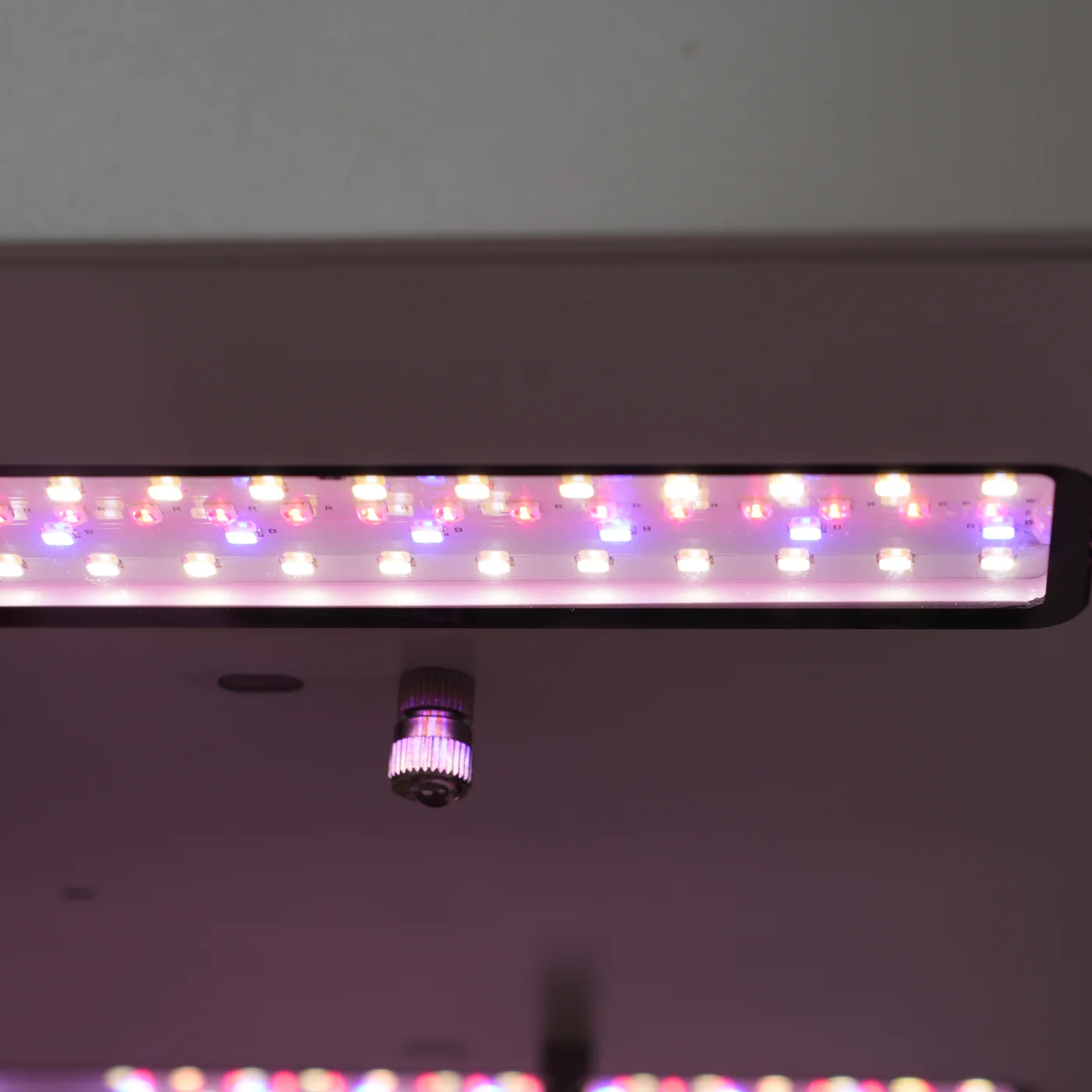
Light that adapts.
BioLight™ combines red, blue, white, UV-B and near-infrared channels for different growth stages.

Two growing levels. Eight trays. Light, water and observation working together behind the glass.
Before the first tray goes in, there is room to see how it all fits together.
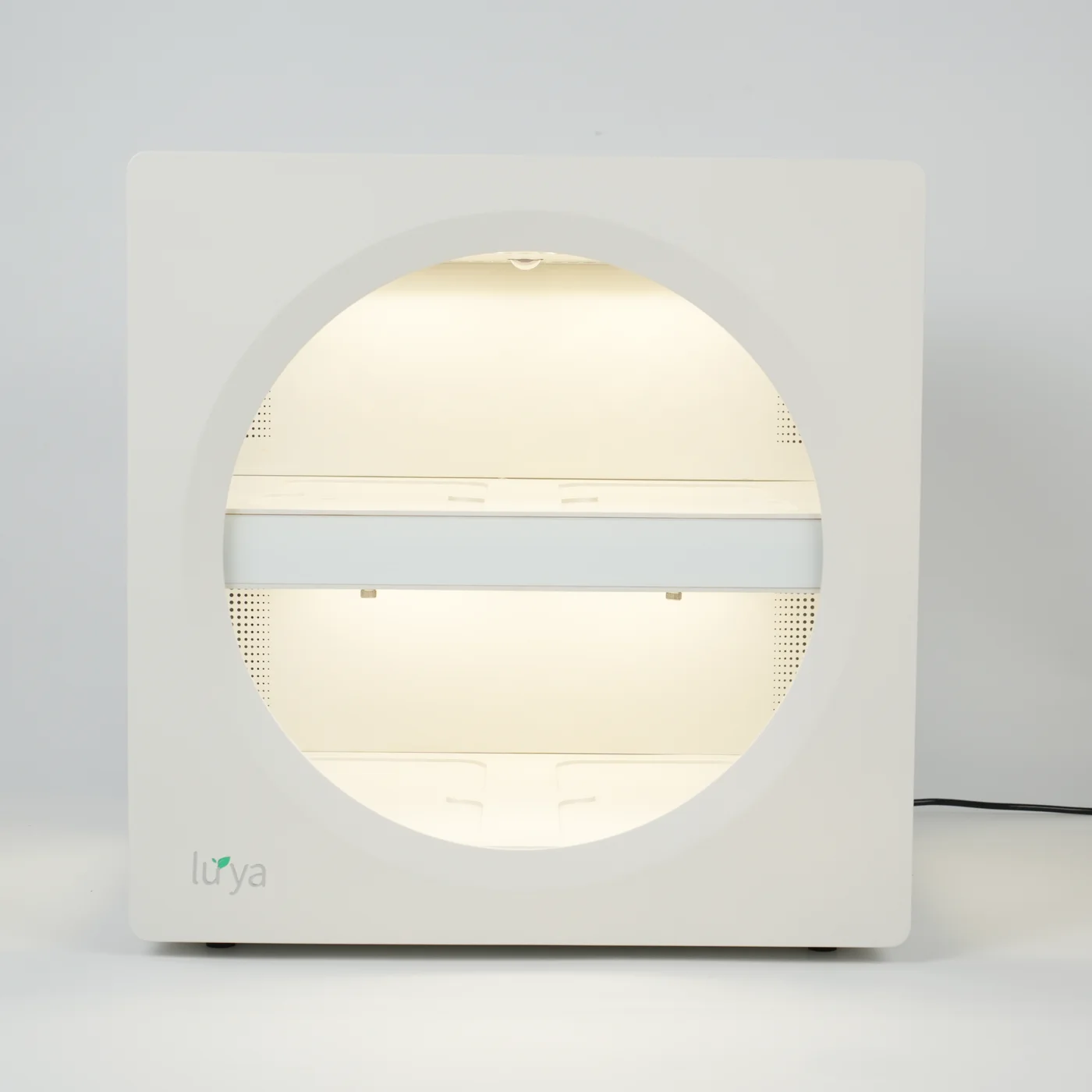
The round front window frames the two growing levels, with the central status display between them. Each level has room for four trays.
Explore the technology Luya takes care of for you.
BioLight™ combines red, blue, white, UV-B and near-infrared channels for different growth stages.
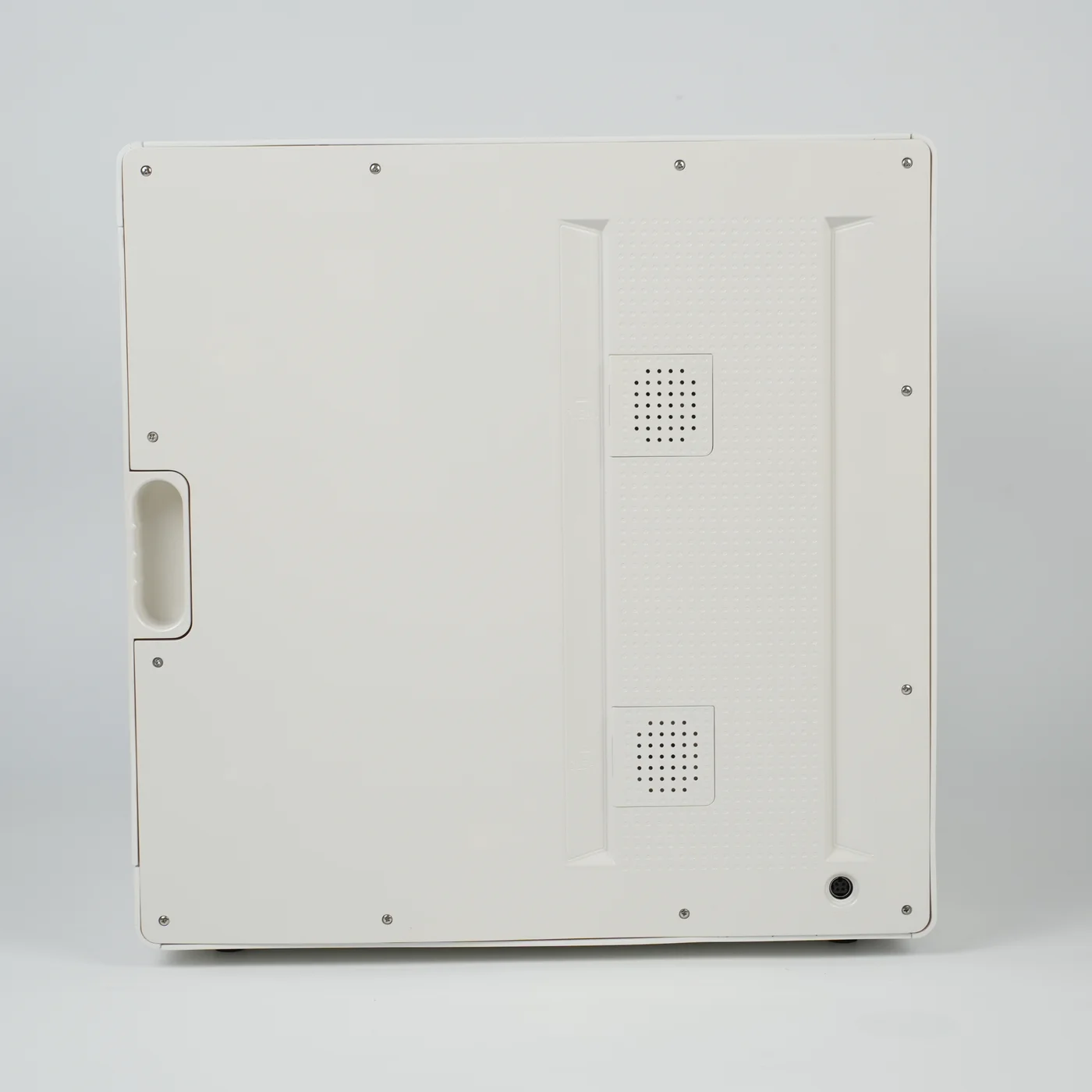
Four spray nozzles per level. Each level waters independently; the rear-right tank comes out for refilling.
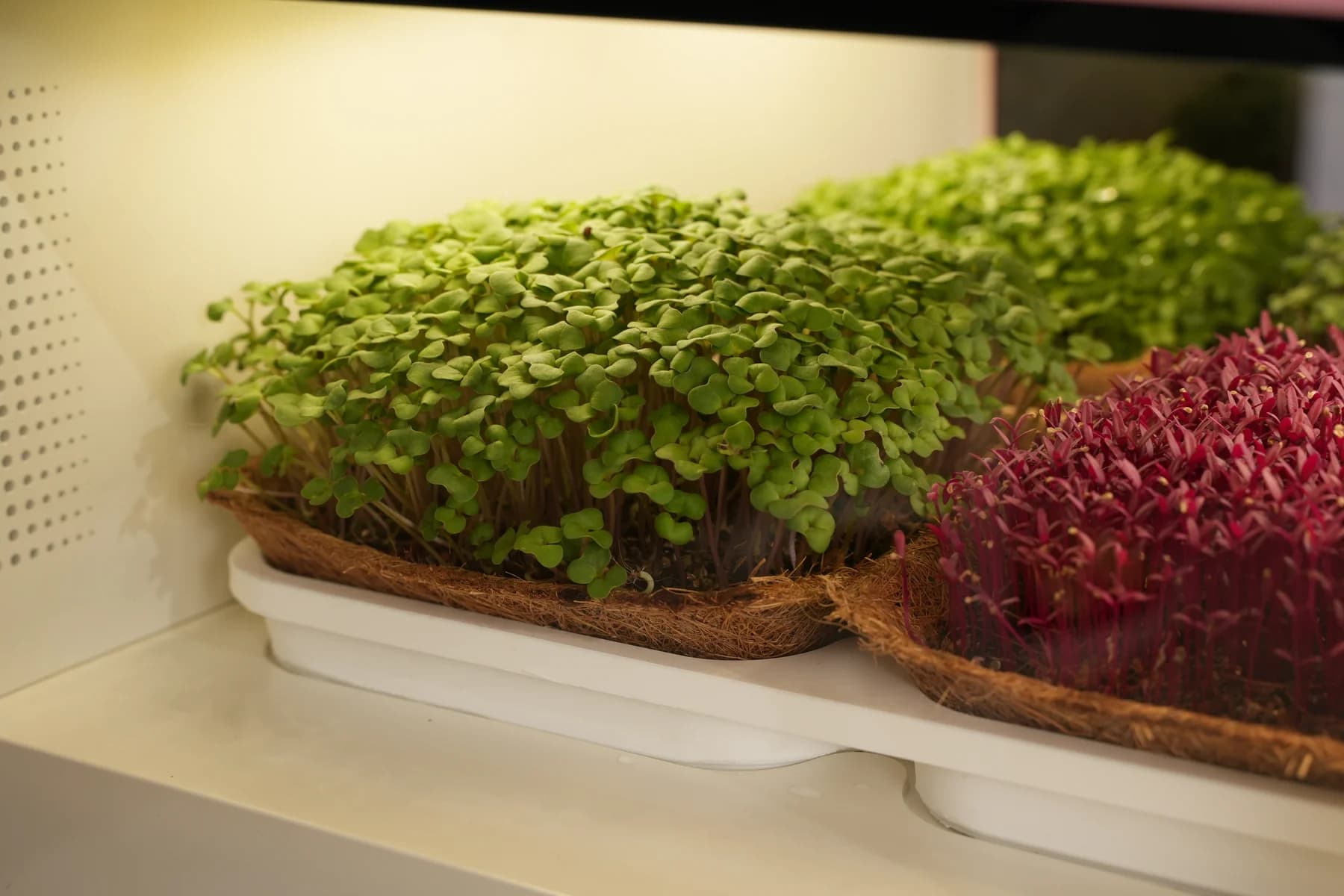
One camera per level, with automatic filter switching. Luya follows NDVI, canopy coverage, germination and other growth indicators.
The X-1 comes in white or pink. They are the same machine — same two levels, same eight tray positions, same lighting and irrigation — and they cost the same. The finish is the only difference, and it is yours to pick.
Cleaning between cycles It is a home appliance in a home, not a cleanroom. Cleaning between cycles matters.
A view of the plants They observe trays. Camera behaviour, retention and controls are documented in the app's privacy settings.
When Wi-Fi drops Core growing continues if the connection drops, but remote monitoring and alerts depend on connectivity.
Exact dimensions, weight, power draw, tank volume, sensors and connectivity are published on the specifications page. Measured noise level and certifications are still pending.