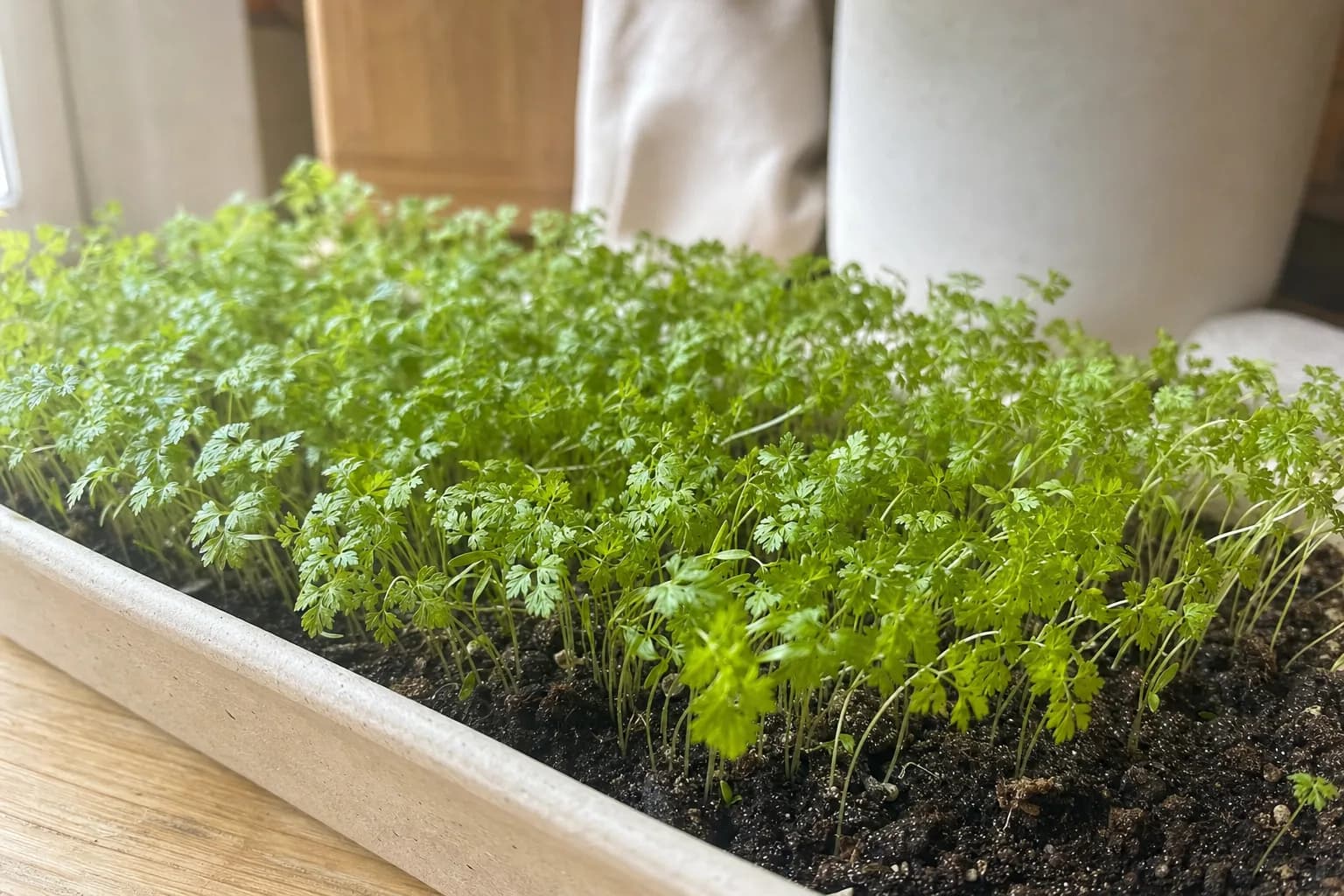
Chervil is one of the four classic fines herbes of French cooking, alongside parsley, tarragon and thyme — and it is the one most people could not identify if you handed it to them. That is not a failing. Its job is to be present without announcing itself.
What it tastes like
Anise and tarragon at the same time, mild, with a faint liquorice sweetness. It is considerably gentler than fennel, which occupies the same flavour family with far more force.
That gentleness is why it belongs with eggs. Chervil will not overwhelm an omelette or a soft-boiled egg the way a stronger herb does; it makes the dish taste more finished without the eater being able to say why.
Growing it
One instruction matters more than the rest.
- Sow in rows, not scattered. Chervil spreads as it grows. Scatter-sown, it produces a tangled mat that is genuinely difficult to cut cleanly — you end up tearing rather than cutting, and torn herb leaves bruise and darken.
- Harvest at 14 to 18 days for a microgreen, or three to four weeks for a petite green.
- Treat it gently after cutting. Delicate leaves bruise in a colander. Cut it straight onto the plate where you can.
How to use it
- Eggs, in every form. This is the pairing worth growing it for.
- On steamed or roasted vegetables, where it adds an aromatic top note without changing the dish.
- In green salads, as part of the mix rather than the point of it.
- Never cooked. Delicate aromatics are the first thing heat destroys.
In a blend, chervil is an edge rather than an accent — a small percentage that lifts the rest. Our guide to blending microgreens explains the difference.
Timing and variety notes draw on Cooking With Microgreens by Sal Gilbertie and Larry Sheehan.