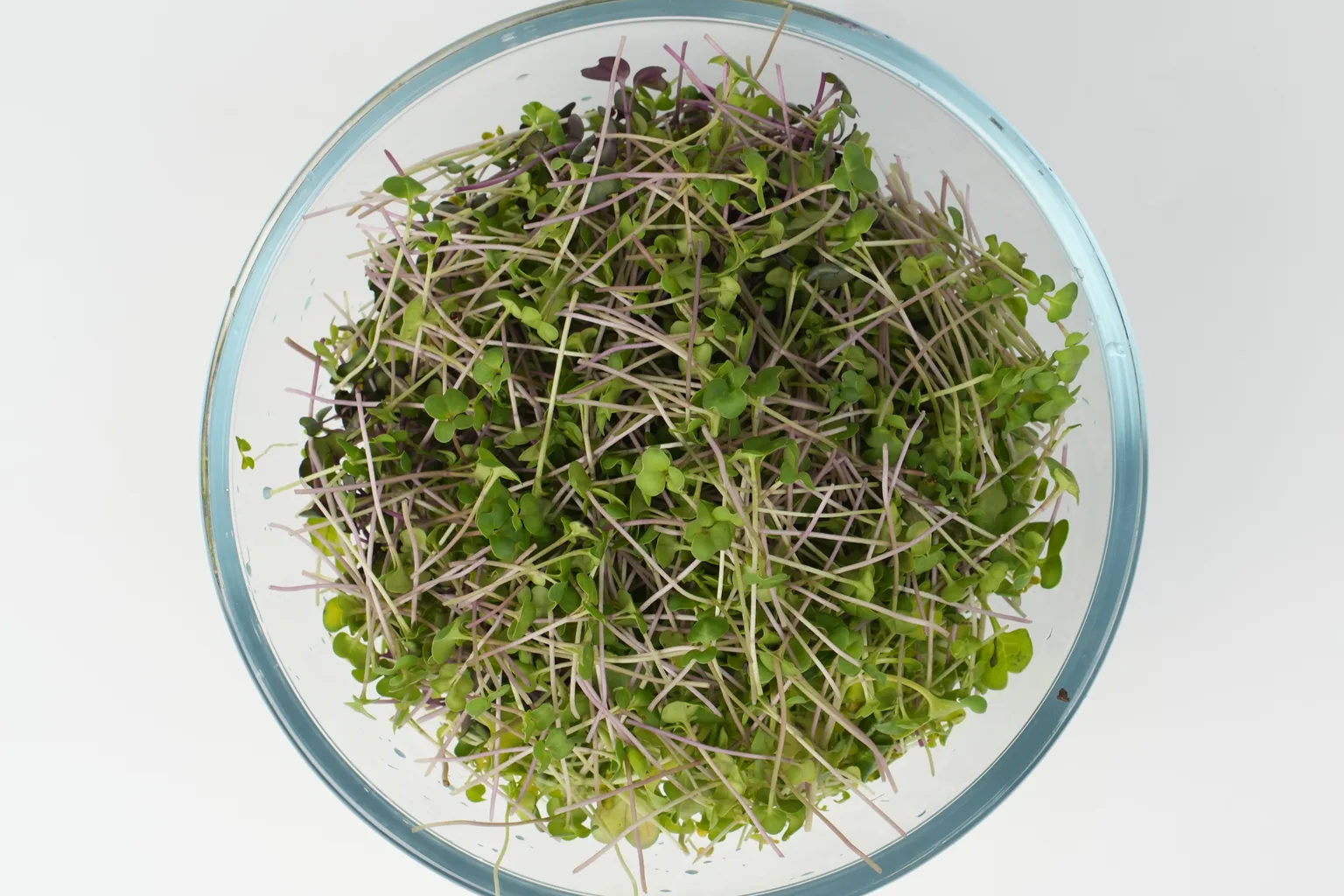
Buy a bag of "spring mix microgreens" and you usually get something that tastes green and not much else. Three or four crops, all pulling in the same direction, averaging each other into blandness.
A blend that works is built like a dish, not like a handful. It has parts with different jobs. Here is the structure we use, and how to fill it from whatever you happen to be growing.
The three jobs
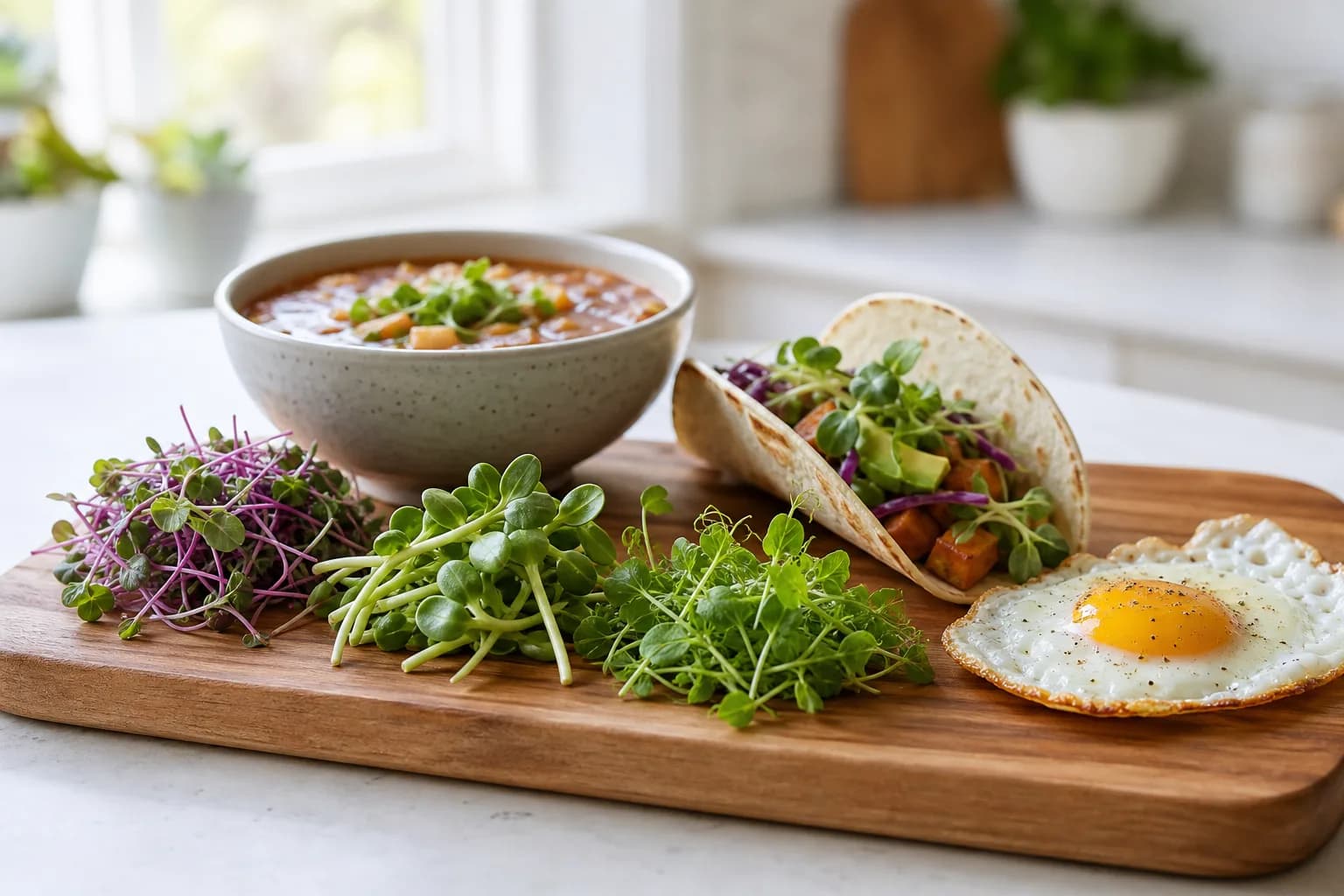
A base — 60 to 70 percent. Mild, sweet, high volume. Its job is bulk and texture, not flavour. Pea shoots and sunflower are the obvious candidates; both are crunchy, both are sweet enough to be pleasant on their own, and neither will fight anything you add.
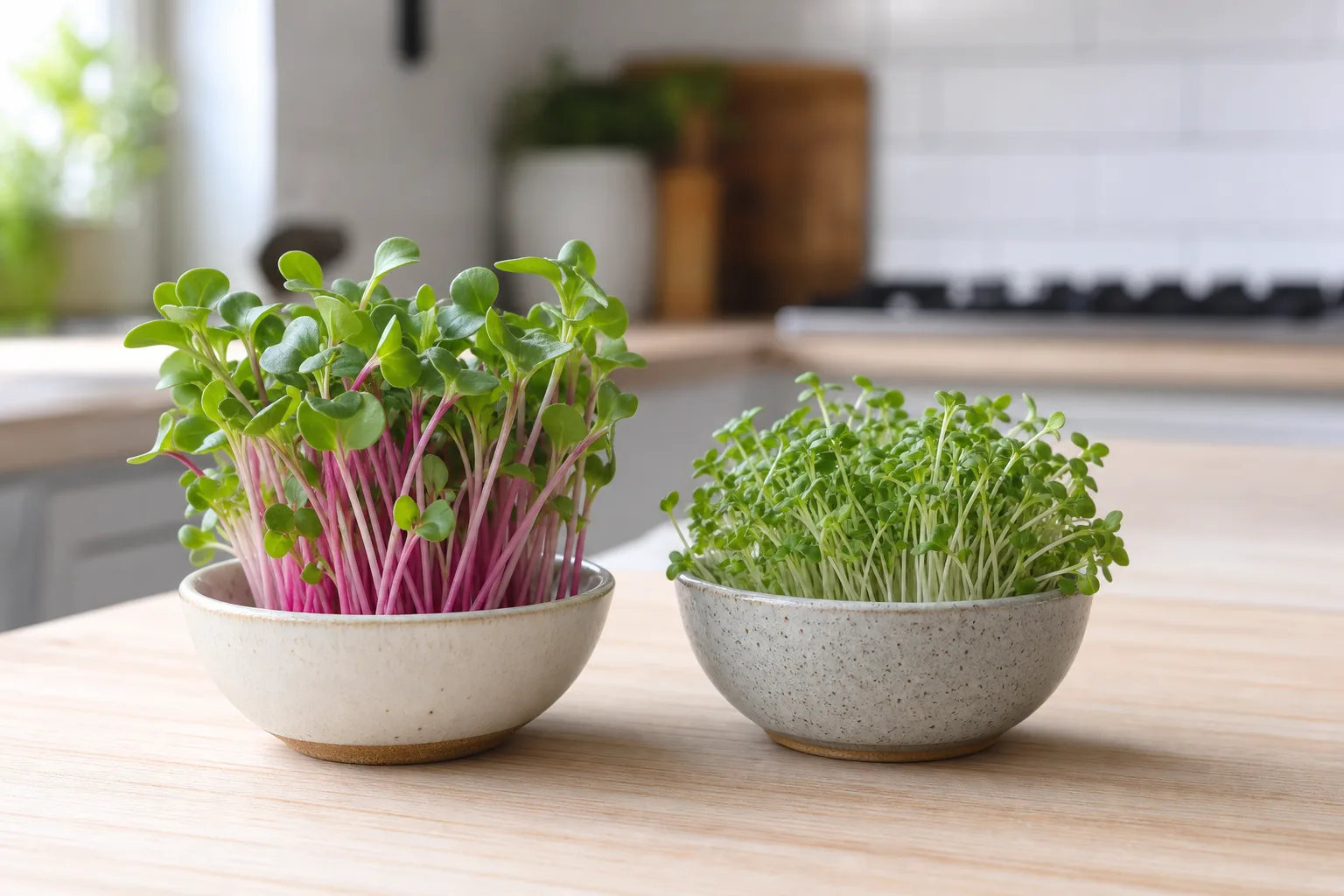
An accent — 20 to 30 percent. This is the crop that makes the mix identifiable. Radish, mustard, arugula, broccoli, cress. Something with an actual point of view. Below about a fifth of the bowl it disappears; above a third it stops being an accent and becomes the dish.
An edge — 5 to 10 percent. A small amount of something sharp, sour, aromatic or brightly coloured that keeps the mix from settling. Red-veined sorrel for sourness, amaranth for colour, basil or cilantro for aroma. This is the part most home mixes leave out, and it is the part that makes people ask what is in it.
Three blends that hold together
Citrus. Pea shoot base, cress accent, red-veined sorrel edge. Sorrel carries genuine oxalic sourness, so the mix reads as lemony without any lemon in it — which makes it excellent on fish and on anything fatty. The idea is not ours: Sal Gilbertie and Larry Sheehan build a citrus blend along these lines in Cooking With Microgreens, combining lemon basil, sorrel and red amaranth.
Peppery. Sunflower base, radish accent, mustard edge. This one is aggressive on purpose. It belongs on rich food — a burger, a fatty sandwich, roast potatoes — where its job is to cut, not to complement.
Herbal. Pea shoot base, broccoli accent, basil and cilantro edge. Softer, aromatic, and the one that works in an omelette or folded into warm grains at the last second.
Blend in the bowl, not in the tray
The instinct is to sow a mix into one tray. Resist it unless the crops share a timetable.
Different seeds germinate at different rates and finish at different heights. Sow radish with basil and the radish is ready while the basil is still deciding; harvest on the radish's schedule and you cut half a tray of nothing. Crops with genuinely similar timing — most brassicas together, say — will co-exist, but the reliable method is to grow crops separately and combine them at the moment you eat.
That also lets you change the ratio without regrowing anything, which is the whole point of thinking in percentages.
Ratios worth remembering
- Too much accent is the most common mistake. A mix that is half radish is a radish salad with some pea shoots in it.
- The edge should be noticeable and not identifiable. If someone can name it immediately, use less.
- Match strength to the food. Delicate fish wants the citrus blend; a short rib wants the peppery one. Our guide to flavour pairing covers the greens-to-food half of this, which is a different question from the greens-to-greens one here.
- Colour is a fourth job. Amaranth or red cabbage at 5 percent changes how the bowl looks without changing how it tastes. That is sometimes exactly what you want.
Building your own
Take whatever you have growing, sort it into the three jobs, and check you have all three. Most disappointing mixes turn out to be two bases and no edge.
If you are not sure which category a crop belongs to, our four flavour profiles piece sorts the common ones, and the texture guide covers the part of a blend that has nothing to do with taste.
The citrus-blend idea in this article is drawn from Cooking With Microgreens by Sal Gilbertie and Larry Sheehan. The base/accent/edge structure and the ratios are ours.