Medically reviewed by Dr. Shaiek, Plant & Growing Scientist at Luya. This article is for educational purposes and is not medical advice; consult a healthcare professional about your individual needs.
If you've read anything about the health benefits of microgreens, you've probably met one word again and again: sulforaphane. It's the compound that has earned broccoli — and especially broccoli microgreens — a reputation as a functional food, and it's the reason so many nutrition researchers, doctors, and biohackers pay attention to these tiny greens. Here's what it actually is, what the science says it does, and how to get the most of it.
What sulforaphane is
Sulforaphane is a naturally occurring compound in the isothiocyanate family, found in cruciferous vegetables like broccoli, cabbage, kale, and radish. The twist: it isn't present in the raw plant in its active form. Instead, the plant stores a precursor called glucoraphanin alongside an enzyme called myrosinase, kept apart in separate compartments. When you chew, chop, or crush the plant, the two finally meet — and the reaction produces active sulforaphane.
This single fact explains almost everything practical about sulforaphane: why how you prepare cruciferous vegetables matters, why raw beats overcooked, and why young plants eaten fresh are such an efficient source.
Why broccoli microgreens are a standout source
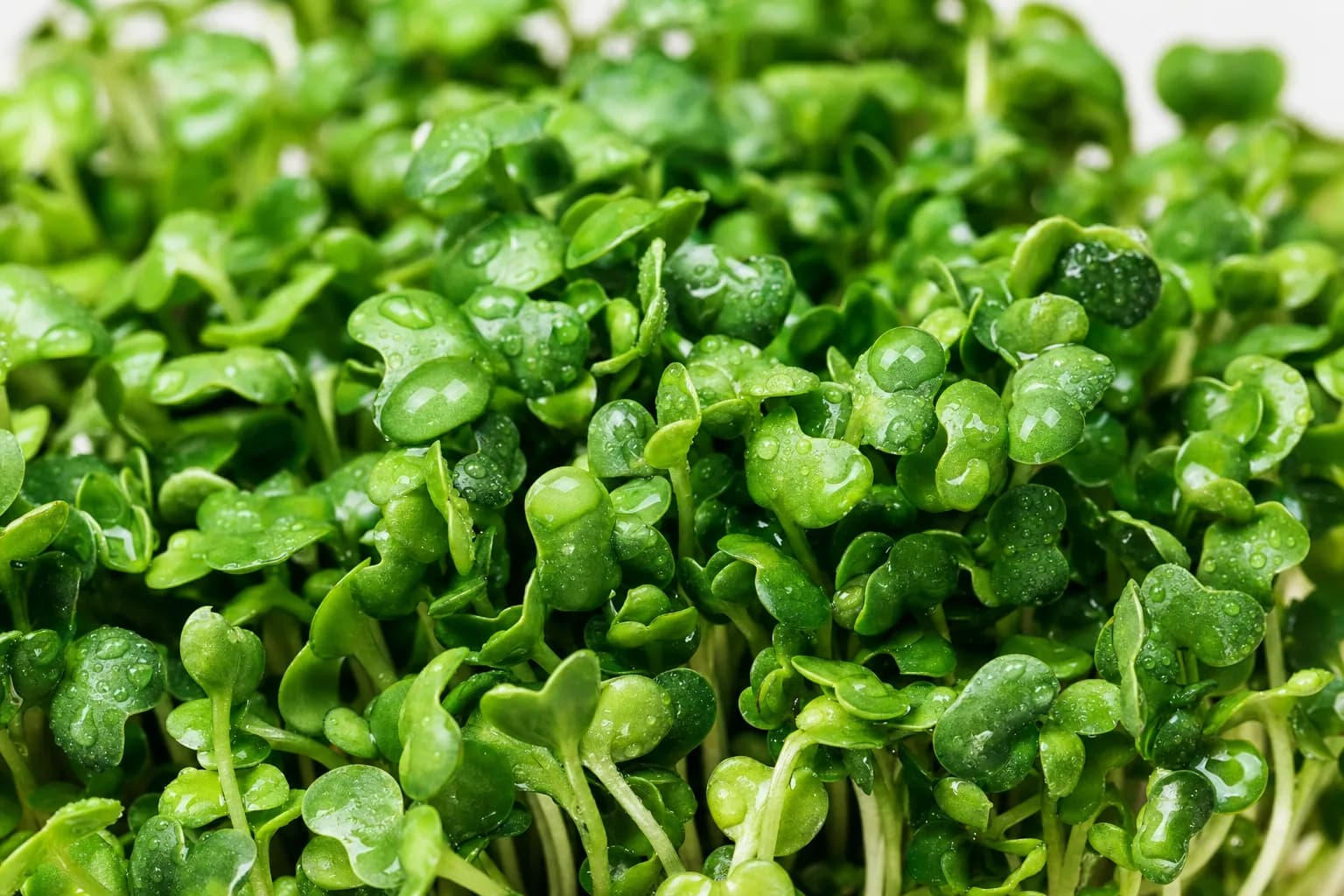
This is the headline finding. According to research originating at Johns Hopkins University, young broccoli plants can contain dramatically more sulforaphane precursor than mature broccoli heads — studies have reported broccoli microgreens and sprouts holding on the order of 10 to 100 times the concentration found in fully grown broccoli, gram for gram.
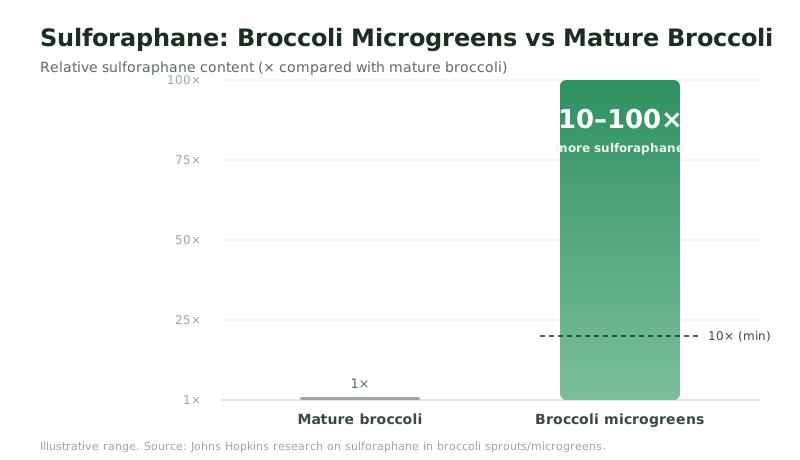
The reason is biological: a seedling concentrates the chemical defenses it needs to survive its most vulnerable days into a tiny package. You get a large dose of those compounds in a small, raw, easy-to-eat serving — no cooking required (and cooking can degrade the very enzyme needed to form sulforaphane).
Here's roughly how the forms compare:
| Form | Sulforaphane (relative to mature) | Notes |
|---|---|---|
| Mature broccoli, cooked | ~1× (baseline) | Heat can reduce active compound |
| Mature broccoli, raw | Higher than cooked | Myrosinase still intact |
| 3-day broccoli sprouts | ~20–50× | The classic Johns Hopkins finding |
| Broccoli microgreens (raw) | ~10–100× precursor | Concentrated in the young seedling |
Figures are approximate and vary by variety, growing conditions, and measurement method.
This is also why microgreens are nutrient-dense in general: research has found many varieties to be 2 to 3.5 times more nutrient-dense than their mature counterparts grown under the same conditions, with red radish microgreens often topping the list.
What the research says sulforaphane does
Sulforaphane is one of the more studied plant compounds, though much of the work is still in animal or early-stage human research. The areas of active investigation are genuinely interesting:
- Antioxidant and cellular defense. Sulforaphane is best known for activating the body's Nrf2 pathway — a master switch that turns on the cell's own antioxidant and detoxification responses. Rather than acting as a single antioxidant, it prompts the body to make its own, which is why it shows up so often in longevity and cellular-health research.
- Blood-sugar regulation. Several studies have explored sulforaphane's effect on insulin sensitivity and glucose metabolism. Broccoli-derived compounds have been noted for improving insulin resistance in research settings, helping sugar move out of the blood and into cells.
- Inflammation. As an isothiocyanate, sulforaphane has been studied for its role in modulating inflammatory pathways, which connects to a wide range of chronic-condition research.
It's worth being precise here: these are areas of research interest, not proven cures. The encouraging theme is that sulforaphane appears to work with the body's own defense systems rather than acting like a single-target drug.
Sulforaphane from food vs. supplements
Sulforaphane supplements exist, but whole-food sources have a real advantage: bioavailability and the full matrix of co-occurring compounds. Plants deliver sulforaphane alongside the myrosinase enzyme, vitamins, fiber, and other phytonutrients that supplements often strip away. Many nutrition researchers note that the nutrients in plants tend to be more diverse and bioavailable than isolated supplement forms.
For most people, the simplest high-quality source is a small daily serving of fresh, raw broccoli microgreens.
How to get the most sulforaphane
Because the active compound depends on intact enzymes and fresh tissue, a few habits make a real difference:
| Do this | Why it works |
|---|---|
| Eat them raw or barely warmed | Heat destroys myrosinase, the enzyme that makes sulforaphane |
| Chew thoroughly | Chewing is what triggers the precursor-to-sulforaphane reaction |
| Pair with a pinch of mustard or radish | These add extra myrosinase, boosting conversion |
| Eat them fresh | The active compound and enzymes degrade over days of storage |
That last point is the quiet catch. The freshest microgreens give you the most — and greens that have wilted for days in a clamshell simply aren't delivering the same value as ones harvested minutes before eating.
Freshness is the whole game
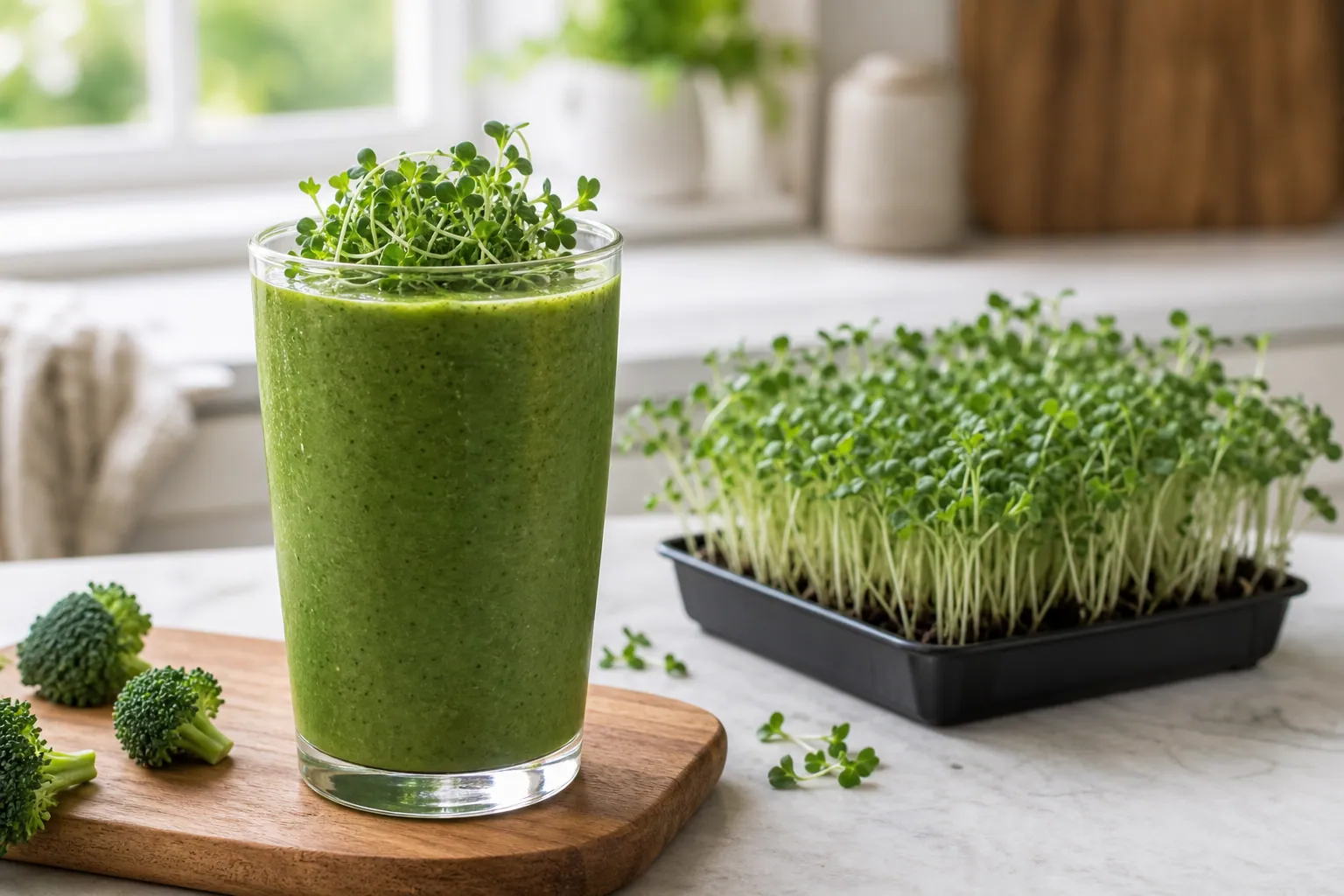
If sulforaphane depends on fresh, raw, enzyme-rich tissue, then the closer you can get harvest to plate, the better. That's the core idea behind a countertop grower like Luya: a tray of broccoli microgreens growing right where you eat, harvested a few minutes before it hits your bowl — so the compound you're after is at its peak, every single day, instead of degrading in transit.
You don't need a machine to benefit from sulforaphane — a windowsill tray works. But however you grow them, the principle is the same: fresh, raw, and chewed well is how these tiny greens punch so far above their weight.
Curious which microgreens pack the most nutrition overall? Read Microgreens Nutrition: Why They're More Nutrient-Dense, or see how Luya grows them fresh on your counter →.
Selected sources
- Johns Hopkins University research on sulforaphane in broccoli sprouts/microgreens
- USDA & peer-reviewed reviews on microgreen nutrient density (MDPI Plants, 2025)
- Reviews on sulforaphane, the Nrf2 pathway, and isothiocyanate bioavailability
References
- Fahey JW, Zhang Y, Talalay P. Broccoli sprouts: an exceptionally rich source of inducers of enzymes that protect against chemical carcinogens. PNAS. 1997;94(19):10367–10372. https://doi.org/10.1073/pnas.94.19.10367
- Axelsson AS, et al. Sulforaphane reduces hepatic glucose production and improves glucose control in patients with type 2 diabetes. Sci Transl Med. 2017;9(394):eaah4477. https://doi.org/10.1126/scitranslmed.aah4477