The World Health Organization identifies iodine deficiency as one of the nutritional problems affecting more than a third of the world's population [1]. It belongs to the category researchers call hidden hunger: deficiencies with subtle, non-specific effects that show up regardless of social or economic status — by one estimate touching around 60% of people worldwide.
Iodine matters because the thyroid cannot make its hormones without it, and those hormones set metabolic rate and, in early life, neurological development. Iodised salt was the twentieth century's answer and a genuinely successful public-health intervention. But it arrives attached to a food many people are actively trying to eat less of, which is a structural awkwardness. Agronomic biofortification asks whether a vegetable could carry part of that load instead.
Four species, two doses, one clean design
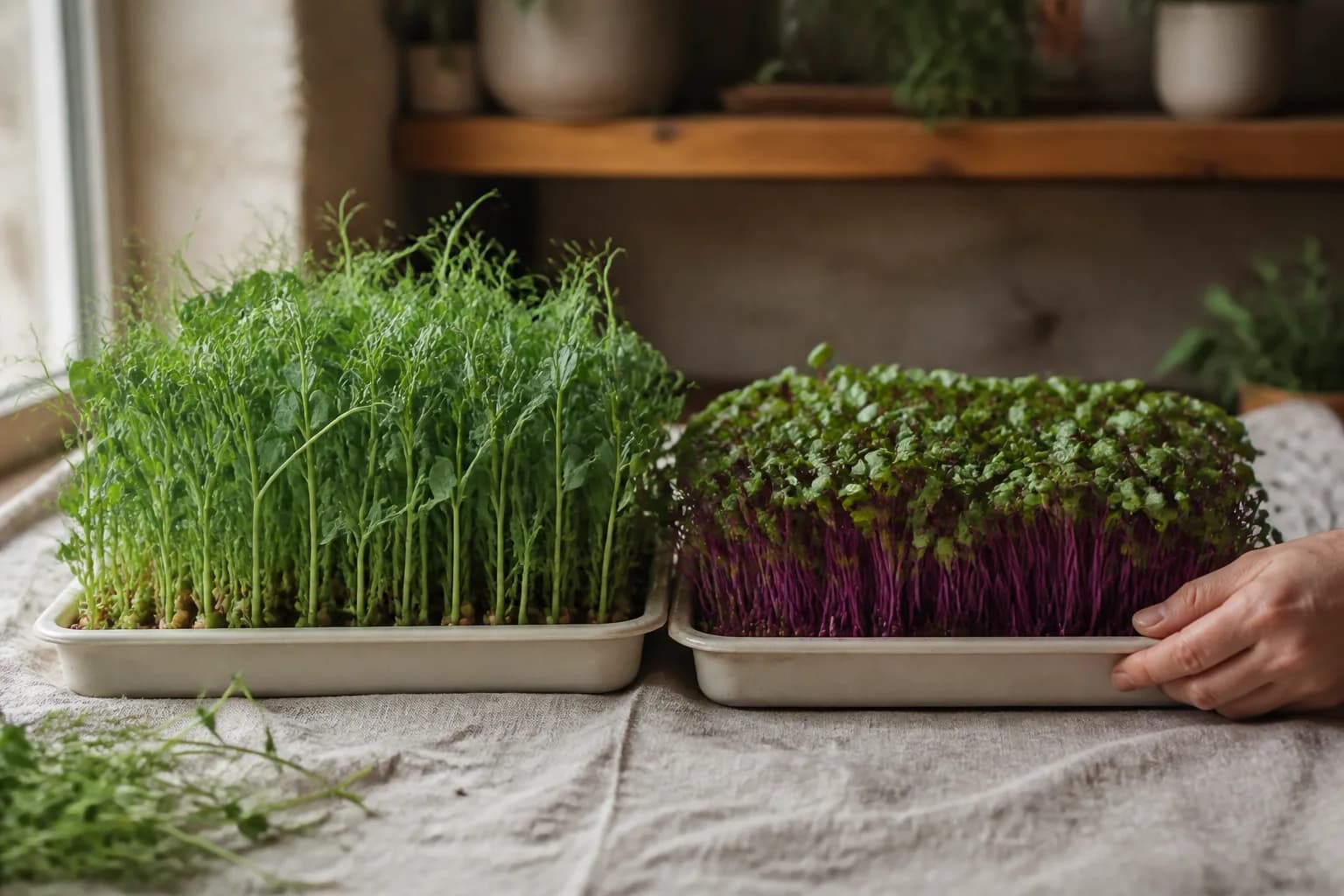
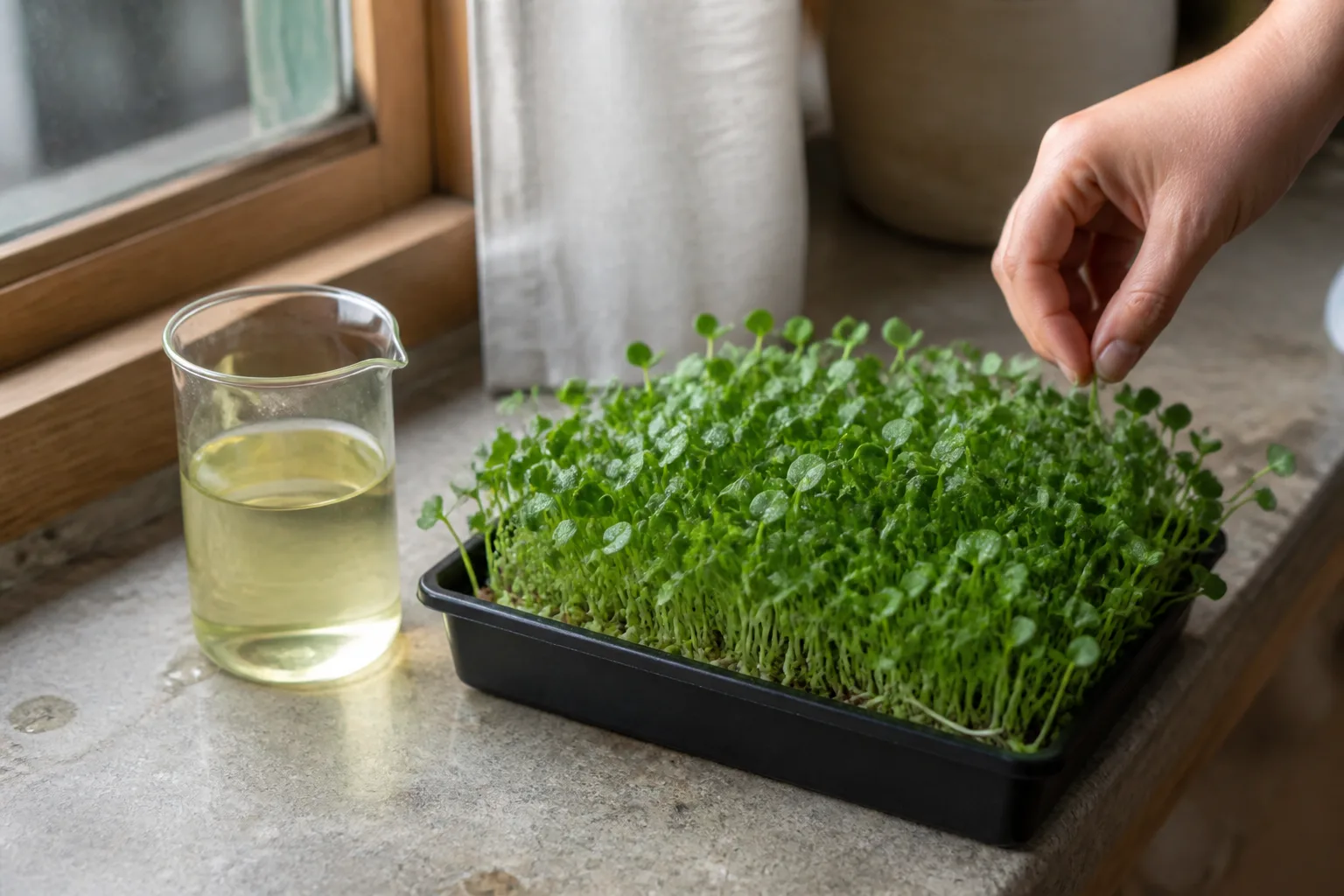
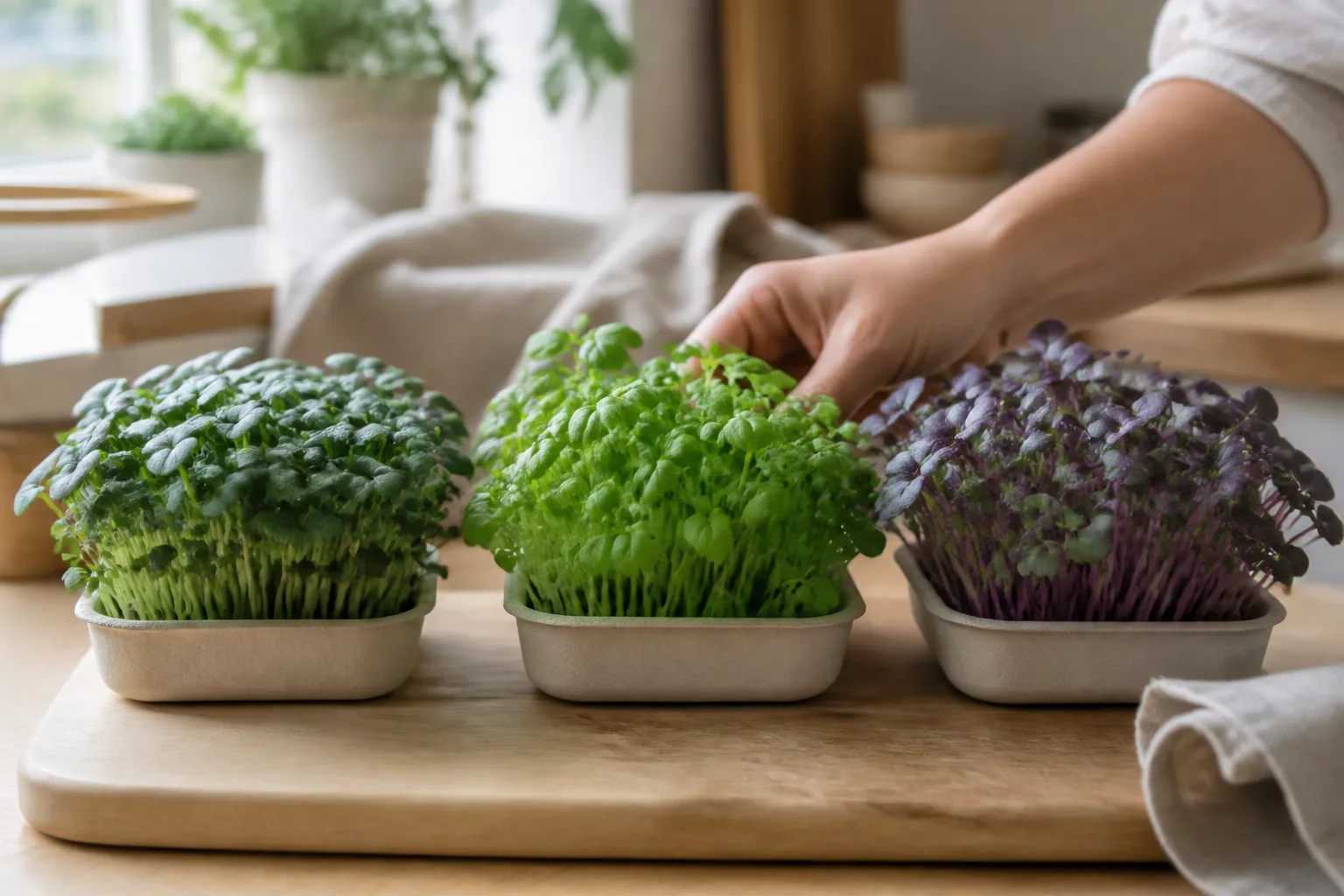
A team at the University of Naples Federico II ran what they describe as the first report of agronomic iodine biofortification across four microgreen species — tatsoi, coriander, green basil and purple basil [1]. Iodine was supplied through the nutrient solution as potassium iodide at two doses, 4 µM and 8 µM, against an untreated control.
Four species from different botanical families is a deliberately awkward design, and that is what makes it useful: it tests whether the technique generalises, rather than confirming it works in one convenient crop.
At the 8 µM dose, tissue iodine concentration rose by an average of 226.52% across species. Tatsoi accumulated the most, reaching 15.03 µg per gram fresh weight.
Note that this study reports fresh weight. Much of the biofortification literature reports dry weight, which inflates the apparent number by roughly an order of magnitude relative to what you would put on a plate. Fresh-weight figures are directly comparable to a serving, and it is a small mercy that this one is in the more useful units.
The part that makes it usable: what did not change
A nutritional gain that ruins the vegetable is not a gain. So the more valuable half of this result is the list of things iodine supplementation left alone: dry matter content, colour parameters, and nitrate levels [1].
Nitrate deserves its own paragraph. Leafy greens grown fast in enriched nutrient solutions have a known tendency to accumulate nitrate, and dietary nitrate from vegetables is subject to intake guidance. A biofortification method that raised iodine while also raising nitrate would be trading one thing for another. This one did not. "We added iodine and nitrate stayed put" is a safety result, not a footnote.
Colour and dry matter matter for a duller reason: they are proxies for whether the plant is growing normally. Change them and you are looking at a stressed crop, whatever the mineral assay says.
Species is the variable that governs everything
Tatsoi, a brassica, led the group. Coriander (an apiaceous herb) and the two basils (lamiaceae) responded differently under identical treatment. Even the two basils — same species, different cultivars — did not behave identically.
This is the recurring lesson of the whole biofortification literature, and it appears in every paper we have read on the subject: the crop matters as much as the dose. The same pattern shows up in selenium work, where kale accumulated roughly five times what wheat did, and in zinc trials, where radish outperformed pea four-fold. A result obtained in tatsoi is a result about tatsoi.
What a serving would actually contribute
The authors framed their findings against the recommended dietary allowance for iodine, and against a hazard quotient — the sensible pair of questions, since a concentration means nothing without a serving size and an upper limit beside it. Iodine, like selenium, has a range rather than a floor: too much is its own thyroid problem, which is why the study bounded the answer in both directions rather than only celebrating the increase.
What this is, and what it is not. LUYA grows food, not medicine. Nothing here is medical advice, and enriched microgreens are not a treatment for any deficiency. If you think you are short of a nutrient, that is a conversation with a clinician and a blood test — not a growing tray.
For the wider picture, see the biofortification overview. For why the growing solution is the lever in all of this, see do microgreens need nutrients, and water pH and EC for what else is dissolved in it.
Sources
Every figure in this article comes from one of the papers below, each read in full before being cited. Where a study measured one species under one set of conditions, we say so rather than generalising it to every crop. Follow the DOI to check any number yourself.
- Ciriello et al. — Iodine biofortification of four microgreens species and its implications for mineral composition. Scientia Horticulturae 320 (2023) 112229. doi.org/10.1016/j.scienta.2023.112229