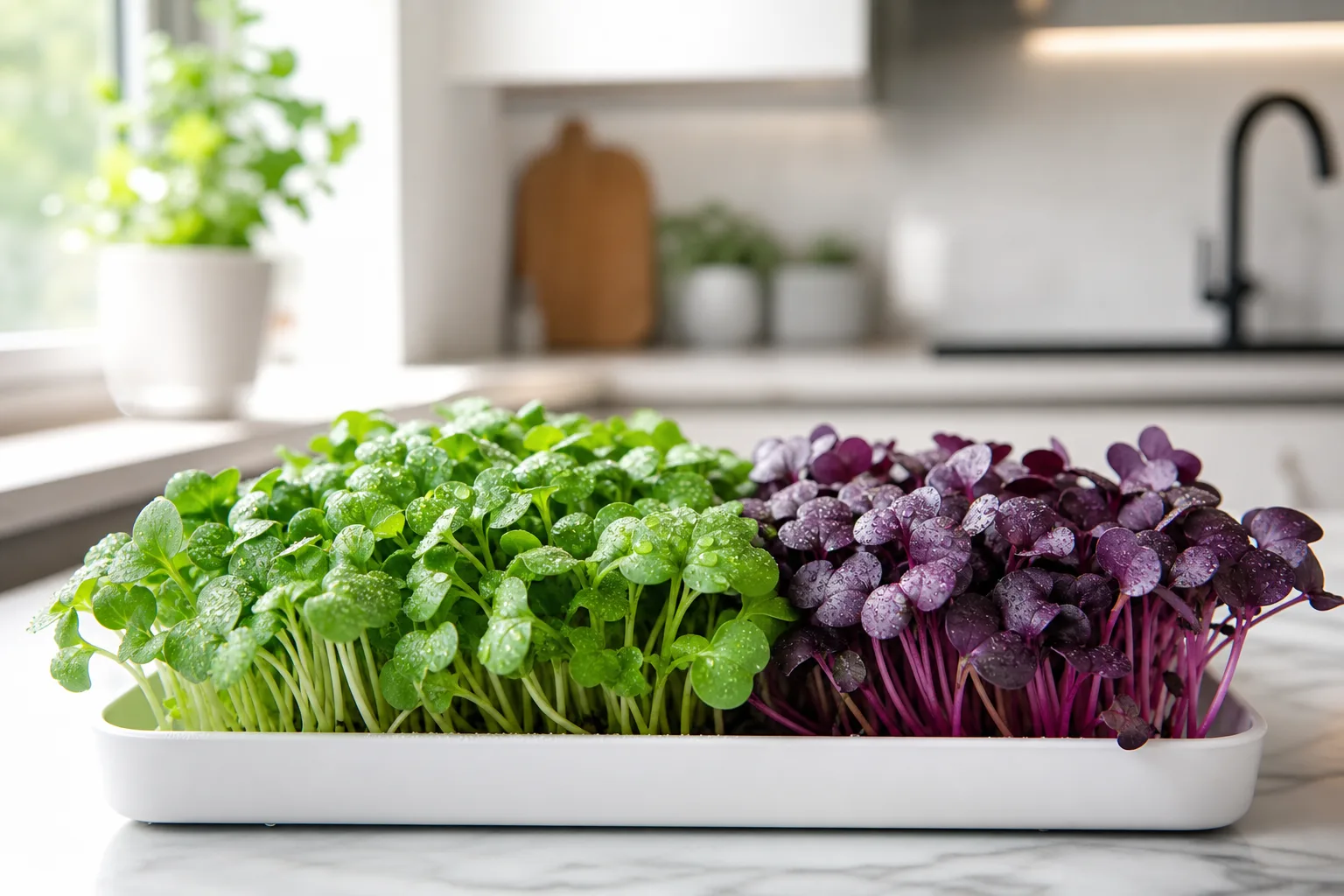
If you have ever sown a tray of broccoli or radish seeds, kept them moist, and watched them turn into a lush green carpet in a week, you have probably wondered: where is all that growth coming from? You never added plant food. The water was just water. And yet the tray filled in beautifully.
That little mystery sits at the heart of one of the most common questions new growers ask: do microgreens need nutrients or fertilizer at all? The honest answer is a satisfying "it depends," and once you understand why, you will know exactly when to reach for a bottle of nutrients and when to skip it entirely.
The seed is a packed lunch
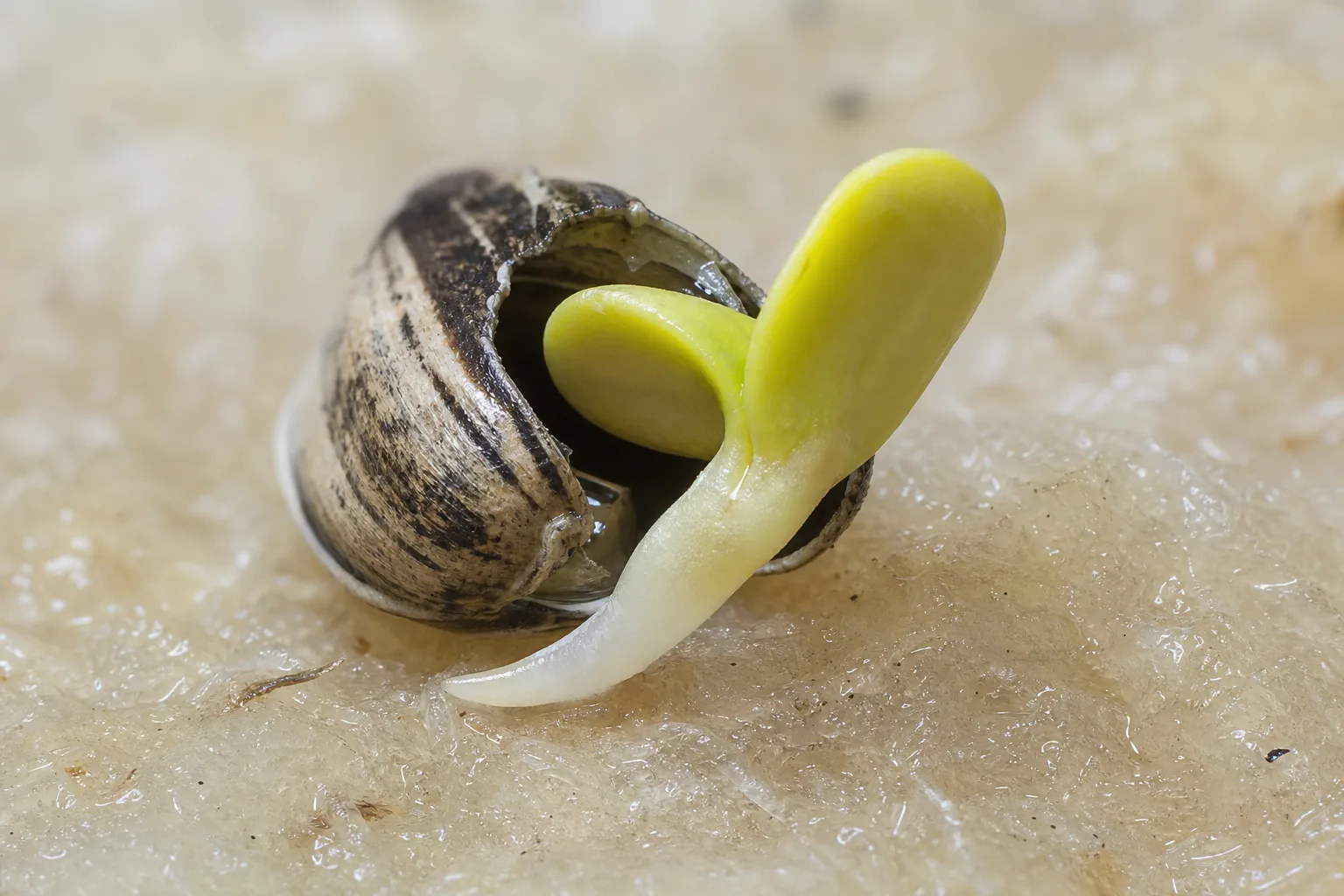
Here is the key idea that makes everything else click. A seed is not just a starting point. It is a self-contained meal.
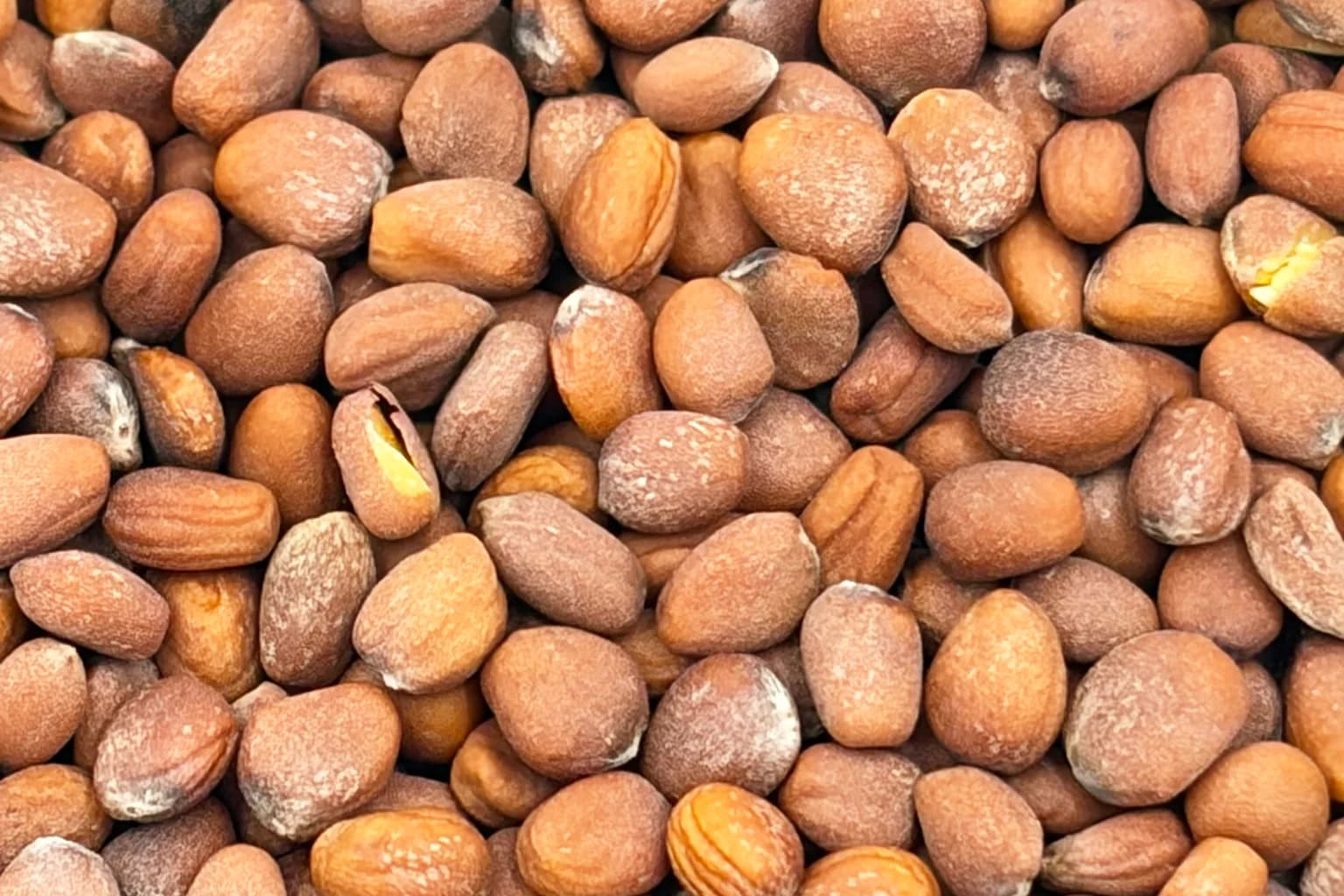
Inside every seed is a store of energy and minerals the parent plant tucked away for exactly this moment. When the seed soaks up water and germinates, it draws on that built-in pantry to push out a root and lift its first leaves. Those first leaves, the rounded pair you see on most microgreens, are called cotyledons. They are not "true leaves" in the botanical sense. They are more like the seed's own lunchbox unfolding into the light.
Because microgreens are harvested so early, usually at the cotyledon stage or just as the first true leaves appear, a huge share of their growth runs on seed reserves alone. That is why you can grow a respectable tray with nothing but clean water. The plant is essentially spending savings, not earning a paycheck yet.
This is also why microgreens are so nutrient-dense by weight. You are eating the plant at its most concentrated moment, before it has thinned itself out into a larger, more watery adult. If you want the deeper story on that, we cover it in microgreens nutrition and are microgreens good for you.
So can you skip fertilizer entirely?
Yes, for many crops, you can. Plenty of home growers raise good-looking microgreens on tap water and never touch a nutrient bottle. The seed's reserves carry the plant far enough that the result is genuinely edible and genuinely healthy.
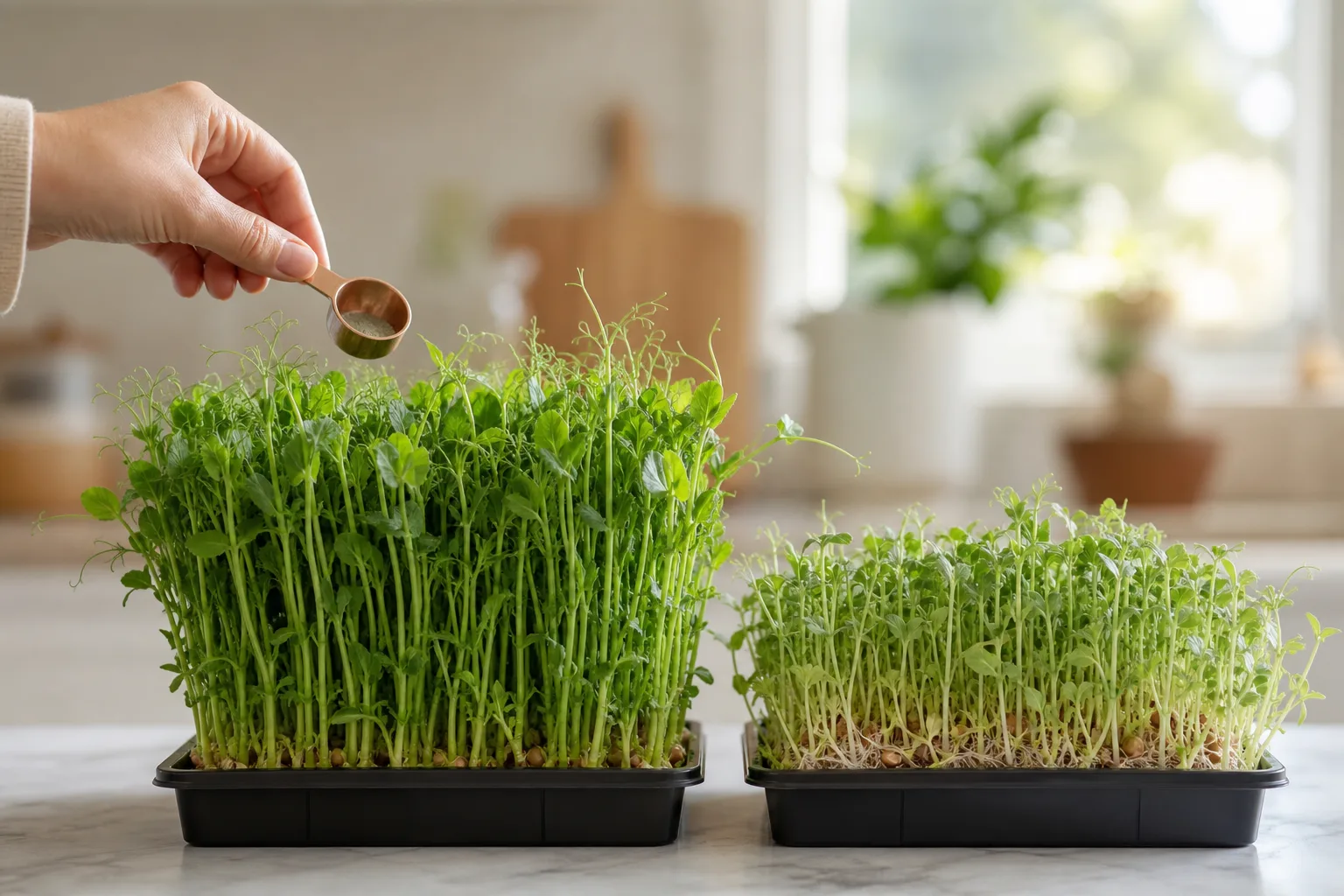
But "can grow" and "grow their best" are two different things. In careful side-by-side trials, growers who run a dilute nutrient solution consistently get plants that look more robust and reach harvest faster than water-only trays. Water alone will get most crops to a usable point. It just tends to produce shorter, paler, slightly slower greens.
So the real question is not "will they grow without nutrients." It is "how much do you want from each tray." If you are growing for fun and harvesting small handfuls, plain water is fine. If you want denser trays, deeper color, and a quicker turnaround, a light feeding pays off.
| Approach | Growth speed | Appearance | Yield per tray | Best for |
|---|---|---|---|---|
| Water only | Slower | Paler, leggier | Lower | Casual growers, fast crops |
| Dilute nutrient solution | Faster | Deeper color, sturdier | Higher | Bigger harvests, selling |
| Full-strength fertilizer | Fast but risky | Can over-feed | Marginal gain | Generally not worth it |
When a dilute solution earns its keep
If you do feed, the watchword is "dilute." Microgreens are tiny and short-lived, so they need a fraction of what a mature tomato plant would. A common, sensible approach is to use roughly half the strength written on a complete hydroponic nutrient package, and even less is often plenty.
To put real numbers on it: a typical full-strength mix of a balanced vegetable formula might call for around 2.4 grams of base nutrient per gallon of water, plus a little calcium nitrate and a pinch of Epsom salt (magnesium sulfate). Cut that to roughly half, about 1 gram per gallon, and you are in a comfortable zone for most microgreens. Precision is not critical here. These plants are forgiving.
| Component | Full strength (per gallon) | Half strength (per gallon) | Role |
|---|---|---|---|
| Complete base nutrient | ~2.4 g | ~1 g | N-P-K and trace minerals |
| Calcium nitrate | ~2.4 g | ~1 g | Calcium plus nitrogen |
| Epsom salt (magnesium sulfate) | ~1.2 g | ~0.5 g | Magnesium and sulfur |
The cost is almost negligible. A single grow might use only a few grams of nutrient total, which works out to pennies per tray. That is part of why feeding is worth considering even though it is not strictly required: you spend almost nothing and gain noticeably better trays.
A few practical notes if you go this route. You usually do not need to dump and refill your reservoir constantly. Topping up as the plants drink is fine for most grows. Change the solution out if it starts to smell off, turns cloudy, or your root tips begin to darken. And do not stress over pH. With seeds and very young plants, pH matters far less than it does for long-lived adult plants, and most clean water sources fall in a workable range on their own. What matters more is starting with water free of heavy metals, high chlorine, and other junk you would not want in your food.
Crop differences matter more than you think
Not every microgreen responds the same way, and this is where the "it depends" really bites.
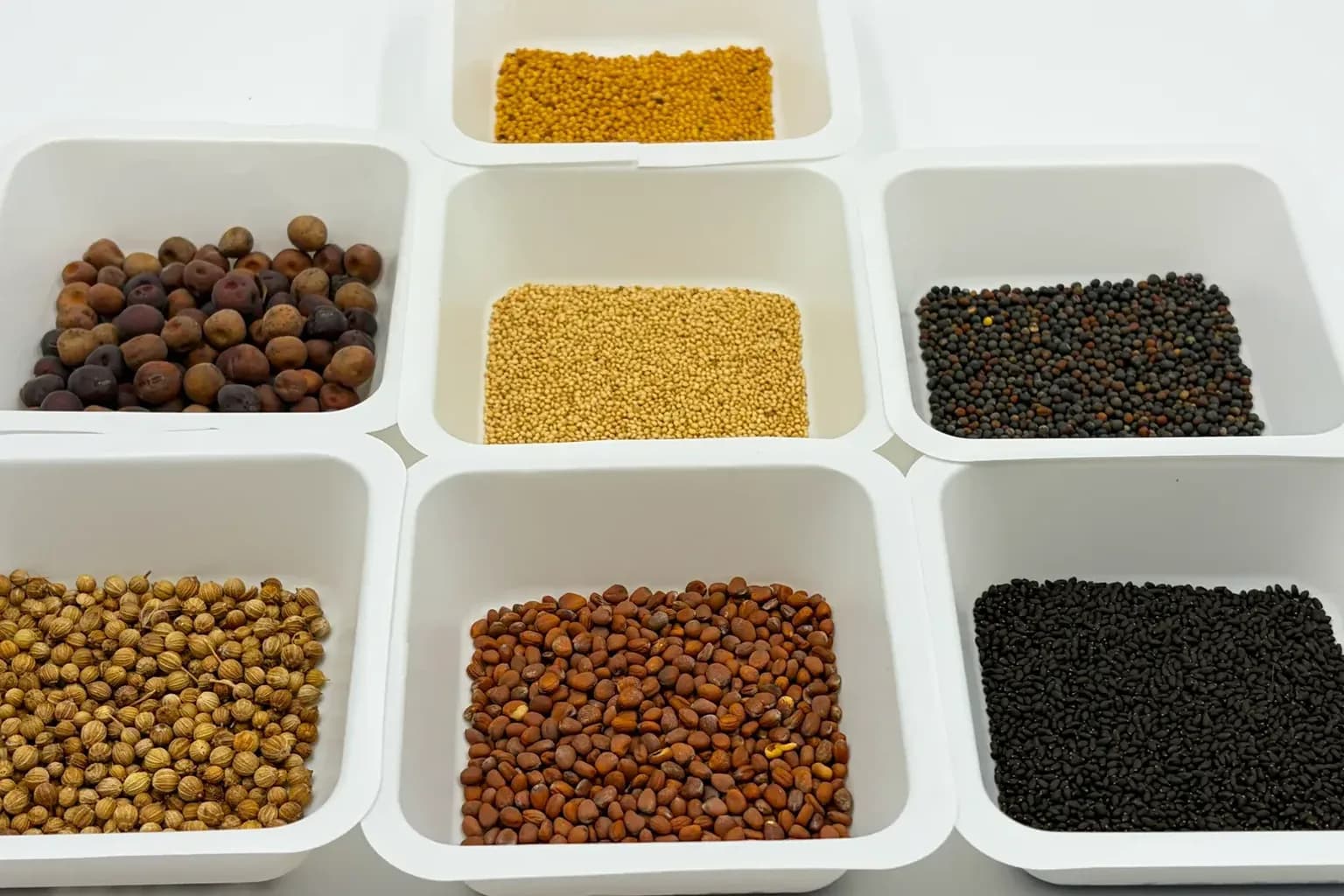
Fast, energy-rich seeds tend to be the most self-sufficient. Sunflower and pea, for example, are large seeds with generous reserves, and they bulk up impressively on water alone. They are essentially growing on a big packed lunch. You can read more about them in pea shoots and sunflower microgreens.
Smaller-seeded brassicas like broccoli, kale, radish, and cabbage have less stored reserve per seed. They still grow on water, but they are the crops where a dilute feed shows the clearest improvement in size and color. If you are chasing maximum yield from broccoli microgreens or radish microgreens, a light nutrient solution is the lever that moves the needle.
Crops you grow a little longer, to the first or second true leaf, are another case. Once true leaves appear, the plant has largely used up its seed reserves and starts depending on what it can pull from the water and light. At that stage, feeding stops being optional and starts being genuinely useful, because the plant is now earning its own keep through photosynthesis rather than spending savings.
| Crop type | Seed reserve | Water only | Benefit from feeding |
|---|---|---|---|
| Sunflower, pea | Large | Excellent | Modest |
| Broccoli, radish, kale, cabbage | Small | Good | Clear improvement |
| Anything grown to true leaves | Mostly used up | Declines | Significant |
The role of light, water, and air
Nutrients are only one input, and fixating on fertilizer while ignoring the others is a classic beginner trap. A tray that gets too little light will stretch tall and pale no matter how you feed it. Roots that cannot breathe will stall even in perfect solution, which is why so many hydroponic setups bubble air into the water to keep oxygen high. And poor airflow invites the mold problems we tackle in why microgreens keep molding.
In other words, nutrients are the easy variable. Light, oxygen at the roots, humidity, and clean water do most of the heavy lifting. Get those right and many crops barely need feeding at all. Get them wrong and no amount of fertilizer rescues the tray.
This is exactly the balancing act a countertop food computer like Luya is built to handle. Rather than asking you to mix nutrient salts by the gram and guess at the rest, it manages light, water, and the growing environment together so each crop gets what it actually needs, when it needs it. The seed still brings its packed lunch; the system just makes sure nothing else is holding the plant back.
The honest answer
So, do microgreens need nutrients or fertilizer? Strictly speaking, no. The seed comes loaded with enough to produce a real, edible, nutritious harvest on clean water alone, especially with big-seeded crops like sunflower and pea harvested early.
But "don't need" is not the same as "won't benefit." A dilute nutrient solution, at roughly half strength or less, reliably gives you sturdier plants, deeper color, faster harvests, and more food per tray, all for a few cents. The smaller-seeded brassicas and any crop grown to true leaves benefit the most. The bigger seeds need it the least.
If you are just starting out, grow your first trays on plain water and see what you get. It will likely be better than you expect, and it teaches you what the seed alone can do. Then try a half-strength feed on your next round of broccoli or radish and watch the difference. Once you have seen it side by side, you will know exactly where nutrients fit in your own growing, which is the most useful answer of all. For the full beginner walkthrough, head to how to grow microgreens at home.