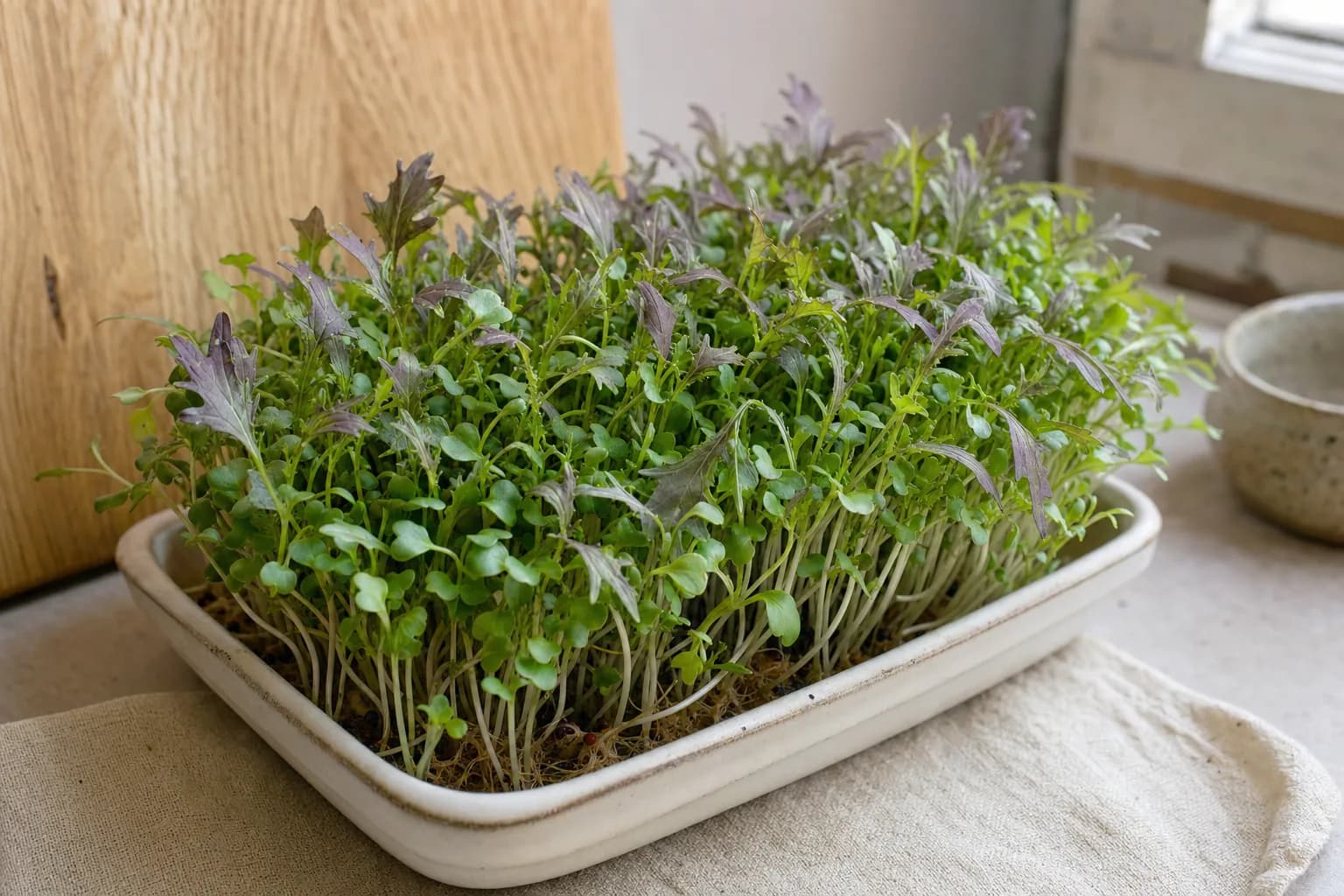
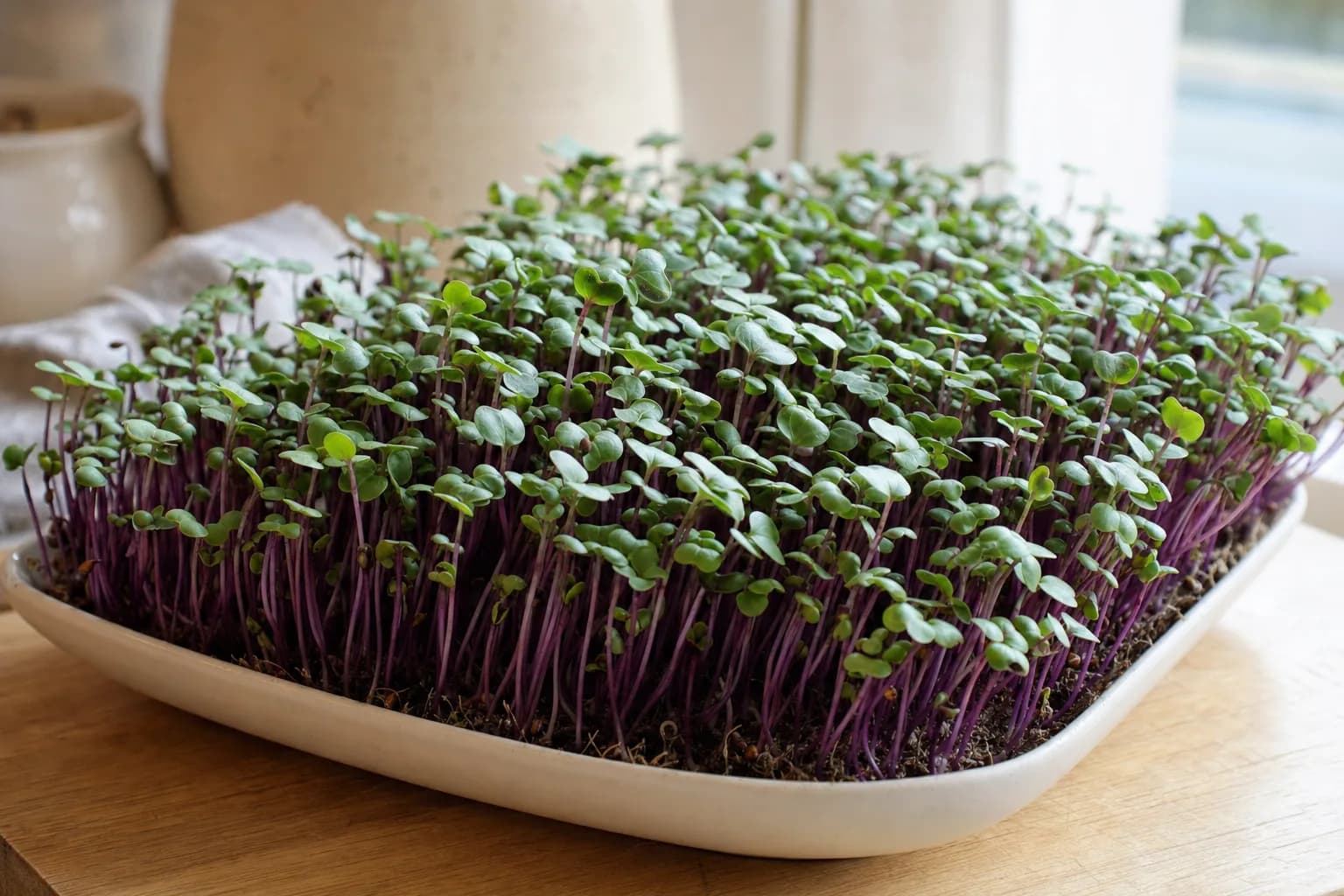
Kohlrabi is the brassica most people have never grown as a microgreen, and it is one of the easiest. It germinates in three to five days, tolerates a cool room better than most crops, and produces something crisper than broccoli or cabbage at the same stage.
What it tastes like
Mild and delicately sweet, with a texture that is the actual selling point. Where many brassica microgreens are soft, kohlrabi has a genuine crunch — closer to the crispness of the mature vegetable than you would expect from a seedling.
The mature plant is a strange-looking thing, a swollen stem sitting above the soil with leaves sprouting from it like antennae. None of that matters at microgreen stage. What you get is a clean, sweet, crunchy green.
Growing it
Grow it the way you grow kale — the cultivation is essentially the same.
- Germination in 3 to 5 days, and unusually tolerant of cool conditions: it will still germinate reliably in a room at 50 to 60°F, where several other crops stall. If you grow in an unheated space in winter, this is a useful property.
- Water evenly and thoroughly whenever the surface has dried, rather than misting little and often.
- Harvest at 3 to 4 inches, about 10 to 14 days. Eighteen days gives you a petite green.
- Do not let it run to baby leaf. This is the one deadline that matters — past the petite stage kohlrabi starts to yellow, and a yellowing tray is not something you can rescue.
Purple or green?
Both exist. There is an apple-green variety and a purple one, and the general view among growers is that the purple strain simply tastes better. It also looks better on a plate, which makes the choice easy.
How to use it
Kohlrabi is one of the few microgreens whose texture survives contact with warm food, which widens what you can do with it.
- In salads, as a base or mid-weight. It is mild enough not to compete and crunchy enough to matter.
- Stirred into a stir-fry at the very end, off the heat. Most microgreens collapse; this one holds for a moment.
- Anywhere you want crunch without flavour — see the texture guide for the crops that do this job.
- With its relatives. It sits comfortably alongside broccoli and kale in a brassica blend, and the timings are close enough to grow them on the same schedule.
Timing and variety notes in this article draw on Cooking With Microgreens by Sal Gilbertie and Larry Sheehan, cross-checked against our own trays.