This article is for general education and is not medical advice. Talk to your doctor before changing your diet for a health condition or if you take medication.
If you only ever grow one crop on your kitchen counter, make it broccoli microgreens. These tender seedlings, harvested 7 to 10 days after sowing, deliver a concentrated dose of the compound that turned broccoli into a darling of nutrition research: sulforaphane. Gram for gram, broccoli microgreens can carry far more of its precursor than the mature heads in the produce aisle, and they taste mild, crunchy, and clean, disappearing into eggs, sandwiches, grain bowls, and smoothies. That makes them one of the rare "superfoods" you will actually eat every day.
This guide covers what makes broccoli microgreens special, what the science supports (and where it stops), and how to grow a reliable tray.
What are broccoli microgreens?
Microgreens are young vegetable greens harvested just after the first true leaves appear, usually within one to two weeks of sowing. They sit between a sprout and a baby green, and they tend to be far more nutrient-dense than the full-grown plant. Across many crops, peer-reviewed reviews (MDPI Plants) and USDA data point to microgreens being roughly 2 to 3.5 times more nutrient-dense than their mature counterparts, with radish microgreens often topping the charts.
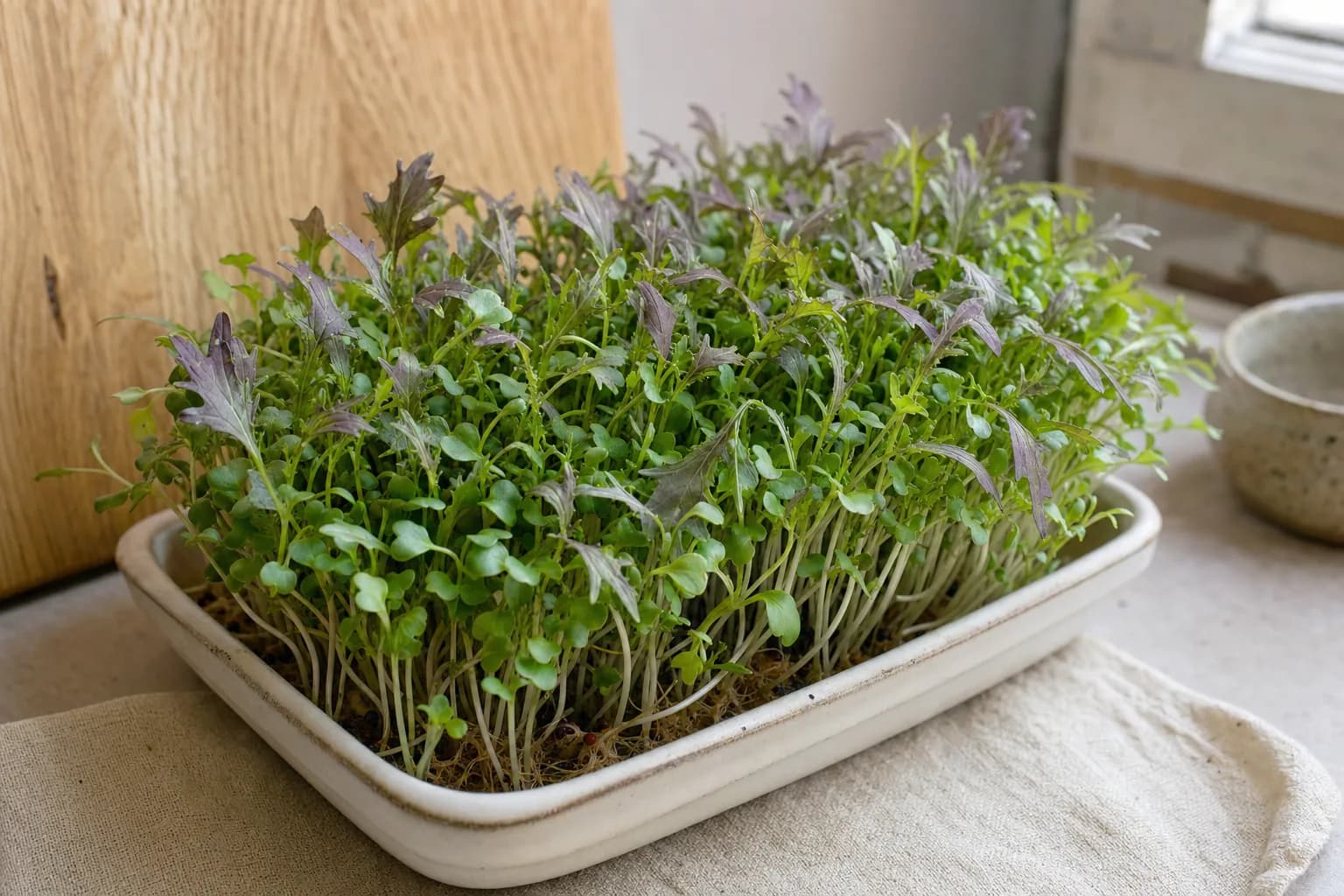
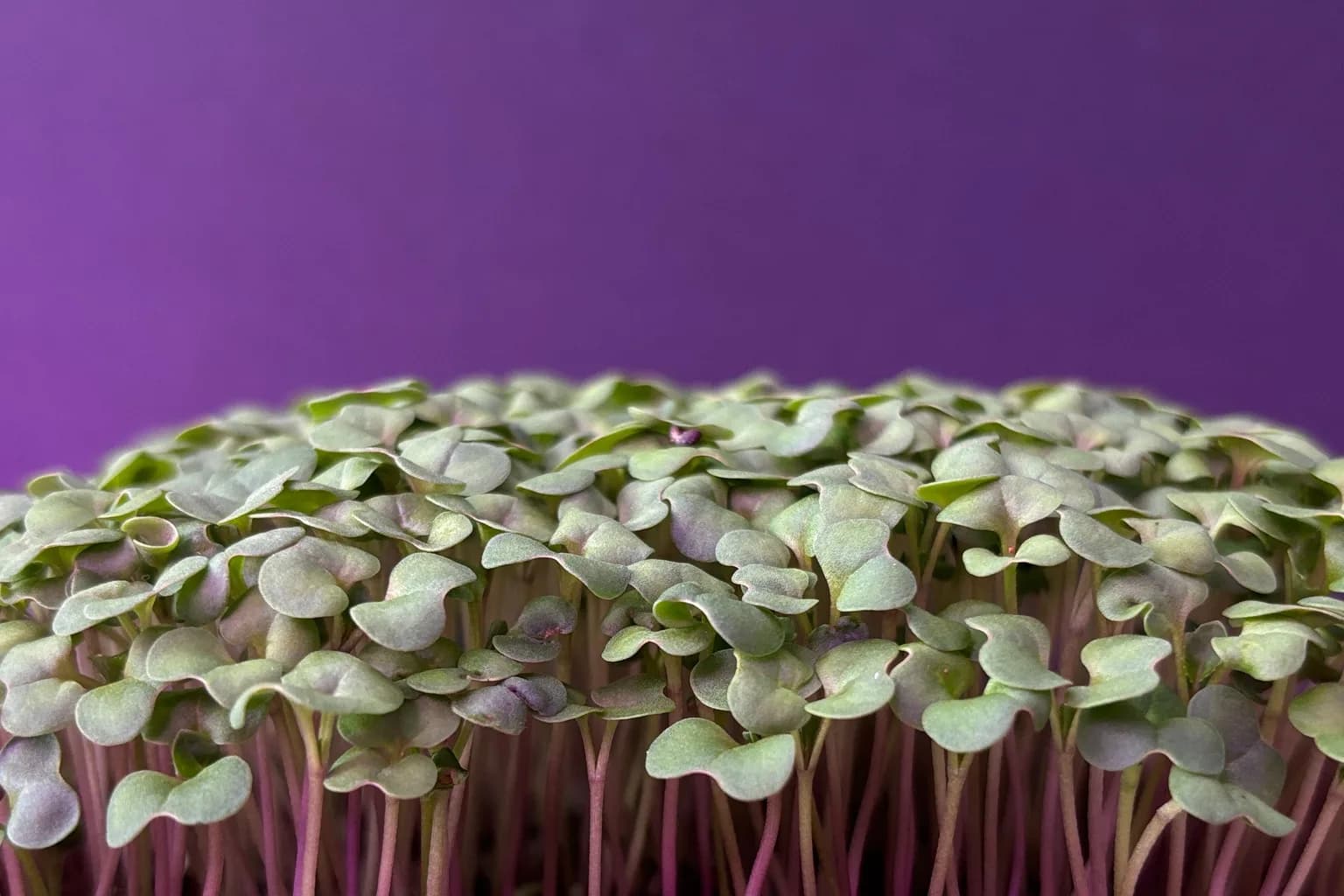
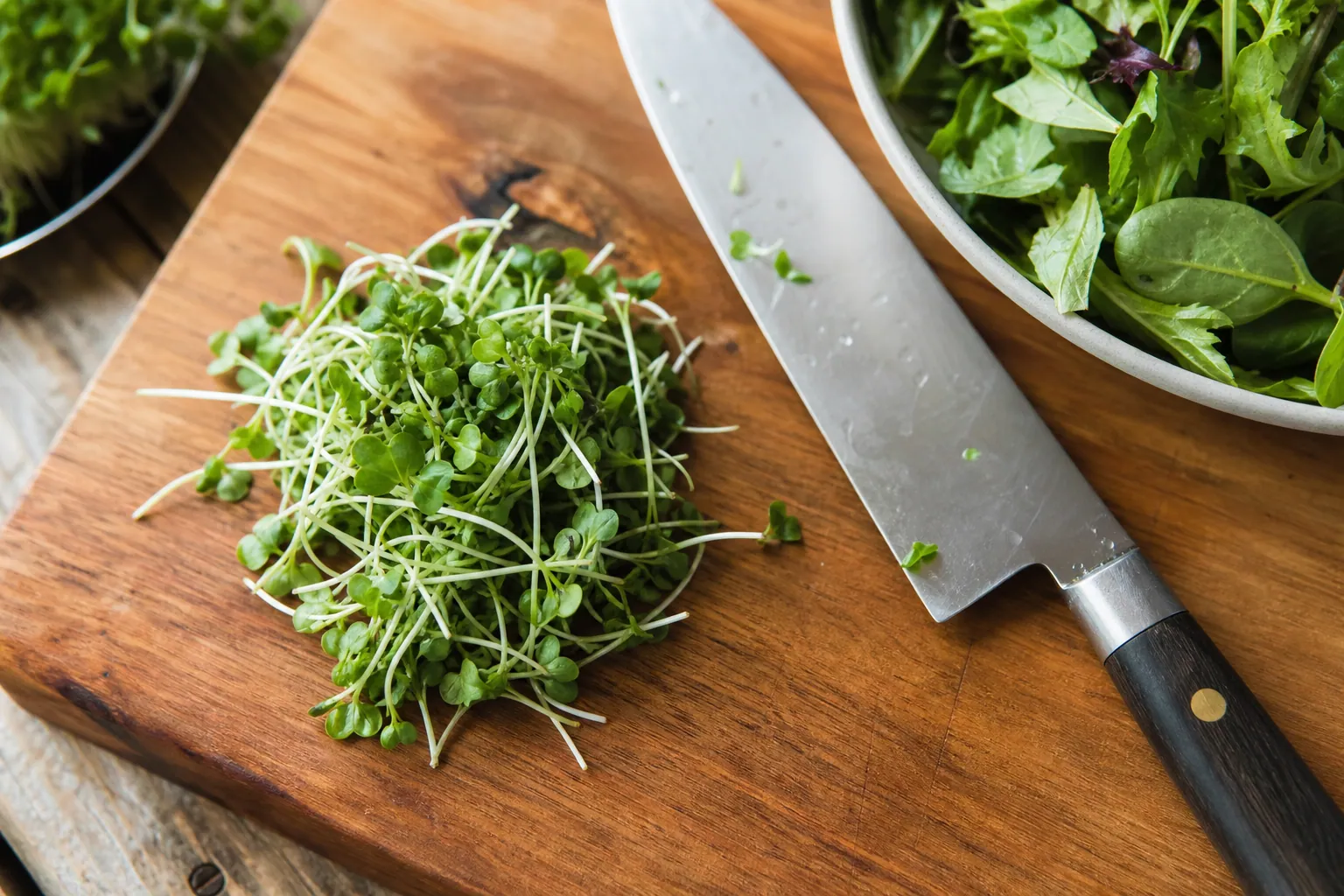
Broccoli microgreens are simply broccoli (Brassica oleracea) grown to that early stage. They have slender pale stems, two small seed leaves, and a flavor that is fresh and lightly peppery, much gentler than a raw floret, so people who dislike cooked broccoli often enjoy them. If you are weighing them against other young greens, microgreens vs sprouts breaks down how each is grown and eaten, and what are microgreens covers the category as a whole.
Broccoli microgreens nutrition and the sulforaphane story
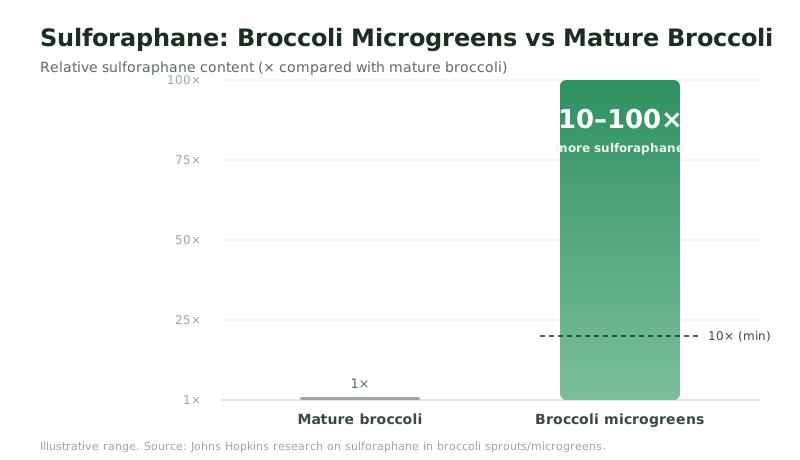
The headline nutrient in broccoli microgreens is sulforaphane, and the numbers are striking. Research from Johns Hopkins found that broccoli sprouts and microgreens can contain roughly 10 to 100 times more glucoraphanin, the direct precursor to sulforaphane, than mature broccoli, a concentration mature heads simply do not reach. That said, the finished sulforaphane you actually get varies widely by variety, growing conditions, and harvest timing.
Here is how sulforaphane actually forms. Broccoli stores glucoraphanin and an enzyme called myrosinase in separate compartments inside the plant. When you chew or chop the greens, the cell walls break, the two finally meet, and they react to form sulforaphane, an isothiocyanate. Sulforaphane then activates the body's Nrf2 pathway, a master switch that turns up the cell's own antioxidant and detoxification defenses rather than acting as a single antioxidant itself.
That mechanism is why sulforaphane has been studied for blood-sugar regulation, inflammation, and cellular defense. The honest caveat: much of this is research-stage, early-phase work, not proof that eating broccoli microgreens treats or cures anything. For a deeper look at the compound, read what is sulforaphane, and if you are deciding between food and capsules, broccoli microgreens vs sulforaphane supplements compares the two honestly.
Broccoli microgreens are also rich in vitamins C, K, and E, plus a range of antioxidants and polyphenols, which holds true across microgreens broadly. You can see the wider picture in our microgreens nutrition overview.
| Nutrient / compound | What it does | Note for broccoli microgreens |
|---|---|---|
| Sulforaphane (from glucoraphanin) | Activates the Nrf2 antioxidant/detox pathway | 10–100x the glucoraphanin of mature broccoli |
| Glucoraphanin (precursor) | Converts to sulforaphane when chewed | ~10–100x higher than mature broccoli (Johns Hopkins) |
| Vitamin C | Antioxidant, immune support | Concentrated in young greens |
| Vitamin K | Blood clotting, bone health | Abundant in brassica microgreens |
| Vitamin E | Antioxidant, cell protection | Present across microgreens |
| Polyphenols | Plant antioxidants | Higher density than the mature plant |
In short, broccoli microgreens are not a different vegetable with magic powers; they are the same plant captured when its precursor levels peak, before growth dilutes them across stems and water.
How to get the most sulforaphane
Because sulforaphane only forms when myrosinase is active, handling matters more than most people realize. Heat and overcooking degrade myrosinase, so steaming or sautéing a tray can quietly destroy the very payoff you grew them for. The most sulforaphane comes from greens that are raw, fresh, and chewed thoroughly, which gives the enzyme time to convert glucoraphanin before you swallow.
A practical routine: eat them uncooked, chew well, and if you add them to a hot dish, stir them in off the heat at the end. Freshness matters too, since precursor and enzyme levels fall as greens age, one concrete reason a tray on your counter beats a clamshell that spent days in transit. For more tactics, see maximize sulforaphane.
It is worth saying plainly that the most-cited cholesterol result for brassica microgreens comes from an animal study: in mice on a high-fat diet, red cabbage microgreens lowered LDL and liver cholesterol along with inflammatory markers (USDA). That is a promising early signal, not human proof, and broccoli is a different crop. Read it as a reason to enjoy these greens in a varied diet, not as a treatment. Our pieces on microgreens and cholesterol and microgreens and inflammation frame that research carefully.
How to grow broccoli microgreens at home
Broccoli is one of the best beginner crops, alongside radish (which germinates in 1 to 2 days and is ready in 5 to 7), pea shoots, and sunflower. Broccoli germinates quickly and forgives small mistakes, which is why it is a smart first tray. Here is the basic cycle.
| Step | Timing | What to do |
|---|---|---|
| Sow | Day 0 | Spread seed evenly on a moist growing medium; do not overcrowd |
| Blackout | Days 1–3 | Cover to encourage even, upright germination; keep moist, not soggy |
| Light | Days 4–7 | Uncover, give bright indirect light; water from below to keep leaves dry |
| Harvest | Days 7–10 | Snip just above the medium once the first true leaves appear |
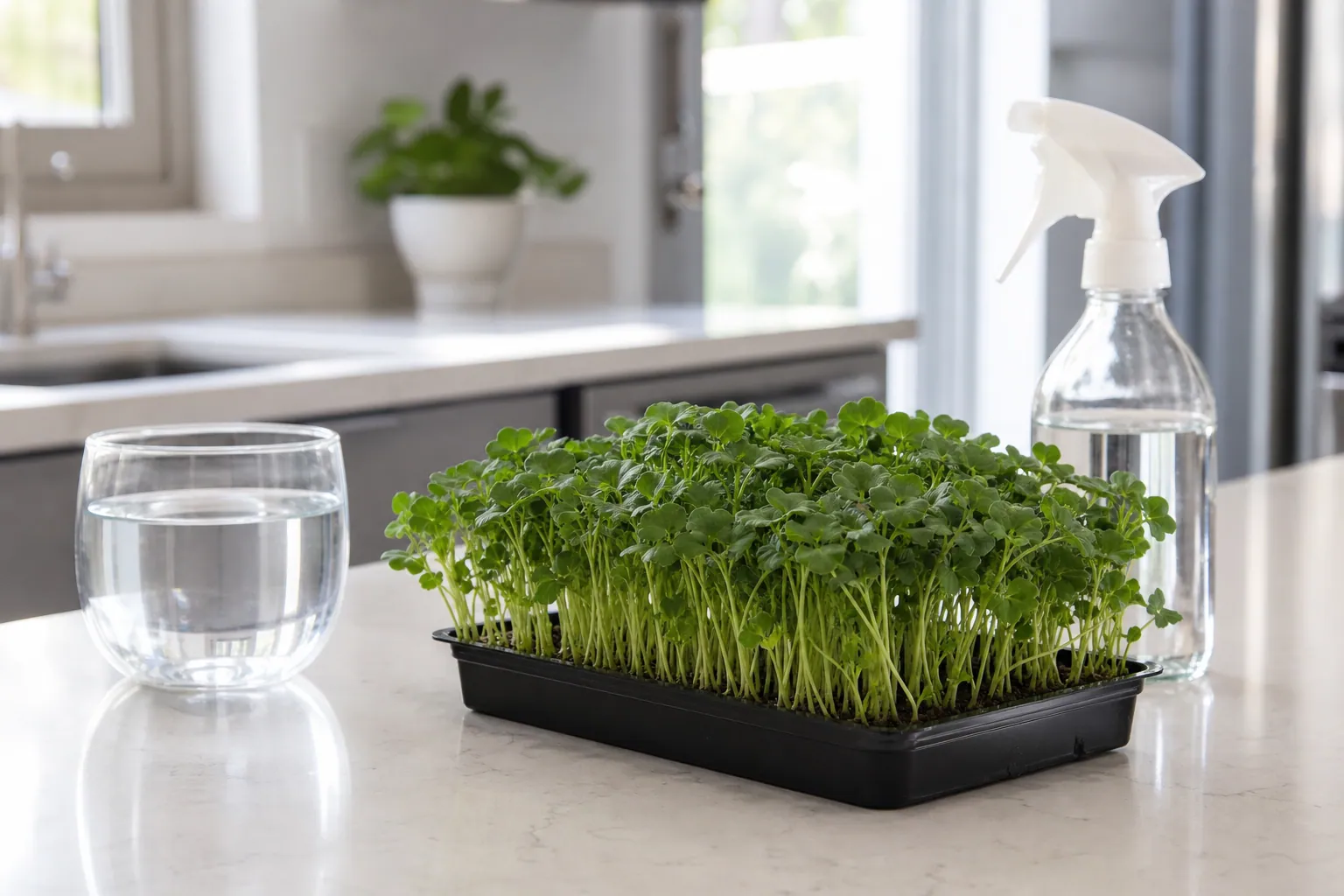
A few things make or break a tray. The most common DIY failure is mold, which thrives on excess moisture, poor airflow, overcrowded seed, and warmth, and is easy to mistake for the harmless white root hairs broccoli naturally puts out. Then there is the mess of soil, and the maintenance of daily watering across a roughly 10-day cycle. Miss a stretch because you traveled or hit a busy week, and the tray can be lost in a day. Manual growing has a real failure rate, and it is mostly a consistency problem, not a skill problem.
If mold is your recurring enemy, why microgreens keep molding walks through prevention, and microgreens maintenance covers the day-to-day rhythm of keeping trays alive. For more crop ideas once broccoli clicks, see easiest microgreens to grow.
Growing vs buying
Buying broccoli microgreens has its own frustrations. They are expensive, often $4 to $6 per 2 oz clamshell, roughly $30 to $50 per pound, pricier than most cuts of meat. And they are frequently not fresh, having traveled from farm to truck to warehouse to store. Microgreens wilt fast and carry a short shelf life, so a discouraging share of every clamshell ends up slimy in the back of the fridge.
Growing at home solves the freshness and cost problems at once, as long as you stay consistent. That consistency gap, not gardening skill, is what trips most people up, and it is exactly what an automated approach is built to close. Our deeper comparison lives in grow vs buy microgreens.
This is where Luya fits in. The Luya countertop food computer is a sealed, climate-controlled appliance, a bit like a Nespresso but for greens. It runs a closed loop that manages temperature, watering, dosing, and airflow automatically, uses pre-seeded trays you drop in, and keeps the chamber ventilated so mold has a much harder time taking hold. You harvest only what you need, seconds before eating, and the rest keeps growing alive on your counter, so freshness stops being something you race against.
To see how the closed-loop system works, visit /how-it-works, or for everyday ways to use your harvest, browse how to eat microgreens.
Selected sources
- Johns Hopkins Medicine — research on broccoli sprouts, glucoraphanin, and sulforaphane (hopkinsmedicine.org)
- USDA — FoodData Central and microgreens nutrition research, including brassica microgreen animal studies (usda.gov)
- MDPI Plants — peer-reviewed reviews on microgreen nutrient density (mdpi.com)
- NIH / PMC — published literature on sulforaphane and the Nrf2 pathway (ncbi.nlm.nih.gov)
- Cleveland Clinic — consumer health guidance on cruciferous vegetables (clevelandclinic.org)
- Healthline — dietary overviews of microgreens and sulforaphane (healthline.com)
References
- Fahey JW, Zhang Y, Talalay P. Broccoli sprouts: an exceptionally rich source of inducers of enzymes that protect against chemical carcinogens. PNAS. 1997;94(19):10367–10372. https://doi.org/10.1073/pnas.94.19.10367
- Xiao Z, Lester GE, Luo Y, Wang Q. Assessment of Vitamin and Carotenoid Concentrations of Emerging Food Products: Edible Microgreens. J Agric Food Chem. 2012;60(31):7644–7651. https://doi.org/10.1021/jf300459b
- Huang H, Wang TTY, et al. Red Cabbage Microgreens Lower Circulating LDL, Liver Cholesterol, and Inflammatory Cytokines in Mice Fed a High-Fat Diet. J Agric Food Chem. 2016;64(48):9161–9171. https://doi.org/10.1021/acs.jafc.6b03805