We talk endlessly about how microgreens taste, but texture is the quieter half of the story, and often the half that decides whether a dish works. A crisp, upright sprig adds a little snap to a soft taco. A pile of limp, watery greens turns the same taco into a soggy mess. Same nutrition, completely different eating experience. Knowing what makes one crop crunchy and another meltingly tender lets you build plates that feel as good as they taste.
This is a practical, hands-on look at microgreen texture: what creates it, which crops sit where on the spectrum, how to pair texture with the right dish, and the one mistake that turns a lovely tray into slime in the fridge. Texture is something a trained sensory panel can actually measure and describe, and the patterns are easy to put to work at home.
What Actually Creates Texture in a Microgreen
Texture in a microgreen comes down to the physical structure of a very young plant. A few variables do most of the work.
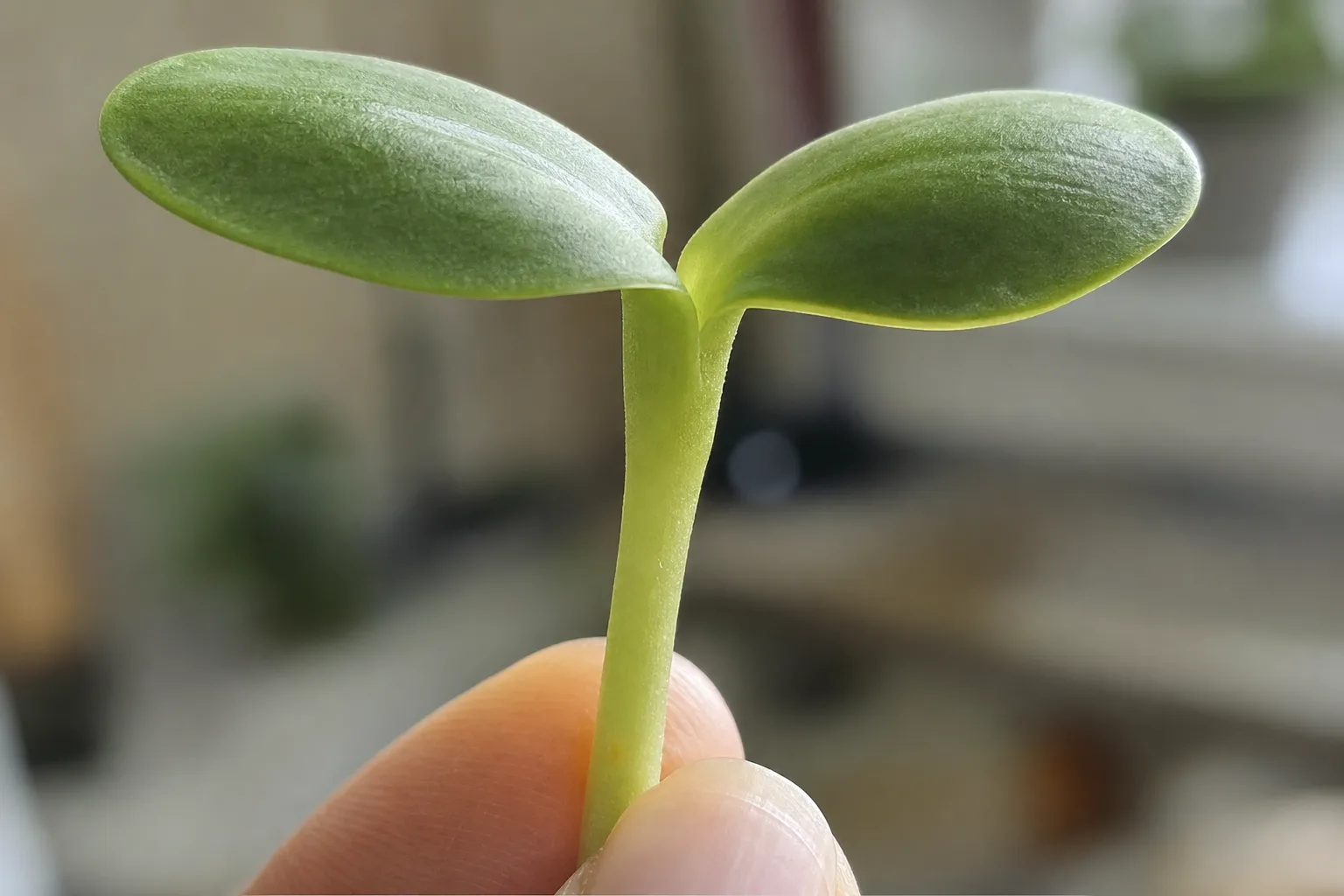
Crop type is the biggest factor. Some seedlings are built thick and watery, others thin and wispy. Sunflower shoots, for example, push up a substantial juicy stem and plump seed leaves, while broccoli and many brassicas stay fine and feathery no matter how you grow them. That difference is baked into the seed.
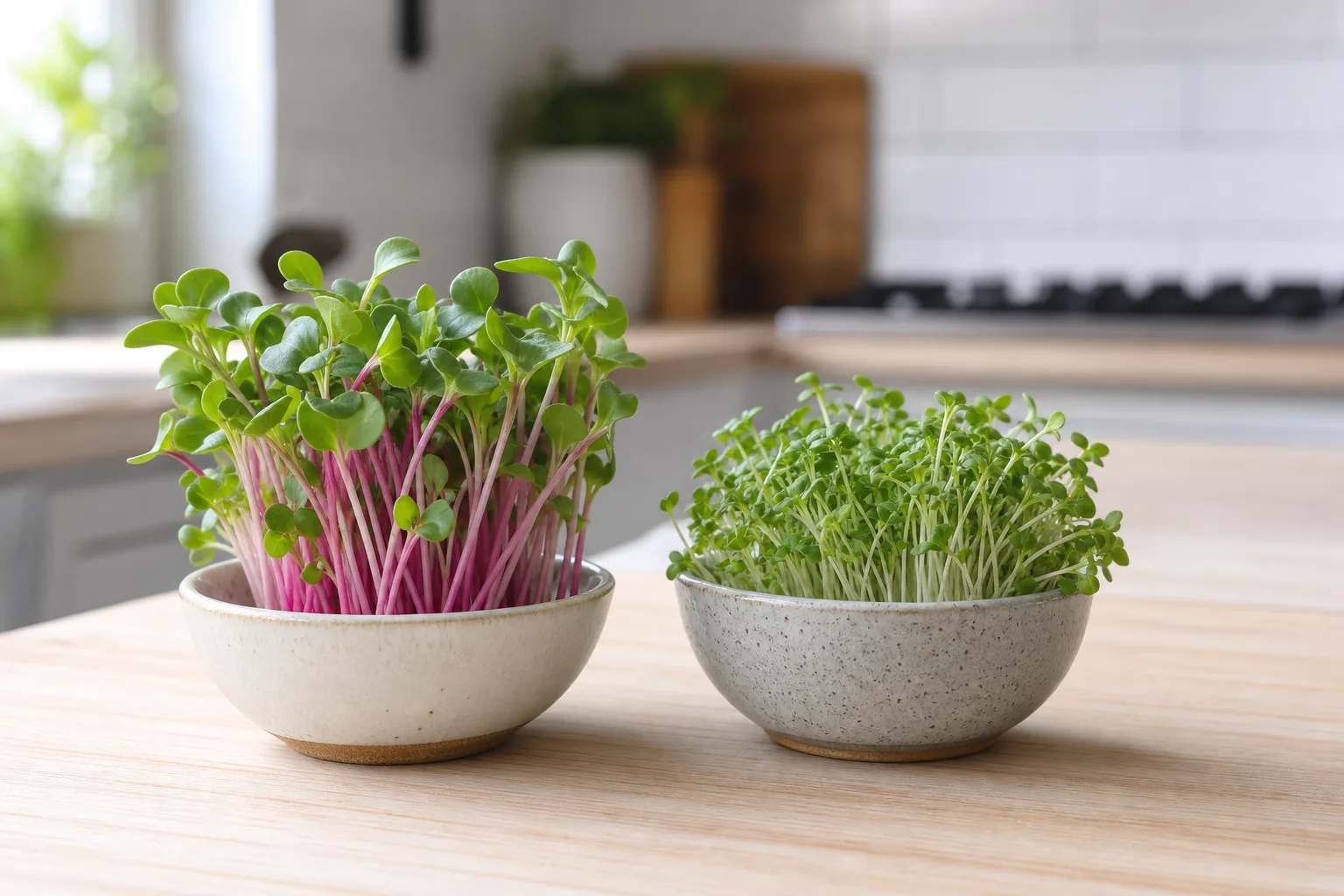
Stem thickness is the next lever. A thick stem holds water and structure, so it snaps when you bite it. A thin stem mostly just folds. This is why two greens harvested on the same day can feel worlds apart in the mouth.
Harvest stage matters more than most people expect. Microgreens are usually cut somewhere between 7 and 21 days after germination, and where you land in that window changes everything. Cut early and you get something delicate and tender. Let it run a few more days and stems thicken, fibers develop, and the green firms up. Wait too long, though, and tender turns toward tough and stringy.
Hydration is the wildcard. A well-watered, freshly cut green is crisp because its cells are full and turgid, like a firm grape. Once it loses water, it goes limp; once it sits wet in a sealed bag, it goes slimy. Texture, in other words, is not fixed at harvest. It keeps changing right up until the moment you eat.
If you want the bigger picture on what these little greens even are, what are microgreens is a clear starting point.
The Texture Spectrum: From Crunchy to Tender
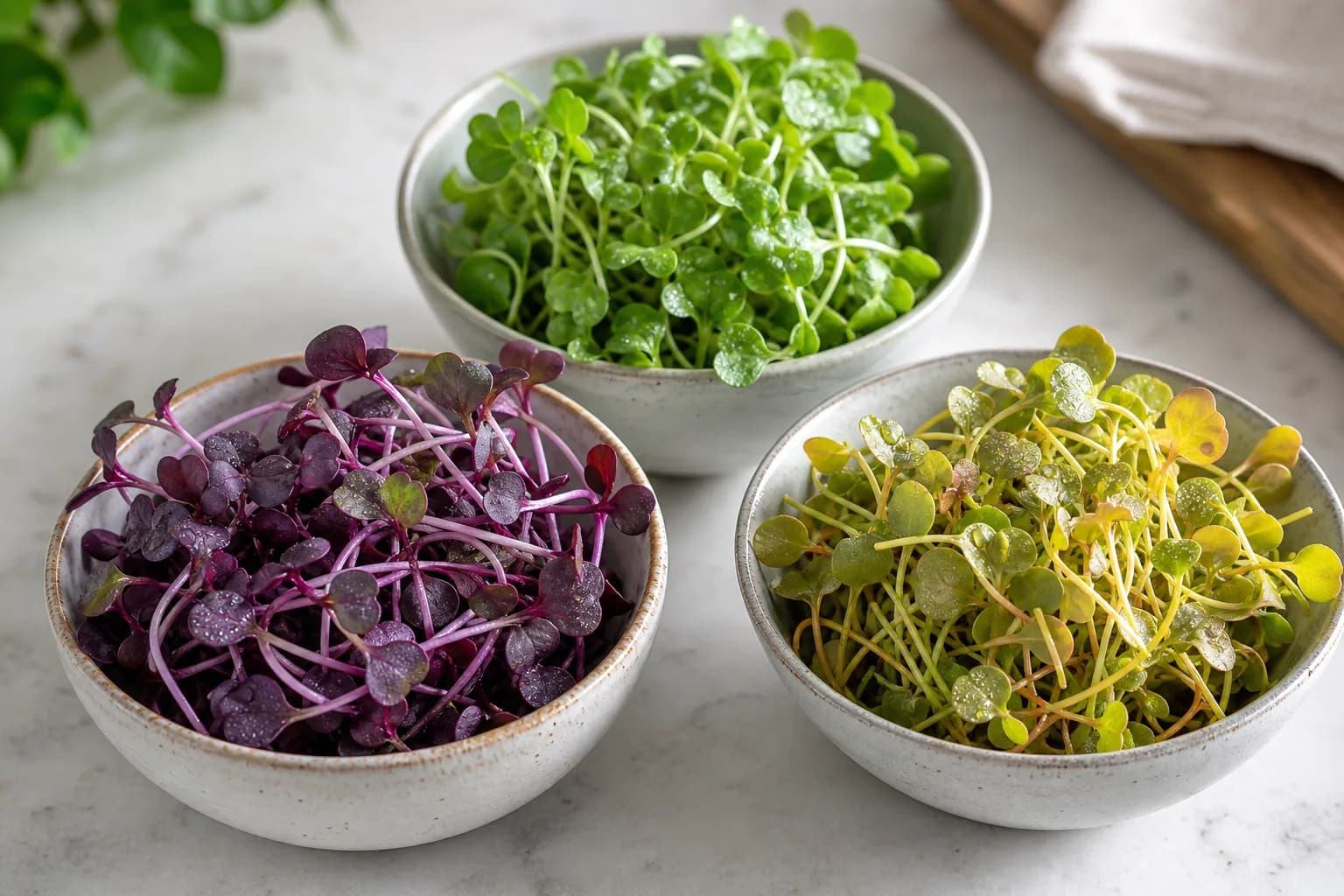
It helps to picture microgreens along a line from genuinely crunchy to delicately tender. The four ends of the flavor world often described by sensory panels (broccoli, pea, mustard, arugula) also happen to spread nicely across the texture range, which makes them useful reference points.
Here is a rough map of common crops, based on stem build and how they eat fresh:
| Crop | Texture | Stem build | Best described as |
|---|---|---|---|
| Sunflower | Very crunchy | Thick, juicy | Snappy, substantial |
| Pea shoots | Crunchy + crisp | Firm, succulent | Sweet, springy |
| Radish | Crisp | Medium, upright | Clean snap |
| Mustard | Medium | Slim but firm | Tender with bite |
| Arugula | Medium-tender | Fine | Soft, peppery |
| Broccoli | Tender | Fine, feathery | Delicate, melts in |
| Micro kale | Tender | Fine | Soft, leafy |
| Cress | Very tender | Wispy, thread-like | Whisper-light |
A couple of patterns jump out. The big-seeded crops, sunflower and pea, deliver the most crunch because they grow thick stems and store more water. For more on those two, nutty microgreens: sunflower and pea digs into why they punch above their weight. The fine brassicas like broccoli and micro kale sit at the tender end; they are wonderful folded into soft foods but add almost no structure. Crops like radish and mustard land in the satisfying middle, with enough snap to notice and enough bite to keep things interesting. If you are choosing by flavor first, microgreens flavor profiles maps the taste side of the same crops.
How Harvest Timing Tunes the Crunch
The same seed can give you two different textures depending on when you cut it, and this is the lever most home growers never think to pull.
Early in the window, stems are slim and the whole green is soft and tender. As the plant matures across that 7-to-21-day range, stems thicken and stiffen, and you gain crunch. There is a sweet spot for every crop where the stem is firm enough to snap but young enough to stay juicy and never fibrous.
| Harvest stage | What you get | Trade-off |
|---|---|---|
| Early (around 7–10 days) | Tender, delicate, mild | Less structure, wilts faster |
| Mid (around 10–16 days) | Balanced crunch and juiciness | The reliable sweet spot |
| Late (17–21+ days) | Firmer, more developed | Risk of fibrous or stringy stems |
Crunchy crops like sunflower reward a slightly later cut, when the stem has bulked up. Tender crops like broccoli are usually best on the earlier side, before any toughness creeps in. Growing your own is the only way to truly control this; a countertop grower like Luya lets you snip exactly at the stage you want, rather than taking whatever a store happened to harvest days ago. If you are new to it, how to grow microgreens at home covers the basics.
Matching Texture to the Dish
Pairing texture with food is where this all pays off. The simple rule: contrast soft foods with crunch, and let tender greens disappear into things that are already crisp.
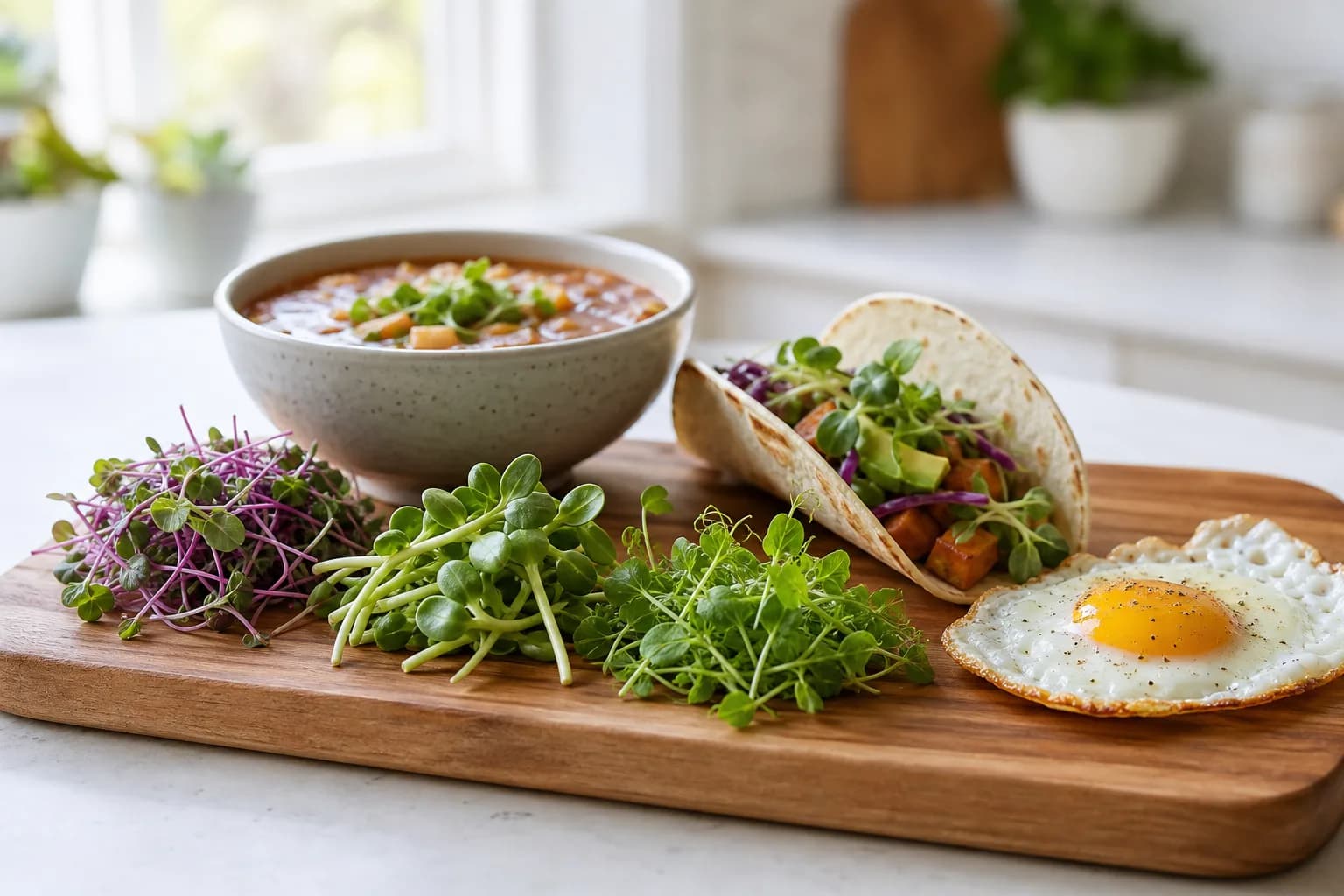
- Soft, creamy, or warm dishes want crunch. Avocado toast, scrambled eggs, soups, risotto, and tacos all come alive with crisp radish, pea shoots, or sunflower scattered on at the end. The snap cuts through the softness.
- Crunchy or crisp dishes want tender greens. A crackly sandwich, a crisp flatbread, or a crunchy slaw doesn't need more snap; fold in delicate broccoli, micro kale, or arugula for flavor without fighting the base.
- Salads can go either way, but a mix of textures is the move. A handful of crunchy plus a handful of tender keeps every bite interesting. Microgreens salad ideas leans into exactly this.
- Garnishes are mostly about looks and aroma, so a crisp, upright sprig that holds its shape (radish, pea, sunflower) photographs and plates better than something that flops.
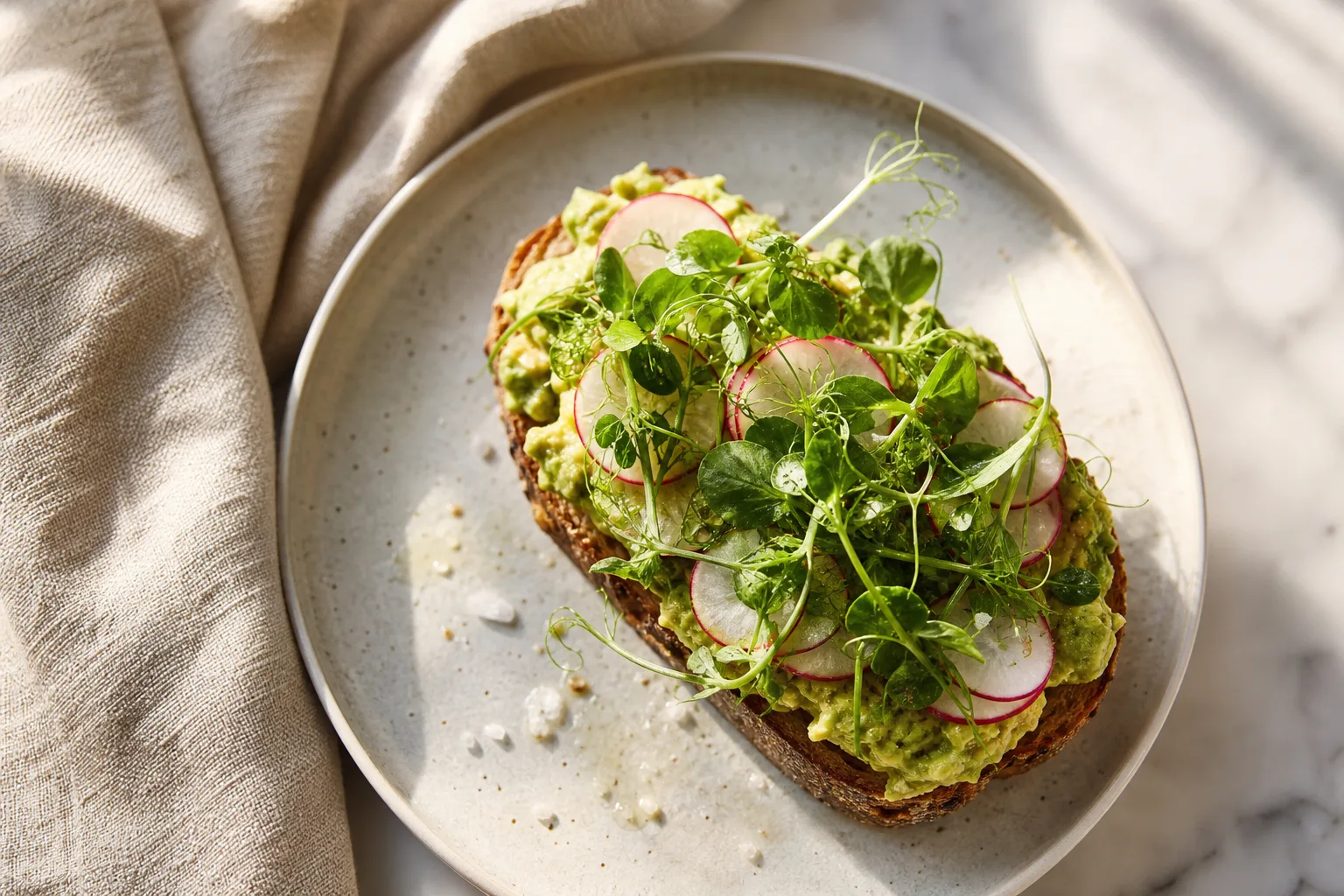
One more practical note: heat destroys crunch fast. Add crunchy microgreens off the heat, right before serving, or they wilt into the dish. Cooking with microgreens and heat goes deeper on what survives the pan and what doesn't.
How to Avoid Sliminess (The One Texture Killer)
Sliminess is the failure mode that ruins more microgreens than any other, and it is almost always a moisture-and-airflow problem, not a freshness problem in the way people assume.
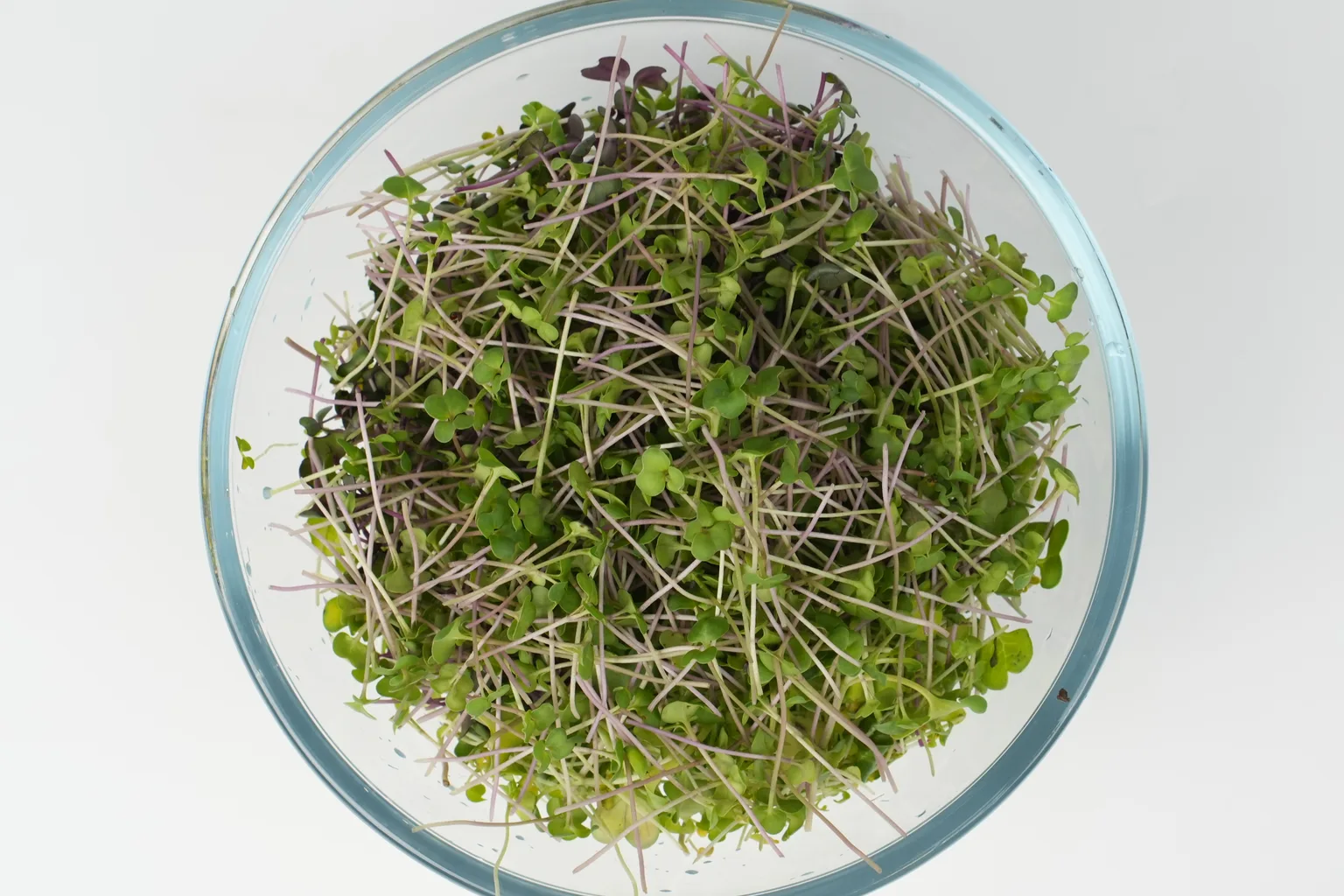
Microgreens are mostly water held in delicate young cells. When they sit wet in a sealed container with no airflow, surface moisture lingers, cells start breaking down, and you get that slick, slimy film. The same biology that gives you crisp texture at harvest works against you in storage. (It is closely related to the conditions that cause microgreens to mold.)
A few habits keep greens crisp:
- Dry before storing. Pat harvested greens gently or give them a short spin, then let surface water evaporate before sealing them up. Wet-in, slimy-out.
- Store with airflow and a paper towel. Line a container with a paper towel to wick excess moisture, and don't pack the greens down. Air should move around them.
- Keep them cold and eat them soon. Even perfectly stored, microgreens are at their crisp best within a few days. This is the real argument for growing instead of buying: store-bought greens have often spent days in transit, losing turgor and edging toward slime before you ever open the clamshell.
- Revive limp (not slimy) greens. Wilted but still healthy greens often perk back up after a few minutes in cold water. Slimy greens are past saving; that is a one-way door.
The honest takeaway: crunch is perishable. The crispest microgreen you will ever eat is one you cut minutes before it hits the plate, which is the whole appeal of growing them where you cook. For a fuller view on freshness, are store-bought microgreens fresh is worth a read.
Putting It All Together
Texture isn't an afterthought; it's half of what makes microgreens feel like a real ingredient instead of a decoration. Once you know that crop and stem thickness set the baseline, harvest timing fine-tunes it, and hydration can make or break it on the plate, you can build dishes on purpose: crunch where you want contrast, tenderness where you want greens to melt in.
Start with one crunchy crop and one tender crop in your rotation, sunflower and broccoli are a great pair, and pay attention to how each one behaves in your favorite dishes. You'll quickly develop an instinct for which green goes where. And if you grow your own, you get the one thing the grocery store can't sell: the choice of exactly when to cut, and the crisp, alive texture that only comes from a green harvested minutes ago.