Medically reviewed by Dr. Oumayma Shaiek, Growing Scientist at Luya. This article is for general education and is not medical advice. Talk to your doctor before changing your diet for a health condition or if you take medication.
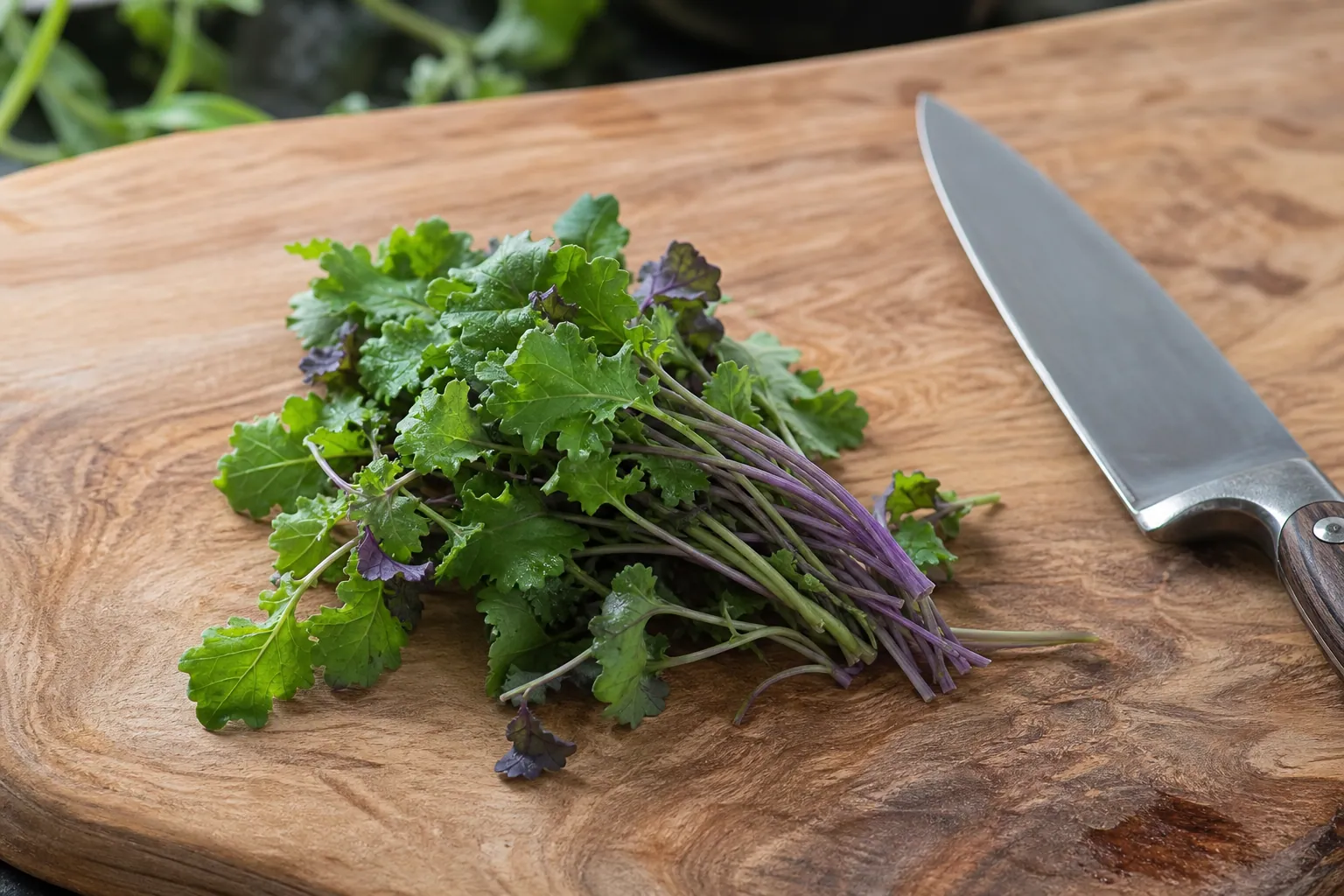
If you love kale but find a full head intimidating, kale microgreens are a friendly shortcut. These tender young seedlings deliver the green, mildly cabbage-like flavor of mature kale in a softer, sweeter package, and they are ready to harvest in days rather than weeks. Better yet, kale microgreens are part of a family of tiny greens that research has found can be far more nutrient-dense than their full-grown counterparts.
In this guide we will walk through what makes kale microgreens worth eating, how their nutrition compares to other popular varieties, and exactly how to grow a tray on your own counter.
What Are Kale Microgreens?
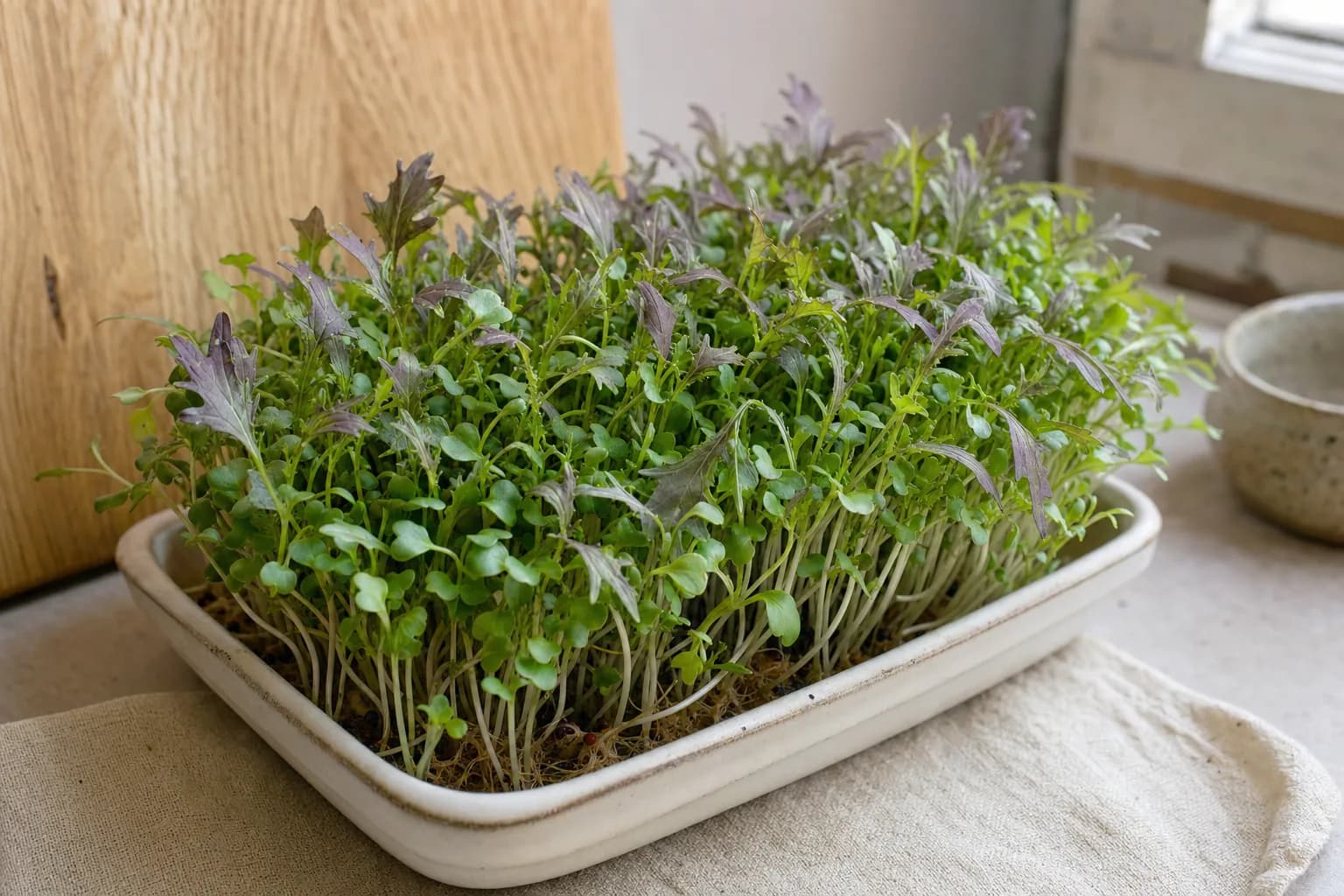
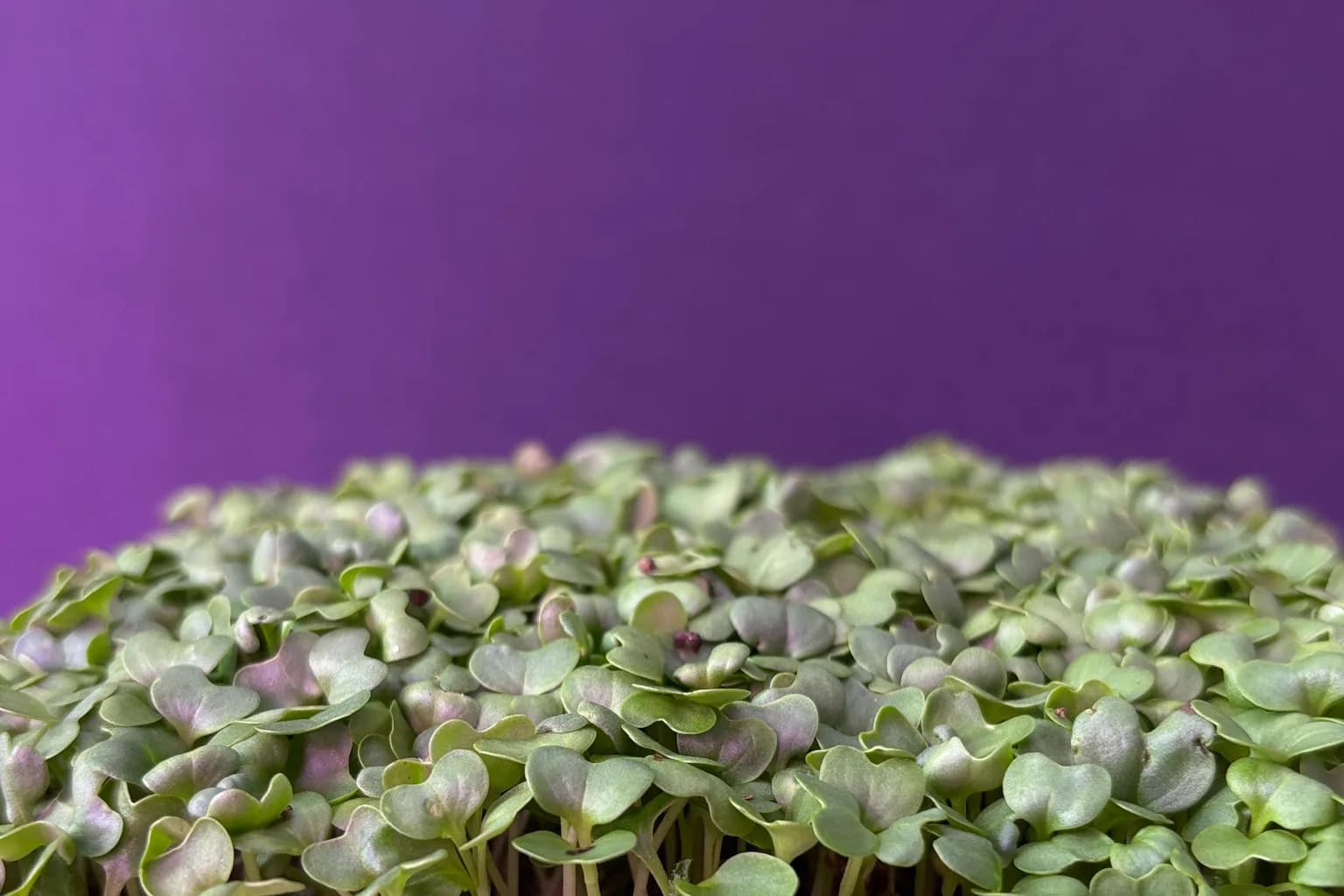
Microgreens are vegetables harvested very young, usually within a week or two of sprouting, right after the first true leaves begin to appear. Kale microgreens are simply kale seeds grown to that stage and snipped at the stem. They are not the same as sprouts, which are eaten seed, root, and all after just a few days of soaking. If you want a deeper breakdown of the difference, see our guide on microgreens vs sprouts.
What makes this whole category interesting is concentration. Peer-reviewed reviews and USDA data suggest microgreens can be roughly 2 to 3.5 times more nutrient-dense than the mature vegetable, depending on the variety. In other words, a small handful of young greens can carry a meaningful amount of the nutrition you would expect from a much larger serving of grown produce.
The Benefits of Kale Microgreens
Kale belongs to the brassica family, the same group that includes broccoli, cabbage, and radish. These greens are known for being rich in vitamins C, K, and E, along with antioxidants and polyphenols that help the body defend its cells. Kale microgreens carry those nutrients in a compact, raw, easy-to-eat form, which matters because cooking is where a lot of the value of mature kale quietly leaks away. You steam or sauté a full head, and heat-sensitive vitamin C and the enzymes behind sulforaphane take a hit. A microgreen, by contrast, is something you eat raw by default, scattered over a finished plate, so the nutrition arrives intact.
The concentration story is the other half of why these tiny greens punch above their size. Because microgreens can run roughly 2 to 3.5 times more nutrient-dense than the mature vegetable, a small handful folded into a meal can stand in for a much larger serving of grown kale. That density is exactly what the wider research on microgreens nutrition keeps returning to, and it is the practical reason a tray that fits on a windowsill is worth the effort.
Kale is also the crop behind one of the more striking mineral findings in the field. When researchers biofortified kale microgreens with selenium, the route mattered far more than the dose — feeding it through the nutrient solution put roughly 37 times more selenium into the crop than spraying it on the leaves, with no yield penalty. We have written that study up in full in selenium-enriched microgreens, because it is the clearest demonstration we know of that what a microgreen contains is decided by how it is grown.
Because they come from the brassica family, kale microgreens also contain compounds related to sulforaphane, the much-studied isothiocyanate that forms when the precursor glucoraphanin meets the enzyme myrosinase as you chew or chop. Sulforaphane activates the body's Nrf2 antioxidant and detox pathway and is being researched for its role in blood-sugar regulation, inflammation, and cellular defense. It is worth noting this is research-stage science, not a list of proven cures. If you are curious about the mechanism, our explainer on what is sulforaphane goes further.
Where do kale microgreens sit among the popular brassica greens? Here is a quick comparison of standout traits across common varieties.
| Microgreen | Notable nutrient angle | Typical flavor |
|---|---|---|
| Kale | Vitamins C, K, E and antioxidants | Mild, sweet, cabbage-like |
| Broccoli | Highest sulforaphane precursor in the family | Fresh, slightly peppery |
| Radish | Often the most nutrient-dense overall | Bold, spicy |
| Pea shoots | One of the more protein-dense microgreens | Sweet, crisp |
For context on just how concentrated some of these can be, broccoli microgreens are a standout. Johns Hopkins research found broccoli microgreens and sprouts contain roughly 10 to 100 times more glucoraphanin, the sulforaphane precursor, than mature broccoli, though the finished sulforaphane you actually get varies widely by variety, growing conditions, and harvest timing.
Kale microgreens make an excellent everyday green, while broccoli and radish bring their own strengths. Many people simply rotate between them: broccoli when they want the sulforaphane angle, radish when they want a spicy bite, kale as the mild, sweet base that goes with almost anything. If you eat a plant-forward diet, you might also like our roundup of high-protein microgreens.
How to eat kale microgreens
Because the flavor is gentle, kale microgreens are forgiving in a way that bolder varieties are not. The rule worth remembering is to add them at the end and keep them raw. Pile them onto avocado toast or a finished bowl, fold a handful into a sandwich or wrap, stir them into a cold grain salad, or blend them into a smoothie where the mild taste vanishes entirely. Avoid cooking them into a hot dish: the same heat that degrades myrosinase in mature brassicas applies here, so the most sulforaphane comes from eating them raw, fresh, and well chewed. A good habit is to keep a tray within arm's reach of where you actually plate food, so adding a pinch becomes automatic rather than a chore.
How to Grow Kale Microgreens at Home
The good news: kale microgreens are beginner-friendly. The basic process is the same as most brassicas.
- Prep your tray. Spread an even layer of moist growing medium across a shallow tray with drainage.
- Sow densely. Scatter kale seeds across the surface in a thick, even layer. Brassica seeds are small, so they do not need soaking.
- Cover and germinate. Keep the seeds dark and lightly humid for the first few days while they sprout.
- Uncover and light. Once the seedlings stand up, move the tray to bright light so the leaves green up.
- Water gently. Keep the medium moist but never soggy, ideally watering from the bottom to keep leaves dry.
- Harvest. When the first true leaves appear, usually within a week to ten days, snip just above the soil line.
For a full walkthrough that applies to any variety, see how to grow microgreens at home.
A reasonable expectation for kale microgreens is a 7 to 10 day cycle from seed to harvest. Here is how that timeline tends to break down.
| Stage | Roughly when |
|---|---|
| Germination | Days 1-3 |
| Uncover, first light | Days 3-5 |
| Greening up | Days 5-8 |
| Harvest | Days 7-10 |
The catch with growing by hand
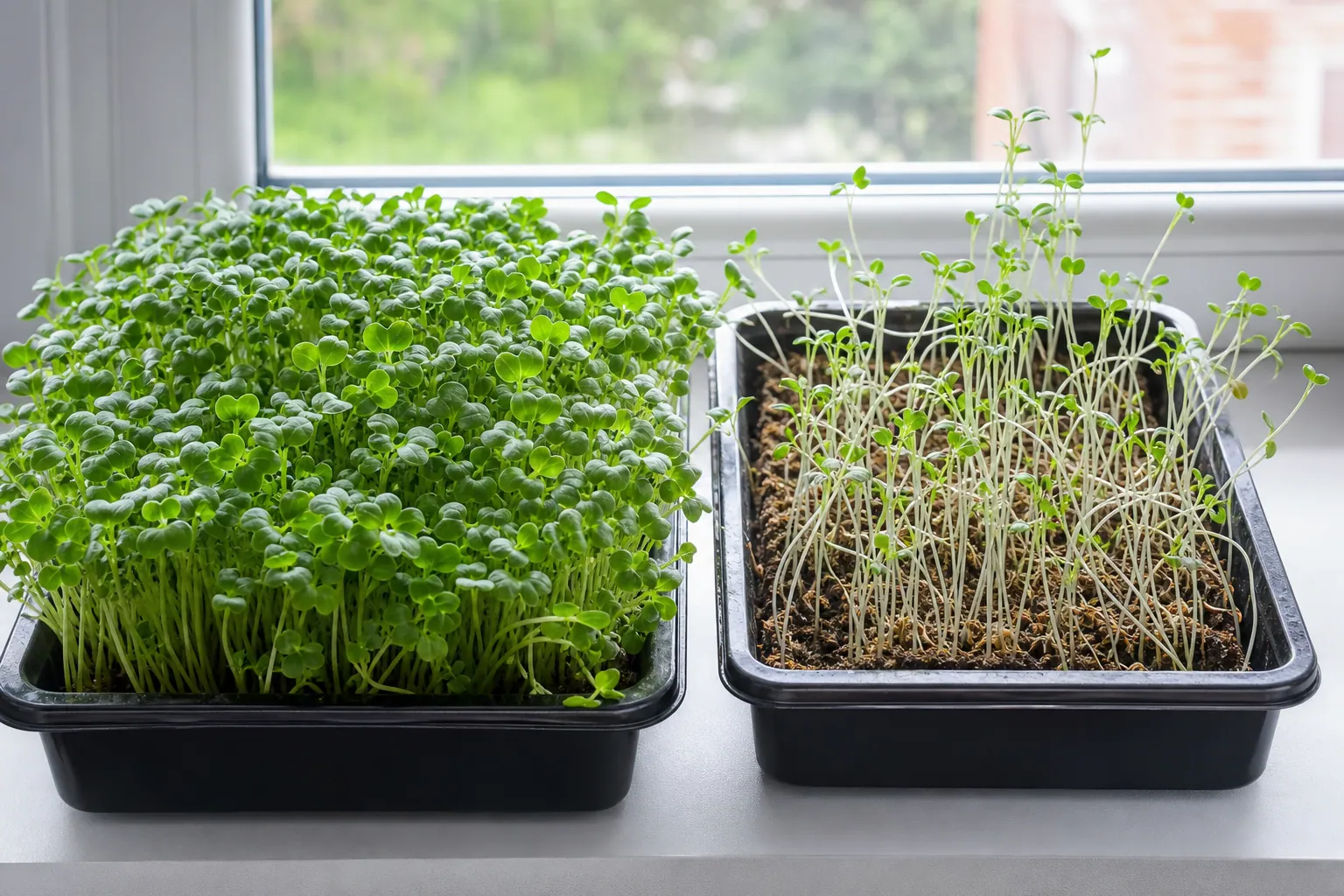
Honest growing advice means naming the failure points. The three classic ones are mold, mess, and maintenance. Mold thrives when you combine moisture, poor airflow, overcrowding, and warmth, which is exactly the environment a dense seed tray creates if you are not careful. Mess comes from working with loose soil indoors. And maintenance is the quiet dealbreaker: microgreens need daily attention across that roughly ten-day cycle, so a work trip or one busy week can wipe out a tray.
None of this means you should not grow your own. It just means consistency is the real skill, and manual trays have a genuine failure rate.
Buying vs. Growing Kale Microgreens
The alternative to growing is buying, and that comes with its own tradeoffs. Store-bought microgreens are expensive, often $4 to $6 for a 2 oz clamshell, which works out to roughly $30 to $50 per pound. They are also frequently not fresh by the time you eat them, since they travel a long farm-to-truck-to-warehouse-to-store path, wilt quickly, and have a short shelf life that leads to a lot of waste.
This is the gap Luya is built to close. The Luya countertop appliance, sometimes described as "like a Nespresso, but for greens," uses a sealed, climate-controlled, ventilated chamber to keep mold out, automatic nutrient dosing, and precise temperature control so the daily-chore problem disappears. You drop in a pre-seeded tray, and you harvest only what you need while the rest keeps growing alive, seconds before it lands on your plate. It is designed to solve both sides of the equation: the mold, mess, and maintenance of growing by hand, and the cost and staleness of buying.
You can read more about why store-bought microgreens are expensive and not fresh if you want the full breakdown.
The Bottom Line
Kale microgreens are a genuinely worthwhile addition to your kitchen: nutrient-dense, mild and sweet, quick to grow, and easy to add to almost any dish. Grow them by hand if you enjoy the ritual and can keep up the daily care, or let an automated system handle the mold, mess, and timing for you.
Curious how a fully automated, sealed grow chamber turns a kale microgreen tray into a zero-chore countertop habit? See exactly how it works, and explore more crop ideas in our guide to the easiest microgreens to grow.
References
- Fahey JW, Zhang Y, Talalay P. Broccoli sprouts: an exceptionally rich source of inducers of enzymes that protect against chemical carcinogens. PNAS. 1997;94(19):10367–10372. https://doi.org/10.1073/pnas.94.19.10367
- Xiao Z, Lester GE, Luo Y, Wang Q. Assessment of Vitamin and Carotenoid Concentrations of Emerging Food Products: Edible Microgreens. J Agric Food Chem. 2012;60(31):7644–7651. https://doi.org/10.1021/jf300459b