Almost every microgreen sits somewhere between sweet and peppery. Sorrel does not. It is sour — a clean, lemony tartness from oxalic acid, the same compound that gives rhubarb its bite — and that makes it the most useful crop in the catalogue for anyone who cooks.
It is also slow, fiddly and comparatively expensive to seed. Here is whether it is worth it.
What it tastes like
Lemon, without lemon's perfume. A sharp acidity that arrives after the leaf, rather than on it. Against fat — salmon, egg yolk, cream, roast chicken skin — it does the job a squeeze of citrus does, but without adding liquid to the plate.
That last part is why chefs like it. You can acidify a finished dish at the table without making anything wet.
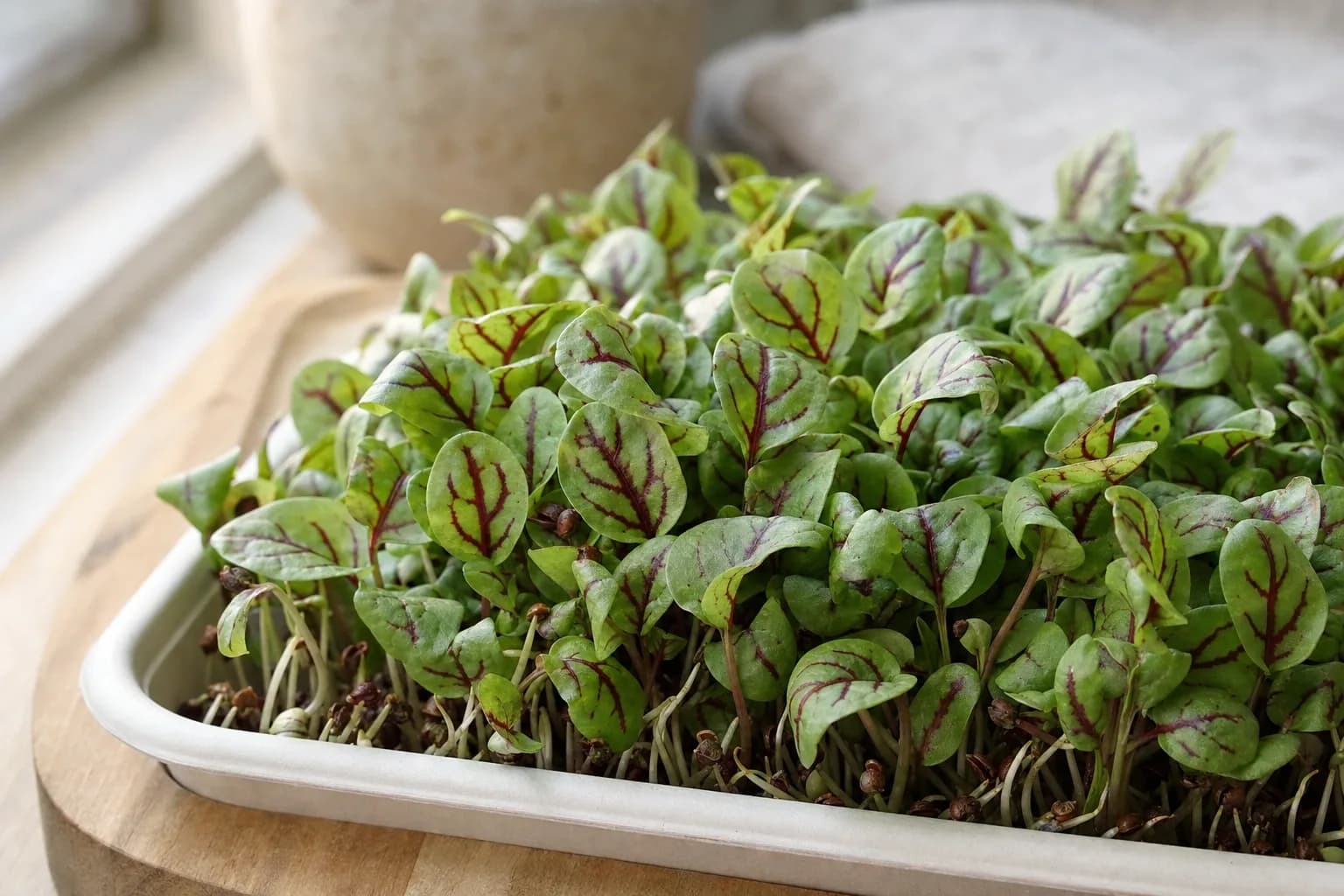
Red-veined or green?
Two varieties turn up as microgreens. Rumex scutatus and its relatives come as an all-green leaf or a red-veined one, and the red-veined type is the one worth buying: dark green leaves cut through with crimson veins, considerably more striking on a plate. Gilbertie and Sheehan note the same preference in Cooking With Microgreens, along with the catch — red-veined sorrel seed can run two to three times the price of the green kind.
For a crop you will use at five percent of a blend, that price difference is smaller than it sounds.
Growing it
Sorrel is not a beginner's crop, and the reasons are worth knowing before you commit a tray.
- The seed is tiny. Distributing it evenly by hand is genuinely difficult, and uneven sowing shows up as bald patches you cannot fix later. We cover the handling technique in how to sow tiny microgreen seeds evenly.
- It is slow. Expect noticeably longer than the seven-day crops. Sorrel will still be filling in when radish sown the same day is finished, which is a good argument for giving it its own tray rather than mixing it in — see how to blend microgreens.
- Sow it thinner than you think. Slow crops spend longer in humid conditions, and a dense mat of slow-growing seedlings is an invitation to mould. Our seed density guide explains the general principle; sorrel sits at the sparse end of it.
How to use it
Sparingly, and raw. Heat destroys both the colour and the acidity — the red veins go grey and the sourness flattens, which is a waste of the only crop that had it.
- On fish. The classic pairing, and it deserves the reputation. Salmon especially.
- On eggs. Soft-boiled, scrambled, in an omelette added off the heat.
- In a blend, at 5–10 percent. This is where most people should start. It turns a mild mix into one that tastes deliberate.
- On anything fatty that would normally get a lemon wedge. Roast potatoes, fried chicken, a rich soup.
One honest caution
Sorrel's sourness comes from oxalic acid, which is present in many everyday foods — spinach, rhubarb, beet greens, chocolate, tea. As a garnish-scale ingredient this is unremarkable. If you have been told to limit dietary oxalate, for kidney stones or another reason, that advice covers sorrel too, and your doctor is the right person to ask rather than us.
Is it worth a tray?
If you cook, yes — but grow it as a supporting crop, not a staple. One small tray goes a long way at blend proportions, and it does something no other microgreen in the common catalogue does. If you only ever grow the fast, forgiving crops, you will never miss it. Once you have used it, the mixes without it start to taste like they are missing something.
Variety notes in this article draw on Cooking With Microgreens by Sal Gilbertie and Larry Sheehan.