If you've tried growing microgreens at home, you've probably met the enemy: a fuzzy white web creeping across your tray, usually a day or two before harvest. It's discouraging, a little gross, and the single most common reason people give up on growing their own greens.
The good news: mold is preventable once you understand what causes it. The frustrating news: preventing it by hand means controlling several variables at once, every single day. Let's break down both — and then talk honestly about why it keeps happening anyway.
First, is it mold — or root hairs?
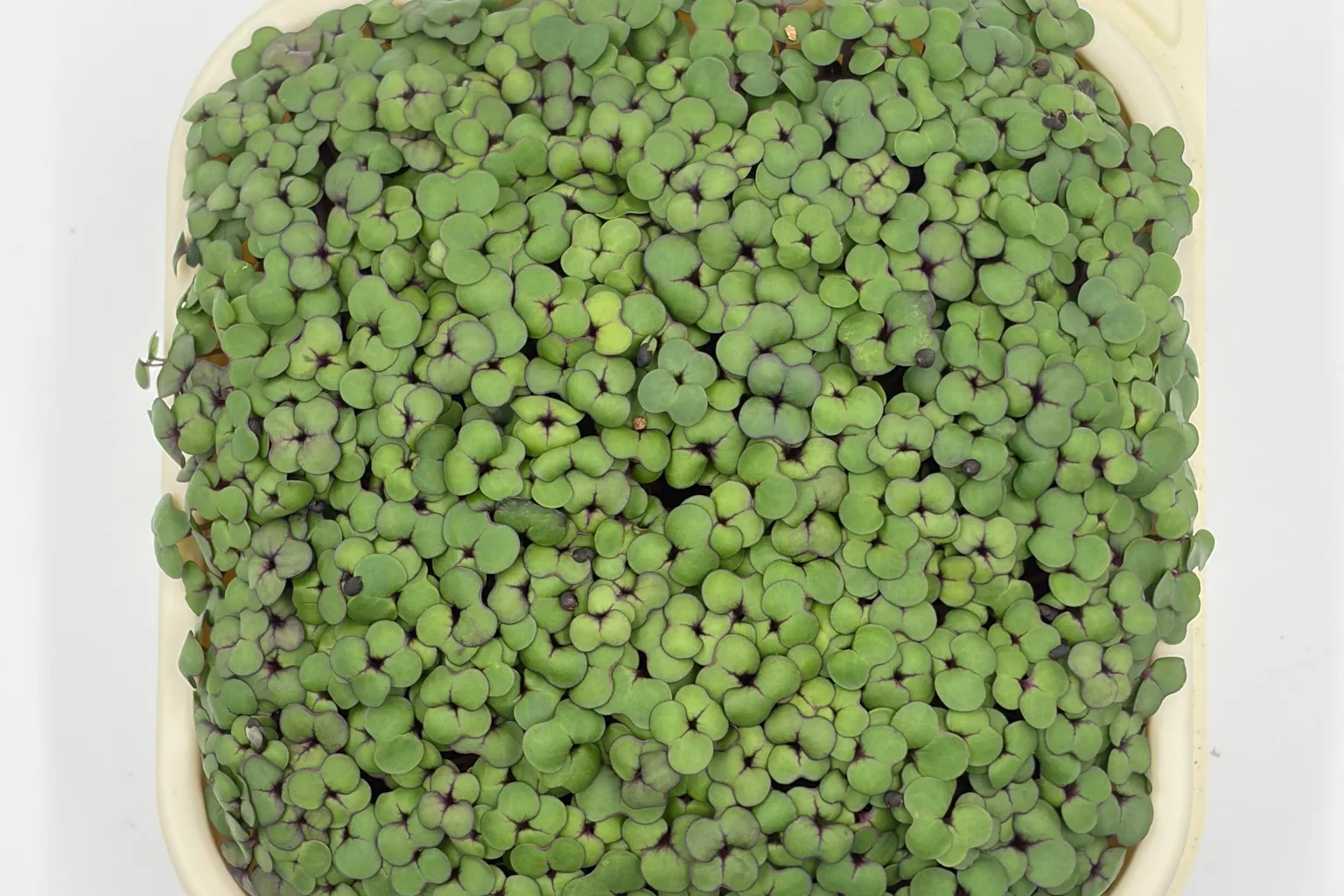
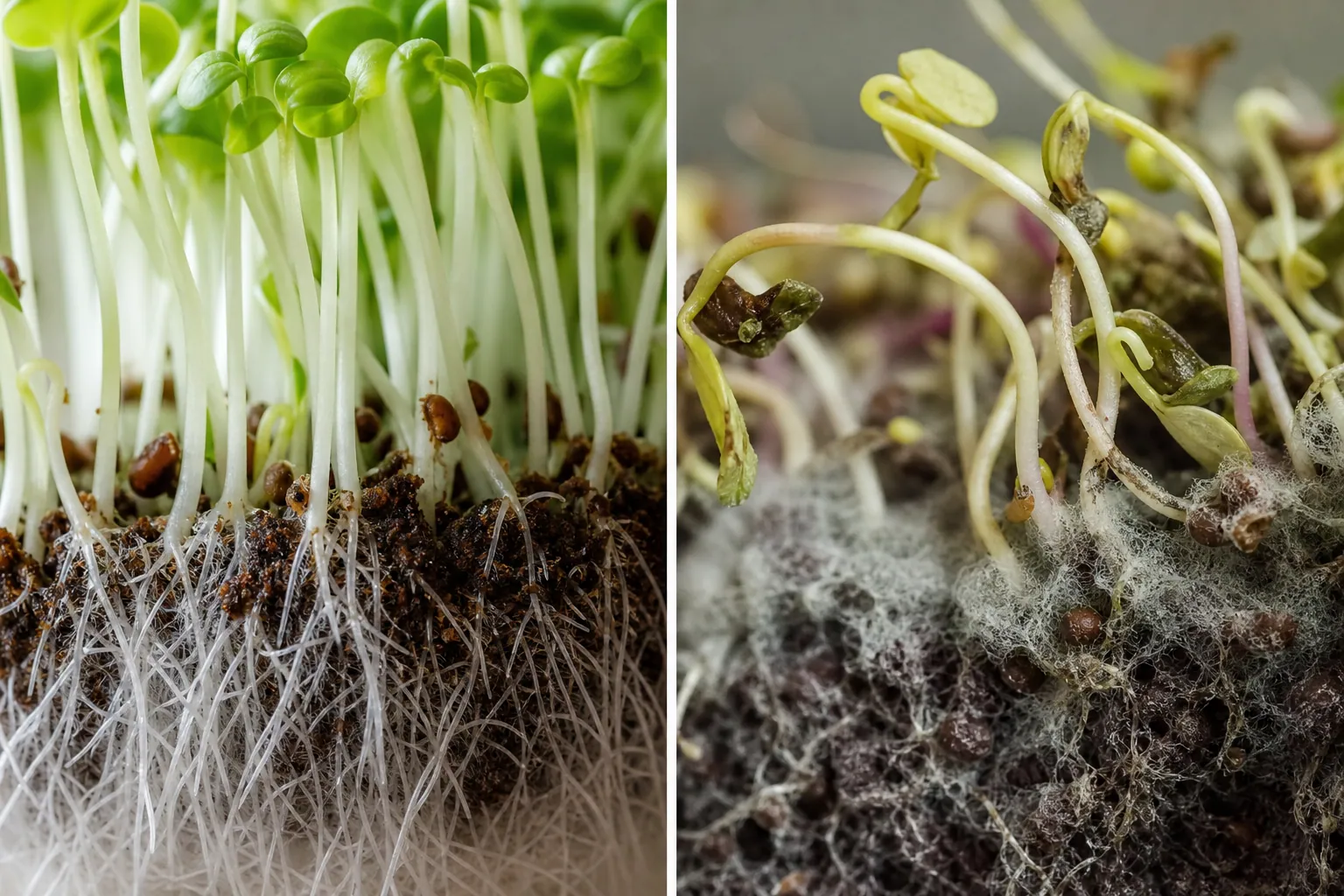
Before you toss a tray, make sure you're not looking at root hairs. New growers panic over a fine, fuzzy halo around the base of the stems and assume the worst. Here's how to tell them apart:
| Root hairs (harmless) | Mold (a problem) | |
|---|---|---|
| Where | Only around roots / stem base | Spreads across surface and up stems |
| Look | Fine, even, fringe-like | Web-like or cottony, patchy |
| Color | White | White, gray, green, or black |
| Smell | None | Musty, sour |
| Water test | Lies flat when misted | Unaffected |
When in doubt: a quick spritz of water makes root hairs lie down; mold doesn't care.
What actually causes microgreens to mold
Mold spores are everywhere — in your seeds, your air, your kitchen. They only become a problem when the environment lets them outcompete your seedlings. Four conditions do that:
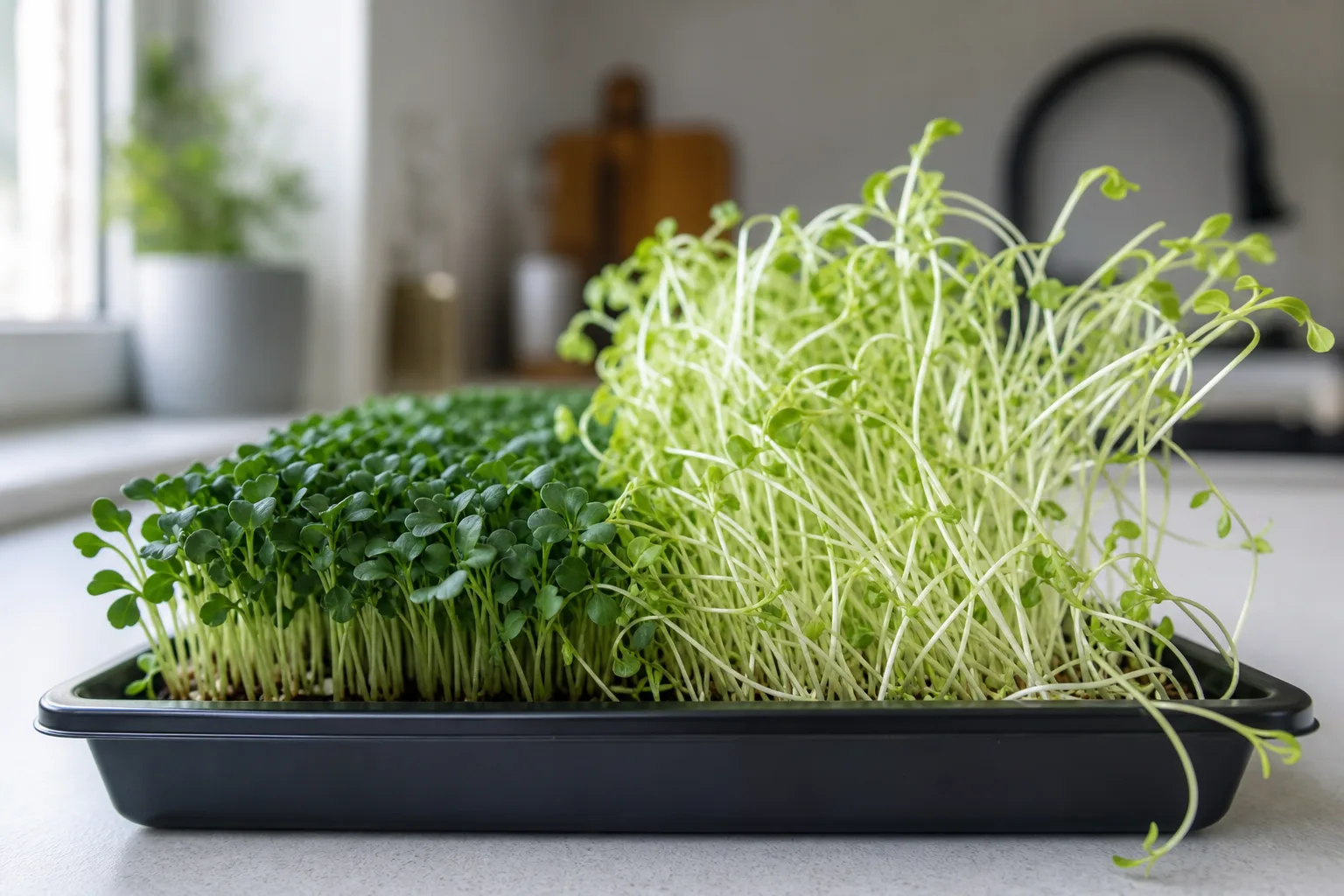
- Too much moisture, too little airflow. Stagnant, humid air is mold's ideal home. Trays in a closed cabinet or covered too long are the classic culprit.
- Overcrowded seeds. Pile seeds on top of each other and the dense mat traps moisture against the medium — no air gets in.
- Warm, stuffy temperatures. Most molds thrive in the same 70–80°F range microgreens like, so warmth without ventilation accelerates both.
- Contaminated seeds or dirty equipment. Reusing trays without sanitizing, or using seeds not intended for sprouting, stacks the deck against you.
How to prevent mold (the manual checklist)
Here's the standard advice — and it works, if you do all of it, consistently:
| Step | What to do | Why it matters |
|---|---|---|
| Seed density | Don't overseed; use the recommended amount | Crowding traps moisture |
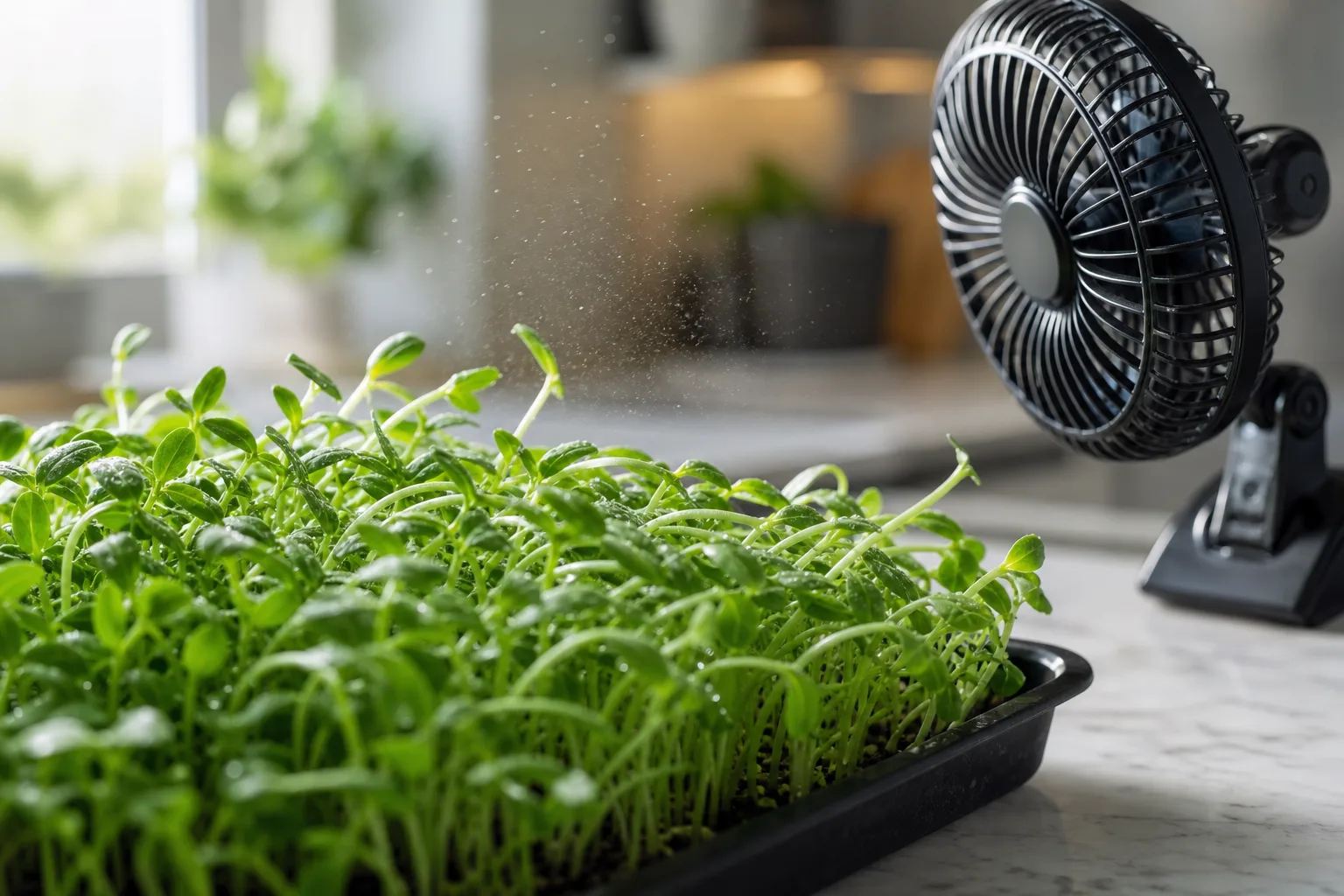
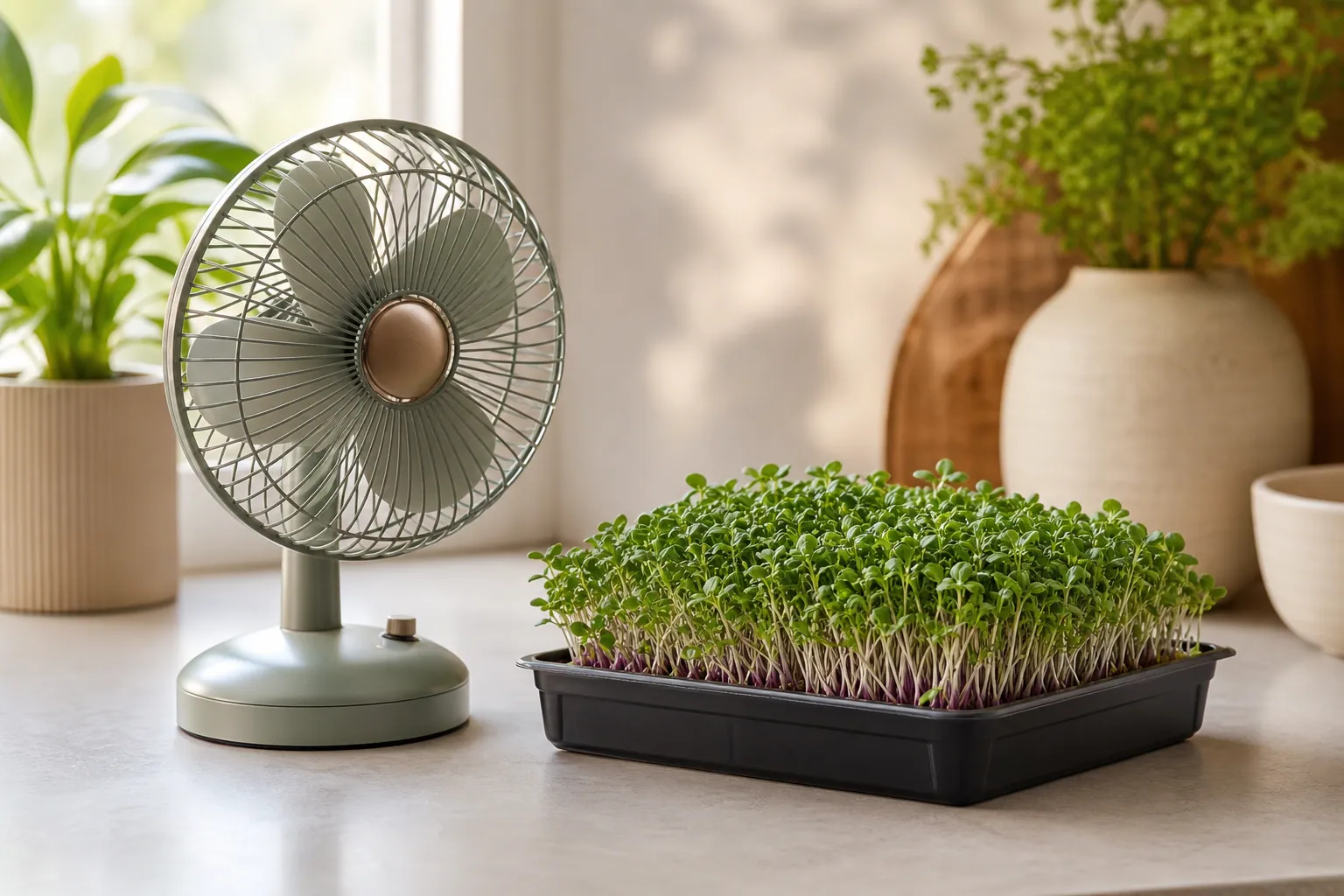
| Airflow | Run a small fan on low nearby | Moving air starves mold |
| Watering | Water from the bottom tray, not the leaves | A dry canopy resists mold |
| Blackout timing | Uncover on time (usually day 3–4) | Covered-too-long = mold |
| Sanitation | Wash trays with diluted hydrogen peroxide or vinegar between grows | Kills carried-over spores |
| Climate | Keep things cool-ish and well-ventilated | Heat + stuffiness speeds mold |
Do all six, every grow, and your mold rate drops sharply.
Why it still happens — and why that's the real problem
Here's the honest truth most growing guides skip: mold prevention is a daily balancing act of moisture, airflow, temperature, and timing — and a single off day can undo a whole tray.
You go out of town. You forget to refill the water. The kitchen gets warm during a heat wave. The blackout cover stays on one day too long. Any one of those, and you're back to the fuzzy web — often right before harvest, after you've already put in nine days.
That's not a knowledge problem. It's a consistency problem. And consistency over 10+ days is exactly what humans are bad at and machines are good at. It's why so many people's microgreens story is "I tried it once, it molded, I gave up."
The hands-off alternative
This is the problem we built Luya to solve. Instead of you managing moisture, airflow, light, and temperature by hand, Luya holds them steady automatically inside a sealed, climate-controlled chamber:
- Automatic air circulation keeps the canopy out of stagnant, humid air — the root cause of mold.
- Built-in bottom watering keeps leaves dry without you metering every pour.
- Precise temperature control holds the chamber in range instead of drifting with your kitchen.
- Pre-seeded trays arrive at the correct seed density, clean and ready — no overcrowding, no dirty-equipment contamination.
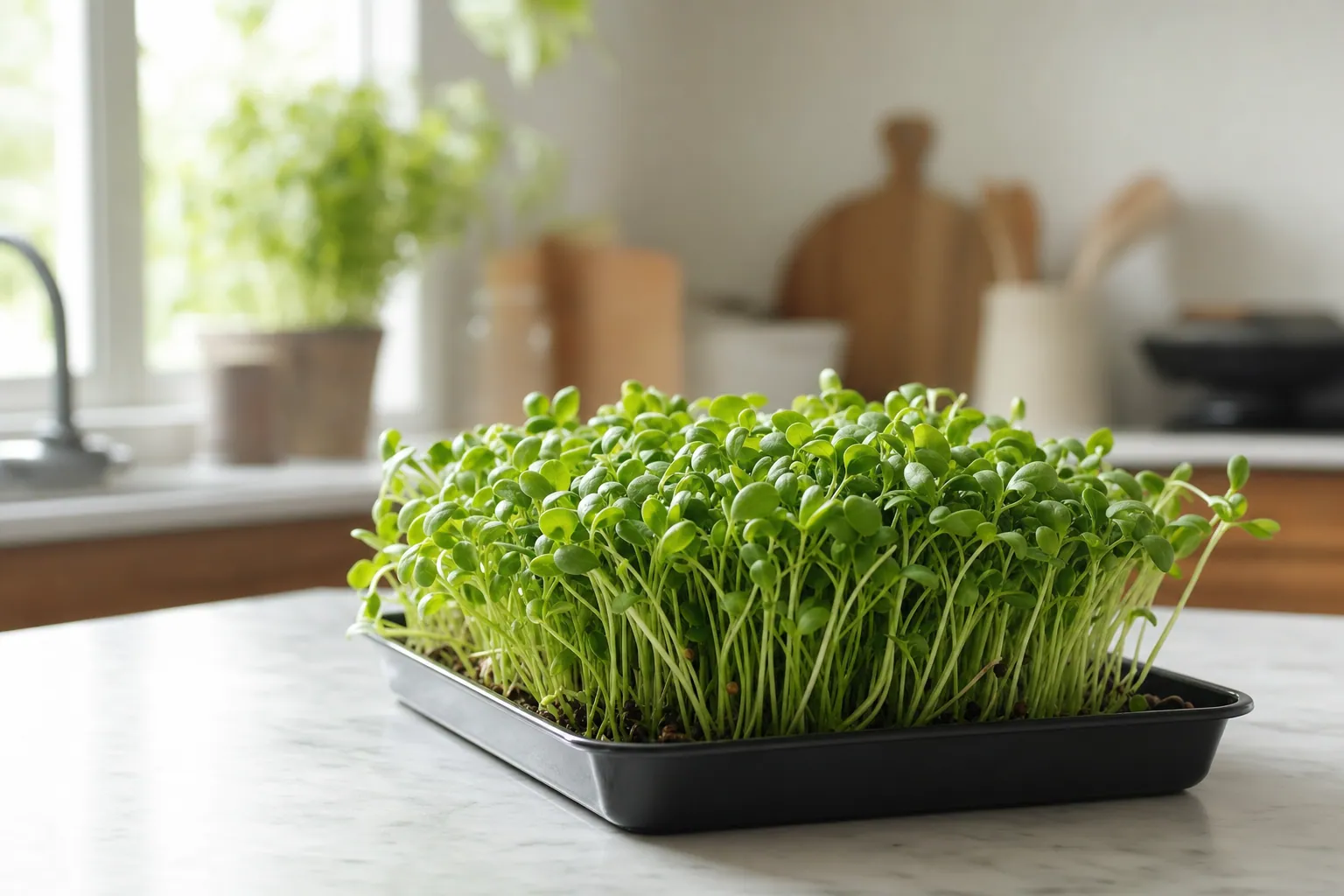
The result is the thing manual growing can't reliably deliver: the same clean, mold-free harvest every cycle, whether or not you had a perfect week.
Growing microgreens by hand is genuinely rewarding when it works. But if mold keeps winning — or you simply don't want a daily chore — letting an automated system hold the variables steady is the difference between "I tried microgreens once" and "we eat fresh microgreens every week."
Want fresh microgreens without the mold, mess, or daily fuss? See how Luya works →. New to growing? Start with How to Grow Microgreens at Home.