Ask ten growers how much seed to put in a tray and you will get ten answers, usually measured in vague handfuls. That works until it doesn't. Sow a little too heavy and you trade a beautiful, full tray for a humid mat that yellows from the bottom and starts to mold. Sow too light and you get a thin, patchy crop that took just as long to grow and yields half as much. Seed density is one of the few growing decisions you make before the seeds ever touch water, and it quietly sets up almost everything that happens afterward.
The good news is that this is a solved problem. Once you measure your seed by weight instead of by feel, every tray becomes repeatable. This guide walks through sensible sowing rates for the most common crops in a standard 10x20 tray, explains why the numbers differ so much between, say, broccoli and sunflower, and shows you how to read your own trays so you can dial the rate in for your setup.
Why seed weight beats the handful
A handful is not a unit. Your hand and mine hold different amounts, and a handful of fluffy arugula seed weighs a fraction of a handful of dense pea seed. The moment you switch to grams on a small kitchen scale, you remove the guesswork. You can write down what you did, look at the result a week later, and adjust by a gram or two with confidence. That feedback loop is the whole game.
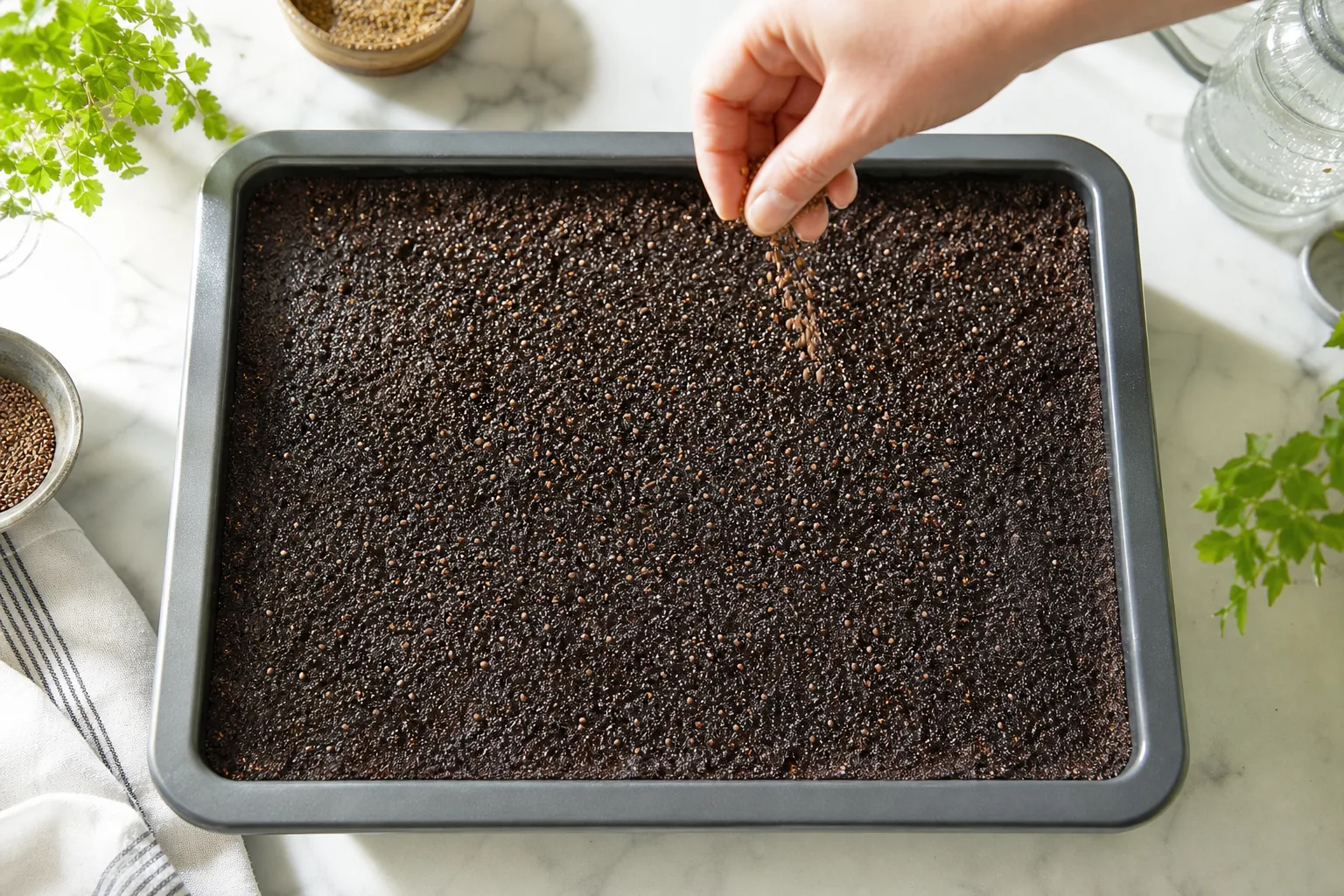
Seed density is usually expressed as grams of dry seed per 10x20 tray, the workhorse size most home and small commercial growers use. If you grow in a smaller tray or a no-soil hydroponic setup, the same logic applies; you just scale the weight to your surface area. The target is always the same: enough seeds that the cotyledons knit into a continuous canopy, but not so many that they pile on top of each other.
What drives the right number
Three things mostly decide a crop's sowing rate.
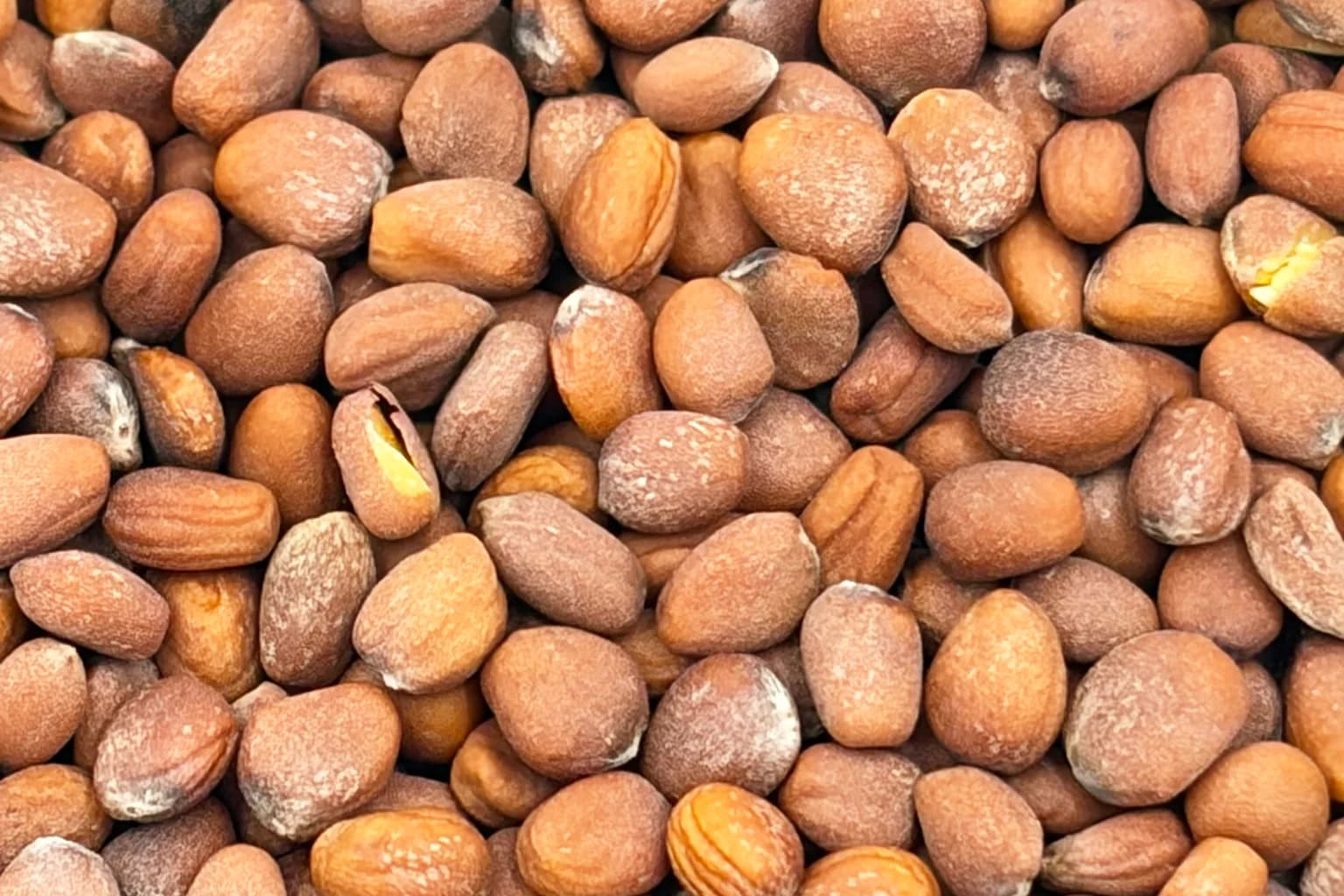
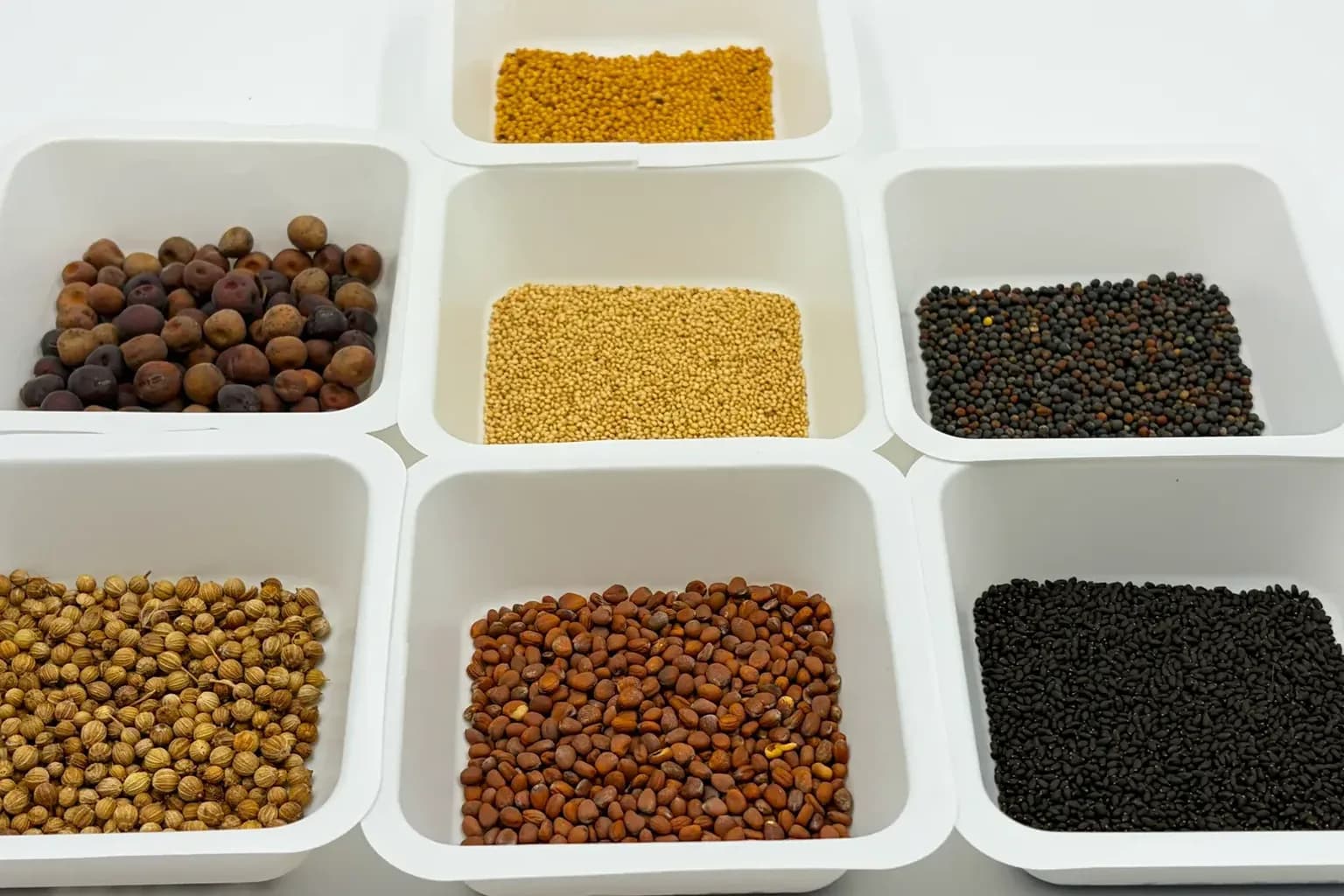
The first is seed size. Big seeds like sunflower, pea, and beet take up far more room per seed, so you need many more grams to cover the same tray. Tiny seeds like broccoli, arugula, and amaranth pack hundreds of plants into a single gram, so a little goes a long way. This is also why growers match screen and tray choices to seed size: large seed grows directly on a mesh tray, while the smallest seeds need a fine screen so they don't fall through.
The second is mucilage, the gel coat that some seeds form when wet. Chia, basil, cress, and arugula develop a slippery jelly around each seed as it imbibes water. A little of this is fine, but a thick mucilaginous mat traps moisture and chokes airflow, so these crops are deliberately sown on the lighter side.
The third is germination vigor and final size. Seeds that come up fast and grow tall and heavy (sunflower, pea) can crowd themselves and flop, so you give them room. Slow, fine crops that stay short can be sown denser without the same penalty.
Sowing rates by crop
The table below gives a working range for popular crops in a 10x20 tray. Treat the middle of each range as your starting point, then adjust based on what your trays tell you. Rates assume a standard tray and reasonably fresh, high-germination seed.
| Crop | Seed size | Grams per 10x20 tray | Pre-soak? | Notes |
|---|---|---|---|---|
| Broccoli | Tiny | 10–14 g | No | Forgiving; cornerstone crop |
| Radish | Small | 25–35 g | No | Fast, vigorous, hard to overdo |
| Kale | Tiny | 10–14 g | No | Similar to broccoli |
| Cabbage | Tiny | 10–14 g | No | Similar to broccoli |
| Arugula | Small, mucilaginous | 8–12 g | No | Sow lighter; gels when wet |
| Mustard | Small | 12–16 g | No | Spicy, reliable |
| Cress | Small, mucilaginous | 10–14 g | No | Heavy mucilage; keep airflow up |
| Amaranth | Very tiny | 5–8 g | No | Dust-fine; sow sparingly |
| Beet / chard | Large, clustered | 30–40 g | Yes (4–8 h) | Multi-germ seed; soak helps |
| Sunflower (black oil) | Large | 90–120 g | Yes (8–12 h) | Heavy yield; give room |
| Pea | Large | 120–160 g | Yes (8–12 h) | Soak; can flop if crowded |
| Cilantro | Large, split | 30–45 g | Yes (4–8 h) | Slow; split seed germinates better |
Notice the spread. Broccoli and amaranth ask for single-digit grams; peas want well over a hundred. That is not an error. A single sunflower seed is many times the size of a broccoli seed, and a tray packed wall to wall with sunflower simply contains fewer, larger plants.
For the large pre-soaked crops, the soak does double duty: it kick-starts germination and lets you rinse off debris before sowing, which cuts down on the mold pressure that heavy crops are prone to. If your dense trays keep molding, under-soaking and over-sowing are the two usual culprits.
Too thick vs. too thin: the real tradeoff
It helps to think of density as a dial with a cost on each end.
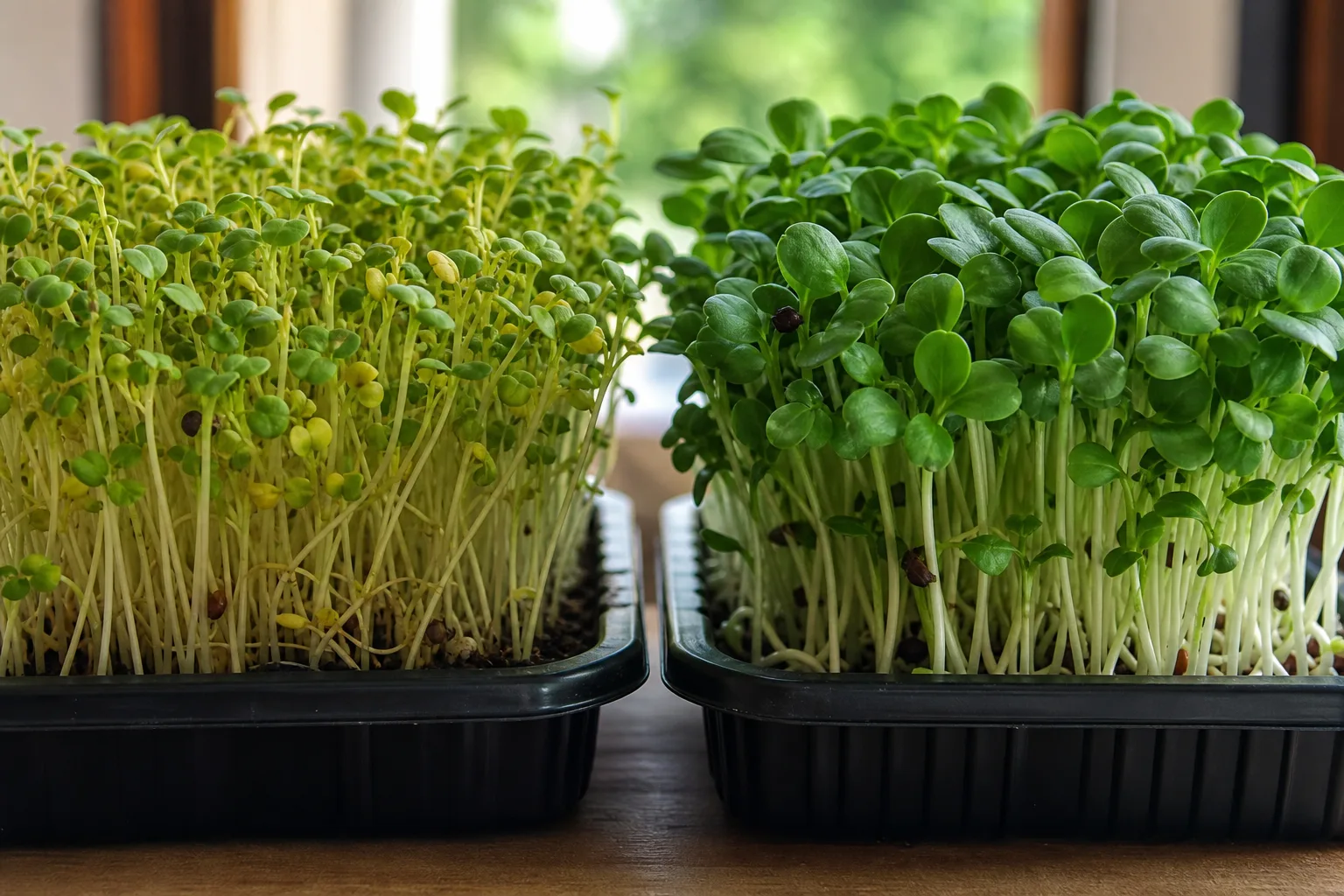
Sow too thick and the canopy becomes a sealed lid. Moisture can't escape, the lower stems stay wet, and you get the classic signs: yellowing at the base, a sour smell, fuzzy mold, and damping-off where seedlings collapse at the base. New growers often mistake root hairs for mold here, but true mold spreads as a web across the surface. Crowded trays also compete for light, leaving you with pale, leggy stems reaching for the canopy.
Sow too thin and you waste the tray. The plants don't support each other, so they sprawl, the surface dries unevenly, and stray mold colonies find bare patches to colonize. Worse, your yield per tray drops sharply, which matters if you're growing to actually eat from your harvest rather than just admire it.
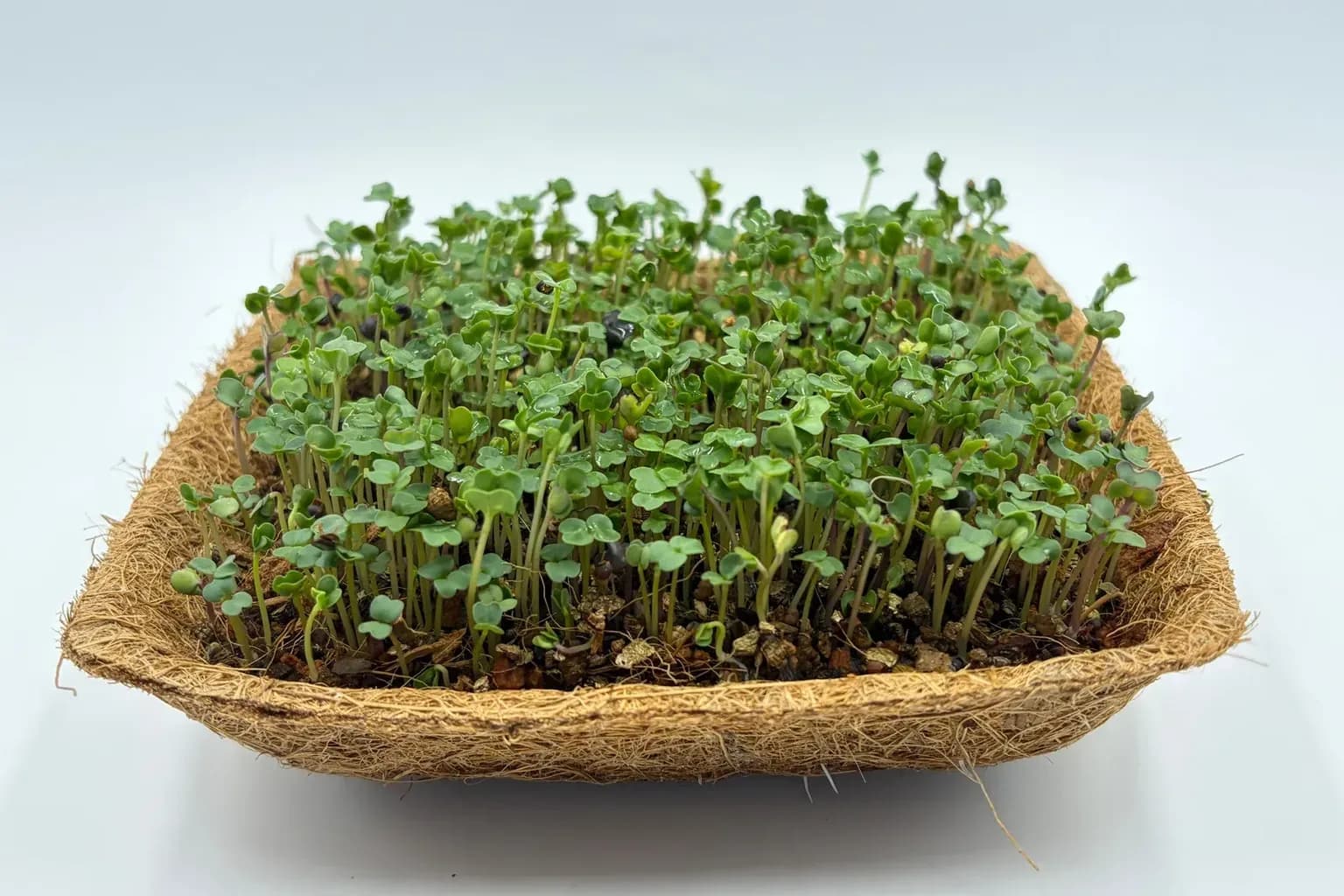
The sweet spot is a canopy where cotyledons just touch and gently hold each other upright, with the seeds forming roughly a single dense layer rather than a pile. You should be able to see the growing surface here and there at sowing time; by harvest, you shouldn't.
How density connects to yield
Up to a point, more seed means more harvest. A radish tray sown at 30 grams will out-yield the same tray at 15 grams. But the curve flattens and then reverses: past the optimum, extra seed doesn't add weight, it adds rot. Those collapsed and yellowed seedlings aren't harvestable, so you paid for seed that became a liability.
This is also why crop choice and density interact with profitability if you ever sell. Heavy crops like sunflower and pea use a lot of seed but produce dense, weighty trays. Tiny-seeded crops like broccoli sip seed but yield less by weight, even though they pack more nutrition per bite. There's no single "best" rate; there's a best rate for your goal. For a fuller look at the economics, see grow vs. buy microgreens.
| Density vs. optimum | Yield | Mold risk | Light competition |
|---|---|---|---|
| Too thin (about half) | Low | Low–moderate | Low |
| Optimal | High | Low | Low |
| Too thick (about double) | Plateaued or falling | High | High |
Dialing in your own rate
Published numbers get you in the right neighborhood. Your kitchen, your seed lot, and your water decide the last gram or two. Here's a simple way to calibrate.
Weigh your seed before each sow and write the number on a piece of tape on the tray. When you harvest, judge the result honestly: was the canopy even and dry-stemmed, or did the base yellow? Did roots anchor well, or did the mat slide around? Adjust by 10–15 percent and try again. Within three or four trays of a given crop, you'll land on a rate you trust. Fresh seed with strong germination needs less than old seed, so re-check when you open a new bag.
This kind of patient tuning is exactly what an automated grower removes from your plate. With Luya's countertop system, the device handles watering, airflow, and light on a schedule built for each crop, so a well-sown tray stays in the healthy zone without you babysitting it. You still control the one upstream decision that matters most here: how much seed goes in.
The takeaway
Seed density isn't fussy once you stop guessing. Buy a cheap scale, start each crop at the middle of its range, and aim for a canopy where seedlings just touch without piling up. Sow heavy crops like pea and sunflower in the hundreds of grams, tiny crops like broccoli and amaranth in single digits, and give mucilaginous seeds room to breathe. Then let your own trays be the teacher: read each harvest, nudge the number, and repeat. Get this one decision right and most of the headaches that plague crowded trays simply never start. From there, the rest of growing gets a lot quieter.