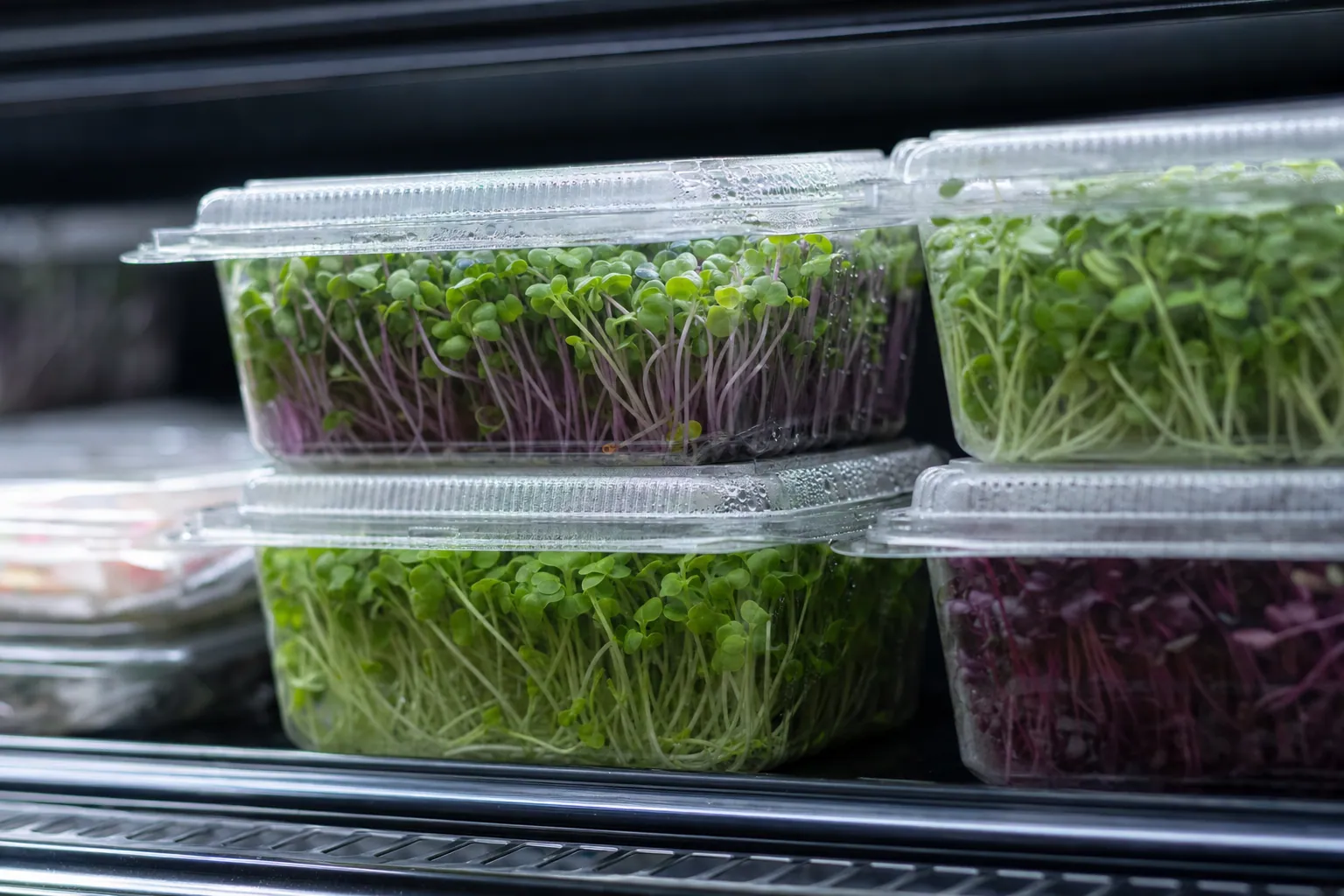
If you love microgreens but wince at the checkout, you're not imagining it. A tiny 2 oz clamshell routinely runs $4 to $6 — which works out to $30–$50 per pound, putting these baby greens among the most expensive produce in the store. And too often, they're already past their best by the time you get them home.
Here's why that happens, and what you can do about it.
Why microgreens cost so much at retail
The high price isn't a markup conspiracy — microgreens are genuinely expensive to grow and sell at scale:
- They're labor-intensive. Seeding, monitoring, harvesting, and washing are largely done by hand, on short 7–14 day cycles.
- They're fragile. Tender greens bruise easily, so they need careful handling, refrigerated transport, and protective plastic packaging.
- They have a brutal shelf life. Most last only a few days after cutting, so retailers price in heavy spoilage and waste.
- The supply chain is long. Farm → packing → cold truck → distributor → store shelf → your fridge. Every step adds cost and time.
Put it on a chart and the gap is stark:
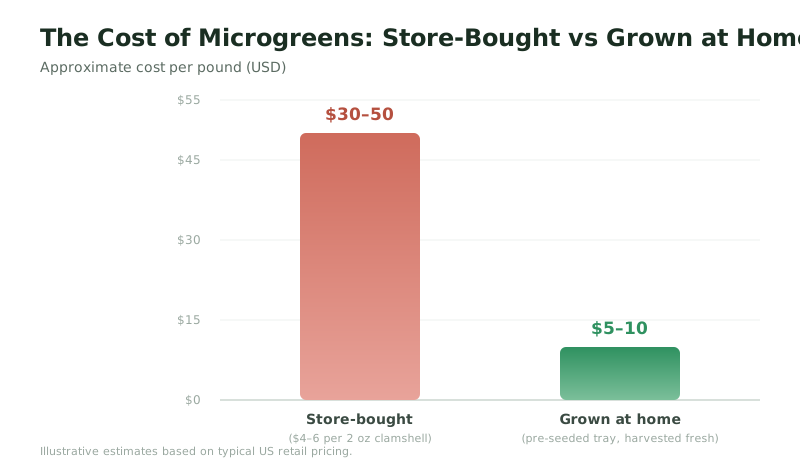
That long supply chain is also why freshness suffers.
The freshness problem nobody mentions
Microgreens are at their nutritional and flavor peak in the first hours after harvest. From the moment they're cut, they begin losing moisture, texture, and nutrients.
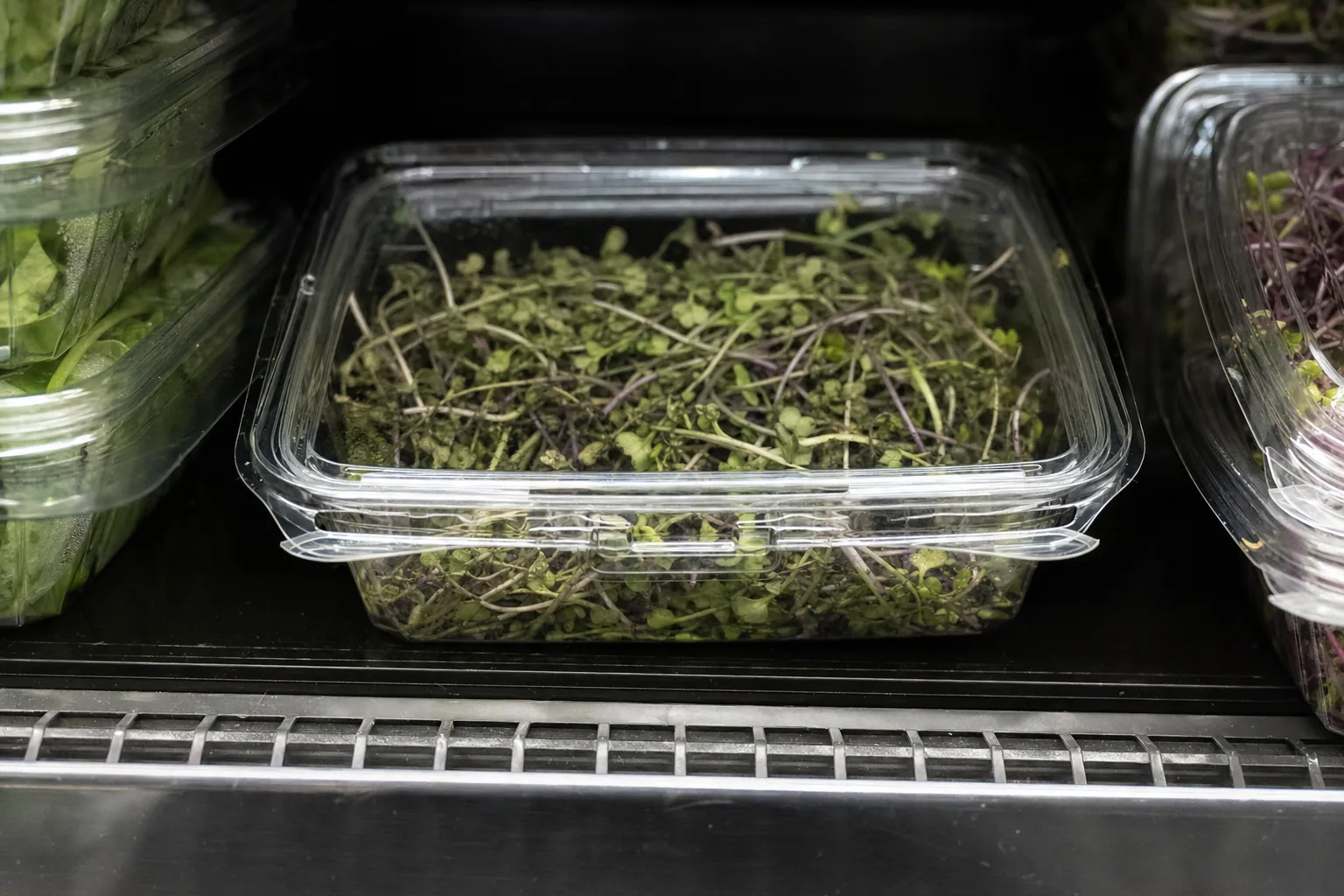
By the time a clamshell reaches you, it has often spent several days to a week in transit and on the shelf — sealed in plastic, slowly wilting. Here's the rough journey:
| Stage | Typical time | What's happening to the greens |
|---|---|---|
| Harvest & pack | Day 0 | Peak freshness and nutrient density |
| Cold transport & distribution | Days 1–3 | Moisture and nutrient loss begins |
| On the store shelf | Days 2–5 | Wilting accelerates in plastic |
| In your fridge | Days 1–4 | Often slimy before you finish the box |
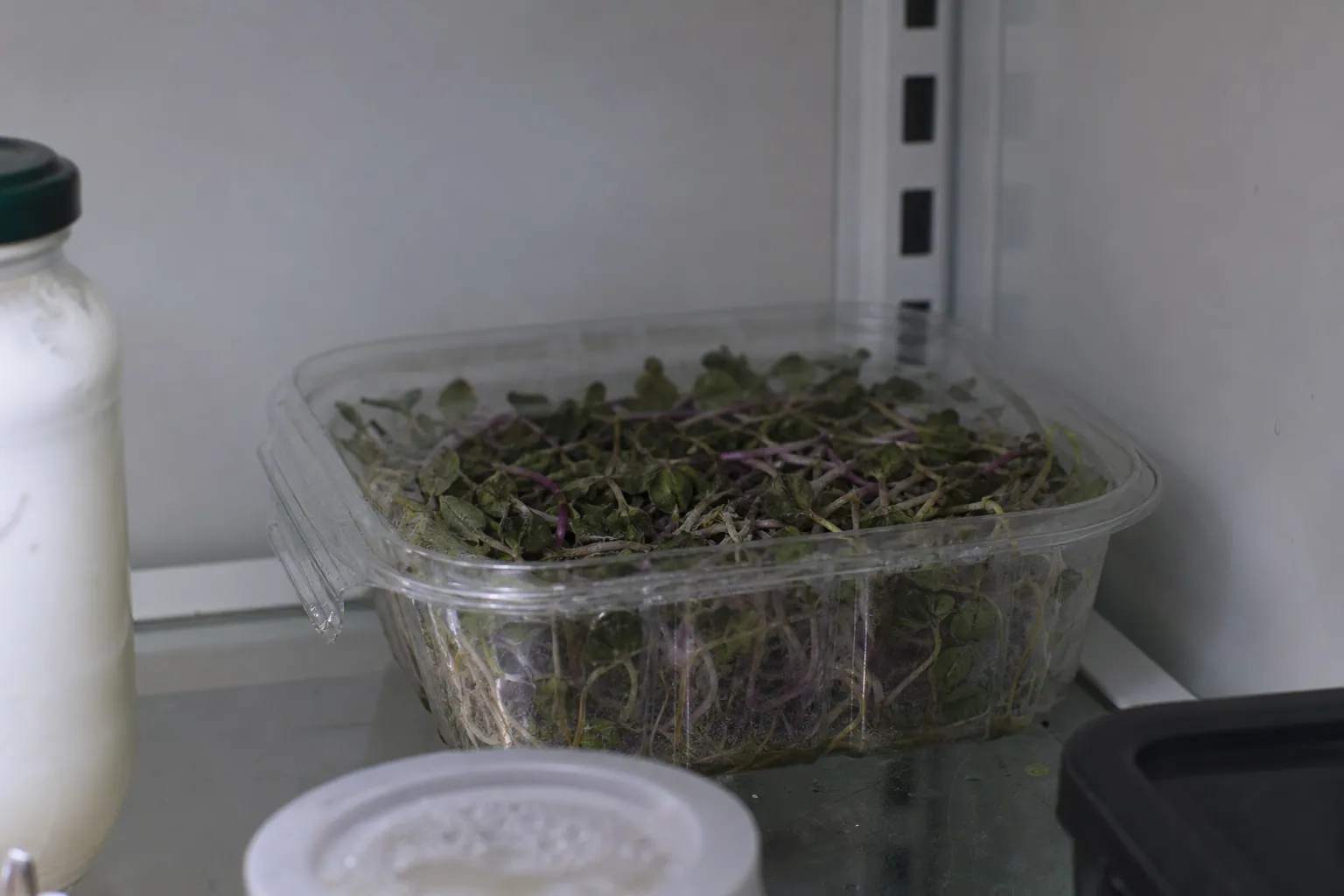
You're frequently paying premium prices for greens already days past their prime. The sad, slightly slimy clamshell shoved to the back of the fridge is a familiar sight for anyone who buys microgreens regularly — and because they spoil so fast, much of what you buy never gets eaten, which makes the effective cost even higher.
What you're really paying for
Add it up and a microgreens habit gets pricey fast. If you use microgreens a few times a week, you might go through 2–3 clamshells — call it $10–18 a week, or $500–900 a year — for greens that are wilting before you finish them.
For a food prized specifically for being fresh and nutrient-dense, that's a frustrating trade.
The fresher, cheaper alternative: grow-and-eat
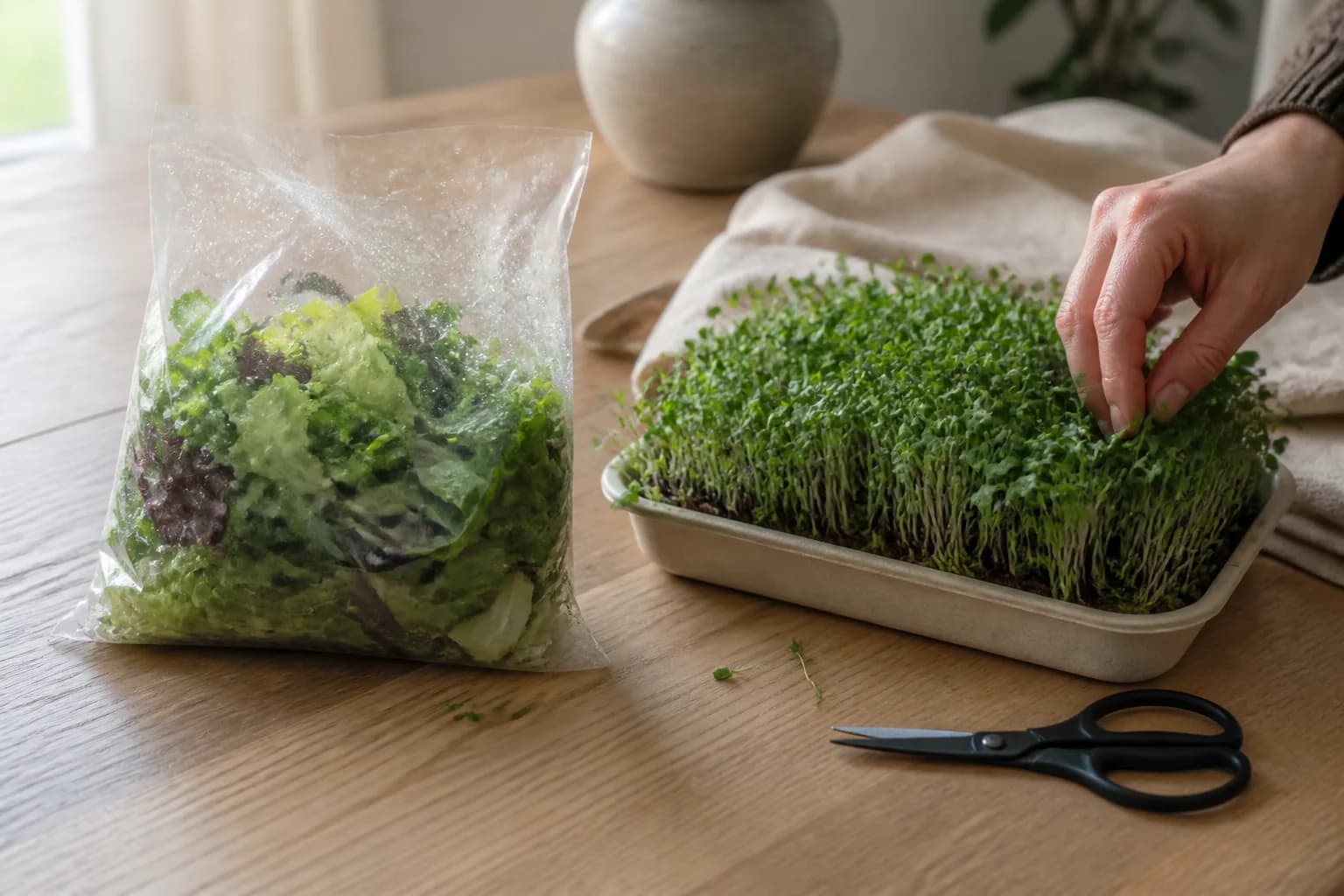
The structural problem is the supply chain — distance and time between harvest and plate. The fix is to shrink that distance to zero: grow them where you eat them, and harvest only what you need, when you need it.
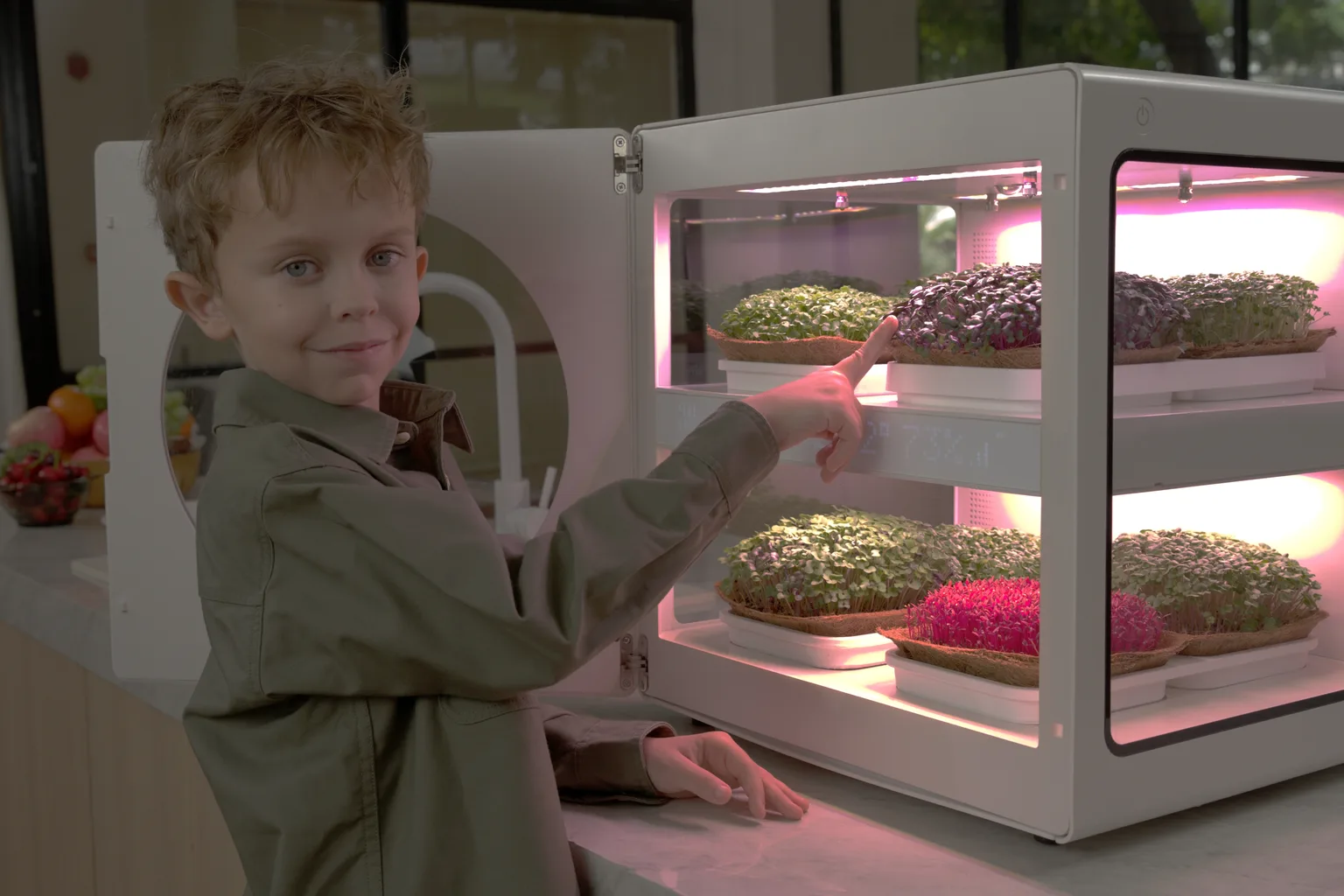
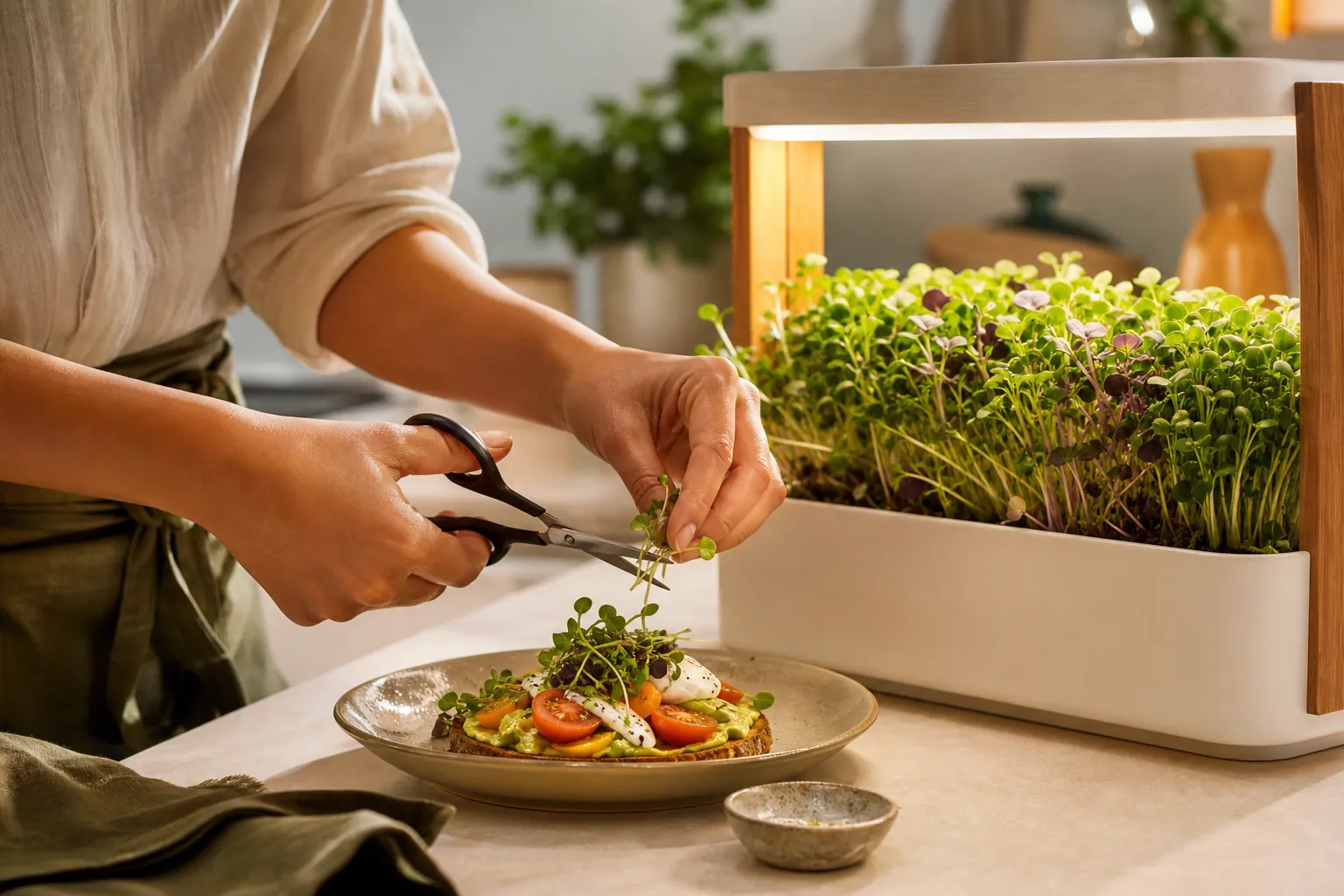
That's exactly what Luya is built for. It's a countertop grower that turns a pre-seeded tray into a fresh harvest right on your counter:
- Harvested seconds before eating — peak flavor and nutrition, with none of the transit-and-shelf decay.
- Dramatically cheaper per serving. A pre-seeded tray costs a few dollars and yields the equivalent of several store clamshells — without the spoilage you're throwing away.
- No wilting, no waste. You cut what you need and the rest keeps growing, alive, until you do.
- No plastic clamshells headed for the trash.
Microgreens earned their reputation by being fresh and nutrient-dense. The store version too often delivers neither — at a premium price. Growing them at your counter restores both, and costs less over time.
Tired of paying $5 for half-dead greens? See how Luya grows fresh microgreens on your counter →. Curious about the nutrition you're missing? Read What Is Sulforaphane?.