Everything else about growing microgreens at home is yours to control. The water, the tray, the medium, the light, the timing, the temperature — you choose all of it, and you can change any of it tomorrow.
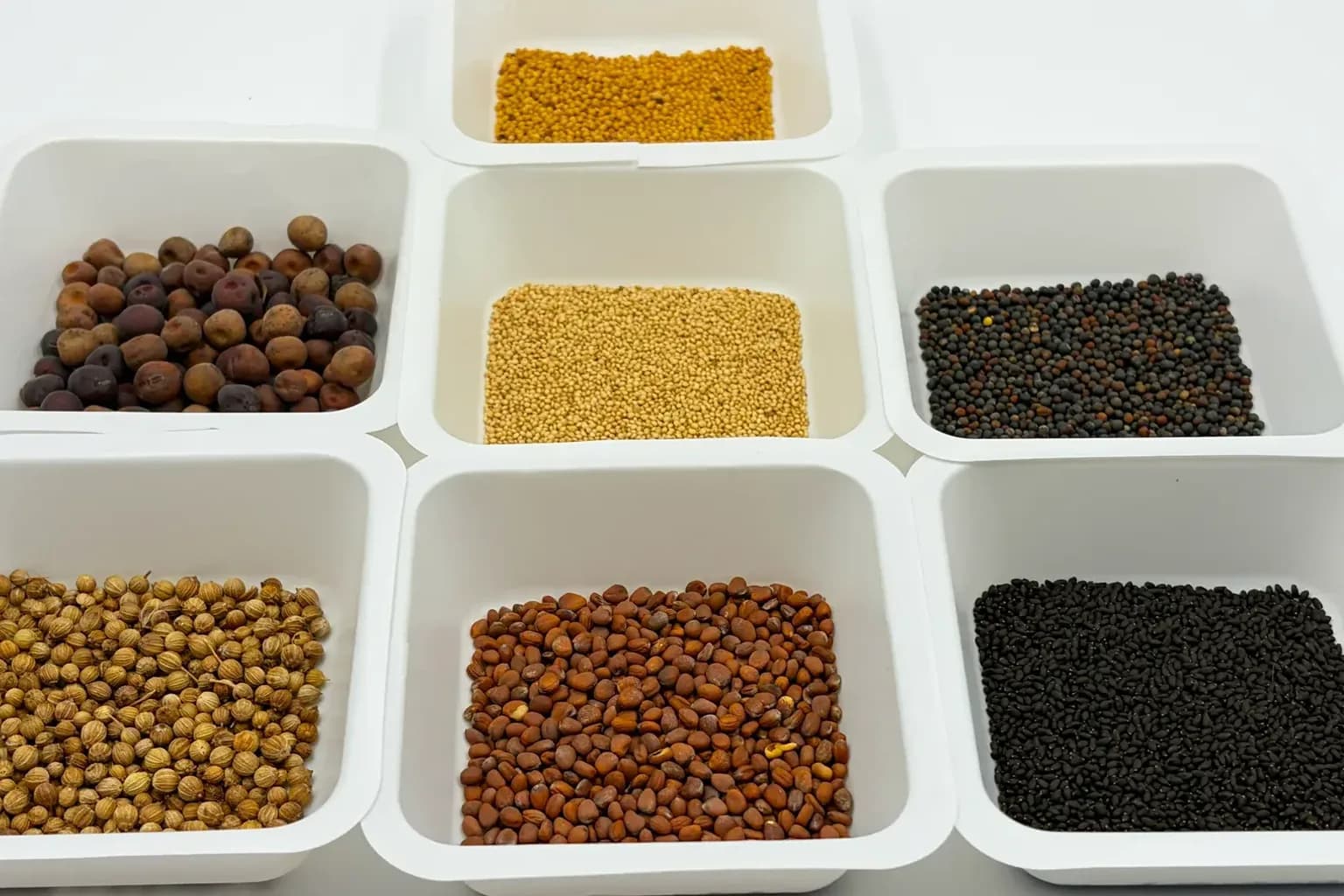
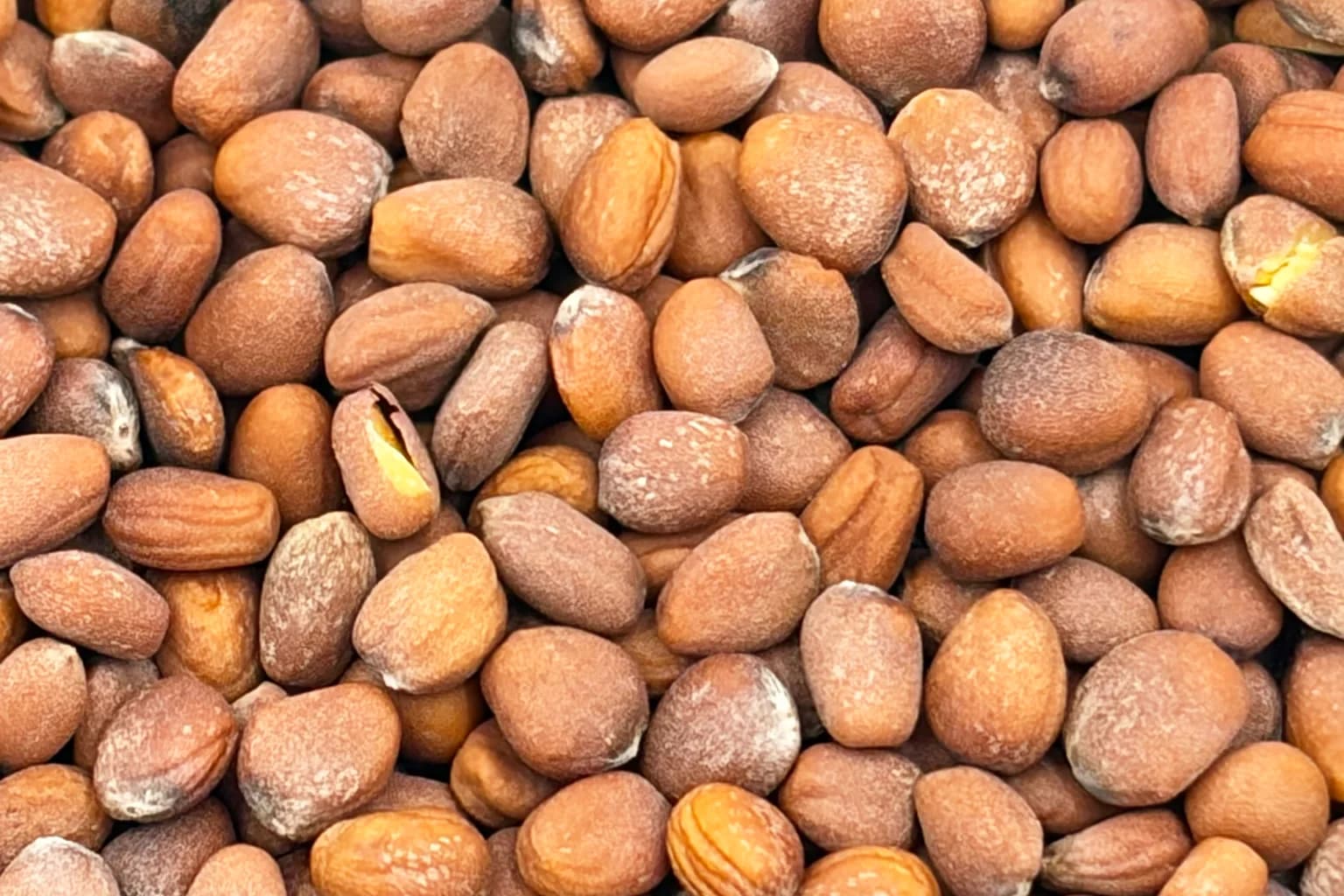
Seed is the exception. It arrives from elsewhere, having passed through a supply chain you did not see, and the food-safety literature identifies contaminated seed as a primary source of pathogen introduction [1].
Highest inherited risk, earliest point in the process, least visibility. That combination is why seed treatment is where the research concentrates.
Why seed matters disproportionately
Two reasons, and the second is the one people miss.
It comes first. Treat the water and you close one route. Treat the seed and you address the route the literature calls primary, before the crop exists.
Starting quantity does not determine the outcome. A study inoculating both substrate and seed across 20 microgreen types, at both low and high levels, found that transfer to the edible portion was governed by the pathogen and the crop — and not by how much contamination was introduced [2]. In a warm, humid, nutrient-rich tray held for a week, a small population is not a small problem. It has time.
This is why "the seed looked fine" and "it was probably only a trace" are not reassurances. Neither is a quantity you can perceive, and quantity was not the deciding variable anyway.
What has been tested
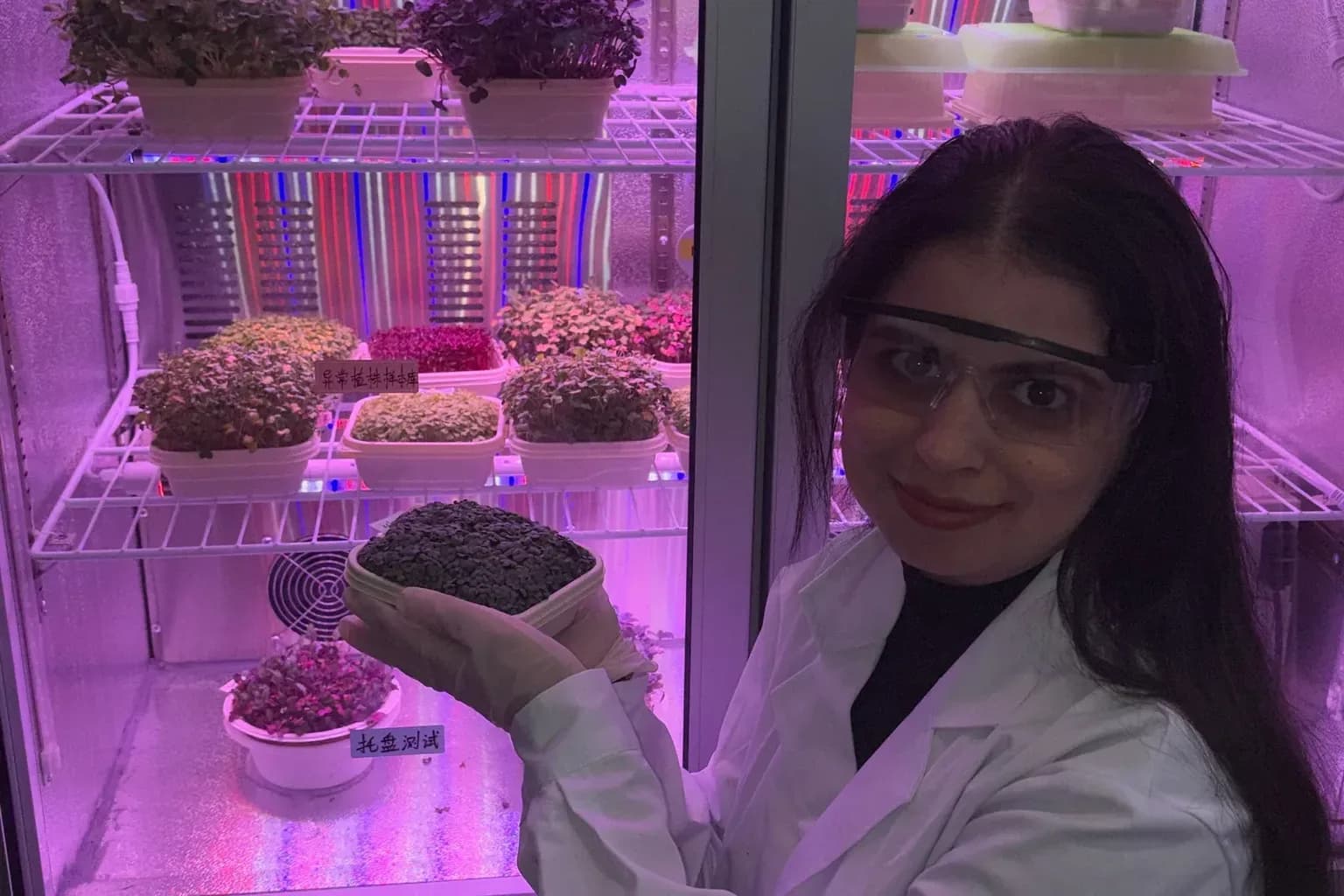
Researchers at West Virginia State University evaluated seed decontamination against Listeria monocytogenes — chosen because recalls due to Listeria contamination have become a concern as the microgreens market expands — comparing three approaches [1]:
- Hydrogen peroxide soak
- Hydrogen peroxide combined with peroxyacetic acid
- Dry heat treatment
The design constraint worth carrying away is one that no other sanitation step has: the seed still has to germinate afterwards.
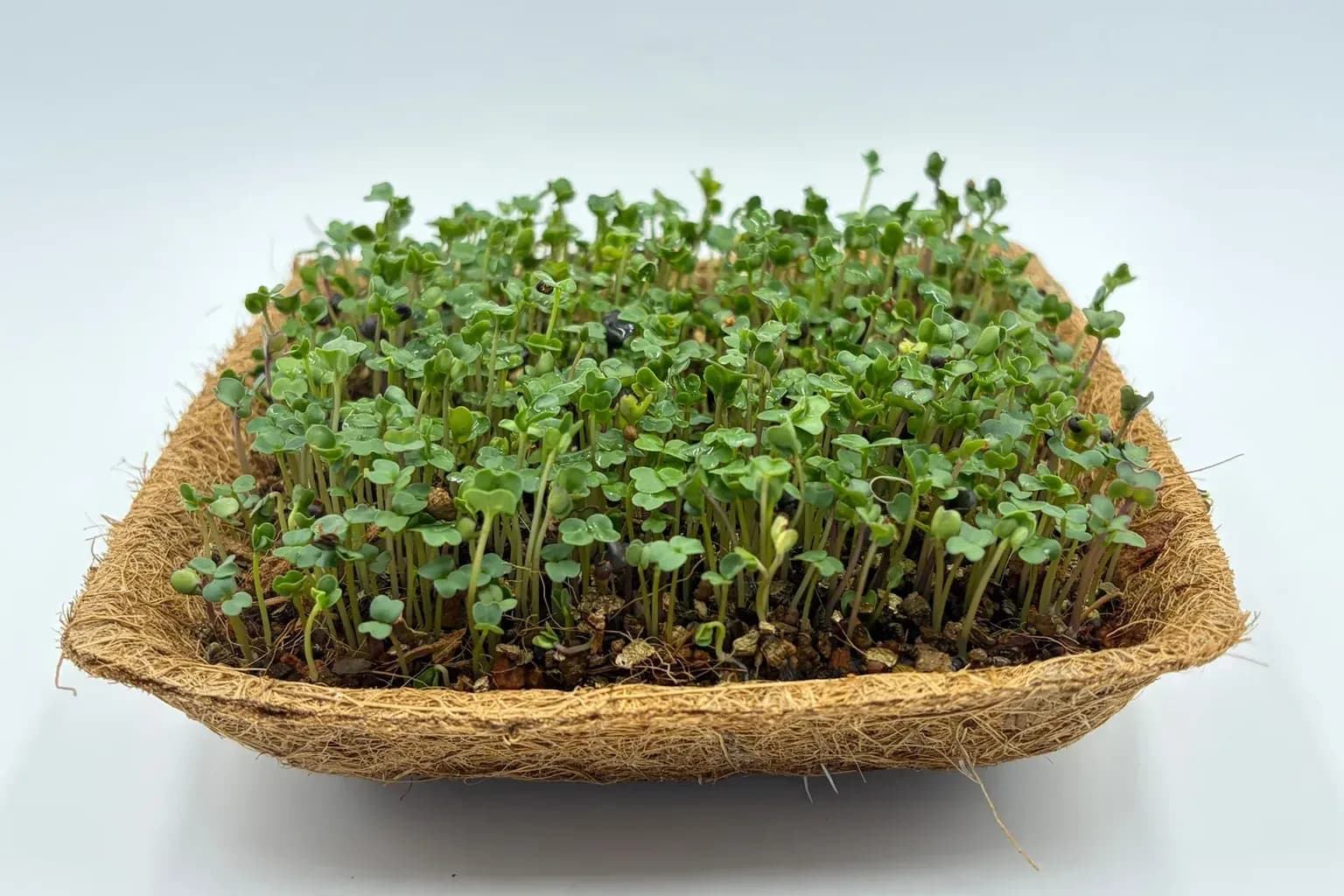
You are not sterilising a countertop. You are treating a living embryo that must survive the treatment and then grow vigorously. Any protocol harsh enough to guarantee a kill risks damaging viability, and a treatment that halves your germination rate has not solved a problem — it has exchanged one for another. Worse, a partially damaged, unevenly germinating tray is itself a food-safety liability: dead and rotting seed is substrate for exactly what you were trying to eliminate.
That tension — efficacy against viability — is the entire subject. It is also why no single home protocol has emerged: the workable dose depends on the seed, and seeds differ in coat thickness, size, oil content and how much heat or oxidiser they tolerate.
Why we are not giving you a recipe
We are not publishing concentrations and contact times. That is a deliberate decision, and the reasoning is worth stating rather than leaving as an omission.
The numbers in these studies were validated in a laboratory, against specific inoculated strains, on specific seed lots, with germination measured afterwards and microbial counts confirming the result. Every one of those conditions is load-bearing. Move the number into a kitchen — different seed, no inoculation to test against, no plate count afterwards, no way to know whether it worked — and you have a ritual, not a protocol. Publishing it would dress up a guess in the costume of a lab result, which is worse than saying nothing, because it produces false confidence in exactly the place where confidence should be earned.
What is well supported and genuinely actionable
- Buy seed intended for sprouting or microgreens. This is the single highest-value habit. Suppliers serving this market test lots for pathogens; seed sold for field planting is not held to that standard and may be treated with fungicides never intended for a food crop eaten raw at day seven.
- Keep the lot number. If something goes wrong, the lot is the thread you pull — and it is the only way to tell a seed problem from a process problem.
- Store seed dry and cool. Moisture during storage is an opportunity you can simply decline to provide.
- Do not reuse soak water, and do not soak longer than the crop needs. Soak water is a warm nutrient broth; time in it is growth time for anything present. See germination and blackout.
- Buy quantities you will use. A bag of seed opened repeatedly over two years accumulates handling, humidity and opportunity.
Where this sits in the bigger picture
Seed is one entry point among several — water and substrate are documented routes too, and neither is closed by treating seed. Are microgreens safe to eat maps all of them, including why growing where you eat removes steps rather than removing risk. The water article covers the route that runs through every cycle rather than only the first day.
Sources
Every figure in this article comes from one of the papers below, each read in full before being cited. Where a study measured one species under one set of conditions, we say so rather than generalising it to every crop. Follow the DOI to check any number yourself.
- Ayilaran, McHugh & Jung — Microgreen seed decontamination: efficacy of hydrogen peroxide, hydrogen peroxide–peroxyacetic acid, and dry heat against Listeria monocytogenes. Journal of Agriculture and Food Research 27 (2026) 102882. doi.org/10.1016/j.jafr.2026.102882
- Transfer of Salmonella, Escherichia coli O157:H7 and Listeria monocytogenes to microgreens from contaminated substrate or seed. International Journal of Food Microbiology 414 (2024) 110612. doi.org/10.1016/j.ijfoodmicro.2024.110612
- Understanding food safety on sprouts and microgreens: contamination factors and decontamination strategies. Food Research International 214 (2025) 116589. doi.org/10.1016/j.foodres.2025.116589