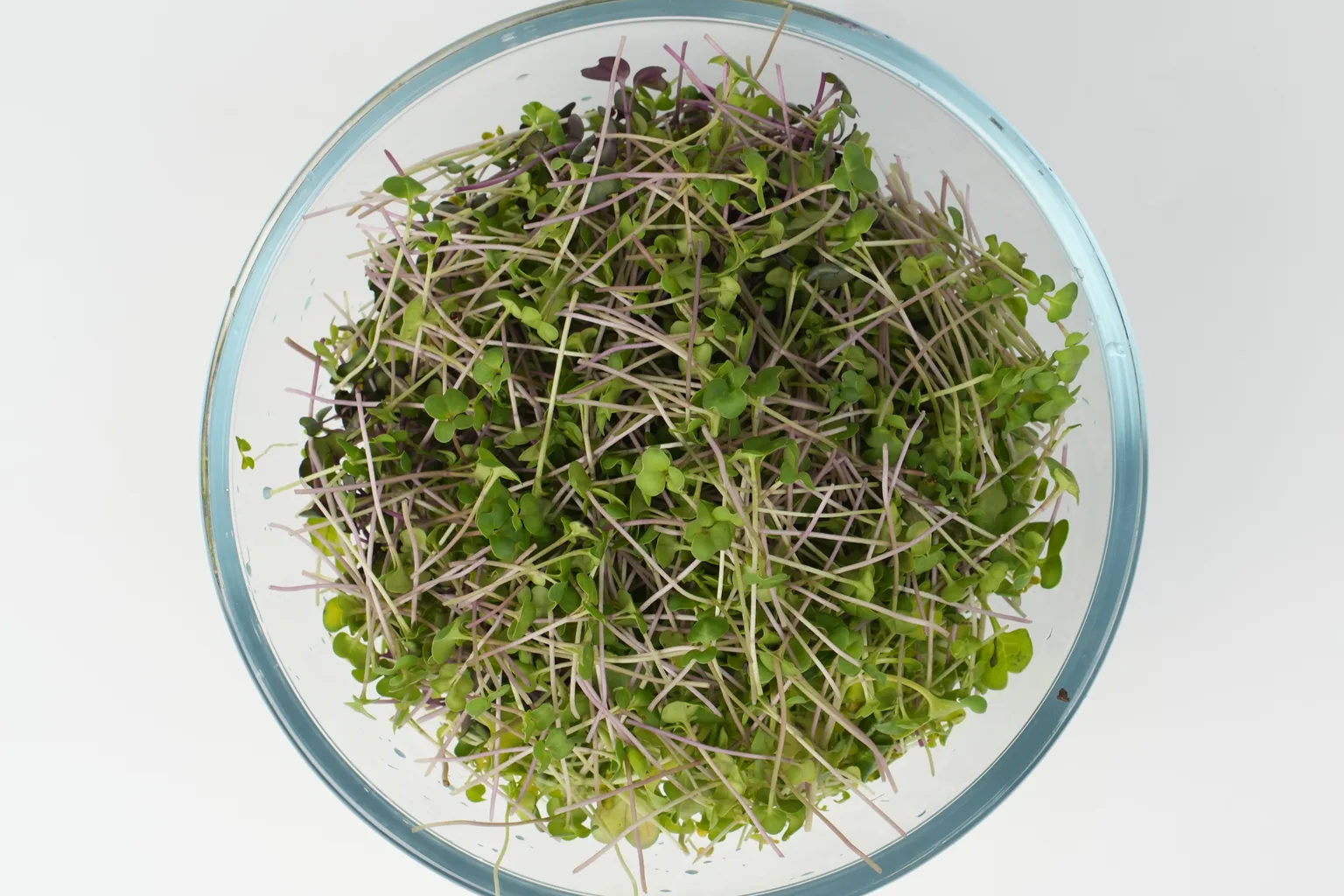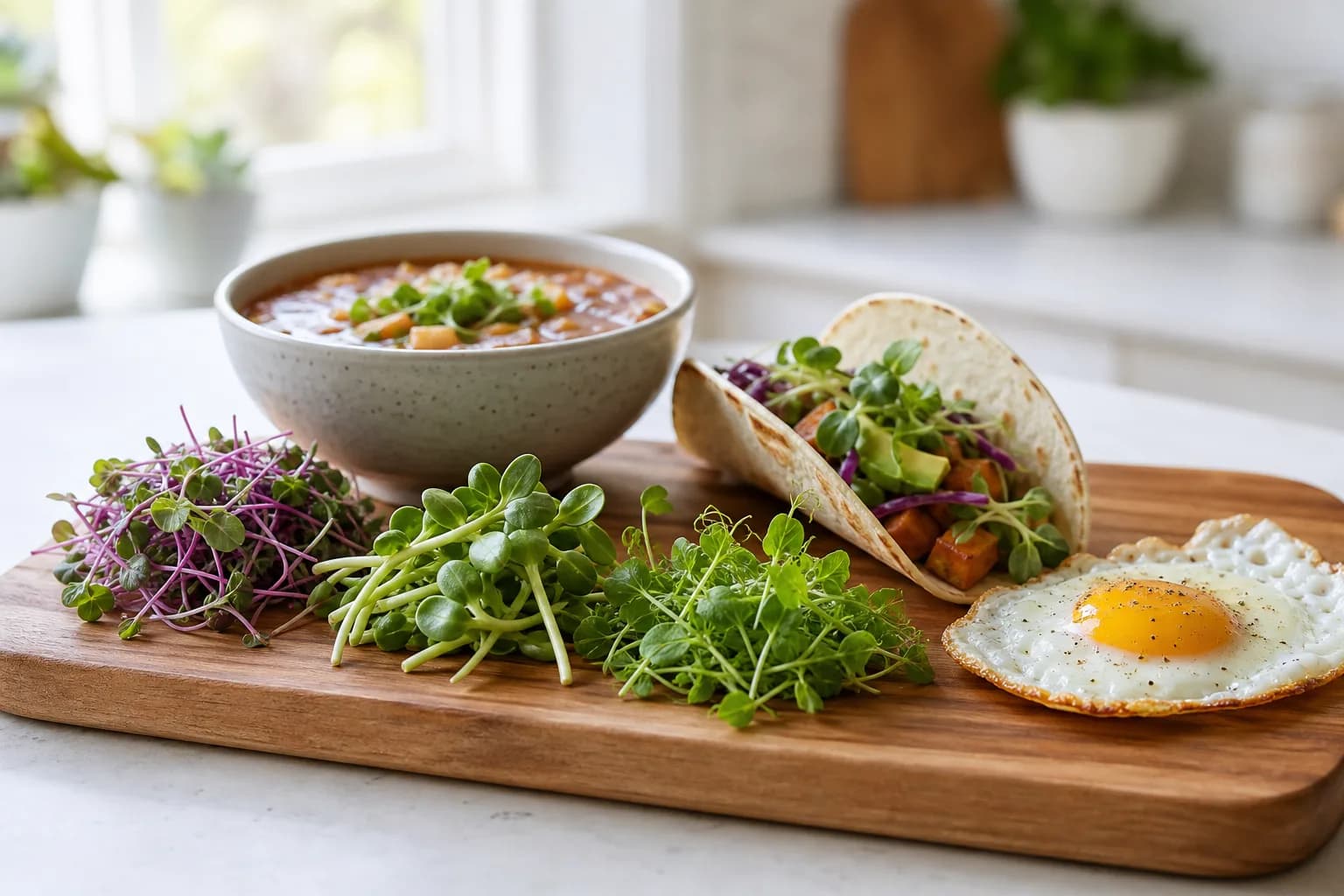
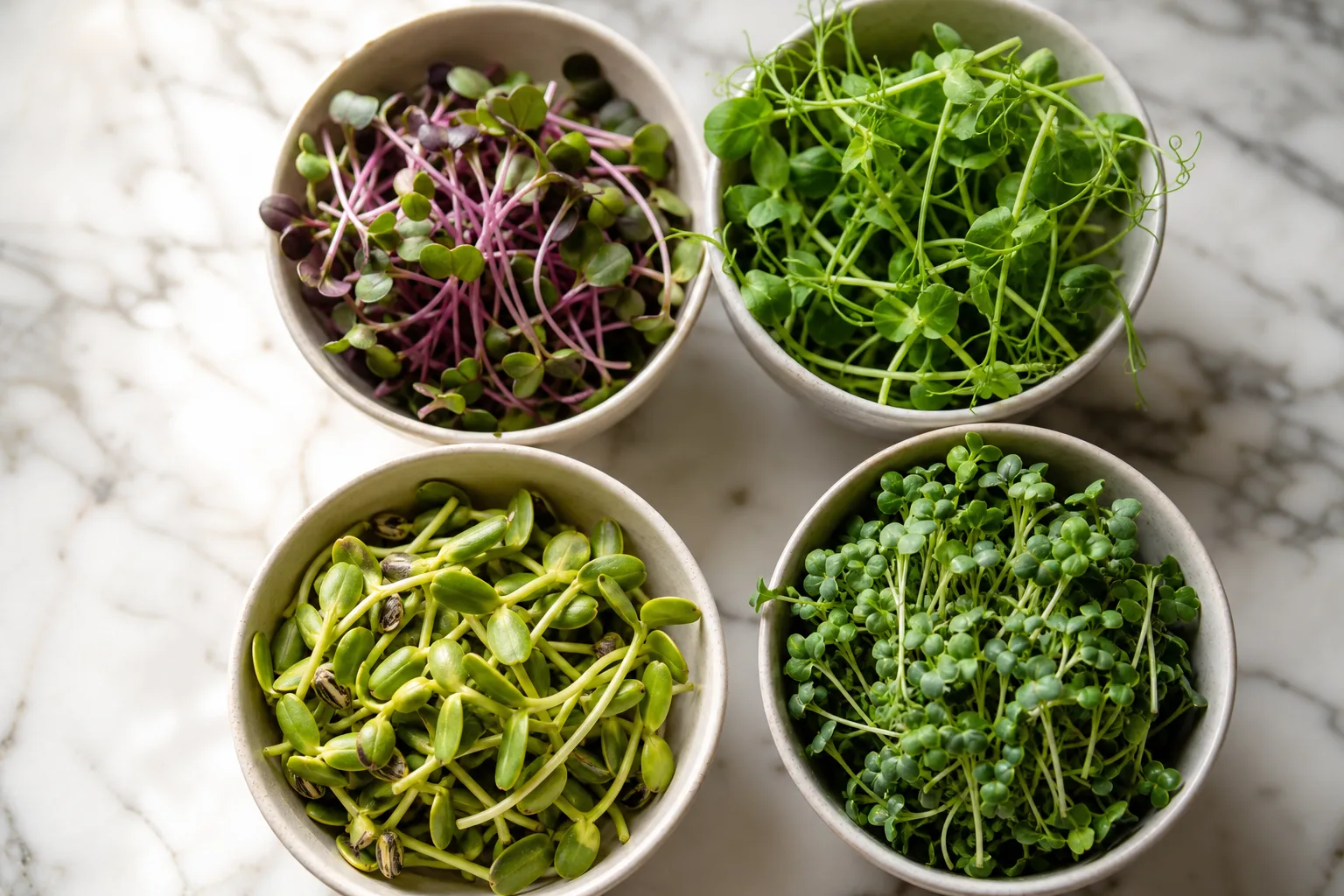
If you have ever bought a clamshell of microgreens expecting a delicate garnish and instead gotten a mouthful of horseradish-level heat, you already know the secret hiding in this category: not all microgreens taste alike. Far from it. A trained sensory panel that worked through a dozen different micro and baby greens found they sort cleanly into a handful of distinct flavor families — each one suited to different foods, moods, and moments.
Knowing those families turns microgreens from a mystery topping into a tool you can actually cook with. Want a peppery kick on a taco? There's a profile for that. Want something that disappears into a smoothie without a fight? Different profile. Below, we break down the four flavor archetypes, how they taste, how they feel in the mouth, and how to pick the right one for whatever you're making.
How researchers grouped microgreens by flavor
The grouping isn't guesswork. Over several tasting sessions, a trained sensory panel evaluated 12 micro and baby greens — including broccoli, arugula, sunflower, mustard, pea shoots, radish, bok choy, watercress, and baby kale and spinach. Every sample was tasted blind, in random order, labeled only with a three-digit code and served under red lighting so the color of the greens couldn't sway anyone's impression. Panelists rinsed and took breaks between samples so the spicy ones wouldn't blow out their palates for the milder ones.
When all the descriptions were tallied, the greens collapsed into four representative profiles. Think of them as the corners of the microgreen flavor map. Most varieties you'll find at a market or grow at home land near one of these four points.
| Flavor profile | Signature varieties | Taste in one phrase | Best described as |
|---|---|---|---|
| Spicy / pungent | Mustard, radish, arugula, watercress, cress | Sharp, peppery heat | A bite that lingers |
| Fresh-green | Pea shoots, broccoli, bok choy | Clean, vegetal, crisp | Tastes like "green" |
| Nutty-sweet | Sunflower | Mild, rich, slightly sweet | Crunchy and comforting |
| Mild | Baby kale, baby spinach, micro kale | Gentle, leafy, low-key | Barely-there, easy |
Profile 1: Spicy and pungent
This is the loudest family, and it's the one that surprises newcomers. Mustard, radish, arugula, watercress, and cress all carry a sharp, peppery heat that builds as you chew. The sensation comes from the same plant chemistry that gives horseradish and wasabi their punch — sulfur compounds the seedlings produce as a natural defense. In a microgreen, that chemistry is concentrated into a tiny leaf, which is why a single pinch can taste louder than a whole handful of mature salad greens.
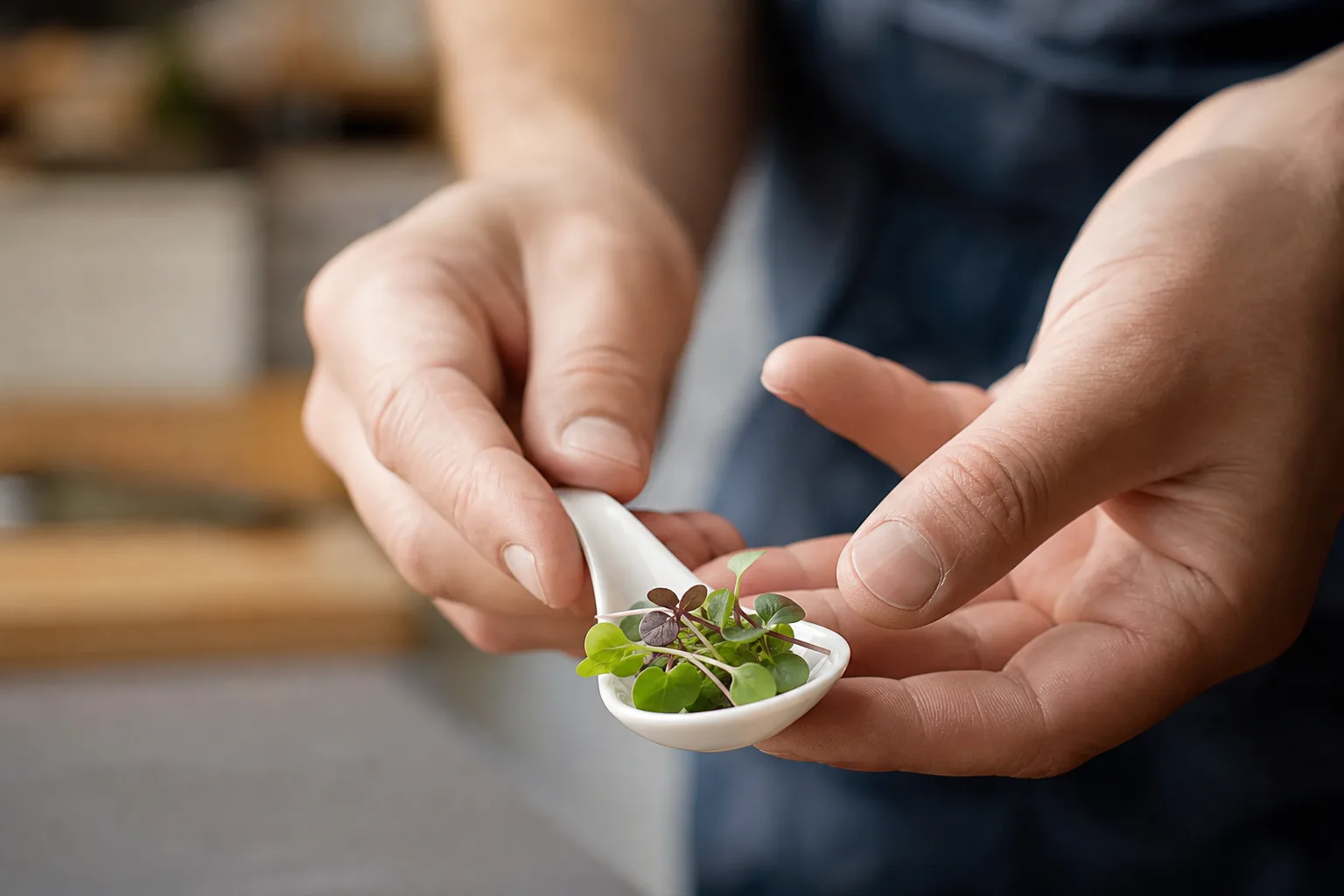
Use these when you want contrast and lift. A few mustard or radish greens cut through fatty foods beautifully — think a rich burger, a slice of avocado toast, or a fried egg. They wake up tacos, ramen, and grain bowls. The catch is restraint: because the heat compounds, a little goes a long way, and these are best added raw at the very end so the bite stays bright. If you want a deeper look at the peppery end of the spectrum, see our spicy microgreens guide and our breakdown of radish microgreens.
Profile 2: Fresh-green
If the spicy profile shouts, the fresh-green profile speaks in a clear, clean voice. Pea shoots, broccoli, and bok choy microgreens taste like the platonic idea of "green" — vegetal, slightly sweet, crisp, and refreshing without much heat or bitterness. Pea shoots in particular taste almost exactly like a sweet snap pea, and broccoli microgreens carry a mild, grassy freshness with just a hint of their cruciferous cousin's character.
This is the most universally likeable group, which makes it the easiest place to start if you're new to microgreens or feeding skeptics. Fresh-green varieties layer into salads, sandwiches, and wraps without fighting the other ingredients, and they're gentle enough to fold into a smoothie. Broccoli microgreens carry a bonus most people don't expect: they're one of the richest dietary sources of sulforaphane, a compound that has drawn real research attention — more on that in our piece on what sulforaphane is and the nutrition of microgreens. For ideas on putting the fresh-green crowd to work, our pea shoots and microgreens salad ideas articles are good next stops.
Profile 3: Nutty and sweet
Sunflower is the standout here, and it's the profile most likely to win over people who think they don't like microgreens. Sunflower shoots are thick, juicy, and satisfyingly crunchy, with a mild, nutty-sweet flavor that reads more like a fresh snack than a salad garnish. There's none of the sharp heat of the spicy group and very little of the grassy edge some greens carry — just a clean, slightly rich taste that pairs with almost anything.
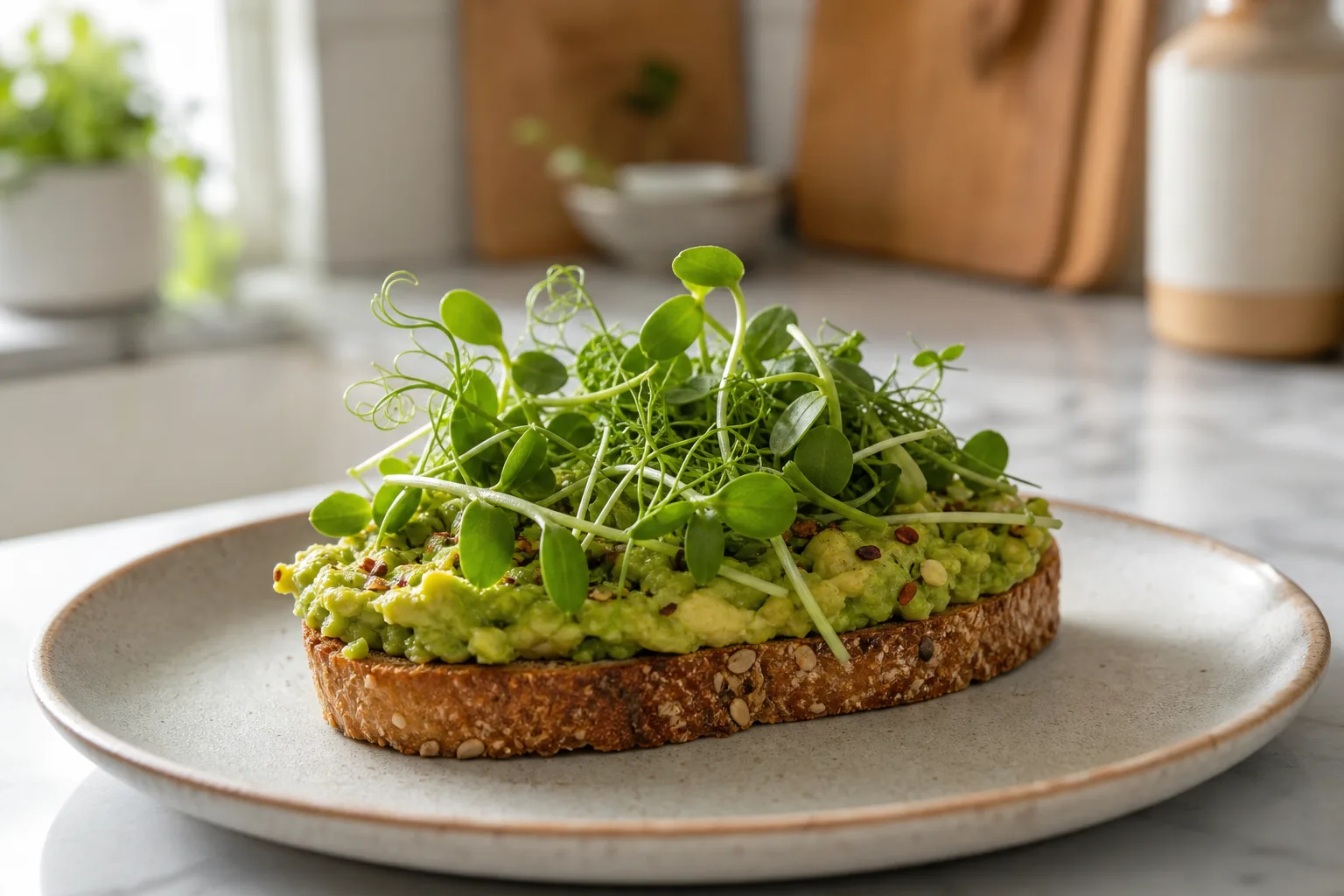
Because they're so substantial, nutty-sweet microgreens behave more like an ingredient than a finishing touch. Pile them on toast, fold them into a sandwich for crunch, blend them into a smoothie, or just eat them by the handful. Their sturdier texture also means they hold up better than delicate greens — they won't wilt the instant they hit a warm dish. We go deeper on this family in our nutty microgreens guide to sunflower and pea.
Profile 4: Mild
The fourth corner of the map is the quiet one. Mild greens — micro kale, baby kale, and baby spinach among them — bring tender leaves and a soft, leafy, low-key flavor with little heat, bitterness, or sweetness to speak of. They're the chameleons of the category: they add freshness, color, and nutrition without changing the flavor of a dish much at all.
That makes mild greens the safe default for cooking and for picky eaters. Stir them into soups and pastas at the last second, tuck them into omelets, or use them as the leafy base of a bowl. They're also forgiving for beginners growing at home, because they don't demand precise timing to taste good. If you're easing a household into greens, this is where to begin.
How to choose by texture, not just taste
Flavor is only half the story. The same panel that mapped taste also tracked texture, and it matters more than most people realize — a green's crunch or tenderness decides whether it belongs raw on top or stirred into the dish.
| Texture | Typical varieties | Best use |
|---|---|---|
| Crisp and snappy | Pea shoots, radish | Raw, as a fresh topping |
| Thick and juicy | Sunflower | Sandwiches, snacking, smoothies |
| Tender and soft | Baby spinach, micro kale, baby kale | Stirred into warm dishes |
| Delicate and fine | Arugula, cress | Light garnish, added last |
The simplest rule: sturdy, crunchy greens (sunflower, pea, radish) shine raw and on top, while tender, delicate ones (mild greens, fine spicy greens) either go in last or get a gentle warm finish. Pairing flavor with texture is how chefs make a garnish feel intentional rather than decorative. For more on the hands-on side, see our microgreen texture guide and tips on how to eat microgreens.
Putting the four profiles to work
Here's the quick mental model. Reach for spicy when a dish needs contrast and a little drama. Reach for fresh-green when you want clean, crowd-pleasing flavor that plays well with everything. Reach for nutty-sweet when you want something substantial enough to be the snack itself. And reach for mild when you want all the freshness and none of the fuss.
The reason this matters more for microgreens than for ordinary salad greens is freshness. These profiles are at their most vivid in the first day or two after harvest — peppery greens are peppier, sweet greens are sweeter, and the texture is at its peak. That's a big part of why store-bought clamshells, which can be a week or more past harvest, often taste flat (we wrote about that in why store-bought microgreens are expensive and not fresh). Growing your own closes that gap. A countertop grower like Luya lets you cut a few greens minutes before they hit the plate, when each profile is loudest — and it manages light, water, and timing for you so the flavor lands consistently from batch to batch.
Once you start tasting by profile instead of by label, microgreens stop being a fussy garnish and become a small, reliable lever for flavor. Spicy, fresh, nutty, or mild — pick the corner of the map that fits your dish, and the rest takes care of itself.