Most people buy their first clamshell of microgreens, sprinkle a few on a salad, and then stall. The rest of the box wilts in the fridge while you wonder what else they're actually for. The honest answer is: almost everything. The trick is matching the right green to the right plate, because microgreens are not one flavor. They range from sweet and nutty to sharp enough to clear your sinuses, and putting a fiery mustard green where a gentle pea shoot belongs is a quick way to wreck a dish.
A trained sensory panel that tasted a dozen micro and baby greens blind found they split into four broad flavor families: mellow and grassy (think broccoli), sweet and tender (pea shoots), pungent and biting (mustard), and tangy-nutty-peppery (arugula). Once you can place a green into one of those buckets, pairing it with food gets a lot easier. Below is a cook's guide to where each type shines, plus a chart you can keep on the fridge.
First, sort your greens by intensity
Before you pair anything, taste a pinch on its own. Intensity matters more than the specific variety, because a bold green will dominate a delicate dish and a mild one will vanish under a bold one. If you want a deeper breakdown of the four families, our microgreens flavor profiles guide goes further, and why do microgreens taste bitter explains the compounds behind the sharp ones.
Here's a rough map of common greens by flavor and punch:
| Microgreen | Flavor family | Intensity | Best described as |
|---|---|---|---|
| Pea shoots | Sweet & tender | Mild | Fresh sweet pea, juicy, crunchy |
| Sunflower | Nutty | Mild | Sweet, nutty, satisfying crunch |
| Broccoli | Mellow & grassy | Mild | Clean, slightly bitter, green |
| Beet | Earthy-sweet | Mild | Earthy with a hint of sweetness |
| Cilantro | Citrusy | Strong | Lemony, bright, herbal |
| Radish | Peppery | Strong | Sweet then sharp, like the root |
| Arugula | Tangy-nutty | Strong | Peppery, nutty, slightly astringent |
| Mustard | Pungent | Very strong | Hot, sinus-clearing, wasabi-like |
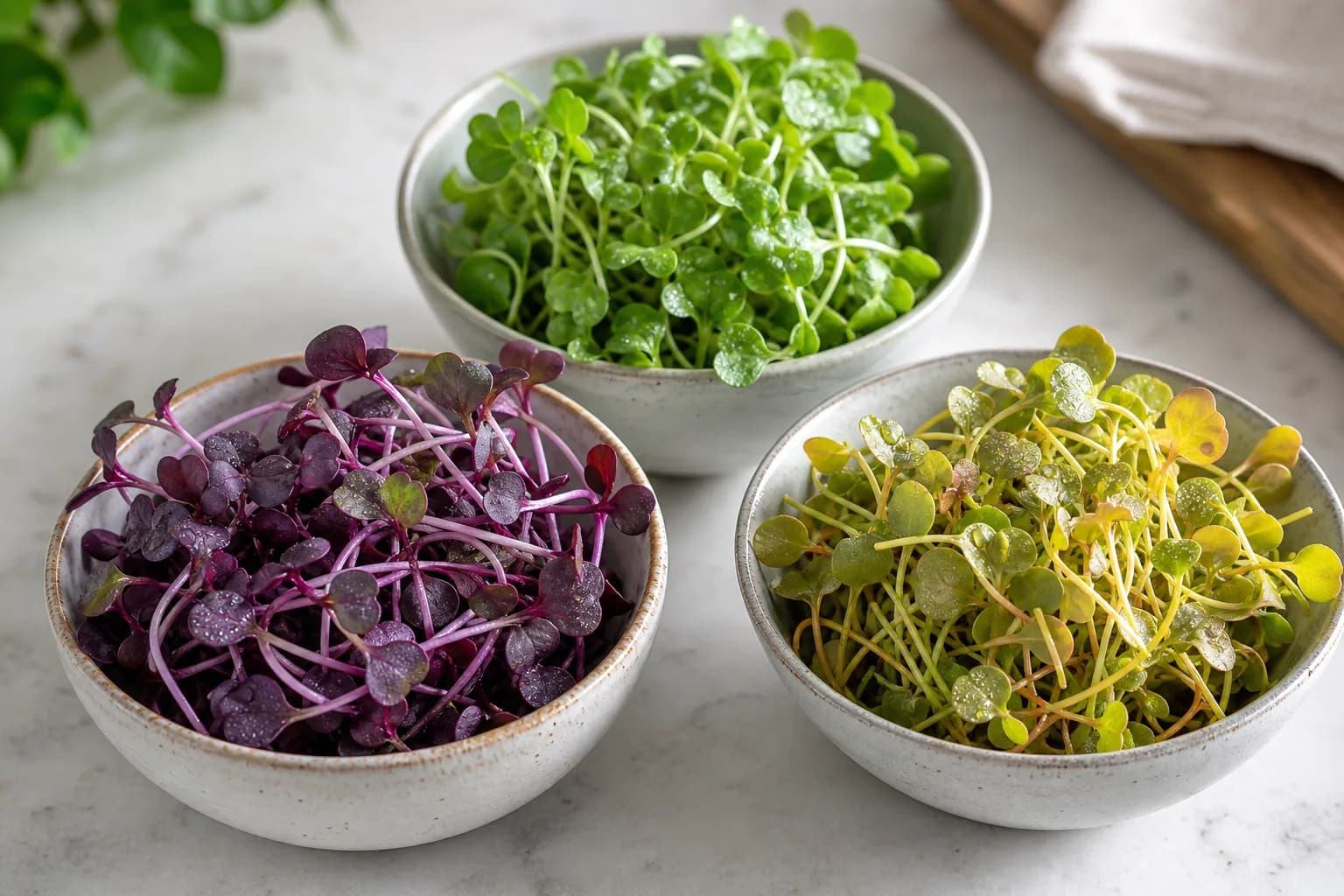
Keep this in mind: the darker the leaf, the more concentrated the color compounds, and often the bolder the flavor. Use the mild ones in piles and the strong ones in pinches.
Eggs: go peppery or herbal
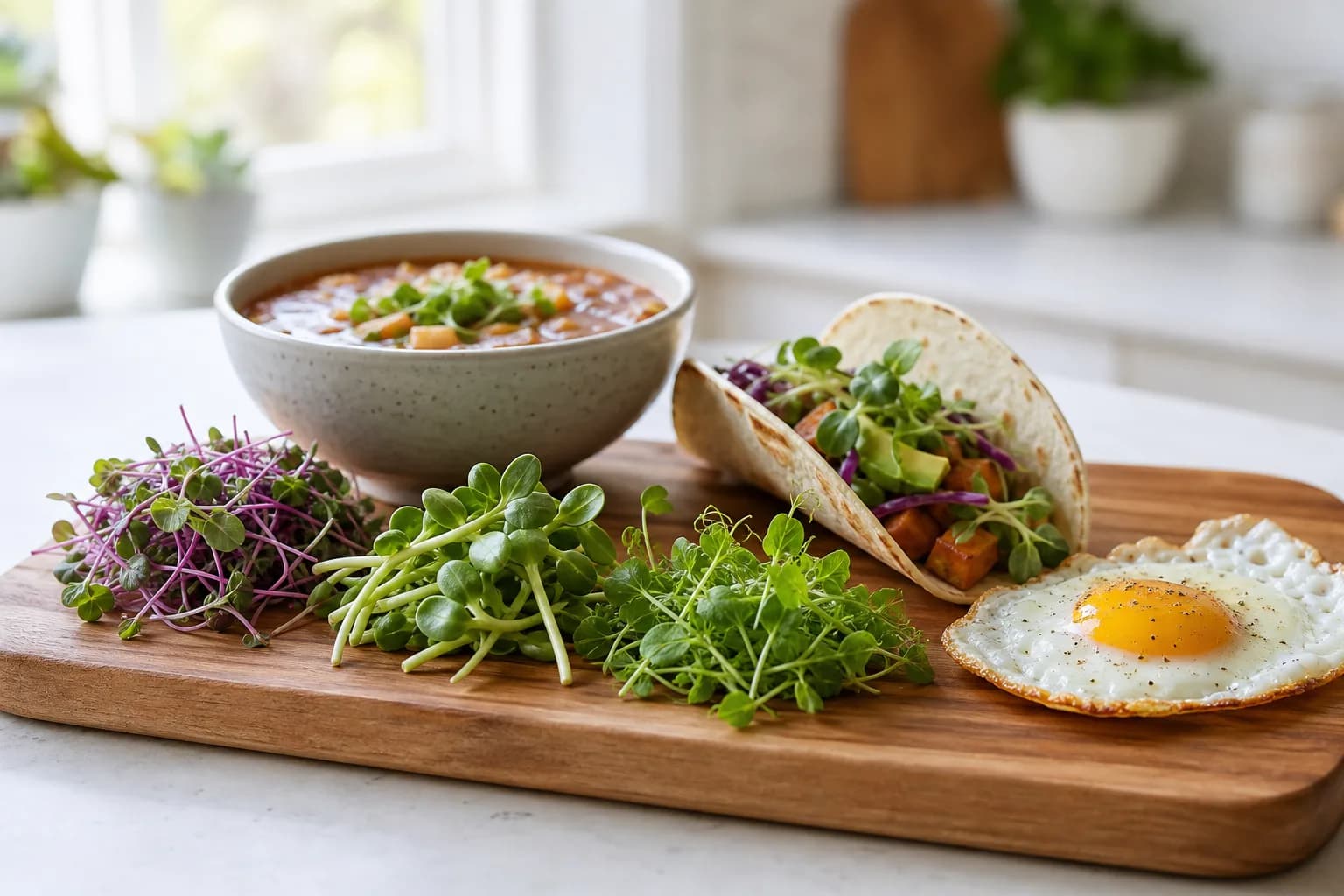
Eggs are a blank, rich canvas, which means they can take a green with some attitude. A soft scramble or a fried egg on toast comes alive under arugula or radish microgreens, whose pepper cuts through the fat. Cilantro micro is excellent folded into an omelet for a citrusy lift. If you're cooking for someone who finds raw greens too sharp, sunflower shoots add nutty crunch without heat.
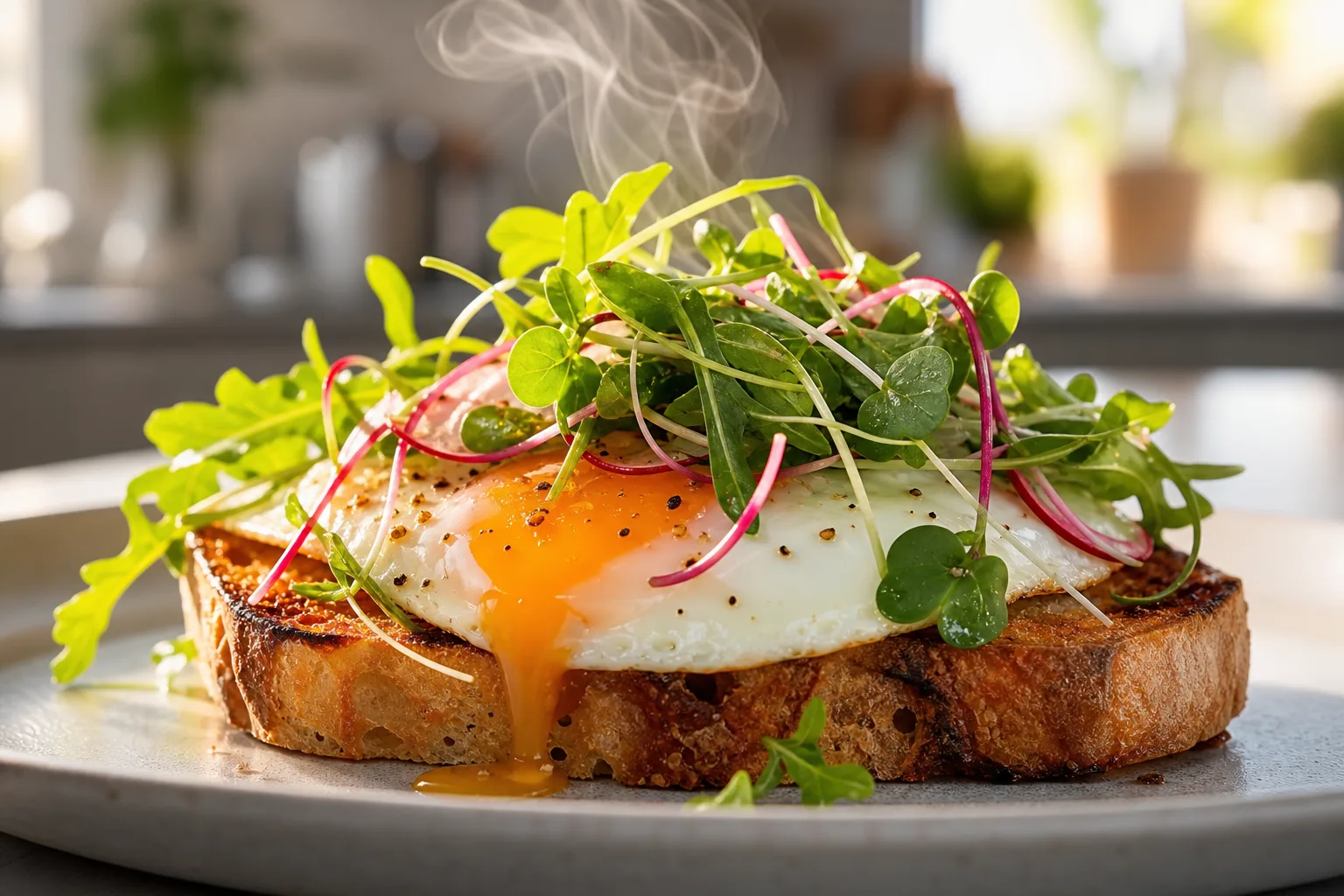
One rule for eggs and every other hot dish: add the greens at the very end, off the heat. Microgreens are tender seedlings, not hardy leaves, and they go limp and dull fast. Basil micro is especially fussy and discolors in the cold or with too much heat. Treat them like a finishing herb, not an ingredient you cook. We cover this in more detail in our guide to cooking with microgreens and heat.
Tacos: radish and cilantro, every time
Tacos want brightness and crunch to balance rich, savory fillings, and this is where peppery and citrusy greens earn their keep. Radish microgreens taste like a milder, leafier version of the pickled radish you'd already put on a taco, so they belong on carnitas, fish, and anything with crema. Cilantro micro brings the lemony, herbal note without the soapy intensity some people dislike in mature cilantro.
For a spicy taco, lean into the contrast with even hotter greens. Mustard or a spicy mustard medley adds a wasabi-like kick that plays beautifully against fatty pork or beef. If you want to understand which greens deliver that heat and why, our spicy microgreens guide breaks it down.
Soups: finish, don't simmer
Soup is one of the oldest professional uses for microgreens. Chefs scatter them over the bowl at the table as a flavor accent and a pop of color, never stirring them into the pot. A swirl of pea shoots or sunflower on a creamy potato or squash soup adds freshness and a little texture. Broccoli micro suits earthy lentil and bean soups. For a brothy noodle bowl, cilantro and radish micro do the same job a handful of fresh herbs would, only more concentrated.
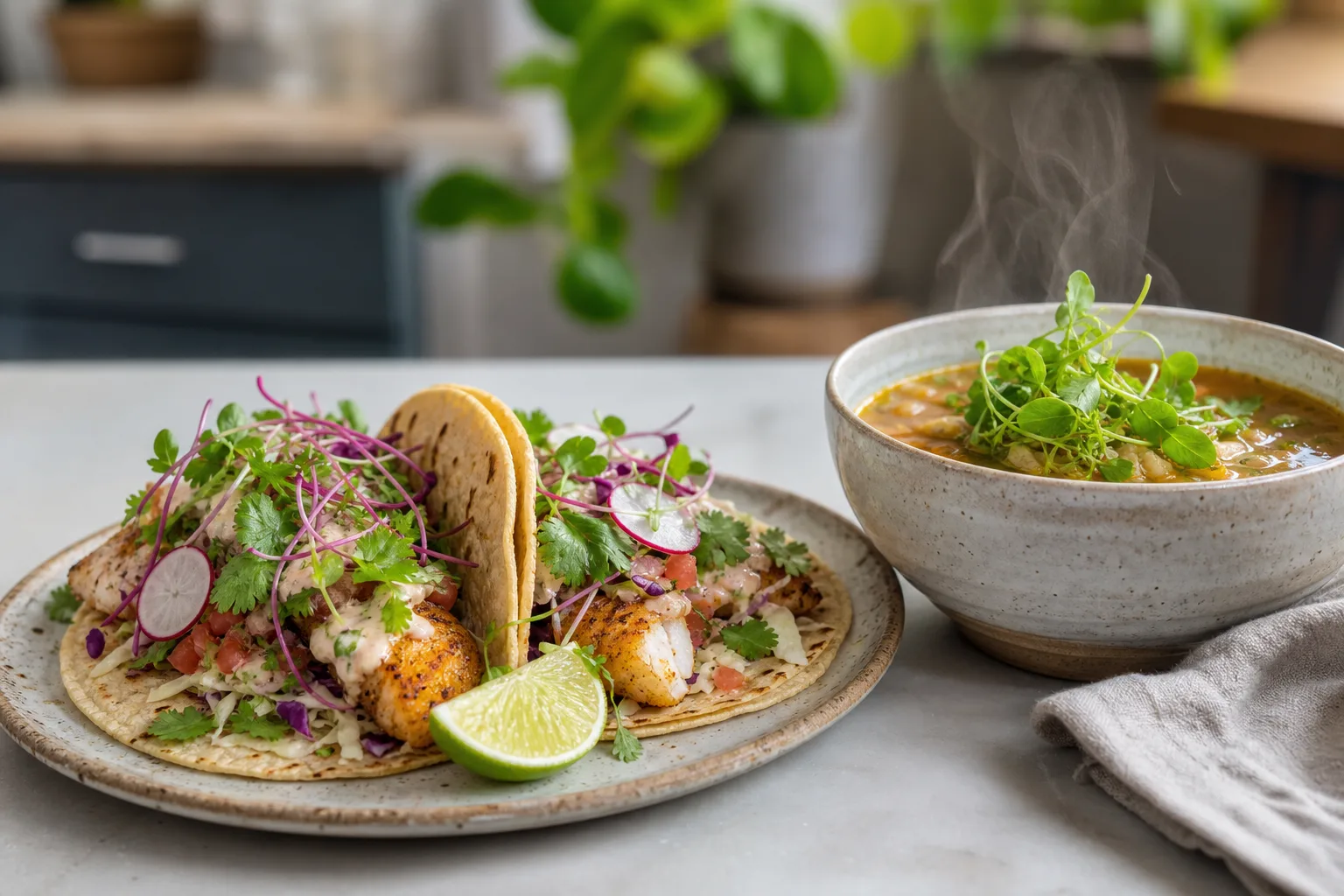
Because the heat from the soup will soften them within a minute or two, garnish each bowl right before it goes to the table. For more ideas along these lines, see our roundup of savory microgreen recipes.
Fish and seafood: keep it delicate
Fish has subtle flavor, so heavy-hitting greens can bulldoze it. Match delicate proteins with delicate or fresh-tasting greens. Parsley micro is a classic with seafood — mild, clean, and free of the tough stems of mature parsley. Pea shoots suit scallops and white fish. Cilantro and a light touch of radish work on grilled or seared fish where you want a little brightness. For an avocado-and-grapefruit plate or a citrusy ceviche, radish micro doubles as garnish and gentle peppery accent.
Save the mustard and heavy arugula for oilier, stronger fish like salmon or mackerel, where there's enough flavor and fat to stand up to the pepper.
Sandwiches and wraps: build for crunch
A sandwich is structural, so you want greens that add texture and won't disappear. This is the place to be generous. Sunflower shoots are the gold standard here: nutty, sturdy, and genuinely crunchy. Pea shoots layer in like a fresh, sweet lettuce. For a sandwich that needs a kick — a turkey club, a roast beef, a creamy egg salad — pile on arugula or radish micro the way you'd use peppery greens or sprouts. (On that note, if you've wondered how the two differ, here's microgreens vs sprouts.) Our microgreens sandwiches and wraps guide has more specific builds.
Salads: mix mild and bold
Salads are where you can actually blend flavor families instead of choosing one. A good microgreen salad balances a mild base — pea shoots, sunflower, broccoli — with a small accent of something bold, like a pinch of mustard or arugula for lift. Beet micro brings earthy sweetness and a stunning red color; a light sprinkle of salt highlights it. Treat the strong greens as seasoning rather than the bulk of the bowl. For full recipes, see our microgreens salad ideas.
Here's a quick pairing chart to pull it all together:
| Dish | Best matches | Why it works | Use with caution |
|---|---|---|---|
| Eggs | Arugula, radish, cilantro | Pepper and citrus cut the richness | Plain broccoli (can disappear) |
| Tacos | Radish, cilantro, mustard | Brightness and crunch against rich fillings | Beet (clashes with savory) |
| Soups | Pea shoots, sunflower, broccoli | Fresh accent that softens nicely | Mustard (too aggressive) |
| Fish | Parsley, pea shoots, cilantro | Delicate greens for delicate flavor | Mustard, heavy arugula |
| Sandwiches | Sunflower, pea shoots, arugula | Sturdy crunch that holds up | Cilantro (too soft alone) |
| Salads | Mix mild base + bold accent | Balanced flavor and texture | All-mustard (overwhelming) |
A note on freshness
Every pairing above assumes one thing: the greens are actually fresh. Microgreens lose flavor, crunch, and color quickly after harvest, which is why a tired clamshell from the store tastes flat no matter where you put it. The boldest, most distinct flavors come from greens cut minutes before you eat them. That's the whole case for growing them at home — a countertop grower like Luya keeps a rotation of crops going so you can snip exactly what a dish needs, when it needs it. If you'd rather start in a tray on the windowsill, our how to grow microgreens at home guide will get you there.
The takeaway
Microgreens aren't a single garnish; they're a whole spice rack of fresh flavors. Sort them by intensity, then match mild greens to delicate foods and save the peppery, pungent ones for rich dishes that can take the heat. Radish and cilantro on tacos, sunflower and pea shoots on sandwiches and in soup, parsley with fish, and a balanced mix on salads. Add them at the end, taste as you go, and you'll never let half a box wilt again.