This article is for general education and is not medical advice. Talk to your doctor before changing your diet for a health condition or if you take medication.
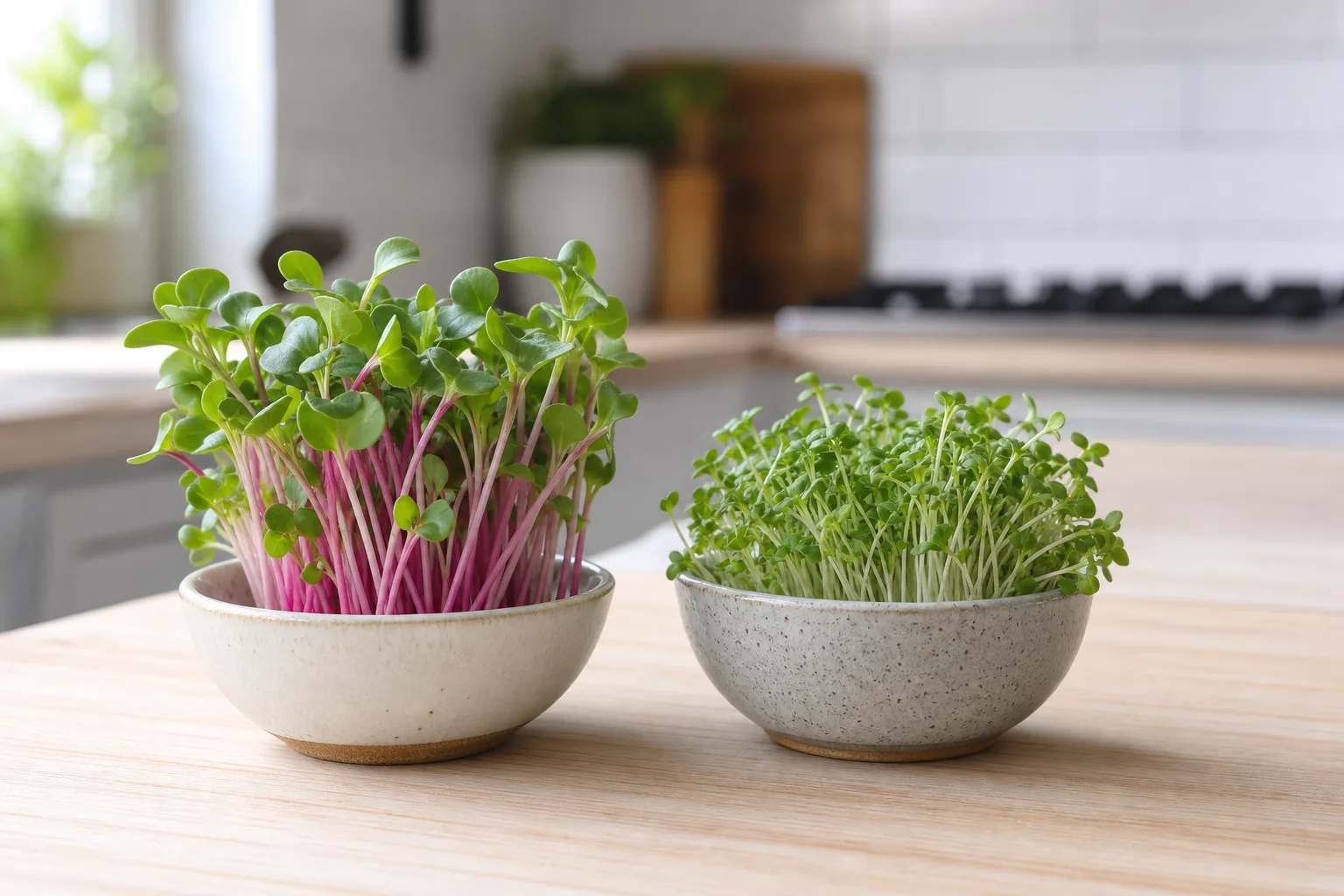
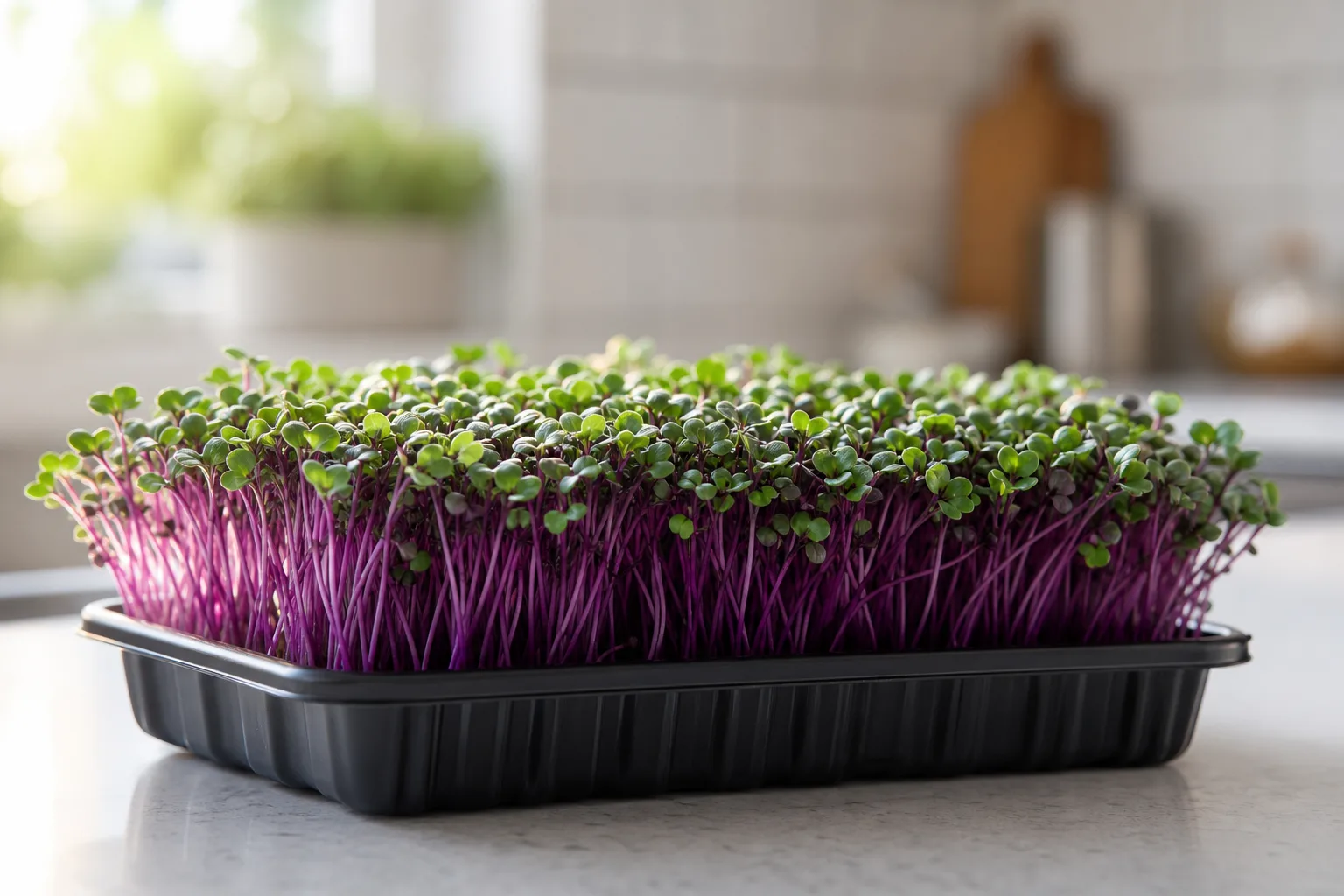
Pick up a tray of radish shoots and a tray of pea shoots side by side, and the first thing you notice is color. One blazes magenta and purple at the stem; the other is a soft, even green. Taste them and the difference holds: the purple one bites back with a peppery heat, the green one is mild and sweet. That pairing of color and flavor is not a coincidence. The pigments that paint a microgreen are the same family of compounds that drive its taste and much of its antioxidant value.
Understanding that link is genuinely useful. It tells you which greens will be bold and which will be gentle before you ever taste them, and it explains why the same seed can look and taste different depending on how it was grown. Let's walk through the three pigment families that matter most, and how light quietly tunes all of them.
The three pigments behind every microgreen
Almost every color you see in a microgreen comes from one of three pigment groups.
Chlorophyll is the green. It's the workhorse of photosynthesis, and a deep, saturated green usually signals a healthy, well-lit, actively growing shoot. On its own, chlorophyll reads as fresh and grassy on the palate.
Carotenoids are the yellows, oranges, and warm golds. Think of the buttery tint in a sunflower shoot or the gold edges on amaranth. These are the same antioxidant pigments found in carrots and tomatoes, and they tend to lend a softer, sometimes nutty or mellow character.
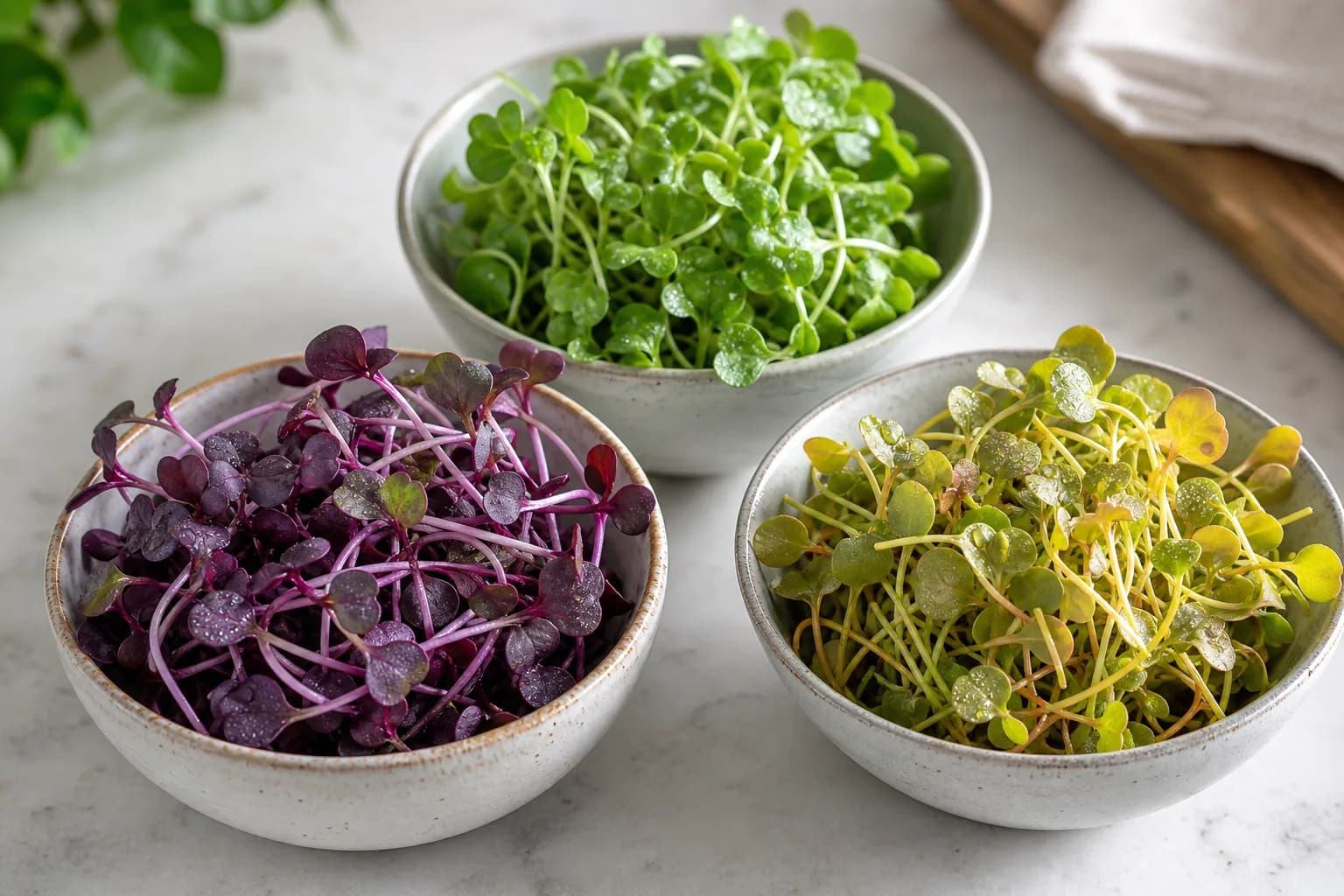
Anthocyanins are the reds, purples, and deep magentas — the showstoppers. They belong to the flavonoid branch of plant chemistry, the same broad family that gives many foods their pungency and astringency. When you see a vivid purple stem, you're often looking at a shoot that will taste more assertive.
Here's the key idea: chlorophyll and carotenoids are primary pigments tied to basic growth and energy capture. Anthocyanins and most flavor-active flavonoids are secondary metabolites — compounds a plant makes not to grow, but to defend and protect itself. And those defensive compounds are exactly the ones our tongues read as bold, peppery, or bitter.
Why bold color so often means bold flavor
A plant builds anthocyanins and related flavonoids through the phenylpropanoid pathway, the same biochemical assembly line that produces many sharp, bitter, and pungent compounds. So when a shoot is loaded with red-purple pigment, it has usually also ramped up that whole pathway — and the flavor follows.
Our trained-panel work and broader sensory research back this up. When tasters describe microgreens blind, the boldly pigmented and brassica-family shoots cluster around words like spicy, sharp, and pungent, while the gentle greens land on mild, sweet, and fresh. The table below lines up four representative greens by their dominant pigment and flavor.
| Microgreen | Dominant color | Pigment driver | Flavor character |
|---|---|---|---|
| Pea shoots | Soft green | Chlorophyll | Mild, sweet, fresh |
| Sunflower | Green with pale stem | Chlorophyll + carotenoids | Nutty, mild, crunchy |
| Broccoli | Medium green | Chlorophyll + glucosinolates | Mild, faintly cabbage-like |
| Radish | Magenta-purple stem | Anthocyanins | Peppery, sharp, hot |
The pattern isn't perfect — broccoli stays mild despite carrying potent health compounds like glucosinolates, the precursors to sulforaphane. But as a quick rule of thumb in the kitchen, deeper red and purple usually means more heat and more punch, while even green means gentler. For a fuller map of these taste categories, see our guide to microgreen flavor profiles and our deep dive into why some microgreens taste bitter.
Color is also a clue to antioxidants
The reason color and flavor travel together is that both ride on the same protective chemistry — and that chemistry is also where much of a microgreen's antioxidant value lives.
Anthocyanins and other flavonoids are produced largely to shield plant tissue from oxidative stress. They mop up reactive molecules in the leaf, and many of those same compounds act as dietary antioxidants once we eat them. Carotenoids do double duty too: in the plant they protect the photosynthetic machinery, and in our diet they're well-studied antioxidant nutrients.
So a richly colored microgreen isn't just prettier and bolder — it often carries a denser load of these protective compounds. That's part of why microgreens punch above their size nutritionally, a topic we cover in microgreens nutrition and are microgreens good for you. The visual cue is real: vivid pigment is one honest, low-tech signal of a shoot that's been busy making antioxidants.
How light turns the colors up or down
Here's where it gets practical for anyone growing at home. The pigments aren't fixed by the seed alone — light shapes how much of each a plant makes. Different colors of light are read by different plant sensors, and each nudges pigment chemistry in its own direction.
- Ultraviolet and blue light are the strongest drivers of anthocyanins and flavonoids. Plants treat these wavelengths as a mild stress signal and respond by switching on the phenylpropanoid pathway, deepening reds and purples and boosting antioxidant compounds. In study after study, adding UV or blue light raised total flavonoid and anthocyanin content across crops.
- Red light mainly supports steady growth and chlorophyll, and can also lift phenolics and certain flavor compounds depending on the crop.
- Green light is the quiet one — less absorbed, but it penetrates deeper into a dense canopy and can fine-tune the balance.
There's an important catch: more intense light isn't automatically more pigment. Within a comfortable range, brighter light gives a plant the energy to build pigments and antioxidants. But push past what the shoot can handle and you can stress it the wrong way, fading color and stunting growth. The sweet spot is moderate, balanced light — enough to color up the shoots without scorching them.
The numbers below give a rough sense of how light color steers the outcome. Treat these as directional, not exact — every crop responds a little differently.
| Light color | Plant sensor | Main effect on pigments | Likely flavor shift |
|---|---|---|---|
| UV (small dose) | UVR8 | Strong rise in anthocyanins, flavonoids | More bold, peppery, complex |
| Blue | Cryptochrome | Higher flavonoids, anthocyanins, antioxidants | Sharper, more pungent |
| Red | Phytochrome | More chlorophyll, some phenolics | Milder, fuller-bodied |
| Green | Cryptochrome | Subtle balancing, deeper canopy reach | Gentle modulation |
This is exactly the kind of fine control a countertop grower like Luya is built around. Instead of guessing, the device manages the light recipe and growing conditions for each crop, so the radish shoots come up reliably purple and peppery and the pea shoots stay sweet and green. If you'd rather understand the machinery, how Luya works walks through it.
Putting color to work in your kitchen
Once you read color as a flavor and nutrition signal, building a plate gets easier.
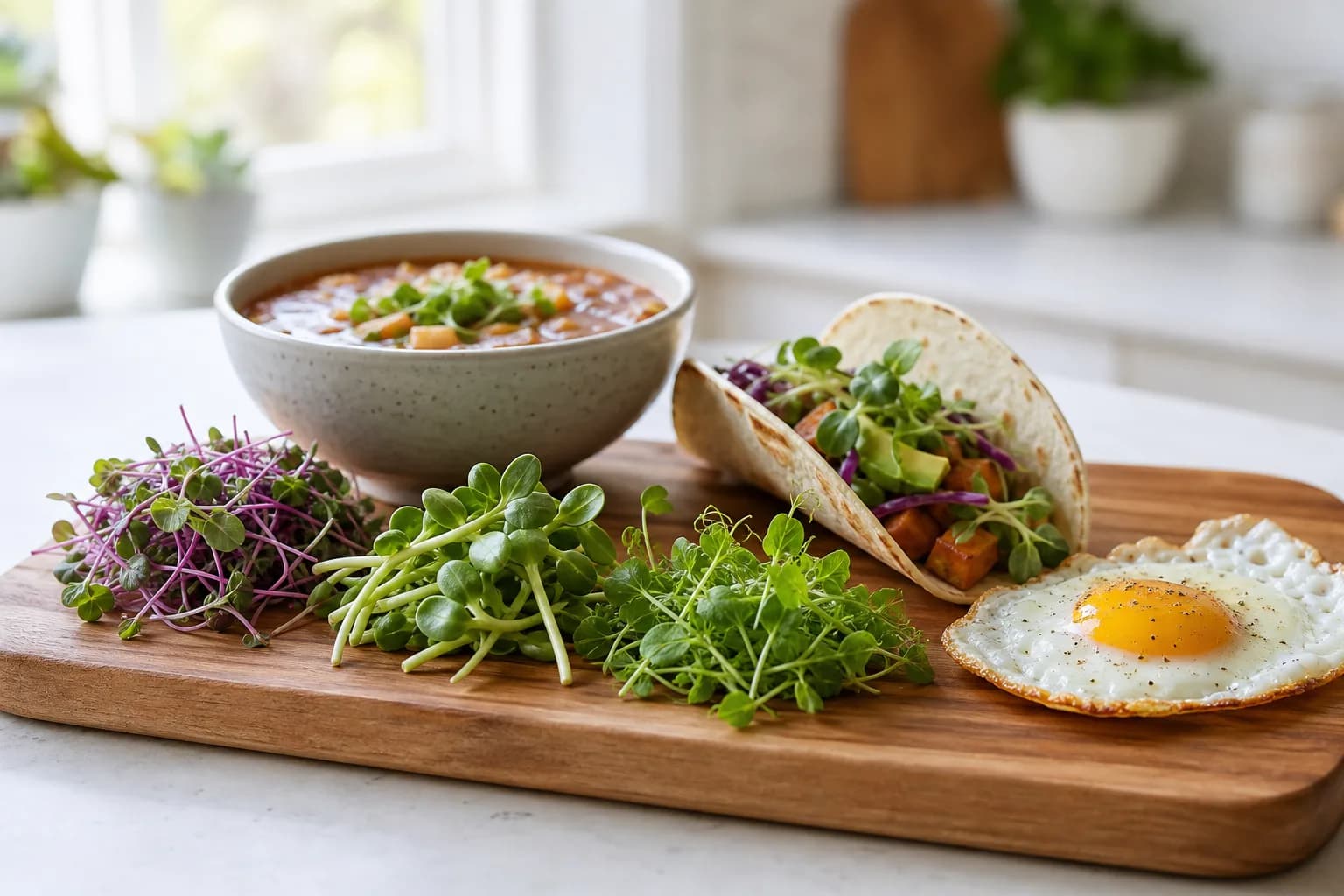
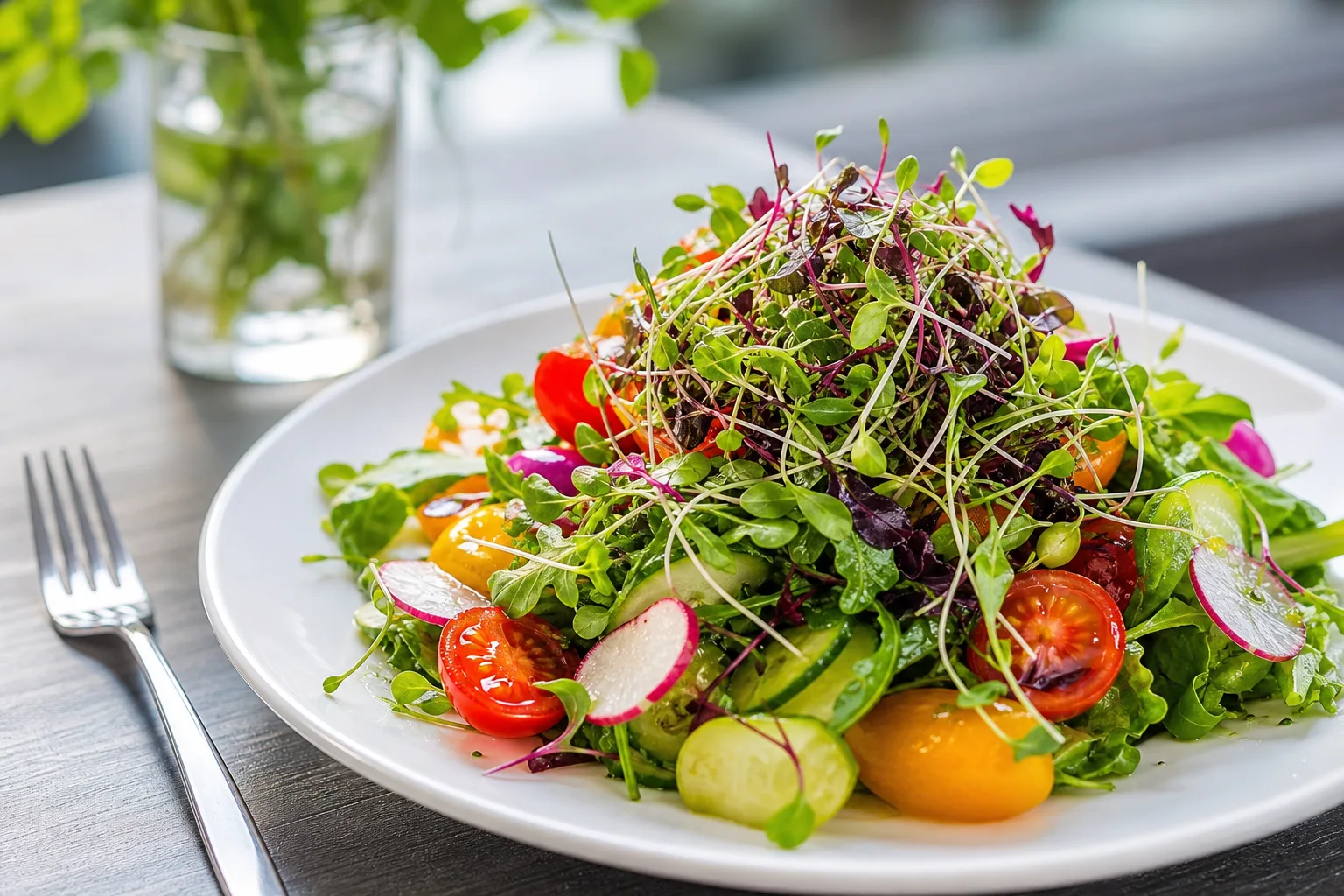
For brightness and heat, reach for the purples and reds — radish microgreens and other anthocyanin-rich shoots add color and a peppery lift to tacos, eggs, and grain bowls. For a mellow base, lean on the even greens like pea shoots and sunflower microgreens, which carry a salad without overpowering it. And for the best of both, mix them: a tangle of green, red, and gold isn't just photogenic, it spreads your antioxidants across several pigment families at once.
A few practical notes. Pigments are at their most vivid when the greens are freshly cut, which is one more argument for growing them at home rather than buying tired clamshells. And go easy with heat — long cooking dulls both color and the delicate compounds behind it, so most microgreens shine as a finishing touch. For more ideas, browse our microgreens salad ideas.
The takeaway
Color in a microgreen is not just decoration. The green of chlorophyll, the gold of carotenoids, and the red-purple of anthocyanins each tell you something real about how a shoot will taste and what it brings nutritionally. Bold pigment usually means bold flavor and a heavier load of protective antioxidants, because they all grow out of the same plant chemistry. And because light steers that chemistry, the way a microgreen is grown can deepen or soften both its color and its taste. Next time you're choosing what to plant or what to pile on your plate, let your eyes do some of the work — the colors are telling you the truth.
References
- Effect of Different Ratios of Blue and Red LED Light on Brassicaceae Microgreens under a Controlled Environment. Plants (Basel). 2021;10(4):801. https://doi.org/10.3390/plants10040801