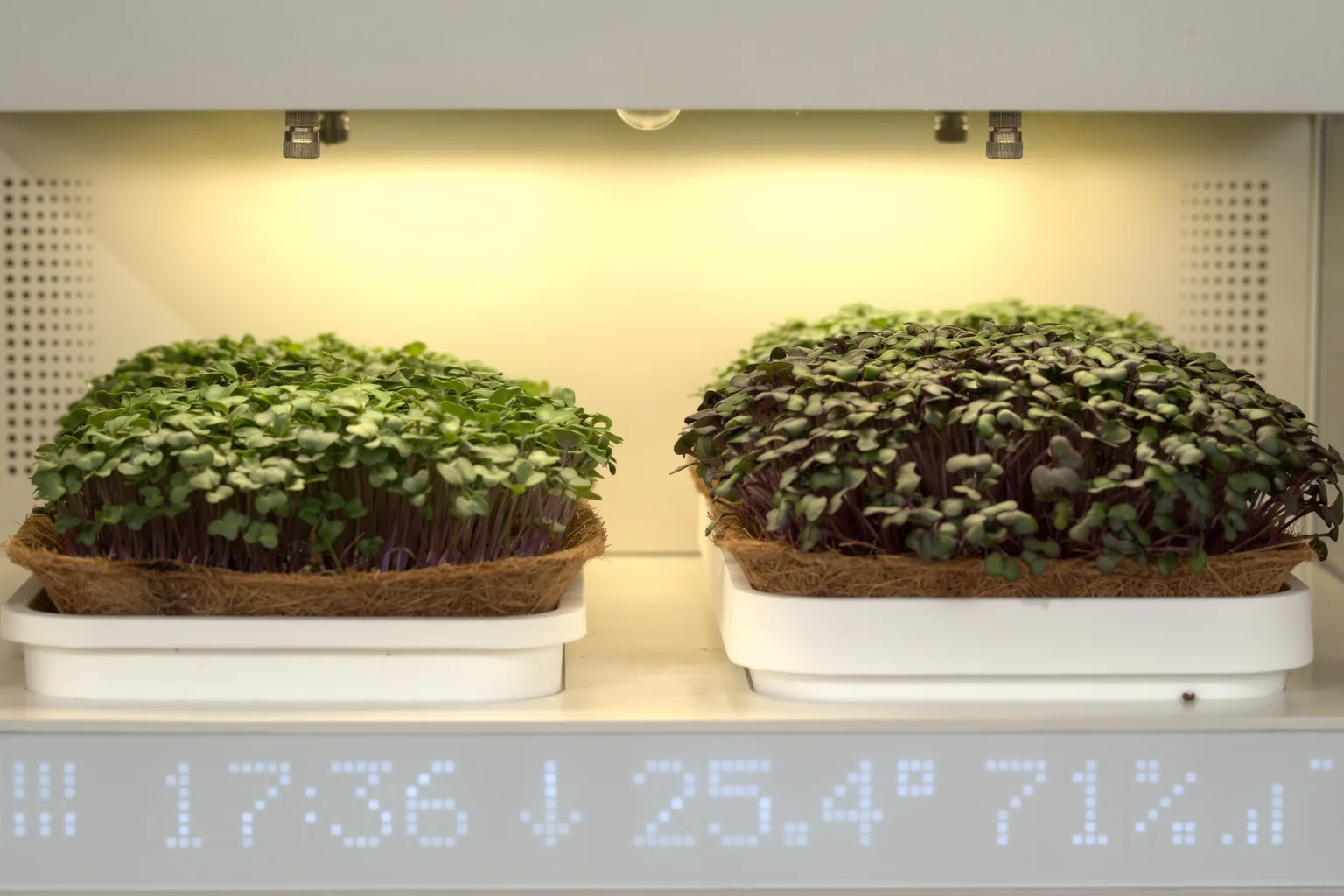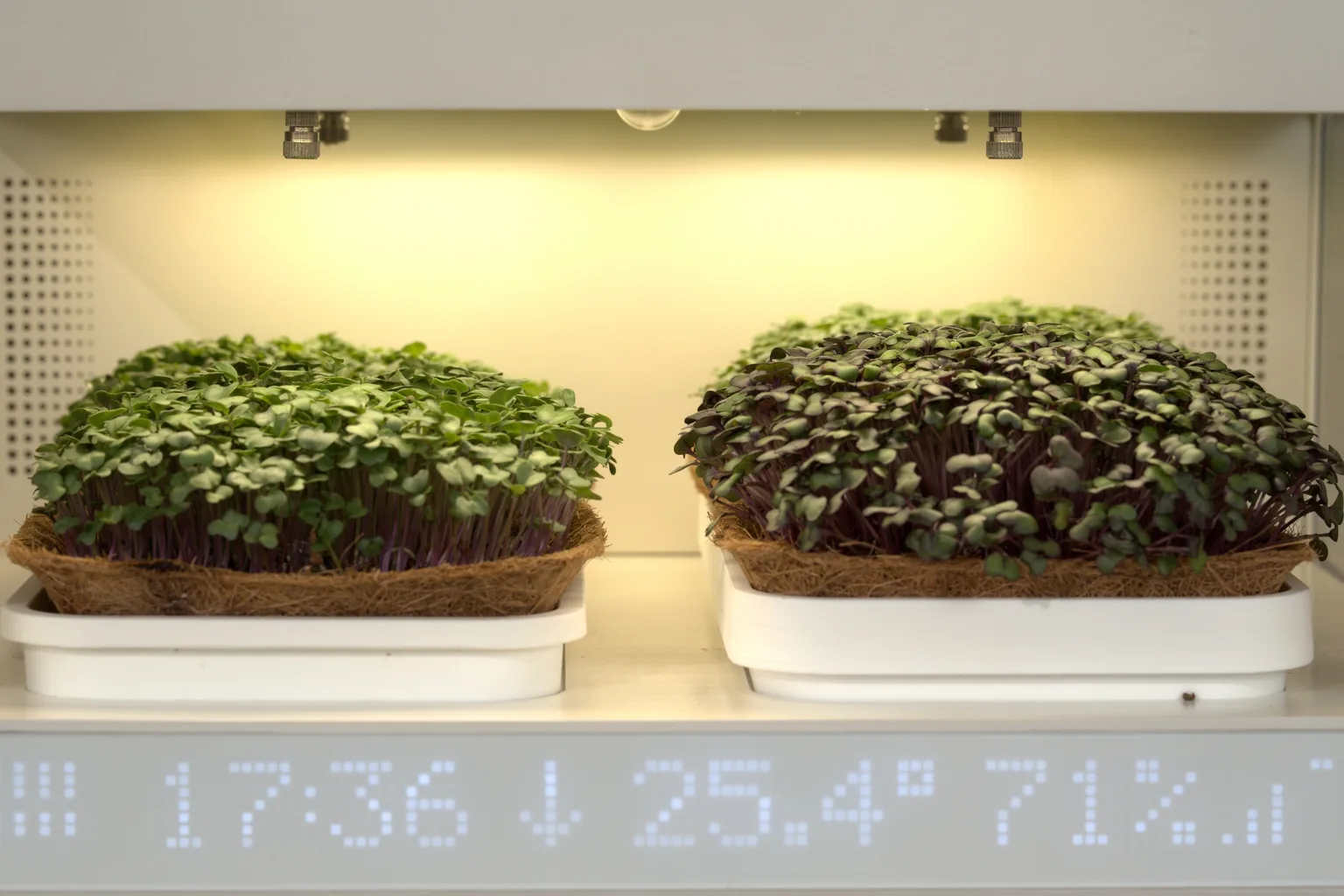
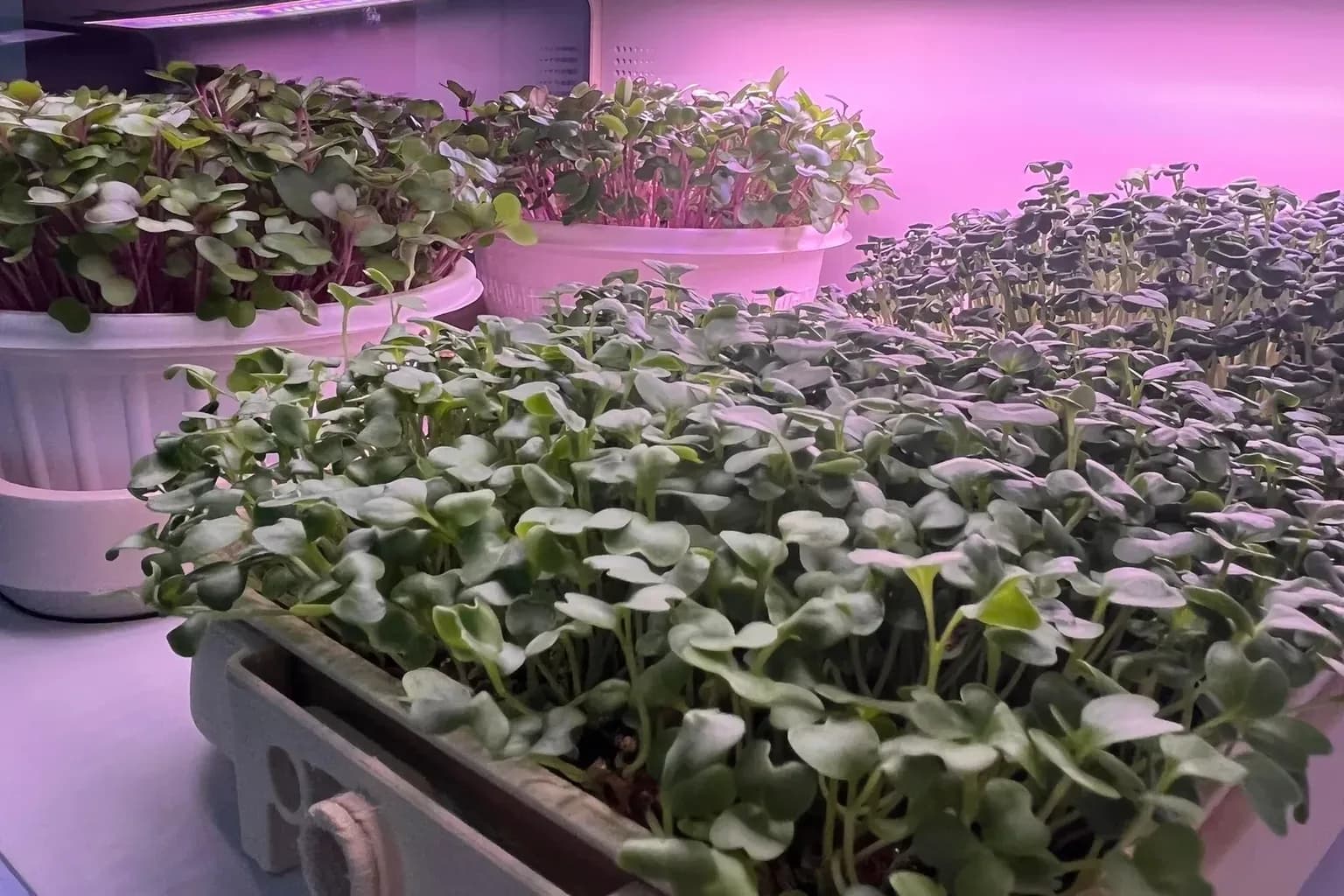
You may not know the term, but you have almost certainly eaten its results. Controlled-environment agriculture is the science of growing plants inside a managed space where temperature, light, humidity, and nutrients are set on purpose instead of left to the weather. For decades it meant greenhouses and warehouses. Now, thanks to a wave of smart appliances, a controlled environment agriculture home setup is real: a small, sealed grow chamber that sits on the counter and produces fresh greens a few feet from where you eat.
This guide explains what the term actually means, where it sits on a spectrum from open fields to your kitchen, why it matters for the food you buy, and how the same engineering now fits inside a countertop machine.
What Controlled-Environment Agriculture Actually Means
At its core, controlled-environment agriculture (usually shortened to CEA) is about removing variables. Outdoors, a crop is at the mercy of frost, heat waves, pests, drought, and unpredictable rain. Inside a controlled environment, the grower sets the conditions and holds them steady, day after day.
A true controlled environment manages four things at once:
- Temperature — held in the plant’s ideal range, not the season’s.
- Light — delivered on a fixed schedule, often by LEDs tuned to the wavelengths plants actually use.
- Humidity and airflow — balanced to stop mold and disease before they start.
- Nutrients and water — measured and dosed precisely instead of guessed.
The payoff is consistency. When every variable is pinned in place, a crop grows the same way in January as it does in July, in Phoenix as it does in Boston — no off-season, no weather risk, no “bad batch” from a heat wave or cold snap. That reliability is why CEA went from a niche research idea to a serious slice of how the world grows leafy greens, herbs, and tender crops.
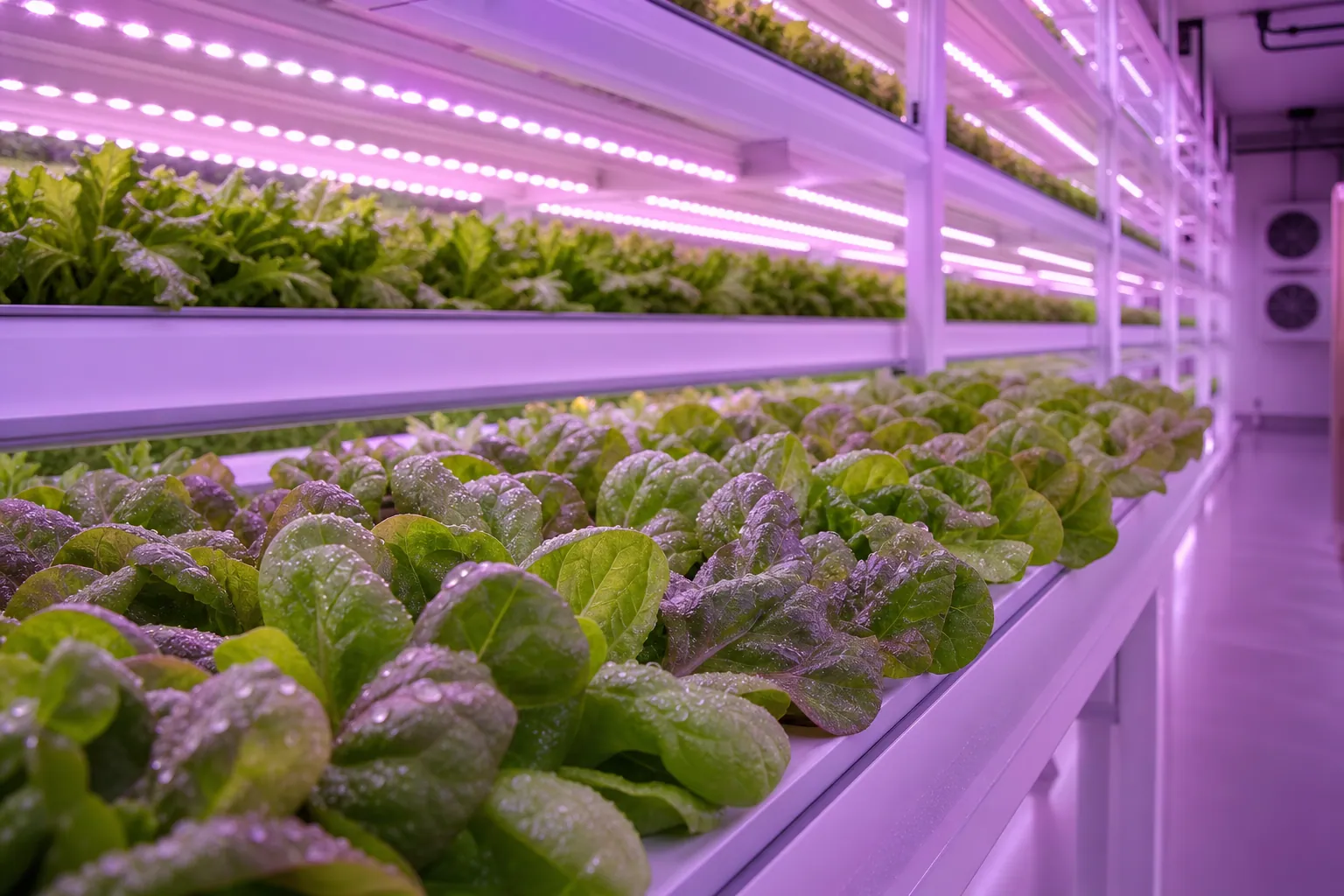
The Spectrum: From Open Fields to Your Countertop
Controlled-environment agriculture is not one thing. It is a spectrum that runs from almost no control to total control, and the more you add, the more predictable the harvest becomes.
| Approach | What’s controlled | Typical scale | Predictability |
|---|---|---|---|
| Open field | Almost nothing | Acres | Low — weather-dependent |
| Hoop house / high tunnel | Some temperature | Large garden to farm | Moderate |
| Greenhouse | Temperature, some light | Commercial farm | Good |
| Vertical / indoor farm | Temp, light, humidity, nutrients | Warehouse | High |
| Countertop food computer | All of the above, sealed | One appliance | Very high |
The interesting story is at the small end of that table. The same closed-loop control that runs a warehouse vertical farm has been miniaturized to fit in a countertop appliance. That shrinking is what makes a controlled environment agriculture home setup practical for the first time — not a hobbyist rig of trays, lamps, and timers, but a single sealed unit that manages itself.
If you want the bigger picture of where this is heading, our look at the future of home farming traces the next decade of countertop growing.
Why It Matters for the Food You Eat
This is not just an engineering story. Controlled environments solve two stubborn, everyday problems with the greens most people buy.
Freshness. Store-bought microgreens travel a long road — farm to truck to warehouse to store shelf. By the time a clamshell reaches your fridge, several days have passed, and these tender greens wilt fast. The result is a short shelf life and a lot of waste; many shoppers throw out half a package before they finish it. We dig into the supply-chain math in are store-bought microgreens fresh?.
Cost. Those same delicate greens are expensive. A 2 oz clamshell often runs $4–6, which works out to roughly $30–50 per pound — closer to the price of seafood than salad.
Growing in a controlled environment, right where you eat, shrinks both problems at once. Nothing has to survive a refrigerated truck or a warehouse, so freshness is measured in seconds, not days. And the per-serving cost drops sharply because you are no longer paying for cold-chain logistics and spoilage.
There is a nutrition angle, too. Microgreens are remarkably concentrated — roughly 2 to 3.5 times more nutrient-dense than their full-grown counterparts, according to peer-reviewed reviews (MDPI Plants) and USDA data, with radish microgreens often topping the charts. They are rich in vitamins C, K, and E plus antioxidant polyphenols.
Broccoli microgreens are the standout. They carry roughly 10 to 100 times more of the sulforaphane precursor glucoraphanin than mature broccoli, with Johns Hopkins research behind the figure — though the finished sulforaphane you actually get varies widely by variety, growing conditions, and harvest timing. Sulforaphane — an isothiocyanate that forms when you chew or chop the greens — is studied for how it activates the body’s Nrf2 antioxidant and detox pathway. (It is research-stage, not a proven cure, and the compound is fragile: overcooking degrades the enzyme that makes it, so raw and freshly chewed wins.) For the full breakdown, microgreens nutrition covers the vitamins, the standout crops, and the science.
The DIY Reality (And Why Control Helps)
You can absolutely grow microgreens by hand on a windowsill, and many people enjoy it. But manual growing has a consistency problem, and it almost always comes down to three things.
| Challenge | What goes wrong | Why control fixes it |
|---|---|---|
| Mold | Moisture, poor airflow, crowding, and warmth invite fuzzy growth | Sealed chamber with managed humidity and ventilation |
| Mess | Soil and water end up on the counter | Pre-seeded trays, fully contained growing |
| Maintenance | Daily watering across ~10-day cycles; one busy week kills the tray | Automated dosing and round-the-clock climate control |
That last row is the quiet killer. A 10-day grow cycle demands attention every single day, and a work trip or a hectic week is often all it takes to lose a tray to drought or rot. Manual growing has a real failure rate — not because people are careless, but because consistency is genuinely hard to maintain by hand. If you have ever battled fuzzy white growth, why microgreens keep molding explains the causes, most of which a controlled environment removes by design rather than by vigilance.
This is exactly the gap that countertop controlled-environment appliances are built to close.
How a Countertop “Food Computer” Brings CEA Home
The clearest example of a controlled environment agriculture home setup is a new kind of appliance sometimes called a food computer. Think of it as a small, sealed indoor farm with a brain.
Luya X is one such device — a countertop unit, about 17 inches tall and 20 inches wide, that runs the same closed-loop principles as a commercial facility, just shrunk down:
- AI closed-loop control constantly reads conditions and adjusts on the fly.
- TEC temperature control that can both heat and cool, so the climate stays exact regardless of your kitchen.
- Automatic multi-channel nutrient dosing (A/B/C/D) — no measuring spoons, no guessing.
- Pre-seeded trays you simply drop in; they are US-made with about a one-year shelf life.
- A sealed, ventilated, climate-controlled chamber that keeps mold and contaminants out.
- A live remote camera and automatic time-lapse so you can watch each grow from your phone.
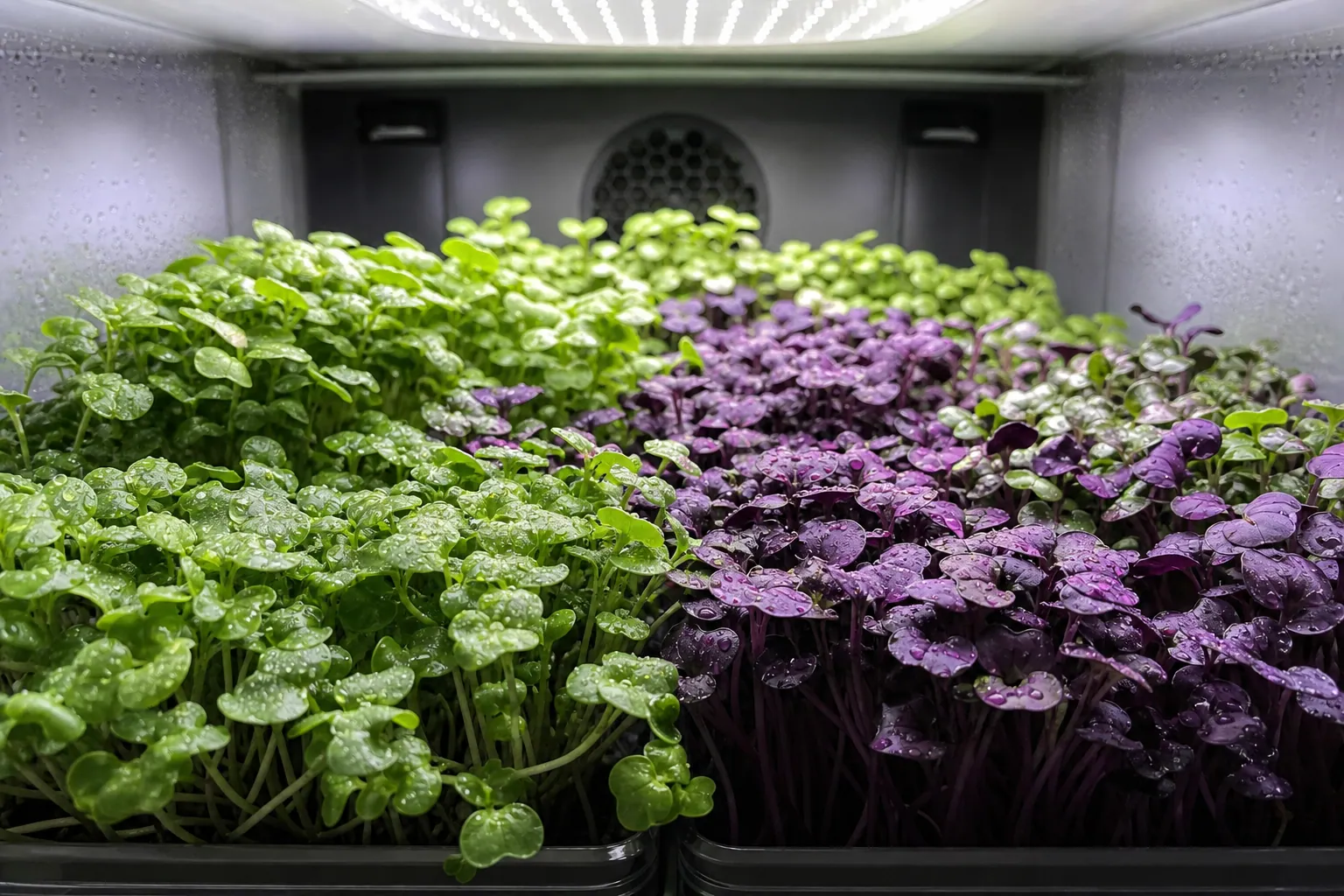
The result is a roughly 7 to 10 day cycle that runs itself. You harvest only what you need for a meal, and the rest keeps growing — alive, in the chamber — until you are ready. That is the real difference between a wilting clamshell and snipping greens seconds before they hit the plate: the sulforaphane and vitamins are at their peak, not days into decline. The honest cost-and-effort comparison lives in grow vs. buy microgreens.
The simplest way to picture it: like a Nespresso, but for greens. Drop in a tray, and the machine handles the agriculture. It solves the DIY headaches (mold, mess, maintenance) and the buyer headaches (expensive, not fresh) at once — which is the whole reason a controlled environment, scaled to one appliance, is suddenly worth a spot on the counter.
The Bottom Line
Controlled-environment agriculture used to mean greenhouses and warehouses run by specialists. Now it can mean a quiet box on your counter that grows farm-fresh greens regardless of season, skips the supply chain entirely, and removes the mold-mess-maintenance failures that sink so many DIY trays. It is a big agricultural idea, finally made small enough — and reliable enough — to live next to the toaster.
Want to see how a sealed, automated grow actually works step by step? Take a look at how it works, then read grow vs. buy microgreens to weigh it against the clamshell habit. Fresh, controlled-environment greens — without the daily chores — might be closer than you think.
References
- Kyriacou MC, Rouphael Y, Di Gioia F, et al. Micro-scale vegetable production and the rise of microgreens. Trends Food Sci Technol. 2016;57:103–115. https://doi.org/10.1016/j.tifs.2016.09.005
- Effect of Different Ratios of Blue and Red LED Light on Brassicaceae Microgreens under a Controlled Environment. Plants (Basel). 2021;10(4):801. https://doi.org/10.3390/plants10040801