If you've fallen for microgreens, you've probably hit the same fork in the road everyone does: should you grow them yourself, or just buy them at the store? The grow vs buy microgreens question really comes down to three things people care about most — what it costs, how fresh the greens are when they reach your plate, and how much work you're honestly signing up for.
This guide breaks down all three with real numbers, including the downsides of each path that most articles skip. By the end, you'll know which option fits your kitchen, your schedule, and your budget — and where the trade-offs actually bite.
What You're Actually Comparing
Before the math, it helps to remember why microgreens earn a place on your counter at all. According to peer-reviewed reviews (MDPI Plants) and USDA data, these tiny seedlings are roughly 2 to 3.5 times more nutrient-dense than their full-grown counterparts, with radish microgreens often topping the charts. Some go further: Johns Hopkins research found broccoli microgreens and sprouts carry roughly 10 to 100 times more glucoraphanin (the sulforaphane precursor) than mature broccoli heads — though the finished sulforaphane you actually get varies widely by variety, growing conditions, and harvest timing.
So whether you grow or buy, you're getting a serious nutritional upgrade over the average salad. They're also rich in vitamins C, K, and E plus a range of antioxidant polyphenols. (If you want the full picture, our guide on microgreens nutrition goes deep, and are microgreens good for you tackles the common skeptic questions.)
The real decision isn't whether microgreens are worth eating — it's logistics. Buying is instant but carries two well-known pain points. Growing is rewarding but asks something of you every single day. Let's look at each honestly.
The Cost: Grow vs Buy Microgreens by the Numbers
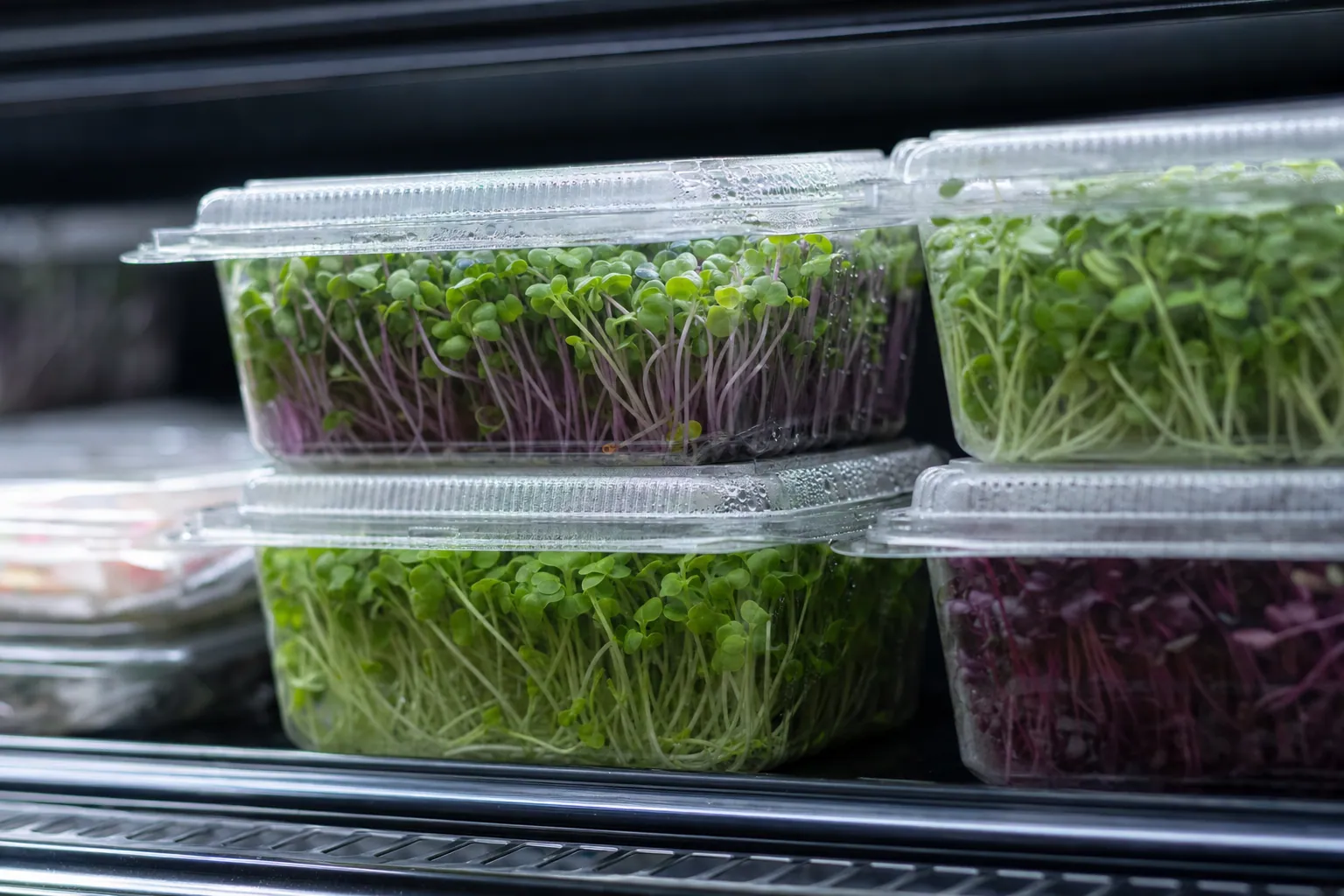
Store-bought microgreens are not cheap. A typical 2 oz clamshell runs $4 to $6, which works out to roughly $30 to $50 per pound. For a food you'd happily eat by the handful, that adds up fast — a daily handful from the store can quietly become a $40-plus monthly habit. (We dig into why in store-bought microgreens: expensive and not fresh.)
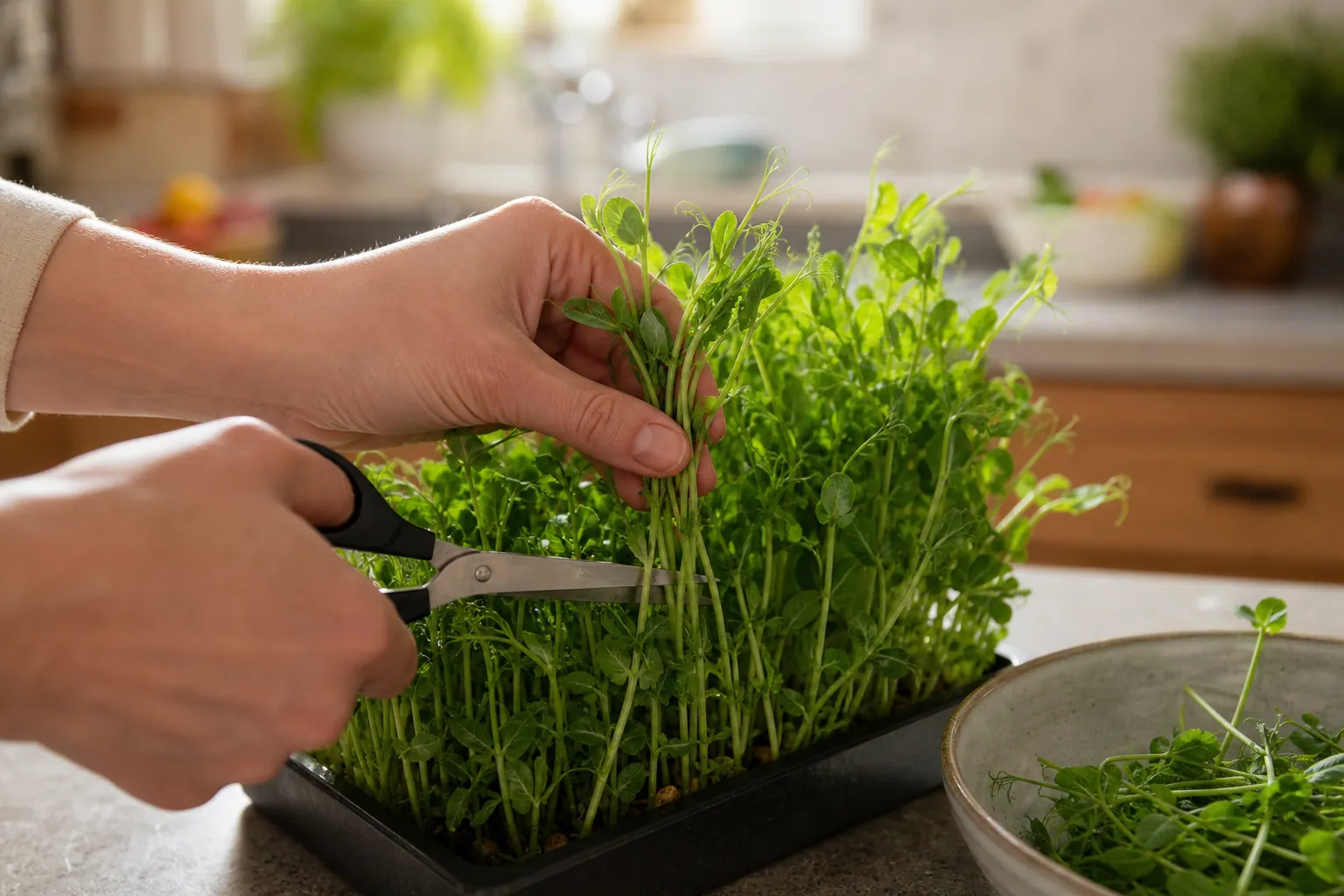
Growing your own can dramatically lower the per-serving cost. Seeds are cheap by the ounce, a single tray yields several servings, and the marginal cost of each new batch is mostly just seed and water. The catch is the upfront effort, the recurring attention, and the failure rate (more on that below). Here's how the two paths stack up.
| Factor | Buying (clamshell) | Growing by hand |
|---|---|---|
| Cost per 2 oz | $4–$6 | A fraction of retail |
| Cost per pound | ~$30–$50 | Far below $30 |
| Time to plate | Instant | ~7–10 day cycle |
| Freshness at eating | Days old | Minutes old |
| Daily effort | None | Watering + checks, ~10 days |
| Failure risk | None | Real (mold, missed watering) |
| Shelf life | Short, wilts fast | Harvest only what you need |
| Mess | None | Soil on counter and sink |
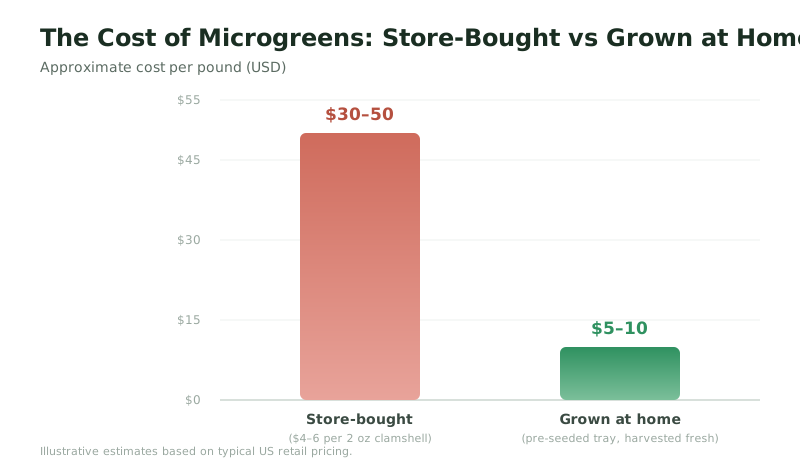
The headline is simple: buying is convenient but expensive, while growing trades money for time and attention. Whether that trade pays off depends entirely on one thing most cost comparisons ignore — how reliably you can actually keep a tray alive over its full cycle.
The Freshness Gap
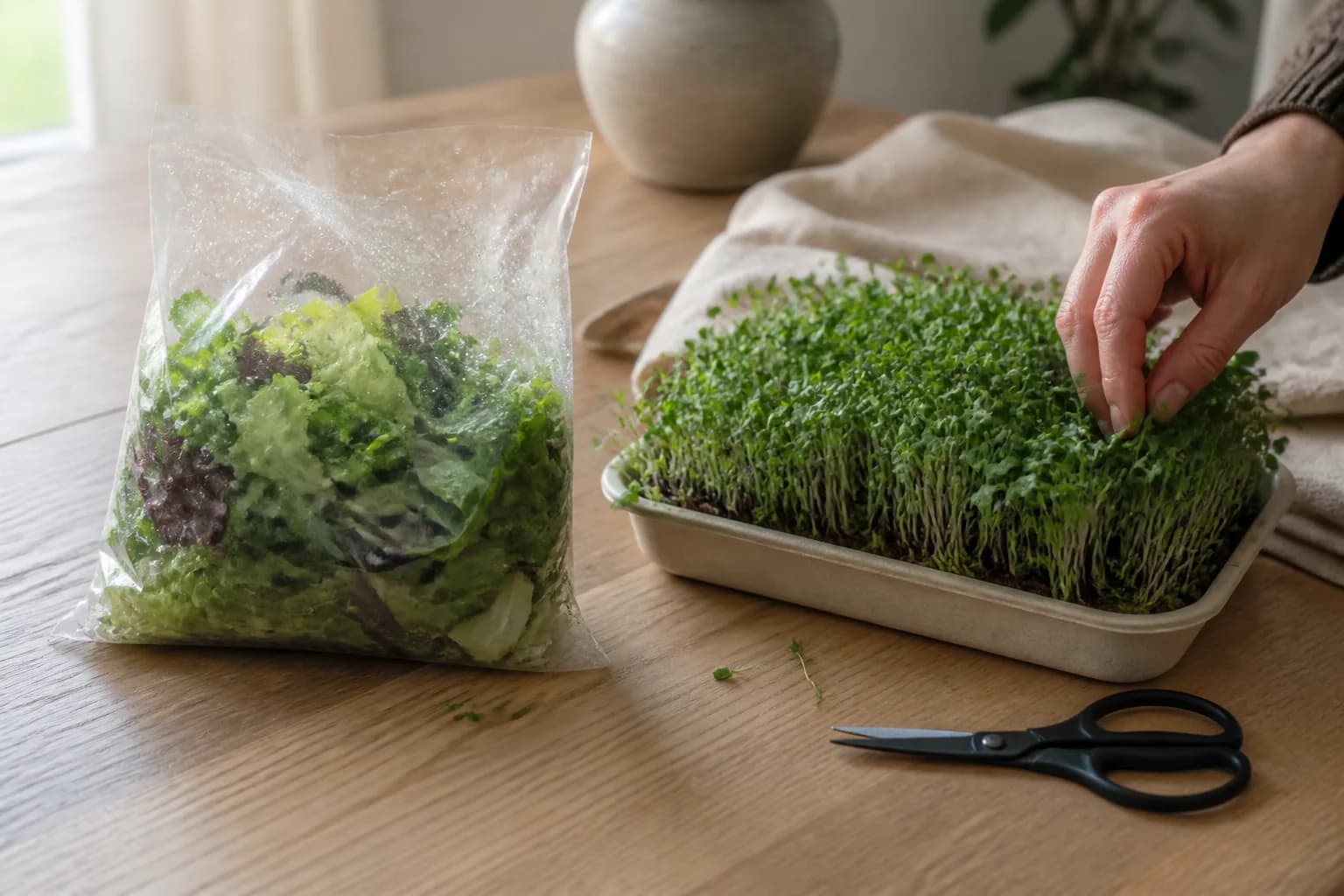
This is where buying really struggles. Store-bought microgreens travel a long road: farm to truck to warehouse to store shelf to your fridge. By the time you buy them, they're often several days old — and microgreens wilt fast. The result is short shelf life, mushy leaves, dull color, and a surprising amount of waste when half the clamshell turns before you finish it. (We unpack this fully in are store-bought microgreens fresh.)
Freshness isn't just about taste and crunch. With nutrient-dense greens, fresher genuinely matters at the chemical level. Take sulforaphane, the compound that makes broccoli microgreens so interesting: it's an isothiocyanate that only forms when the precursor glucoraphanin meets the enzyme myrosinase as you chew or chop the greens raw. That reaction activates the body's Nrf2 antioxidant and detox pathway, which is why sulforaphane is being studied (still at the research stage, not as a proven cure) for blood-sugar regulation, inflammation, and cellular defense.
The practical takeaway: heat and overcooking degrade myrosinase, and time on a shelf doesn't help either. Raw, fresh, and well-chewed is how you get the most out of them. (For the deeper science, see what is sulforaphane and maximize sulforaphane.) So the closer to harvest you eat, the better — which is exactly where home growing wins.
Growing at home flips the freshness equation completely. You snip what you need seconds before it hits your plate. Nothing sits in plastic losing crunch, color, and nutrients. That "alive until you eat it" quality is the single strongest argument for growing your own.
The Catch with DIY Growing
Growing microgreens by hand sounds simple, and the easiest crops really are beginner-friendly — radish germinates in 1 to 2 days and is ready to harvest in 5 to 7, with pea shoots, broccoli, and sunflower close behind. (Curious where to start? See easiest microgreens to grow.)
But anyone who's run manual trays for a few months knows the three M's that quietly raise the true cost of "free" greens:
- Mold. The number-one killer of home trays. Too much moisture, poor airflow, overcrowded seeds, and a warm room create the perfect storm. One fuzzy tray and the whole batch goes in the trash — there's no rinsing it off. (Here's why microgreens keep molding and how to spot it early.)
- Mess. Soil on the counter, in the sink, tracked across the kitchen. For tidy kitchens, this alone is a real deterrent — and it's why some growers experiment with growing microgreens without soil.
- Maintenance. This is the quiet one, and it sinks more trays than any other. Microgreens need daily watering and attention across roughly 10-day cycles. Travel for a weekend, get slammed at work, or simply forget for two days, and the tray is gone. Manual growing has a genuine failure rate — it's fundamentally a consistency problem, not a skill problem. (More on the realistic workload in microgreens maintenance.)
None of this means you shouldn't grow. It means honest DIY growing isn't truly "free." Your time, your counter space, and the occasional failed tray are part of the real cost — and they're the part the seed-price math never shows.
Is There a Best-of-Both Option?
Here's the honest summary so far: buying gives you zero effort but high cost and stale greens. Growing by hand gives you cost savings and unbeatable freshness, but demands daily attention and tolerates no slip-ups. Each path makes you give up something real.
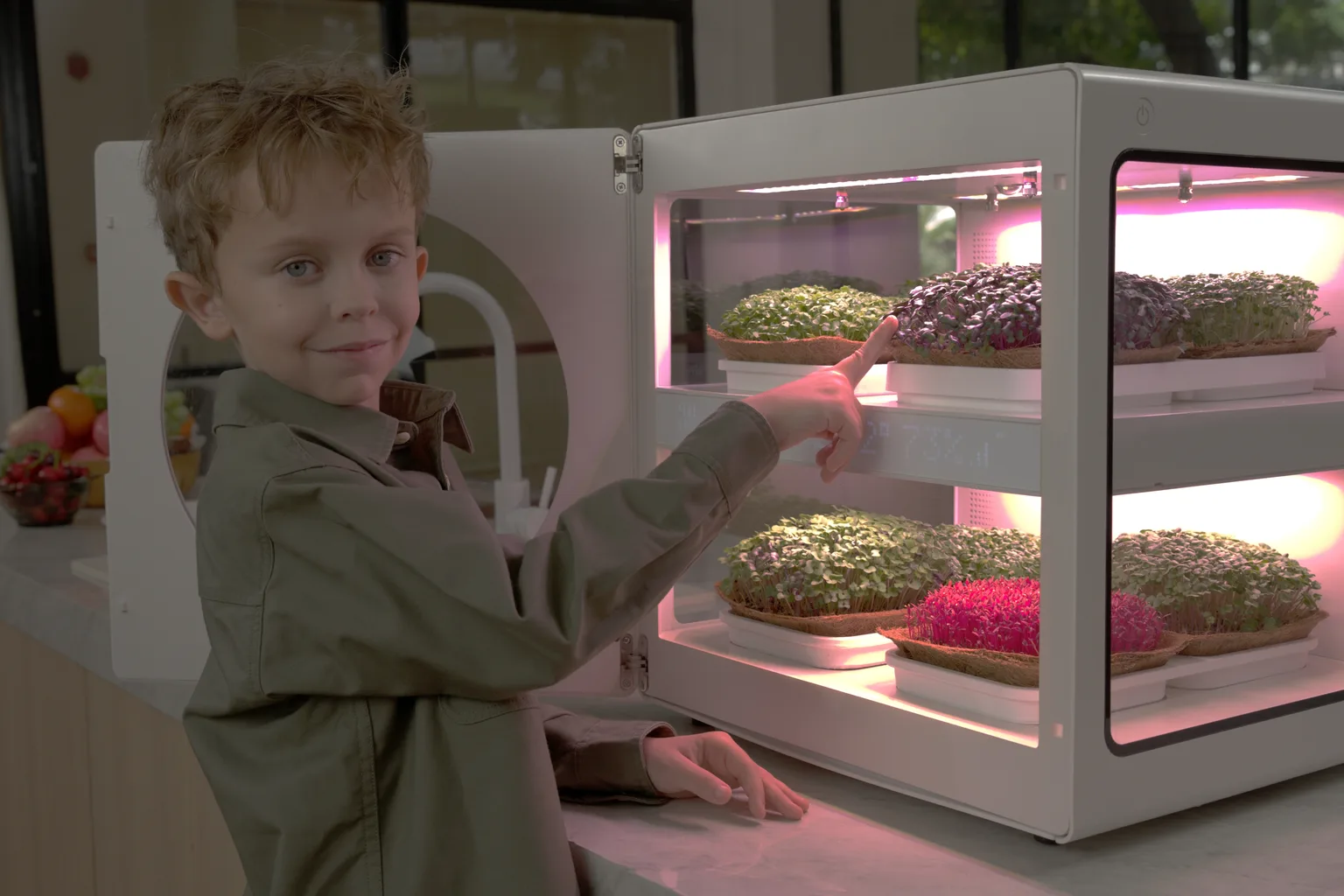
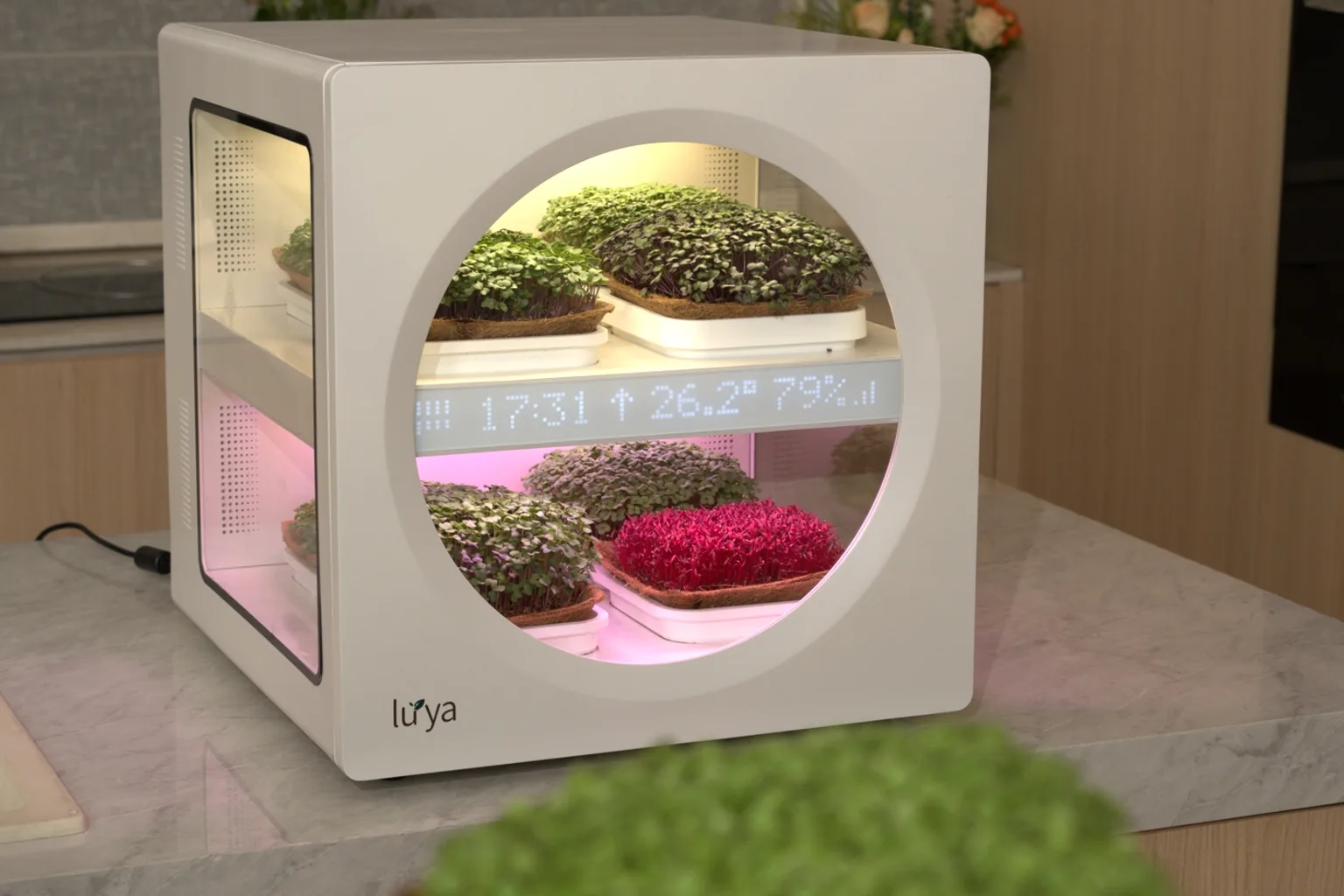
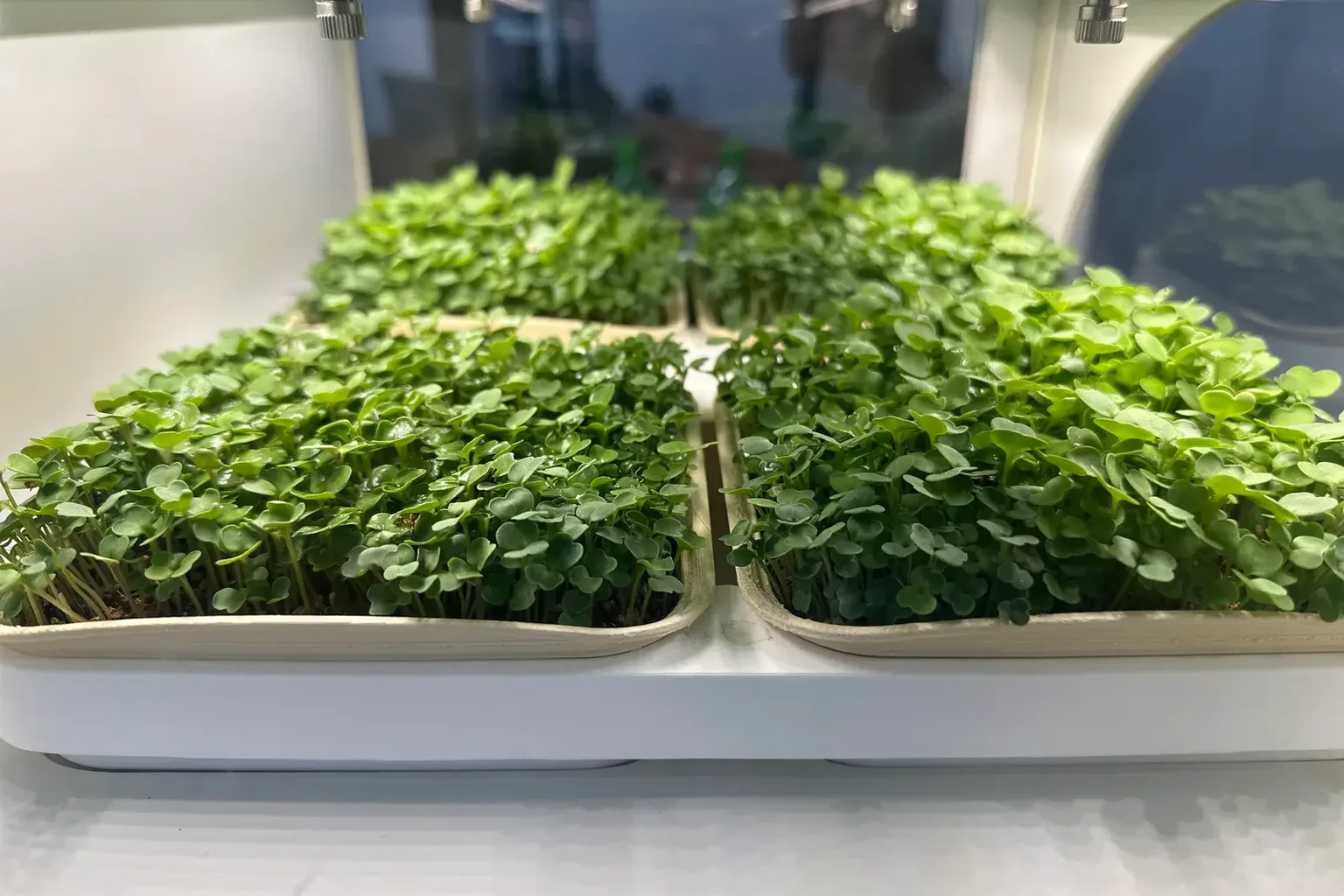
This gap is exactly what we built Luya to close. Think of it like a Nespresso, but for greens. You drop in a pre-seeded tray, and a sealed, climate-controlled chamber handles the rest — precise heating and cooling, automatic nutrient dosing, and ventilation engineered to keep mold out. (Here's how Luya works under the hood.)
That design erases the three M's: no mold (a sealed, ventilated chamber instead of an open room), no mess (a pre-seeded tray instead of loose soil), and no maintenance (automated across the whole 7 to 10 day cycle). It also fixes both buyer pains at once — greens cost less per serving than retail, and you harvest them seconds before eating, so freshness is maxed out. The rest of the tray keeps growing, alive, until you reach for it again.
It's not the only way to enjoy microgreens, and plenty of people happily run manual trays for years. But if the daily-watering reality of DIY is the thing quietly holding you back, an automated approach removes the failure risk while keeping the freshness and savings that make growing worth it in the first place.
The Bottom Line
For the grow vs buy microgreens decision, ask yourself one honest question: can you reliably tend a tray every day for ten days, mess and mold included? If yes, growing by hand saves real money and delivers the freshest, most nutrient-dense greens possible. If your weeks are too unpredictable for that, buying still works — just go in expecting higher cost, shorter shelf life, and the occasional wasted clamshell.
And if you want the freshness and savings of growing without the daily chore, an automated countertop grower is the middle path worth a serious look.
Ready to skip the mold, mess, and daily watering? See exactly how it works at /how-it-works, or keep reading about fresh microgreens at home to picture what an always-on supply on your counter really looks like.
References
- Xiao Z, Lester GE, Luo Y, Wang Q. Assessment of Vitamin and Carotenoid Concentrations of Emerging Food Products: Edible Microgreens. J Agric Food Chem. 2012;60(31):7644–7651. https://doi.org/10.1021/jf300459b
- Fahey JW, Zhang Y, Talalay P. Broccoli sprouts: an exceptionally rich source of inducers of enzymes that protect against chemical carcinogens. PNAS. 1997;94(19):10367–10372. https://doi.org/10.1073/pnas.94.19.10367
- Kyriacou MC, Rouphael Y, Di Gioia F, et al. Micro-scale vegetable production and the rise of microgreens. Trends Food Sci Technol. 2016;57:103–115. https://doi.org/10.1016/j.tifs.2016.09.005