For most of human history, "farming" meant land, weather, and luck. The future of home farming looks nothing like that. It is small enough to sit on your counter, smart enough to run itself, and close enough that you can harvest dinner seconds before you eat it. The shift is already underway, and it is being driven by three forces coming together at once: artificial intelligence, vertical growing, and a quiet demand for food that is genuinely fresh.
This is not science fiction or a far-off promise. The pieces exist today. What is changing is how seamlessly they fit into an ordinary kitchen.
Why Home Farming Is Having a Moment
Two frustrations are pushing people toward growing their own food, and both are practical rather than philosophical.
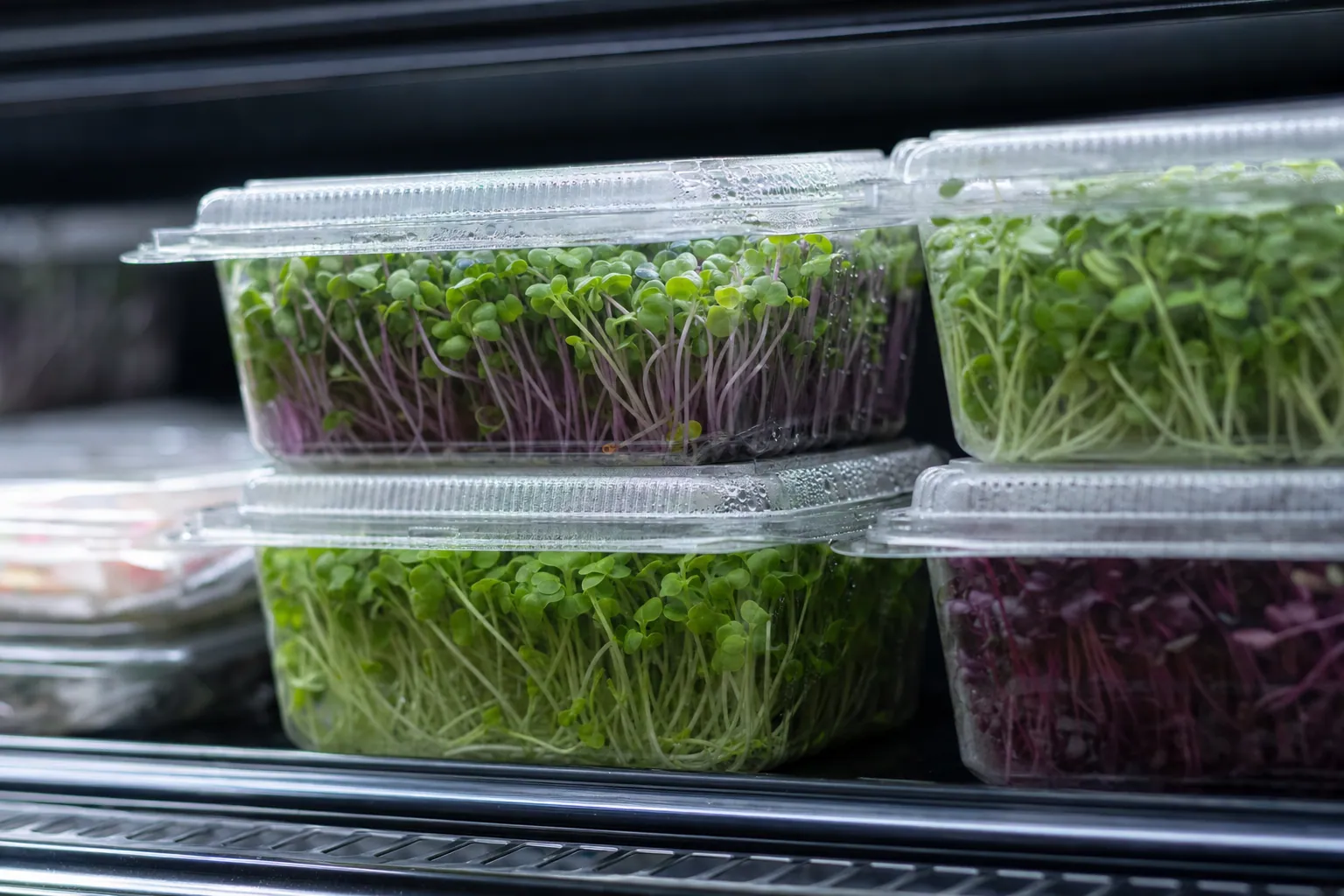
The first is cost and freshness at the store. Packaged greens, especially nutrient-dense microgreens, are expensive and often past their best by the time you get them home. A 2 oz clamshell of microgreens commonly runs $4 to $6, which works out to roughly $30 to $50 per pound — premium pricing for a product that is mostly water and air. And because they travel a long supply chain from farm to truck to warehouse to shelf, they wilt fast and the waste piles up. By the time a clamshell reaches the produce aisle, it may have lost days of shelf life and a meaningful share of its delicate vitamins. We dig into that math in are store-bought microgreens fresh.
The second frustration is that growing greens yourself, the old-fashioned way, is harder to sustain than it looks. The problem is rarely a green thumb. It is consistency.
The Nutrition Story Behind the Trend
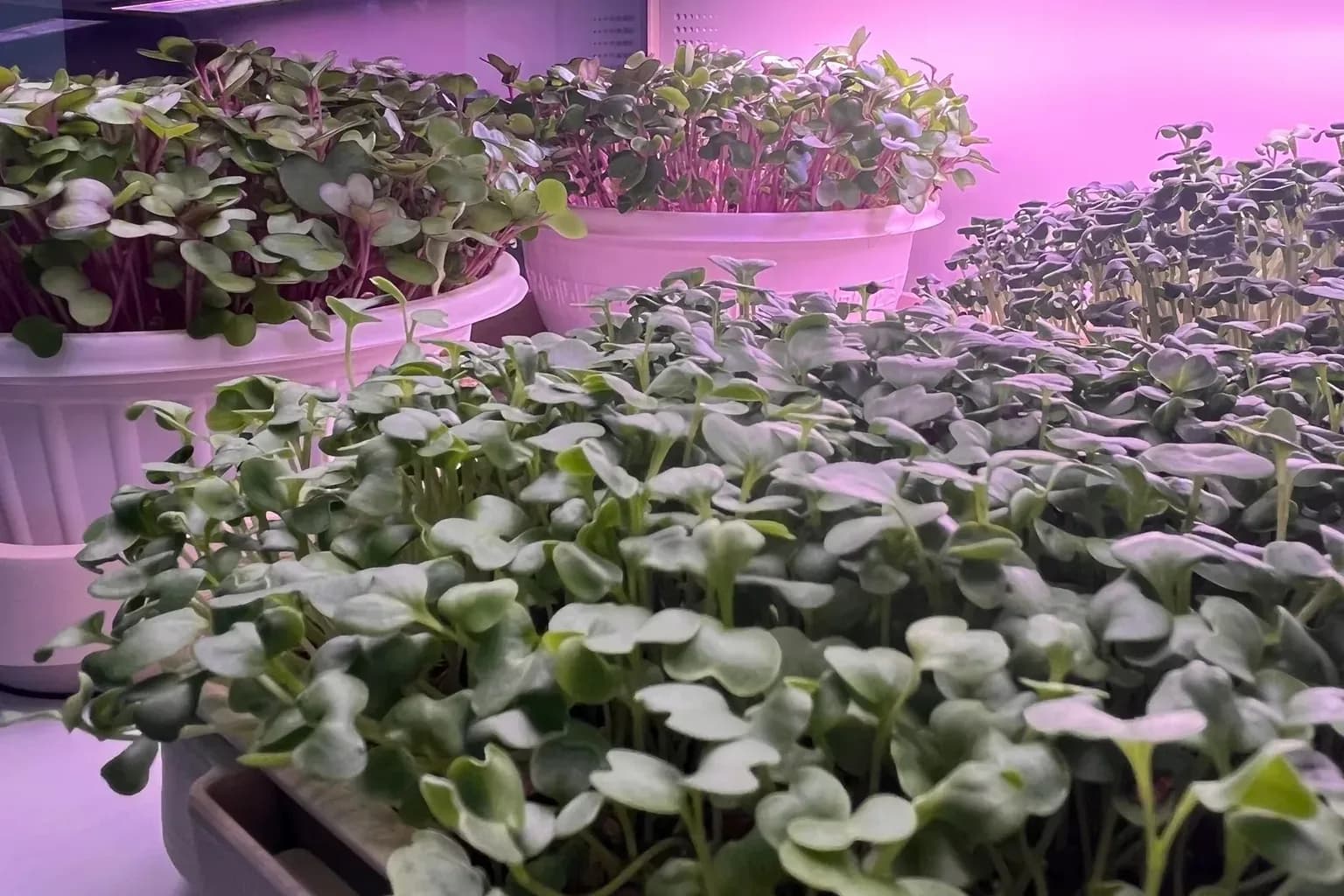
Part of what makes home farming compelling is what you can actually grow. Microgreens, the young seedlings of vegetables and herbs, are nutritional standouts.
Research summarized in peer-reviewed reviews and USDA work suggests microgreens are roughly 2 to 3.5 times more nutrient-dense than their fully mature counterparts, with radish microgreens often topping the list. They are rich in vitamins C, K, and E, plus antioxidants and polyphenols.
Some specific crops are remarkable. Broccoli microgreens are a leading dietary source of the precursor to sulforaphane, a compound studied for its role in the body's antioxidant and detox pathways. Different greens bring different strengths.
| Microgreen | Standout nutrient | Why it matters |
|---|---|---|
| Broccoli | 10–100× the glucoraphanin of mature broccoli | Glucoraphanin is the sulforaphane precursor that activates the body's Nrf2 antioxidant/detox pathway, though the finished sulforaphane you actually get varies widely by variety, growing conditions, and harvest timing |
| Radish | High overall nutrient density | Often the most nutrient-dense microgreen measured |
| Pea shoots | Protein | One of the more protein-dense microgreens and a strong plant-based protein source |
| Red cabbage | Antioxidants, polyphenols | Early animal research links it to lower LDL cholesterol |
A note on the research: a mouse study found red cabbage microgreens lowered LDL and liver cholesterol, along with inflammatory markers, in mice on a high-fat diet. That is early, animal-stage evidence, not human proof, but it points to why scientists keep studying this category. If you want to go deeper, our guide to microgreens nutrition breaks down the numbers, and what is sulforaphane explains the broccoli story in plain language.
What Makes the Future of Home Farming Different
If growing greens is so rewarding, why doesn't everyone do it? Because manual growing has a real, well-documented failure rate. The future of home farming is largely about engineering those failure points out of existence.
Three problems break most home grows:
- Mold. Moisture, poor airflow, overcrowding, and warmth combine to ruin a tray. It is the single most common reason a grow fails.
- Mess. Soil on the counter, in the sink, everywhere.
- Maintenance. A roughly 10-day cycle needs daily watering and attention. One busy week or a short trip can kill the whole tray.
This is where AI and controlled-environment growing change the equation. Instead of asking a busy person to be a perfect, consistent farmer, the system becomes the farmer. A sealed, climate-controlled chamber keeps mold-causing conditions out. Precise temperature control and automated watering remove the daily-chore problem. The plant gets ideal conditions every hour of every day, whether you are home or not.
To understand why this matters, it helps to know the two big reasons trays fail in the first place. We cover them in detail in why microgreens keep molding.
| Old way (manual) | The new way (automated) |
|---|---|
| Mold risk from poor airflow and moisture | Sealed, ventilated, climate-controlled chamber |
| Daily watering required | Automatic nutrient and water dosing |
| Soil mess on counters | Pre-seeded, drop-in trays |
| Travel or a busy week kills the tray | Runs itself for the full cycle |
| Guesswork on timing and conditions | AI closed-loop control adjusts continuously |
Vertical Growing, Shrunk to Counter Size
The other half of the future is space. Vertical growing, long used in commercial controlled-environment agriculture, stacks crops to produce a lot of food in a small footprint without sun, soil, or sprawling acreage.
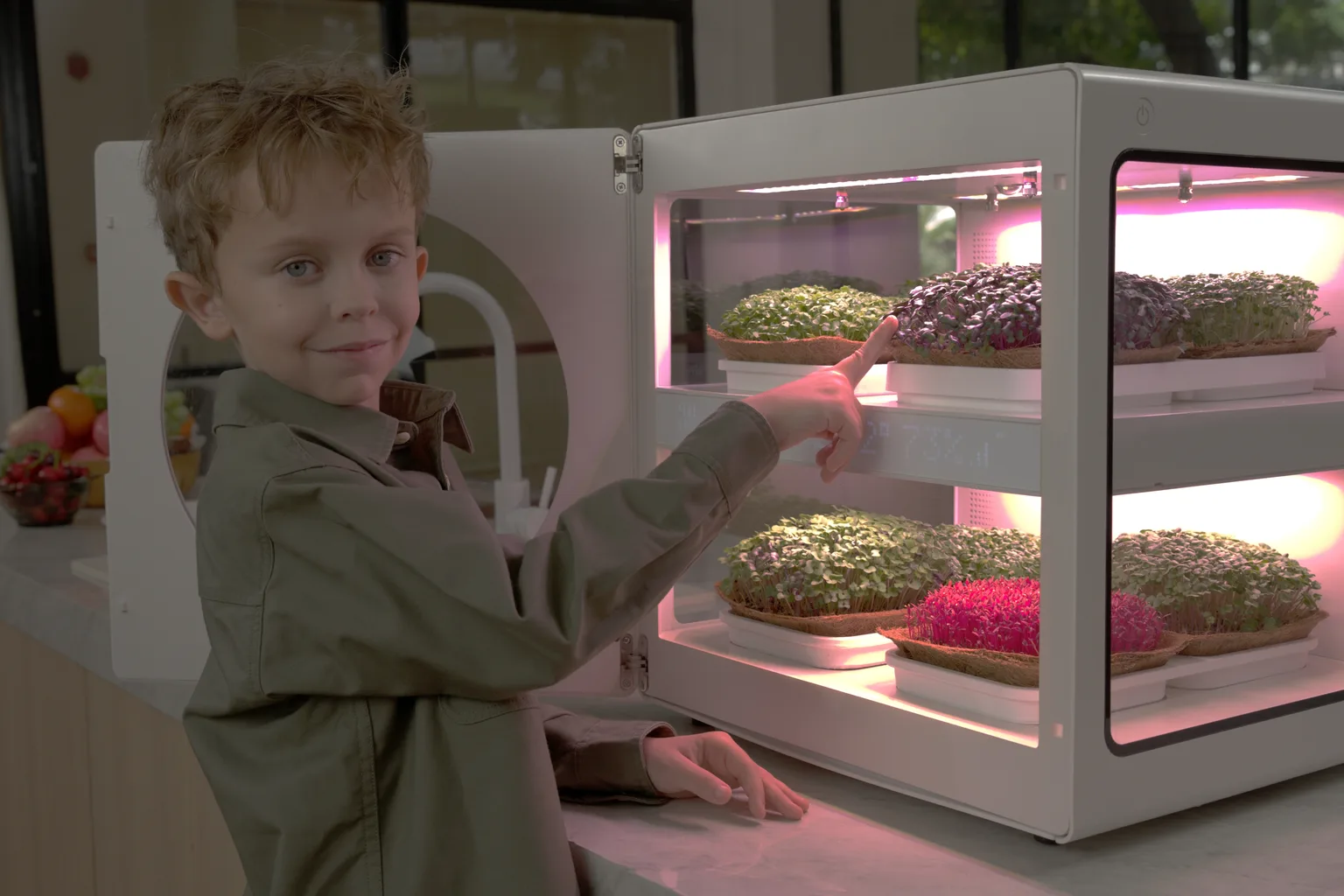
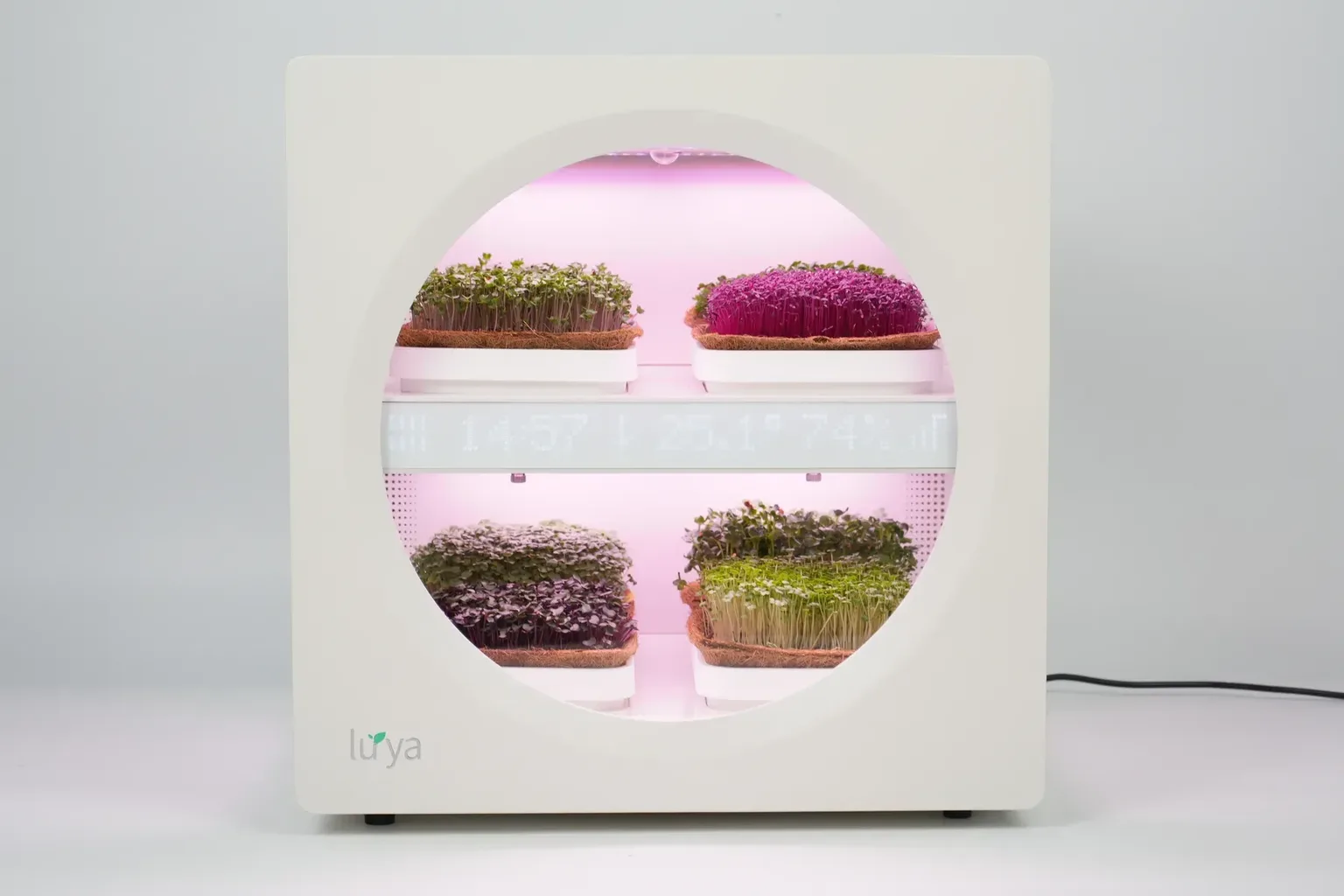
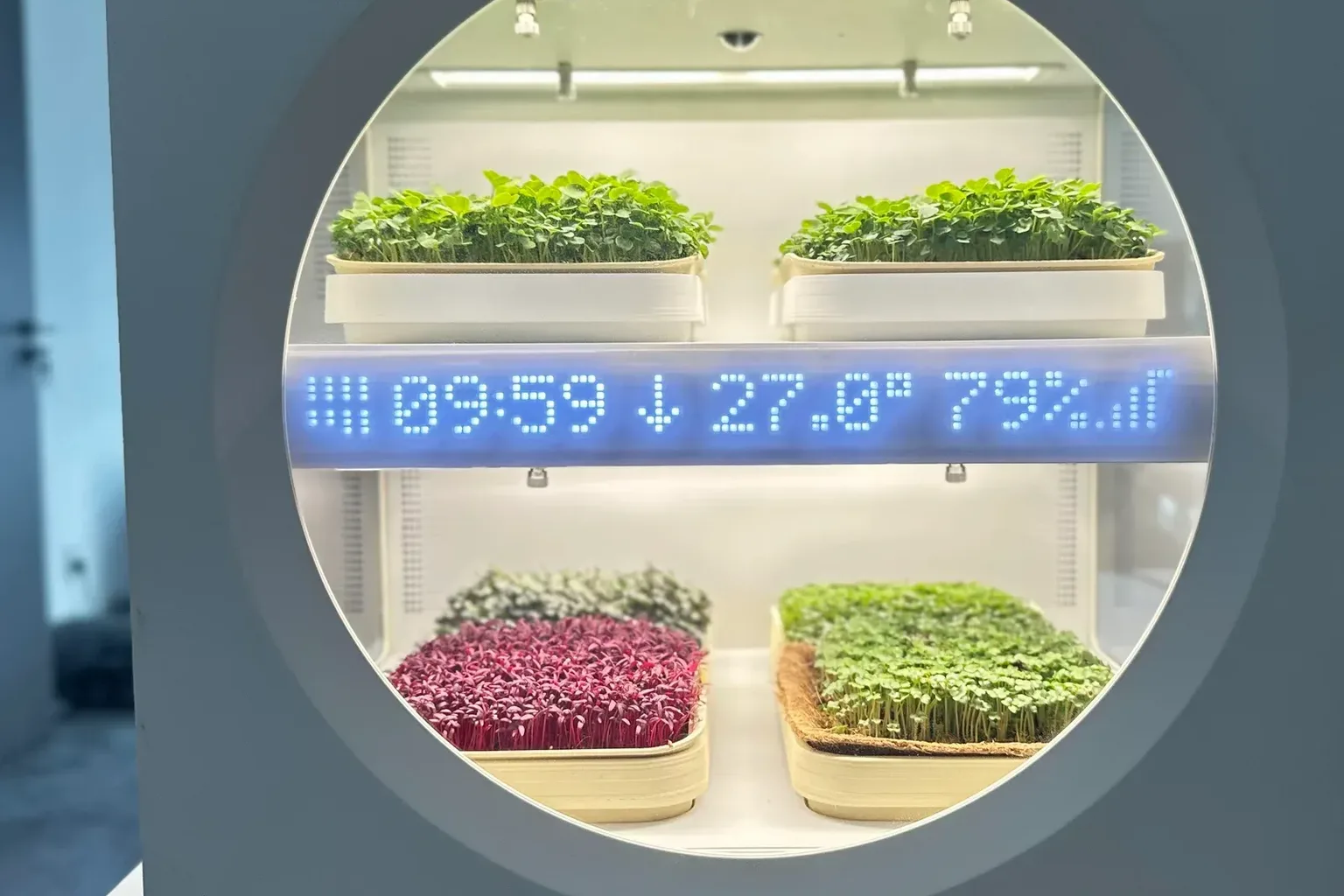
The breakthrough for home cooks is scale. The same principles that run a warehouse farm now fit in an appliance about 17 inches tall, 20 inches wide, and 15 inches deep. That is roughly the size of a microwave, and it can keep multiple crops growing at once.
This compactness is what finally makes home farming realistic for apartments, small kitchens, and people who have never grown anything. You do not need a yard, a sunny window, or a weekend. You need a counter and an outlet. Indoor growing also sidesteps the variables that wreck outdoor crops: there are no pests, no seasons, no drought, and no soil-borne pathogens. A radish microgreen that germinates in 1 to 2 days and is ready to cut in 5 to 7 behaves the same in January as it does in July. If you are curious about the broader field this comes from, controlled environment agriculture is a good primer, and our list of the easiest microgreens to grow shows just how fast some of these crops move.
How a "Food Computer" Pulls It Together
Put AI and vertical growing in one box and you get what some people call a food computer. The idea is simple, even if the engineering is not: make growing greens as easy as making coffee. Think of it like a Nespresso, but for greens.
In practice that means a closed-loop system where sensors and software make the decisions a careful farmer would, automatically:
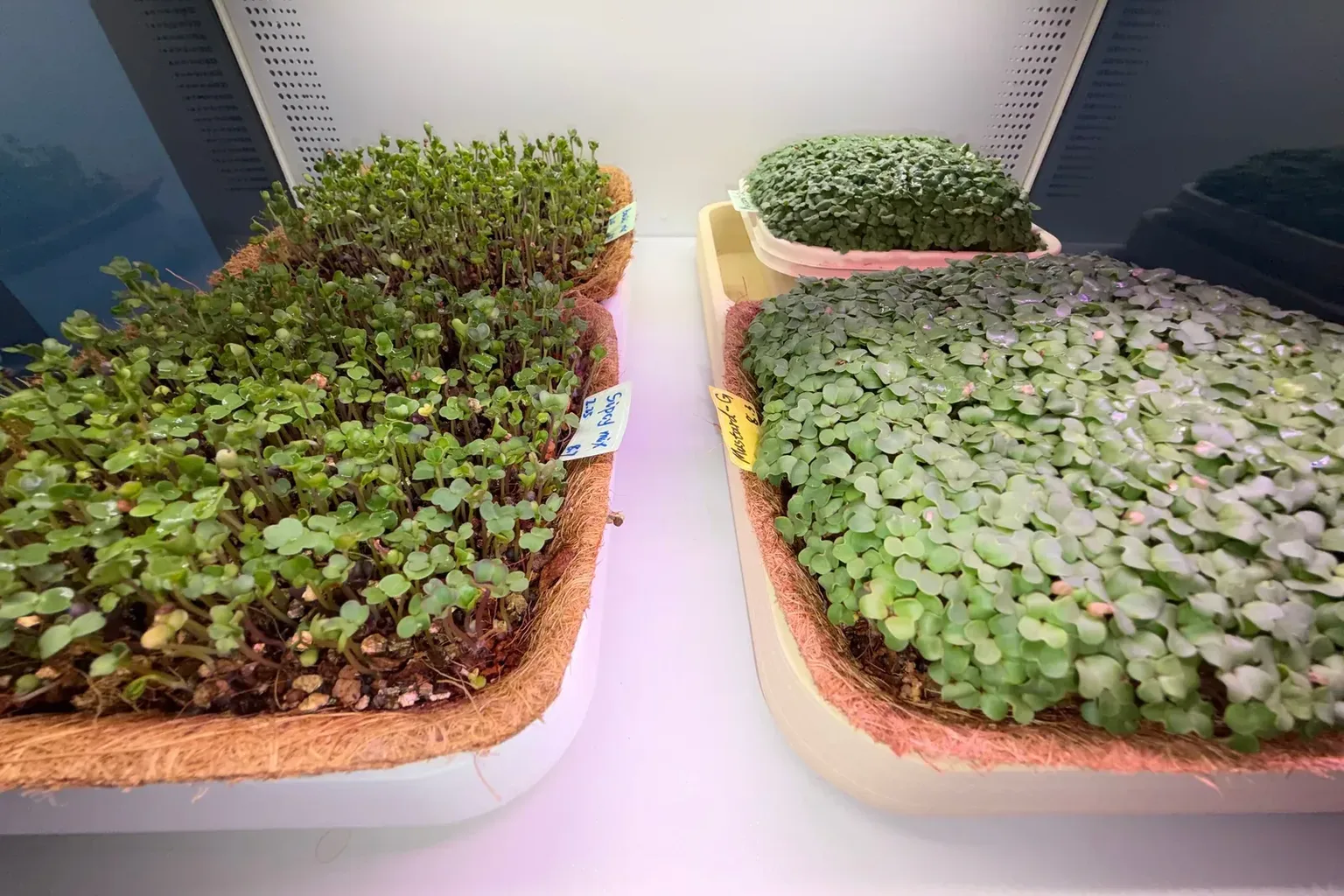
- Pre-seeded trays you drop in. No soil, no measuring, no mess. They are US-made with about a one-year shelf life.
- Precise temperature control that both heats and cools, so the chamber stays in the ideal range year-round.
- Automatic nutrient dosing across multiple channels, so each crop gets what it needs.
- A sealed, ventilated chamber that keeps mold out, the core fix for the most common failure.
- A live camera and time-lapse so you can watch each grow from anywhere, plus a simple status display and companion app.
Cycles run about 7 to 10 days, and you harvest only what you need while the rest keeps growing alive. That last detail is the freshness payoff: instead of a wilting clamshell from the store, you cut greens seconds before they hit your plate.
This is the model Luya built with its countertop appliance, Luya X. It is designed to solve both sides of the problem at once: the mold, mess, and maintenance that defeat manual growers, and the cost and staleness that frustrate store buyers.
If you are weighing your options, our honest comparison of grow vs buy microgreens lays out the real trade-offs, including price per serving.
What This Means for Your Kitchen
The future of home farming is not about turning everyone into a gardener. It is about removing the work and uncertainty so the good part, fresh and nutrient-dense food, is the only part left. AI handles the precision. Vertical growing handles the space. A sealed, automated system handles the chores.
The result is a kitchen where a living supply of greens is simply always there, the way refrigeration once made fresh milk a given. Quietly, that is a big shift in how we eat at home.
Want to see how a hands-off home farm actually works, step by step? Take a look at how it works, then read grow vs buy microgreens to see how the math compares with the store.
References
- Xiao Z, Lester GE, Luo Y, Wang Q. Assessment of Vitamin and Carotenoid Concentrations of Emerging Food Products: Edible Microgreens. J Agric Food Chem. 2012;60(31):7644–7651. https://doi.org/10.1021/jf300459b
- Fahey JW, Zhang Y, Talalay P. Broccoli sprouts: an exceptionally rich source of inducers of enzymes that protect against chemical carcinogens. PNAS. 1997;94(19):10367–10372. https://doi.org/10.1073/pnas.94.19.10367
- Kyriacou MC, Rouphael Y, Di Gioia F, et al. Micro-scale vegetable production and the rise of microgreens. Trends Food Sci Technol. 2016;57:103–115. https://doi.org/10.1016/j.tifs.2016.09.005