This article is for general education only and is not medical advice. Talk to your doctor before starting any supplement or making changes to your diet, especially if you have a health condition or take medication.
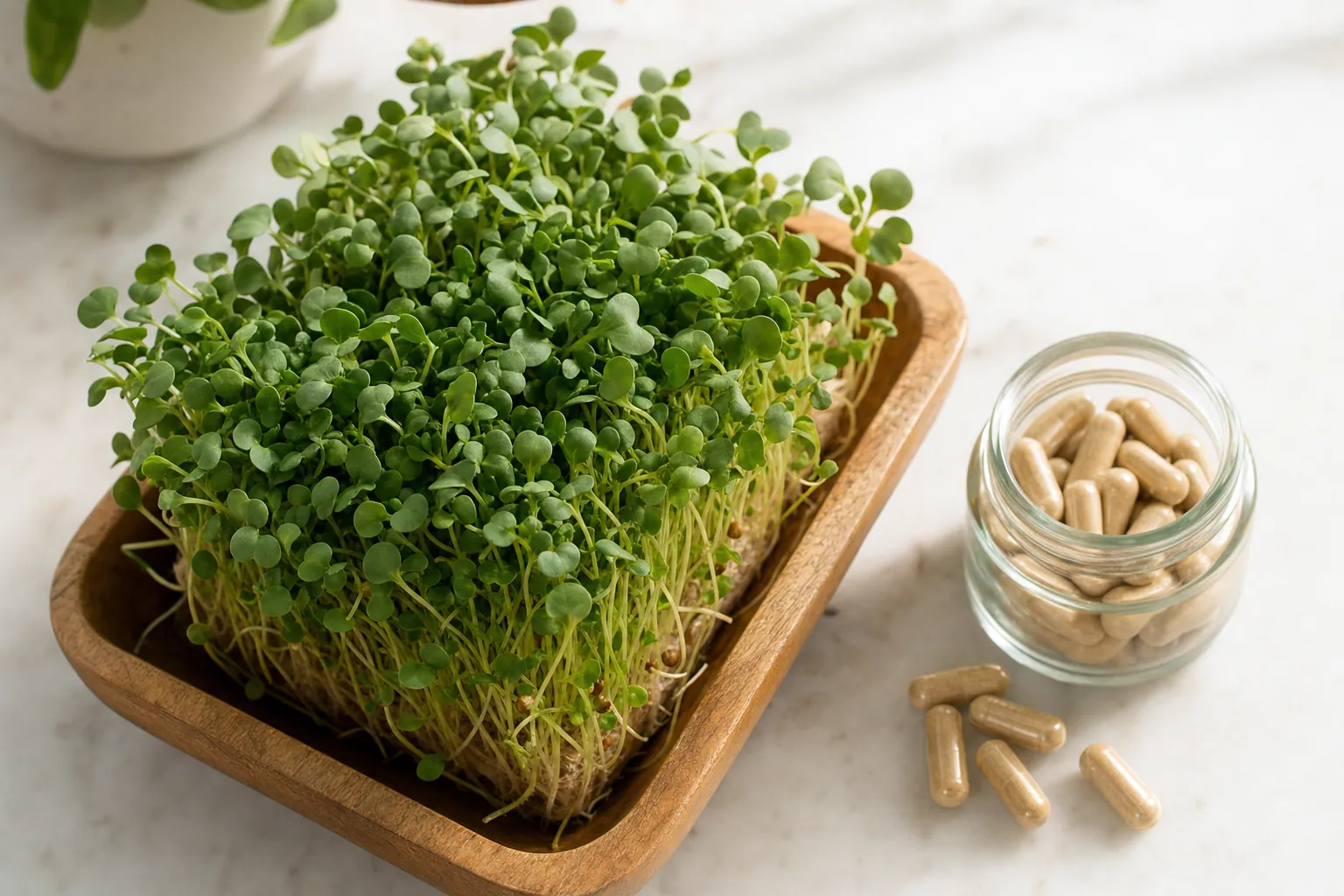
If you've been chasing sulforaphane, you've probably hit the same fork in the road every biohacker reaches: take a capsule, or eat the plant. The sulforaphane supplement vs microgreens debate sounds like it should have an obvious winner, but the real answer lives in the biochemistry of how this compound actually forms in your body. Get that part right and the "which wins" question mostly answers itself.
Let's break down what sulforaphane is, how it's made, and why fresh broccoli microgreens have a structural advantage that's surprisingly hard for a pill to match.
What Sulforaphane Actually Is (and Why It's Tricky)
Sulforaphane is an isothiocyanate, a sulfur-rich plant compound found in cruciferous vegetables. Here's the catch that makes it different from, say, vitamin C: sulforaphane doesn't really exist in the intact plant. What the plant stores is a precursor called glucoraphanin, sitting separately from an enzyme called myrosinase.
When you chew or chop the plant, you rupture its cells, glucoraphanin meets myrosinase, and only then does sulforaphane form. No enzyme contact, no sulforaphane. This is the single most important fact in the whole comparison, and it's why two products listing the same "milligrams of glucoraphanin" can deliver wildly different amounts of the active compound your cells actually see.
Researchers are interested in sulforaphane because it activates the body's Nrf2 pathway, a master switch that flips on a cascade of antioxidant and detoxification genes. It's being studied for blood-sugar regulation, inflammation, and cellular defense. Important caveat: much of the most exciting work is still early-stage or animal research, not a proven cure for anything in humans. Treat it as a promising area of nutrition science, not a prescription. If you want the deeper mechanism, see our primer on what is sulforaphane.
Sulforaphane Supplement vs Microgreens: The Source Question
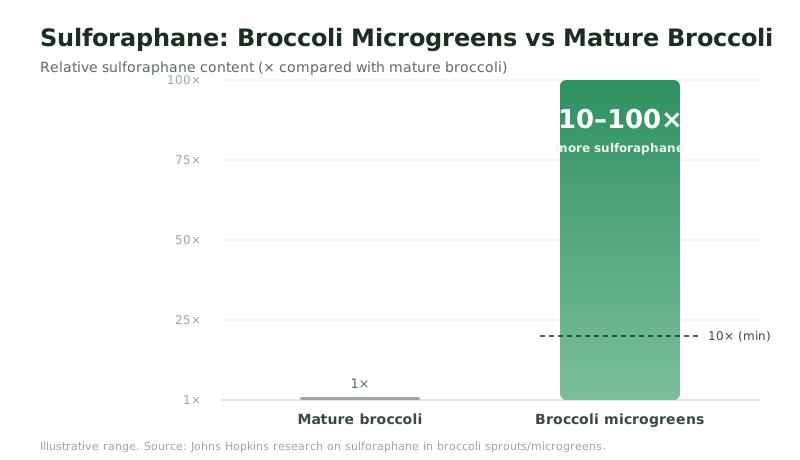
This is where the comparison gets interesting. Broccoli microgreens and young sprouts are remarkably concentrated. Johns Hopkins research helped establish that young broccoli can carry roughly 10 to 100 times more glucoraphanin (the sulforaphane precursor) than mature broccoli heads, a density mature florets simply don't reach, though the finished sulforaphane you actually get varies widely by variety, growing conditions, and harvest timing.
So fresh microgreens give you both halves of the equation: a high load of glucoraphanin and active, intact myrosinase, ready to react the moment you chew. That synergy is the whole point.
Supplements are a more mixed story. Many capsules deliver standardized glucoraphanin, which is reliable and shelf-stable. But if the product lacks active myrosinase (the heat and processing used to make a stable powder readily deactivate it), conversion to actual sulforaphane falls back on your gut bacteria. That hand-off is where the variability creeps in: studies measuring sulforaphane in urine after a glucoraphanin-only dose show large person-to-person swings, because everyone's microbiome converts it differently, and some people convert very little. Better-formulated products add a myrosinase source, often from mustard seed or active broccoli-seed extract, specifically to close that gap, but you have to read the label closely to know whether yours does.
A fresh microgreen sidesteps the whole problem. It carries its own myrosinase, so the reaction starts in your mouth instead of being outsourced to bacteria you can't see or control.
| Factor | Broccoli microgreens | Sulforaphane supplement |
|---|---|---|
| Active form | Forms on chewing (glucoraphanin + live myrosinase) | Often glucoraphanin only; conversion varies |
| Dosing precision | Approximate, by volume eaten | Exact mg per capsule |
| Whole-food cofactors | Vitamins C, K, E, fiber, polyphenols | Isolated compound |
| Freshness sensitivity | High; eat fresh and raw | Shelf-stable |
| Convenience while traveling | Lower | Higher |
| Cost over time | Low if home-grown | Ongoing per-bottle cost |
The honest takeaway: a well-formulated supplement can be a legitimate, convenient tool, particularly for travel or strict dosing. But for raw potency plus the natural enzyme that makes sulforaphane usable, fresh microgreens are hard to beat. Supplements isolate one compound; the plant brings the whole supporting cast, including vitamins C, K, E, and polyphenols.
The Part Nobody Talks About: Freshness and Preparation
A capsule's dose is whatever the label says. A plant's "dose" depends on how you treat it.
Two preparation rules matter enormously:
- Don't overcook it. Heat degrades myrosinase. Boil or microwave broccoli into mush and you can wipe out the enzyme that makes sulforaphane. Raw, lightly steamed, or chewed-well wins.
- Chew thoroughly. More cell rupture means more enzyme contact means more sulforaphane. Tossing microgreens whole onto a salad and barely chewing leaves compound on the table.
This is why fresh, raw, well-chewed microgreens are such an efficient delivery system, and why we wrote a full guide on how to maximize sulforaphane from your food. The plant doesn't just match a supplement; with the right handling it can outperform a poorly formulated one.
Freshness compounds the advantage. Microgreens are at their nutritional and enzymatic peak right after harvest, and both the antioxidant vitamins (C, K, E) and the delicate enzyme machinery start fading once the plant is cut. The store-bought supply chain, days of farm-to-truck-to-warehouse-to-shelf, works against that peak, and it's why a tray of broccoli microgreens you grew yourself isn't really the same product as a wilted clamshell that's been refrigerated for a week. Eating something harvested seconds ago is a different category of fresh, and for an enzyme-dependent compound like sulforaphane, that timing isn't a nice-to-have.
So, Which Wins?
For most people optimizing for usable sulforaphane, real nutrition, and value, fresh broccoli microgreens win because they supply the precursor and the enzyme together, plus a whole-food matrix a capsule can't replicate, vitamins C, K, and E, fiber, and a range of polyphenols that supplements strip away. Supplements earn their place as a convenient backup, especially when exact, repeatable milligram dosing is the goal or when travel makes a fresh tray impractical. In practice, a lot of careful eaters end up using both: greens as the daily default, capsules as the fallback for the days they're on the road.
The one real obstacle to the microgreens side is consistency. Store-bought clamshells are expensive (often $4 to $6 per 2 oz, roughly $30 to $50 per pound) and frequently past their freshness peak. Growing your own solves cost and freshness, but DIY trays come with their own headaches: mold from poor airflow and overcrowding, soil mess, and the daily-watering commitment of a roughly 10-day cycle that one busy week or trip can ruin.
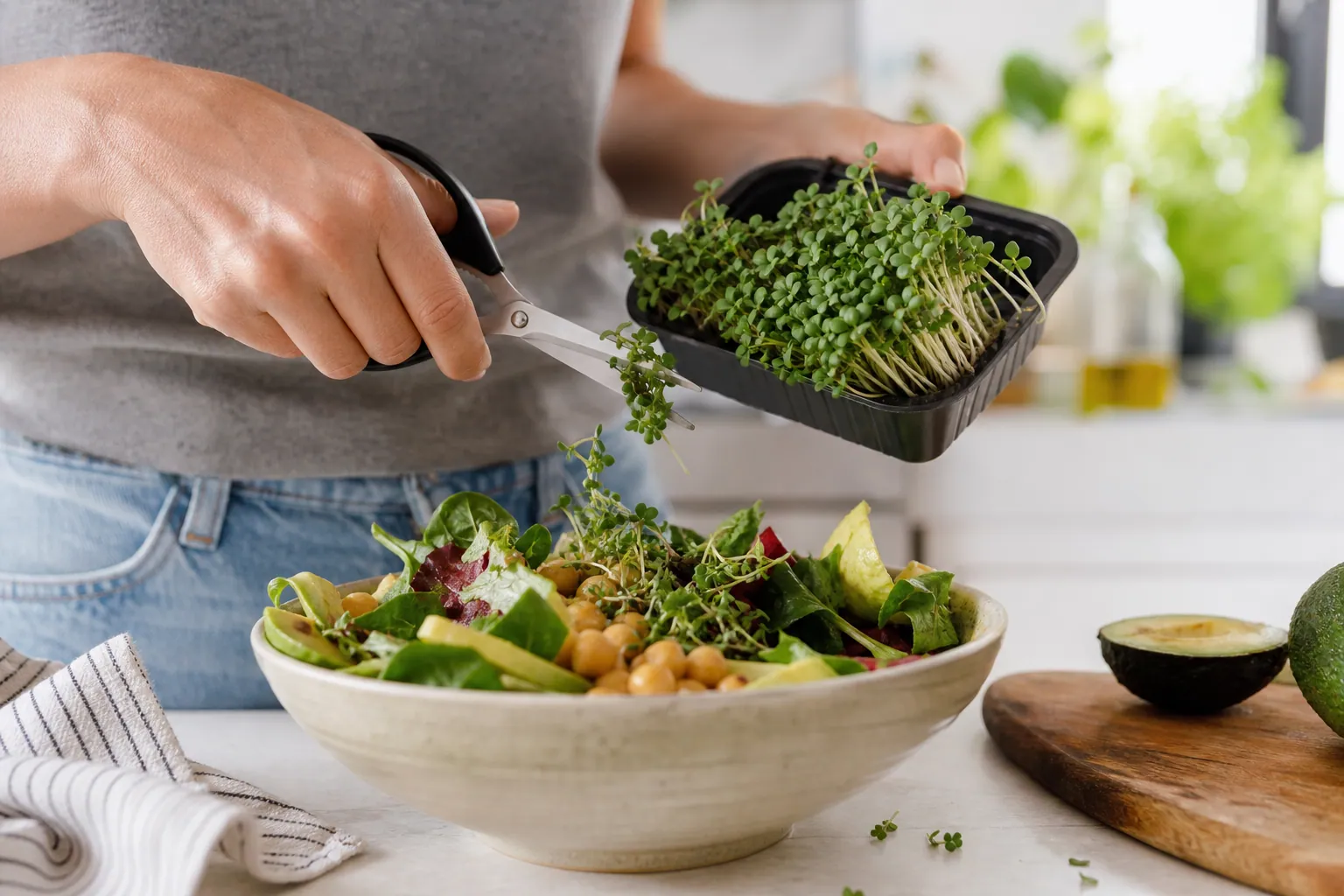
This is the gap Luya was built to close. The Luya X is a countertop "food computer" with a sealed, climate-controlled, ventilated chamber that keeps mold out, pre-seeded US-made trays you simply drop in, and automatic nutrient dosing and temperature control. You harvest only what you need, seconds before eating, and the rest keeps growing. Think of it like a Nespresso, but for greens, designed to deliver the one thing sulforaphane really demands: maximum freshness with zero chore.
If you're weighing your options more broadly, our guides on microgreens vs sprouts and grow vs buy microgreens are worth a read before you commit.
The Bottom Line
Sulforaphane isn't a number on a label; it's a reaction that happens when fresh plant tissue meets your teeth. Supplements can deliver the raw material conveniently, but fresh broccoli microgreens deliver the material, the enzyme, and the whole-food extras in one bite. For pure usable potency, the plant has the edge, as long as it's genuinely fresh.
Curious how effortless fresh-daily greens can actually be? See how it works and then dig into the science with our deep dive on microgreens nutrition.
Selected sources
- Johns Hopkins Medicine (sulforaphane and broccoli sprout research) — hopkinsmedicine.org
- National Institutes of Health / PubMed Central (Nrf2 pathway and isothiocyanate research) — pmc.ncbi.nlm.nih.gov
- USDA (nutrient data and microgreens research) — usda.gov
- MDPI Plants (peer-reviewed microgreens nutrient-density reviews) — mdpi.com
- Cleveland Clinic (cruciferous vegetables and health) — clevelandclinic.org
- Healthline (consumer nutrition overviews) — healthline.com
References
- Fahey JW, Zhang Y, Talalay P. Broccoli sprouts: an exceptionally rich source of inducers of enzymes that protect against chemical carcinogens. PNAS. 1997;94(19):10367–10372. https://doi.org/10.1073/pnas.94.19.10367
- Axelsson AS, et al. Sulforaphane reduces hepatic glucose production and improves glucose control in patients with type 2 diabetes. Sci Transl Med. 2017;9(394):eaah4477. https://doi.org/10.1126/scitranslmed.aah4477