This article is for general education and is not medical advice. Talk to your doctor before making changes for a specific health condition.
If you've stood in the produce aisle wondering whether those tiny greens are actually worth the price, you're not alone. The labels get thrown around loosely, and a lot of shoppers assume "sprouts" and "microgreens" are two words for the same thing. They aren't. In the microgreens vs sprouts comparison (and how both stack up against the full-grown vegetable), the differences are real, measurable, and worth understanding before you decide what to put on your plate or grow on your counter.
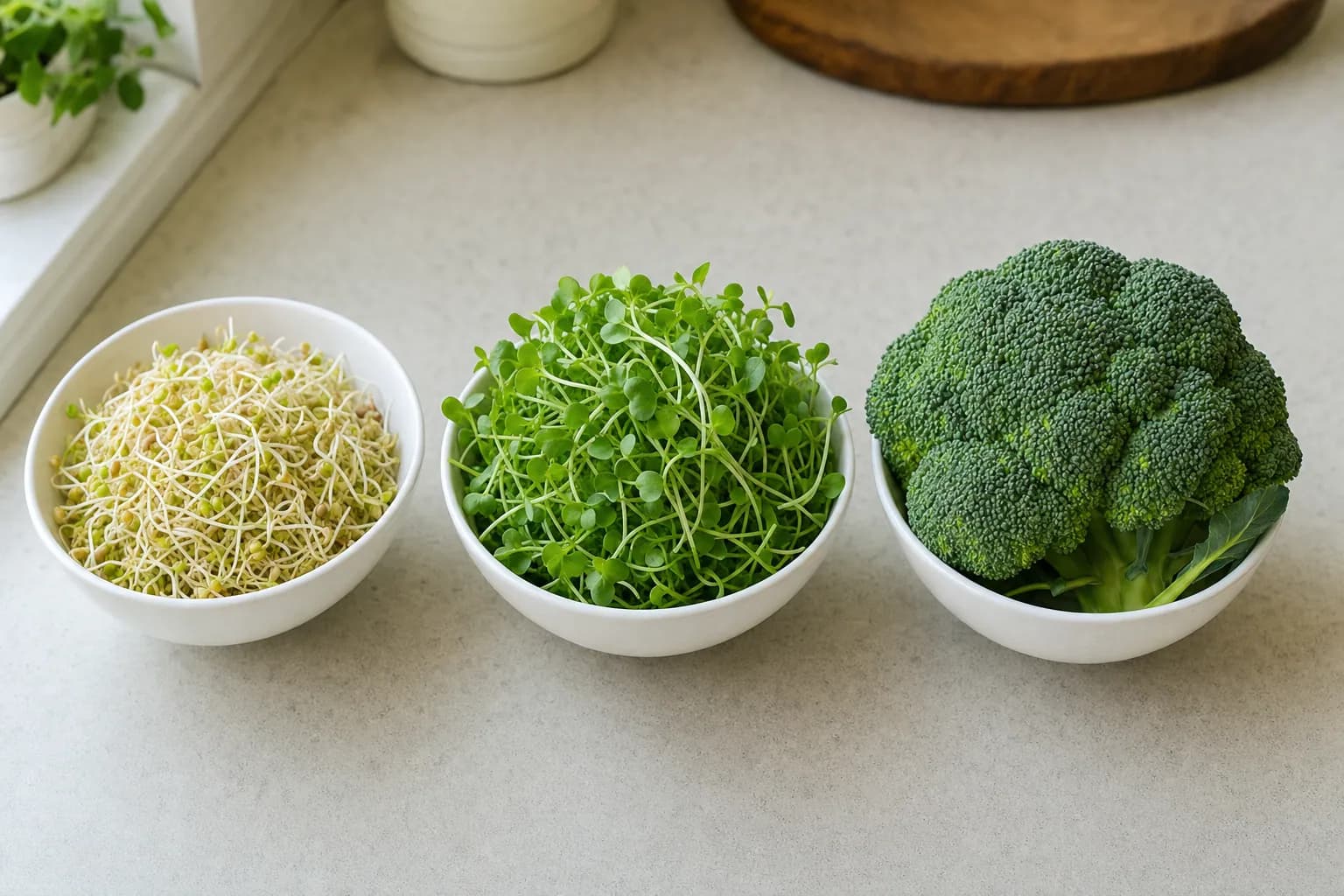
Here's the key idea: all three are the same plant captured at different moments of its life. A single broccoli seed can become a sprout in a few days, a microgreen in a week or two, or a full head of broccoli in a couple of months. What changes along the way is how the plant is grown, which part you eat, how safe it is raw, and how much nutrition it delivers per bite.
Microgreens vs Sprouts: How They Actually Differ
The cleanest way to settle the microgreens vs sprouts question is to look at how each is grown and which part of the plant ends up in your mouth.
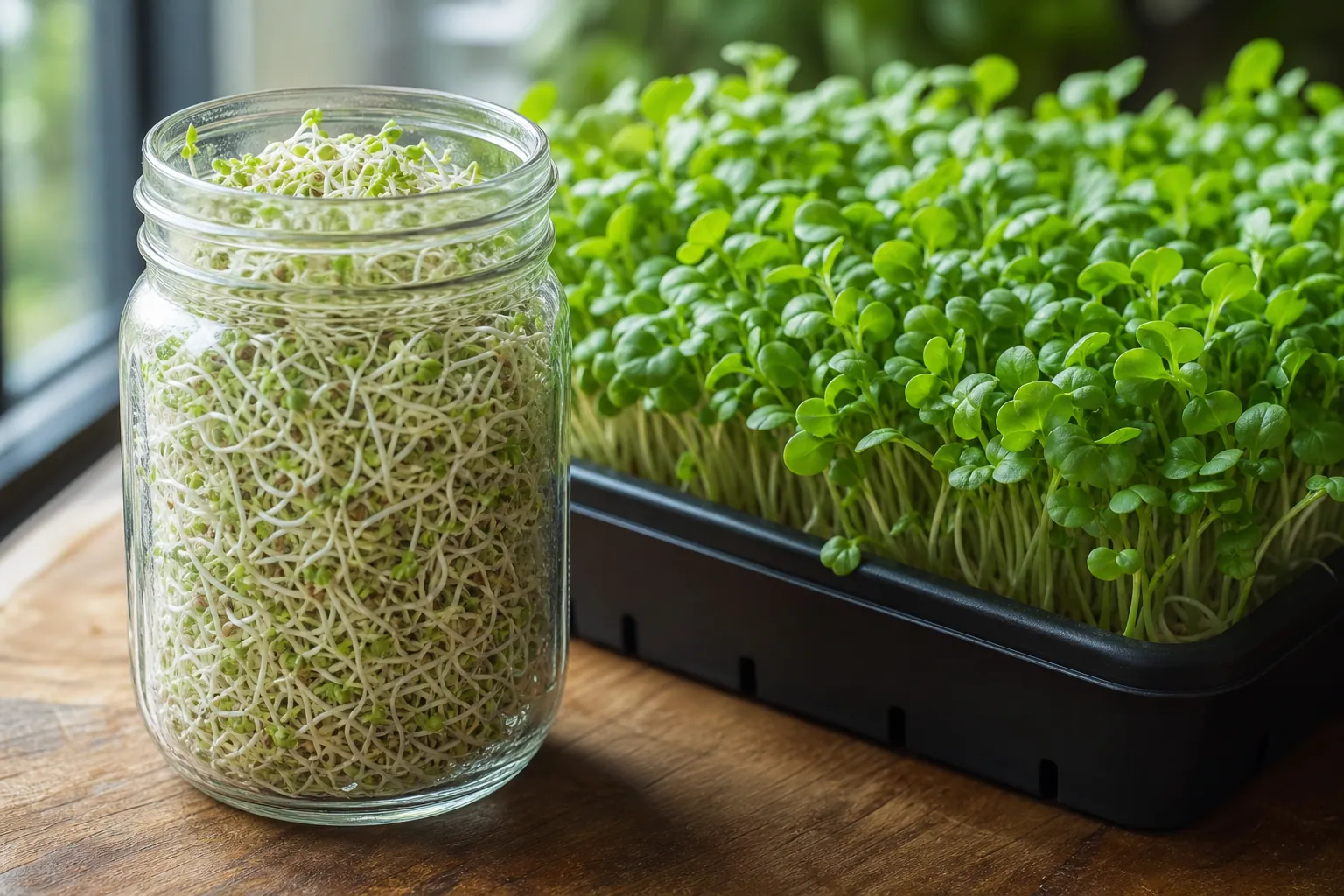
Sprouts are germinated seeds, and not much more. You soak the seeds, keep them damp in a jar or tray, and within a few days you eat the entire thing: seed, root, and the first pale shoot. They grow in warm, humid, dark conditions with no soil and no light. You harvest them before any true leaves form, which is why they taste mild and watery-crunchy rather than vegetable-forward.
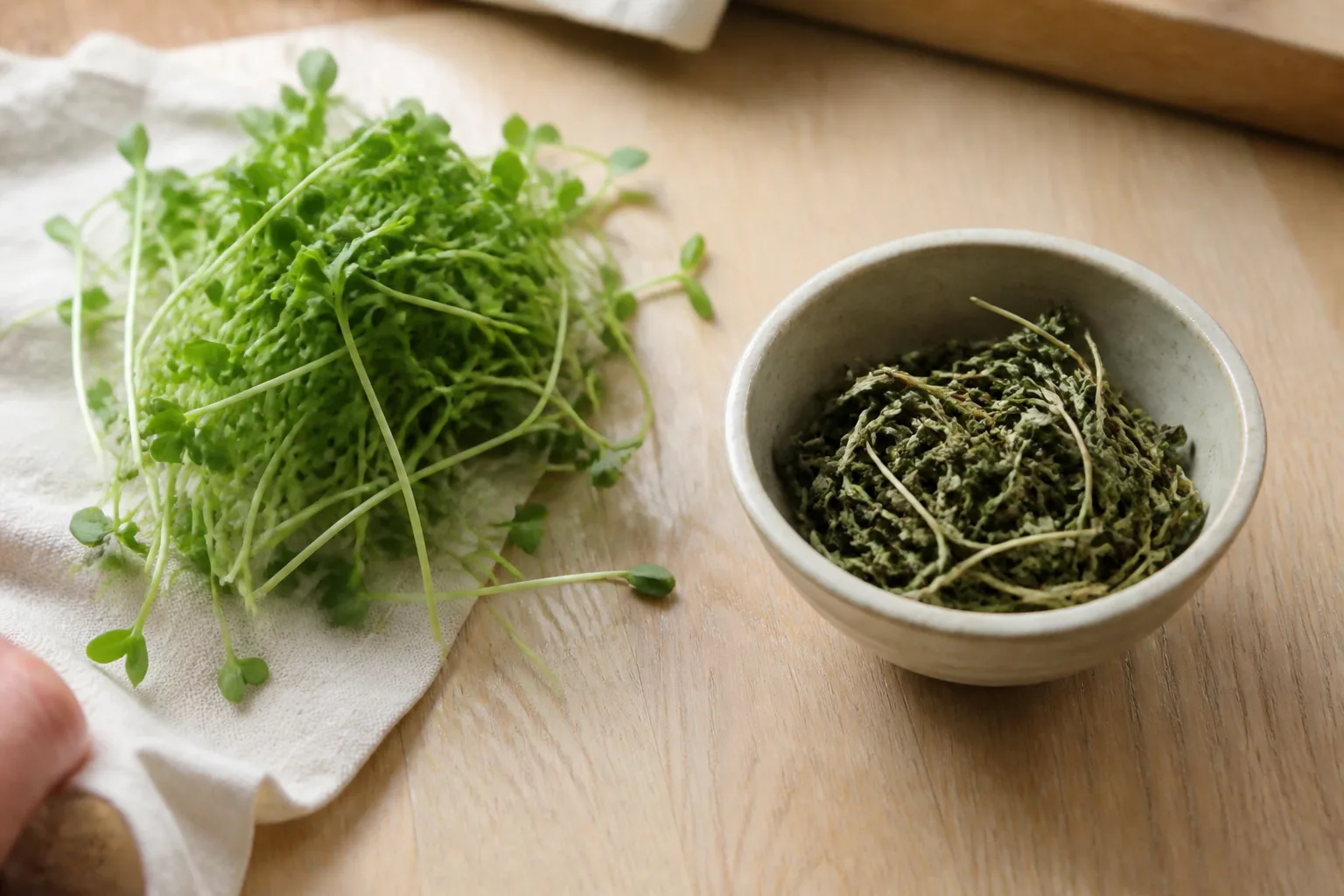
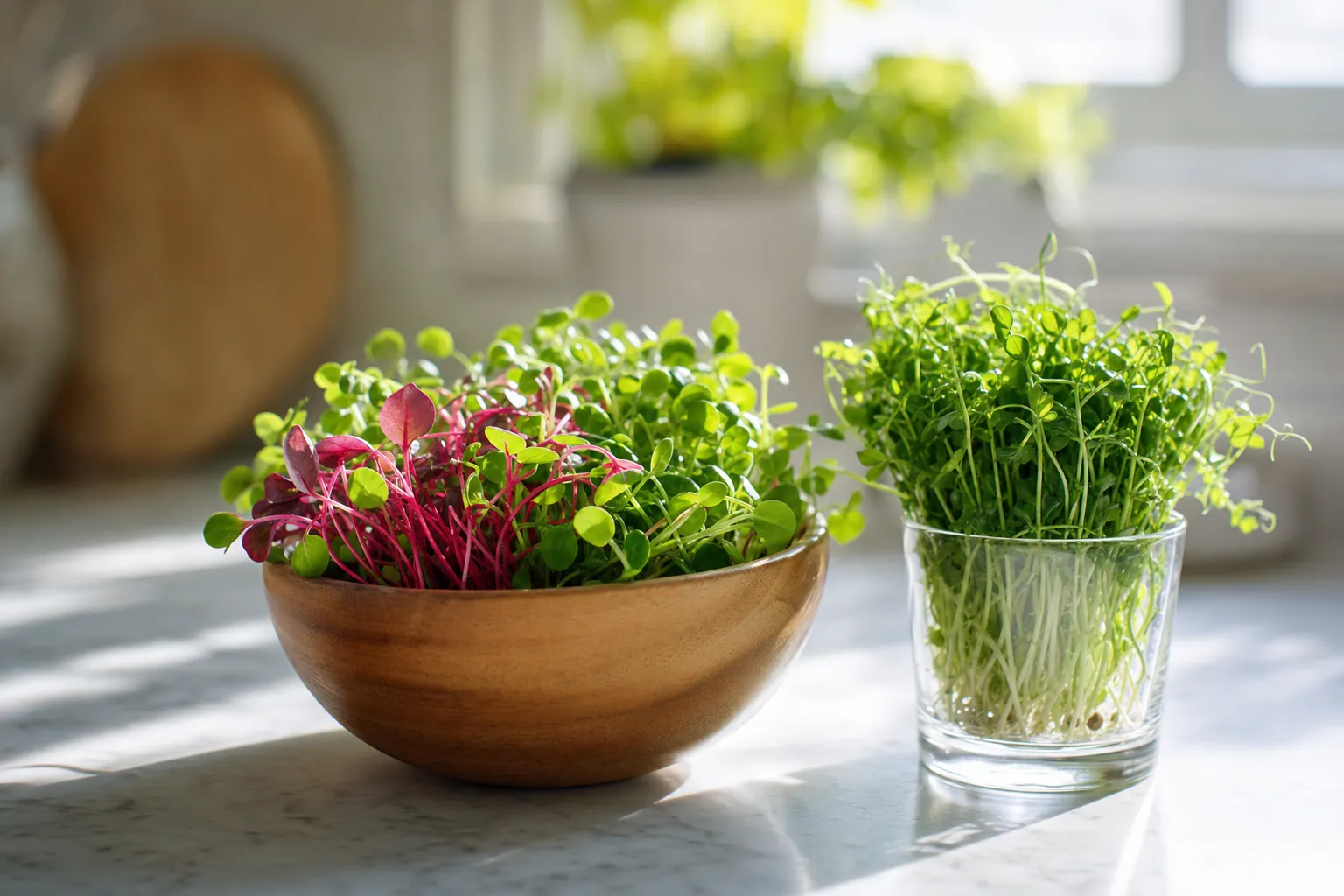
Microgreens are the next chapter of the same story. They're grown in a thin layer of soil or on a fiber mat, given real light, and harvested after the first true leaves appear, usually 7 to 14 days in. You snip them above the soil line and eat the stem and leaves only, leaving the root and seed husk behind. That extra week of light is what lets them build color, flavor, and a denser nutrient load than a sprout.
Mature vegetables are the plant grown to full size over weeks or months, in soil, outdoors or under glass, and harvested when the edible part (a head, a leaf, or a root) is fully developed and familiar.
| Feature | Sprouts | Microgreens | Mature Vegetable |
|---|---|---|---|
| Time to harvest | 3-7 days | 7-14 days | 6-12+ weeks |
| Growing medium | Water only | Soil or mat | Soil |
| Light needed | No | Yes | Yes |
| What you eat | Seed, root, shoot | Stem + leaves | Head, leaf, or root |
| Harvested | Whole, uncut | Cut above soil | Cut or pulled at maturity |
| Flavor | Mild, watery-crunchy | Concentrated, fresh | Familiar, full |
That "what you eat" row matters more than it looks. Because a sprout is eaten whole, root and seed included, after days in warm standing moisture, sprouts carry a higher food-safety risk than microgreens, whose edible tops are cut cleanly above the growing surface. It doesn't make sprouts dangerous, but it does mean source and hygiene matter a great deal.
The Nutrition Gap Is Bigger Than You'd Think
Here's where the comparison gets genuinely interesting. Younger plants pack a surprising amount of nutrition into a tiny package, and microgreens are the standout of the three.
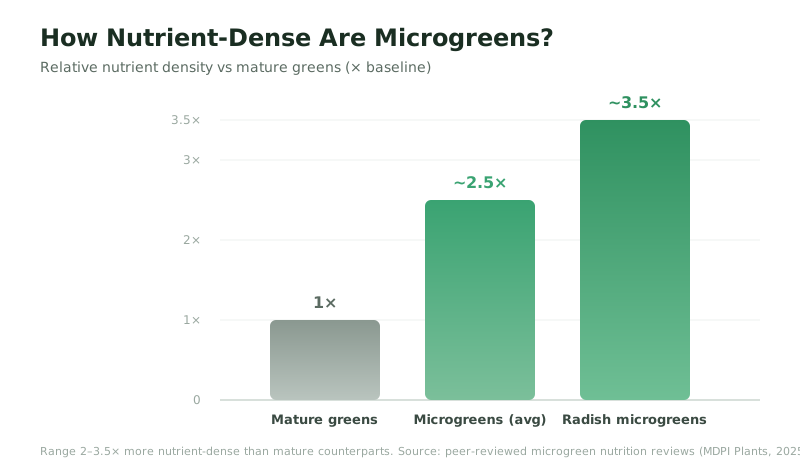
Peer-reviewed reviews (including work published in MDPI Plants) alongside USDA data suggest microgreens are roughly 2 to 3.5 times more nutrient-dense than their mature counterparts, with radish microgreens frequently topping the charts. Across the board they're rich in vitamins C, K, and E, plus the antioxidants and polyphenols that give them their deep color. If you want the full breakdown, our guide to microgreens nutrition lays it out crop by crop, and are microgreens good for you tackles the question head-on.
The most dramatic example is broccoli. Research from Johns Hopkins found that young broccoli (both microgreens and sprouts) can contain 10 to 100 times more glucoraphanin (the sulforaphane precursor) than a mature broccoli head, though the finished sulforaphane you actually get varies widely by variety, growing conditions, and harvest timing.
Sulforaphane is worth knowing by name. It's an isothiocyanate that forms when a compound called glucoraphanin meets an enzyme called myrosinase, a reaction triggered the moment you chew or chop the plant. Once formed, it activates the body's Nrf2 pathway, part of your natural antioxidant and detox machinery. Researchers are actively studying it for blood-sugar regulation, inflammation, and cellular defense, but it's important to be precise: this is research-stage science, not a proven cure for anything.
One practical takeaway follows directly from that chemistry: heat degrades myrosinase, so overcooking can quietly cancel the benefit. Raw, fresh, and well-chewed delivers the most sulforaphane, which is one more point in the microgreen's favor since they're eaten raw by default. For the deeper dive, see our explainer on what sulforaphane is and why it matters.
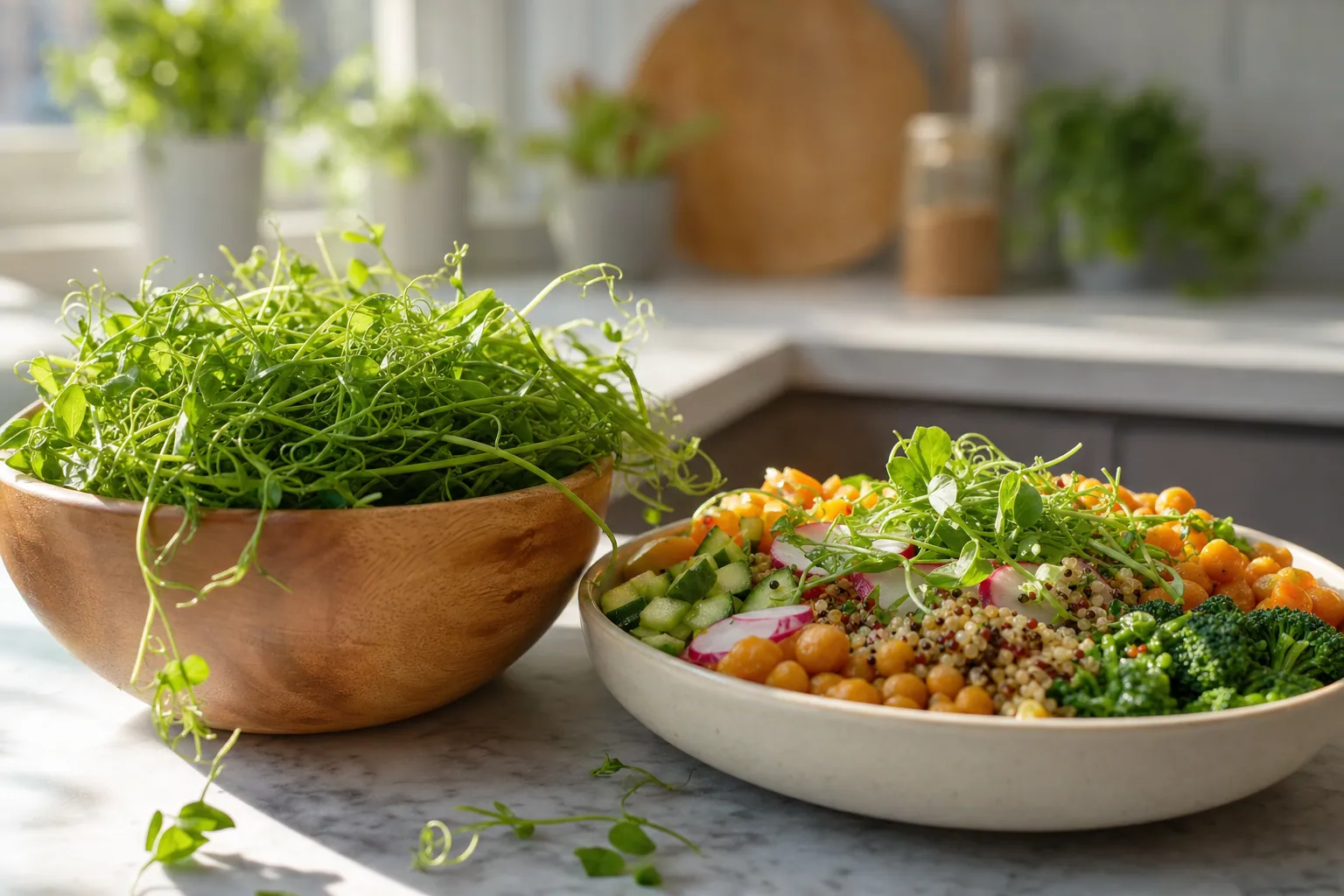
It isn't only about broccoli, either. Pea shoots are one of the more protein-dense microgreens and a strong plant-based protein source. And in one USDA animal (mouse) study, red cabbage microgreens lowered LDL and liver cholesterol (and inflammatory markers) in mice on a high-fat diet, along with reduced weight gain. That's encouraging early animal research, not human proof, but it helps explain why this category attracts so much attention.
| Crop | Standout nutrient note |
|---|---|
| Radish microgreens | Often highest in overall nutrient density |
| Broccoli microgreens | 10–100× the glucoraphanin of mature broccoli |
| Pea shoots | One of the more protein-dense microgreens |
| Red cabbage microgreens | Lowered LDL and liver cholesterol in a mouse study |
Which One Is Right for You?
There's no single winner here. The right choice depends on what you actually want out of the food.
Choose sprouts if you want the fastest, cheapest option and don't mind a mild flavor. Just buy from a reputable source or follow safe-sprouting practices carefully, because the warm, wet, dark growing conditions that make sprouts so quick are the same conditions bacteria like.
Choose microgreens if you want the best balance of nutrient density, flavor, and food safety. You get concentrated nutrition, the cleaner harvest of cutting above the soil line, and a fresher, more vegetable-forward taste that works in almost anything.
Keep eating mature vegetables, too. They bring the fiber and sheer volume that tiny greens can't match, and dietary variety is the real goal. Microgreens are a concentrated boost on top of a good diet, not a replacement for it.
For most health-conscious eaters, microgreens land in the sweet spot, which raises the obvious question: where do you actually get them fresh?
The freshness problem
Store-bought microgreens have two stubborn drawbacks. First, they're expensive, often $4 to $6 for a tiny 2 oz clamshell, which works out to roughly $30 to $50 per pound. Second, they're frequently not very fresh: by the time they move from farm to truck to warehouse to store shelf, they've burned through days of shelf life and tend to wilt within a day or two of getting home. We dig into both in why store-bought microgreens are expensive and not fresh.
Growing your own fixes the cost and freshness math, but it swaps in a different set of headaches: mold from too much moisture and poor airflow, the mess of handling soil, and the daily watering a tray demands across its roughly 10-day cycle. Leave for a weekend or hit a busy week, and a tray can fail. That failure rate is real, and it's why a lot of enthusiastic first-time growers quietly give up. Our notes on why microgreens keep molding cover the most common culprits.
That gap, between greens that are too expensive and not fresh on one side, and DIY trays that are finicky and high-maintenance on the other, is exactly what we built Luya to close.
Grow Microgreens at Home Without the Guesswork
Luya is a countertop "food computer" that grows fresh microgreens automatically. You drop in a pre-seeded tray, and a sealed, climate-controlled chamber handles the temperature, watering, and airflow that normally invite mold and mess. You harvest only what you need, seconds before eating, and the rest keeps growing alive on the counter. Think of it like a Nespresso, but for greens.
If you're weighing your options, see exactly how it works, then read our deep dive on microgreens nutrition to decide what's worth growing first.
Selected sources
- Johns Hopkins Medicine — broccoli sprout and sulforaphane research
- USDA — microgreen nutrient and animal-study data
- MDPI Plants — peer-reviewed microgreens nutrition reviews
- NIH / PMC — research on sulforaphane and the Nrf2 pathway
- Cleveland Clinic — general nutrition guidance
References
- Fahey JW, Zhang Y, Talalay P. Broccoli sprouts: an exceptionally rich source of inducers of enzymes that protect against chemical carcinogens. PNAS. 1997;94(19):10367–10372. https://doi.org/10.1073/pnas.94.19.10367
- Xiao Z, Lester GE, Luo Y, Wang Q. Assessment of Vitamin and Carotenoid Concentrations of Emerging Food Products: Edible Microgreens. J Agric Food Chem. 2012;60(31):7644–7651. https://doi.org/10.1021/jf300459b
- Huang H, Wang TTY, et al. Red Cabbage Microgreens Lower Circulating LDL, Liver Cholesterol, and Inflammatory Cytokines in Mice Fed a High-Fat Diet. J Agric Food Chem. 2016;64(48):9161–9171. https://doi.org/10.1021/acs.jafc.6b03805
- Kyriacou MC, Rouphael Y, Di Gioia F, et al. Micro-scale vegetable production and the rise of microgreens. Trends Food Sci Technol. 2016;57:103–115. https://doi.org/10.1016/j.tifs.2016.09.005