This article is for general education only and is not medical advice. Talk to a qualified clinician before making changes to your diet, especially if you have a health condition or take medication.
If your goal is to maximize sulforaphane, broccoli microgreens are one of the most efficient foods you can put on your plate. Gram for gram, young broccoli microgreens and sprouts can carry dramatically more of the sulforaphane precursor than the mature heads you buy at the store, and a few small choices in how you grow, cut, and eat them can mean the difference between getting a meaningful dose and getting almost none.
That last point surprises people. Two cooks can start with the identical tray and one ends up with a generous dose of active sulforaphane while the other gets a fraction of it. Sulforaphane is not a static number on a nutrition label; it is the output of an enzyme reaction you either help along or accidentally shut down.
This guide walks through where sulforaphane comes from, then gives you concrete, repeatable steps to get the most out of every tray, from harvest to the last chew.
What Sulforaphane Is and Why It Depends on How You Eat
Sulforaphane is an isothiocyanate, a plant compound the body uses to activate its Nrf2 pathway, the master switch behind much of our internal antioxidant and detox defense. Researchers have studied it for potential roles in blood-sugar regulation, inflammation, and cellular defense. To be clear, this is research-stage work, not a list of proven cures.
Here is the part most people miss: sulforaphane is not sitting ready-made inside the leaf. Broccoli microgreens store an inactive precursor called glucoraphanin. Sulforaphane is only created when glucoraphanin meets an enzyme called myrosinase, and that contact happens when plant cells are physically broken, when you chew or chop.
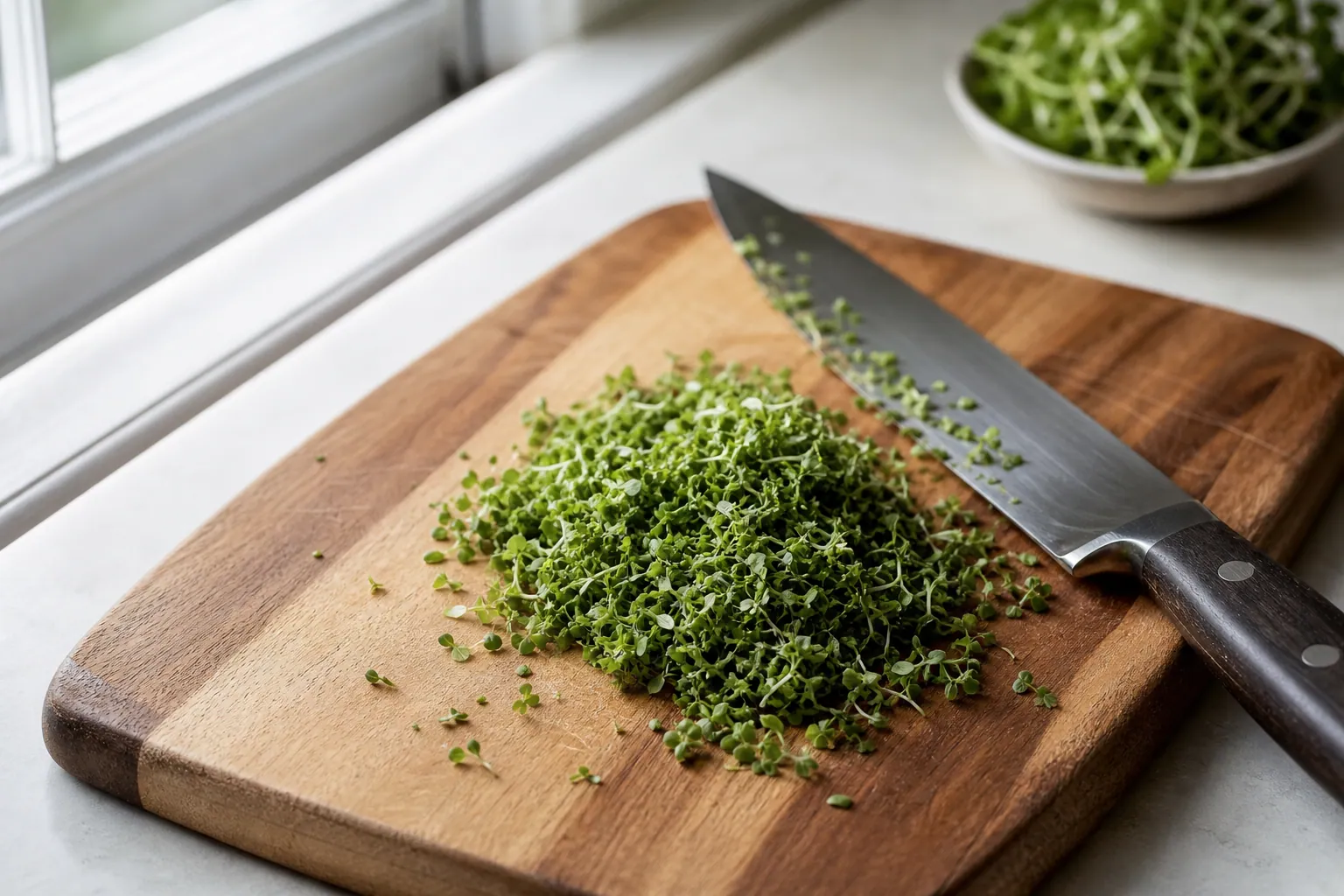
That single fact drives almost every tip here. If myrosinase is destroyed before it can do its job, you lose most of the payoff, no matter how much glucoraphanin the plant started with. Think of it like a two-part epoxy: glucoraphanin and myrosinase sit in separate compartments inside the leaf, harmless until they mix. Damaging the tissue while keeping the enzyme intact is what triggers the reaction, and heat and wilting both work against you.
Why Broccoli Microgreens Beat Mature Broccoli
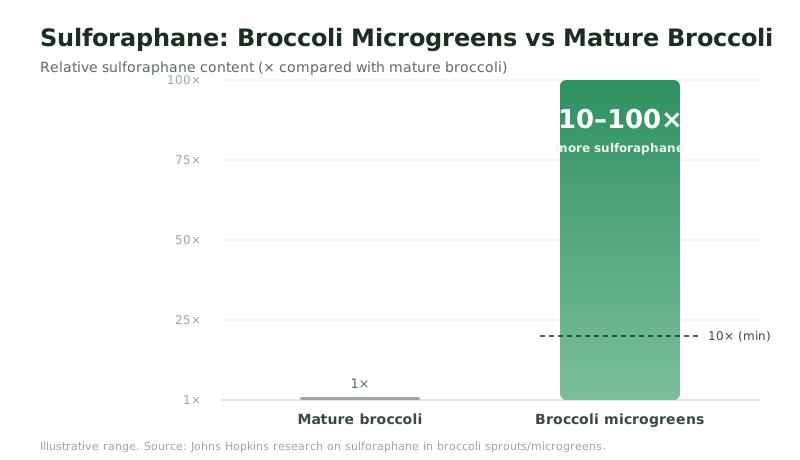
Microgreens in general run roughly 2 to 3.5 times more nutrient-dense than their mature counterparts in peer-reviewed reviews. Broccoli is a standout case. Research from Johns Hopkins found that broccoli sprouts and microgreens can contain on the order of 10 to 100 times more sulforaphane precursor (glucoraphanin) than mature broccoli, though the finished sulforaphane you actually get varies widely by variety, growing conditions, and harvest timing.
That concentration is why broccoli microgreens are a favorite among people optimizing their intake: a small handful can stand in for a much larger volume of cooked broccoli. The advantage comes from timing in the plant's life cycle. In the first days after germination, the seedling loads its tissues with defensive glucosinolates like glucoraphanin to protect the vulnerable young plant. As broccoli matures into a head, that compound is diluted across far more biomass, so precursor density per gram drops. Harvesting at the microgreen stage, usually 7 to 10 days in, captures the plant near its peak.
It is worth being precise about the numbers. The cited 10-to-100x range describes the precursor (glucoraphanin), not the finished sulforaphane you absorb, and how much active compound you end up with varies widely by cultivar, growing conditions, harvest timing, and light. Good prep gets you closer to the plant's potential; poor prep wastes it. Still, the takeaway is real: broccoli microgreens give you far more raw material than mature broccoli can.
| Item | Sulforaphane potential | Best prepared |
|---|---|---|
| Mature broccoli (cooked) | Baseline (lowest) | Often overcooked, degrading myrosinase |
| Broccoli microgreens (fresh) | ~10-100x more precursor than mature | Raw, chewed well |
| Broccoli microgreens (fresh, well-prepped) | 10-100x the glucoraphanin of mature broccoli | Raw, chopped, eaten promptly |
For more on the compound itself, our explainer on what sulforaphane is breaks down the biochemistry in plain language. And if you have wondered whether a capsule would be simpler, broccoli microgreens versus sulforaphane supplements covers why many supplements struggle to deliver active sulforaphane reliably, an enzyme problem fresh greens largely sidestep.
Five Ways to Actually Maximize Sulforaphane
The compound is fragile and enzyme-dependent, so technique matters as much as quantity. Here is what the research framing supports.
1. Eat them raw. Heat and overcooking degrade myrosinase. Without that enzyme, glucoraphanin mostly passes through unconverted. Raw, fresh, and well-chewed is the highest-yield combination.
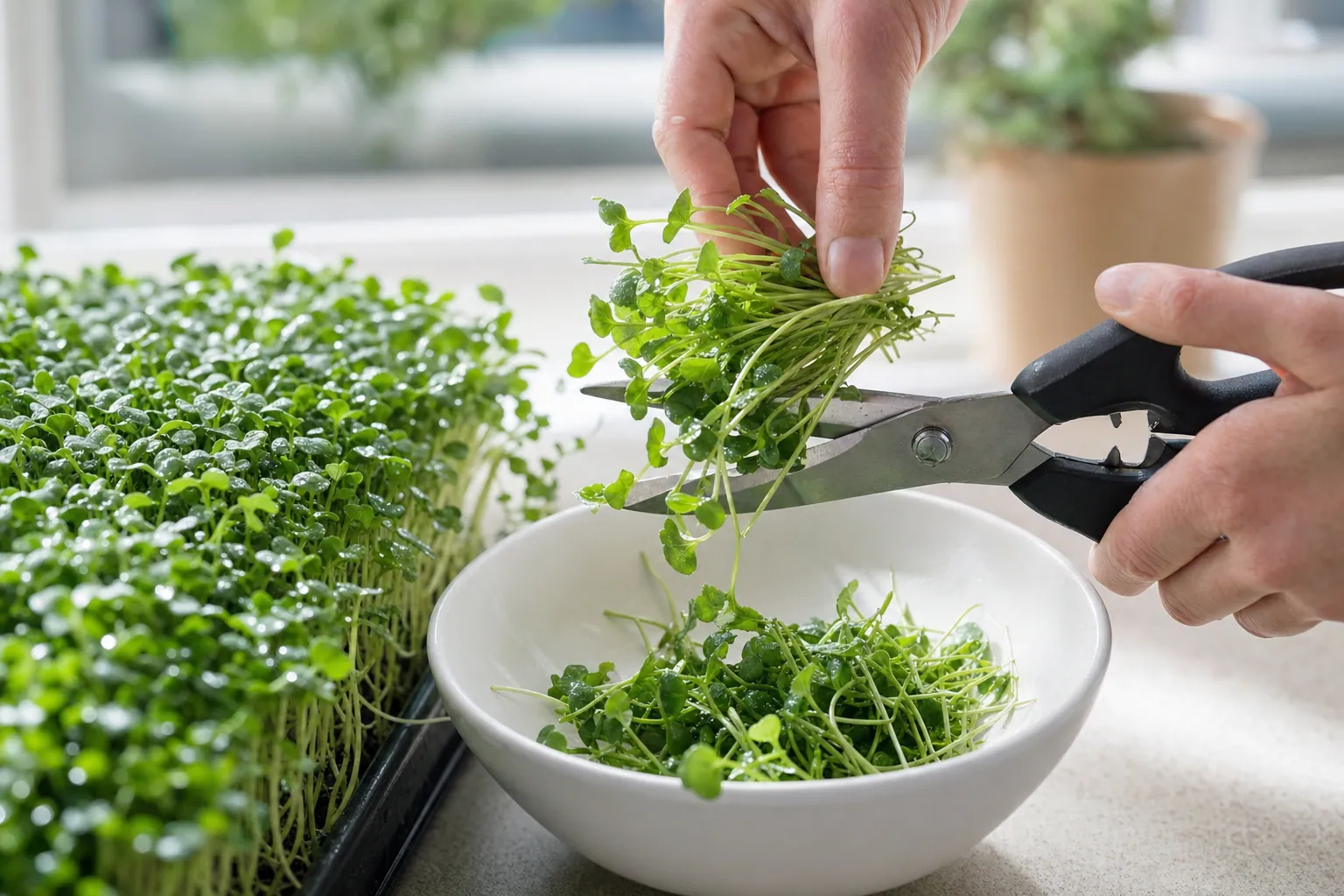
2. Chop or chew thoroughly. Sulforaphane forms at the moment cells rupture. Chopping finely before eating, and chewing slowly, both increase the contact between glucoraphanin and myrosinase.
3. Let chopped greens rest a few minutes. A short pause after chopping lets the enzyme reaction get going before any heat or acid can interfere. Chop, set the bowl aside while you finish the rest of the meal, then eat. It is a no-cost habit that gives the glucoraphanin-myrosinase conversion a head start chewing alone cannot.
4. Eat them fresh, not wilted. Freshness protects the active enzyme system. Greens that have spent days in a supply chain or sat limp in the fridge have less to offer than greens harvested minutes ago.
5. Add them at the end, not the start, of cooking. If you must add them to a warm dish, fold them in off the heat so you preserve enzyme activity rather than cooking it away.
These principles show up across the cruciferous family, part of why microgreens are such a useful tool for anyone tracking their microgreens nutrition closely.
Freshness Is the Hidden Variable
You can do everything right at the cutting board and still come up short if the greens themselves are stale. This is the quiet problem with store-bought microgreens: a 2 oz clamshell can run $4 to $6, roughly $30 to $50 per pound, and by the time it reaches you it has often spent days moving from farm to truck to warehouse to shelf. They wilt fast and create a lot of waste.
Growing at home solves the freshness problem in theory, and broccoli is beginner-friendly, germinating in a day or two and ready to harvest within a week. But manual growing has its own failure rate. Mold is the most common culprit, fueled by excess moisture, poor airflow, overcrowding, and warmth, and to an untrained eye fuzzy mold can look unsettlingly like the fine root hairs of healthy seedlings. There is also the mess of soil and the maintenance load: daily watering over roughly 10-day cycles. One trip out of town or one busy week can kill a tray, and a moldy tray is not a "maximize sulforaphane" tray, it is compost.
The point is not to discourage growing. It is to be honest that consistency, not effort, determines whether you have fresh greens on hand the day you want them. The biochemistry above only pays off if something alive and crisp is in your kitchen to chop in the first place.
A Simple Daily Routine
Here is a practical pattern many people use to keep sulforaphane intake steady without overthinking it.
| Step | What to do | Why it matters |
|---|---|---|
| Harvest | Snip a small handful fresh | Freshness protects myrosinase |
| Chop | Cut finely on a board | Ruptures cells to start the reaction |
| Rest | Wait a few minutes | Lets sulforaphane form |
| Combine | Add to a cool dish, smoothie, or salad | Avoids heat degradation |
| Eat | Chew slowly and well | Maximizes enzyme contact |
For ideas on working them in, see our roundup of microgreens salad ideas and tips on how to eat microgreens without it feeling like a chore.
The Bottom Line
To maximize sulforaphane from broccoli microgreens: start with truly fresh greens, eat them raw, chop them finely, let them rest a few minutes, chew thoroughly, and keep heat away. The plant supplies the precursor; your prep supplies the conversion. Freshness ties it together, which is why so much of the payoff comes down to having living, just-harvested greens within reach.
If reliable freshness is your sticking point, that is the problem Luya was built to solve. Luya is a countertop appliance, a bit like a Nespresso but for greens, that grows pre-seeded trays in a sealed, climate-controlled chamber so you can harvest a fresh handful seconds before eating, no mold, mess, or daily fuss. See how it works, and if you are curious how home-grown compares to the clamshell, read grow vs buy microgreens.
Selected sources
- Johns Hopkins Medicine (johnshopkinsmedicine.org) — research on broccoli sprouts and sulforaphane precursors
- USDA (usda.gov) — microgreens nutrient density and cruciferous research
- National Institutes of Health / PMC (ncbi.nlm.nih.gov) — sulforaphane, Nrf2, and isothiocyanate studies
- MDPI Plants (mdpi.com) — peer-reviewed reviews on microgreen nutrition
- Cleveland Clinic (clevelandclinic.org) — cruciferous vegetables and dietary guidance
- Healthline (healthline.com) — consumer-facing summaries of sulforaphane research
References
- Fahey JW, Zhang Y, Talalay P. Broccoli sprouts: an exceptionally rich source of inducers of enzymes that protect against chemical carcinogens. PNAS. 1997;94(19):10367–10372. https://doi.org/10.1073/pnas.94.19.10367
- Kyriacou MC, Rouphael Y, Di Gioia F, et al. Micro-scale vegetable production and the rise of microgreens. Trends Food Sci Technol. 2016;57:103–115. https://doi.org/10.1016/j.tifs.2016.09.005