This article is for general education and is not medical advice. Talk to your doctor or a registered dietitian about your individual nutrition needs.
The Best High-Protein Microgreens for a Plant-Based Diet
If you eat plant-based, protein is the question everyone asks you about, and it's usually the first thing skeptics bring up. High protein microgreens are one of the most overlooked answers on the plate. These tiny seedlings concentrate a surprising amount of plant protein into just a few grams, and they arrive with a payload of vitamins, antioxidants, and a fresh, snappy bite that powders and pressed bars simply can't match.
To be clear, they won't replace your beans, tofu, or lentils, and they aren't meant to. Where they shine is as a daily topping: a low-effort, nutrient-dense way to nudge the protein and micronutrient content of almost any meal upward without changing how you cook. A handful on a grain bowl is a different thing from a sad pinch of garnish.
Let's look at which varieties actually earn the "high protein" label, how they compare, and how to eat them so the nutrition survives the trip from tray to fork.
What Makes High Protein Microgreens Worth It
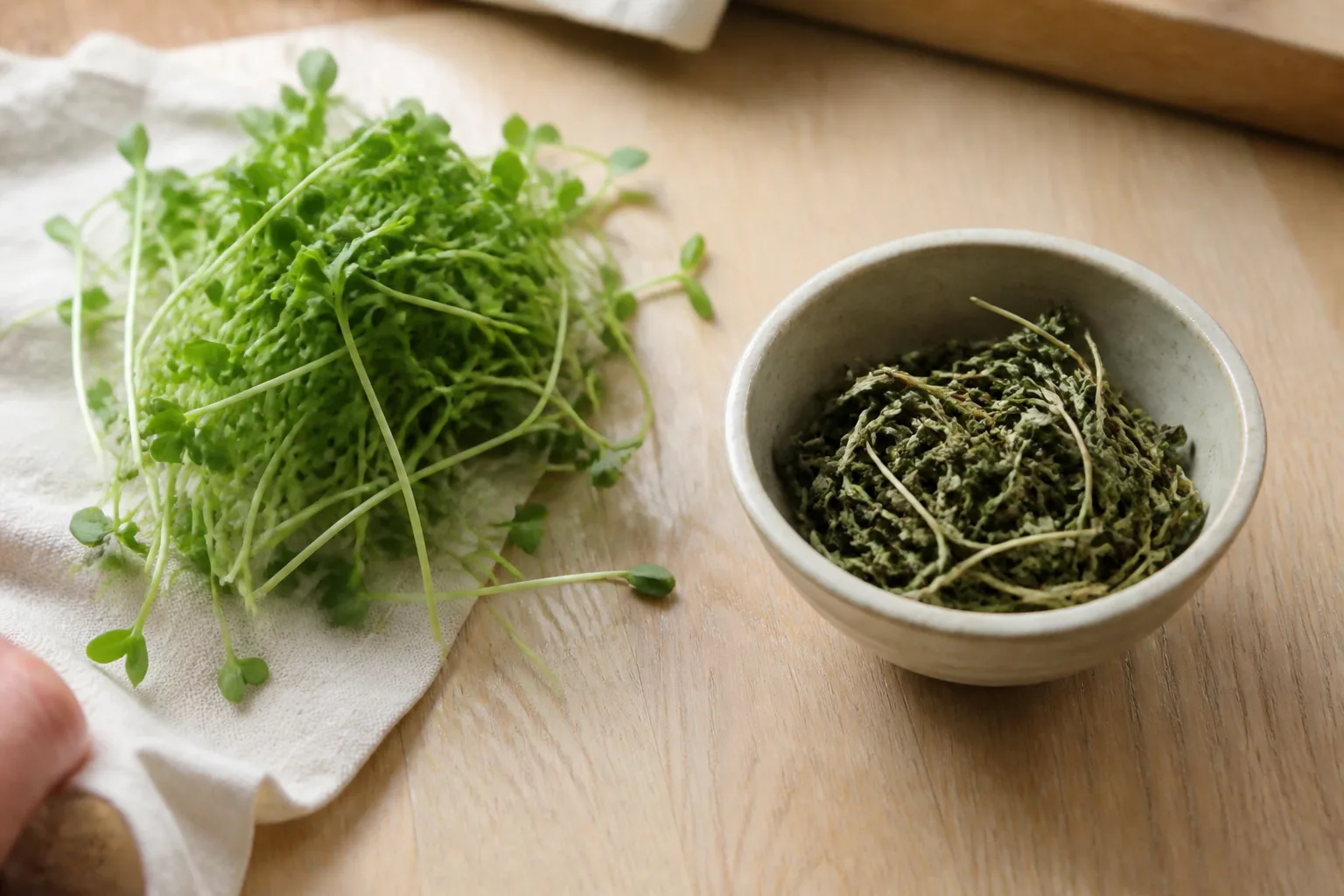
Microgreens are young vegetables harvested just after the first true leaves appear, usually within 7 to 10 days of planting. At that stage the seedling is packing the nutrient stores it would otherwise spend slowly building out a full-size plant, so everything is compressed into a tiny footprint. (If you're new to the category, our primer on what are microgreens covers the basics.)
That concentration is the whole point. Peer-reviewed reviews, including work published in MDPI Plants, alongside USDA nutrient data, suggest microgreens are roughly 2 to 3.5 times more nutrient-dense than their mature counterparts, with radish microgreens often topping the list. You are eating a smaller volume but a denser one.
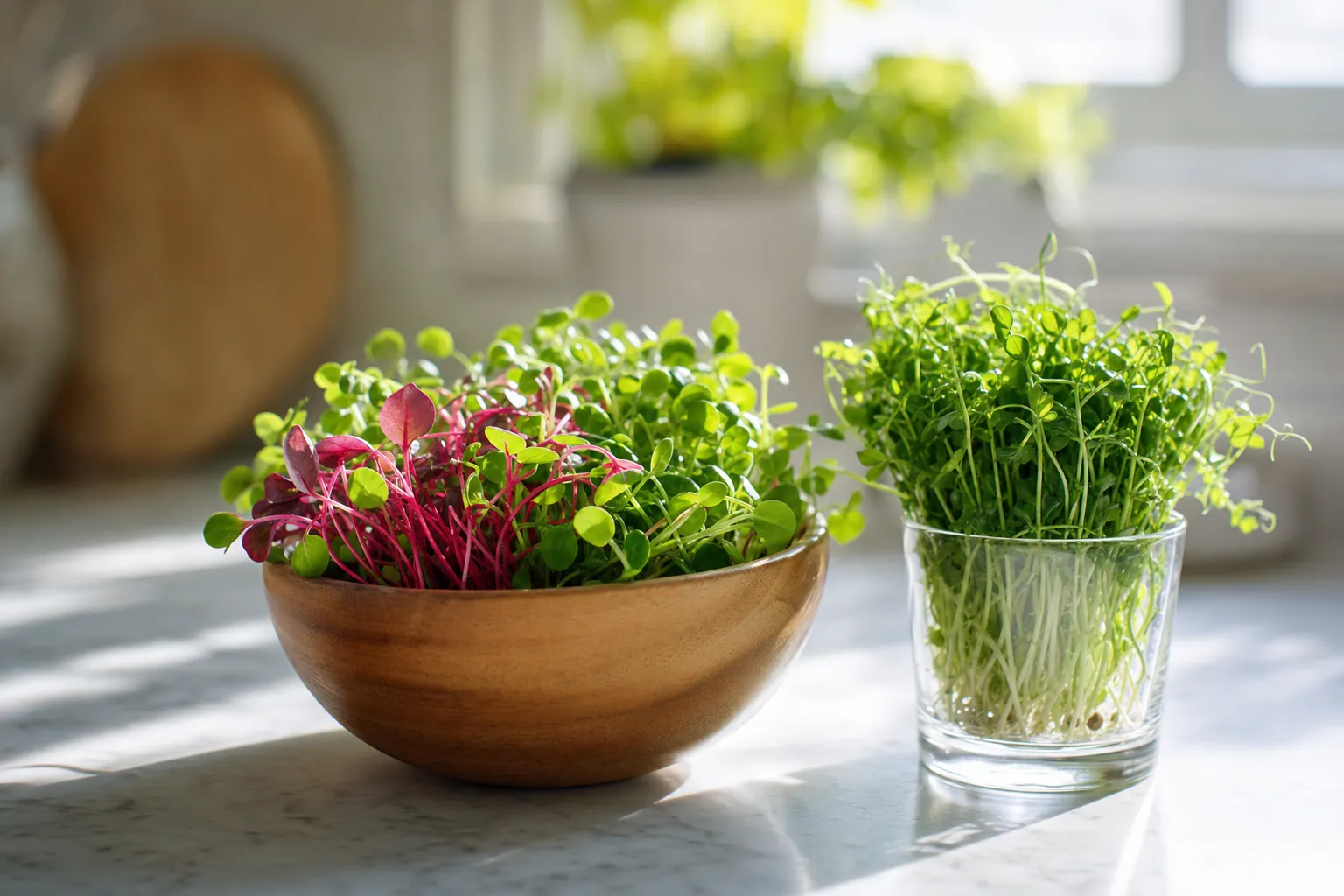
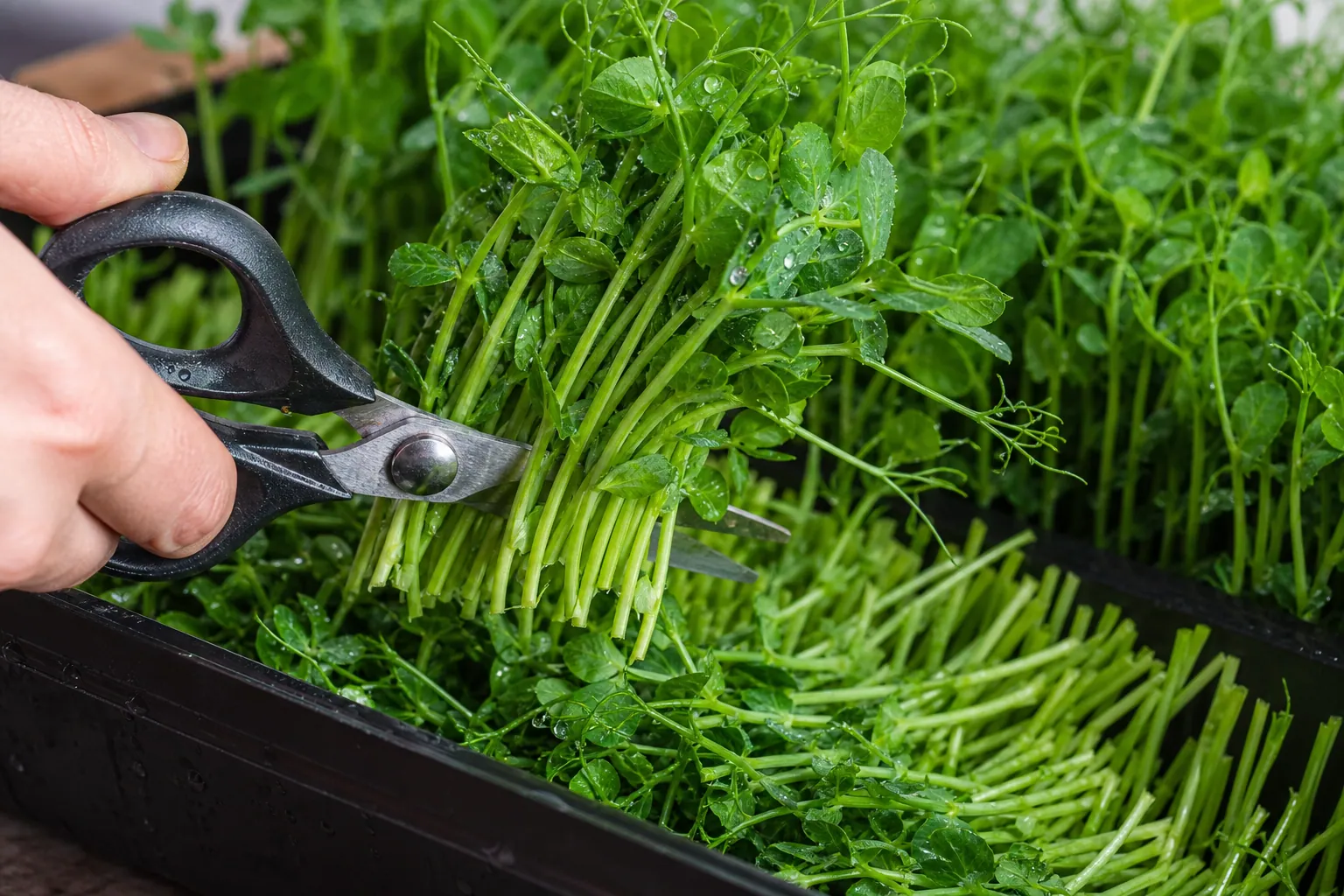
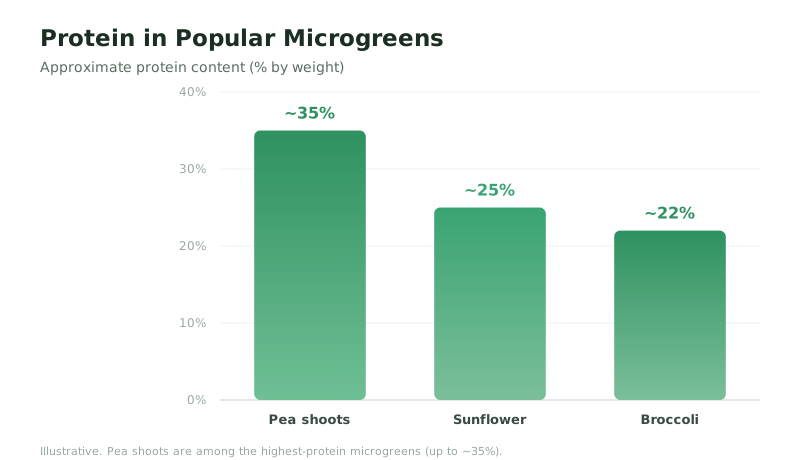
Protein is part of that story. The standout is the pea shoot, one of the more protein-dense microgreens and a genuinely strong plant-based protein source. For a tender leafy green, that's remarkable, and it's the main reason pea shoots get the most attention from vegan and plant-based eaters chasing every gram. Most leafy greens are mostly water; pea shoots are unusually protein-forward for something this delicate.
Beyond protein, microgreens are rich in vitamins C, K, and E, plus a range of antioxidants and polyphenols. So when you add high protein microgreens to a meal, you aren't adding filler volume or empty crunch. You're adding density, color, and compounds your body can use.
The Best Microgreens to Add Protein to a Vegan Plate
Not every microgreen is a protein heavyweight, and that's fine. The smartest approach is to anchor your habit with one or two protein-forward varieties, then round out the rest by flavor and the specific nutrients you care about. Here's how the most popular options compare.
| Microgreen | Protein note | Other standout traits | Flavor |
|---|---|---|---|
| Pea shoots | One of the most protein-dense; the protein leader | Vitamins C and K, tender stems | Sweet, fresh, like raw peas |
| Broccoli | Moderate | ~10-100x more sulforaphane precursor than mature broccoli | Mild, slightly peppery |
| Radish | Moderate | Often most nutrient-dense overall (~2-3.5x mature) | Bold, peppery, crisp |
| Sunflower | Moderate, hearty | Crunchy texture, healthy fats, filling | Nutty, mild |
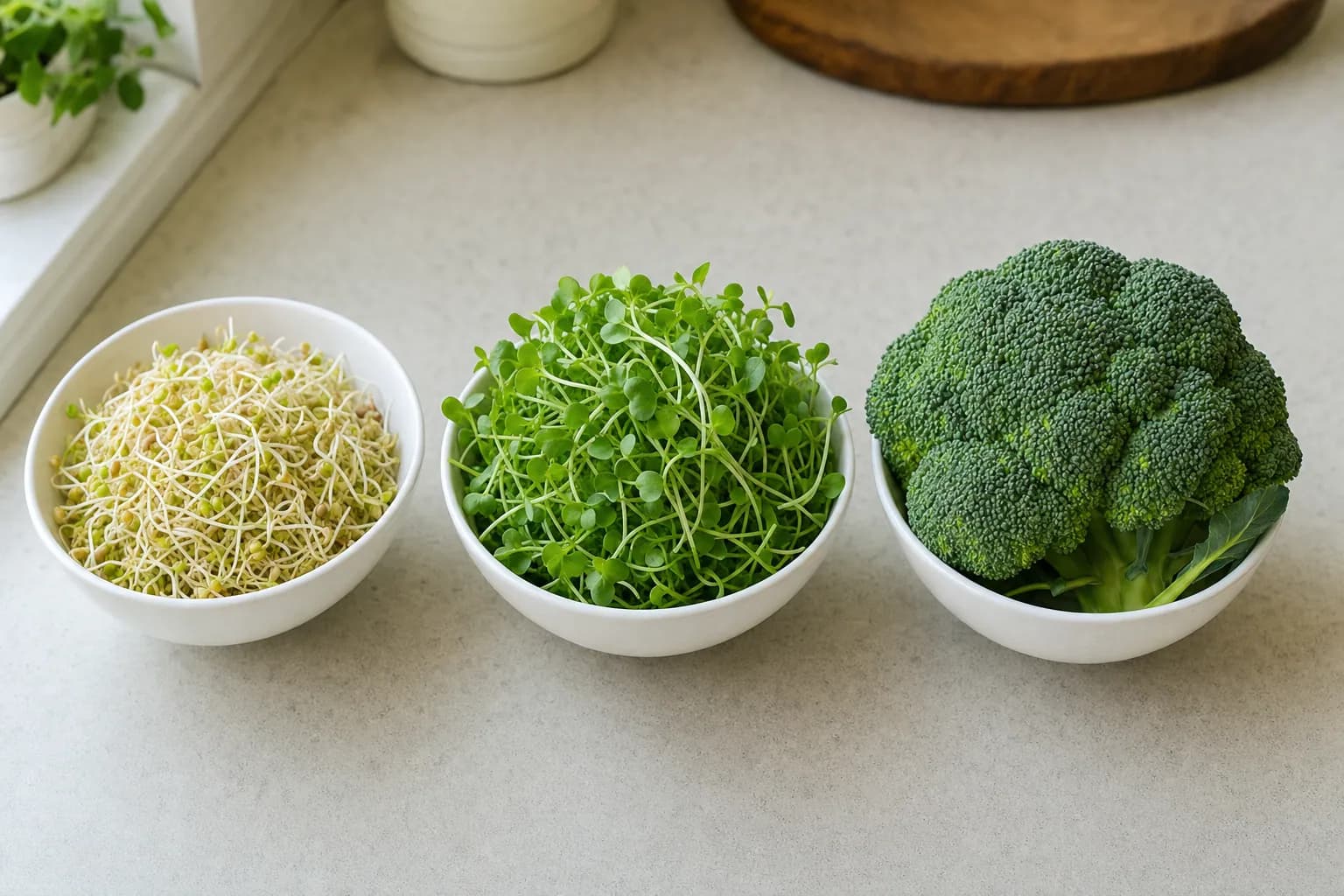
Pea shoots are the obvious anchor for anyone building protein. Compared with the popular alternative, they're also milder and faster-growing than sprouts, with more nutrient density per bite, a distinction we unpack in microgreens vs sprouts.
But the supporting players matter too. Broccoli microgreens are a nutritional powerhouse for a different reason: they carry far more glucoraphanin, the precursor to sulforaphane, than mature broccoli does, by some measures 10 to 100 times more, though the finished sulforaphane you actually get varies widely by variety, growing conditions, and harvest timing. Sulforaphane is an isothiocyanate that forms when you chew or chop the greens, and it's been studied for blood-sugar regulation and inflammation (research-stage, not a proven cure). For the full breakdown of why that compound draws so much attention, see what is sulforaphane.
Sunflower microgreens bring a satisfying crunch and healthy fats, which makes a high-protein plant-based bowl feel genuinely filling rather than just leafy. Radish microgreens add a peppery kick and, gram for gram, tend to be the most nutrient-dense of the bunch, a useful counterweight to the milder pea shoot.
For a wider look at how these greens stack up nutritionally beyond protein, see our overview of microgreens nutrition.
How to Actually Eat Them for Maximum Benefit
The good news for protein-rich microgreens is that they're meant to stay raw, which is also how you preserve the most nutrition. Heat is the enemy of some of their best compounds, especially in broccoli microgreens. Sulforaphane only forms when the enzyme myrosinase meets its precursor as you chew, and that enzyme degrades when overcooked. So raw, fresh, and well-chewed delivers the most. The same logic protects heat-sensitive vitamins like C and the protein you came for.
A few practical ways to work them in every day:
- Pile them on, don't sprinkle. A token garnish won't move the needle. Treat pea shoots like a salad green and use a generous handful, not a pinch.
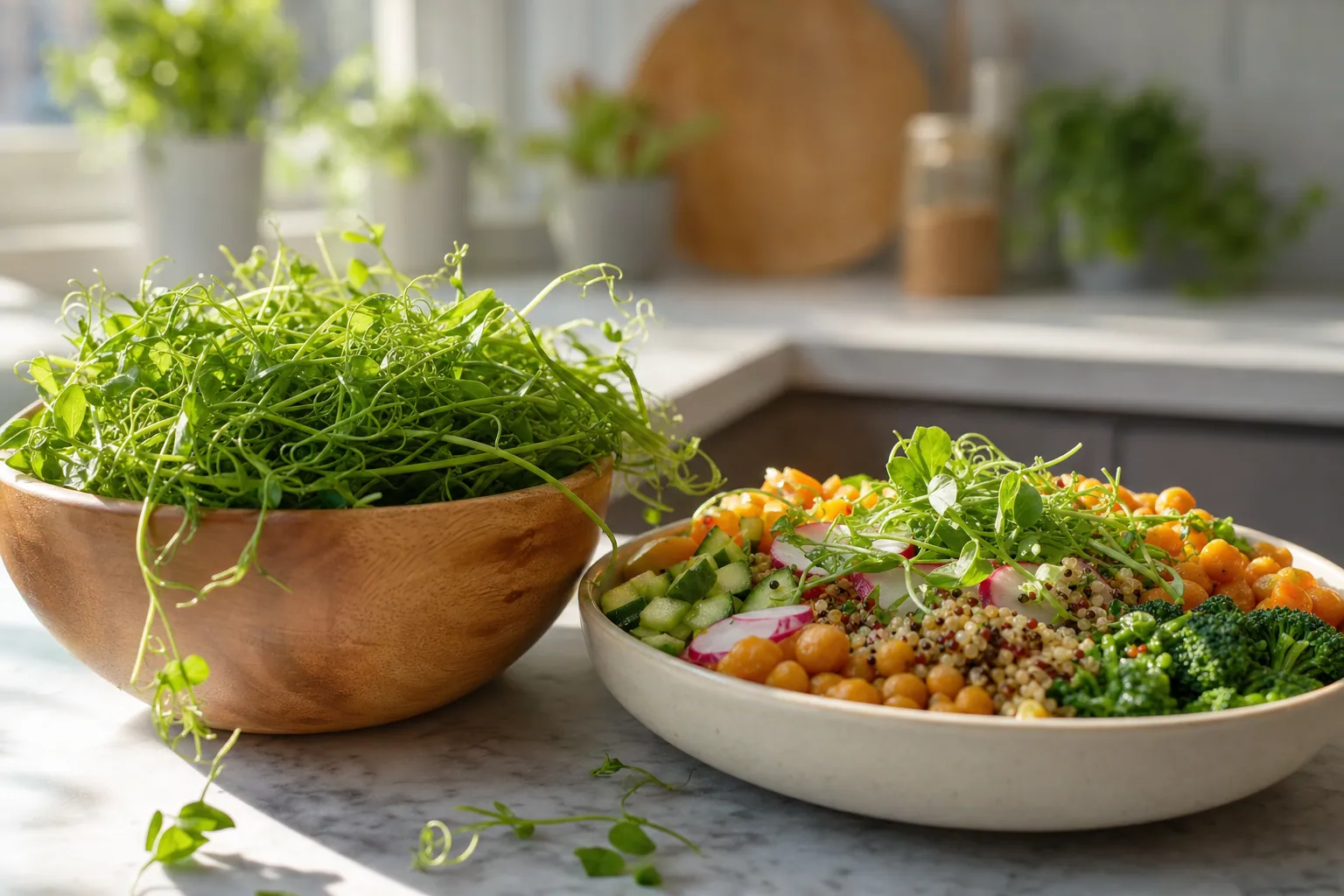
- Add to grain and protein bowls. Layer a handful over rice, quinoa, lentils, or tofu after cooking, never during, so the heat doesn't undo the work. See microgreens salad ideas for combinations beyond the basic bowl.
- Blend into smoothies. Mild varieties vanish into fruit. Our microgreens smoothie recipes have blends that hide the green entirely.
- Stir into salads. They mix beautifully with full-size leaves, adding protein, color, and a fresh crunch full-grown greens lose.
The rule of thumb is simple: add them at the very end, eat them fresh, and chew well. Everything about the nutrition rewards freshness, which brings us to the real obstacle.
The Catch: Fresh Is Everything (and Hard to Get)
Here's the honest part. The protein and nutrient density that make high protein microgreens worth eating begin fading the moment they're cut. Store-bought microgreens travel from farm to truck to warehouse to store over several days, so by the time a clamshell reaches you, it has already spent much of its short shelf life in transit. They wilt fast, slump in the fridge within days, and often arrive past their best. They're expensive on top of that, frequently $4 to $6 for a tiny 2-ounce clamshell, which works out to roughly $30 to $50 per pound, a steep price for something you may end up composting.
| Path to your plate | Cost | Freshness reality |
|---|---|---|
| Store-bought clamshell | Days in the supply chain; wilts fast, short shelf life | |
| Growing manually at home | Low ingredient cost | Fresh, but mold, mess, and daily watering create a real failure rate |
| Sealed countertop grower | Lower cost per serving | Harvested seconds before eating, alive until you cut it |
Growing your own fixes both the cost and the freshness problem, but manual growing comes with its own headaches: mold from poor airflow and overcrowding, the mess of loose soil, and the daily watering a 10-day cycle quietly demands. Miss a few days during a busy week or a trip, and the whole tray is lost. It's less a gardening skill than a consistency problem, and consistency is exactly what real life interrupts. We go deeper on the most common culprit in why microgreens keep molding.
This is the gap Luya was built to close. The Luya countertop "food computer" grows pre-seeded trays in a sealed, climate-controlled chamber, so you skip the mold, the mess, and the daily chores, then harvest a handful of pea shoots seconds before they hit your bowl. The rest keeps growing, alive, until you need it. Think of it like a Nespresso, but for fresh greens.
Bring Fresh Protein Greens to Your Table
The best high protein microgreens, led by pea shoots and rounded out with broccoli, radish, and sunflower, are one of the easiest upgrades you can make to a plant-based meal, but only when they're genuinely fresh. If you're tired of paying premium prices for greens that wilt by the weekend, see how it works and grow them at home with zero guesswork, harvesting only what you need.
Want to go deeper on the lifestyle? Read our guide to microgreens for a vegan diet next.
Selected sources
- USDA (nutrient data and microgreen research)
- MDPI Plants (peer-reviewed reviews on microgreen nutrient density)
- Johns Hopkins (broccoli sulforaphane research)
- Healthline (general nutrition education)
- Cleveland Clinic (general nutrition education)
References
- Xiao Z, Lester GE, Luo Y, Wang Q. Assessment of Vitamin and Carotenoid Concentrations of Emerging Food Products: Edible Microgreens. J Agric Food Chem. 2012;60(31):7644–7651. https://doi.org/10.1021/jf300459b
- Kyriacou MC, Rouphael Y, Di Gioia F, et al. Micro-scale vegetable production and the rise of microgreens. Trends Food Sci Technol. 2016;57:103–115. https://doi.org/10.1016/j.tifs.2016.09.005