If you've ever bought a tray of tiny greens, used them once, and then watched the rest wilt into slime at the back of the fridge, this guide is for you. The best part of learning how to eat microgreens is that there's almost nothing to learn. You don't need recipes, knife skills, or a single extra cooking step. These little leaves were practically made to be tossed on top of food you're already making.
There's a real reason to bother, too. Microgreens are roughly 2 to 3.5 times more nutrient-dense than their full-grown counterparts, according to peer-reviewed reviews in journals like MDPI Plants and data from the USDA. They're rich in vitamins C, K, and E plus antioxidants and polyphenols. So a small handful does outsized nutritional work on almost anything on your plate, which is exactly why the daily-garnish approach makes so much sense.
Below are ten genuinely easy ways to fold them into breakfast, lunch, and dinner, plus the one timing trick that keeps their nutrition intact. Pick the few that match how you already eat, and the habit will stick.
Why a Daily Handful Is Worth It
Before the ideas, here's the quick "why." Because microgreens pack more vitamins and antioxidants per bite than mature vegetables, a small garnish does meaningful work without crowding out the rest of your meal. A few varieties stand out for specific reasons, so it helps to know what each one brings to the plate:
| Microgreen | What it's known for | Flavor |
|---|---|---|
| Radish | Often the most nutrient-dense of the common varieties | Peppery, crisp |
| Broccoli | Very high in sulforaphane precursor vs. mature broccoli | Mild, slightly bitter |
| Pea shoots | One of the more protein-dense microgreens | Sweet, fresh |
| Sunflower | Satisfying crunch, easy to eat by the handful | Nutty, mild |
| Red cabbage | Studied in early animal research for heart markers | Mild, slightly sweet |
The standout is broccoli. Research from Johns Hopkins found that broccoli sprouts and microgreens can contain 10 to 100 times more glucoraphanin, the sulforaphane precursor, than mature broccoli, though the finished sulforaphane you actually get varies widely by variety, growing conditions, and harvest timing. That is a remarkable concentration for something you can grow on a windowsill, and it's the reason broccoli microgreens get so much attention in nutrition research.
If you want the deeper science behind those numbers, see our breakdown of microgreens nutrition and our plain-language explainer on what sulforaphane is. For now, the practical takeaway is simple: a handful a day is an easy, low-effort upgrade.
The 10 Easiest Ways to Eat Microgreens
You don't have to commit to all ten. Pick two or three that fit your routine, and let the rest stay in your back pocket for when you want variety.
1. Pile them on toast. Avocado toast, ricotta toast, or plain buttered sourdough all get a fresh, peppery lift from a small handful of radish or sunflower microgreens. This is the lowest-effort entry point, and it's where most people start.
2. Stir them into eggs at the end. Scrambled, fried, or folded into an omelet, microgreens add color and a clean bite. Add them right before serving so the heat barely touches them. (More on why that timing matters below.)
3. Top any soup or stew. A pinch of microgreens on a finished bowl adds crunch and nutrients without cooking them to mush. A peppery radish microgreen cuts beautifully through a rich, creamy soup.
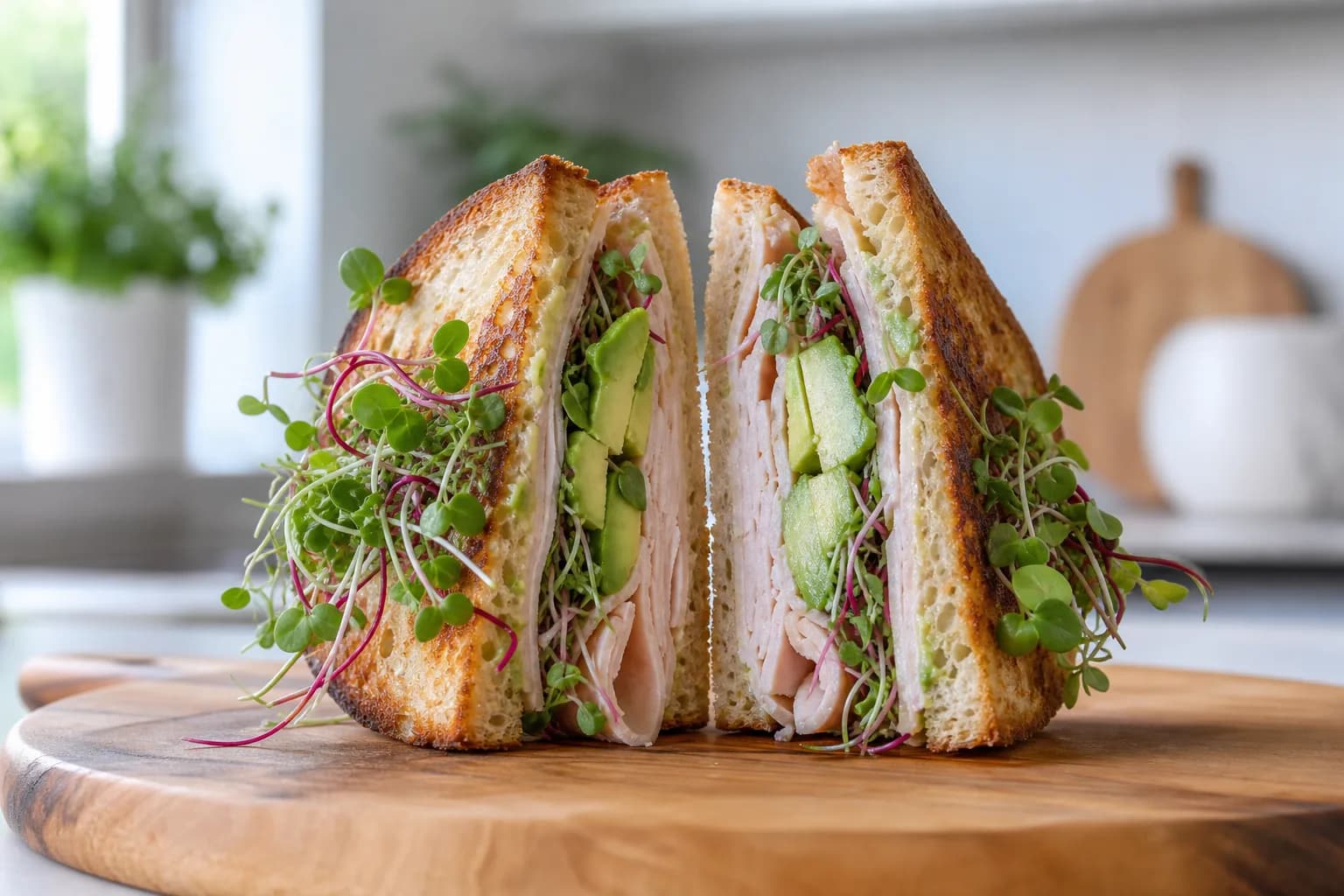
4. Tuck them into sandwiches and wraps. Swap or supplement the lettuce. Pea shoots and sunflower hold up especially well and add real texture instead of just bulk.
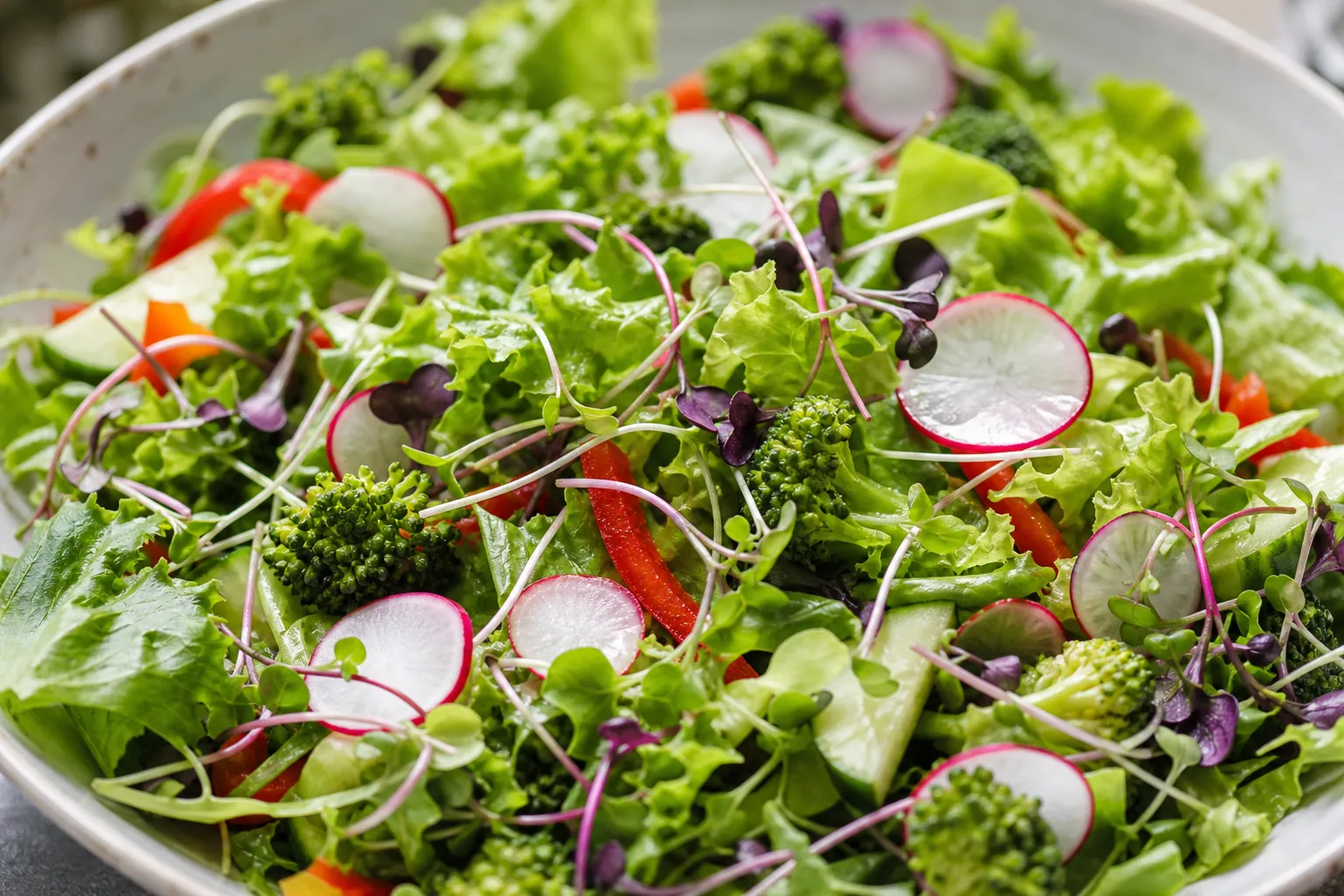
5. Build a microgreen-forward salad. Use them as the base or mix them with regular greens so the cost stretches further. For combinations that actually taste good, see our microgreens salad ideas.
6. Garnish grain bowls and rice. A handful over a quinoa, farro, or rice bowl makes a thrown-together weeknight dinner feel finished and deliberate.
7. Blend a small amount into smoothies. Mild varieties like sunflower or broccoli disappear into fruit without taking over. Our microgreens smoothie recipes have ratios dialed in so you get the nutrition without the grassy aftertaste.
8. Scatter over pizza or flatbread. Add them after baking so they stay bright and fresh against the hot cheese. Arugula-style microgreens are a classic finish here.
9. Fold into tacos and bowls. They work as a crunchy, fresh layer alongside or in place of cilantro and lettuce, and they hold their texture better than shredded lettuce does.
10. Snack on them straight. Sunflower and pea shoots are sweet and crunchy enough to eat by the small handful, no plate required. Pea shoots in particular are a strong plant-based protein source, which makes them an easy bite between meals.
How to Eat Microgreens Without Losing the Nutrition
This part matters more than people expect, especially for broccoli microgreens. Sulforaphane isn't sitting ready inside the leaf. It's an isothiocyanate that forms only when a compound called glucoraphanin meets an enzyme called myrosinase, and that reaction happens when you chew or chop the greens. Once formed, sulforaphane is studied for its role in activating the body's Nrf2 antioxidant and detox pathway, which researchers are exploring for blood-sugar regulation, inflammation, and cellular defense. To be clear, that's research-stage science, not a list of proven cures.
The catch is that the enzyme is fragile. Two simple habits protect it:
- Eat them raw and fresh. Heat and overcooking degrade myrosinase, so the most sulforaphane comes from raw, well-chewed greens. Chewing thoroughly genuinely matters here.
- Add them at the end. When a dish is hot, stir microgreens in off the heat or sprinkle them on top right before eating, never partway through cooking.
That's why "garnish, don't cook" is the one rule worth remembering. It's also why nearly every idea above adds the greens at the finish line rather than the stove. For the deeper how-to on protecting these compounds, read our guide to maximizing sulforaphane.
| Habit | Effect on nutrition |
|---|---|
| Raw + well chewed | Best sulforaphane formation |
| Added at the end (off heat) | Preserves enzyme activity |
| Overcooked or boiled | Degrades myrosinase |
Variety helps too. Rotating radish, broccoli, pea, and sunflower across the week gives you a wider range of vitamins and compounds, and it keeps the daily habit from getting boring, which is usually what makes a healthy routine collapse. Different leaves, different benefits, same thirty-second effort.
Keeping Them Fresh Enough to Eat Daily
Here's the honest hurdle: the hardest part of eating microgreens every day usually isn't the eating, it's having genuinely fresh ones on hand at the moment you want them. Store-bought clamshells run about $4 to $6 for two ounces, which works out to roughly $30 to $50 a pound. And by the time they reach your fridge, they've often spent days moving through the farm-to-truck-to-warehouse-to-store supply chain, so they wilt quickly and a frustrating share ends up in the compost.
Growing your own solves the freshness problem in theory, but manual trays bring their own headaches. Mold is the big one, fed by excess moisture, poor airflow, overcrowding, and warmth. Then there's the soil mess, and the daily watering and attention that a roughly 10-day grow cycle demands. One busy week or a short trip, and a whole tray can be lost. Manual growing has a real failure rate, and it's almost always a consistency problem rather than a skill problem.
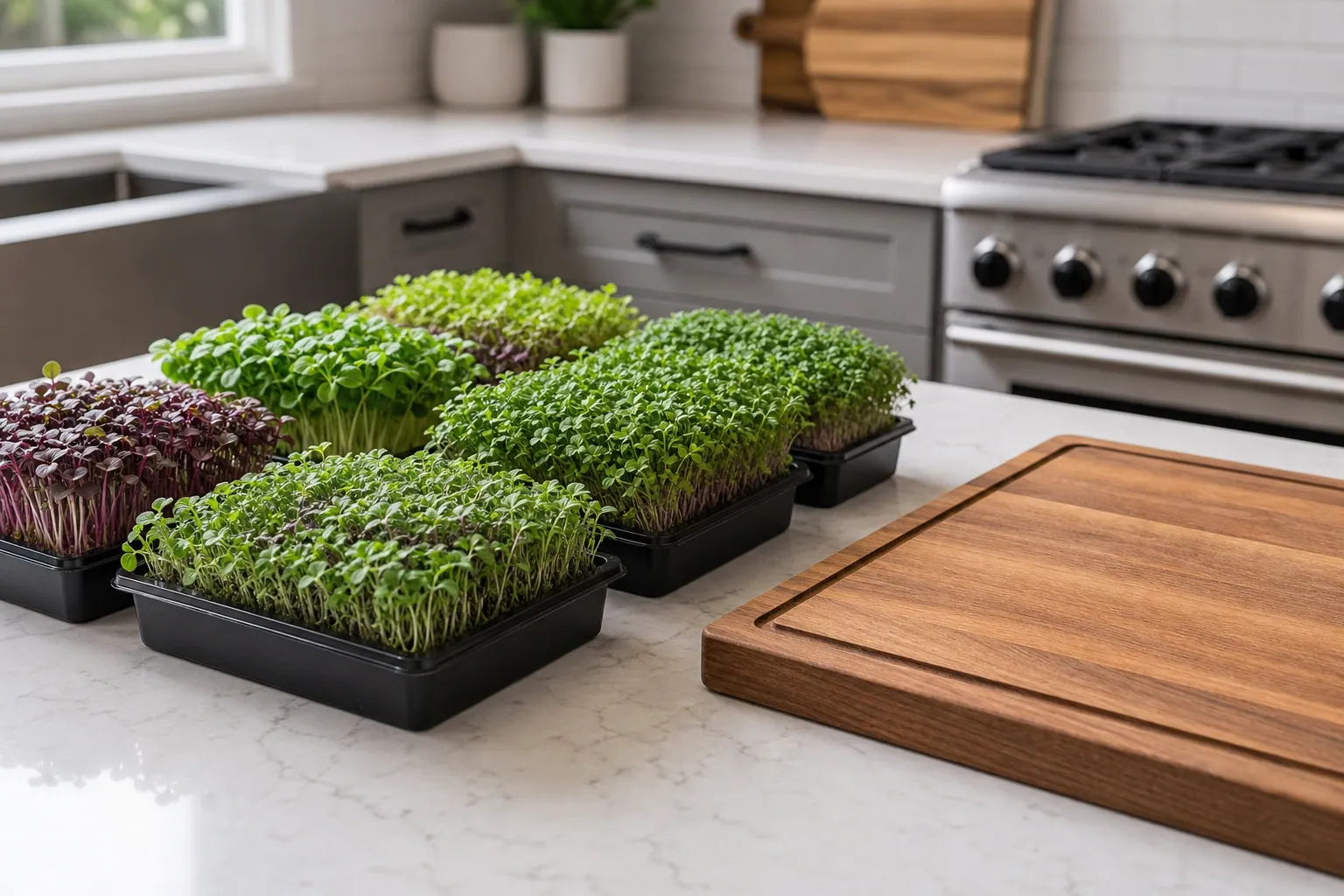
So the daily habit really comes down to access. If you can reliably snip fresh greens the moment you want them, every idea on this list becomes effortless. If you can't, even the best intentions slowly fade as the clamshells wilt and the trays mold.
That gap between "I want fresh microgreens daily" and "I actually have them" is exactly the problem Luya was built to close. It's a countertop appliance, a bit like a Nespresso but for greens, with a sealed, ventilated, climate-controlled chamber that keeps mold out, pre-seeded trays you simply drop in, and automatic care across the full 7-to-10-day cycle. You harvest only what you need, snipped seconds before it lands on your toast, and the rest keeps growing alive. See exactly how it works, or keep reading with are microgreens good for you to learn what a daily handful really does for your body.
References
- Fahey JW, Zhang Y, Talalay P. Broccoli sprouts: an exceptionally rich source of inducers of enzymes that protect against chemical carcinogens. PNAS. 1997;94(19):10367–10372. https://doi.org/10.1073/pnas.94.19.10367
- Kyriacou MC, Rouphael Y, Di Gioia F, et al. Micro-scale vegetable production and the rise of microgreens. Trends Food Sci Technol. 2016;57:103–115. https://doi.org/10.1016/j.tifs.2016.09.005