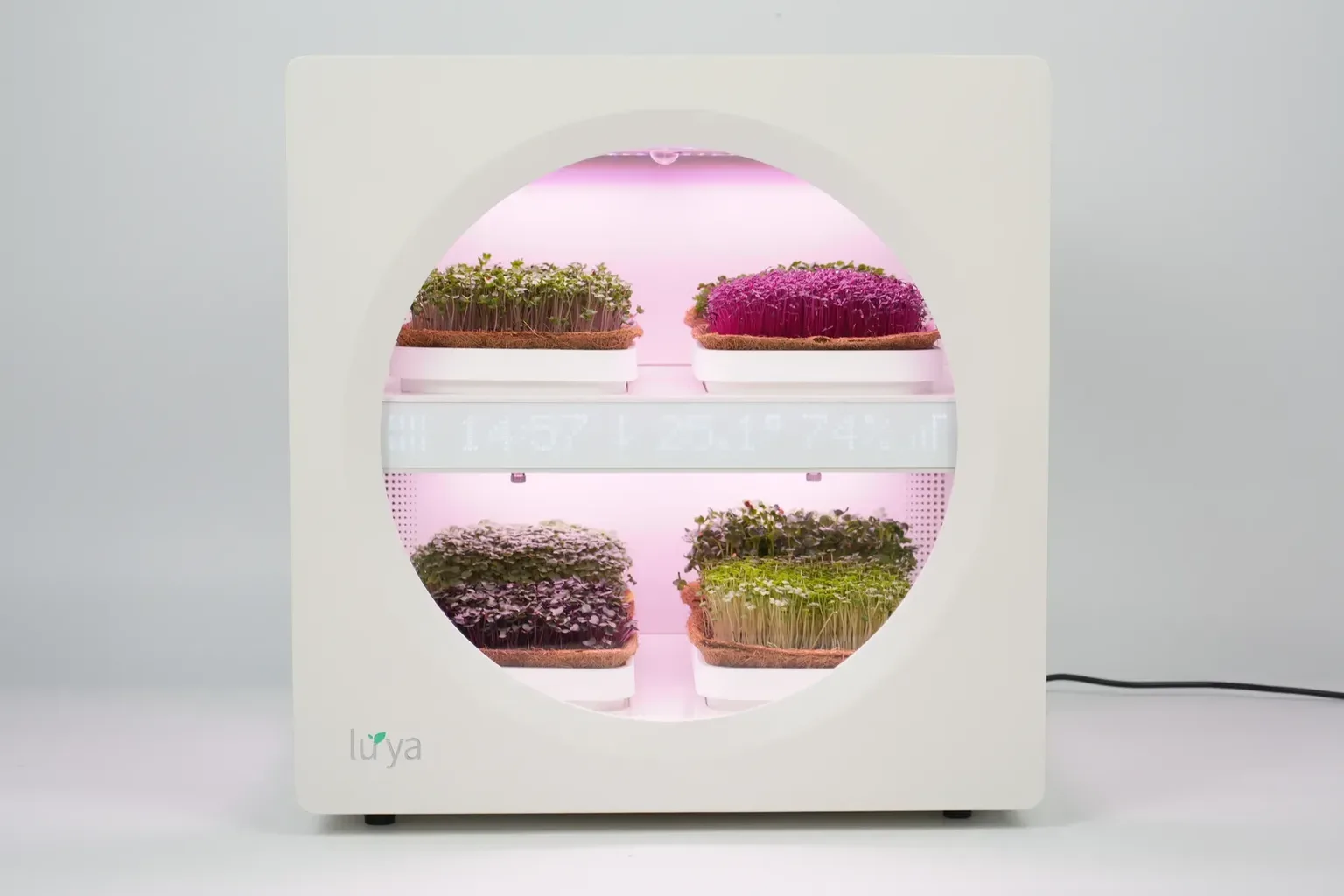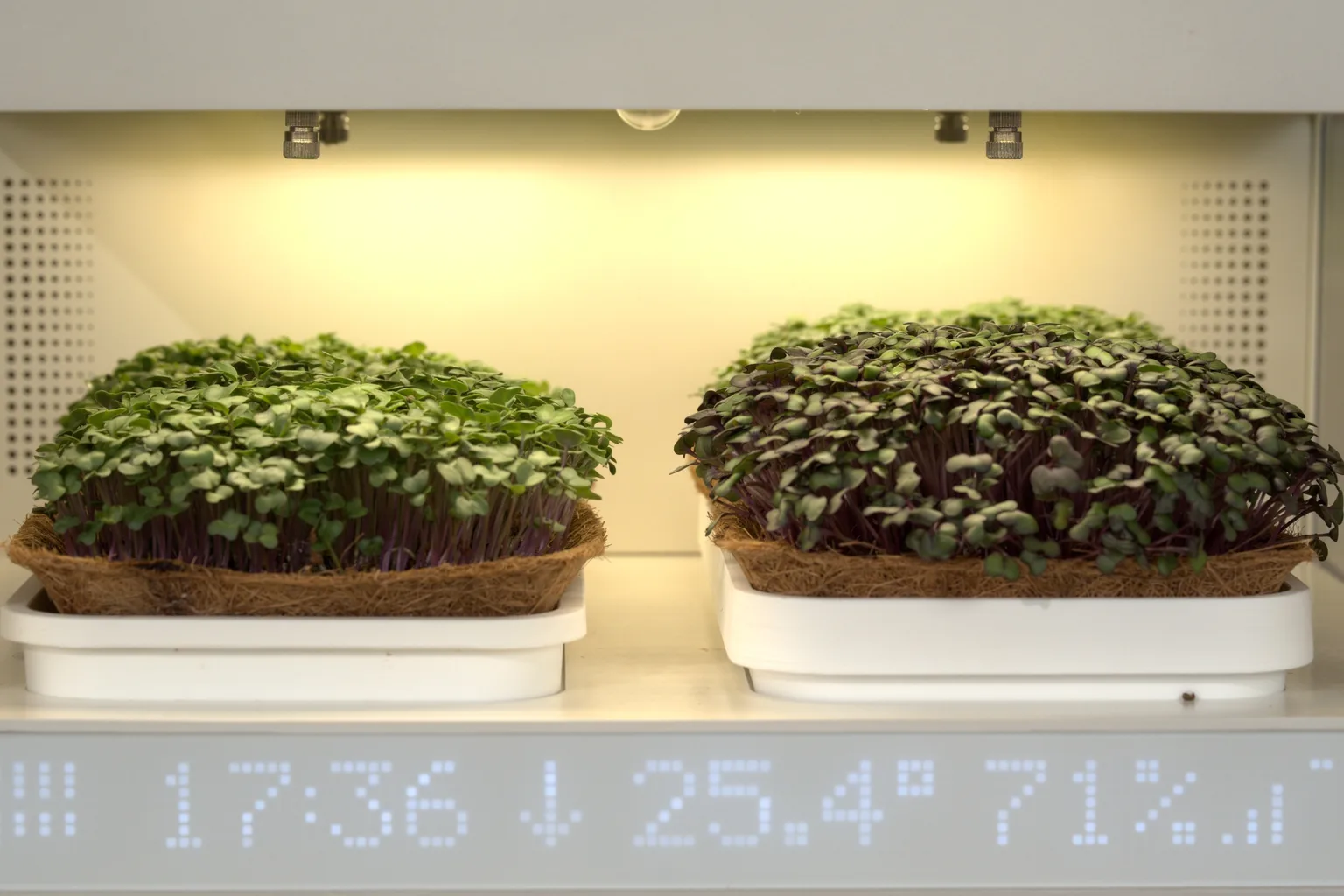
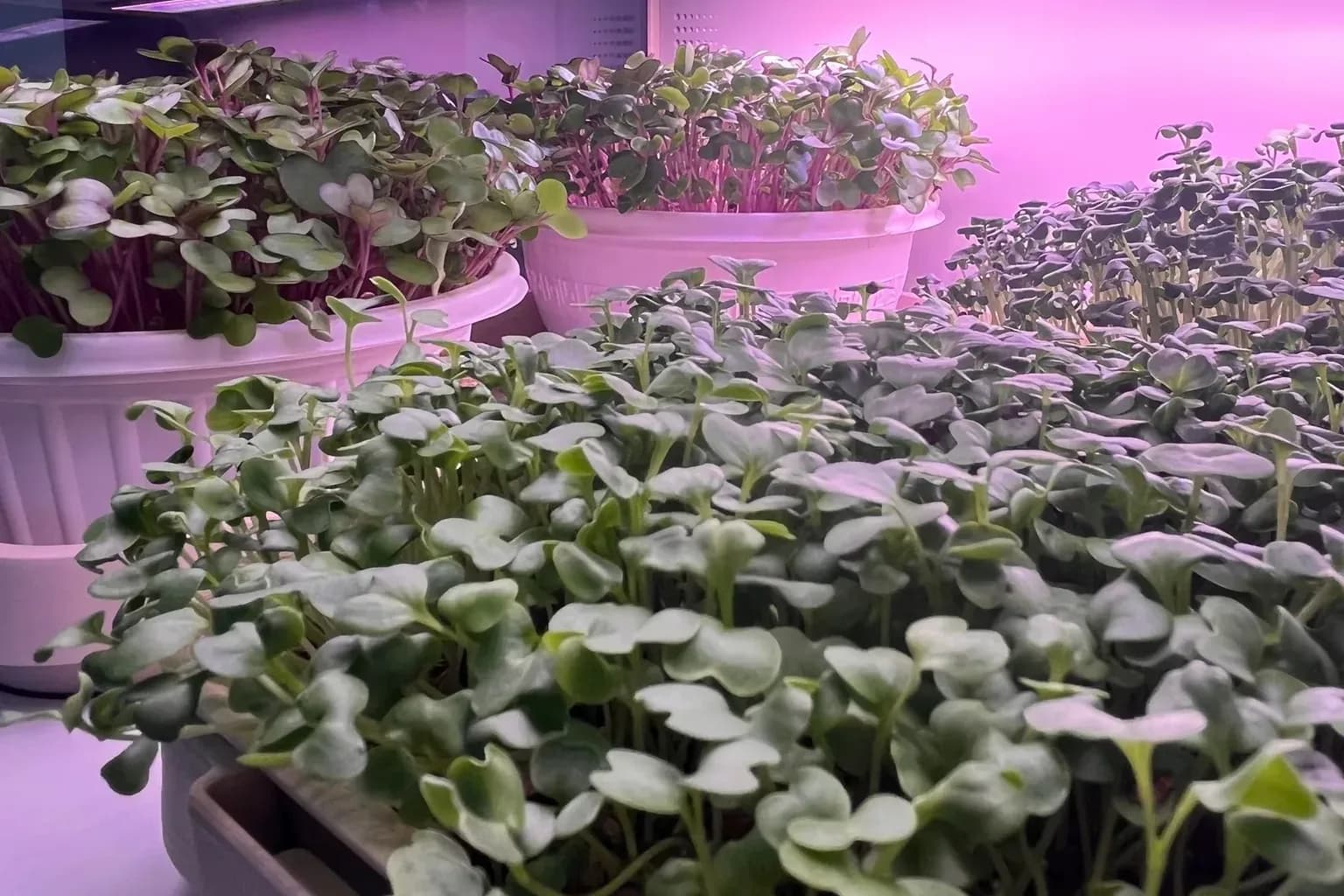
For most of farming's history, getting more food meant getting more space. Bigger fields, bigger barns, bigger greenhouses. The interesting thing happening right now is the opposite: the smartest growing systems are getting smaller, not larger. The control techniques that researchers built to run sprawling commercial greenhouses are being distilled down to fit a box on your kitchen counter. That shift, from acreage to algorithms, is what people mean when they talk about the future of AI farming.
This article walks through where autonomous growing is actually heading, grounded in the research that's driving it. We'll look at how greenhouse control evolved from simple thermostats to self-learning systems, why "small and smart" is becoming a real strategy rather than a gimmick, and what it looks like when that intelligence lands on a countertop. If microgreens are new to you, what are microgreens is a good warm-up before we dig in.
From thermostats to systems that think ahead
Early greenhouse automation was reactive. A sensor noticed it was too hot, so a fan switched on. Too dry, so a valve opened. These on-off and PID controllers kept plants alive, but they couldn't plan, and they couldn't juggle competing goals like yield, energy use, and crop safety all at once.
The next leap was model predictive control (MPC). Instead of reacting to the present moment, an MPC system carries a mathematical model of how the greenhouse behaves and uses it to look a few hours ahead. It asks, "If I heat now and vent later, where will temperature, humidity, and CO2 land?" Then it picks the sequence of moves that hits the targets while respecting hard limits, like keeping humidity low enough that disease doesn't take hold. Researchers run this loop in short steps, recomputing every 15 minutes over growth cycles that can stretch 40 days or more.
MPC is powerful, but it has a well-known weak spot: it's only as good as its model. A greenhouse is a messy, nonlinear place, and weather forecasts are never perfect. When the model is even slightly wrong, the controller can push the system somewhere it shouldn't go and quietly break the very limits meant to protect the crop.
Why "learning" is the real breakthrough
This is where the most recent research gets exciting. Two complementary ideas are reshaping how autonomous growers handle the messiness of real life.
The first is pairing MPC with reinforcement learning (RL). Rather than trusting a fixed, hand-built model, the system treats the model's settings as adjustable dials and tunes them from experience. Over repeated growth cycles it learns the parameters that produce the best real-world results, compensating for the gaps between its model and reality. In one Delft study, this MPC-plus-RL approach cut constraint violations dramatically over 100 simulated growth cycles, eventually approaching the performance of a controller that had perfect knowledge of the system, something no real grower ever has.
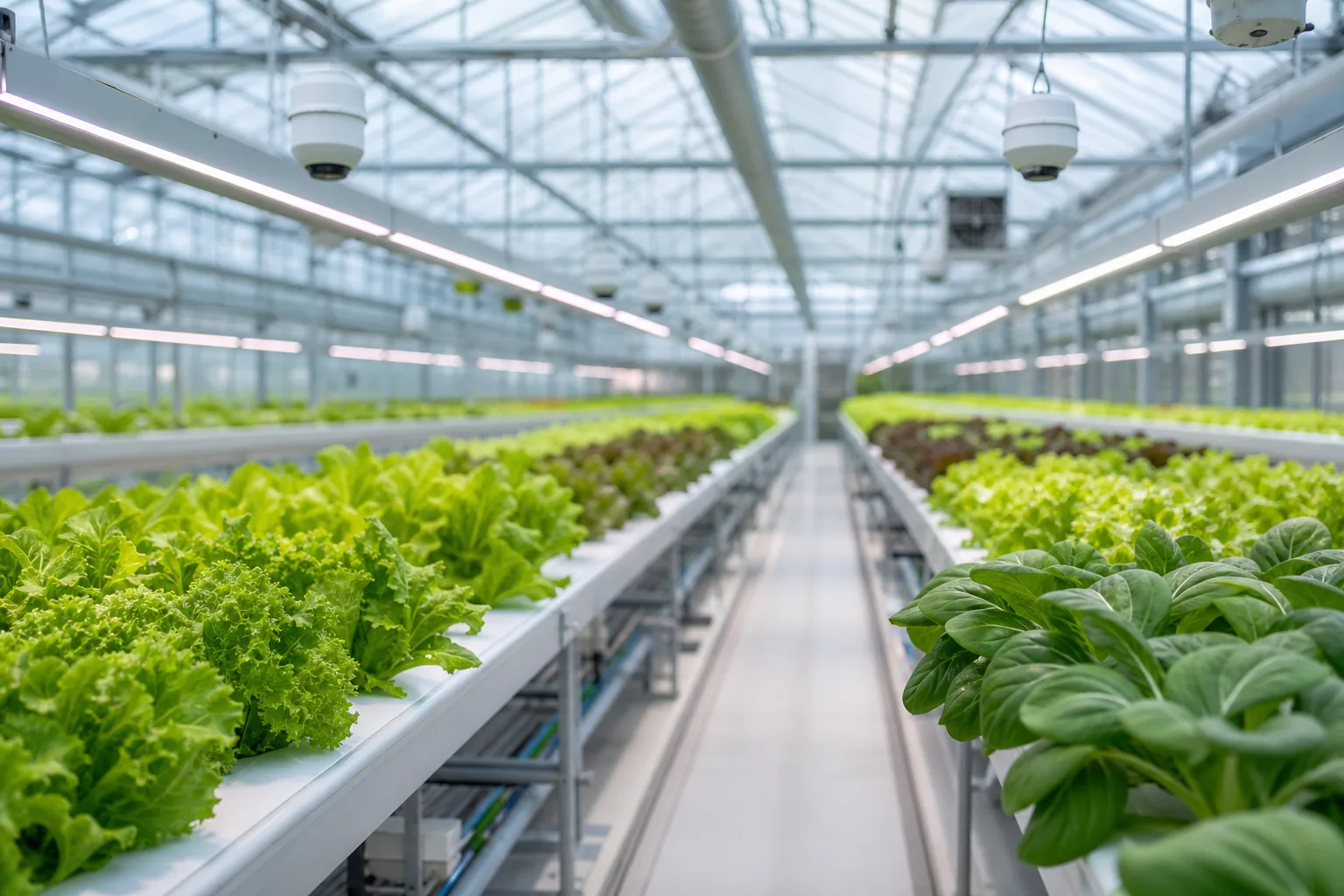
The second idea tackles a different problem: safety when conditions go sideways. A Tencent and Tsinghua team built a model-based RL framework that trains a policy inside an ensemble of simulated environments, then deliberately focuses learning on the worst cases rather than the average ones. The payoff is robustness. When they stress-tested the system with abnormal temperatures and humidity, the safety-focused version kept far more of its crop alive than the standard one.
| Approach | What it does | Main limitation |
|---|---|---|
| On-off / PID | Reacts to current readings | Can't plan or balance goals |
| Model predictive control (MPC) | Plans ahead using a model | Fragile when the model is wrong |
| MPC + reinforcement learning | Tunes the model from real data | Needs cycles of experience |
| Robust model-based RL | Trains for worst-case conditions | Heavier to build and simulate |
The numbers below give a feel for why these methods earn their keep, drawn from the same research.
| Metric | Standard RL policy | Robustness-focused policy |
|---|---|---|
| Crop fresh weight (high-heat stress) | 38.5 | 45.2 |
| Crop fresh weight (cold stress) | 30.3 | 38.5 |
| Retention rate (high-heat stress) | 80% | 85% |
| Retention rate (low-light stress) | 77% | 82% |
The takeaway isn't the exact figures. It's that a system trained to expect bad days holds up better when bad days arrive, which is exactly the quality you want in something growing your food unattended.
The surprising part: smaller is winning
Here's the counterintuitive turn. All of this intelligence was developed for big, expensive facilities. But software doesn't care how large the room is. Once a control loop knows how to sense conditions, predict outcomes, and act, it can run a 10,000-square-meter greenhouse or a single tray with the same logic.
That decoupling, intelligence from scale, is why the future of AI farming is heading toward your home rather than away from it. A countertop unit has a few real advantages over its industrial cousins: a tiny sealed chamber is far easier to model accurately, weather forecasting basically disappears as a problem, and the crop spends seconds going from harvest to plate. The hard research problems of giant greenhouses, like uncertain weather and enormous decision spaces, shrink when the "farm" is the size of a toaster oven. If you want the deeper backstory on this trend, the future of home farming traces it in more detail, and controlled environment agriculture explains the broader field these ideas come from.
What this looks like on your counter
Strip away the math and an autonomous grower runs the same four-beat rhythm whether it fills a warehouse or a corner of your kitchen: sense the conditions, predict what happens next, choose the best move, and act. A countertop food computer like Luya does exactly this with light, water, and airflow, tuning the environment so a tray of microgreens grows evenly without you babysitting it. We go under the hood in how Luya works and in how AI runs a growing chamber.
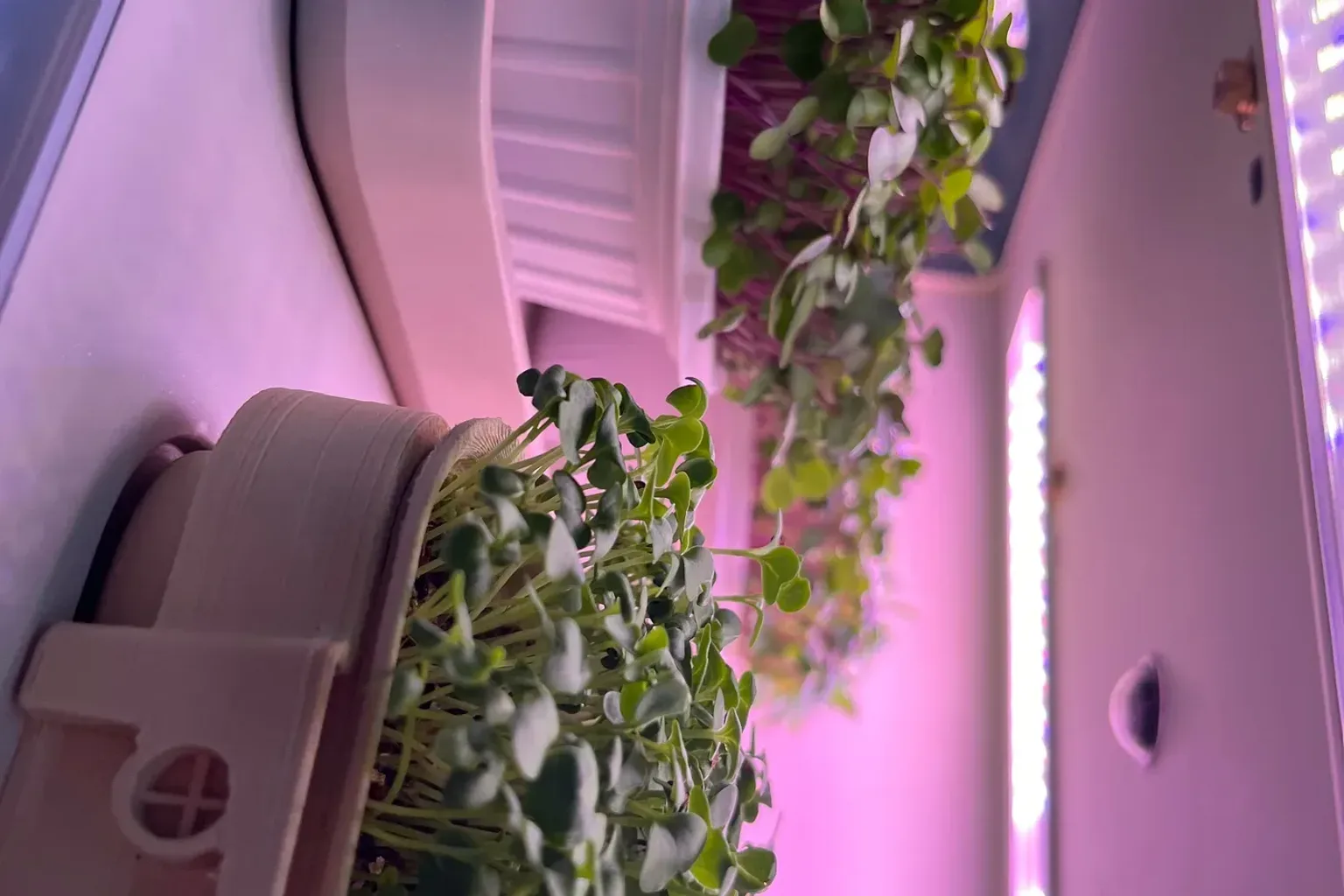
The practical wins are easy to feel. Microgreens are one of the most rewarding crops for this kind of automation: they're fast, nutrient-dense, and forgiving. A well-run chamber sidesteps the usual home-growing headaches, like the molding that comes from stale, humid air. And because the system manages light and climate precisely, it can lean into the qualities you care about, from flavor to nutrition. The research even hints at where this goes next: controllers can be tuned toward whatever you value most, whether that's maximum yield or, say, more sulforaphane in your broccoli microgreens.
Where it's all heading
The trajectory is clear even if the timeline isn't. Three threads are converging.
- Self-tuning by default. Future growers won't ship with a fixed recipe. They'll learn from each cycle, adapting to your home's quirks the way the RL research adapts to an imperfect model.
- Safety as a first-class goal. Expect systems designed around worst-case days, not average ones, so a heat wave or a cold snap in your kitchen doesn't ruin a harvest.
- Personalization. As control gets cheaper, the same hardware can target different outcomes per crop and per household, optimizing for taste, texture, or specific nutrients.
None of this requires you to understand a Bellman equation, any more than driving requires you to design an engine. The research is doing the hard part so the experience can stay simple.
The bottom line
The future of AI farming isn't a distant vision of robot tractors on the horizon. It's a quiet inversion already underway: the intelligence that once needed an industrial greenhouse is being compressed into devices small enough to live next to your coffee maker. The control loops are smarter, the systems are learning to handle their own bad days, and the scale keeps shrinking toward the place where food is actually eaten.
For most of us, that means the most advanced farm we'll ever own won't be measured in acres. It'll be measured in trays, sitting on a counter, quietly running the same math that powers the world's most sophisticated greenhouses, and handing you fresh greens in return. If you're curious whether it beats the grocery store, grow vs buy microgreens is a fair place to weigh it out.