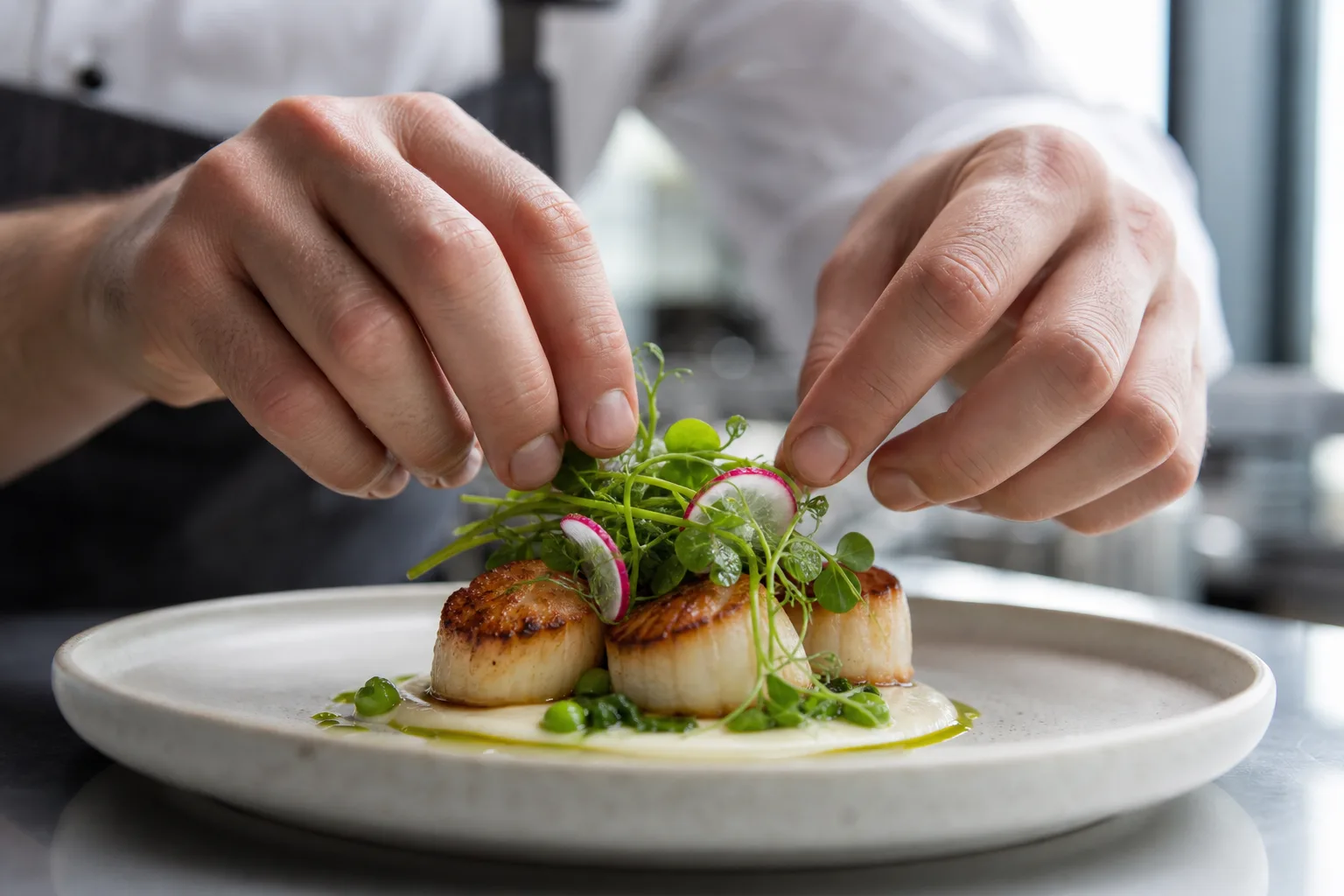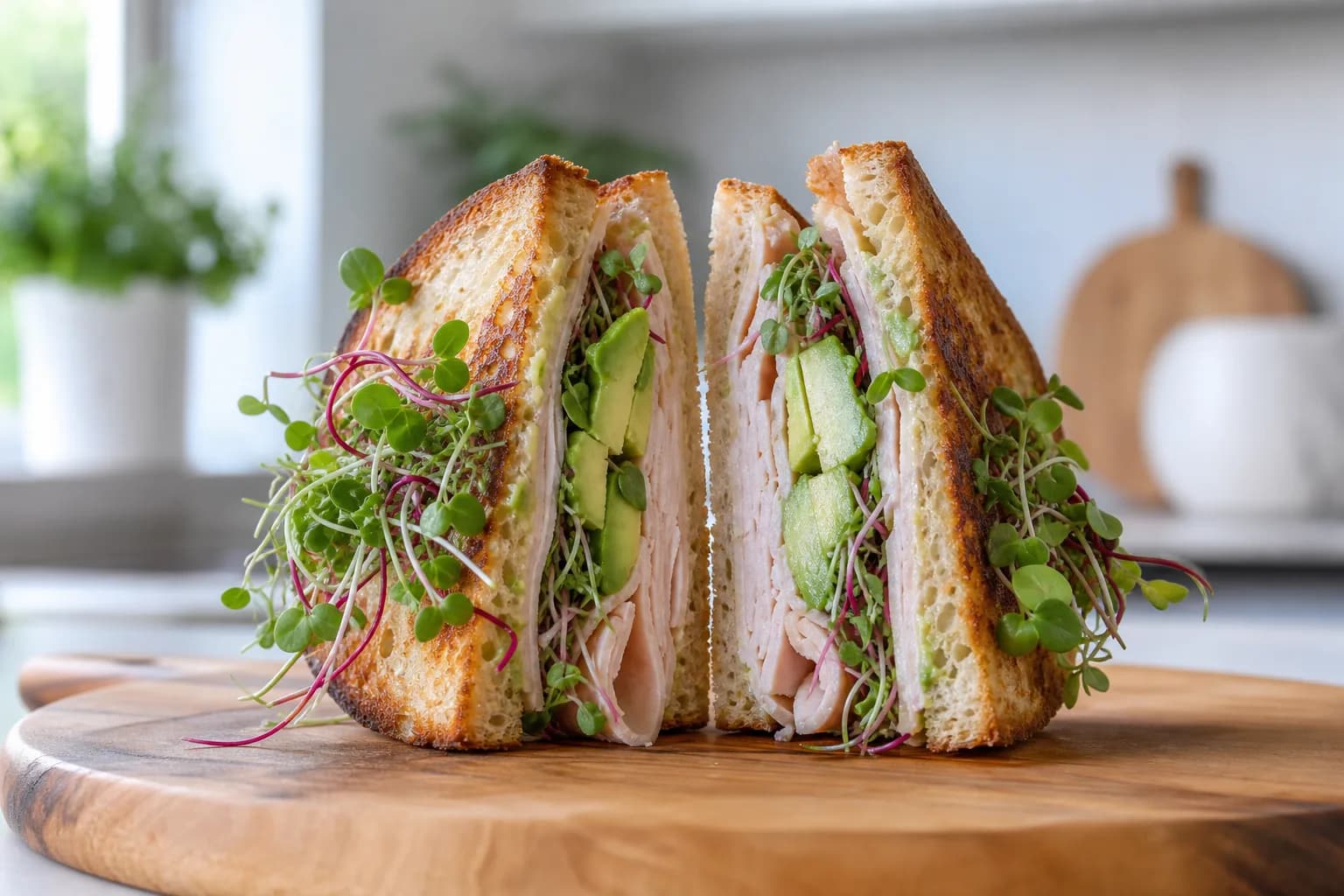

If you want an easy way to eat more greens, a microgreens smoothie is one of the smartest places to start. A small handful of microgreens disappears into the flavor of fruit and yogurt, yet it adds a real nutrient boost: microgreens are roughly 2 to 3.5 times more nutrient-dense than their full-grown counterparts. Blending also does some of the work for you, breaking down cell walls so your body can reach more of what is inside.
Below are our favorite recipes, the best crops to blend, and a few simple ratios that keep every drink smooth and genuinely tasty.
Why Put Microgreens in a Smoothie?
Microgreens are young vegetable greens harvested just after the first true leaves appear. Despite their size, they are concentrated. Research reviews report that many microgreens carry meaningfully more vitamins and antioxidants than the mature vegetable, and they are especially rich in vitamins C, K, E, and polyphenols.
A smoothie is also the most forgiving way to eat them. Raw, the flavors range from mild and grassy to peppery. Fruit, yogurt, and a little citrus round those edges off completely, so even sharp crops like radish blend in without dominating. If you have ever bought a clamshell of microgreens, used a tablespoon as a garnish, and watched the rest wilt in the fridge, a smoothie is the answer: it lets you use a full handful at once, before they have any chance to turn.
There is a practical bonus too. Blending and chewing help release beneficial compounds. In broccoli microgreens, for example, sulforaphane forms only when the plant's glucoraphanin meets an enzyme called myrosinase as the tissue is broken down. Blending raw greens supports that process, while heavy cooking degrades the enzyme. If you want the deeper science, see our guide to what sulforaphane is and how to maximize sulforaphane at home.
The Best Microgreens to Blend
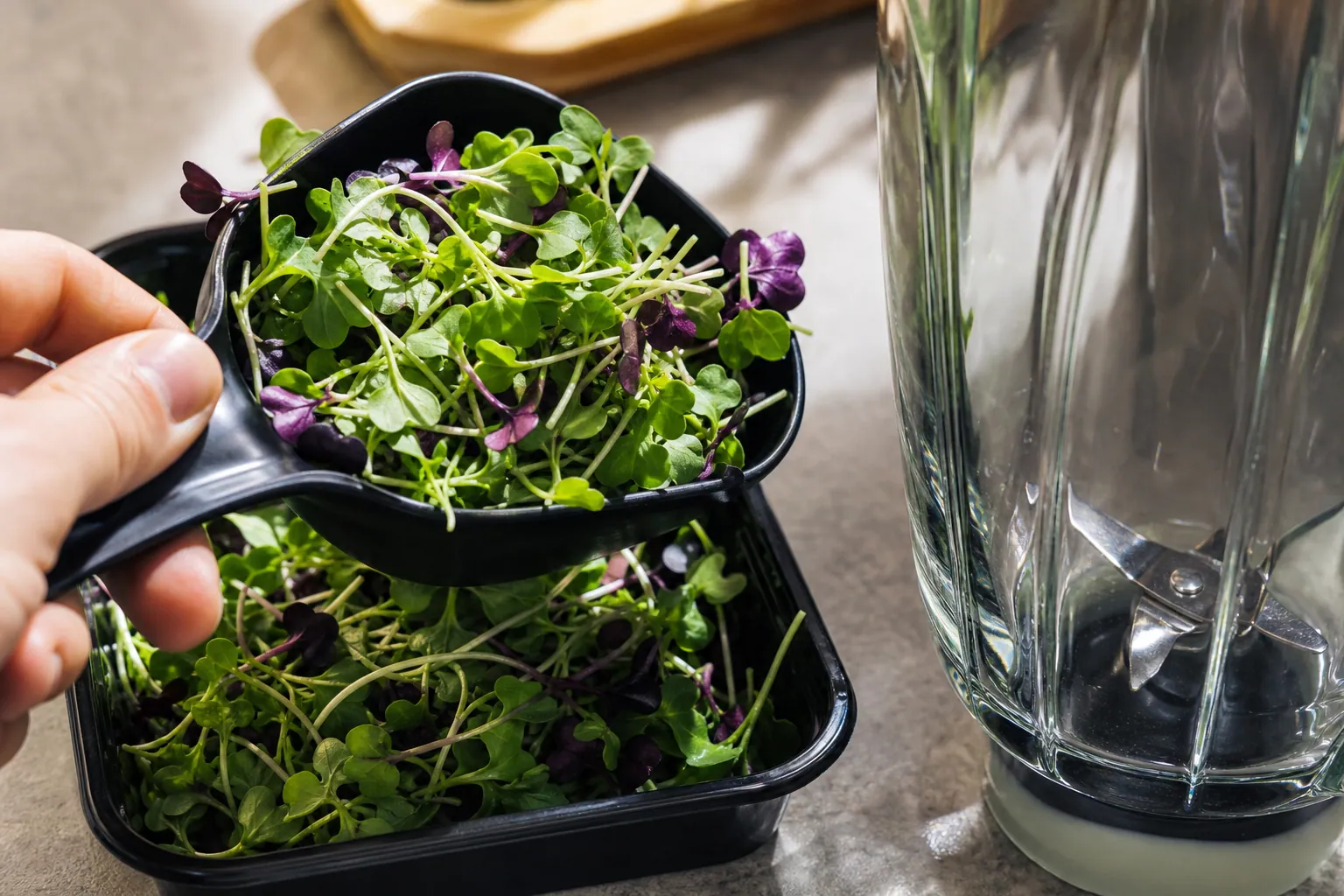
Not every microgreen behaves the same in a blender. Some are mild and sweet, some are peppery, and a few bring serious protein. Here is how the most popular crops stack up.
| Microgreen | Flavor in a smoothie | Best paired with | Why blend it |
|---|---|---|---|
| Broccoli | Mild, slightly grassy | Berries, banana | High sulforaphane precursor |
| Pea shoots | Sweet, fresh | Mango, pineapple | One of the more protein-dense microgreens |
| Radish | Peppery | Apple, ginger, citrus | Often the most nutrient-dense |
| Sunflower | Nutty, mild | Banana, nut butter | Creamy texture, easy starter |
| Red cabbage | Earthy, mild | Blueberry, yogurt | Vivid color, antioxidants |
If you are new to growing or blending, start with sunflower or pea shoots. They are sweet, forgiving, and beginner-friendly. Broccoli is the crop to reach for when nutrition is your main goal: broccoli microgreens can contain far more sulforaphane precursor than mature broccoli. Johns Hopkins researchers have measured roughly 10 to 100 times more glucoraphanin, the sulforaphane precursor, in the young plant than in the mature head, though the finished sulforaphane you actually get varies widely by variety, growing conditions, and harvest timing. That is why a half-cup of broccoli microgreens in a smoothie punches so far above its weight.
A useful way to choose is to match the crop to your goal. Here is the same shortlist sorted by what each one does best in a glass.
| If you want | Reach for | Practical note |
|---|---|---|
| The gentlest first try | Sunflower | Nutty and creamy; nobody will notice the green |
| A protein lift | Pea shoots | A strong plant-based protein source; great after a workout |
| Maximum sulforaphane | Broccoli | Pair with berries to hide the grassy edge |
| The biggest nutrient bump | Radish | Most nutrient-dense; use sparingly, it bites |
| Color and antioxidants | Red cabbage | Turns the whole drink a deep violet |
For a crop-by-crop breakdown, our pages on broccoli microgreens, radish microgreens, and pea shoots go deeper.
Five Microgreens Smoothie Recipes
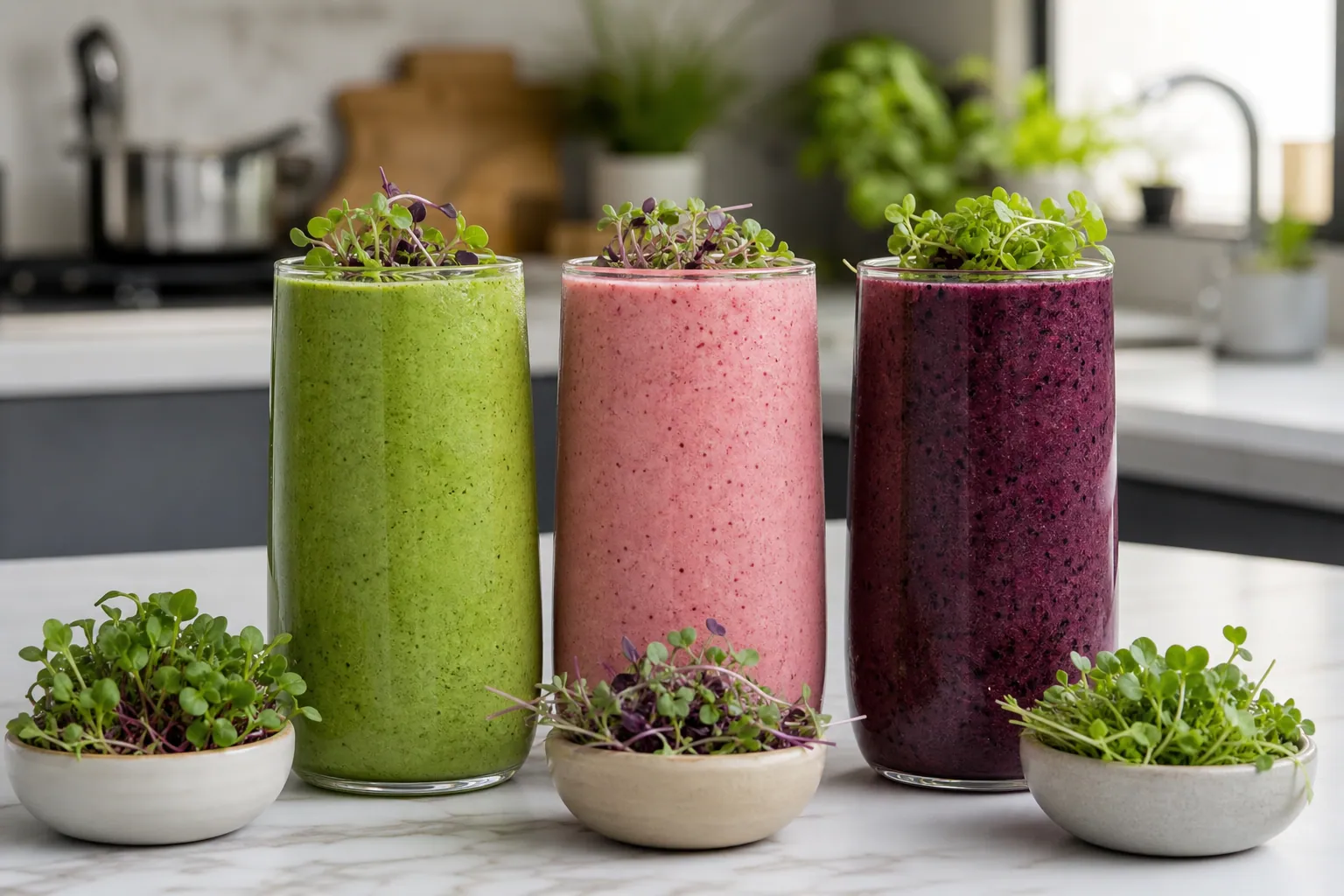
Each recipe makes one large serving. Add the microgreens last, blend for 30 to 45 seconds, and drink it fresh. The greens are most potent right after harvest, so blend close to mealtime.
1. Green Starter (mild and creamy)
- 1 banana
- 1/2 cup sunflower microgreens
- 1 cup milk or oat milk
- 1 tablespoon nut butter
- A few ice cubes
A gentle introduction. The sunflower greens add body without a strong flavor.
2. Berry Broccoli Boost
- 1 cup mixed berries
- 1/2 cup broccoli microgreens
- 3/4 cup plain yogurt
- 1/2 cup water
- 1 teaspoon honey, optional
Berries mask the grassy note completely, making this an easy way to work broccoli microgreens into a daily habit.
3. Tropical Pea Protein
- 1 cup pineapple or mango
- 1/2 cup pea shoots
- 1 cup coconut water
- 1/2 banana
Pea shoots bring sweetness and a meaningful protein lift, so this one is great post-workout.
4. Peppery Radish Refresher
- 1 green apple
- 1/4 cup radish microgreens
- 1 cup water
- Juice of half a lemon
- A small knob of ginger
Bright and zippy. Keep the radish quantity modest, since its pepper is bold.
5. Purple Antioxidant
- 1 cup blueberries
- 1/2 cup red cabbage microgreens
- 3/4 cup yogurt
- 1/2 cup milk
A striking color and a smooth, mellow taste.
A quick ratio to remember: for one serving, use about one to two cups of liquid, one cup of fruit, and a half cup of mild microgreens (a quarter cup for peppery crops). That balance keeps the drink smooth without an overpowering green flavor. Think of fruit and yogurt as the carrier and the greens as the booster, not the base. If a blend tastes too "green," do not add more fruit, which only dilutes; instead pull the greens back to a quarter cup next time and add a squeeze of citrus, which brightens rather than sweetens.
You can also build a habit around batching. Wash and dry a few servings of microgreens, portion them into a muffin tray, and freeze. A frozen puck drops straight into the blender and skips the ice, so the drink stays cold and the greens stay vivid. Freezing does soften the texture, but it preserves the vitamins and the glucoraphanin, and the chewing-and-blending step that releases sulforaphane still happens the moment you drink it. For more ideas beyond the blender, see how to eat microgreens and our microgreens salad ideas.
Tips for the Smoothest, Freshest Result
A few small habits make a big difference:
- Blend the greens last and briefly. Long blending warms the mix and can mute fresh flavor.
- Use cold liquid and a little ice. Cold keeps the drink crisp and the greens vivid.
- Go raw. Heat degrades delicate enzymes and vitamins, so smoothies are an ideal way to enjoy microgreens uncooked.
- Mind the freshness window. Microgreens wilt quickly, so the fresher they are when you blend, the better they taste and the more they offer.
That last point is the real challenge for most people. Store-bought microgreens often cost $4 to $6 for a small clamshell, which works out to roughly $30 to $50 per pound, and they may already be days old by the time they reach your kitchen. By the time a clamshell has traveled from farm to truck to warehouse to store shelf, much of its short shelf life is already gone, which is why so much of it ends up wilted in the drawer. A daily smoothie habit at those prices and that freshness gets expensive and frustrating fast.
Growing them yourself solves both problems on paper, and it is genuinely satisfying when it works. In practice, traditional trays demand daily watering and attention across a roughly 10-day cycle, and they are prone to mold when moisture, warm air, crowding, and poor airflow line up. Miss a few days because you traveled or had a busy week and a tray can fail outright. The result is that home growing is less a knowledge problem than a consistency problem, and consistency is exactly what a daily smoothie habit needs.
Bring It All Together
The best microgreens smoothie is the one you actually make, again and again, because the greens are always on hand and always fresh. That is exactly the gap Luya is built to close. Luya is a countertop appliance, a little like a Nespresso but for greens: you drop in a pre-seeded tray, and a sealed, climate-controlled chamber grows fresh microgreens in about 7 to 10 days, with no mold, no mess, and no daily chores. You harvest only what you need for today's blend, and the rest keeps growing alive on your counter.
Want to keep learning? Start with are microgreens good for you to see what all those nutrients add up to.
References
- Fahey JW, Zhang Y, Talalay P. Broccoli sprouts: an exceptionally rich source of inducers of enzymes that protect against chemical carcinogens. PNAS. 1997;94(19):10367–10372. https://doi.org/10.1073/pnas.94.19.10367