Building a great microgreens vegan diet is one of the easiest upgrades you can make to plant-based eating. These tiny, just-sprouted greens pack a surprising amount of nutrition into a small handful, and they slip into almost any meal you already make. No new recipes required — just a fresh topping that does a lot of quiet work.
If you eat vegan, you're already thinking about protein, vitamins, and getting enough variety on the plate. Microgreens help on all three fronts. They're rich in vitamins C, K, and E plus antioxidants and polyphenols, and certain varieties bring real plant protein to the table. Because they're harvested at the seedling stage, they deliver that nutrition in a far smaller volume than mature salad greens — a meaningful advantage when you're trying to fit more nutrient-dense food into the same meals.
Below are practical, repeatable ways to fold microgreens into a typical day of plant-based meals.
Why Microgreens Earn a Spot in a Vegan Diet
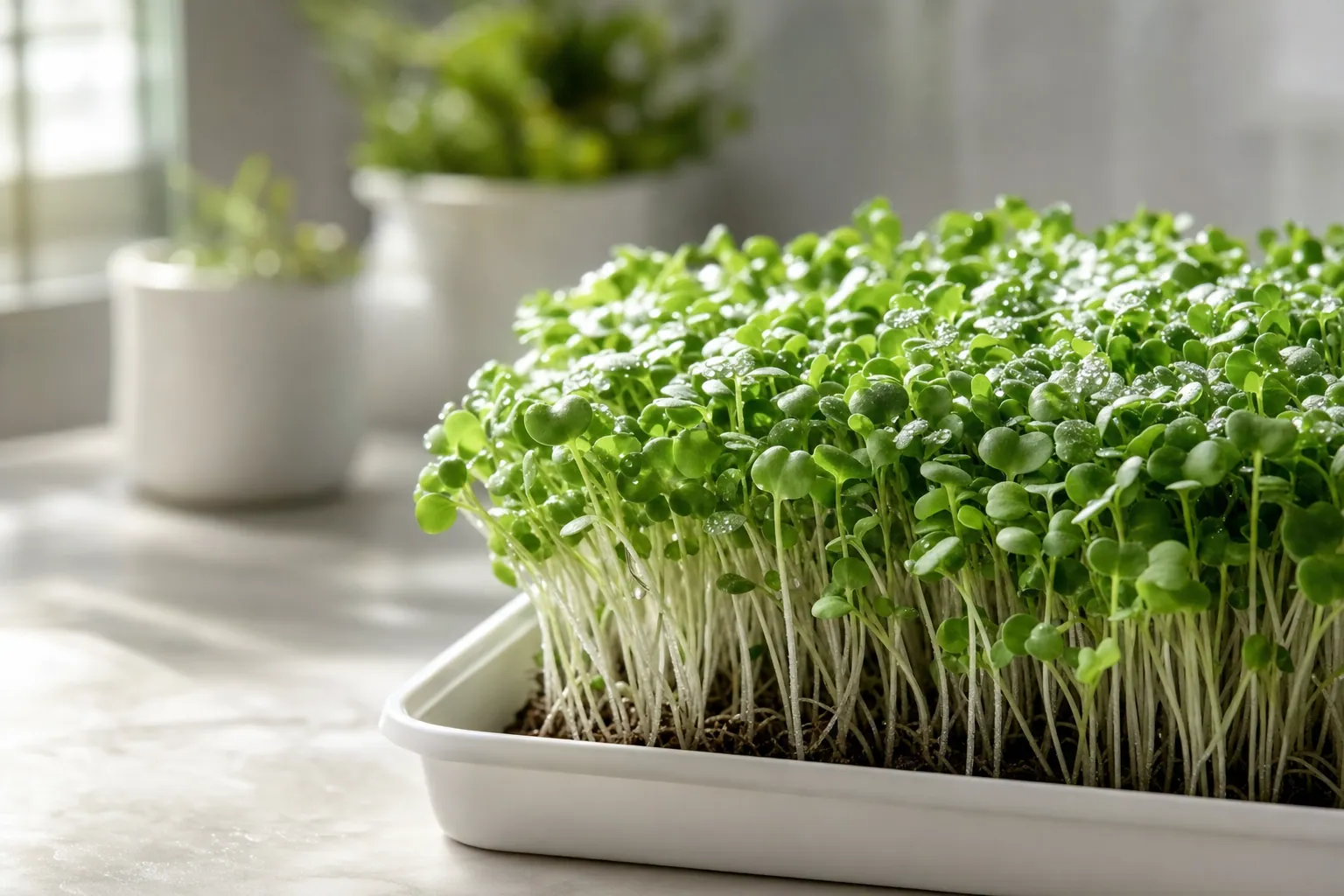
Microgreens are the young seedlings of vegetables and herbs, harvested just after the first leaves appear. That early stage is when they're most concentrated. Research summarized in peer-reviewed reviews (MDPI Plants) and USDA data shows microgreens are roughly 2 to 3.5 times more nutrient-dense than their mature counterparts, with radish microgreens often topping the list.
For plant-based eaters, a few varieties stand out:
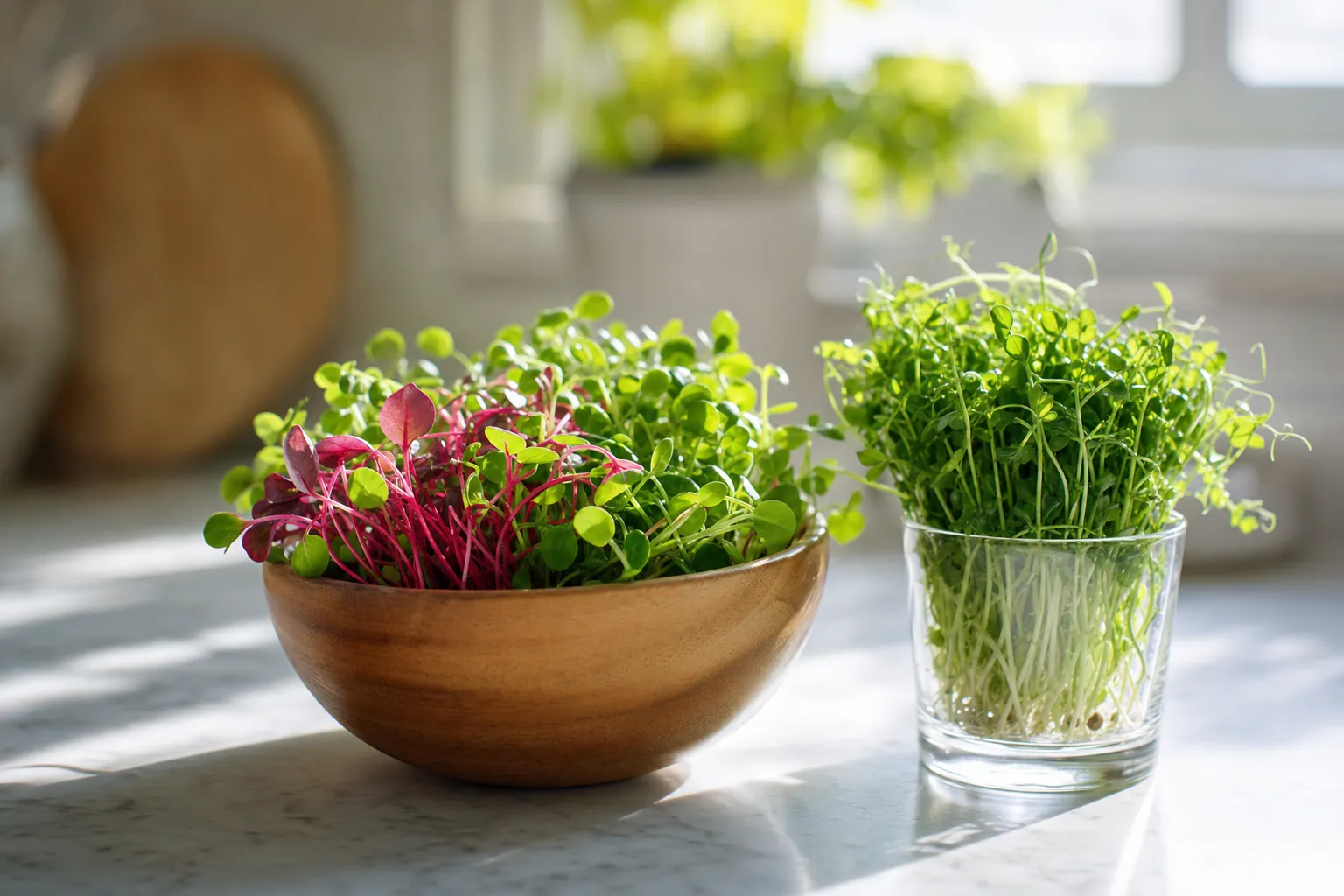
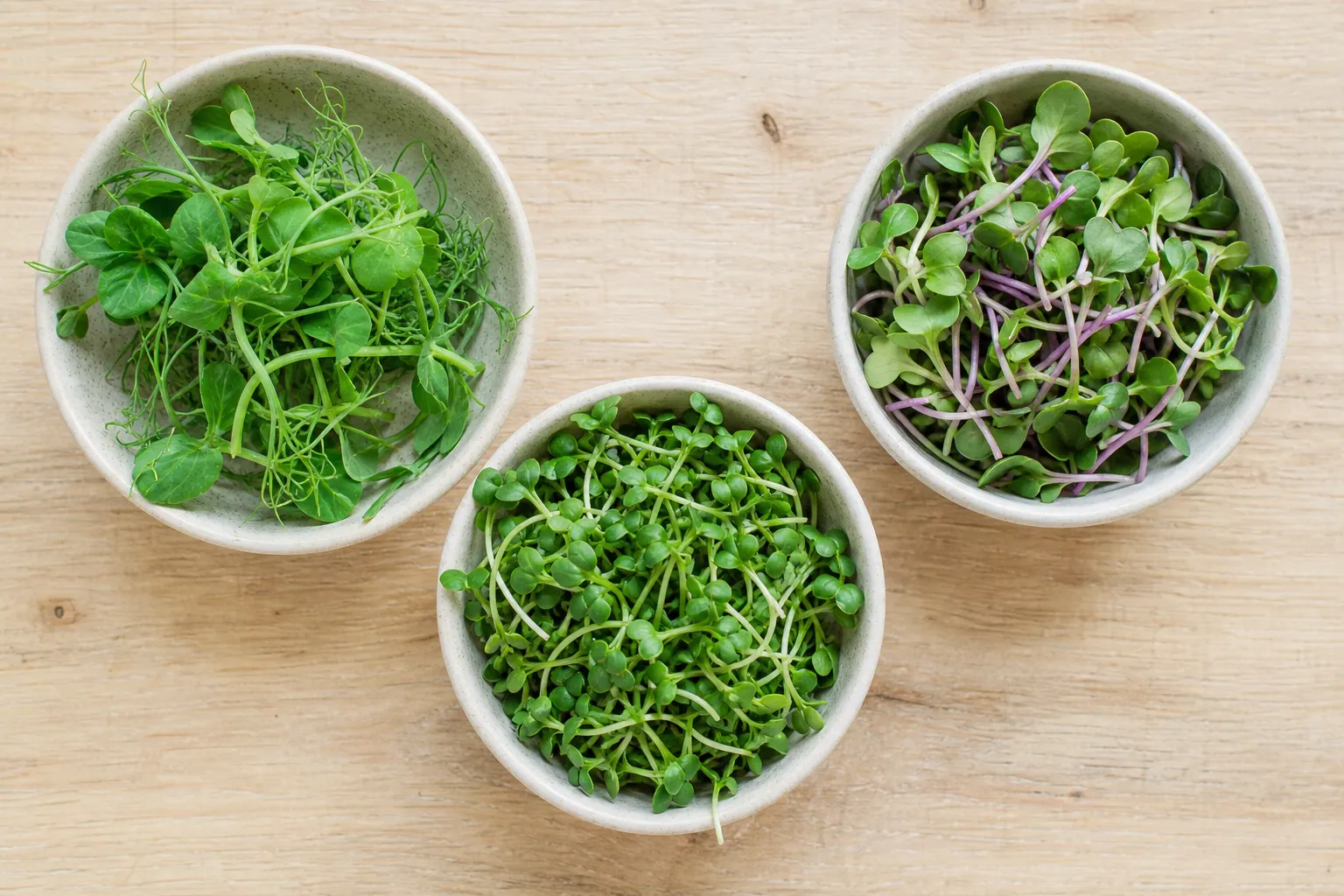
- Pea shoots are one of the more protein-dense microgreens and a genuinely strong plant protein source — useful in their own right, not just a garnish.
- Broccoli microgreens are the headline act for sulforaphane, a compound studied for its role in the body's antioxidant and detox defenses.
- Radish microgreens bring the highest nutrient density and a peppery kick.
The sulforaphane angle is worth a quick note. Sulforaphane is an isothiocyanate that forms when the compound glucoraphanin meets the enzyme myrosinase — a reaction triggered the moment you chew or chop the greens raw. Broccoli microgreens carry far more of the precursor than mature broccoli (Johns Hopkins research points to roughly 10 to 100 times more glucoraphanin), though the finished sulforaphane you actually get varies widely by variety, growing conditions, and harvest timing. Once formed, sulforaphane activates the body's Nrf2 pathway, a master switch for the cell's own antioxidant and detoxification enzymes. Researchers are studying it for blood-sugar regulation, inflammation, and cellular defense — promising, research-stage findings rather than proven cures, so it's best framed as a smart reason to eat the greens, not a treatment.
The practical takeaway for a plant-based kitchen is simple: heat degrades myrosinase, so cooked broccoli microgreens lose much of their sulforaphane potential. Raw, freshly chopped, and chewed well gets you the most. If you want the deeper science, see our guide to what sulforaphane actually is, or compare fresh greens to capsules in our look at broccoli microgreens vs. sulforaphane supplements.
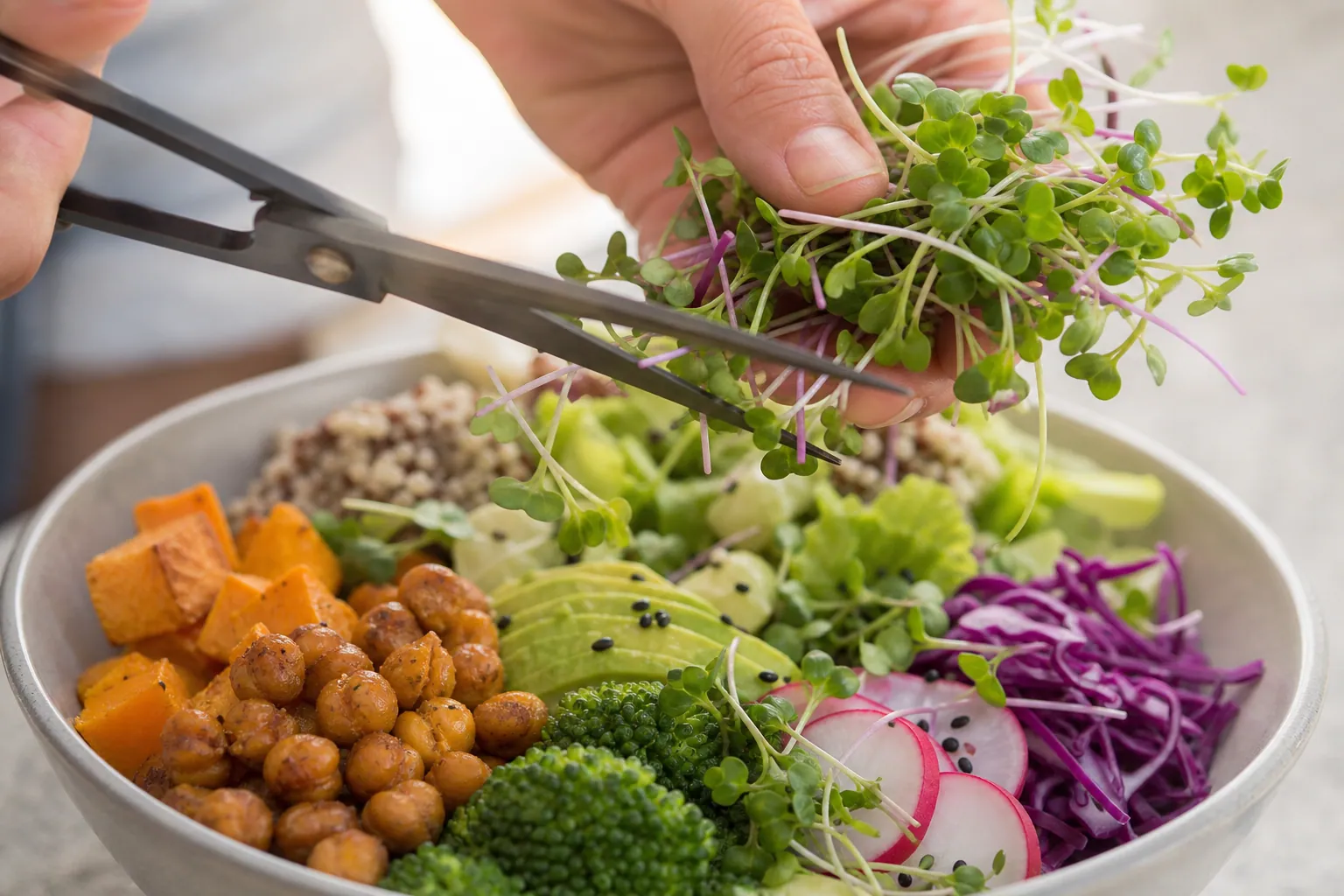
Daily Ideas: Adding Microgreens to Every Plant-Based Meal
The best part of a microgreens vegan diet is how low-effort it is. You're not cooking them into anything — you're adding a fresh handful at the end. Here's a simple day.
Breakfast
- Pile pea shoots on avocado toast for a protein-forward start.
- Blend a small handful of mild microgreens into a smoothie — they disappear into the flavor while adding vitamins. (We have a full set of microgreens smoothie recipes if you want ideas.)
- Fold radish or broccoli microgreens into a tofu scramble right before serving, off the heat, to keep them raw.
Lunch
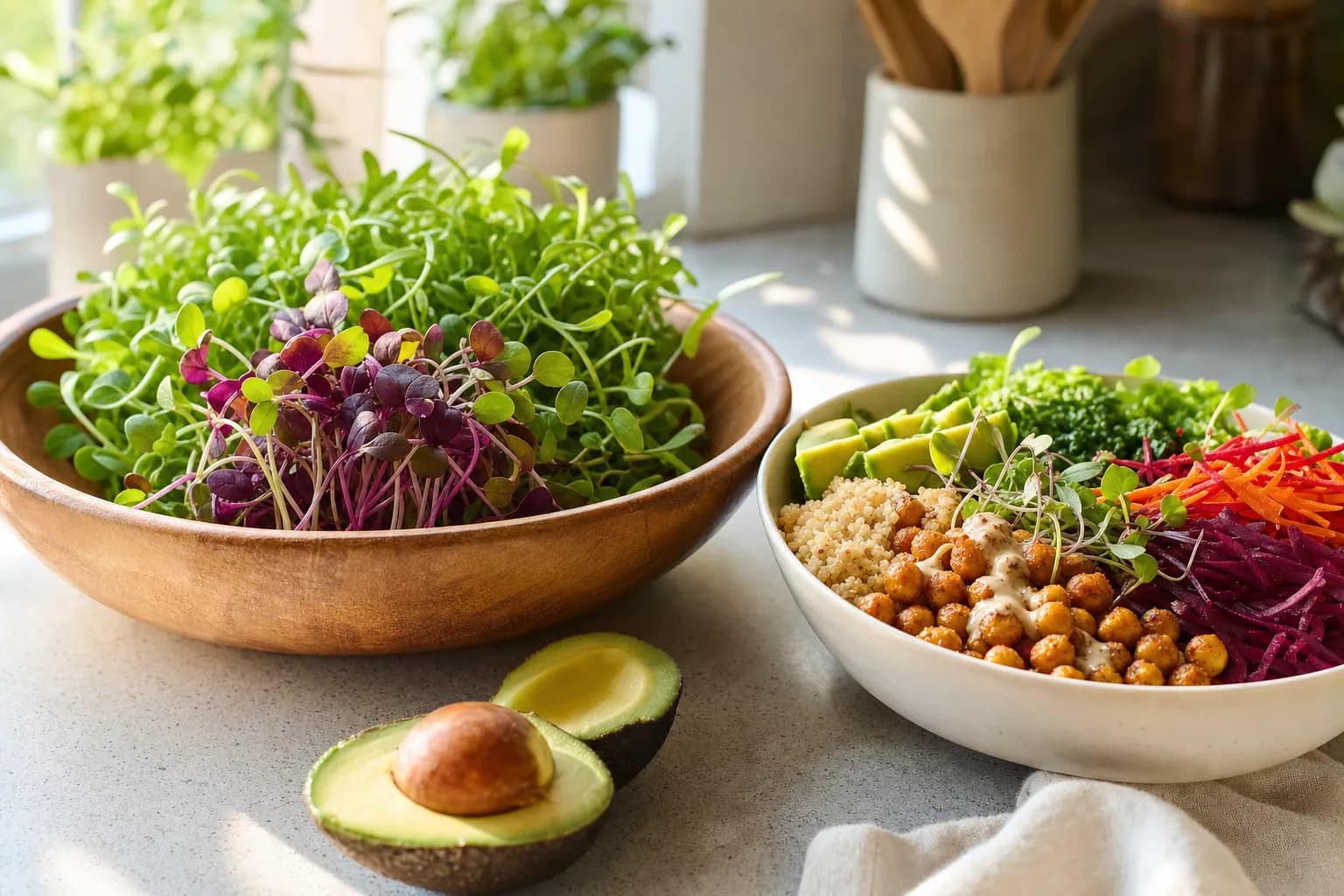
- Top grain bowls, lentil salads, or hummus wraps with a generous tangle of greens.
- Use them as the "lettuce" layer in sandwiches — more flavor, more nutrition, same crunch.
Dinner
- Finish soups, curries, and stir-fries with a fresh handful after plating, never during cooking.
- Scatter over roasted vegetables or a vegan pasta to add color and a fresh, peppery contrast.
Snacks
- Stir into guacamole or salsa for a fresh, peppery lift.
- Add to a quick wrap with tahini and roasted chickpeas.
A simple rule ties it all together: add microgreens last, keep them raw, and chew them well. Cooking is the enemy of the most fragile nutrients — vitamin C and the myrosinase enzyme both fade with heat — so treating microgreens as a finishing touch rather than an ingredient is what preserves their value. Over a normal week, that single habit can add several extra servings of vegetables to your diet without changing a single recipe.
How Much, and Which Variety for Which Goal
You don't need a precise dose. A small handful per meal is a realistic, sustainable habit. Matching variety to what you care about makes it more intentional.
| Variety | Why vegans like it | Best uses |
|---|---|---|
| Pea shoots | One of the more protein-dense microgreens | Toast, salads, stir-fry finish |
| Broccoli microgreens | Highest sulforaphane precursor | Smoothies, bowls, raw toppings |
| Radish microgreens | Most nutrient-dense, peppery | Wraps, tacos, sandwiches |
| Sunflower | Mild, crunchy, beginner-friendly | Salads, snacking, bowls |
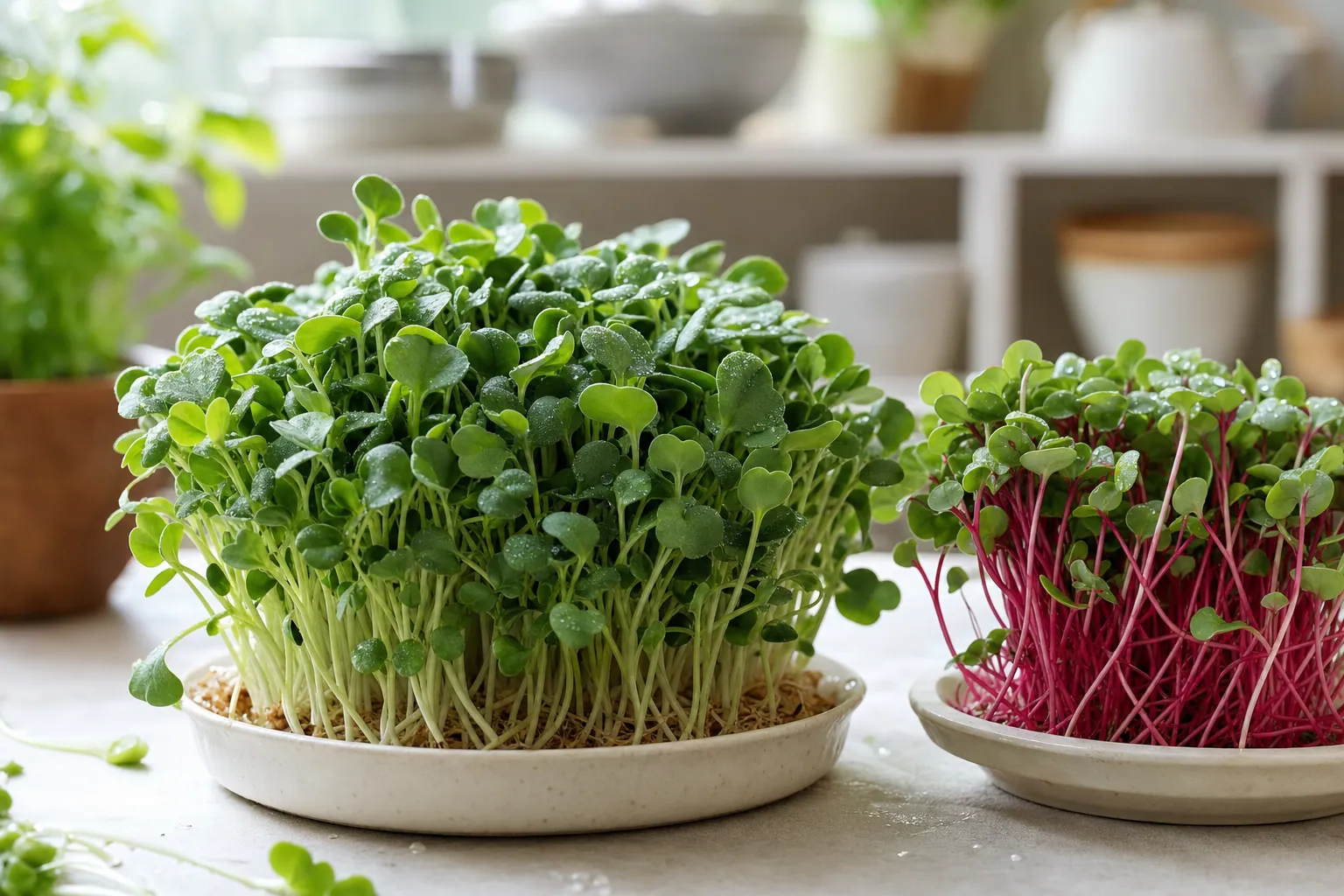
| Red cabbage | Color plus antioxidants | Slaws, bowls, garnish |
A quick, honest caveat on red cabbage microgreens: an animal (mouse) study reported by the USDA found that red cabbage microgreens lowered LDL and liver cholesterol, along with less weight gain and lower inflammatory markers, in mice on a high-fat diet. That's early, animal research, not proof for humans. Treat it as a promising reason to enjoy variety, not a medical claim. If cholesterol is on your radar, our deeper write-up on microgreens and cholesterol walks through exactly what that study did and didn't show.
Why does variety matter so much here? Each crop concentrates a different mix of compounds. Pea shoots lean into protein, broccoli microgreens into sulforaphane, radish into peppery nutrient density, red cabbage into anthocyanin pigments. Rotating two or three varieties through your week is a low-effort way to cover more nutritional ground than any single green could — which is precisely the kind of dietary diversity plant-based eating thrives on.
If protein is your main reason for going plant-based, our roundup of high-protein microgreens goes deeper on how to stack them into your day.
The Catch: Keeping Them Fresh and Affordable
Here's the practical problem most plant-based eaters hit. Store-bought microgreens are expensive — often $4 to $6 for a small 2 oz clamshell, which works out to roughly $30 to $50 per pound. And by the time they reach your fridge, they've spent days moving through the farm-to-truck-to-warehouse-to-store supply chain. They wilt fast, the shelf life is short, and a lot ends up in the trash.
Growing your own is the obvious answer, but DIY trays have their own headaches: mold from moisture and poor airflow, soil mess, and the daily watering that a microgreens habit demands over each roughly 10-day cycle. One busy week or a short trip, and the tray is gone. It's really a consistency problem.
This is the gap Luya is built to close. The Luya countertop food computer is a sealed, climate-controlled appliance — think "a Nespresso, but for greens." You drop in a pre-seeded, US-made tray, and it handles temperature, watering, and nutrients automatically inside a ventilated chamber that keeps mold out. You harvest only what you need over a 7 to 10 day cycle, and the rest keeps growing alive on your counter. That makes fresh microgreens both cheaper per serving and fresher than anything in a clamshell, with none of the daily chores.
For a plant-based kitchen, that means a steady, fresh supply is always within arm's reach — which is exactly what turns "I should eat more microgreens" into something you actually do every day.
Ready to make fresh greens a daily habit? See how Luya works to grow microgreens on your counter with zero mess and zero guesswork. Or keep reading: explore more microgreens salad ideas to put your harvest to work tonight.
References
- Xiao Z, Lester GE, Luo Y, Wang Q. Assessment of Vitamin and Carotenoid Concentrations of Emerging Food Products: Edible Microgreens. J Agric Food Chem. 2012;60(31):7644–7651. https://doi.org/10.1021/jf300459b
- Xiao Z, et al. Microgreens of Brassicaceae: Mineral composition and content of 30 varieties. Journal of Food Composition and Analysis. 2016;49:87–93. https://www.sciencedirect.com/science/article/abs/pii/S0889157516300448
- Kyriacou MC, Rouphael Y, Di Gioia F, et al. Micro-scale vegetable production and the rise of microgreens. Trends Food Sci Technol. 2016;57:103–115. https://doi.org/10.1016/j.tifs.2016.09.005