This article is for general education only and is not medical advice; talk with your doctor or a registered dietitian about your own iron needs.
If you eat plant-based, you have probably been told to "watch your iron." It is good advice. And while no leafy green is a magic fix, microgreens iron content is worth a closer look: these tiny seedlings pack a surprising amount of nutrition into each bite, and a few smart pairings can help your body actually use what is on your plate. This guide walks through where microgreens fit, which crops to grow, and how to get more iron from every serving.
Let's start with why these little greens punch above their weight.
Why Microgreens Are So Nutrient-Dense
Microgreens are the young seedlings of vegetables and herbs, harvested just after the first true leaves appear, usually 7 to 14 days after planting. At that stage, the plant is concentrating everything it needs to grow into one small, tender shoot.
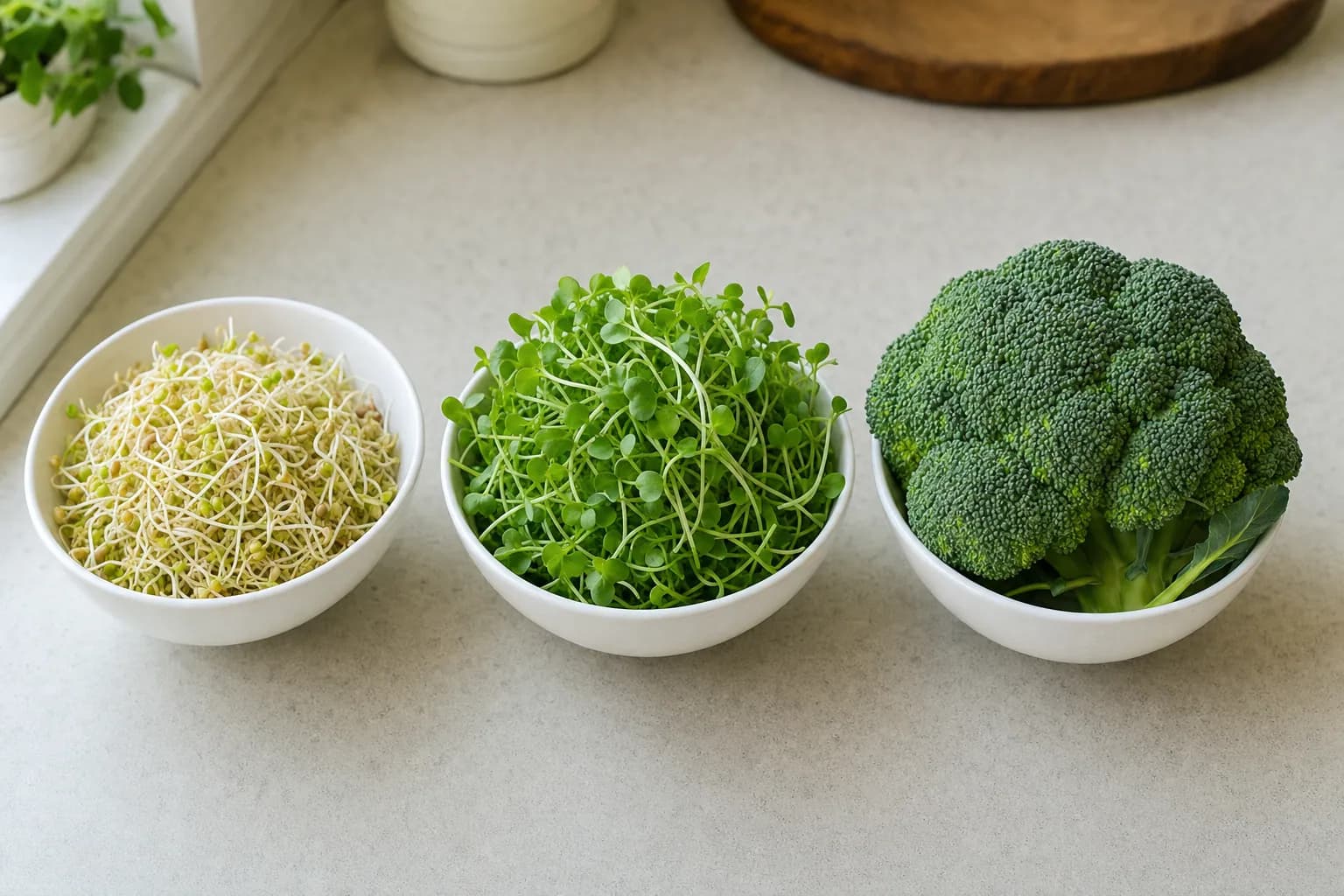
That concentration shows up on the plate. Peer-reviewed reviews (MDPI Plants) and USDA data suggest microgreens are roughly 2 to 3.5 times more nutrient-dense than their full-grown counterparts, with radish microgreens often landing at the top of the range. They are also rich in vitamins C, K, and E, plus the antioxidants and polyphenols that give many of them their deep red and purple pigments.
What this density does not mean is that microgreens are a concentrated iron supplement. Ounce for ounce they carry more of many nutrients than the mature plant, but you still eat them in small handfuls, so the realistic role of microgreens iron in your diet is as a fresh, high-quality topping that lifts the whole meal, not as your primary iron source. That distinction matters, and it shapes the strategy in the rest of this guide.
For a plant-based eater, that density matters. When you are building meals around vegetables, getting more nutrition per ounce means each handful of greens is doing more work. If you want the full breakdown of what is inside, our deep dive on microgreens nutrition covers the vitamins and minerals in detail.
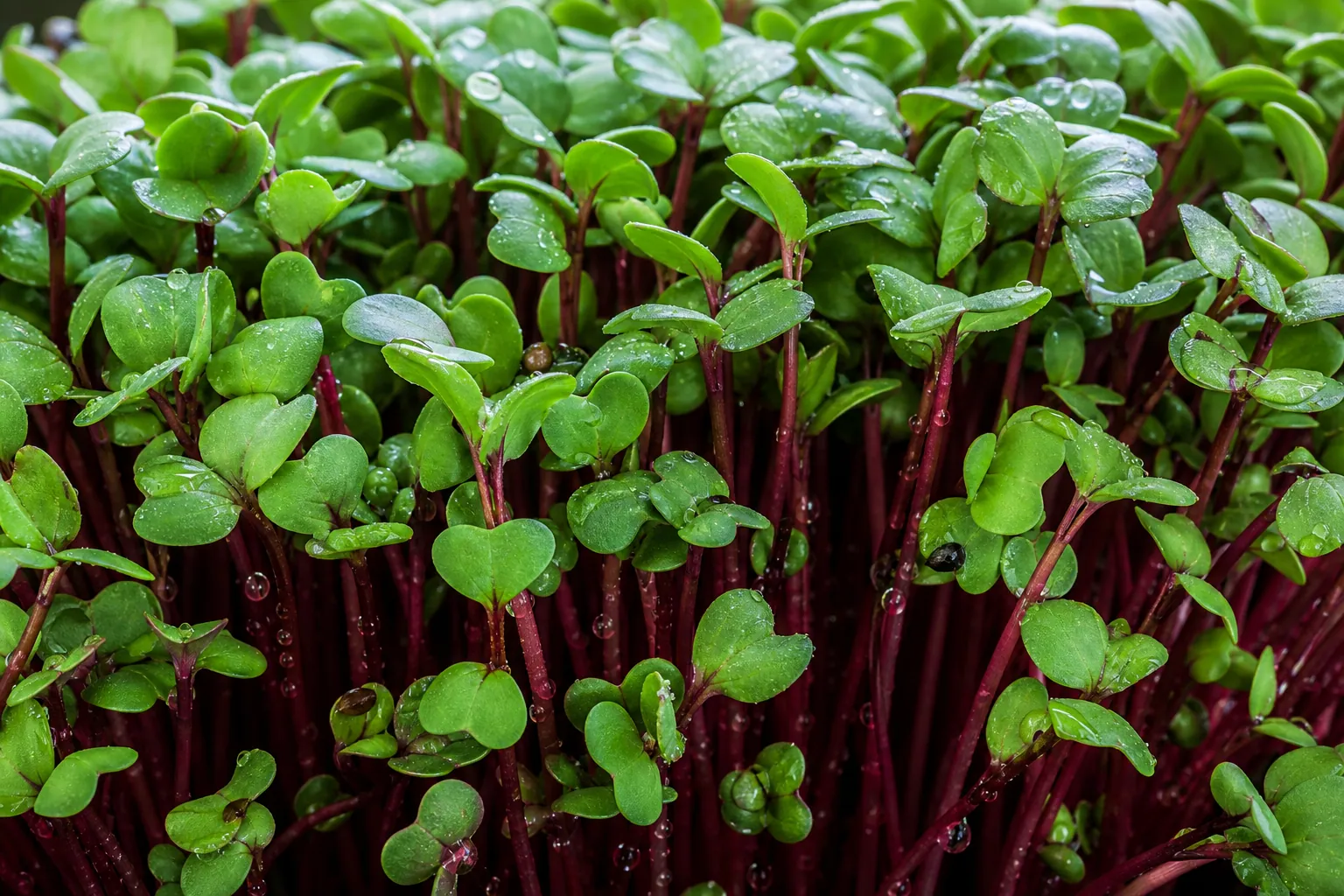
A quick, honest note on iron: most microgreen data centers on vitamins, antioxidants, and compounds like sulforaphane rather than precise iron milligrams per crop. So the smartest plant-based strategy is twofold: use microgreens as a fresh, nutrient-dense base, and pair them with foods and habits that improve iron absorption. We will get to both.
The Plant-Based Iron Challenge (and Where Greens Help)
Plants contain non-heme iron, the form found in lentils, beans, tofu, seeds, and leafy greens. Non-heme iron is perfectly usable, but your body absorbs it less readily than the heme iron in meat. The good news is that absorption is something you can influence at the table.
The single most effective lever is vitamin C. Eating vitamin-C-rich foods alongside iron-rich foods helps convert non-heme iron into a form your gut absorbs more easily, and it can blunt the dampening effect of compounds like the phytates in legumes and whole grains. This is where microgreens shine: many are loaded with vitamin C, so adding a fresh handful to an iron-rich meal is a genuinely useful habit, not just a garnish. The catch is freshness, because vitamin C fades quickly after harvest, which is one more reason the greens you grow yourself outperform a clamshell that has spent a week in transit.
Here is how to think about building an iron-friendly plant-based plate.
| Goal | What to put on the plate | Why it works |
|---|---|---|
| Source of iron | Lentils, beans, tofu, pumpkin seeds, leafy greens | Provide non-heme iron |
| Boost absorption | Microgreens, citrus, bell pepper, tomato | Vitamin C improves non-heme iron uptake |
| Add fresh protein | Pea shoots (high in protein) | Plant protein plus a tender, fresh topping |
| Watch the timing | Coffee and tea between meals, not during | Tannins can reduce iron absorption at mealtime |
Notice the last row. Pairing matters as much as the iron itself. A bowl of lentils with a squeeze of lemon and a pile of fresh microgreens is a far better iron meal than lentils eaten alongside a cup of black tea.
If you want to go deeper on building meals around these greens for a plant-forward lifestyle, our microgreens for a vegan diet guide expands on full-day meal ideas.
Best Microgreens to Grow for a Plant-Based Diet
Not every crop is equally beginner-friendly, and a few stand out for both nutrition and ease. Here are the ones I recommend starting with.
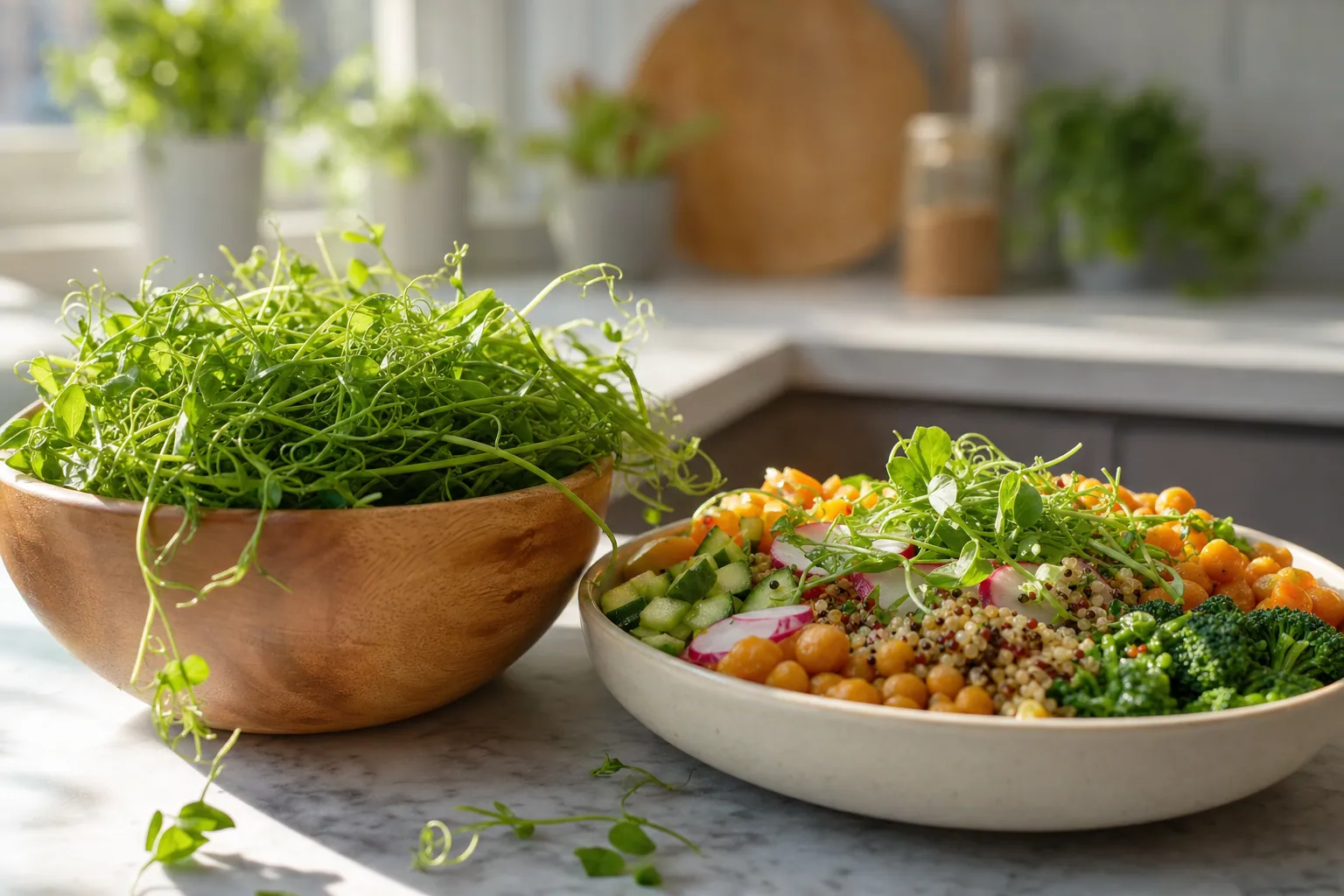
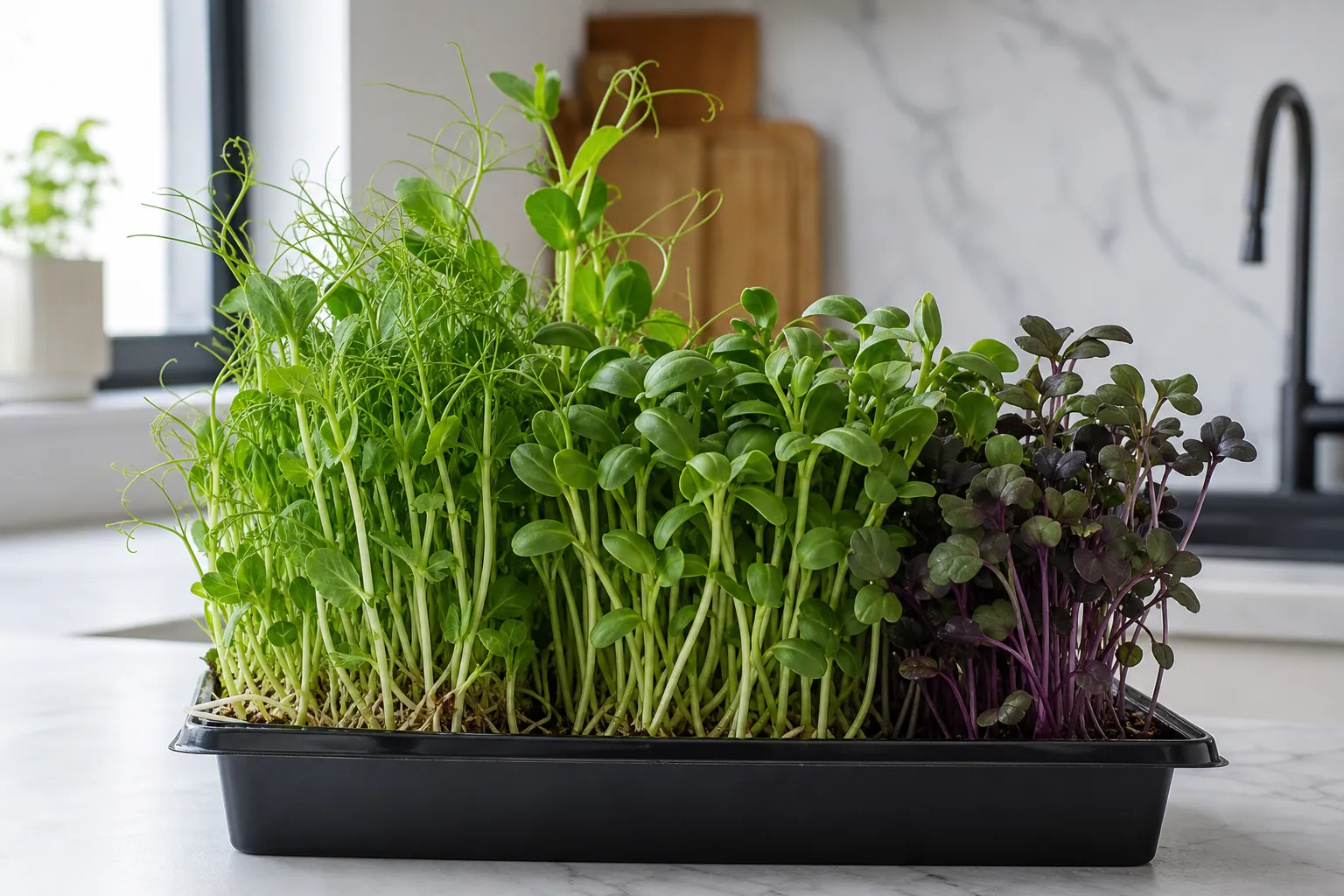
Pea shoots. These are a standout for plant-based eaters because they are one of the more protein-dense microgreens and a strong plant-based protein source. They are also sweet, crunchy, and forgiving to grow. Learn more in our guide to pea shoots.
Radish. Fast and vivid, radish microgreens germinate in 1 to 2 days and are ready to harvest in about 5 to 7 days. They tend to be among the most nutrient-dense microgreens, with a pleasant peppery bite.
Broccoli. Famous for sulforaphane, a compound your body forms when you chew or chop the raw greens. Broccoli microgreens can contain dramatically more of the sulforaphane precursor than mature broccoli. We unpack the science in what is sulforaphane.
Sunflower. Mild, nutty, and substantial, sunflower shoots make a satisfying salad base and add bulk to a bowl without crowding out the other colors.
It is worth noting that microgreens research stretches well beyond iron. A USDA-linked animal study, for example, found that red cabbage microgreens lowered LDL and liver cholesterol (and inflammatory markers) in mice on a high-fat diet. That is early, animal-stage evidence rather than human proof, but it is a reminder that variety on the plate pays off in more ways than one. If you want the balanced overview, are microgreens good for you weighs what the science does and does not yet show.
| Crop | Germination | Harvest | Best for |
|---|---|---|---|
| Radish | 1-2 days | 5-7 days | Fast results, nutrient density |
| Pea shoots | 2-3 days | ~10 days | Plant protein |
| Broccoli | 2-3 days | ~10 days | Sulforaphane |
| Sunflower | 2-3 days | ~10 days | Hearty salad base |
How to Get the Most From Your Microgreens
A few simple habits make a real difference in how much nutrition you get.
Eat them fresh and raw. Vitamin C and heat-sensitive compounds degrade over time and with cooking. For broccoli especially, raw and well-chewed greens preserve the enzyme (myrosinase) needed to form sulforaphane. Toss microgreens onto a finished dish rather than cooking them in.
Pair with vitamin C, naturally. Because many microgreens are vitamin-C-rich, layering them over an iron-rich meal does double duty: more nutrients, plus better non-heme iron absorption. A squeeze of lemon helps too.
Mind your timing with coffee and tea. The tannins in both can blunt iron absorption, so enjoy them between meals rather than alongside your iron-rich plate.
Keep them genuinely fresh. Store-bought microgreens spend days moving through the farm-to-truck-to-store supply chain, often arriving wilted with a short shelf life, and at $4 to $6 per small clamshell (roughly $30 to $50 per pound) they are not cheap. Growing your own means harvesting seconds before eating, when nutrient levels are highest. If you are weighing the options, see grow vs. buy microgreens.
Growing at home has its own classic frustrations, though: mold from poor airflow, soil mess, and the daily watering that a busy week or a trip can easily derail. That consistency problem is exactly what we set out to solve.
A Simpler Way to Keep Fresh Greens on Hand
This is where Luya fits in, lightly. Luya is a countertop "food computer" that grows fresh microgreens in a sealed, climate-controlled chamber, so mold, mess, and daily chores are handled for you. You drop in a pre-seeded tray, and in about 7 to 10 days you harvest only what you need while the rest keeps growing, alive and fresh. Think of it like a Nespresso, but for greens: the freshest possible handful, ready when your iron-friendly bowl needs a topping.
Whatever you grow, the principle stays the same: fresh, nutrient-dense greens plus smart pairings make plant-based eating easier on your iron. For your next step, our guide to microgreens nutrition lays out exactly which vitamins and minerals these tiny greens deliver, so you can build them into your plate with intention.
Selected sources
- Johns Hopkins Medicine — research on broccoli sprouts and sulforaphane (hopkinsmedicine.org)
- USDA — nutrient data and microgreens research (usda.gov)
- NIH / National Library of Medicine — iron and dietary absorption (nih.gov)
- MDPI Plants — peer-reviewed reviews on microgreen nutrient density (mdpi.com)
- Cleveland Clinic — plant-based iron and nutrition guidance (clevelandclinic.org)
- Healthline — non-heme iron and vitamin C absorption (healthline.com)
References
- Xiao Z, et al. Microgreens of Brassicaceae: Mineral composition and content of 30 varieties. Journal of Food Composition and Analysis. 2016;49:87–93. https://www.sciencedirect.com/science/article/abs/pii/S0889157516300448
- Xiao Z, Lester GE, Luo Y, Wang Q. Assessment of Vitamin and Carotenoid Concentrations of Emerging Food Products: Edible Microgreens. J Agric Food Chem. 2012;60(31):7644–7651. https://doi.org/10.1021/jf300459b