This article is for general education and is not medical advice. Talk with your doctor before making changes to your diet, especially if you have a health condition or take medication.
If you've spotted tiny trays of greens at the farmers market and wondered whether the hype is real, here's the short version: yes, and are microgreens good for you is a question peer-reviewed research answers firmly in their favor. These young vegetable seedlings concentrate a surprising amount of nutrition into a single small leaf, and a growing body of published work backs that up. The honest job of this article is to separate what's well-established from what's still being investigated, so you know exactly how much weight to put on each claim.
Let's walk through what microgreens actually are, what the science genuinely shows, and how to fit them into real meals without overthinking it.
What Makes Microgreens So Nutrient-Dense
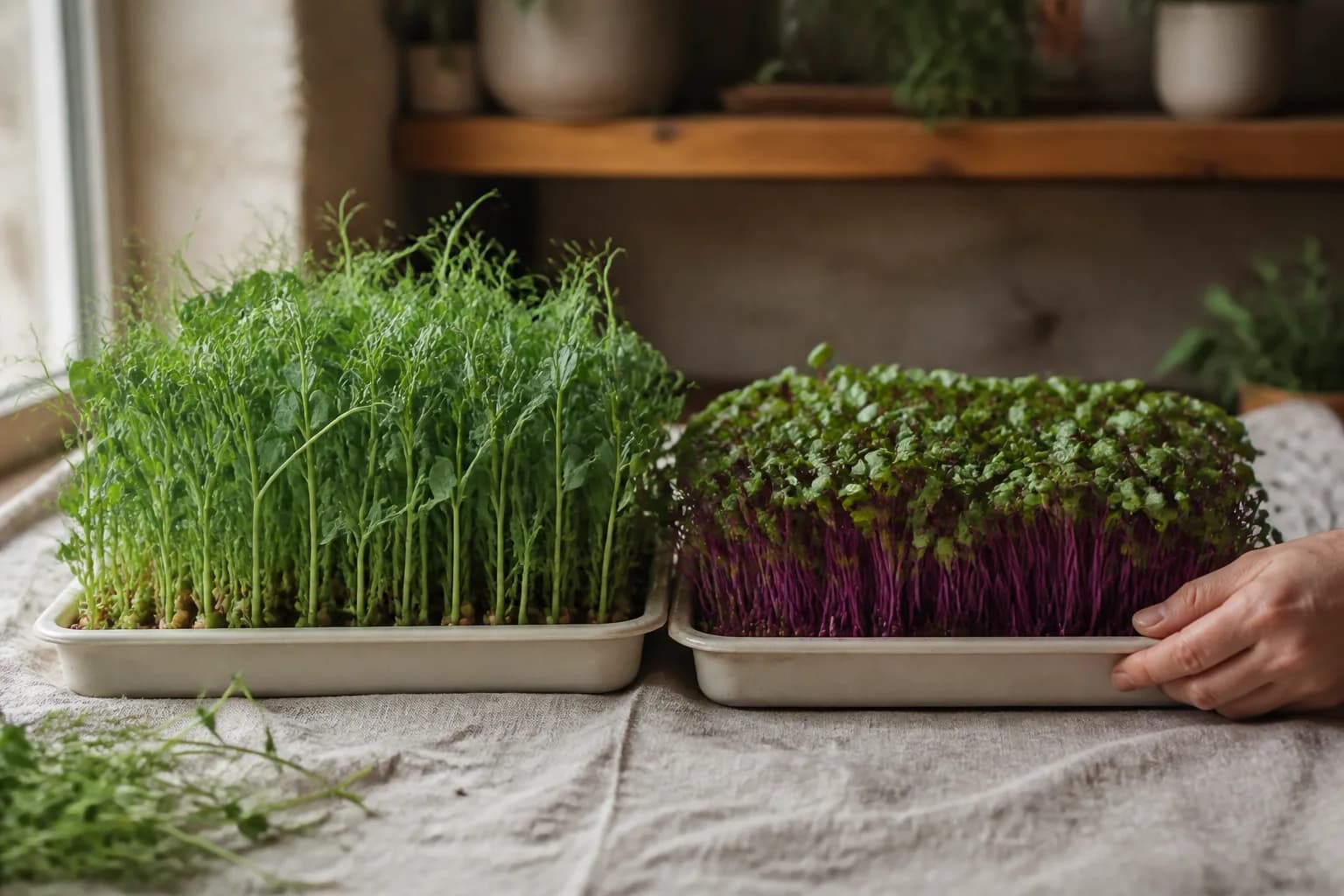
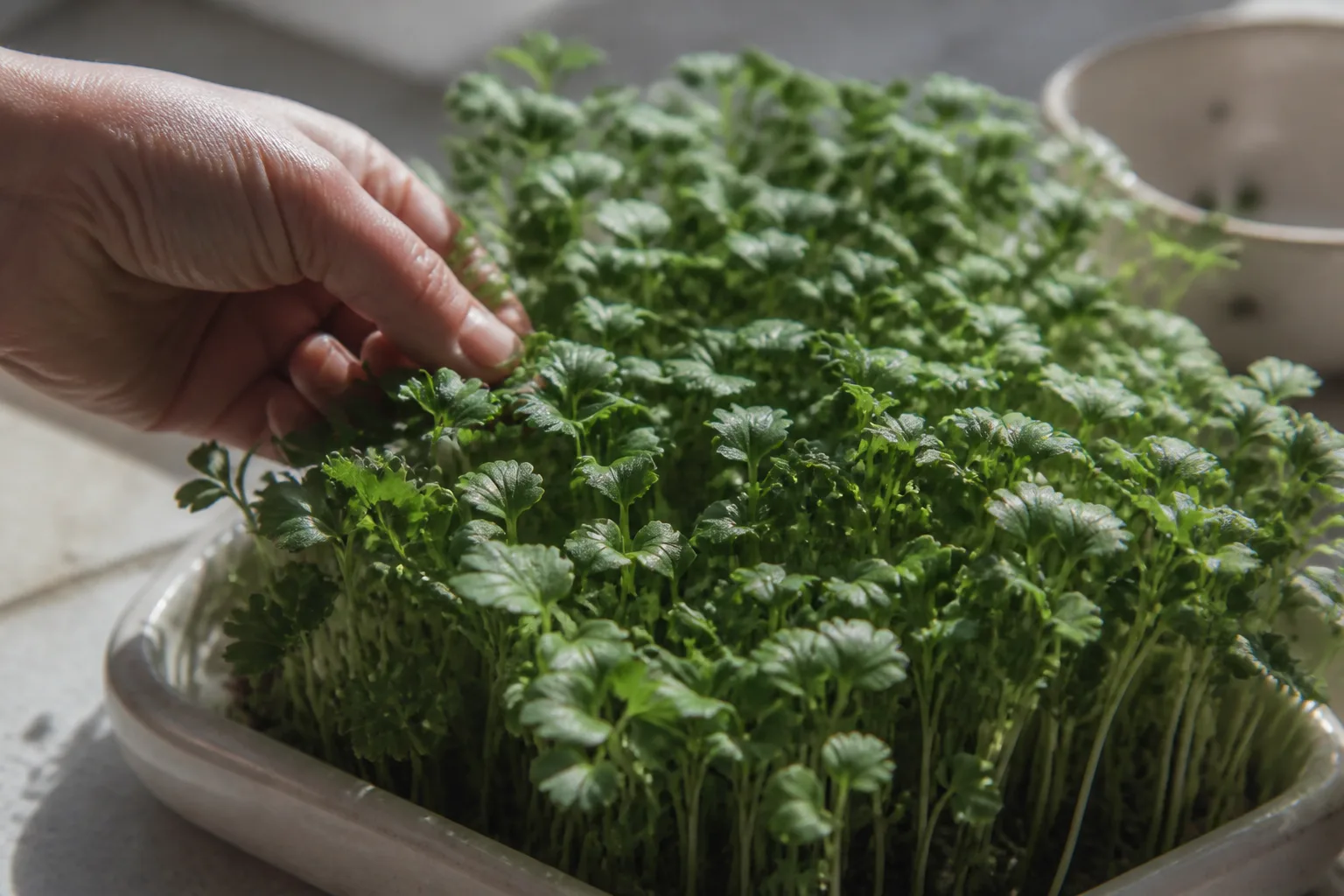
Microgreens are vegetables harvested very young, just after the first true leaves appear, usually 7 to 14 days after the seed sprouts. They are not sprouts (which are eaten root, seed, and all, often before any leaf forms); microgreens grow in light, develop chlorophyll, and you snip them above the soil line. At that early stage the seedling has loaded a dense store of vitamins, minerals, and plant compounds into a tiny amount of tissue, before that nutrition gets diluted across the water and fiber of a full-grown plant.
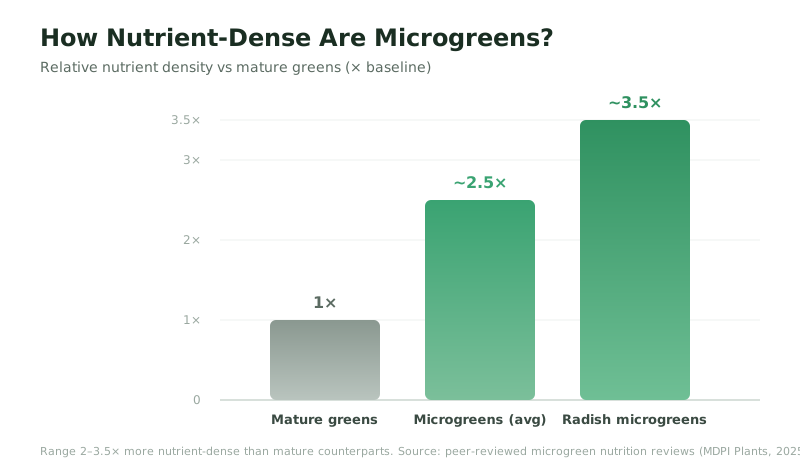
The headline finding from peer-reviewed reviews (including work published in MDPI Plants) and USDA data is that microgreens are roughly 2 to 3.5 times more nutrient-dense than their fully mature counterparts. Radish microgreens often sit at the high end of that range. In practical terms, a small handful can rival or beat a much larger serving of the grown-up vegetable, which is part of why they earn their place even when they look like a garnish.
What's actually inside them? Microgreens are consistently rich in:
- Vitamin C — supports immune function and collagen
- Vitamin K — important for blood clotting and bone metabolism
- Vitamin E — a fat-soluble antioxidant
- Antioxidants and polyphenols — plant compounds linked to lower oxidative stress
That stacked profile, packed into so little volume, is exactly why nutrition researchers keep returning to microgreens. For a fuller breakdown of the numbers, see our deeper guide to microgreens nutrition, and if you're still fuzzy on the category itself, what are microgreens covers the basics.
The Sulforaphane Story: Broccoli Microgreens
The most talked-about compound in this space is sulforaphane, and it's where the science gets genuinely interesting.
Sulforaphane is an isothiocyanate, and it isn't sitting ready-made in the plant. Broccoli stores a precursor called glucoraphanin, and when you chew or chop the leaf, that precursor meets an enzyme called myrosinase, which converts it into sulforaphane. Once absorbed, sulforaphane activates the Nrf2 pathway, a kind of master switch that turns on the body's own antioxidant and detoxification defenses rather than acting as an antioxidant directly.
Here's the striking part. Research from Johns Hopkins found that broccoli microgreens and sprouts can contain roughly 10 to 100 times more glucoraphanin (the sulforaphane precursor) than mature broccoli, the kind of head start that's hard to reach with a normal serving of cooked broccoli, though the finished sulforaphane you actually get varies widely by variety, growing conditions, and harvest timing.
| Microgreen | Standout nutrient | Why it matters |
|---|---|---|
| Broccoli | Sulforaphane precursor | 10-100x the glucoraphanin of mature broccoli |
| Radish | Overall nutrient density | Often the most nutrient-dense microgreen, near the top of the 3.5x range |
| Pea shoots | Plant protein | One of the more protein-dense microgreens |
| Red cabbage | Antioxidants | Lowered LDL and inflammatory markers in an early mouse study (USDA) |
A practical note that changes how you eat them: heat degrades myrosinase, the very enzyme that makes sulforaphane possible. Overcook the greens and you blunt the conversion. So raw, fresh, and chewed well is how you get the most out of them. If you want the step-by-step method, see how to maximize sulforaphane, and for the bigger picture on the compound itself, what is sulforaphane goes deeper. Wondering whether you could skip the greens and just take a pill? We weigh that in broccoli microgreens vs. sulforaphane supplements.
What the Research Supports (and What It Doesn't)
This is where honesty matters most. Sulforaphane is being actively studied for blood-sugar regulation, inflammation, and cellular defense. These are real, well-funded areas of research, but they remain research-stage findings, not proven cures. Microgreens are a nutritious food worth eating, not a treatment for any condition.
A good example of how to read early science is a USDA-associated animal (mouse) study in which red cabbage microgreens lowered LDL ("bad") cholesterol and liver cholesterol, alongside reduced weight gain and lower inflammatory markers, in mice fed a high-fat diet. That's a genuinely encouraging signal, but it's a mouse study. Animals are fed controlled, often high-dose diets that don't map cleanly onto a human eating a handful on toast. Results like these tell scientists where to look next; they don't tell you what will happen in your body.
So the fair summary looks like this:
- Well-established: microgreens are nutrient-dense and rich in vitamins and antioxidants.
- Promising but early: specific effects on cholesterol, blood sugar, and inflammation, mostly from animal or small studies.
If those topics interest you, we cover them carefully and without overstatement in microgreens and blood sugar, microgreens and cholesterol, and microgreens and inflammation.
Beyond Vitamins: Protein and Variety
Microgreens aren't only a micronutrient story. Pea shoots are one of the more protein-dense microgreens and a surprisingly strong plant-based protein source, which makes them a useful addition for anyone leaning into plant-forward or vegan eating. We round up the best options in high-protein microgreens.
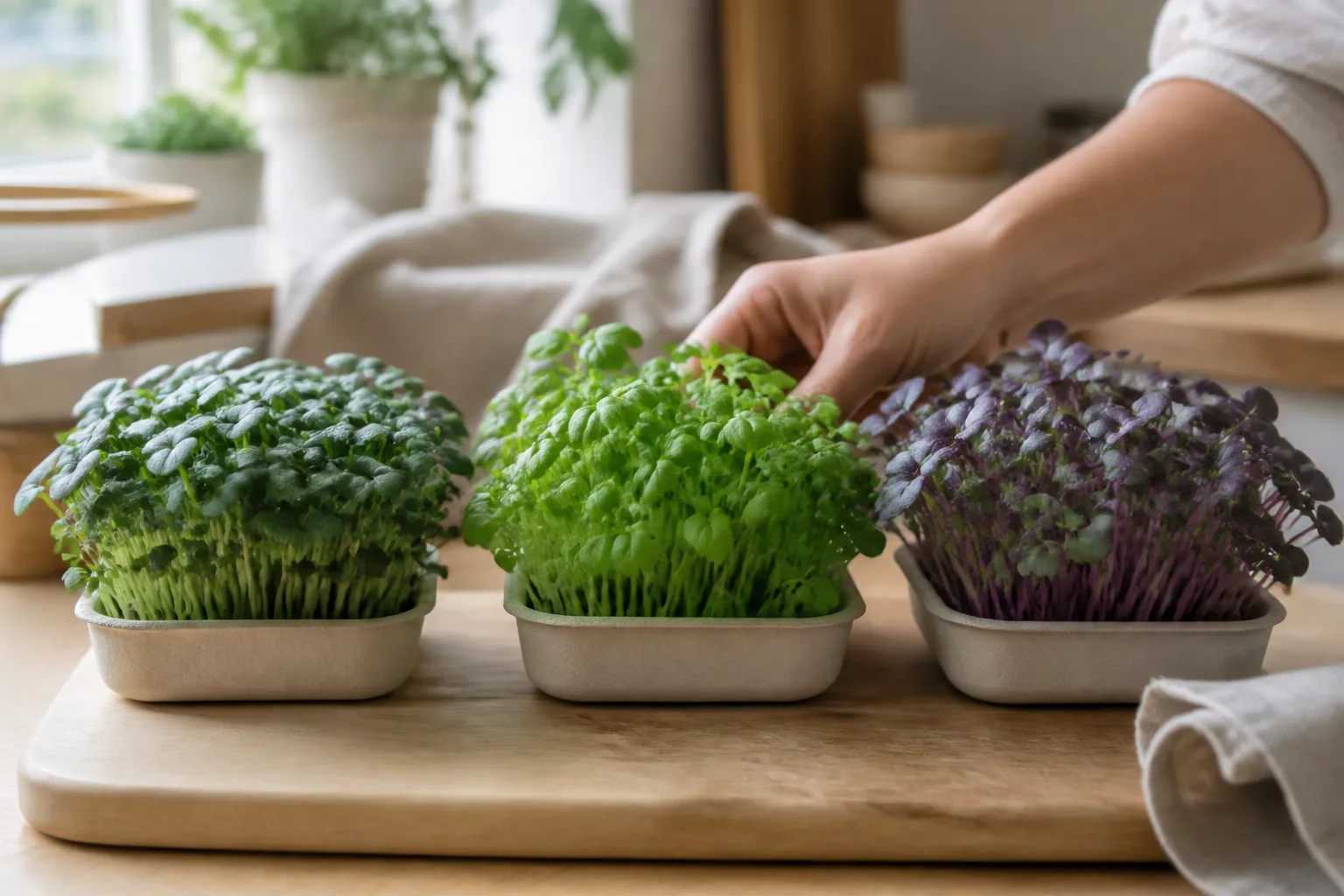
The deeper point is that different microgreens bring different strengths, which is the real argument for eating a rotating mix rather than fixating on one. Radish for sheer density, broccoli for sulforaphane, pea shoots for protein, red cabbage for color and antioxidants. Variety isn't just more interesting on the plate; it's how you cover more nutritional ground from the same small trays.
How to Actually Eat Them
The best microgreens are the ones you'll actually use, so the goal is to make them effortless. A few habits that stick:
- Pile them on toast, eggs, or avocado in the morning.
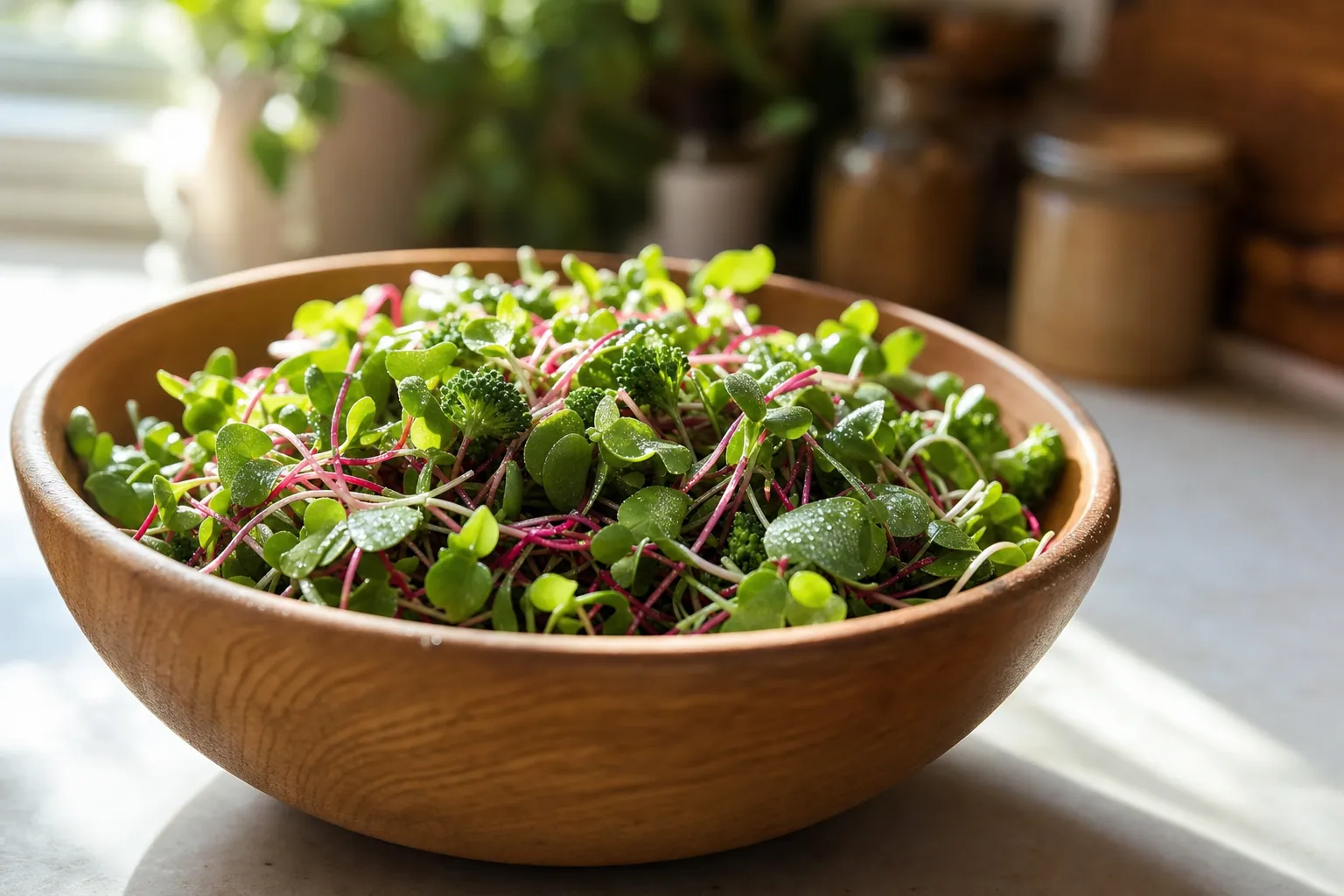
- Toss a handful into salads or grain bowls right before serving.
- Add them after cooking, never during, to protect heat-sensitive compounds like sulforaphane.
- Blend milder ones into smoothies for an easy, almost-invisible boost.
For more ideas, browse our microgreens salad ideas and our microgreens smoothie recipes.
One honest caveat about keeping them on your plate: store-bought microgreens tend to be expensive (often $4-6 per 2 oz clamshell, which works out to roughly $30-50 per pound) and frequently not very fresh. They spend days moving from farm to truck to warehouse to store, and they wilt fast once they do, so a slimy clamshell three days after purchase is a common and frustrating outcome. Growing your own avoids both problems, though traditional home growing has its own headaches with mold, mess, and the daily watering a roughly 10-day cycle demands. If you're weighing the trade-off, grow vs. buy microgreens lays it out plainly.
So, Are Microgreens Good for You?
Yes. The evidence that microgreens are nutrient-dense and rich in protective compounds is solid, and the research on specific health benefits is genuinely promising even while it's still developing. They are a small, simple, science-backed upgrade to almost any meal, with the biggest payoff coming when they're eaten raw, fresh, and often.
The real challenge isn't whether to eat them. It's keeping a steady, genuinely fresh supply on hand.
If you'd like fresh microgreens without the supply-chain markup or the daily upkeep, Luya is a countertop appliance that grows pre-seeded trays in a sealed, climate-controlled chamber, so you harvest exactly what you need, seconds before eating, with no mold and no mess. See how it works, or keep reading with are store-bought microgreens fresh?.
Selected sources
- Johns Hopkins Medicine — research on broccoli sprouts and sulforaphane (hopkinsmedicine.org)
- USDA — microgreen nutrient and red cabbage research (usda.gov)
- MDPI Plants — peer-reviewed reviews on microgreen nutrient density (mdpi.com)
- National Institutes of Health / PMC — sulforaphane and Nrf2 pathway literature (ncbi.nlm.nih.gov)
- Cleveland Clinic — general nutrition guidance on microgreens (clevelandclinic.org)
- Healthline — consumer-facing summaries of microgreen nutrition research (healthline.com)
References
- Xiao Z, Lester GE, Luo Y, Wang Q. Assessment of Vitamin and Carotenoid Concentrations of Emerging Food Products: Edible Microgreens. J Agric Food Chem. 2012;60(31):7644–7651. https://doi.org/10.1021/jf300459b
- Fahey JW, Zhang Y, Talalay P. Broccoli sprouts: an exceptionally rich source of inducers of enzymes that protect against chemical carcinogens. PNAS. 1997;94(19):10367–10372. https://doi.org/10.1073/pnas.94.19.10367
- Huang H, Wang TTY, et al. Red Cabbage Microgreens Lower Circulating LDL, Liver Cholesterol, and Inflammatory Cytokines in Mice Fed a High-Fat Diet. J Agric Food Chem. 2016;64(48):9161–9171. https://doi.org/10.1021/acs.jafc.6b03805
- Kyriacou MC, Rouphael Y, Di Gioia F, et al. Micro-scale vegetable production and the rise of microgreens. Trends Food Sci Technol. 2016;57:103–115. https://doi.org/10.1016/j.tifs.2016.09.005