There's a small kitchen tragedy that plays out more often than it should: someone grows a beautiful tray of microgreens, tosses a generous handful into a hot pan or a bubbling pot, and watches them collapse into limp, dull threads within seconds. The flavor flattens. The color fades. The crisp little leaves that looked so alive a moment ago are suddenly indistinguishable from any overcooked herb.
It's not a disaster, exactly. But it's a waste of the very things that make microgreens special. These are young, tender seedlings, harvested days after germination, and they were never built to stand up to a stove. The good news is that once you understand what heat actually does to them, working microgreens into cooked dishes becomes easy and reliable. The trick is mostly about timing.
Why microgreens are so heat-sensitive in the first place
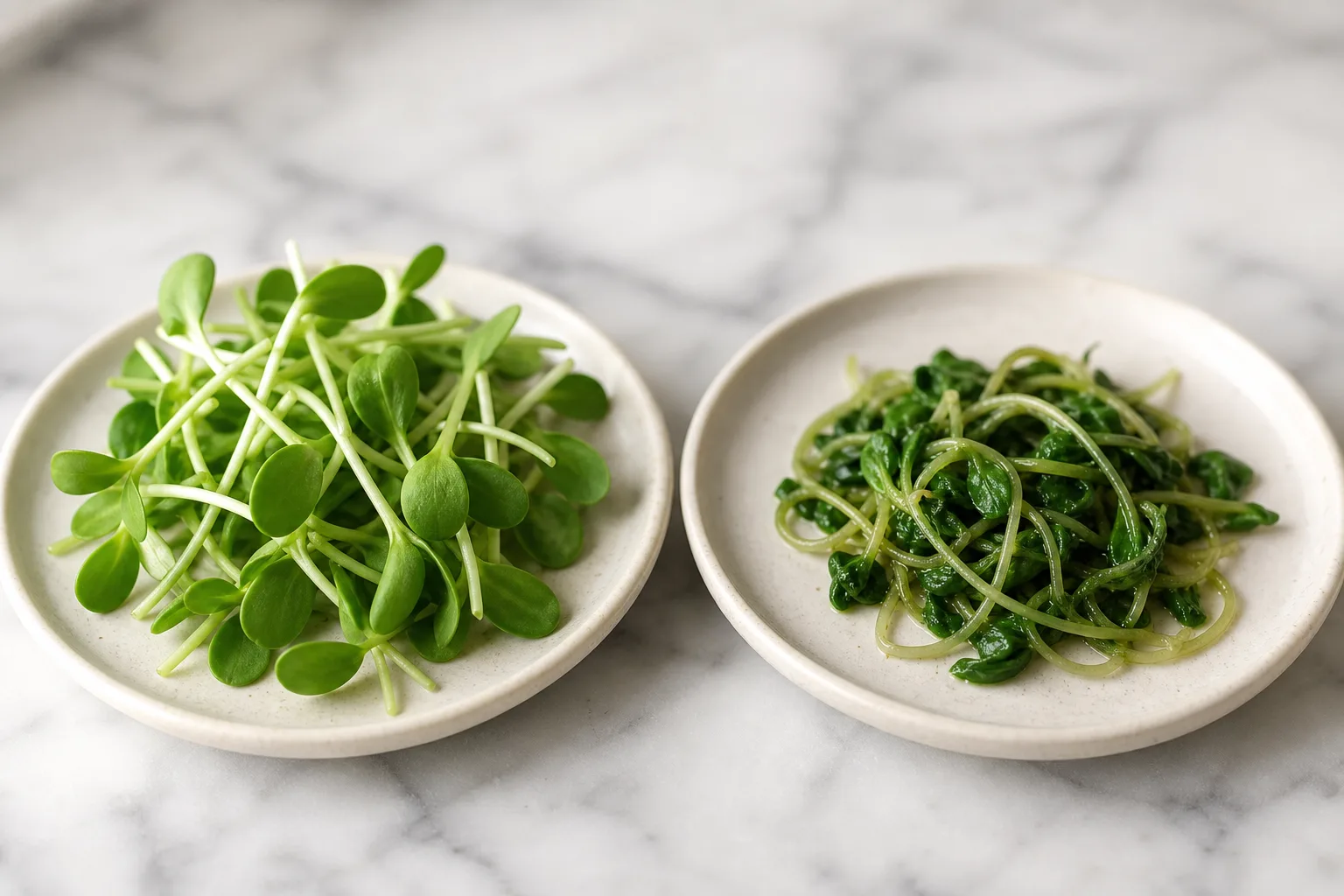
A microgreen is essentially a baby plant with thin cell walls and a high water content. There's very little fibrous structure holding it together, which is exactly why the texture is so delicate and pleasant raw. Apply heat and those cells rupture fast. Water escapes, the leaf goes limp, and what gave the green its lift and crunch is gone.
Mature greens like kale or chard have tougher cell walls and more fiber, so they can simmer in a soup or braise in a pan and still hold their shape. Microgreens can't. If you're curious about how these tiny seedlings differ from their grown-up versions, we cover that in depth in what are microgreens. For cooking purposes, the short version is this: treat a microgreen more like a fresh herb than a vegetable you cook through.
Heat doesn't just wilt them, it can degrade the good stuff
The texture change is the obvious problem. The quieter one is nutritional. A lot of what makes microgreens worth eating comes down to heat-sensitive compounds: vitamin C, certain B vitamins, and the bioactive plant compounds that give crops like broccoli and radish their reputation.
Take sulforaphane, the much-studied compound in broccoli microgreens. It isn't sitting ready-made in the leaf. It forms when you damage the plant tissue (by chewing or chopping) and an enzyme called myrosinase converts a precursor into the active compound. Myrosinase is a protein, and proteins are fragile in the face of heat. Cook broccoli microgreens hard and you can deactivate the very enzyme that makes the compound you're after. We go deeper on this in what is sulforaphane and maximize sulforaphane, but the headline for cooks is simple: high heat works against you here.
Color compounds take a hit too. The deep reds and purples in radish, beet, and red cabbage microgreens come largely from anthocyanins, the same pigment family discussed in microgreens anthocyanins. These pigments are sensitive to prolonged heat and shifts in acidity, which is why a vivid purple garnish can turn a muddy gray when it sits in a hot, acidic sauce.
Here's a rough guide to how different qualities hold up:
| What you value | Heat sensitivity | What happens with prolonged cooking |
|---|---|---|
| Texture / crunch | Very high | Wilts within seconds, becomes limp |
| Vitamin C | High | Degrades quickly, leaches into liquid |
| Myrosinase enzyme (sulforaphane) | High | Deactivates, less active compound forms |
| Anthocyanin color (reds/purples) | Moderate to high | Fades, can shift toward gray-brown |
| Carotenoids (yellows/oranges) | Moderate | More stable, but still diminished by long heat |
| Overall flavor intensity | High | Volatile aromas cook off, flavor flattens |
The one rule that fixes almost everything: add them at the end
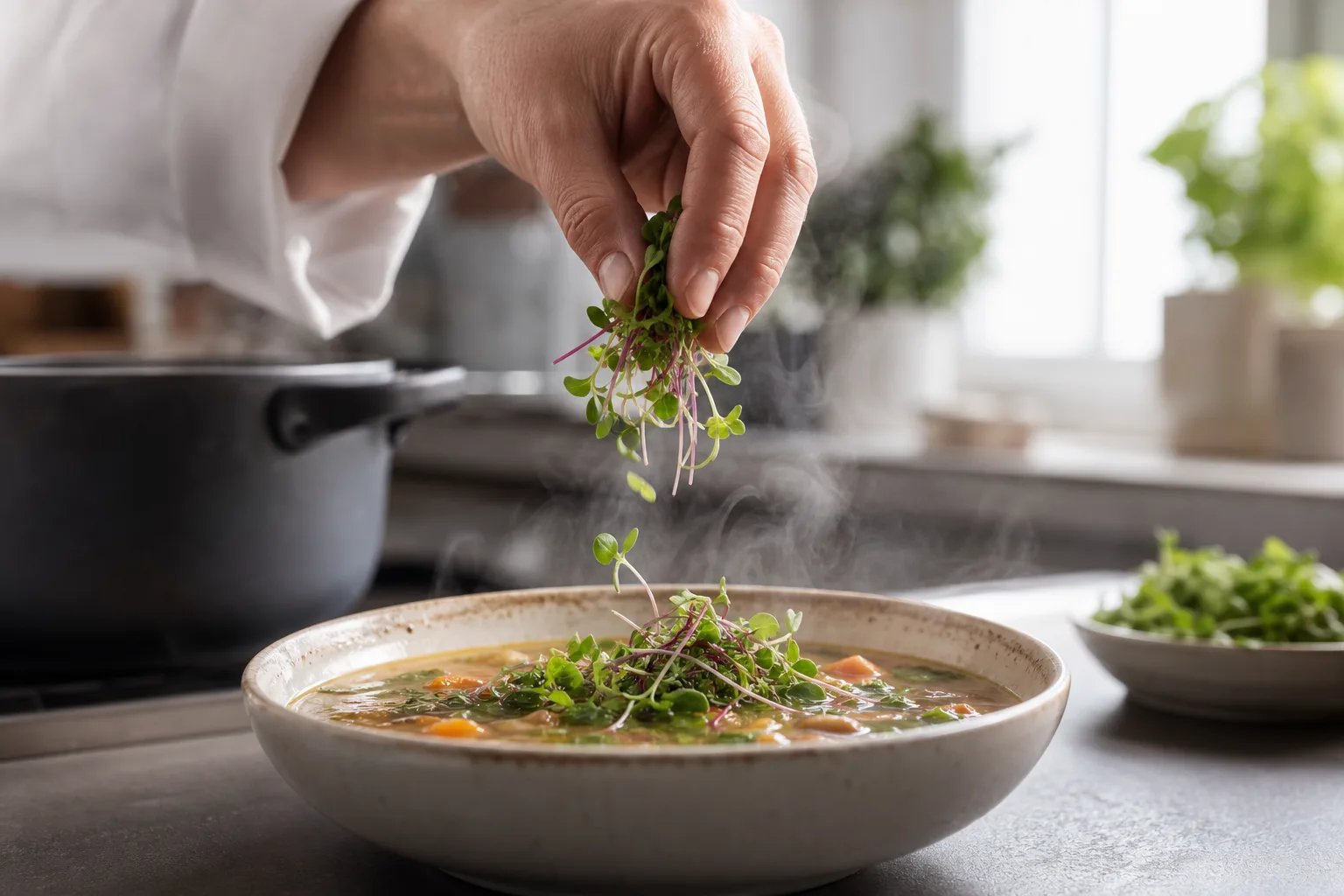
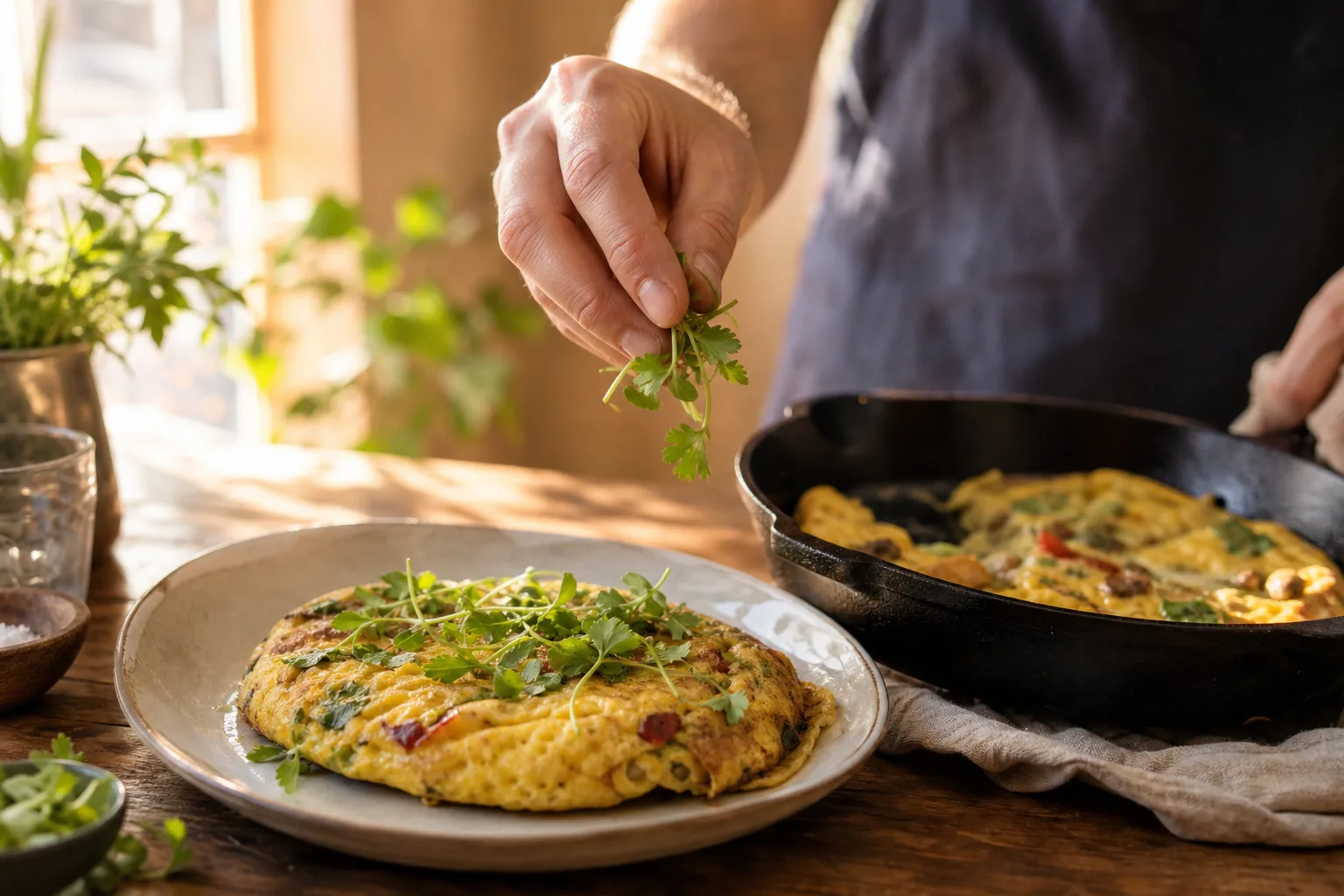
If you remember nothing else, remember this. Cook your dish completely, take it off the heat, and then add the microgreens. The residual warmth of a finished soup, a plated omelet, or a steaming bowl of grains is enough to release aroma and soften the leaves slightly without destroying them.
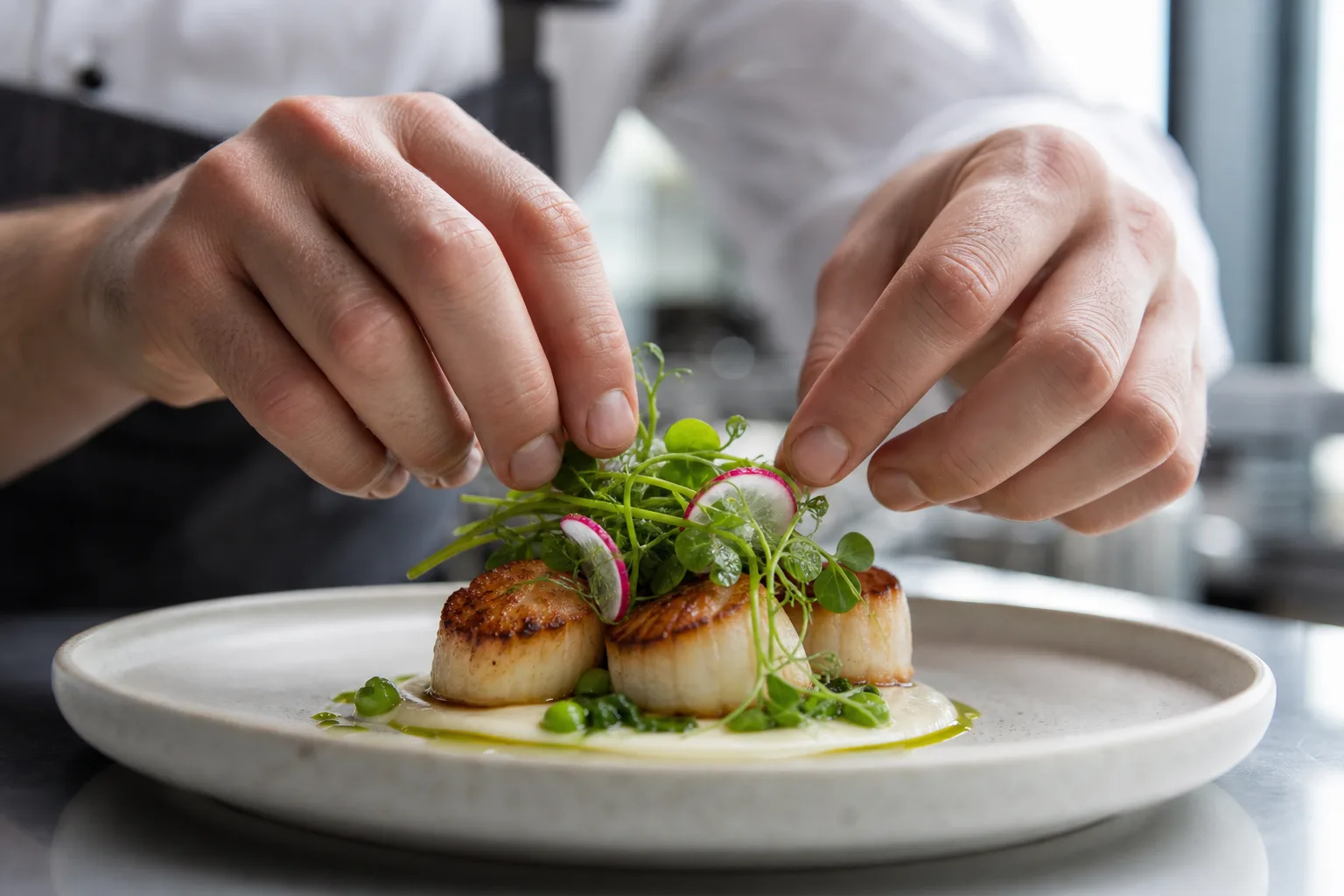
This is how restaurant kitchens have used microgreens for years: as a finishing touch scattered over the top, not an ingredient stirred into the pot. The plate is hot, the greens warm gently, and they keep their color, their lift, and most of their nutrition. If you want to lean into the garnish approach properly, microgreens garnish like a chef walks through the technique.
A few practical timing notes:
- Soups and broths: ladle into bowls first, then float the microgreens on top. Never simmer them in the pot.
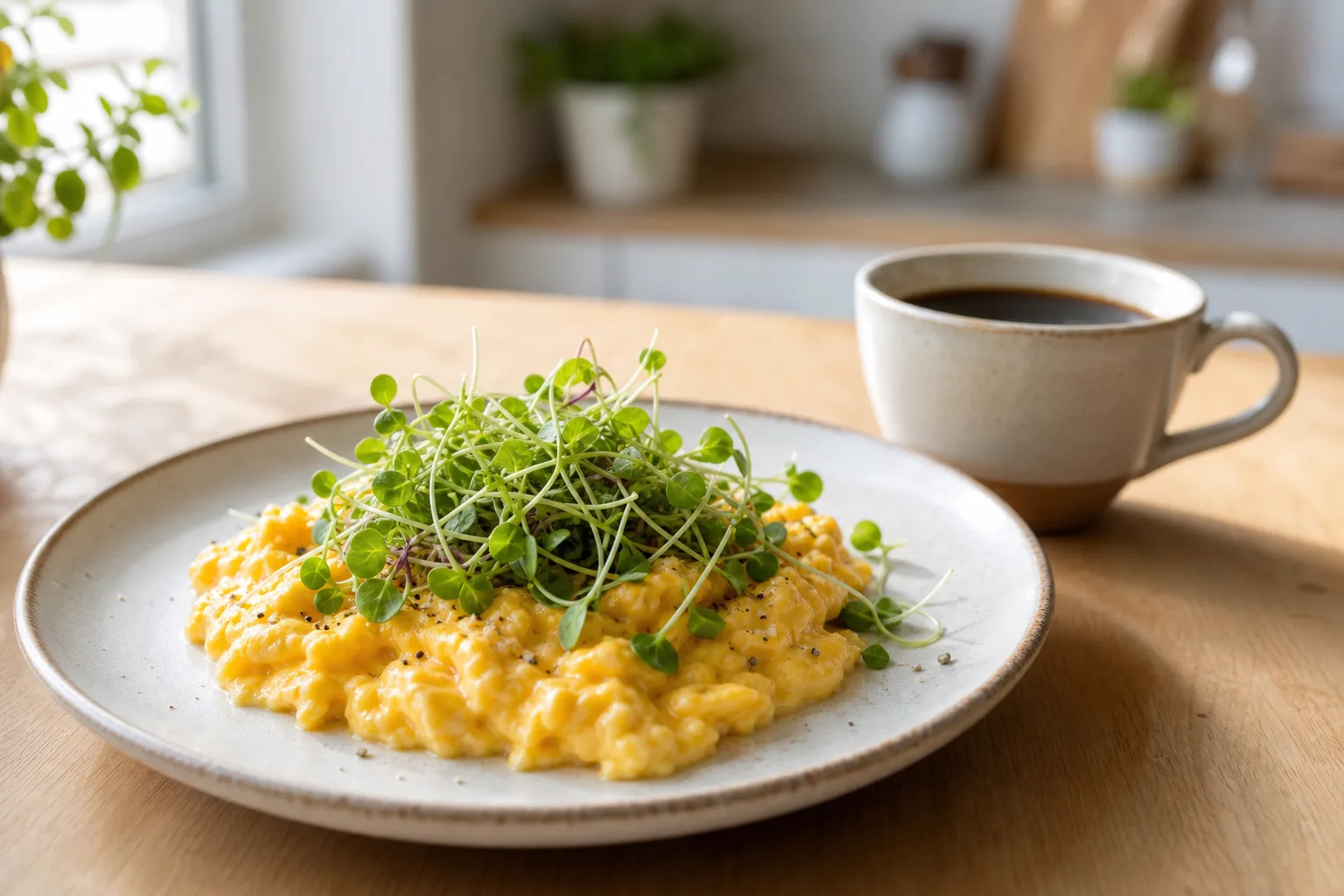
- Eggs: fold or scatter onto the omelet or scramble after it leaves the pan. See microgreens eggs breakfast for ideas.
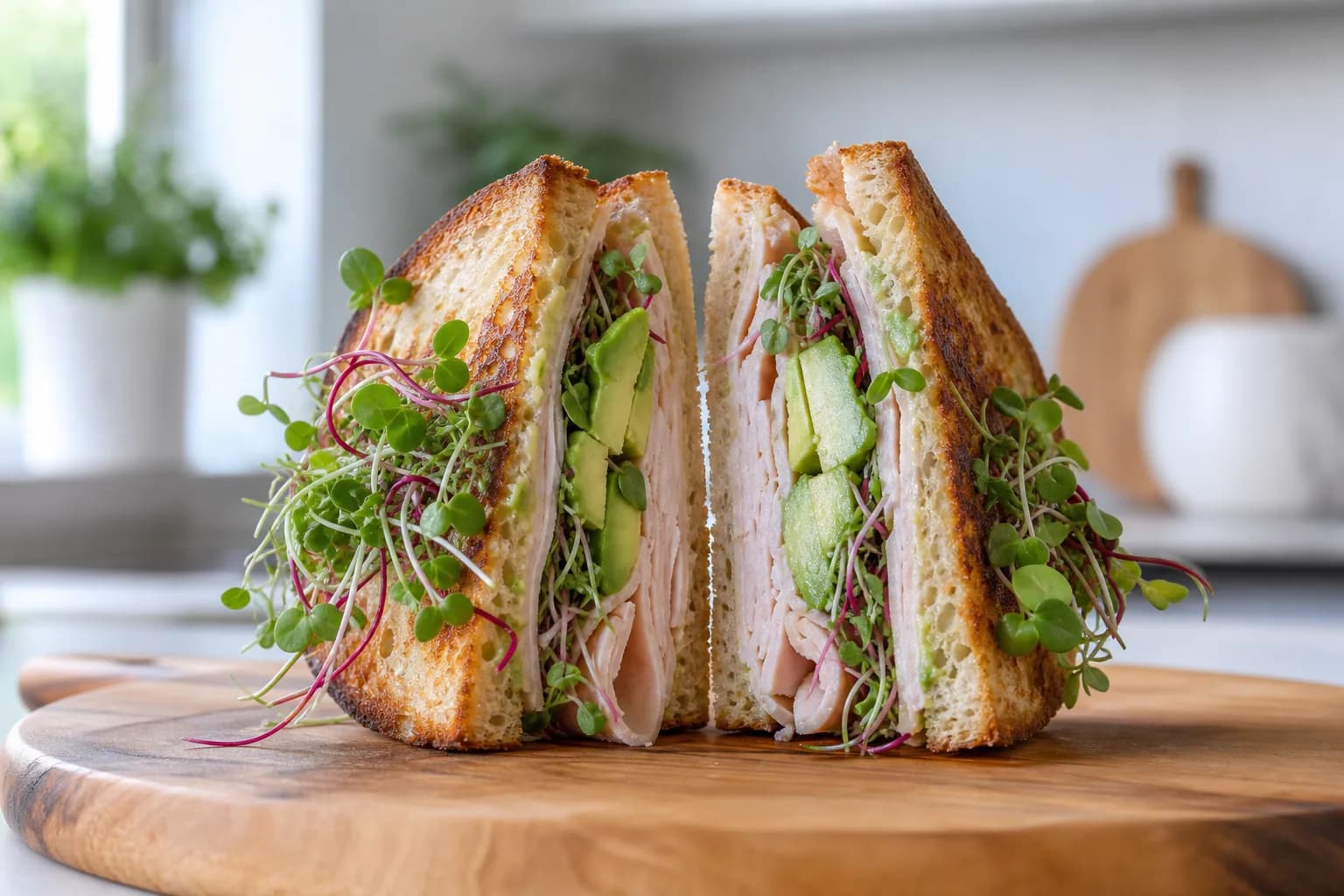
- Pizza, flatbread, toast: add after baking, never before.
- Stir-fries and grain bowls: the residual heat off the wok or rice is plenty.
So can you ever cook them? Sometimes, lightly
Adding at the end is the default, but it isn't an absolute ban. Some preparations call for gentle, brief warmth, and a few crops handle it better than others. The general pattern: heartier, slightly more fibrous microgreens and shoots tolerate a quick warm-through better than the most delicate, watery ones.
| Microgreen / shoot | Light cooking tolerance | Best cooked use |
|---|---|---|
| Pea shoots | Good | Quick toss at the very end of a stir-fry |
| Sunflower shoots | Good | Brief warm-through, sturdy stems hold up |
| Kale | Moderate | Wilt off-heat into warm grains |
| Broccoli | Low (eat raw for sulforaphane) | Finish on top, don't cook |
| Radish | Low | Garnish only, color fades fast |
| Cilantro, basil | Very low | Always finish, treat as herbs |
| Beet, amaranth | Very low | Garnish only, prized for color |
Pea shoots are the classic example. Their stems have a bit more substance, and a quick 20-to-30-second toss in a hot wok at the very end leaves them bright and crisp-tender rather than mushy. We cover that crop in pea shoots. Sunflower shoots behave similarly. For the most delicate, water-heavy crops, though, the answer stays the same: keep them raw or barely warmed.
Get the most from them: freshness, then finishing
Heat is one variable, but it isn't the only thing standing between you and a great microgreen dish. Freshness matters just as much. A microgreen that's already a few days past its prime has lost moisture and aroma before it ever meets the plate, so even perfect timing can't fully rescue it. This is one of the quiet advantages of growing your own: a countertop grower like Luya lets you snip leaves minutes before serving, which means they hit the plate at peak crunch and peak flavor. If you've only ever used store bought microgreens, the difference in how they behave when warmed is genuinely noticeable.
A couple more finishing habits that help:
- Dry them well after rinsing. Surface water turns to steam on a hot plate and accelerates wilting.
- Add a little acid or fat off-heat. A squeeze of lemon or a drizzle of good olive oil over the finished dish helps the leaves taste vivid and, in the case of carotenoids, can improve absorption of fat-soluble nutrients.
- Cut, don't crush. If you're chopping, use a sharp knife so you're slicing cells cleanly rather than bruising them.
For more ways to actually get these greens into your week, how to eat microgreens has a full rundown of everyday uses beyond the salad bowl.
The bottom line
Cooking with microgreens isn't really about cooking them at all. It's about respecting that they're tender, young, nutrient-dense seedlings that lose their best qualities under sustained heat. Wilting collapses their texture, and prolonged warmth degrades vitamin C, dulls those bright anthocyanin colors, and can switch off the enzyme that makes broccoli's sulforaphane.
So build the dish, finish the cooking, and add the greens last. Reach for sturdier crops like pea shoots and sunflower if you genuinely want a quick warm-through, and keep the delicate ones, the cilantro, basil, beet, and amaranth, raw and bright on top. Treat them like the finishing flourish they are, and your microgreens will reward you with color, crunch, and nearly all of the nutrition you grew them for.