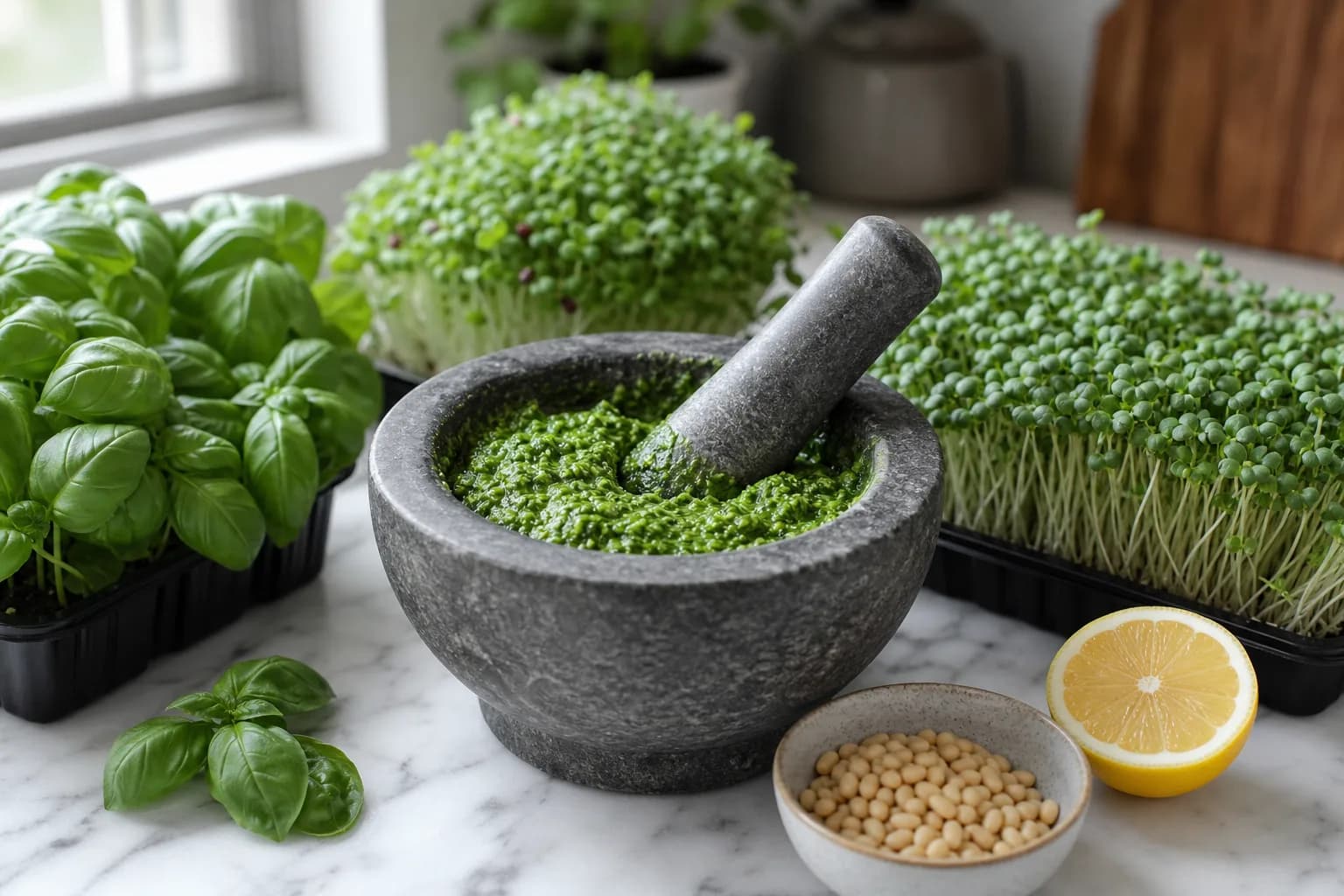
A jar of pesto is one of the most useful things you can keep in the fridge. Spoon it onto pasta, swirl it into soup, spread it on toast, or thin it out and call it a dressing. The classic version leans on a big bundle of basil leaves, but there is a quieter, more interesting way to build that same green punch: microgreens. They bring concentrated flavor, vivid color, and a nutritional density that mature herbs simply cannot match, often several times more per gram. Once you start blending them into sauces, it is hard to go back.
This is a practical guide to microgreen pesto and quick green sauces. We will cover which crops actually work, the ratios that keep your sauce balanced, how to handle heat and storage, and one original recipe to get you started today.
Why microgreens belong in a blender
Microgreens are harvested just after germination, when a seedling has put everything it has into its first leaves. That is also when flavor compounds peak. Many varieties carry four to six times the nutrient concentration of the same plant grown to maturity, and some studies have measured even larger gaps. When you puree them into a sauce, you are capturing that intensity in a form you can drizzle over almost anything.
There is a textural bonus too. Mature basil and parsley have fibrous stems that can leave a sauce stringy. Microgreens are all tender leaf and delicate stem, so they break down smoothly and emulsify cleanly with oil. If you want the deeper background on the plants themselves, our primer on what are microgreens is a good starting point, and microgreens nutrition digs into the numbers.
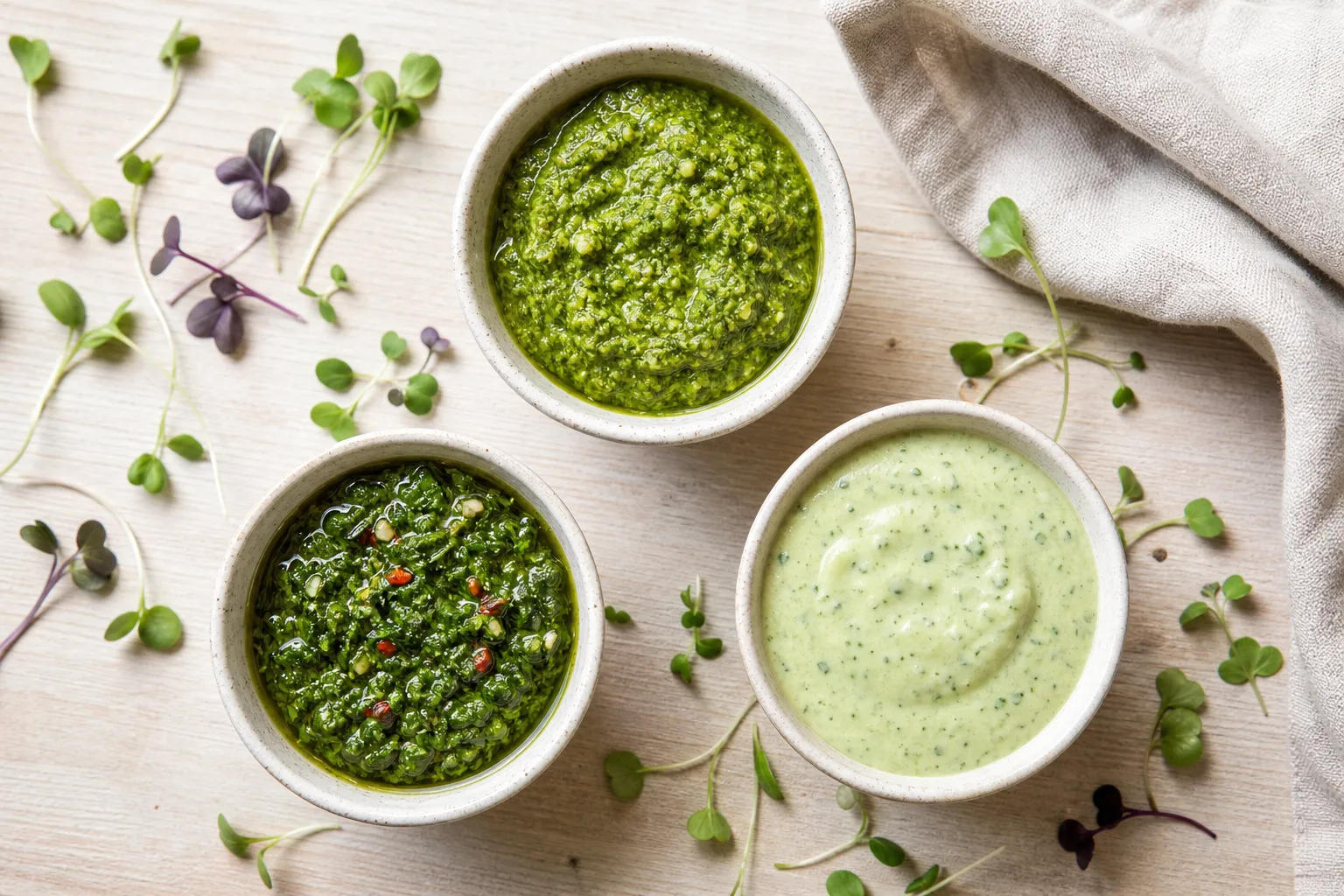
Choosing the right crop for the sauce
Not every microgreen blends into something you want to eat by the spoonful. Flavor intensity is the thing to watch. A mild crop disappears; an aggressive one can take over. Use this as a rough map when you are deciding what to grow or buy for sauce-making.
| Microgreen | Flavor | Intensity | Best sauce use |
|---|---|---|---|
| Basil (Genovese) | Sweet, spicy | High | Classic pesto base |
| Arugula | Nutty, peppery | Strong | Bold pesto, sandwich spread |
| Cilantro | Citrusy, lemony | Strong | Chimichurri, salsa verde |
| Broccoli | Slightly bitter | Mild | Nutrient-boost blend, dressing |
| Sunflower | Sweet, nutty | Mild | Creamy dressing, bulk filler |
| Radish | Sharp, pungent | Strong | Spicy accent, use sparingly |
| Pea shoots | Fresh, green | Mild | Smooth dressing, soup swirl |
A reliable trick: pick one intense crop for character and one mild crop for body. Basil plus sunflower, or arugula plus pea shoots, gives you a sauce that tastes like something without being punishing. Broccoli microgreens are worth a special mention because they are rich in sulforaphane, the compound covered in what is sulforaphane, so folding a handful into any green sauce quietly raises its health value without changing the flavor much.
The ratios that make it work
Pesto and its cousins are forgiving, but a few proportions keep things from going wrong. Think in parts rather than exact grams, then adjust by taste.
| Component | Pesto | Chimichurri | Creamy dressing |
|---|---|---|---|
| Microgreens | 2 cups packed | 2 cups packed | 1 cup packed |
| Oil | 1/2 cup | 1/2 cup | 1/4 cup |
| Acid (lemon or vinegar) | 1 tbsp | 3 tbsp | 2 tbsp |
| Nuts or seeds | 1/3 cup | none | 2 tbsp |
| Hard cheese | 1/3 cup | none | optional |
| Garlic | 1 clove | 2 cloves | 1 small clove |
| Base | — | — | 1/3 cup yogurt or avocado |
Pesto wants more oil and fat for a spoonable, rich texture. Chimichurri is brighter and looser, so it carries more acid and skips the nuts and cheese entirely. A creamy dressing leans on yogurt or avocado to round everything out, which also tames sharper microgreens like radish or mustard. Whichever you make, add the oil last and in a stream while the blade runs. That slow pour is what creates a stable emulsification instead of an oily puddle.
Season at the very end. Microgreens vary in saltiness and bite from batch to batch, so taste before you commit to the final pinch of salt or squeeze of lemon.
Handling heat: a quick warning
Green sauces are happiest raw or barely warmed. Microgreens are delicate, and high heat dulls both their color and their nutrition. If you are tossing pesto with hot pasta, kill the heat first, let the pasta sit for a minute, then fold the sauce in off the burner. The residual warmth is plenty to release the aroma without cooking the greens to a drab khaki. For more on this, our guide to cooking with microgreens and heat goes deeper, and if you are mostly using these as finishing touches, how to eat microgreens has more ideas.
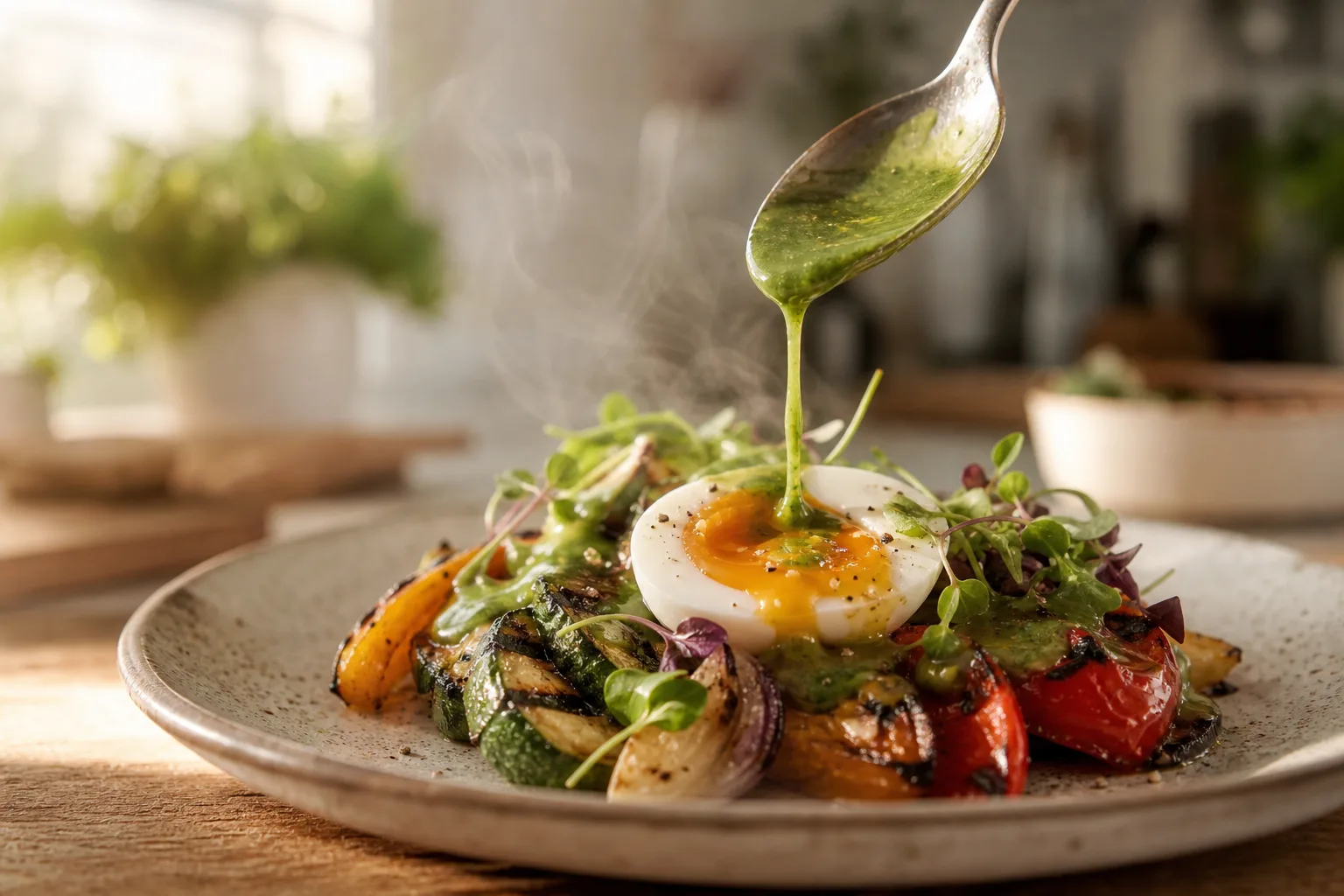
An original recipe: Bright Broccoli-Basil Microgreen Pesto
This is the blend I keep coming back to. Basil microgreens give it a sweet, slightly spicy lift, broccoli microgreens add body and a nutritional boost you cannot taste, and a touch of lemon keeps the whole thing from going flat in the fridge. It comes together in about five minutes.
Makes roughly 3/4 cup
Ingredients:
- 1 1/2 cups packed basil microgreens, rinsed and dried
- 1/2 cup packed broccoli microgreens, rinsed and dried
- 1/3 cup toasted pine nuts (or sunflower seeds)
- 1/3 cup grated Parmesan, optional
- 1 small garlic clove
- 1 tbsp fresh lemon juice, plus 1/2 tsp zest
- 1/2 cup extra virgin olive oil
- Salt and black pepper to taste
Method:
- Add the microgreens, nuts, cheese, garlic, lemon juice, and zest to a blender or food processor. Pulse a few times until coarsely chopped.
- With the motor running, pour the olive oil in a slow, steady stream. Keep going until the sauce is smooth and glossy.
- Taste, then season with salt and pepper. Add a splash more lemon if it needs brightening.
- Use right away or transfer to a clean jar. Press a thin film of oil over the top to keep the surface from browning.
Spoon it over warm (not hot) pasta, spread it on a microgreens on toast breakfast, or thin it with extra lemon and oil to dress a grain bowl.
Storage, freshness, and a note on growing your own
Green sauces are best within a few days. Stored in a sealed jar with that protective oil cap, microgreen pesto holds in the fridge for about a week, the same window you would expect from a basic vinaigrette. The color will deepen over time; a quick stir and a fresh squeeze of lemon revives it. For longer storage, freeze the pesto in an ice cube tray, then pop the cubes into a bag. A single cube melts straight into a pan of soup or a pot of warm grains.
The catch with sauce-making is volume. You can burn through two packed cups of microgreens in a single batch, and store-bought trays are pricey and often past their prime by the time you get them home, a frustration we cover in store-bought microgreens that are expensive and not fresh. Growing your own changes the math. With a countertop grower like Luya, you can harvest basil, broccoli, and pea shoots minutes before they go in the blender, which is exactly when their flavor and nutrition are highest. If you would rather start by hand, how to grow microgreens at home walks through the basics.
A few more ideas to keep going
Once you have the ratios down, the format is endless. Swap cilantro and lime juice into the chimichurri template for a salsa verde that loves grilled fish. Blend pea shoots with yogurt, mint, and a little garlic for a cooling sauce over roasted vegetables. Stir a spoonful of radish microgreen pesto into mayonnaise for a sandwich spread with a horseradish-like kick. Each one starts from the same simple idea: tender greens, good oil, a hit of acid, and a careful hand with the blender.
Microgreen sauces are one of the easiest ways to use a lot of greens at once and taste the difference immediately. Keep a jar in the fridge, a tray growing on the counter, and you will find an excuse to use both almost every day.