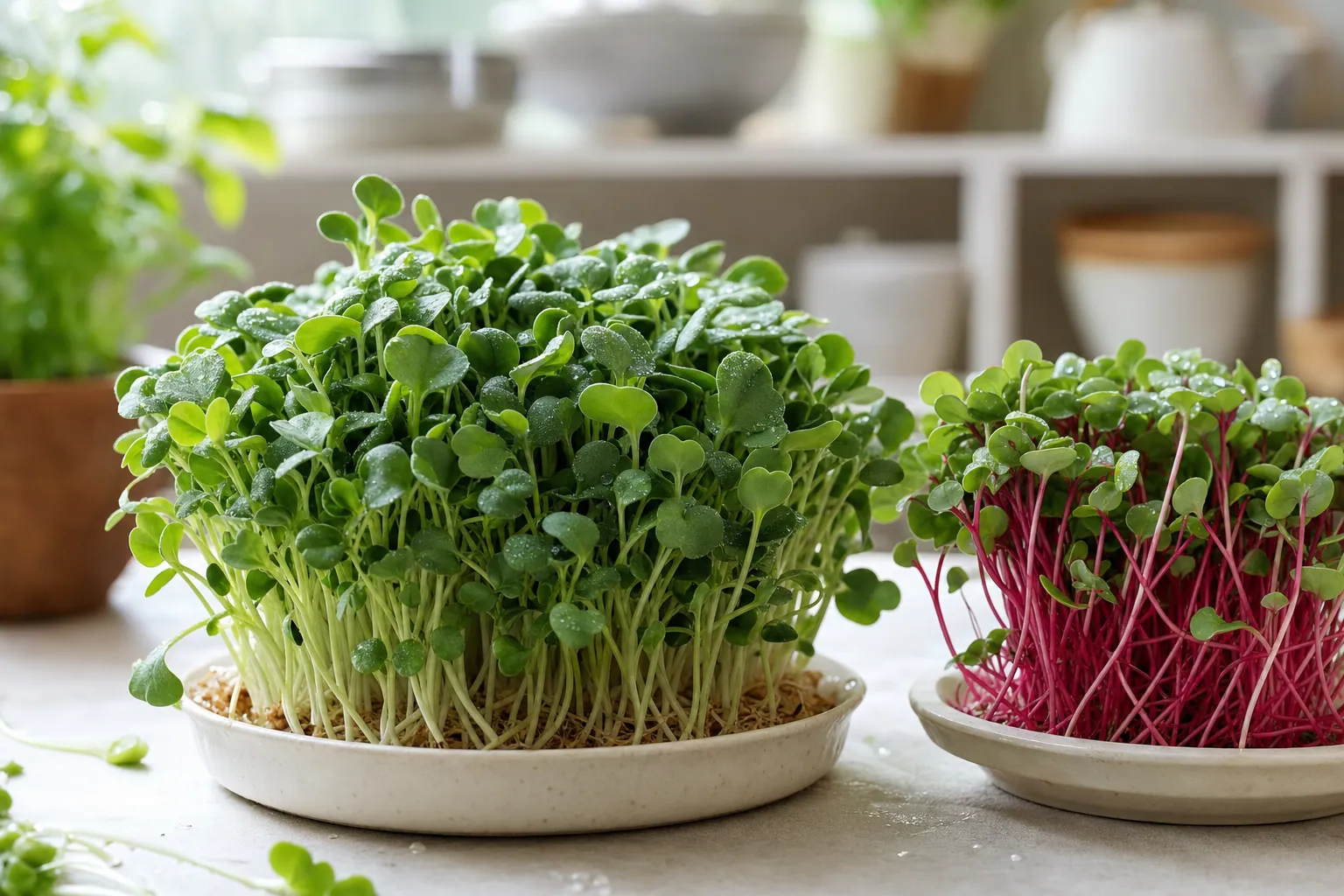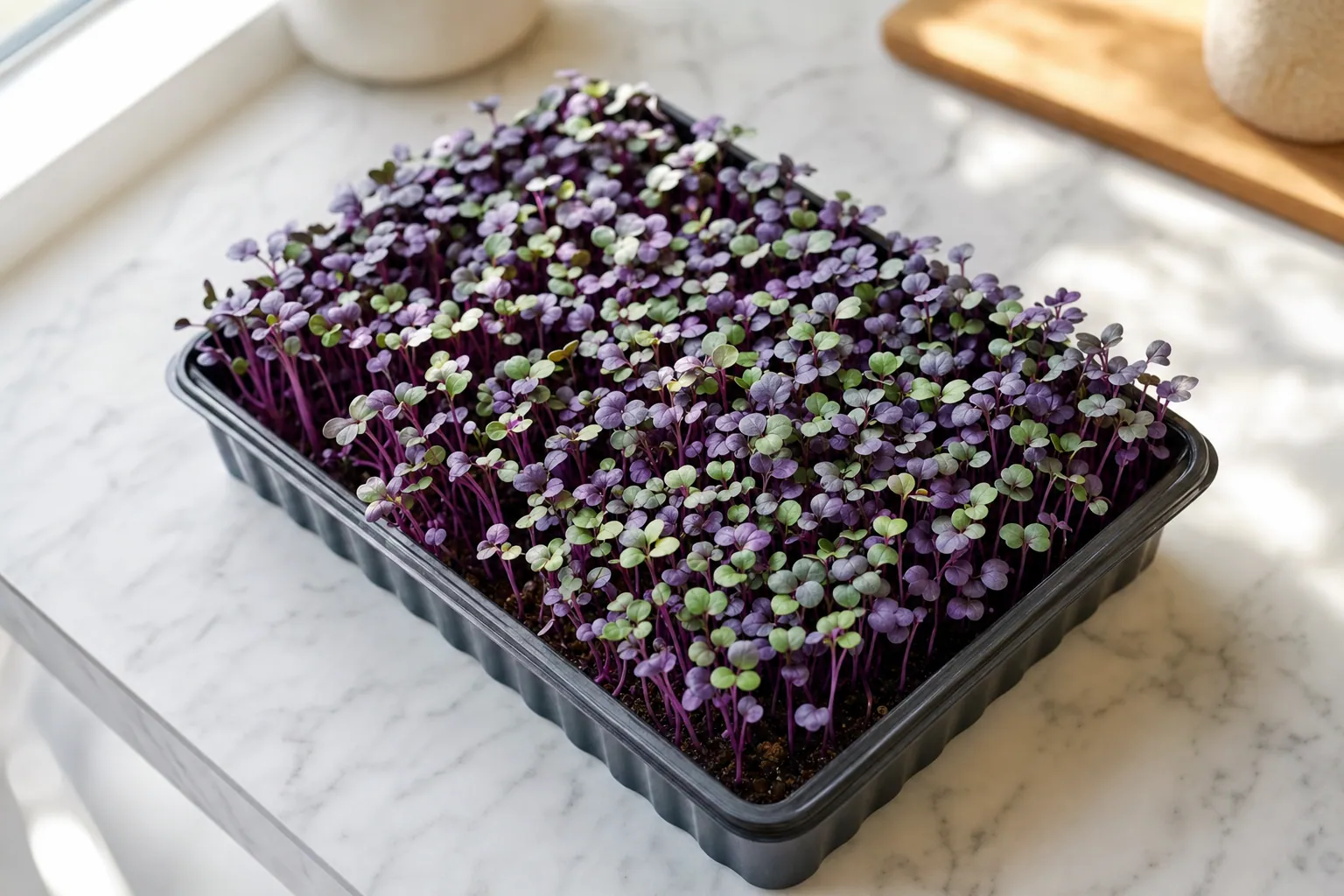
Anthocyanins in Microgreens: Why Some Are Red or Purple
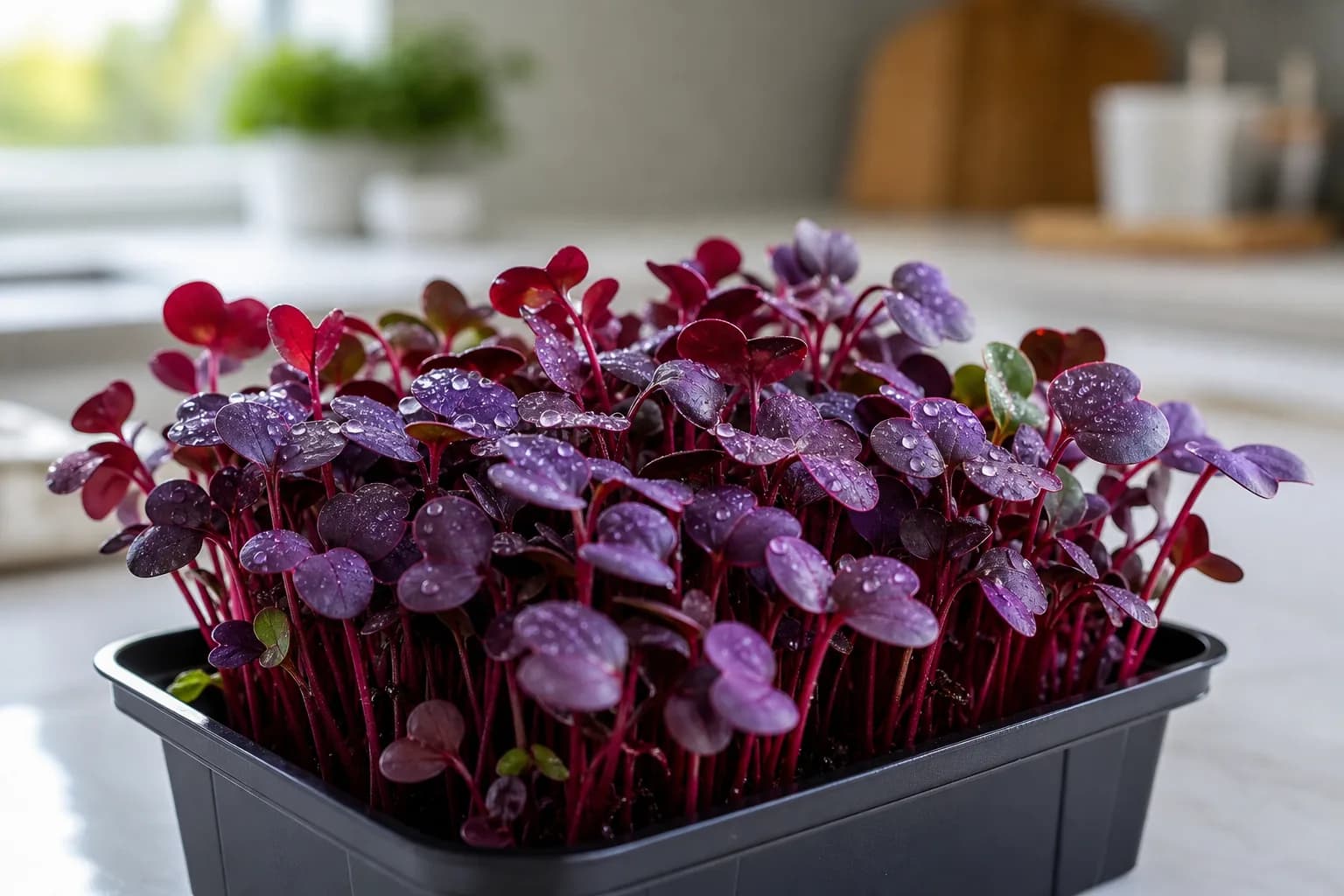
What anthocyanins are, why they matter for health, which microgreens are richest in them, and how light and temperature drive deeper red and purple color.

What anthocyanins are, why they matter for health, which microgreens are richest in them, and how light and temperature drive deeper red and purple color.

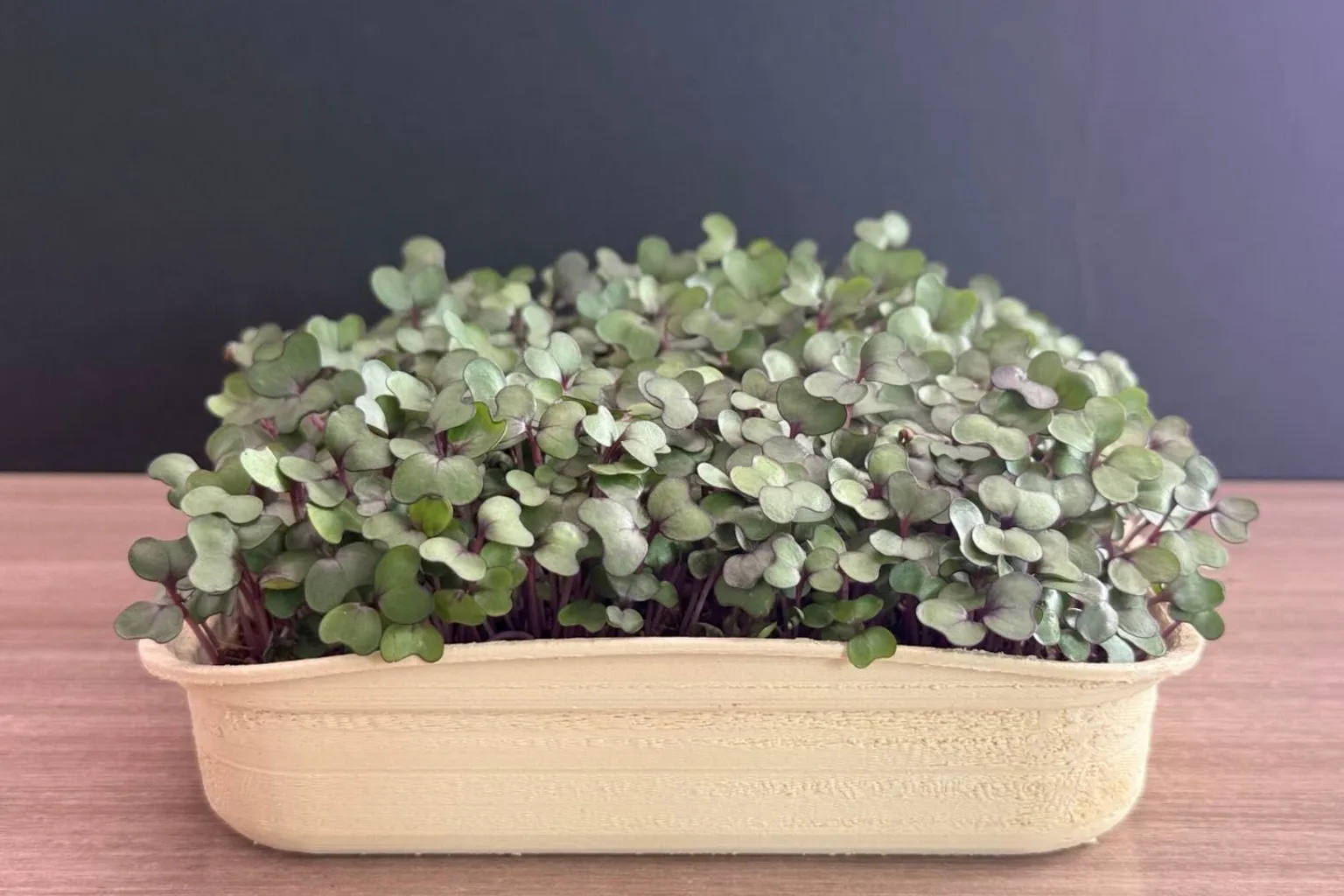
Cabbage microgreens deliver gentle flavor, red-cabbage anthocyanins, and brassica nutrition in days. Learn their benefits, flavor, and how to grow them.

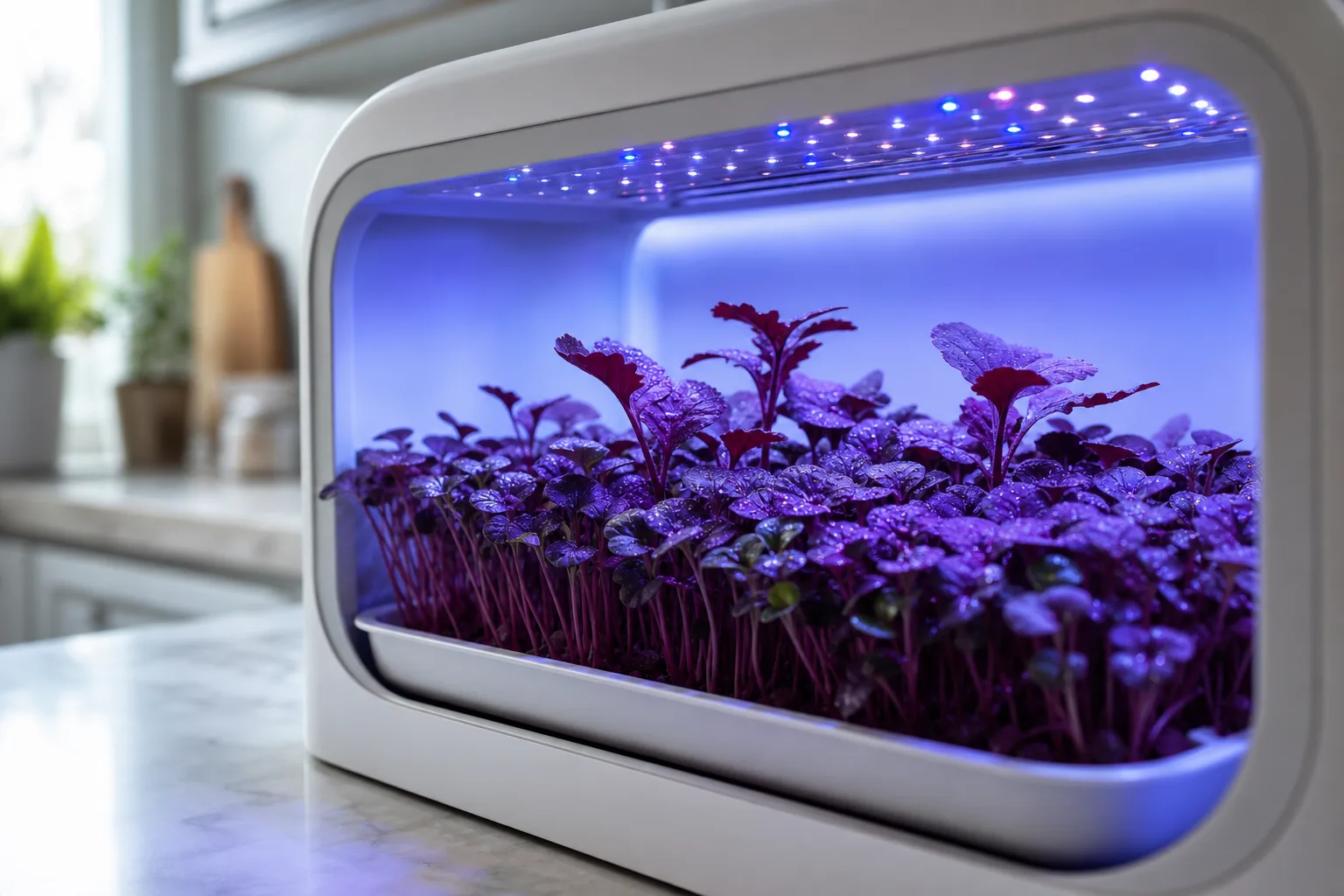
How blue light and microgreens interact: cryptochromes drive anthocyanins, flavonoids, and compact growth. The science plus practical lighting tips.

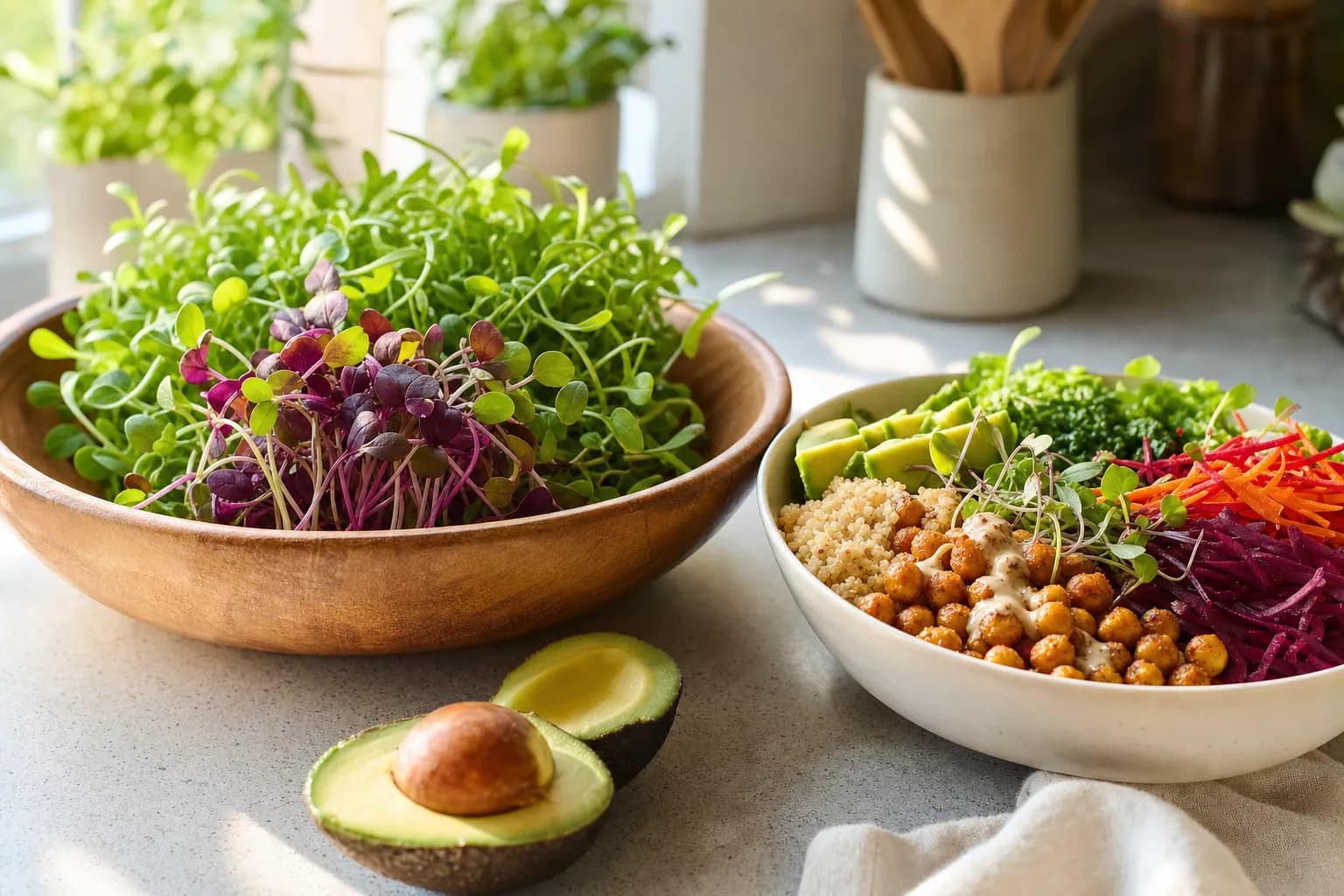
Microgreens vegan diet ideas you can use daily — easy ways to add protein, vitamins, and antioxidants to plant-based meals without extra effort.

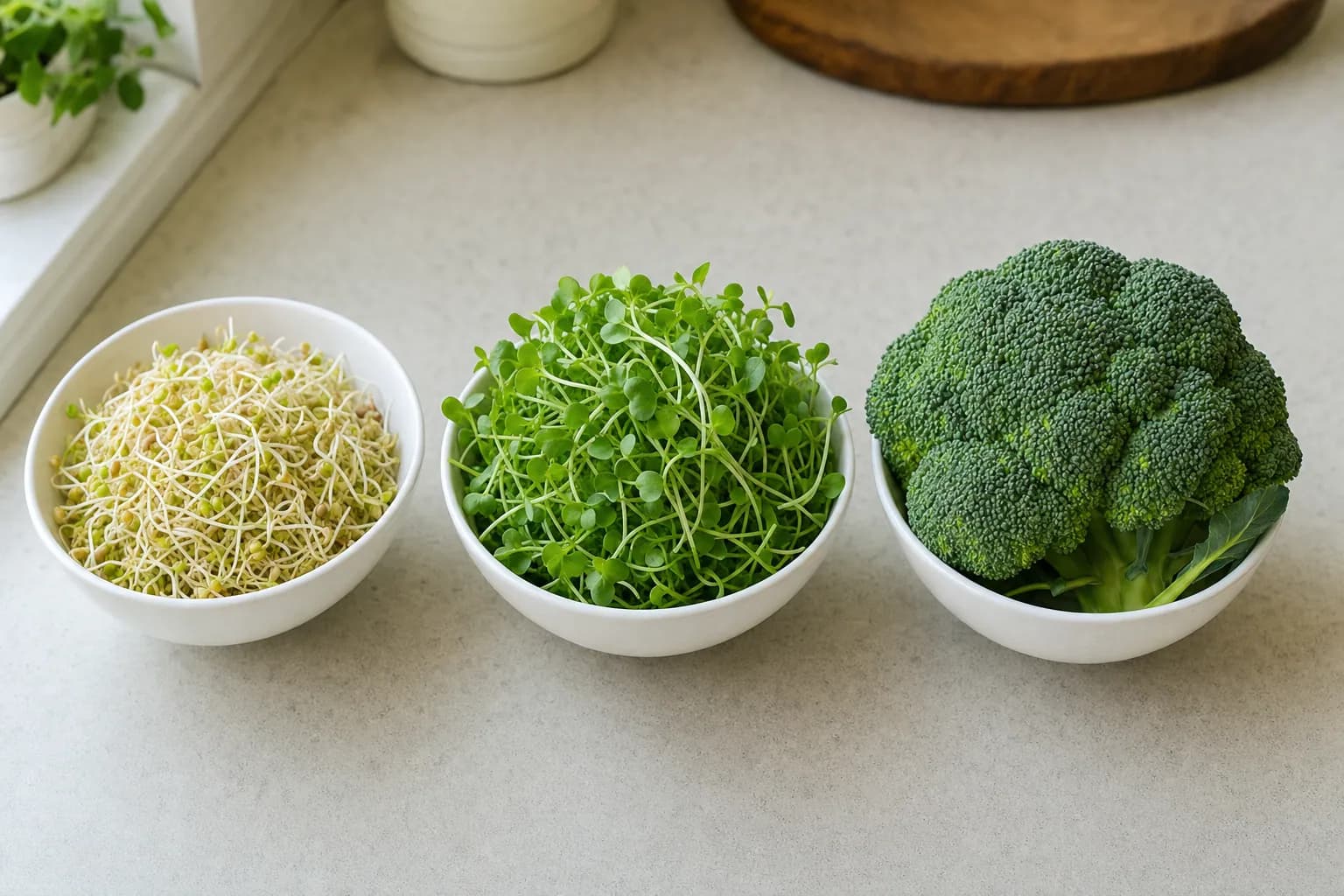
Microgreens vs sprouts vs mature vegetables: how they grow, how they compare on nutrition and food safety, and which one is right for you.

Microgreens inflammation science explained: how cruciferous greens like broccoli make sulforaphane, and what the research really shows.

Microgreens cholesterol research is promising but early. See what the red cabbage mouse study really found and how to use microgreens wisely.

Microgreens longevity, explained for biohackers — the nutrient density, sulforaphane, and protein data behind these tiny greens.

Microgreens and diabetes: what early studies suggest about sulforaphane, blood sugar, and adding nutrient-dense greens to a type 2 diabetes diet.

Are microgreens good for you? Research shows they're 2-3.5x more nutrient-dense than mature greens. Here's what the science genuinely supports.

Microgreens nutrition explained: why these tiny greens carry 2-3.5x more nutrients than mature vegetables, the standout crops, and how to eat them.