If you have ever taught a kid to ride a bike, you already understand reinforcement learning. They wobble, they fall, they get a little better, and eventually they pedal off without thinking about it. Nobody handed them a physics textbook on balance. They learned from the consequences of trying.
That same idea, dressed up in math and running on a computer, is becoming one of the most promising tools in modern farming. Researchers are using it to run greenhouses that grow more food while burning less energy. Here I want to walk through what reinforcement learning actually is, how it learns to steer a growing environment, and where it still falls short, all in plain English and without the hype.
What reinforcement learning really means
Reinforcement learning, usually shortened to RL, is a branch of machine learning built around one simple loop. You have an agent (the decision maker), an environment (the world it acts in), and a reward (a number that tells it whether things are going well).
At each moment, the agent looks at the current situation, called the state, and picks an action. The environment responds: it changes, and it hands back a reward. A good outcome earns a higher number; a bad one earns a lower or negative number. The agent's only goal is to rack up the most reward over time. Crucially, nobody tells it the right answer in advance. It discovers good behavior through trial and error, the same way that kid learned to ride.
What makes RL different from a fixed rulebook is that it does not need a perfect model of how the world works. A greenhouse is messy. Weather shifts, plants respond in nonlinear ways, and heat moves through glass and soil in ways that are hard to write down as tidy equations. RL sidesteps that by learning directly from experience instead of from a hand-built formula.
Turning a greenhouse into a learning problem
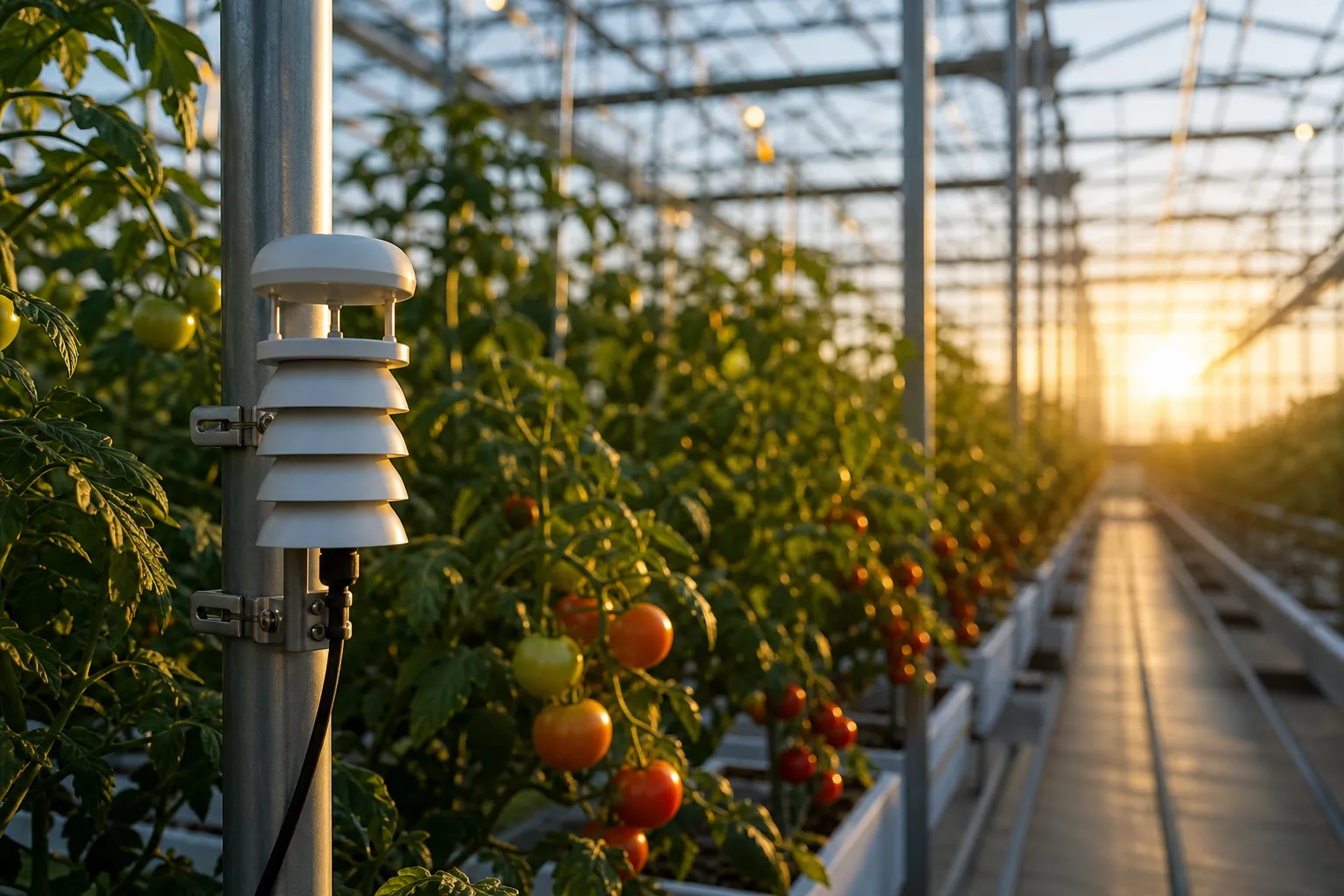
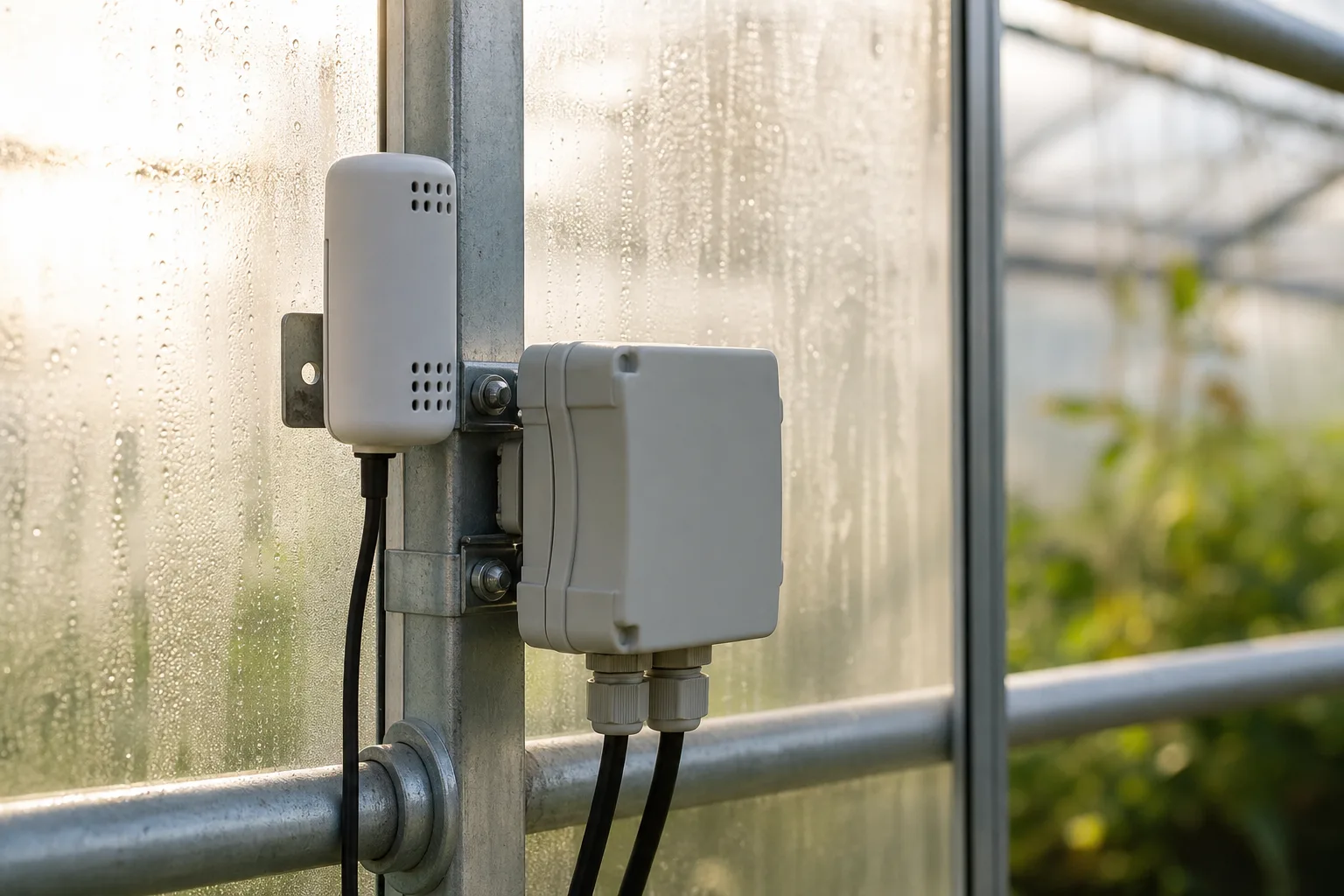
To let an agent control a greenhouse, scientists first describe the space in RL terms. In one Cornell study on a semi-closed greenhouse in Brooklyn, New York, the state was the set of temperatures that matter: the air inside, the walls, the ceiling, the floor, plus the outdoor temperature and a weather forecast. The action was how much heating or cooling power to add or remove. And the reward balanced two competing goals at once: keep the indoor temperature inside the target range, and use as little energy as possible.
That tension is the whole game. Cranking the heaters keeps tomatoes cozy but wastes money. Letting the temperature drift saves energy but risks the crop. The reward function penalizes both straying outside the comfort zone and burning power, so the agent has to find the sweet spot. For tomatoes, that comfort zone sits around 22 to 25 degrees Celsius for healthy growth.
This is the same balancing act anyone faces when growing food indoors, just scaled up. If you have read how Luya works or our piece on controlled environment agriculture, you have seen the principle: the right climate, held steady, is what turns seeds into a reliable harvest.
| Element | In a greenhouse | Everyday analogy |
|---|---|---|
| Agent | The control software | The kid on the bike |
| State | Indoor temps, outdoor weather, forecast | How balanced you feel right now |
| Action | How much to heat or cool | Lean left, lean right, pedal |
| Reward | High for on-target temp + low energy | Staying upright feels good |
| Policy | The learned strategy it follows | Riding without thinking |
How the agent actually gets smarter
Early on, the agent knows nothing, so it mostly experiments at random. It tries an action, watches the temperature change, and records the reward. Each little experience, the state, the action, the reward, and the next state, gets stored in memory. Over many cycles, the agent notices patterns: in this situation, that action tends to pay off.
The technical engine behind this is often a method called Q-learning, where the agent learns to estimate the long-term value of each action in each state. Modern versions use a neural network to make those estimates, which is why you will hear the term deep reinforcement learning. The "deep" part just means a neural network is doing the heavy lifting of recognizing patterns in complicated, continuous data, rather than a simple lookup table.
A nice real-world result: in that Cornell simulation, the Q-learning approach learned a control strategy that used 61 percent less energy than a popular alternative method (deep deterministic policy gradient), while keeping the climate on target. Same crop, same comfort range, far less power. That is the kind of efficiency gain that makes indoor farming more sustainable.
| Approach | Final reward (higher is better) | Energy used over the test |
|---|---|---|
| Standard policy-gradient method | about -21 | roughly 9,800 kJ |
| Q-learning with gradient ascent | about -13 | roughly 3,800 kJ |
Numbers reflect the Brooklyn semi-closed greenhouse simulation; a less negative reward means the agent stayed closer to target while spending less energy.
The two big headaches: data hunger and safety
RL is powerful, but it has a reputation for being a slow learner that needs an enormous number of tries. In a video game, that is fine, you can run millions of attempts overnight. In a real greenhouse, every "try" takes real time and real resources, and a bad decision can stress or kill a crop. Trial and error is a lot less charming when the errors cost you tomatoes.
Researchers tackle this two ways. First, sample efficiency: instead of letting the agent practice only in the real greenhouse, a team from Tsinghua and Tencent built a fast simulator of tomato growth. The agent rehearses thousands of growing seasons inside the simulator in seconds, then applies what it learned to the real thing. They even seeded the simulator with expert agricultural knowledge so it would not produce nonsense like impossible temperatures.
Second, safety and robustness. A policy that performs beautifully in average conditions can fall apart when the weather goes weird. The same team added a clever trick: during training, they deliberately threw out some of the easy, high-reward experiences and forced the agent to focus on the worst-case ones. The payoff showed up under stress tests. When they pushed conditions to extremes, the safety-tuned agent protected significantly more of the crop.
| Stress condition | Crop retained, standard agent | Crop retained, safety-tuned agent |
|---|---|---|
| Air too hot (35 to 40 C) | 80% | 85% |
| Air too cold (-2 to 10 C) | 63% | 73% |
| Very high humidity | 68% | 74% |
| No sunlight | 77% | 82% |
What this means beyond giant greenhouses
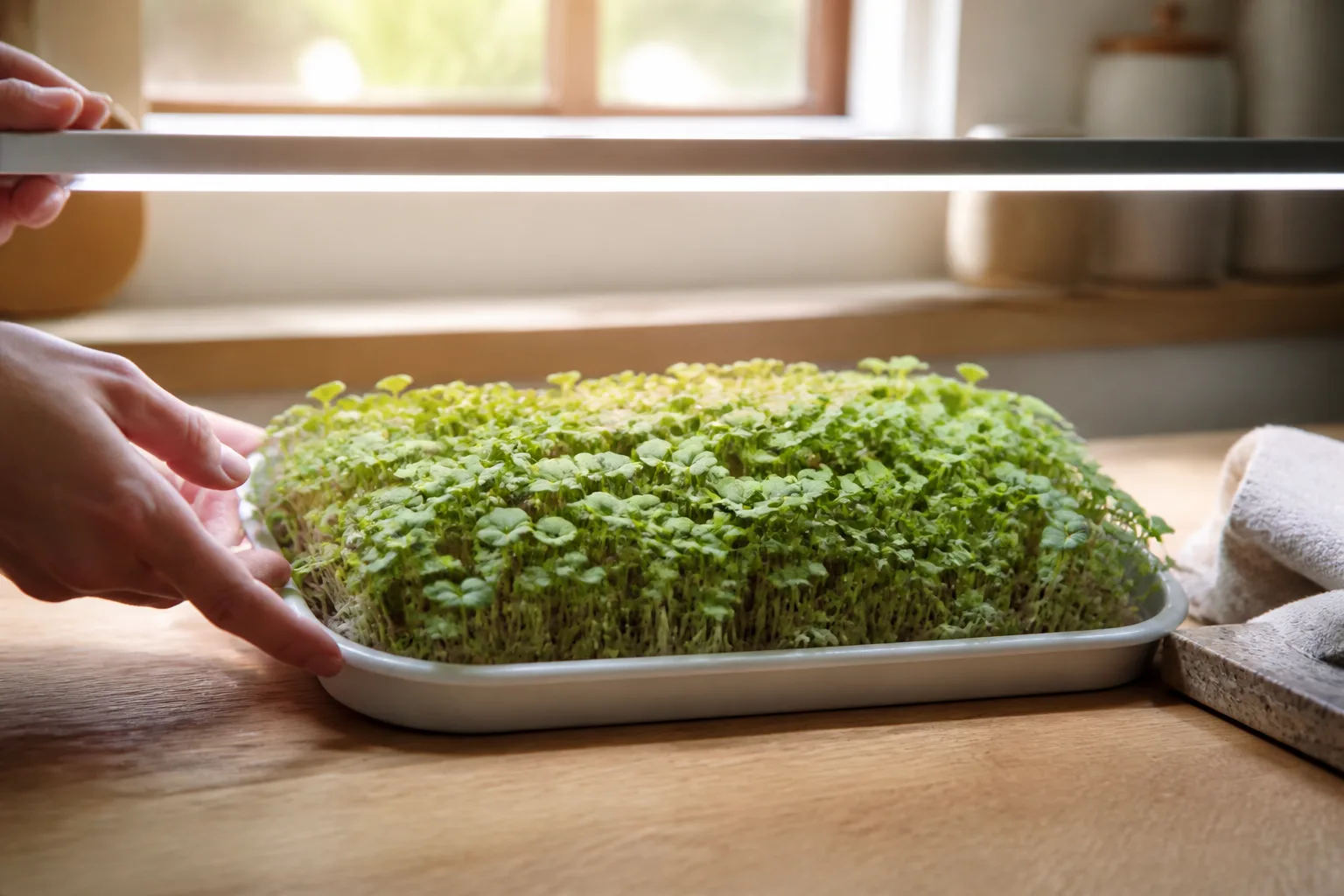
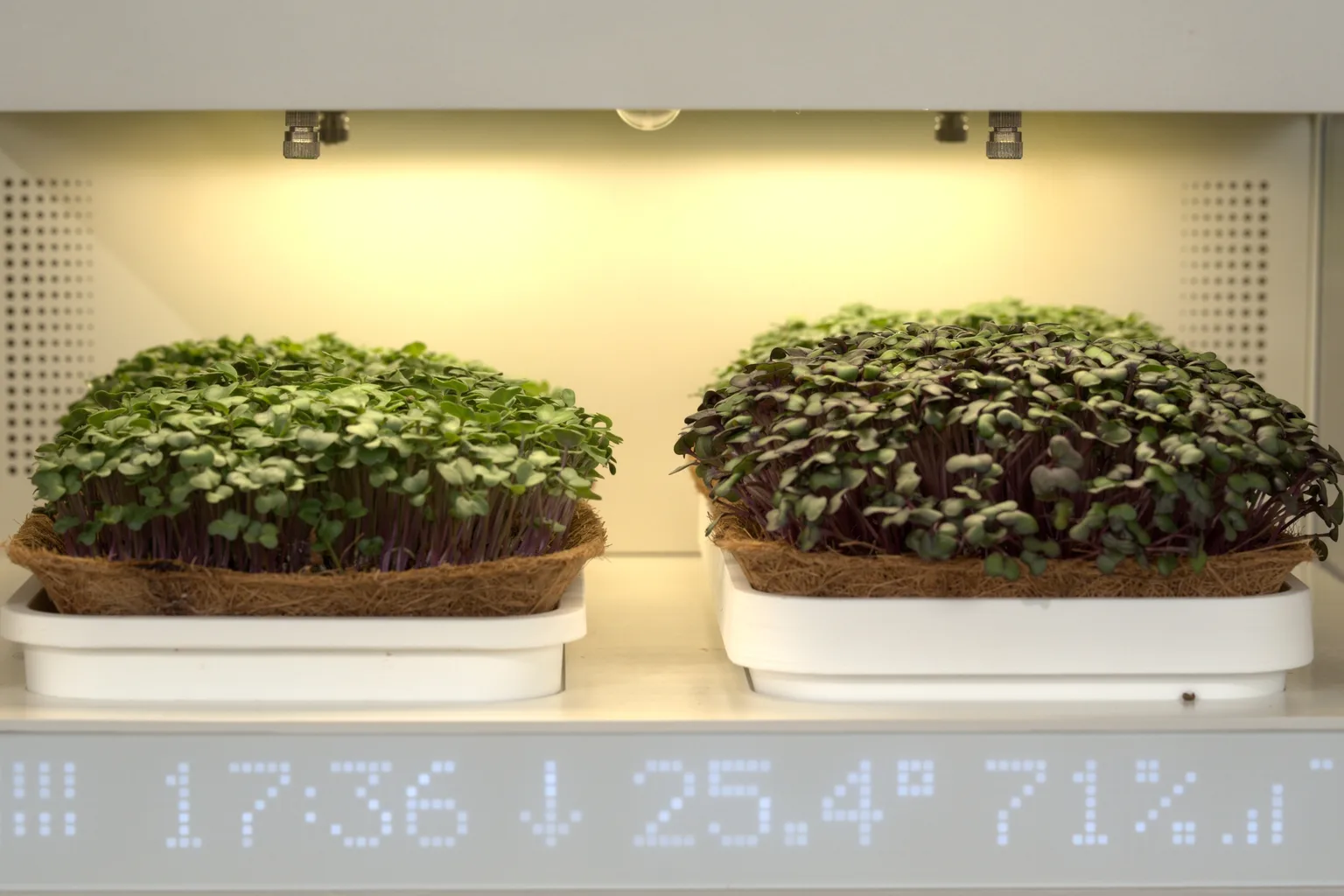
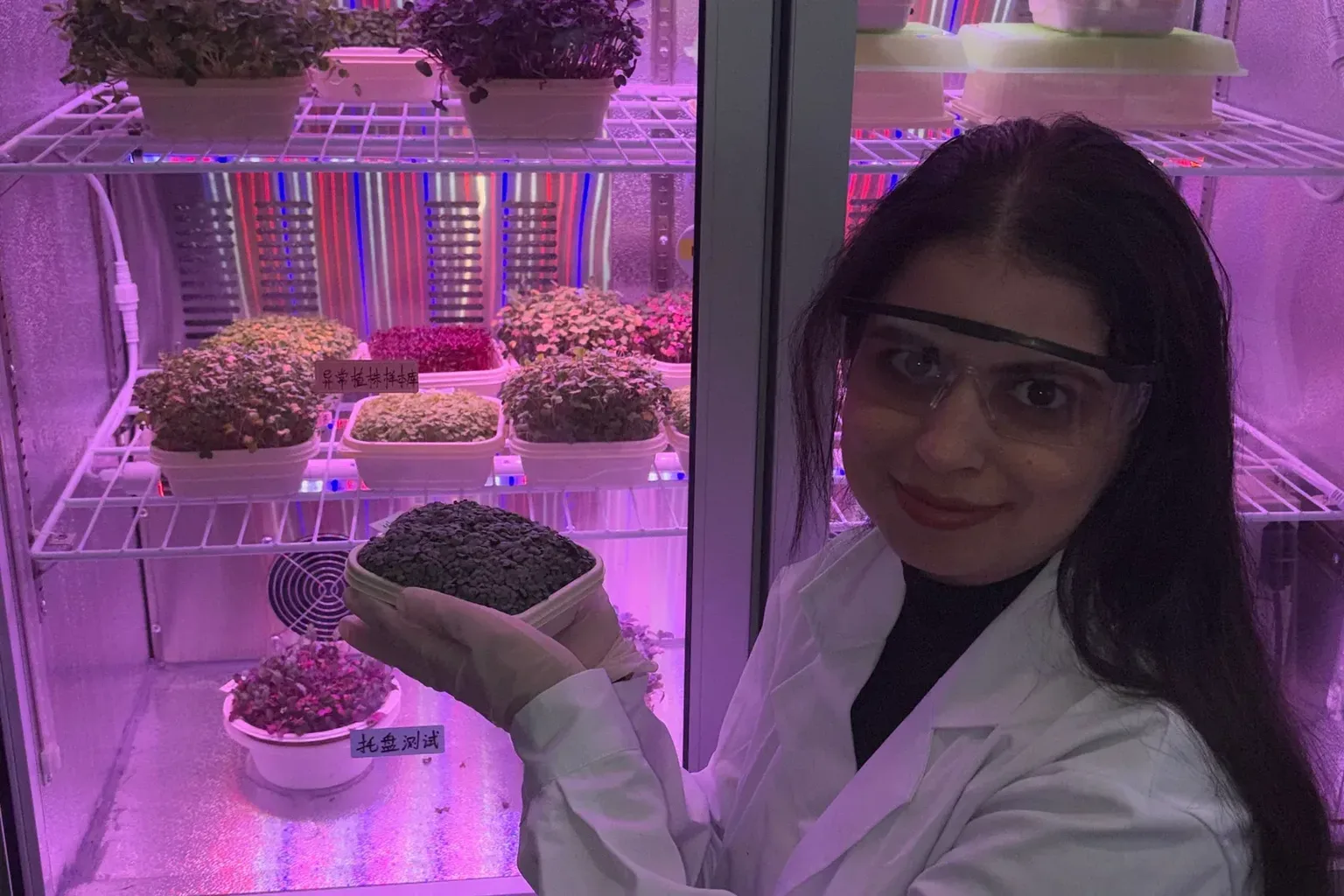
You do not need an industrial greenhouse to benefit from this line of thinking. The core lesson, that a system can watch conditions, adjust, and improve toward a goal, is exactly what makes the Luya countertop food computer feel almost effortless. Luya handles light, water, and timing so you do not have to babysit a tray. You just harvest. If you are curious where home growing is headed, our look at the future of home farming digs into how automation keeps shrinking the gap between a lab and your kitchen.
And the reason any of this is worth the trouble comes back to the plants. Microgreens are nutrient-dense little powerhouses, and growing them yourself means they are fresh, not wilted from a week in transit. If you are new to them, start with what are microgreens and the easiest microgreens to grow, then see why so many people decide it is worth it in grow versus buy microgreens.
Honest limits worth keeping in mind
It would be easy to oversell this, so here is the sober version.
RL still depends heavily on the quality of its simulator or its data. If the model of how plants grow is wrong, the agent confidently learns the wrong lessons, and small errors can pile up over a long growing cycle. The published wins also come mostly from simulations and controlled trials, not yet from years of messy, real-world farming at scale. Skilled human growers remain very good at this, and the most promising setups treat AI as a tireless assistant rather than a replacement for judgment.
Interacting with the real world is also slow and expensive, which is exactly why researchers lean so hard on simulators. Bridging the gap between a clean simulated greenhouse and a real one, with all its quirks, is still active research.
The takeaway
Reinforcement learning in agriculture, explained simply, is just a patient learner with a clear goal: keep the plants happy, waste as little as possible, and get better with every attempt. Define the state, the actions, and a reward that captures what you truly care about, and the agent can find control strategies that rival or beat hand-tuned rules, sometimes cutting energy use by more than half.
It is not magic, and it is not ready to run every farm on its own. But the direction is unmistakable. The same intelligence learning to steer research greenhouses is already quietly tending a tray of greens on a kitchen counter, turning the once-fussy art of growing food into something anyone can do well.