If you have ever wanted ultra-fresh, nutrient-dense greens at home but bounced off the mold, the mess, and the daily watering, you are exactly who the AI microgreens grower was built for. Luya is a countertop appliance that grows microgreens for you in a sealed, climate-controlled chamber, then lets you harvest only what you need, seconds before you eat. Think of it like a Nespresso, but for living greens.
This guide walks through how the system actually works, from the pre-seeded tray you drop in to the AI that manages temperature, water, and airflow so you do not have to.
Why Growing Microgreens Usually Goes Wrong
Microgreens are worth the trouble. Peer-reviewed reviews (MDPI Plants) and USDA data put them at roughly 2 to 3.5 times more nutrient-dense than their mature counterparts, with radish microgreens often topping the list. They are rich in vitamins C, K, and E along with antioxidants and polyphenols. Broccoli microgreens are the standout: Johns Hopkins research found young broccoli carries roughly 10 to 100 times more glucoraphanin, the sulforaphane precursor, than mature heads, though the finished sulforaphane you actually get varies widely by variety, growing conditions, and harvest timing. If you want the deeper science, our guide to microgreens nutrition covers it in detail, and what is sulforaphane explains why that compound matters.
The problem has never been whether to grow them. It is the how.
Manual growing has a real failure rate, and it usually comes down to three things:
- Mold. Moisture plus poor airflow plus overcrowding plus warmth is a recipe for fuzzy gray trays. If you have ever lost a batch this way, our piece on why microgreens keep molding explains the chain of causes.
- Mess. Soil on the counter, in the sink, and tracked across the kitchen.
- Maintenance. A 10-day cycle needs daily attention. One business trip or one hectic week, and the tray is gone.
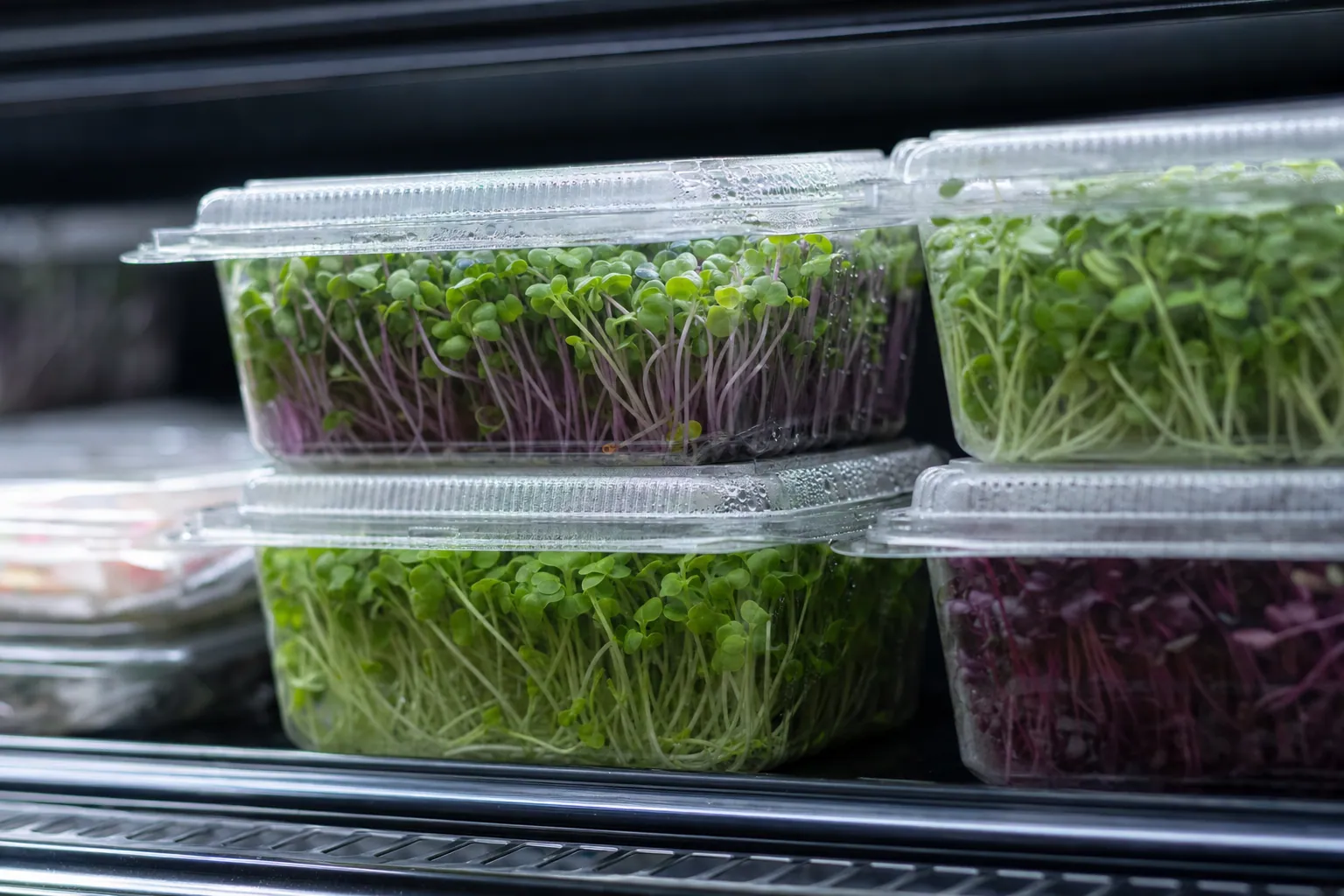
Buying microgreens instead solves the chores but creates new problems: they are expensive, often $4 to $6 per 2 oz clamshell (about $30 to $50 per pound), and they are rarely fresh by the time they reach you after days in the farm-to-truck-to-warehouse-to-store supply chain.
The AI microgreens grower exists to remove both sets of headaches at once.
How the AI Microgreens Grower Works, Step by Step
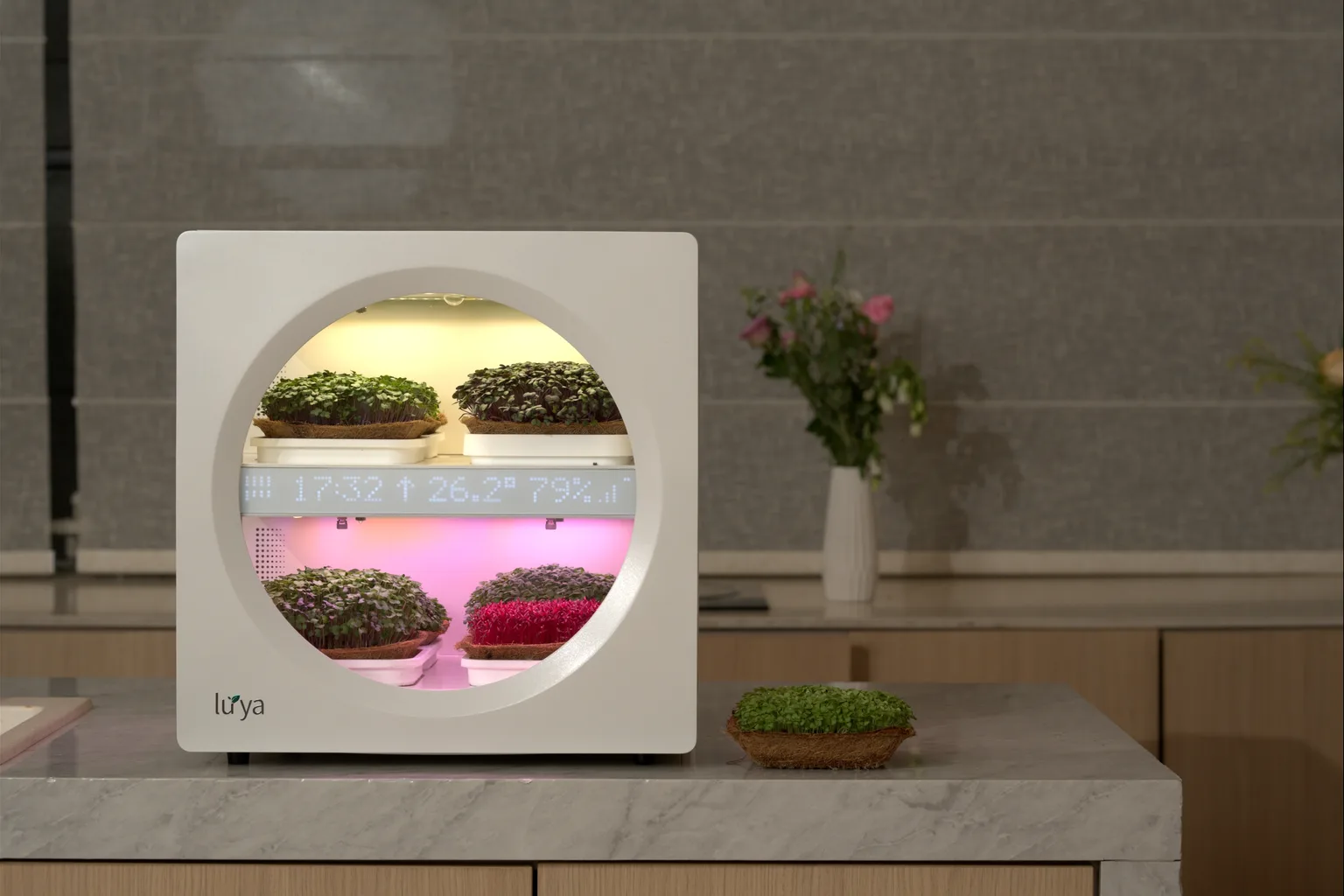
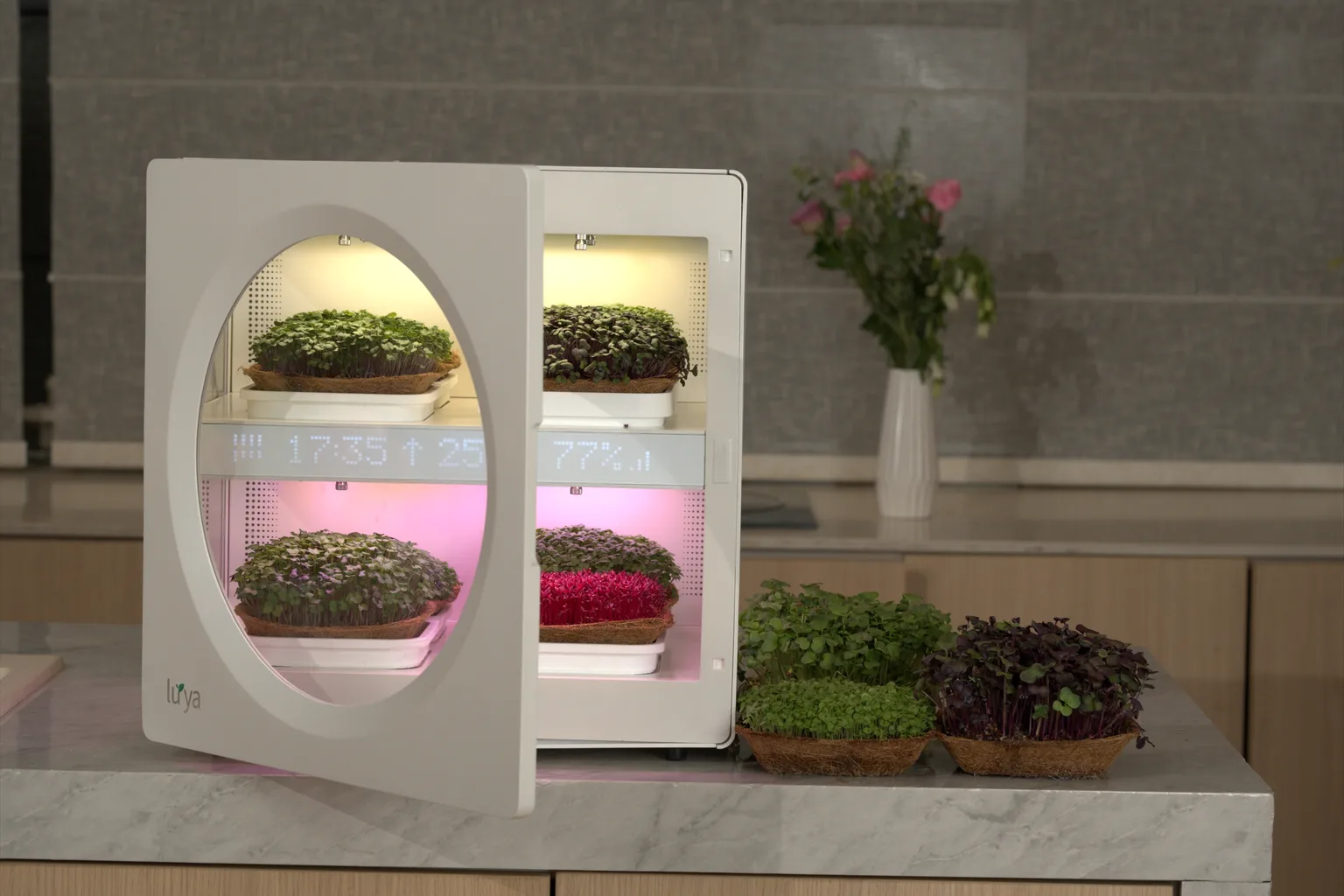
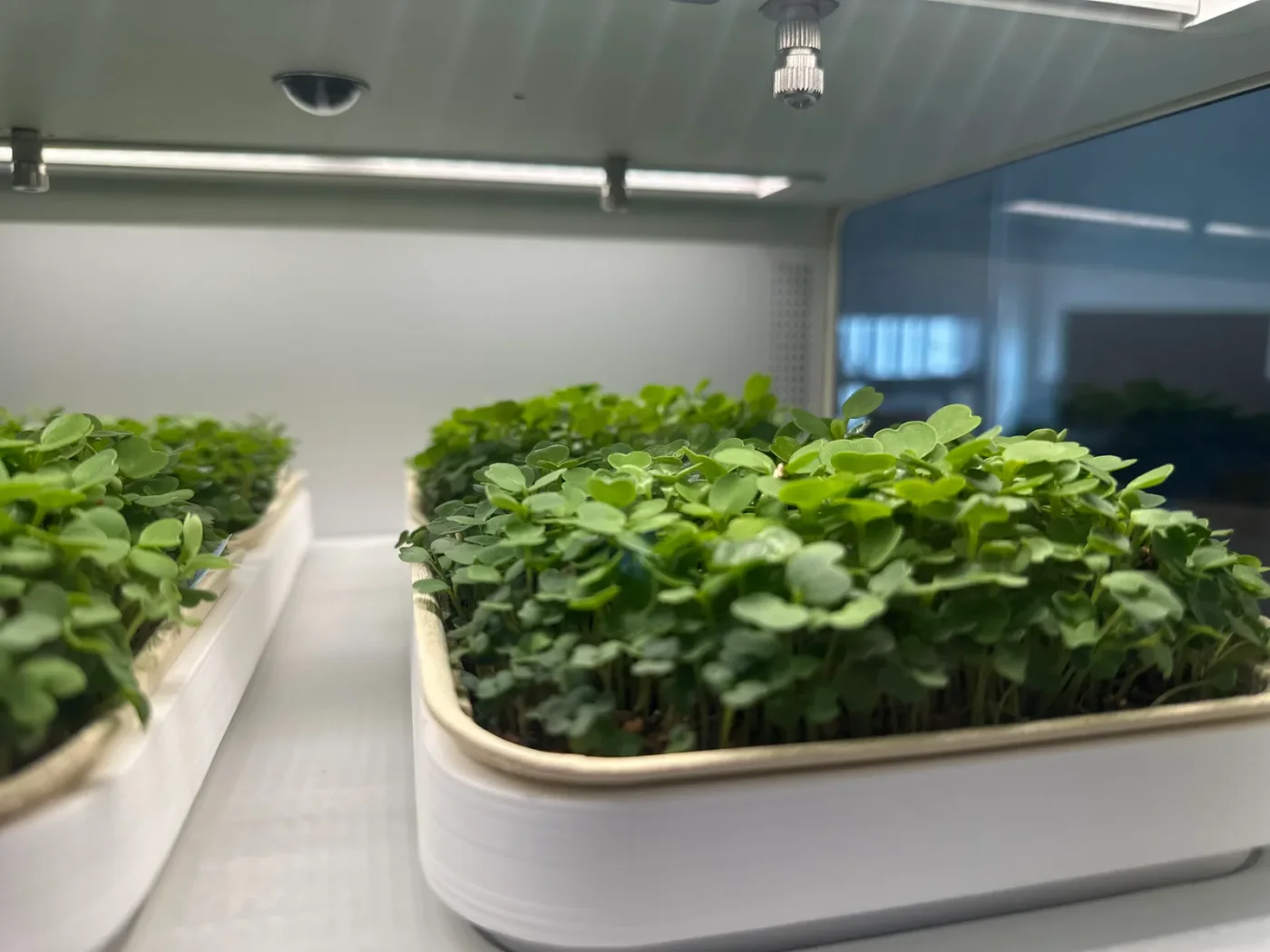
Luya X is a consumer "food computer" about 17 inches tall, 20 inches wide, and 15 inches deep. It sits on your counter and runs a closed-loop system: sensors read the environment, the AI adjusts conditions, and the cycle repeats automatically. Here is what happens from start to harvest.
1. Drop in a pre-seeded tray
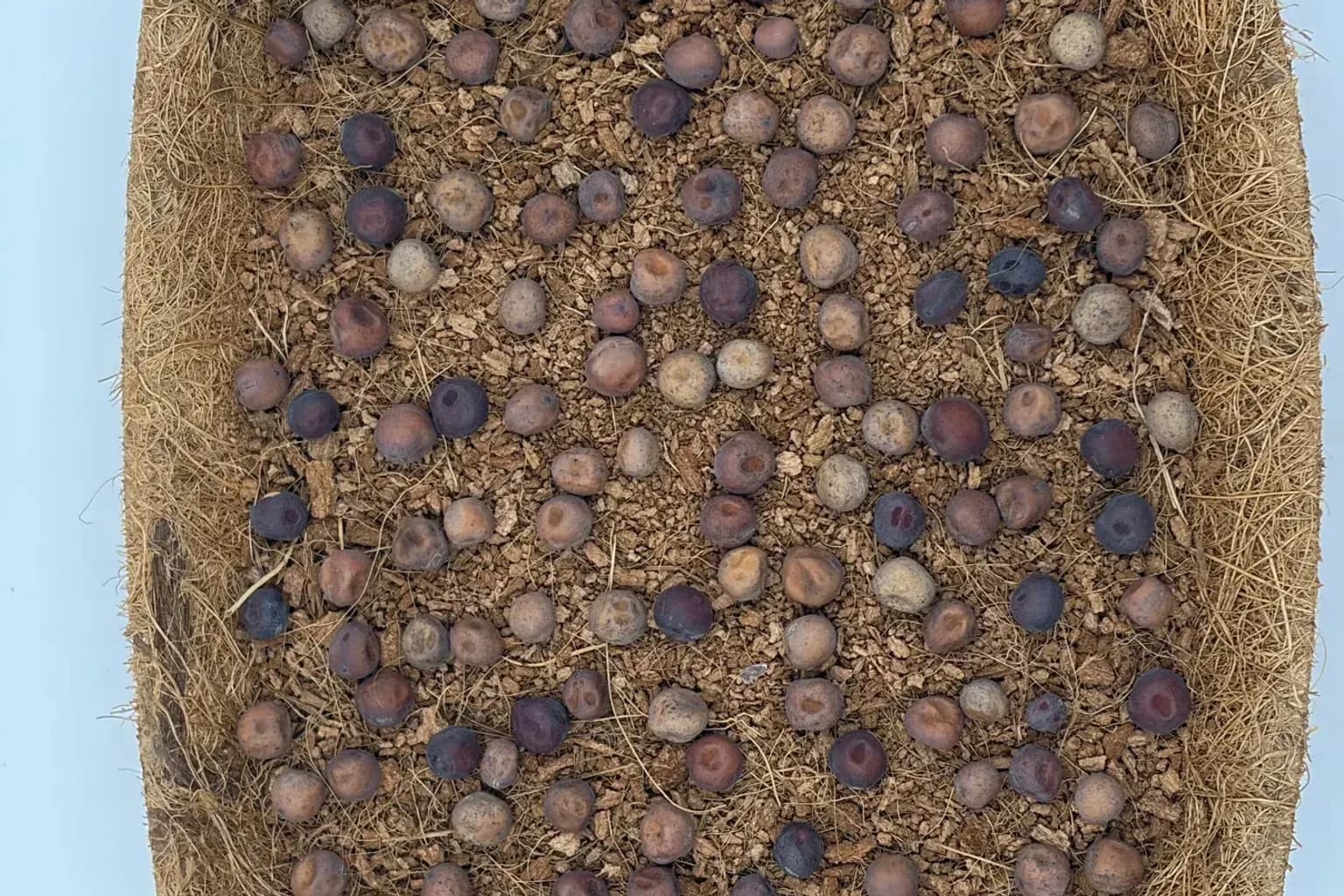
You do not measure seeds or handle soil. Luya uses pre-seeded trays, made in the US with about a one-year shelf life. You simply drop one into the chamber and close the door. This is the entire setup step.
If you want to understand the trays themselves, see pre-seeded microgreens trays.
2. The sealed chamber keeps mold out
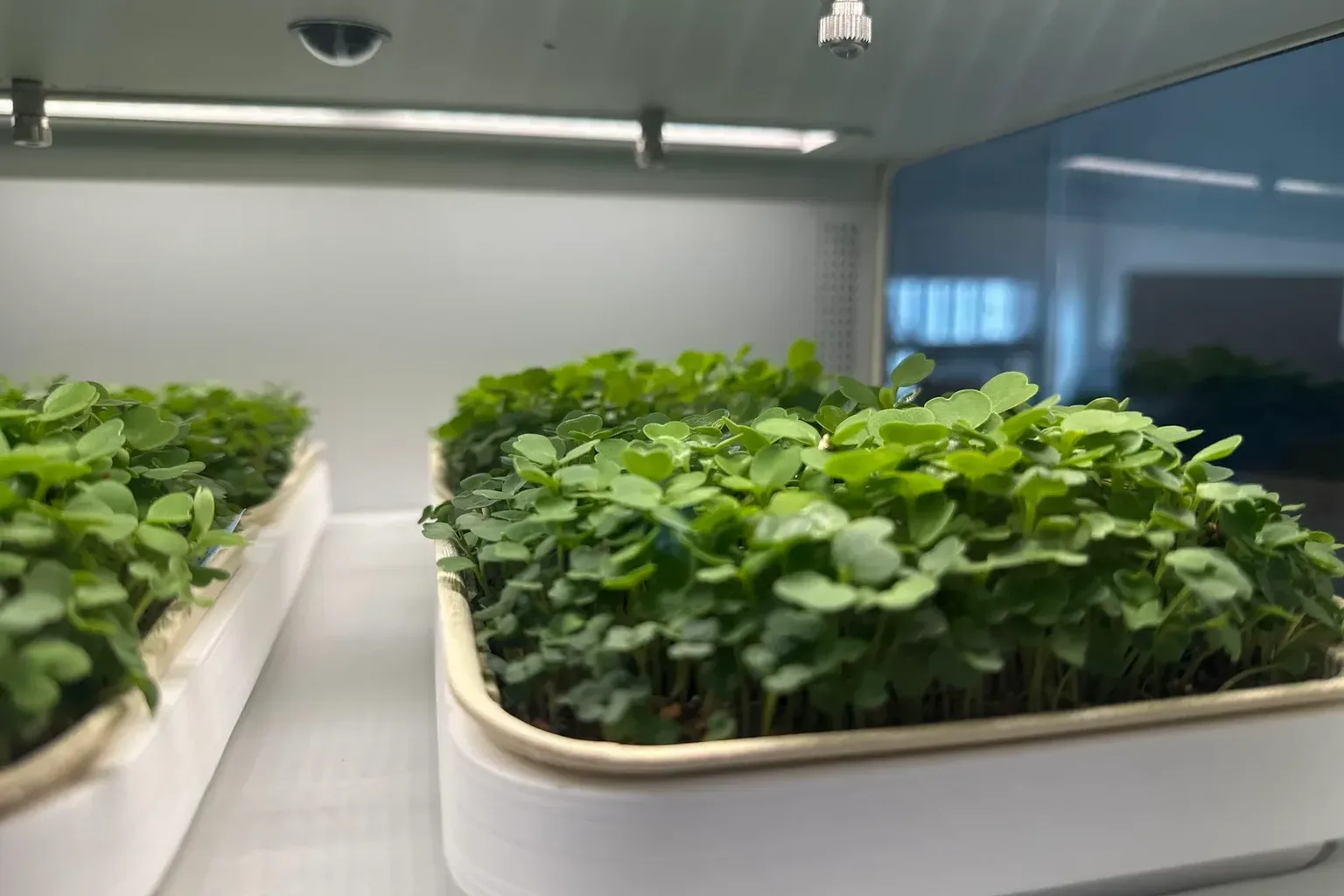
The growing happens inside a sealed, climate-controlled, ventilated chamber. Because airflow, humidity, and crowding are managed by the machine rather than left to chance, the conditions that cause mold in open trays are controlled from the start.
3. AI manages temperature, water, and nutrients
This is the part you would otherwise be doing by hand, every day:
- Precise temperature. A TEC (thermoelectric) system both heats and cools, holding the chamber at the right temperature instead of drifting with your kitchen.
- Automatic nutrient dosing. Multiple channels (A, B, C, and D) dose nutrients automatically, so the plants get what they need without you mixing anything.
- Closed-loop control. The AI reads conditions and adjusts continuously, which is what makes the whole thing hands-off.
The nutrient channels matter more than they sound. Different crops want different feeding, and getting the balance right by hand is where a lot of home setups quietly go wrong. By dosing from separate A/B/C/D channels, the machine can fine-tune the mix per grow instead of asking you to keep bottles and measuring spoons by the sink.
4. Watch it grow, then harvest what you need
A remote live camera lets you check in from anywhere, and the system records an automatic time-lapse of each grow. A minimalist dot-matrix LED shows status at a glance, and a companion app gives you the details.
Cycles run about 7 to 10 days. When greens are ready, you harvest only what you need for that meal, and the rest keep growing alive in the chamber. Nothing wilts in a clamshell, because nothing is picked until you pick it. That last point is the real freshness advantage: store-bought greens lose nutrients and texture from the moment they are cut, while greens still rooted in the chamber are at peak the second you snip them. If you care about getting the most from compounds like sulforaphane, freshness and minimal processing matter, as our guide on how to maximize sulforaphane explains.
What This Looks Like Day to Day
Here is how the manual approach compares with the automated one.
| Task | Manual growing | Luya X |
|---|---|---|
| Setup | Measure seeds, prepare soil trays | Drop in a pre-seeded tray |
| Watering | Daily, by hand | Automatic |
| Temperature | Whatever your kitchen does | TEC heating and cooling |
| Nutrients | Mix and apply yourself | Auto-dosed (A/B/C/D) |
| Mold risk | High without careful airflow | Sealed, ventilated chamber |
| Travel / busy week | Tray often dies | Keeps running on its own |
| Freshness at eating | Depends on timing | Harvested seconds before |
The headline difference is consistency. Manual growing fails not because it is hard in theory, but because it depends on you doing the same small chores reliably for 10 days straight. The AI microgreens grower removes the variable that breaks most home growers.
Which greens can you grow?
The best beginner crops are also some of the most rewarding to grow at home.
| Crop | Notable for | Rough timing |
|---|---|---|
| Radish | Often the most nutrient-dense; fast | Germinates 1 to 2 days, harvest 5 to 7 |
| Broccoli | High sulforaphane precursor | About a 7 to 10 day cycle |
| Pea shoots | One of the more protein-dense microgreens | About a 7 to 10 day cycle |
| Sunflower | Crunchy, beginner-friendly | About a 7 to 10 day cycle |
If you are curious about specific crops, our guides to pea shoots and radish microgreens are good next reads.
Is It Worth $899?
Luya X1 has an MSRP of $1,099 and a $899 Founder price for selected households. The case for it rests on two things it replaces.
First, it removes the chore burden that causes most home growing to fail, the mold, the mess, and the daily maintenance. Second, it changes the economics and freshness of buying. Store-bought clamshells run $30 to $50 per pound and arrive after days in transit. With Luya, you harvest only what you need, the rest stays alive, and there is no supply chain between the plant and your plate.
Run the rough numbers. If a household goes through even one 2 oz clamshell a week at $5, that is about $260 a year, and you are still throwing out whatever wilts before you use it. Heavier users, or anyone buying specialty crops like broccoli or pea shoots, climb well past that. The appliance shifts that recurring spend toward pre-seeded trays you drop in on demand, with no waste because you harvest leaf by leaf.
| Cost factor | Buying clamshells | Luya X |
|---|---|---|
| Up-front cost | $0 | $899 (Founder price) |
| Per-pound cost | $30 to $50 | Lower per serving over time |
| Waste | Wilts within days | Harvest only what you need |
| Freshness | Days in transit | Seconds before eating |
Whether the math works depends on how often you eat microgreens and how much you value freshness and zero waste. For households that want consistent, ultra-fresh greens without the failure rate, the appliance is built to pay back in both reliability and quality over time. If you are weighing the trade-off yourself, grow vs buy microgreens walks through it in more depth.
It is not a magic health device, and the greens are food, not medicine. But as a way to make genuinely fresh, nutrient-dense greens a normal part of daily eating, the automated approach removes the friction that usually gets in the way.
Want to see the full system in action, from tray to harvest? Explore how it works to watch a complete grow cycle, then read meet Luya, the countertop food computer for the bigger picture on why we built it.
References
- Xiao Z, Lester GE, Luo Y, Wang Q. Assessment of Vitamin and Carotenoid Concentrations of Emerging Food Products: Edible Microgreens. J Agric Food Chem. 2012;60(31):7644–7651. https://doi.org/10.1021/jf300459b
- Fahey JW, Zhang Y, Talalay P. Broccoli sprouts: an exceptionally rich source of inducers of enzymes that protect against chemical carcinogens. PNAS. 1997;94(19):10367–10372. https://doi.org/10.1073/pnas.94.19.10367
- Kyriacou MC, Rouphael Y, Di Gioia F, et al. Micro-scale vegetable production and the rise of microgreens. Trends Food Sci Technol. 2016;57:103–115. https://doi.org/10.1016/j.tifs.2016.09.005