Most people meet microgreens as a fussy little garnish perched on a restaurant plate, then never think about them again. That is a shame, because these tender seedlings are some of the most flavor-dense, nutrient-dense food you can keep within arm's reach. The trick is to stop treating them as decoration and start treating them as an ingredient. Once you do, a handful goes onto almost anything savory you already cook.
This is a roundup of 15 honest, fast ways to fold microgreens into everyday meals. No special equipment, no chef training, no recipe you have to follow to the gram. Just a pile of fresh greens and the willingness to add them at the right moment. If you are still wondering what microgreens actually are, the short version is this: they are vegetables and herbs harvested a week or two after sprouting, when their flavor and nutrient concentration are at a peak. Some varieties carry up to several times the nutrients of the full-grown plant.
Start with breakfast: toast and eggs
Breakfast is the easiest place to build the habit, because the foods are mild and the greens get to shine.
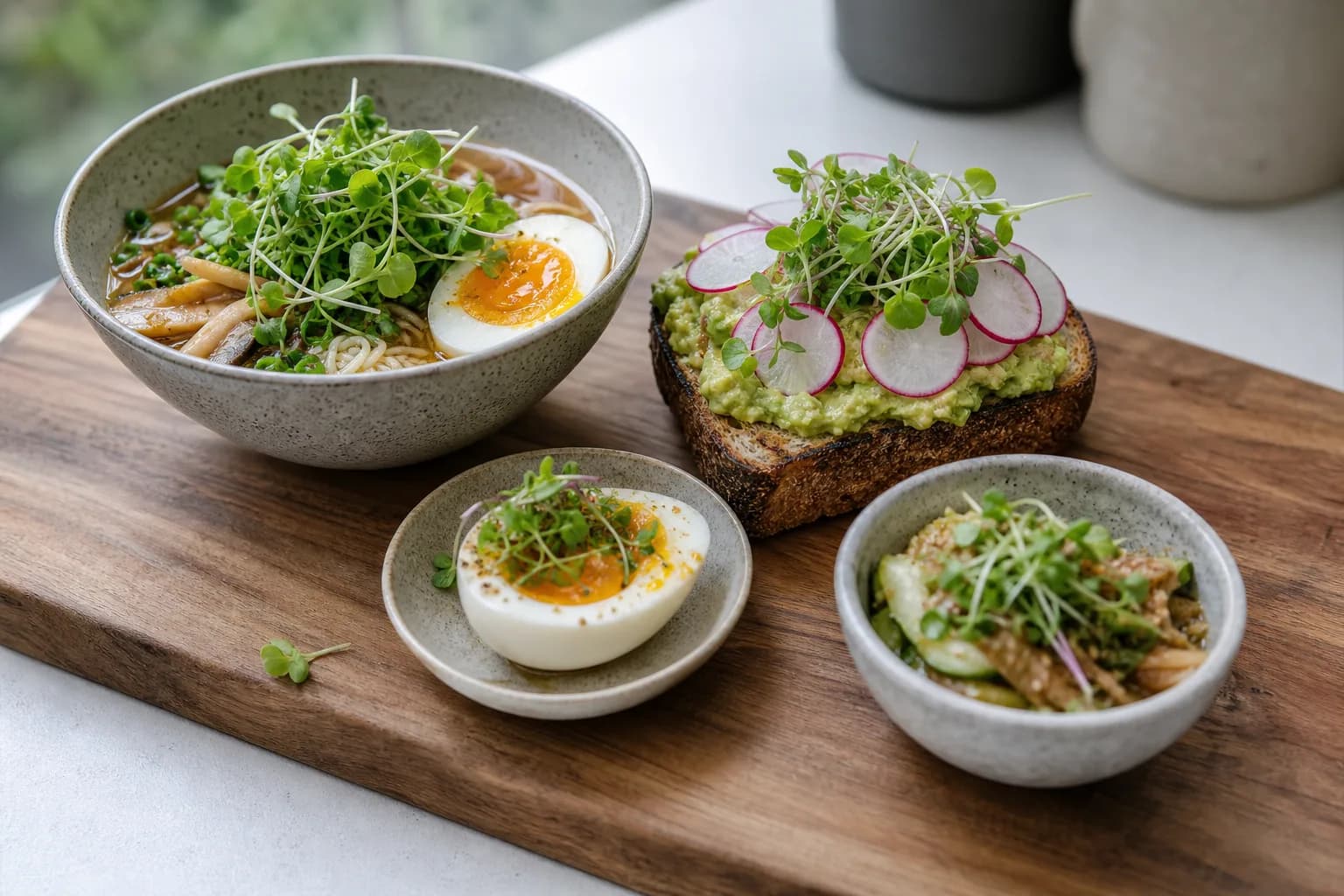
1. Avocado toast. Mash ripe avocado on good sourdough, add salt, lemon, and a slick of olive oil, then bury it under a thick tangle of microgreens. Radish or arugula adds a peppery bite that cuts the richness.
2. Fried or soft-boiled eggs. A runny yolk is basically a sauce. Pile broccoli or pea microgreens on top right before serving so the residual heat just barely wilts them.
3. Omelets and scrambles. Fold a small handful in during the last thirty seconds of cooking, off the heat, so they keep their color and snap.
4. Breakfast burritos. Tuck greens in alongside the eggs and cheese after the tortilla comes off the pan, never inside the griddle.
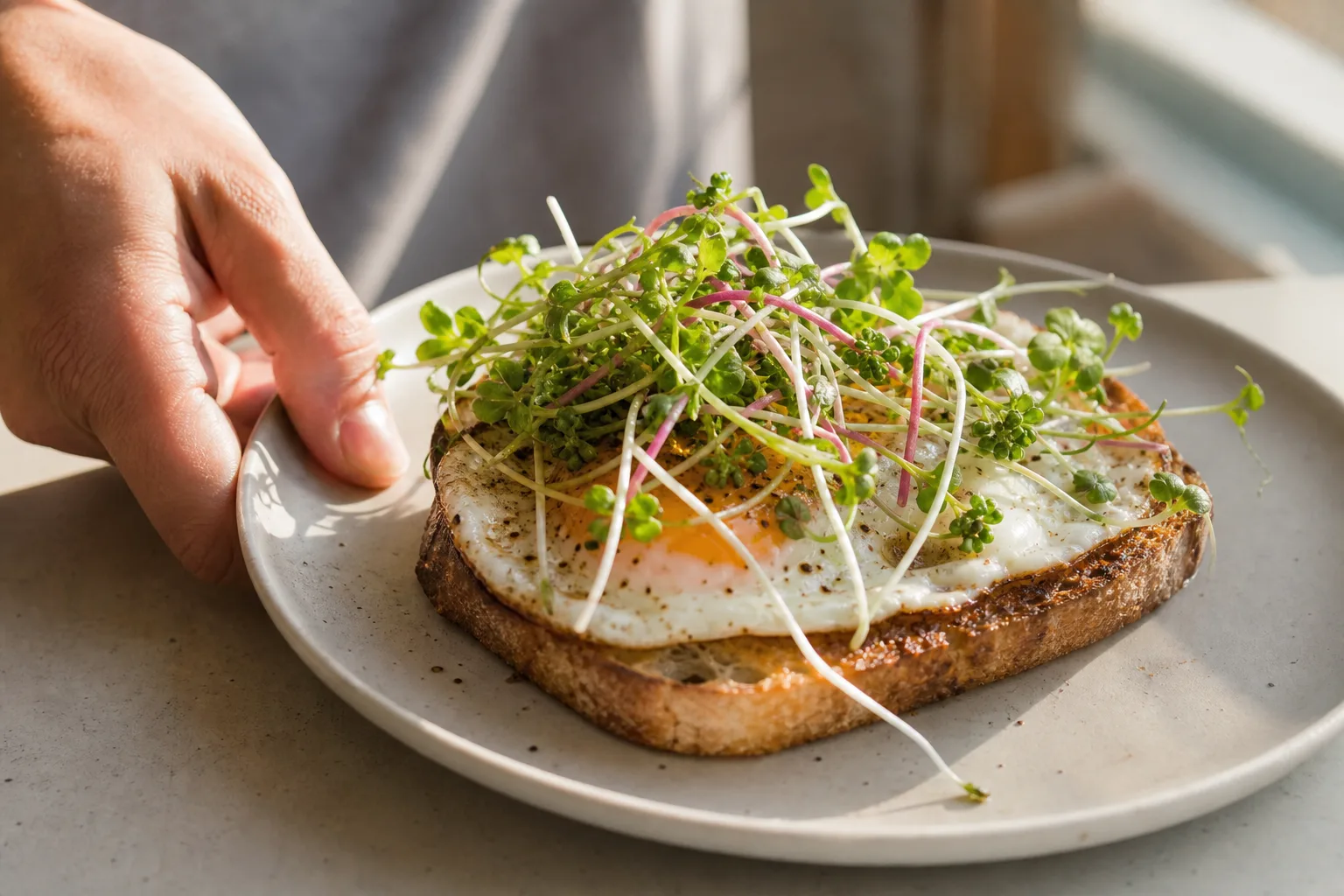
The golden rule for all four: add microgreens at the very end. Their flavor lives in delicate volatile compounds and their texture in thin, watery cell walls, so direct heat collapses both. We cover the timing in more detail in our guide to cooking with microgreens and heat.
Bowls, soups, and noodles
5. Grain bowls. Whatever your base is, quinoa, brown rice, farro, a generous nest of microgreens on top turns a beige bowl into something bright. Sunflower microgreens bring a sweet, nutty crunch that holds up well next to roasted vegetables.
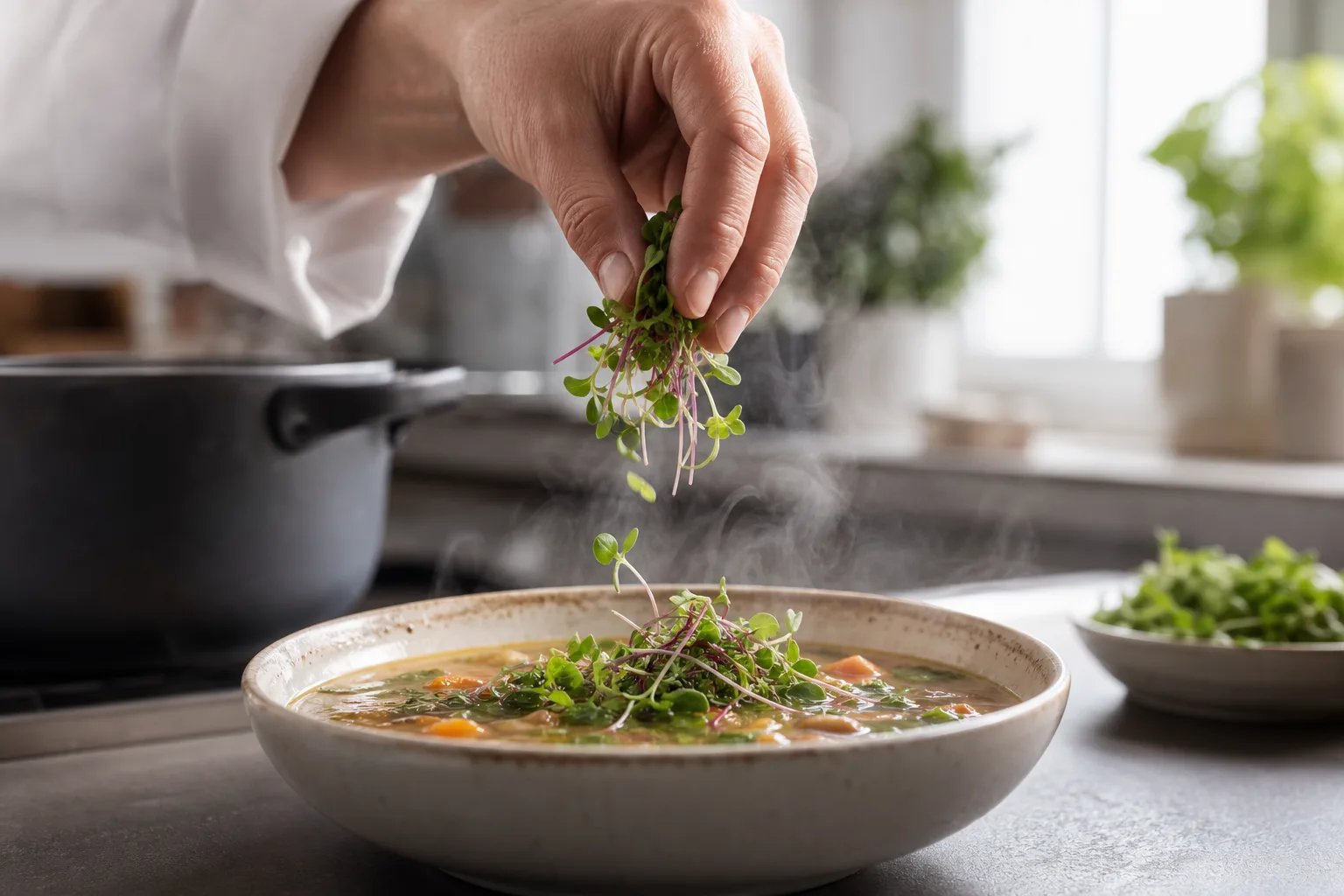
6. Ramen and brothy soups. Drop greens into the bowl, then ladle hot broth over them at the table. They wilt gently in about ten seconds and stay vivid. Stirring them into the pot, by contrast, turns them to mush. Our microgreens in soup piece breaks down which varieties survive the broth best.
7. Cold noodle salads. Soba or rice noodles tossed with sesame, lime, and a fistful of cilantro or fava-bean microgreens make a five-minute lunch that tastes like more effort than it took.
Tacos, sandwiches, and wraps
Anywhere you would use shredded lettuce, microgreens do the same job with far more flavor and far less volume.
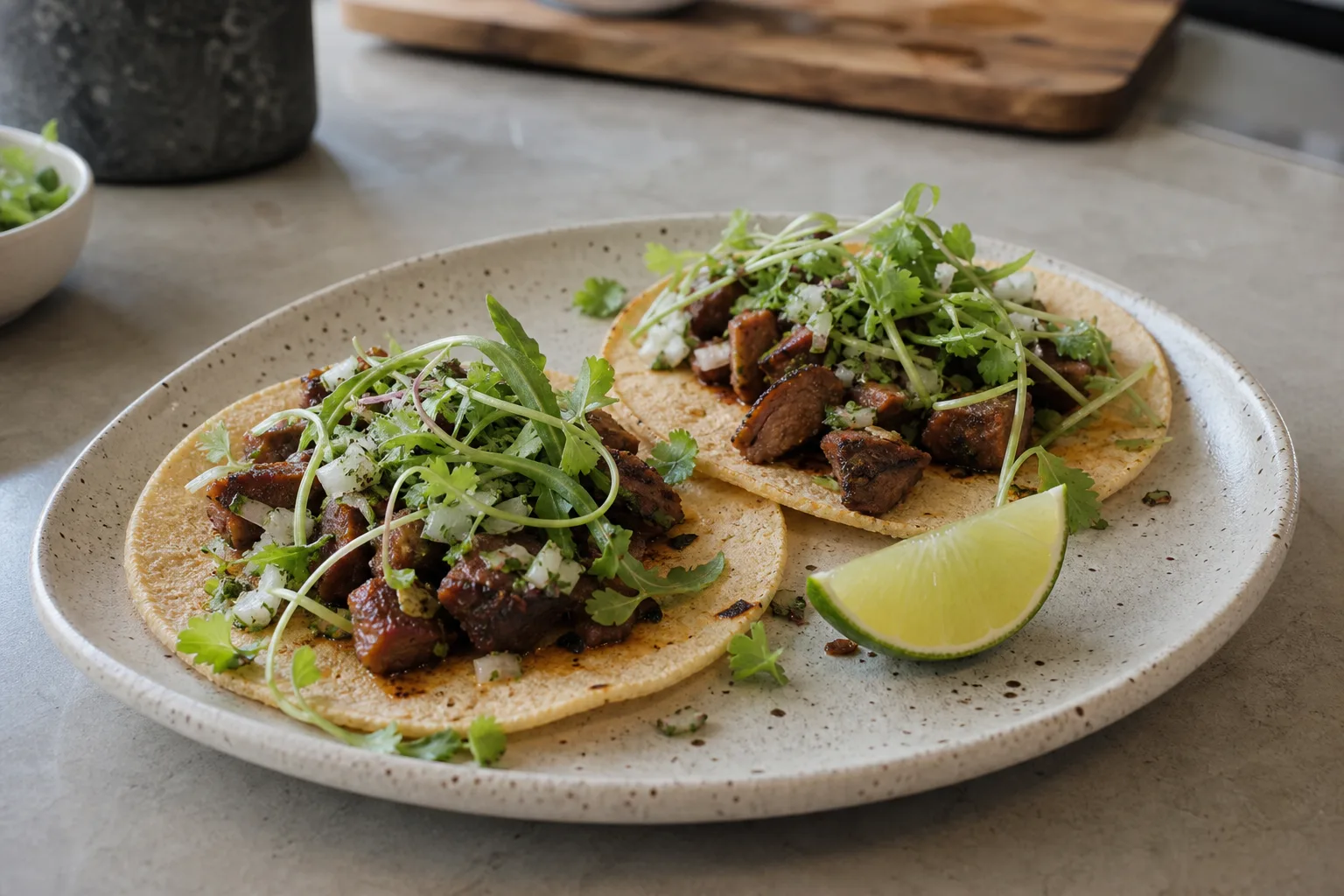
8. Tacos. A confetti of arugula or cilantro microgreens over carnitas, fish, or beans adds freshness and a little pepper. Because the leaves are small, they cling instead of sliding out the back of the tortilla.
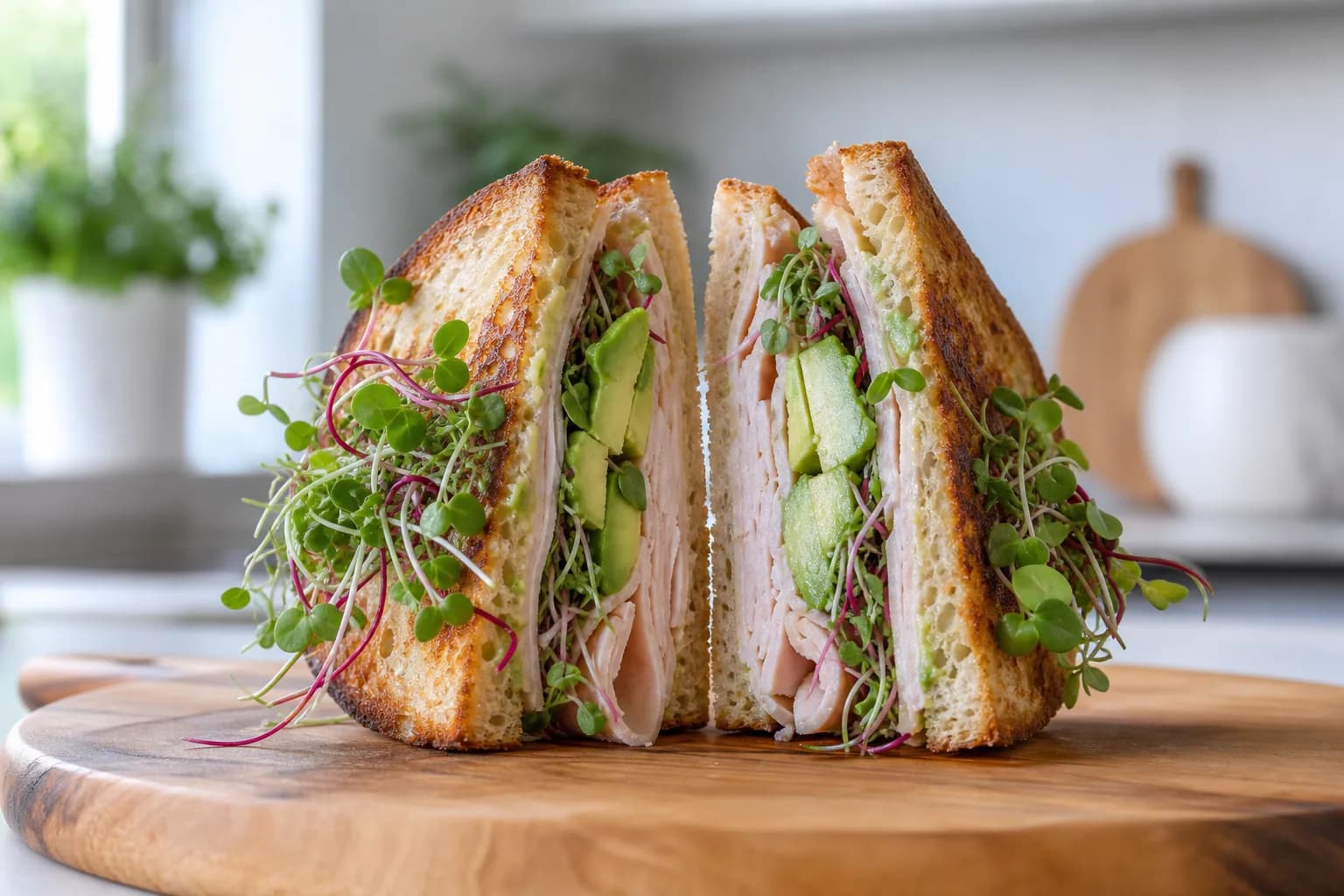
9. Sandwiches and wraps. Swap limp lettuce for a layer of greens. They will not wilt into sadness by lunchtime the way a leaf of romaine does. See microgreens for sandwiches and wraps for build ideas.
10. Burgers. A small handful under the top bun, on top of the patty, brings a herbal lift that holds up against rich, fatty meat.
Pasta, pizza, and dinner plates
11. Finished pasta. Toss a handful through warm pasta off the heat, or scatter them over the top. Basil microgreens with tomato and olive oil is a no-cook sauce in disguise.
12. Pizza, after it bakes. Never before. Slide the pie out of the oven, let it rest a minute, then shower it with arugula or mustard microgreens. The contrast of hot crust and cool greens is the whole point.
13. Pesto and green sauces. Blitz microgreens with oil, garlic, nuts, and a little cheese for a vivid sauce. Basil is the classic, but arugula and broccoli microgreens make a more peppery, more nutritious version. We have a full method in microgreens pesto.
14. On grilled or roasted vegetables. Warm grilled beets or roasted carrots love a sweet, earthy beet microgreen on top, plus an extra pinch of salt to bring out the sweetness.
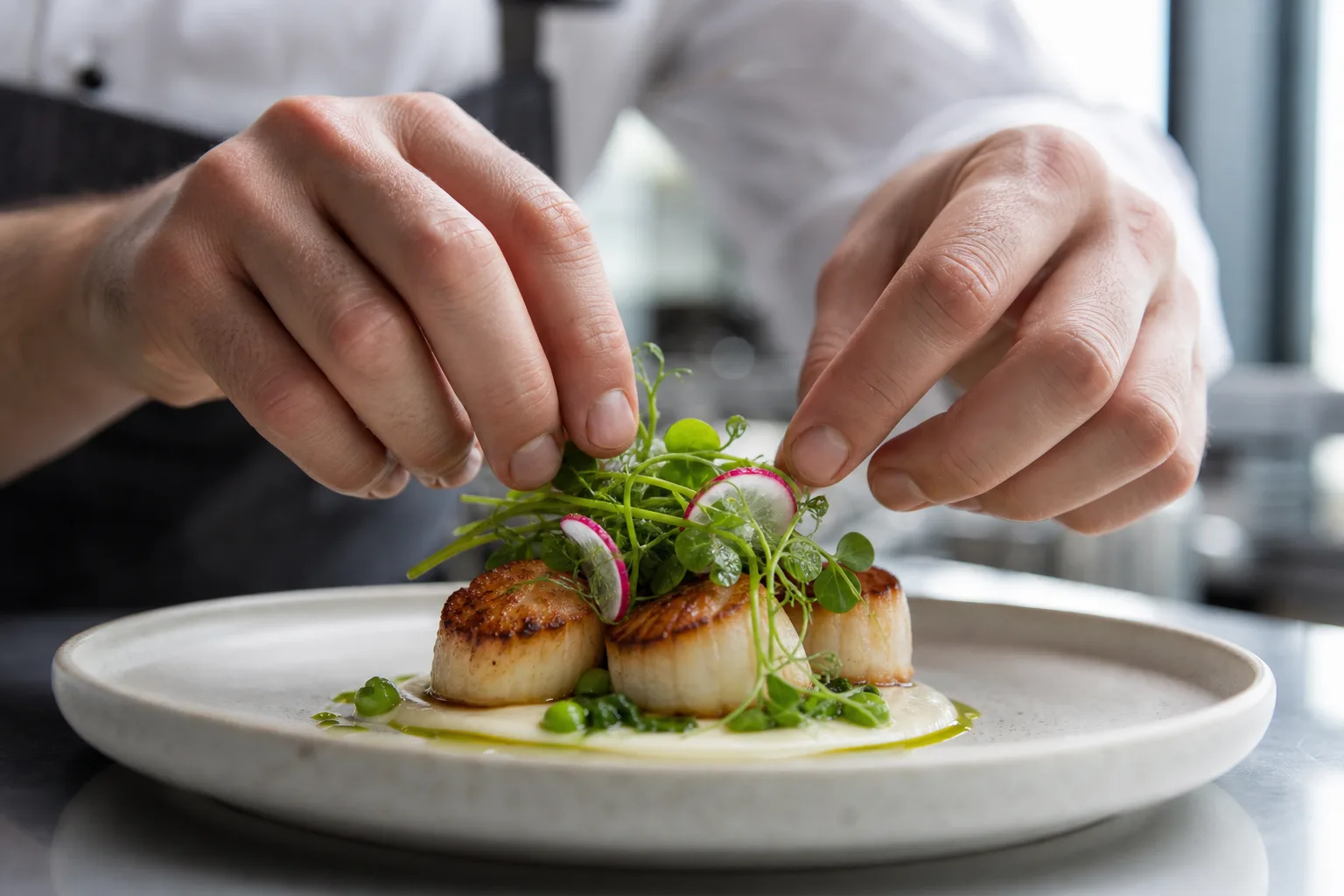
15. As a real garnish, done generously. Finish soups, steaks, fish, and risotto with a proper handful, not three lonely sprigs. Treating them like a chef would means using enough to taste, not just to look pretty.
A flavor-pairing cheat sheet
The fastest way to cook with microgreens well is to match their flavor to the dish. These notes come straight from how each variety actually tastes, so you can grab the right one without guessing. For a deeper dive, see our microgreens flavor profiles guide.
| Microgreen | Flavor | Intensity | Best savory uses |
|---|---|---|---|
| Radish | Sweet, then spicy | Strong | Tacos, avocado toast, burgers |
| Arugula | Tangy, nutty, peppery | Strong | Pizza, sandwiches, grain bowls |
| Broccoli | Slightly bitter, crunchy | Mild | Eggs, pesto, finished pasta |
| Sunflower | Sweet, nutty | Mild | Grain bowls, slaws, cold noodles |
| Basil | Sweet, spicy | High | Tomato pasta, pizza, caprese |
| Cilantro | Lemony, citrus | Strong | Tacos, soups, noodle salads |
| Pea | Fresh, sweet | Mild | Ramen, eggs, stir-fries |
| Mustard | Hot, sharp | High | Burgers, roasted meats, pizza |
| Beet | Sweet, earthy | Mild | Grilled vegetables, salads |
Mild varieties like sunflower, pea, and broccoli are the friendliest place to start, since they add freshness without dominating. The bolder ones, mustard and radish especially, are best deployed where there is fat or richness for them to cut through.
A few habits that make it stick
Eating microgreens every day comes down to three small things. First, keep them visible. Greens you can see when you open the fridge get used; greens hidden in a drawer get forgotten. Second, add them last, off the heat, so you never waste their flavor or color. Third, rinse and pat dry before they touch the plate, just as you would any leafy green.
The honest catch with store-bought microgreens is that they are pricey and often already past their prime by the time you get them home, which is exactly why so many of them mold within a day or two. That is the gap Luya, our countertop grower, was built to close: it raises fresh trays right on your counter, so a daily handful is genuinely free of trips to the store and free of the wilting that makes people give up. When the greens are always there and always fresh, the habit takes care of itself.
The bottom line
Microgreens are not a garnish to admire and a chore to use up. They are a fast, flexible ingredient that improves almost anything savory, from a morning egg to a Friday-night pizza. Pick one variety, keep it where you can see it, and add it to the meals you already make. Fifteen ideas is plenty to get started, but the real number is however many savory dishes you cook in a week, because nearly all of them are better with a fresh handful on top.