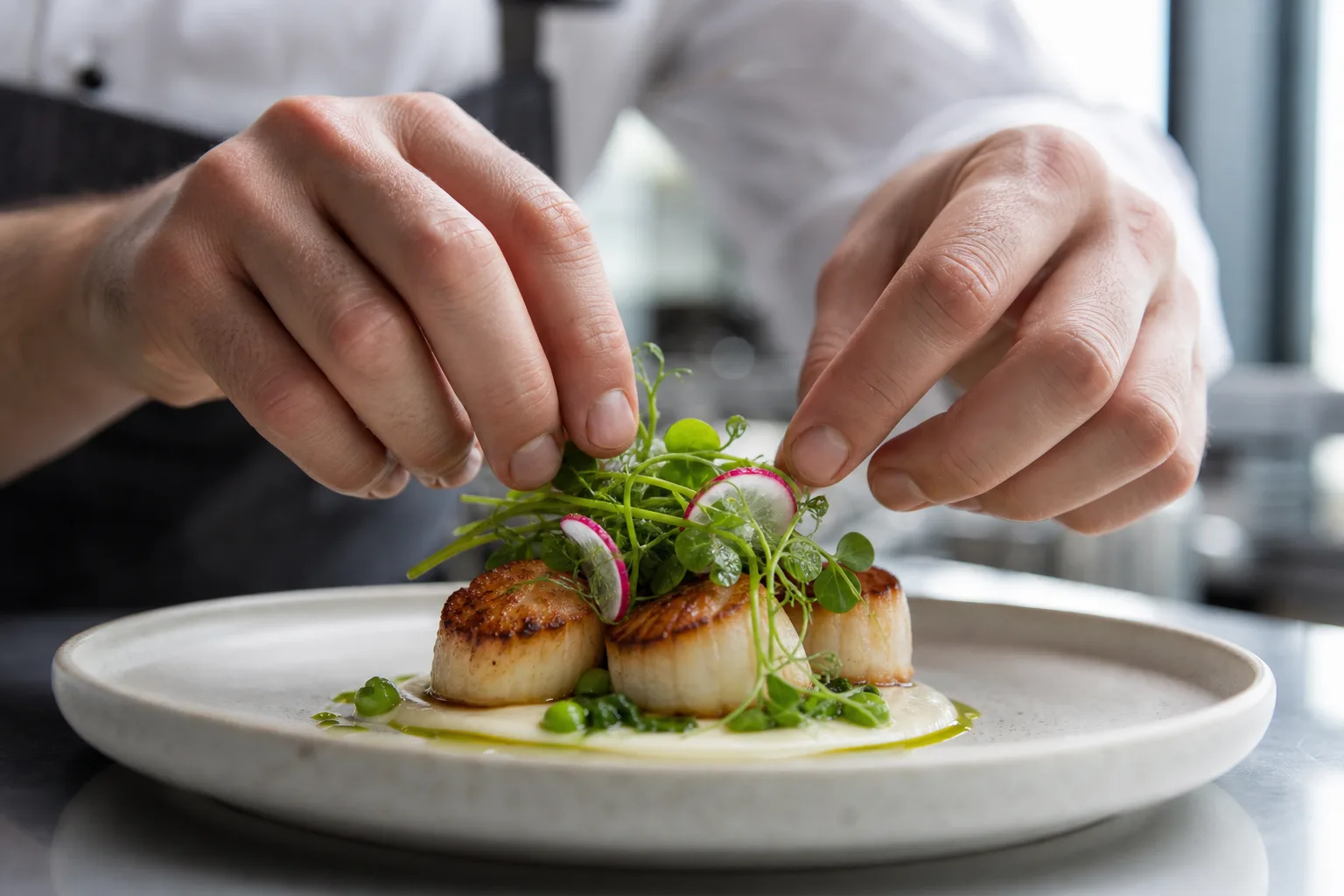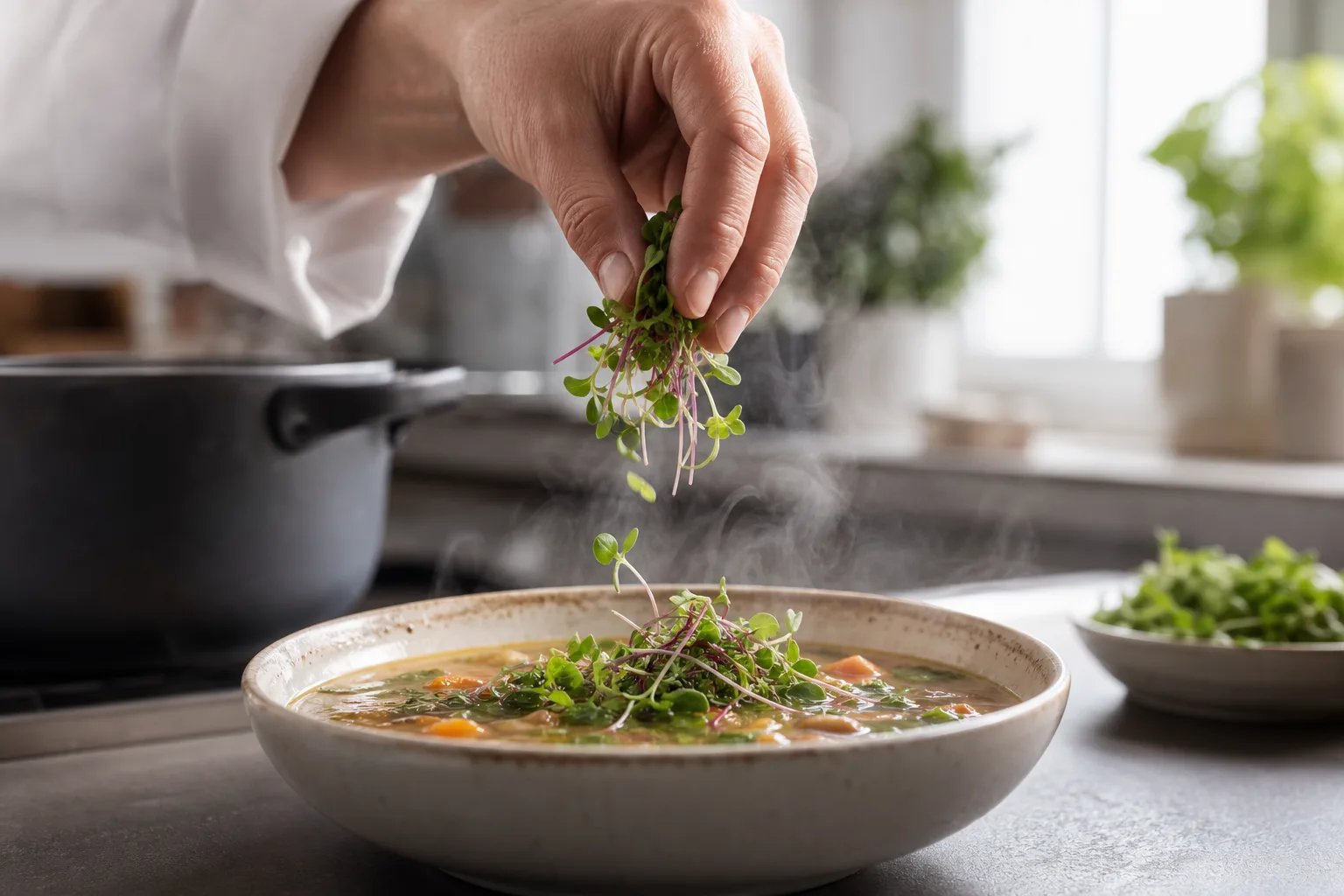
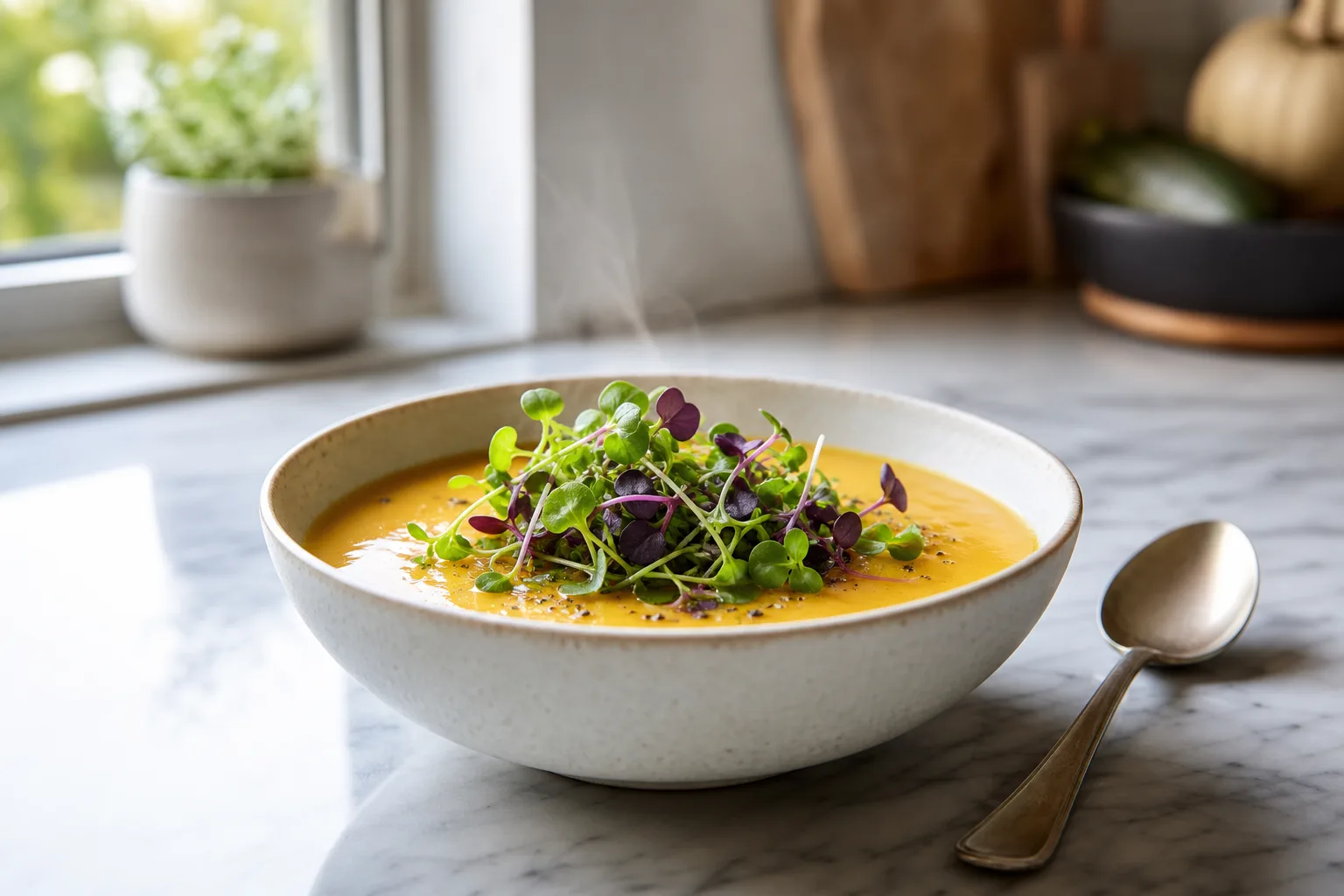
There is a quiet moment in cooking that most home cooks rush past: the few seconds between turning off the heat and carrying the bowl to the table. Chefs treat that window as sacred. It is when a plain pot of soup becomes a dish worth photographing. For years, the trick they relied on was a pinch of microgreens dropped on top at the very last second, raw and untouched by the heat below.
That habit is no accident. Tiny greens add color, aroma, and a clean bite to something otherwise soft and uniform. But there is a more important reason to add them at the end rather than stirring them into the pot, and it has everything to do with keeping the good stuff intact.
Why the timing matters more than the recipe
Microgreens are harvested just days after the seed sprouts, when the plant has poured its energy into a small package of leaves. That is why they can carry far more concentrated nutrients than the full-grown vegetable, in some cases several times more per bite. It would be a shame to cook all of that away.
Many of the compounds people prize in young greens are sensitive to heat and water. Vitamin C leaches into hot liquid and breaks down with prolonged warmth. The same is true for some of the enzymes and delicate antioxidants that make these greens worth eating in the first place. Drop a handful into simmering broth and you trade most of their character for a sad, wilted texture.
Finishing soups with microgreens sidesteps all of that. The greens meet the heat for only a few seconds before they reach your mouth. They warm slightly, release their aroma, and soften just enough, but they never truly cook. You get the bright flavor and the nutrition together, in one bowl.
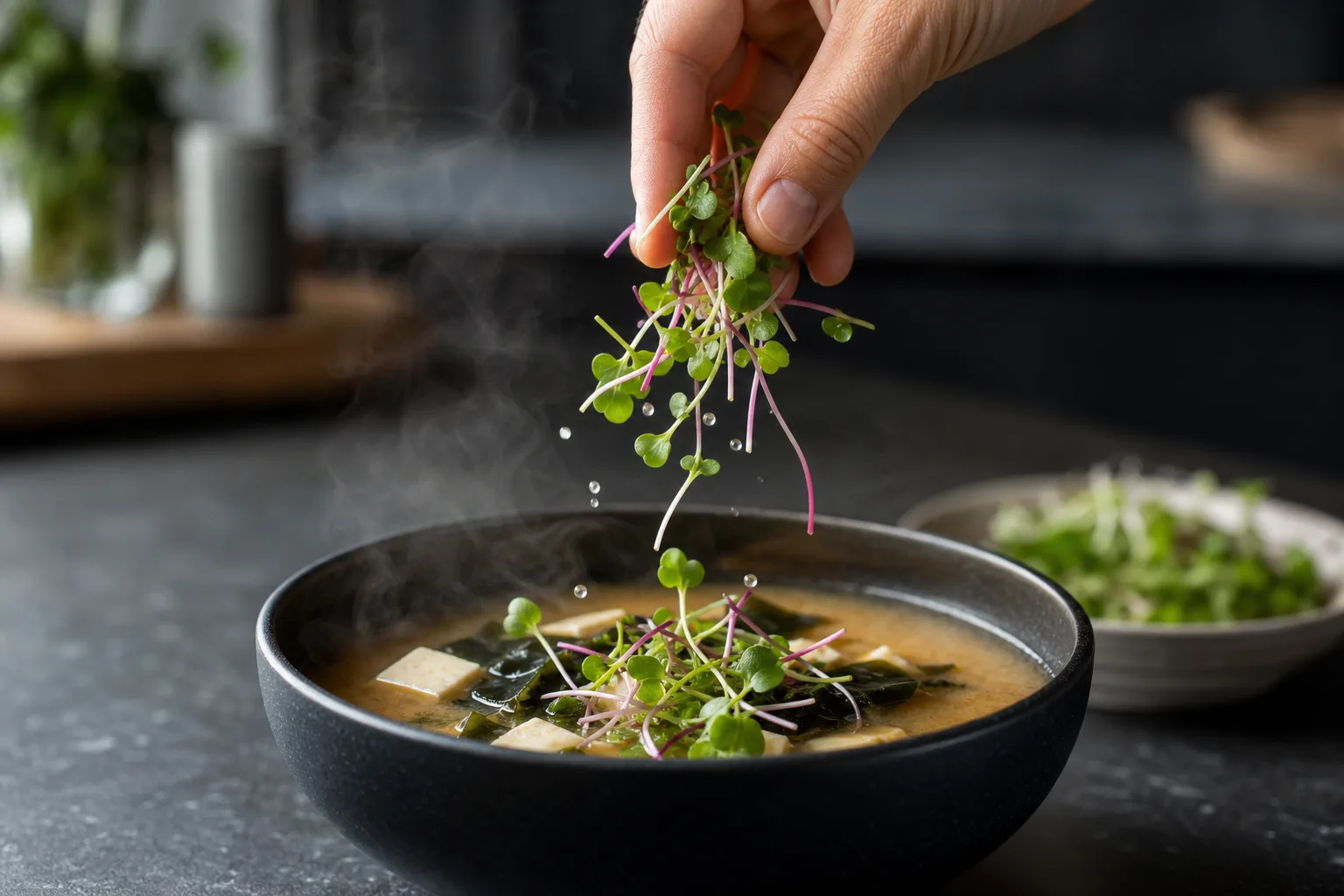
Add them raw, right at the end
The rule is simple. Ladle the soup, then top each bowl. Never add greens to the pot.
A few small habits make the result better:
- Rinse the microgreens in cool tap water and dry them well, the same way you would treat any leafy green. Wet greens turn slimy fast on hot soup.
- Wait until the soup is in the bowl, not the pot. Heat is gentler in a single serving than in a deep simmering pot.
- Pile them loosely rather than pressing them down. A light tangle keeps texture; a flattened mat goes limp.
- Serve immediately. The residual steam will wilt them within a minute or two, which is fine for flavor but means there is no point in topping a bowl that will sit.
If you grow your own, this is where freshness pays off most. Greens snipped minutes before serving hold their crunch and aroma far better than a clamshell that has been riding in a delivery truck. A countertop grower like Luya makes that kind of last-second harvest realistic on a weeknight, which is one of the quiet arguments for growing instead of buying.
Match the green to the bowl
Not every microgreen suits every soup. The trick is to think about flavor intensity and how it plays against the base. A delicate consommé can be overwhelmed by mustard greens; a heavy lentil stew can swallow something too mild. Here is a starting map, drawn from the way these greens actually taste.
| Microgreen | Flavor | Best soup match |
|---|---|---|
| Cilantro | Lemony, citrus, strong | Tortilla soup, pho, coconut curry |
| Sunflower | Sweet, nutty, mild | Creamy potato, squash, chowder |
| Basil | Sweet, spicy, high intensity | Tomato, minestrone, white bean |
| Radish | Sweet to peppery, strong | Miso, ramen, brothy noodle bowls |
| Broccoli | Slightly bitter, crunchy, mild | Cheddar broccoli, lentil, vegetable |
| Pea shoots | Sweet, fresh, mild | Spring pea, leek, light chicken |
| Arugula | Savory, pungent, nutty | Tomato, minestrone, bean soups |
| Kale | Mild bitter, crunchy, mild | Hearty bean, sausage, vegetable |
A useful instinct: pair like with like, or use a green to add the note the soup is missing. Cilantro belongs in bowls that already lean bright and acidic. Sunflower's sweet, nutty character rounds out anything creamy. Peppery radish microgreens cut through the salt and fat of a rich ramen, the way a fresh chili or scallion would. If you want to go deeper on this, our guide to flavor pairing walks through the logic for any dish.
A quick template you can repeat forever
You do not need a recipe so much as a formula. Pick a soup, pick a green, and add a small accent so the topping looks deliberate rather than tossed on.
| Soup base | Microgreen finish | Extra accent |
|---|---|---|
| Roasted tomato | Basil | Drizzle of good olive oil, cracked pepper |
| Butternut squash | Sunflower | Toasted pumpkin seeds, swirl of cream |
| Miso or ramen | Radish | Thin chili slices, sesame seeds |
| Creamy potato leek | Pea shoots | A few snipped chives |
| Lentil or bean | Arugula | Squeeze of lemon, flaky salt |
| Cheddar broccoli | Broccoli | A grating of sharp cheese |
The accent matters more than it seems. A sprinkle of toasted nuts or seeds, a drizzle of oil, or a squeeze of citrus gives the eye somewhere to land and keeps the greens from looking like an afterthought. This is the same logic behind garnishing like a chef on any plate.
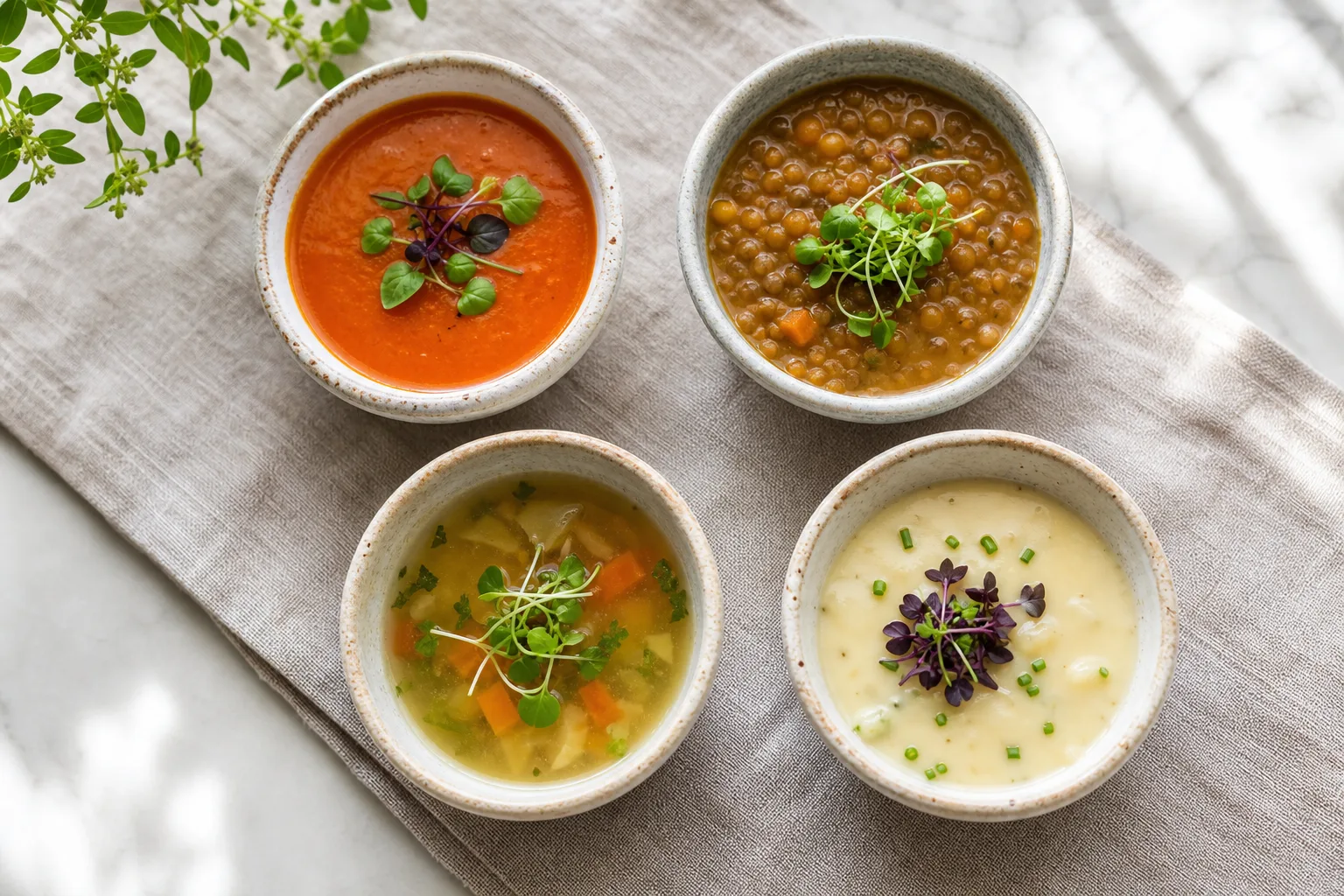
What the greens actually bring to the bowl
It is easy to treat a garnish as decoration, but the nutrition here is real. The young greens in that final handful carry vitamins and plant compounds in concentrated form. Cruciferous types like broccoli and cabbage are particularly interesting: they are rich in the precursors your body converts to sulforaphane, a compound studied for its protective properties, and they act as prebiotics that feed the beneficial bacteria in your gut.
The numbers below are rough per-serving estimates for a typical pinch added at the table. They are not the point of the meal, but they are a meaningful free bonus on top of a bowl you were going to eat anyway.
| Microgreen (small handful, ~15 g) | Notable for | Why it matters |
|---|---|---|
| Broccoli | Sulforaphane precursors | Studied for antioxidant and cell-protective effects |
| Radish | Vitamins C, E, K | Antioxidant support; darker varieties pack more |
| Red cabbage | Vitamins C, E, K | Among the highest vitamin levels in young greens |
| Cilantro | Lutein, beta-carotene | Eye-supporting pigments |
| Arugula | Vitamin K | Linked to cardiovascular health |
Because you are adding them raw, those vitamins stay closer to the levels the plant actually holds. That is the whole argument for the technique. For the bigger picture on what these greens contain, our overview of microgreens nutrition goes further, and if you are simply wondering whether they live up to the hype, are microgreens good for you is a fair place to start.
Start with the easy ones
If you are new to this, do not overthink your first crop. Some of the best soup-topping greens are also the most forgiving to grow. Radish, broccoli, and pea shoots are among the easiest microgreens to grow at home, germinate quickly, and happen to be the ones that play best with brothy, creamy, and hearty soups. Begin there, get comfortable with the last-second finish, and branch into basil and cilantro once you trust the routine.
You will know it is working the first time someone leans over a bowl, breathes in, and asks what smells so good. That is the aroma doing its job, the same reason chefs have guarded that quiet moment between the stove and the table for years.
The takeaway
Soup is the perfect place for microgreens precisely because it asks so little of them. No cooking, no fuss, just a handful added at the last second. Keep them raw to protect the nutrients and the crunch, match the green to the character of the bowl, and add one small accent so it looks like you meant it. Do that, and an ordinary pot of soup becomes something that tastes brighter, looks finished, and quietly does a little more for you. For more ideas beyond the bowl, our guide to savory microgreen recipes and the basics of how to eat microgreens will keep you going.