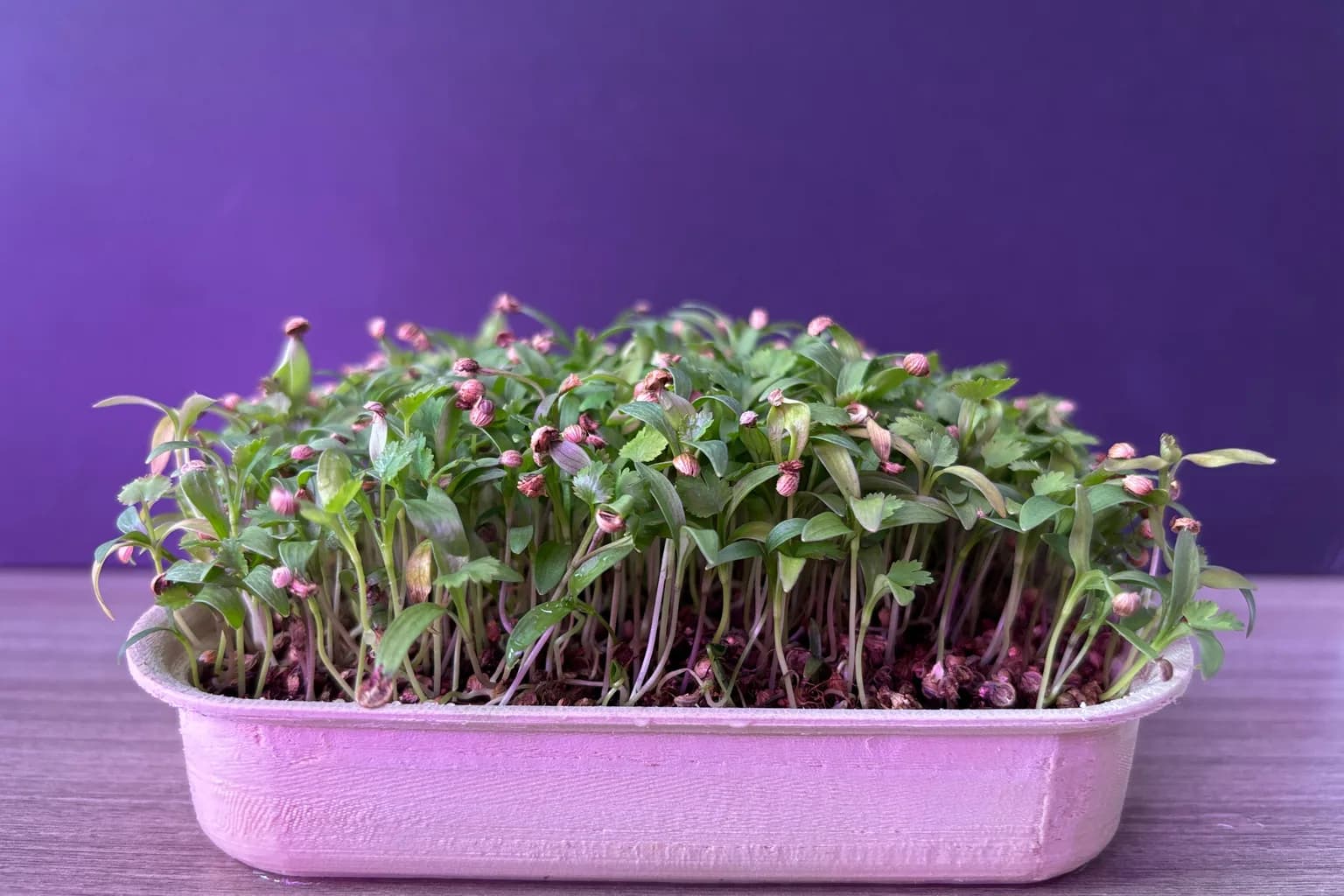
If you love the bright, citrusy punch of fresh cilantro, wait until you taste it as a microgreen. These tiny seedlings carry a flavor that is somehow both cleaner and more concentrated than the mature herb, with that unmistakable cilantro lift in a tender, delicate green you can snip straight onto a plate. The catch is that cilantro asks for something most fast crops do not: patience. It is one of the slower microgreens you can grow, and it has a few quirks that trip up beginners. Once you understand them, though, a steady supply of fresh cilantro on your counter is well within reach.
This guide walks through what makes cilantro special, why it takes its time, and how to coax the best flavor out of every tray.
Why Cilantro Microgreens Taste So Good
Cilantro is a polarizing herb in its mature form, but as a microgreen it tends to win people over. The flavor is intensely herbal and fresh, with the same citrus-and-green character you get from the grown plant, just dialed up and cleaner. Because you eat the seedling at its peak, before any of the woodiness or bitterness of older leaves sets in, you get pure, vivid cilantro flavor with a soft, almost melt-on-the-tongue texture.
That intensity is the whole point. A small pinch of cilantro microgreens does the flavor work of a much larger handful of chopped herb. If you have ever bought a big bunch of cilantro for one recipe and watched the rest turn to slime in the fridge, microgreens solve that problem neatly: you harvest exactly what you need, when you need it.
Cilantro is also a genuinely nutritious little green. Research on microgreen nutrient profiles has found cilantro microgreens to be especially high in beta-carotene and lutein, two carotenoids your body uses to support eye health and everyday cellular defense. Like most microgreens, they deliver this in a concentrated, fresh-harvested form. If you want the bigger picture on what these greens bring to the table, our guide to microgreens nutrition lays it out, and are microgreens good for you weighs the evidence in plain language.
The Slow Grower: Why Cilantro Takes Its Time
Here is the honest part. If you are used to radish or broccoli popping up overnight, cilantro will test your patience. Where many beginner crops germinate in a day or two and finish in under a week, cilantro can take a week and a half to two weeks from sowing to harvest. It germinates unevenly and grows at its own unhurried pace.
The table below shows where cilantro sits compared to the fast crops most people start with.
| Crop | Germination | Harvest | Flavor | Pace |
|---|---|---|---|---|
| Radish | 1-2 days | 5-7 days | Peppery, sharp | Very fast |
| Broccoli | 2-3 days | 7-10 days | Mild, fresh | Fast |
| Pea shoots | 2-3 days | 8-12 days | Sweet, fresh | Medium |
| Cilantro | 7-10 days | 14-21 days | Bright, citrusy | Slow |
None of this makes cilantro hard to grow, it just rewards a different mindset. The plant simply has a slower clock, partly because of how its seeds are built. If you want a quick, confidence-building first crop before committing to cilantro's longer timeline, our roundup of the easiest microgreens to grow is a good place to start, and you can always run a fast tray alongside your slow one so something is always ready.
The Seed Trick: Splitting and Soaking
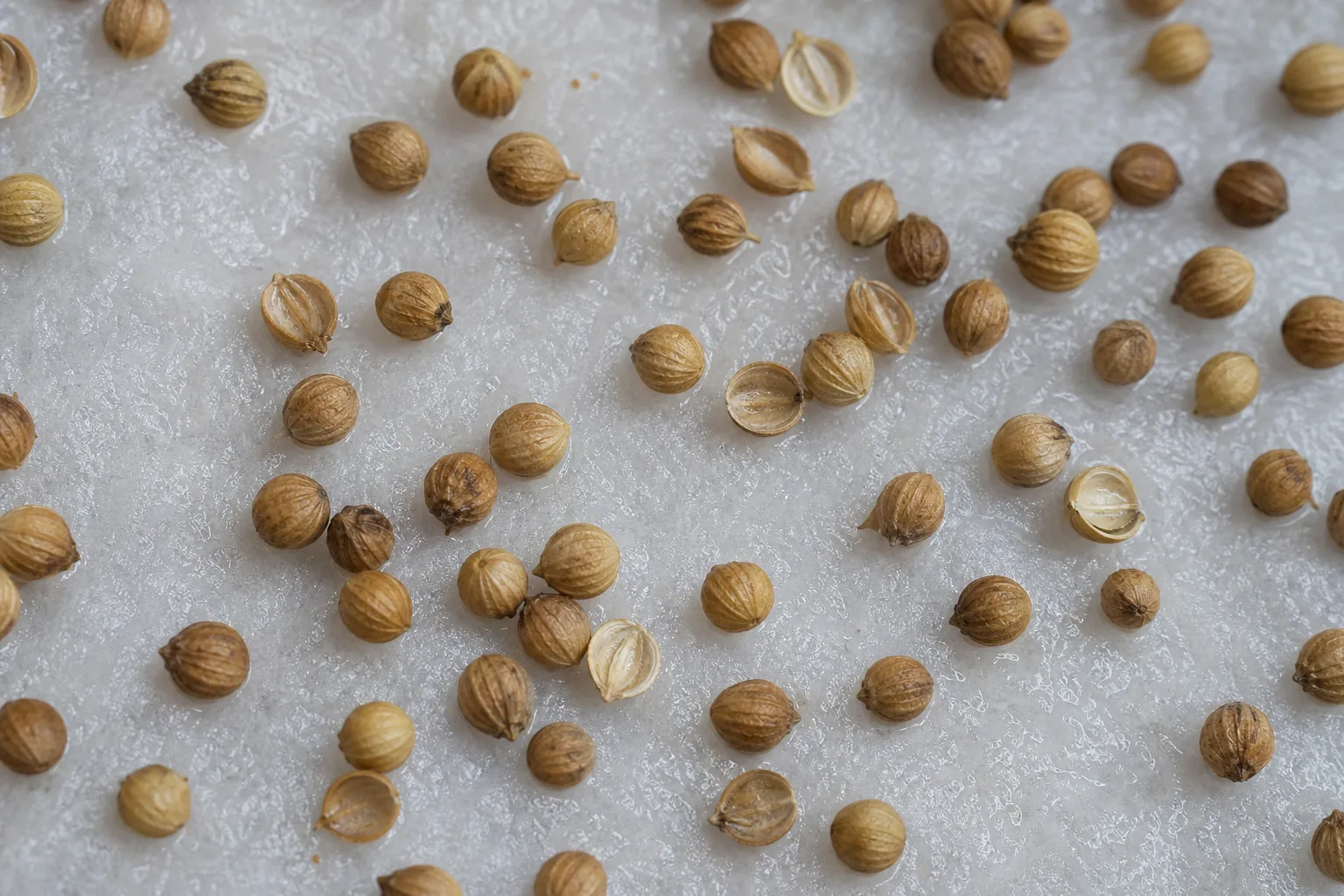
Cilantro's biggest quirk lives in the seed itself. What we call a cilantro "seed" is actually a small round fruit that usually holds two seeds inside a hard shell. Left whole, that shell slows water from getting in, which is a big reason germination drags and comes in patchy.
There are two simple ways to help.
First, gently split the seeds. Rolling the round seeds under light pressure, between two flat surfaces or with the heel of your hand, cracks many of them into their two halves. This exposes more surface to moisture and gives you a more even, reliable sprout. You do not need to crush them, just crack the outer shell.
Second, soak before sowing. A pre-soak of several hours in clean water softens that hard coat and speeds germination, the same trick that works for other tough-coated seeds. Aim for water around a neutral pH of 6 if you can measure it. After soaking, drain the seeds well and spread them in an even layer across your growing surface.
| Step | What to do | Why it helps |
|---|---|---|
| Split | Crack the round seeds into halves | Exposes seeds, speeds water uptake |
| Soak | Soak in clean water several hours | Softens the hard shell |
| Sow | Spread evenly, not too thick | Improves airflow, reduces mold risk |
| Blackout | Keep dark a few days after sowing | Encourages strong, upright stems |
These small upfront steps make a real difference with cilantro. They will not turn it into a fast crop, but they smooth out the uneven germination that frustrates first-timers. For the wider how-to that applies across crops, see how to grow microgreens at home and our look at seed density by crop.
Light, Patience, and Avoiding Mold
Cilantro likes a lot of light once it gets going. After the seeds germinate, move the tray somewhere bright so the seedlings green up and build that signature flavor. Thin, pale, stretched-out stems usually mean the greens are reaching for light they cannot find; if that happens, our notes on how to fix leggy microgreens will help.
The longer growing window is also where cilantro's main risk shows up: mold. The more days a tray spends warm and damp, the more chances mold has to take hold, and mold is the single most common reason home microgreen grows fail. Cilantro's two-week timeline simply gives it more time to go wrong than a five-day radish crop does.
The defenses are the familiar ones, just applied with extra care over a longer stretch. Sow at a sensible density rather than packing the seeds in, keep gentle air moving across the tray, and water consistently without letting things go soggy. Watering from below, so the surface and leaves stay drier, is one of the most effective habits you can build. If you have battled fuzzy white growth before, why microgreens keep molding breaks down the exact causes and fixes.

How to Use Cilantro Microgreens in the Kitchen
This is the fun part, and it is where cilantro microgreens really shine. Because the flavor is so concentrated, treat them as a finishing herb rather than a salad base. A light scatter goes a long way.
A few of my favorite ways to use them:
- Over tacos, guacamole, and salsa, where their citrusy brightness cuts through rich, savory flavors.
- On top of soups and curries like pho, tortilla soup, or a coconut curry, added right before serving.
- Folded into fresh salsas and chutneys, or blended into a quick cilantro-lime dressing.
- Sprinkled over eggs, rice bowls, and avocado toast for an instant lift.
The one rule worth repeating: add them raw and at the very end. Heat collapses both the delicate flavor and the tender texture almost instantly, so they belong on top of the finished dish, never in the pan. For more ideas, our how to eat microgreens guide and microgreens salad ideas are full of simple, repeatable ways to put them to work.
Fresh Cilantro, Without the Waiting Game
Cilantro's slow pace and seed quirks are exactly the kind of thing a controlled environment handles well. This is part of why Luya, our countertop microgreens grower, takes care of the variables that make slow crops fussy. You drop in a pre-seeded tray, and a sealed, climate-controlled chamber manages the temperature, watering, and airflow that mold loves to exploit over a long grow. The daily-watering burden disappears, and so does the soil mess.
For a patient crop like cilantro, that hands-off reliability is the difference between a tray you nurse for two weeks and one that simply shows up fresh on your counter. You harvest only what a recipe needs and leave the rest growing alive. If you are curious how the closed-loop system works, take a look at how Luya works.
The Bottom Line
Cilantro microgreens are not the crop to grow when you want instant results, but they reward the wait with a flavor that is hard to match. Split and soak your seeds to even out germination, give the seedlings plenty of light, stay on top of airflow and watering across the longer timeline, and treat the harvest as the bright, citrusy finishing touch it was born to be. Grow a fast crop alongside it if you are impatient, and you will always have something to snip, slow grower included.