If you have ever set a tray of microgreens on a windowsill, you already know the frustration. One week the shoots are short and stocky; the next they are pale, stretched, and leaning hard toward the glass. The greens are not being difficult. They are simply reacting to light that changes by the hour, the season, and the weather. That is the heart of the LED versus sunlight question for growing microgreens: it is less about which light is "stronger" and more about which one you can actually control.
For tiny crops harvested in a week or two, consistency matters more than raw power. Microgreens do not need to fuel a flowering plant through a whole season. They need a steady, predictable signal that tells them to green up, stay compact, and build the pigments and flavor compounds that make them worth eating. Below, I will walk through what the plant science actually says about light, and why a tunable LED setup tends to win indoors, especially once nutrition enters the picture.
What Plants Are Really Reading in Light
Light is not just energy for photosynthesis. It is also information. Plants carry a whole set of light sensors, called photoreceptors, that read different parts of the spectrum and switch genes on or off in response. Blue light is sensed mostly by cryptochromes and phototropins. Red and far-red light are read by phytochromes. Ultraviolet light is picked up by a receptor called UVR8.
Each of these triggers different behavior. Blue light, for example, keeps stems short and pushes the plant to make protective pigments through the phenylpropanoid pathway, which is the same machinery behind flavonoids, anthocyanins, and many phenolic antioxidants. Red light drives stem and leaf expansion and feeds into terpenoid and pigment production. UV acts like a mild stress signal, nudging the plant to build extra defensive compounds. These are the same molecules that give microgreens much of their color, bite, and nutritional value, which is exactly why light and microgreen nutrition are so tightly linked.
The takeaway is simple. The mix of wavelengths a microgreen receives is a set of instructions, not just calories. Sunlight delivers all of them at once, but in a ratio you cannot dial. An LED panel lets you choose the recipe.
Sunlight: Generous but Unpredictable
Sunlight is free, full-spectrum, and, at midday, far brighter than any home grow light. On a clear summer afternoon, outdoor light can exceed 1,000 micromoles per square meter per second of photosynthetic light. That is more than most leafy crops can even use.
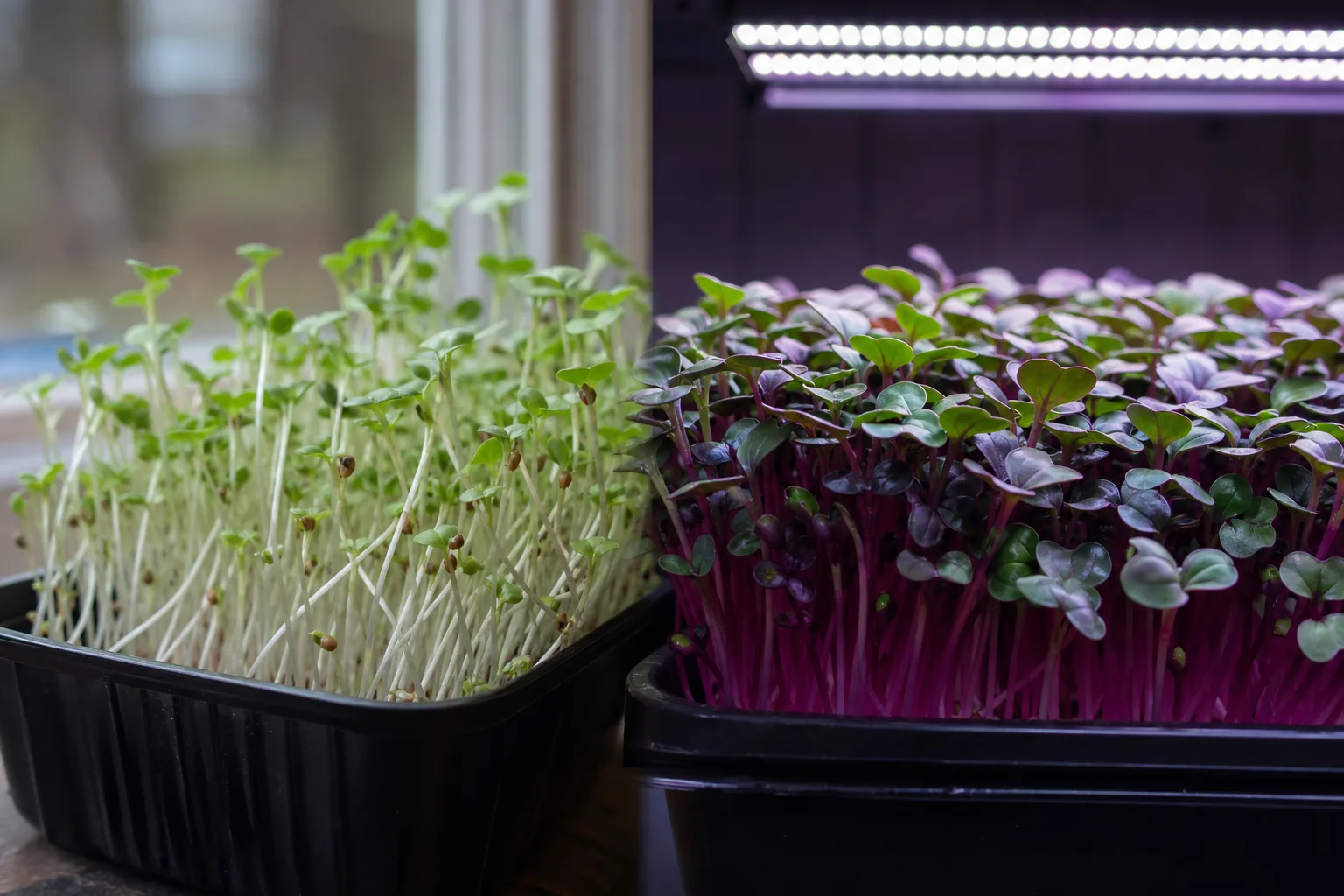
The problem indoors is everything else. A windowsill rarely delivers that intensity. Glass filters out much of the UV that triggers protective compounds, and light arrives from one direction, which is why windowsill greens lean and stretch. Worse, the dose swings constantly. A bright morning followed by an overcast afternoon, a short winter day, a neighboring building, even a passing cloud all change what the tray receives minute to minute.
Plant research shows this variability has real consequences. Within a healthy range, more light supports the photosynthesis that secondary metabolites are built from. But too little starves that process and suppresses flavonoid and phenolic production, while too much can trigger photoinhibition that damages the system and stalls metabolism. Sunlight indoors tends to bounce between "not enough" and "too much" without settling into the sweet spot. The result is inconsistent flavor, weak color, and the leggy, fragile growth covered in how to fix leggy microgreens.
LEDs: A Spectrum You Can Actually Dial
LED grow lights flip the script. Instead of taking whatever the sky offers, you set the spectrum, the intensity, and the timing, then deliver it the same way every single day.
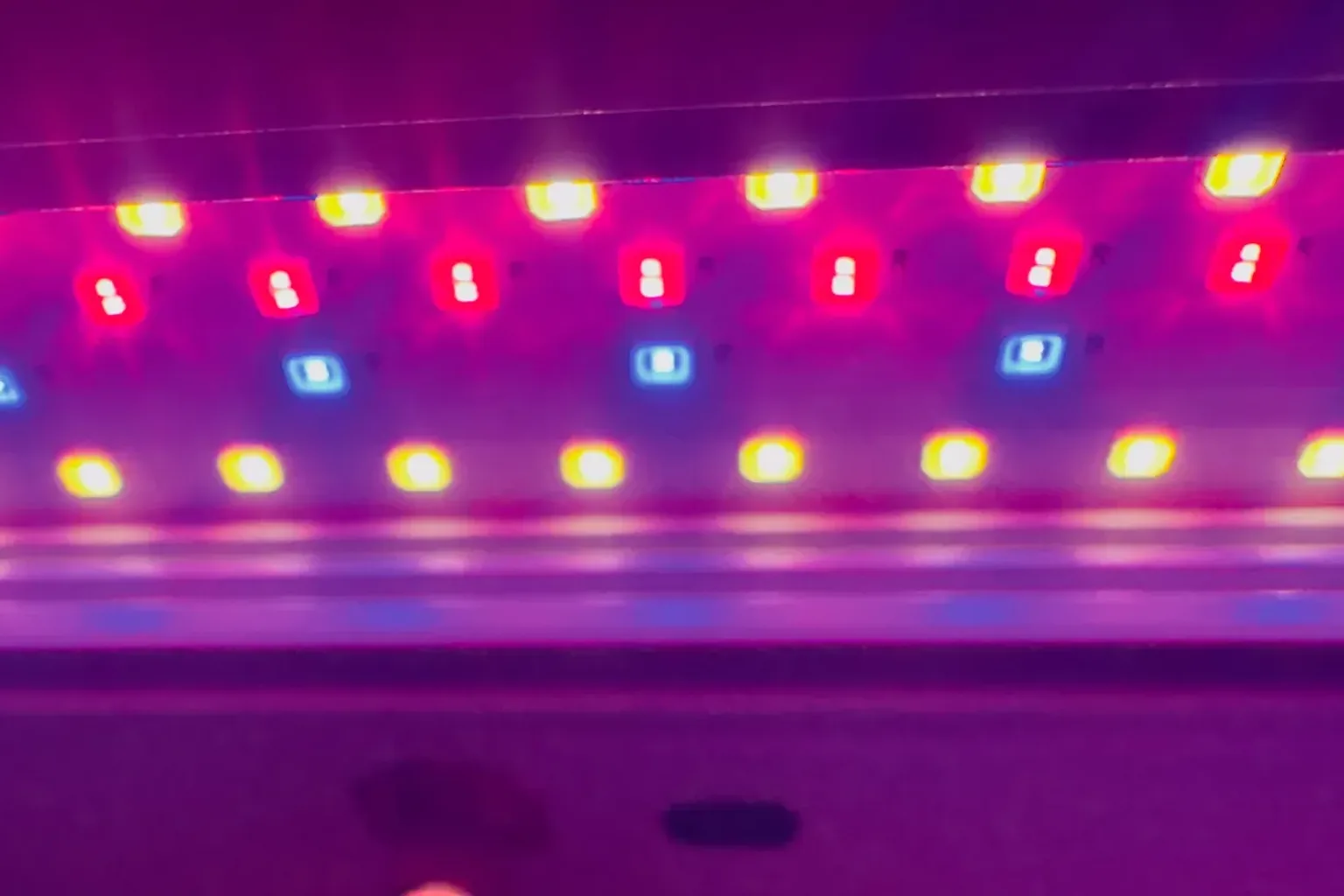
This control is not a gimmick. Studies that isolate individual wavelengths show clear, repeatable effects. Blue light reliably boosts flavonoids and phenolics in basil, kale, and other greens while keeping plants compact. Red light stimulates phenolic and pigment production and supports healthy expansion. Blends, such as a roughly 70 percent red and 30 percent blue mix, can raise total phenolics beyond what either color does alone. A modest dose of UV can push antioxidant levels higher still, as long as it stays below the plant's stress threshold.
Crucially, an LED gives you the dose the crop can use without the extremes. You avoid the dim stretch of a cloudy day and the harsh overload of direct summer glare. For a fast crop like microgreens, that steadiness is the whole point: predictable light produces predictable trays. If you are weighing the broader decision of growing your own versus buying, grow vs buy microgreens puts that reliability in context.
How the Two Compare at a Glance
| Factor | Sunlight (indoor window) | LED grow light |
|---|---|---|
| Spectrum control | Fixed, glass-filtered | Tunable (red, blue, UV blends) |
| Intensity | Swings with weather and season | Set and held constant |
| Daily consistency | Low | High |
| UV for antioxidants | Mostly filtered by glass | Optional, dosed precisely |
| Even coverage | One direction, causes leaning | Overhead, uniform |
| Year-round reliability | Drops sharply in winter | Identical every day |
Why Consistency Drives Nutrition
Here is the part that often gets missed. The compounds that make microgreens nutritionally interesting, the flavonoids, anthocyanins, phenolic acids, and glucosinolates, are not fixed numbers baked into the seed. They are built in response to light, and the genes behind them switch on and off depending on the signal the plant receives.
That means the same variety can come out noticeably different depending on how it was lit. Plant studies repeatedly show that the right spectrum and intensity upregulate the exact enzymes (with names like PAL, CHS, and 4CL) that drive antioxidant production. Get the light right and consistent, and you get a tray rich in those compounds. Let the light wander, and production wanders with it.
There is also a timing dimension. Plants run on an internal circadian clock, and many of these pathways follow a daily rhythm. A stable light-and-dark schedule keeps that clock in sync, which helps the plant accumulate pigments and antioxidants on cue. Some research even shows extended or continuous light can push phenolic and flavonoid levels higher in crops like basil and moringa. You cannot offer that kind of clean, repeatable photoperiod and DLI with a window.
A practical example: the deep red and purple in radish microgreens comes from anthocyanins that respond strongly to blue and UV light. Under weak, glass-filtered window light, those pigments often fail to develop, and you get pale shoots that taste flat. Under a tuned LED, the same seeds turn vivid and peppery.
| Light signal | What it tends to boost | Why it matters for microgreens |
|---|---|---|
| Blue (~450 nm) | Flavonoids, phenolics; compact growth | Stronger antioxidants, sturdier shoots |
| Red (~660 nm) | Phenolics, pigments, healthy expansion | Good yield and leaf development |
| Red + blue blend | Total phenolics above single colors | Balanced color, flavor, and structure |
| Low-dose UV | Anthocyanins, defensive antioxidants | Richer color and bite, if kept gentle |
Where Luya Fits
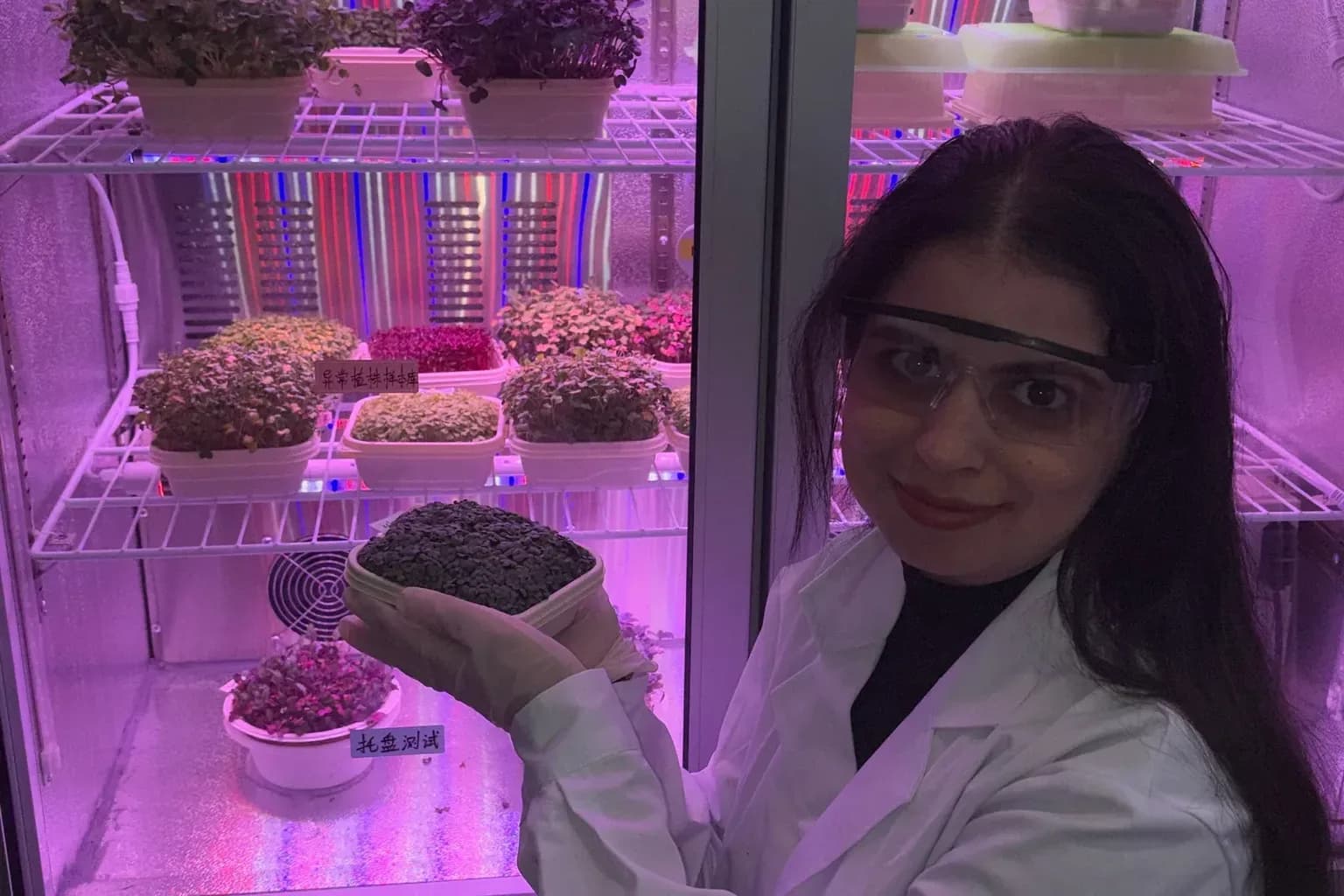
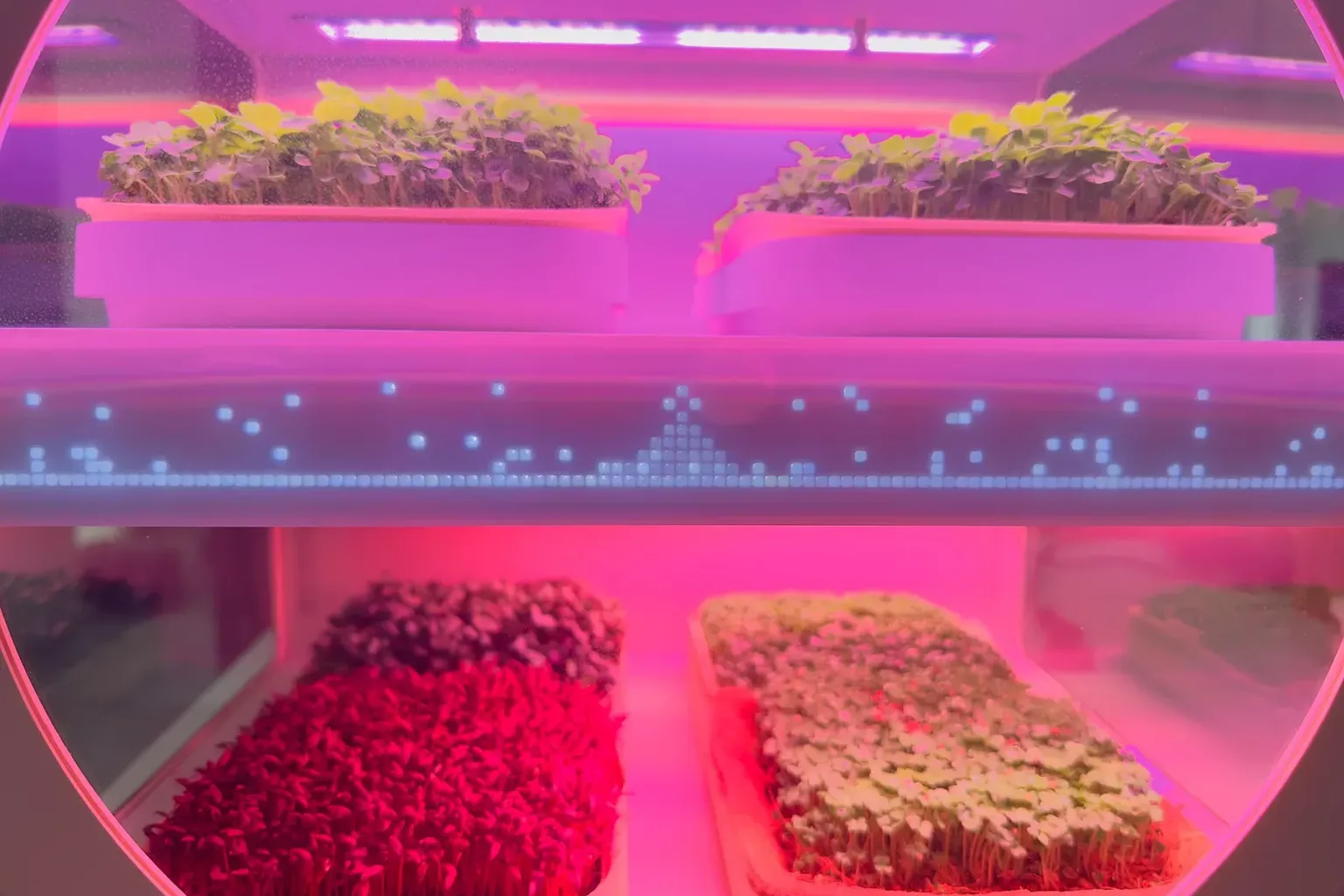
This is exactly the problem a countertop grower is built to solve. Rather than asking you to find a bright enough window and hope the weather cooperates, Luya brings the light source inside the device and holds it steady. The spectrum and schedule are managed for you, so every tray gets the same tuned signal regardless of the season or which way your kitchen faces.
That is the quiet advantage of controlled-environment growing: it removes the guesswork. You are not tracking sun angles or rotating trays to stop them leaning. The light shows up the same way each day, which is the single biggest factor in reliable color, flavor, and nutrition from a fast crop. For the bigger picture, controlled environment agriculture and how Luya works go deeper.
Do You Need LEDs to Grow Microgreens?
No. You can grow a decent tray on a sunny windowsill, and plenty of people do. With a bright, south-facing window, a short crop cycle, and a willingness to rotate the tray and accept some seasonal variation, sunlight works fine. Our guide to growing microgreens at home covers that path.
But if your goal is consistency, especially in winter, in an apartment with limited light, or when you care about maximizing the nutritional compounds, LEDs are the more dependable choice. They are not "better light" in some absolute sense. They are controllable light, and for a crop you harvest in a week, control is what turns a hit-or-miss hobby into a reliable supply of fresh greens.
The Bottom Line
Sunlight is powerful but unruly. LEDs are dimmer at peak but steady, tunable, and available every day of the year. For microgreens, where the prize is dense color, sharp flavor, and high antioxidant content built up over just a few days, that reliability is decisive. The plant science is clear that specific wavelengths and a stable schedule drive the protective compounds we eat microgreens for. A window cannot promise that consistency, but a well-designed LED setup can. If you want greens that look and taste the same every harvest, choose the light you can control.