If you eat plant-based, you already know the daily question: where is the protein coming from? Pea shoots are one of the most quietly impressive answers on the produce shelf. These tender young pea greens are not just a pretty garnish; they are a genuine plant-based protein source, one of the more protein-dense microgreens you can find. That is why pea shoots stand out in the wider world of high-protein microgreens, and why they deserve more than a spot on the edge of the plate.
They taste like spring, too: sweet, faintly grassy, with the unmistakable flavor of fresh garden peas, minus the work of shelling anything. Below we will walk through what pea shoots actually are, why they earn a place in a plant-forward diet, the easiest ways to eat them every day, and the one practical problem, freshness, that quietly decides whether they are worth buying at all.
What Are Pea Shoots?
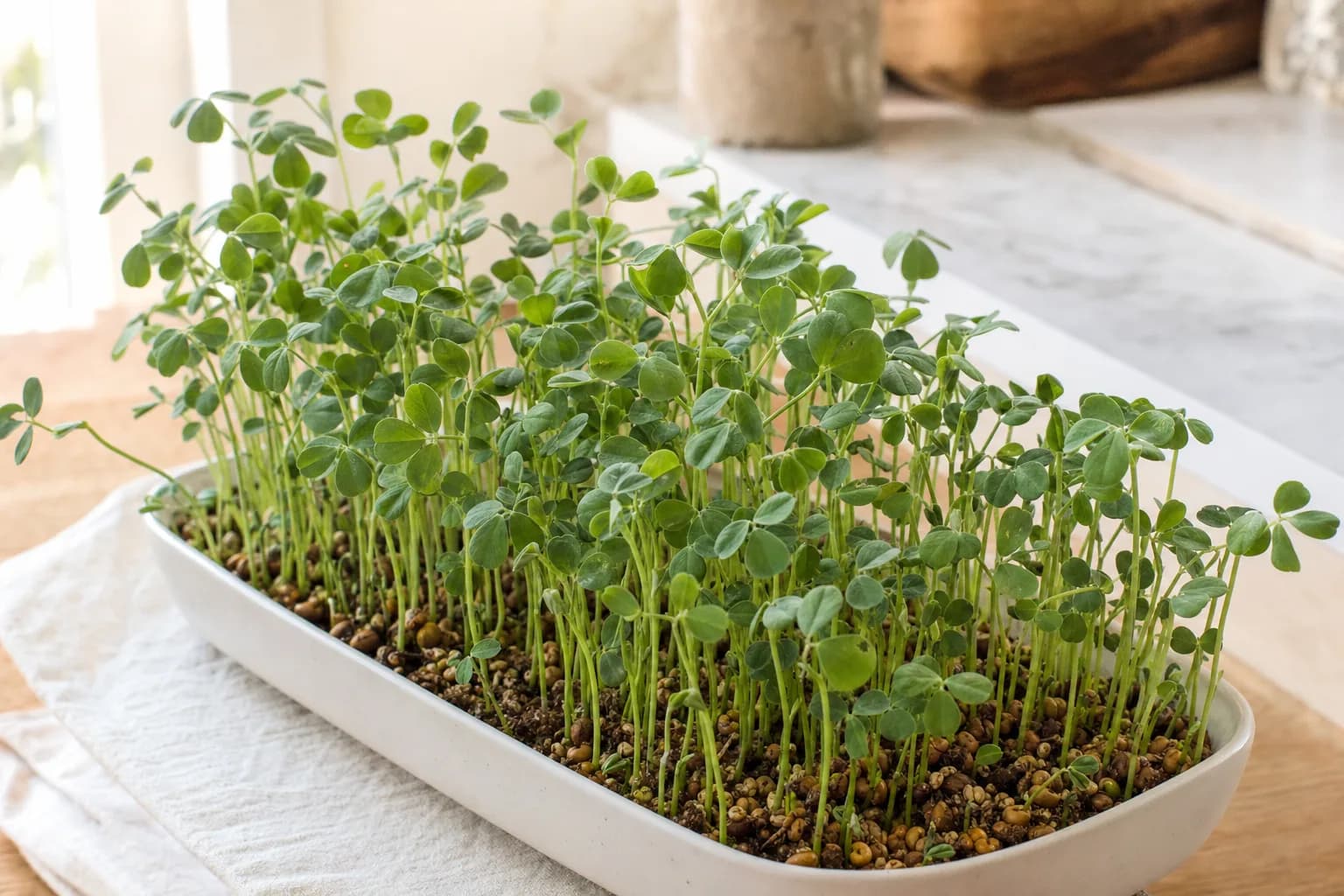
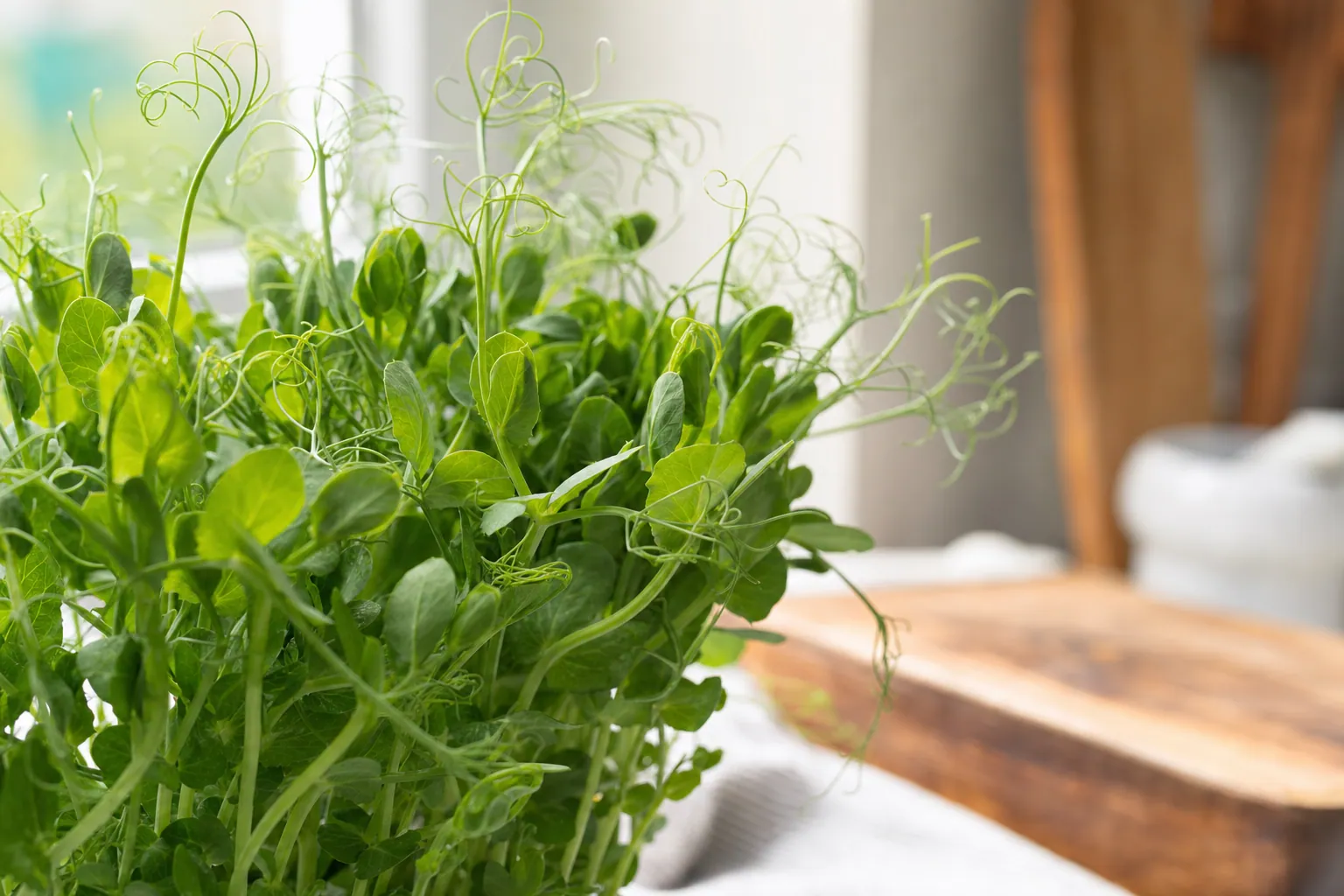
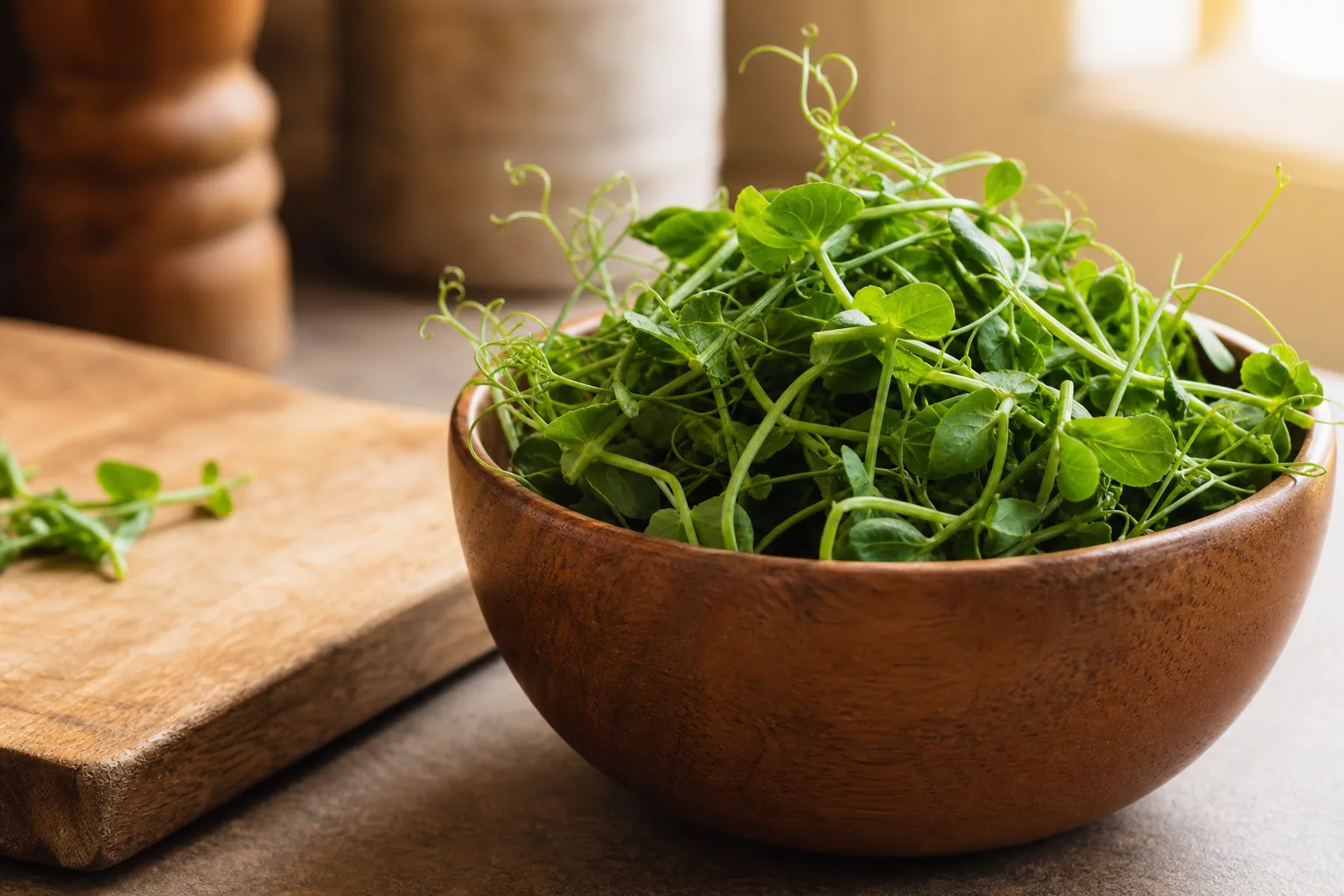
Pea shoots are the young, edible greens of the pea plant, harvested early while the stems are still tender and the leaves and curling tendrils are delicate. They sit squarely in the microgreens family: vegetables picked just after the first true leaves appear, long before the plant reaches full maturity. With peas, that early stage gives you a green that is substantial enough to chew, not the wispy thread you get from some other crops.
That early harvest is the entire point. As a category, microgreens are roughly 2 to 3.5 times more nutrient-dense than their fully grown counterparts, according to peer-reviewed reviews in journals like MDPI's Plants and to USDA nutrient data. You are eating the plant at its most concentrated stage, before those nutrients get diluted across a large mature crop. (Radish microgreens often top that density ranking, but pea shoots have their own edge, which we will get to.) If you want the bigger picture on the whole category, what are microgreens is a clear primer.
Pea shoots are also famously beginner-friendly to grow. Alongside radish, broccoli, and sunflower, they are one of the crops people reach for first, because they germinate readily and grow into something genuinely hearty. That makes them a regular feature in any list of the easiest microgreens to grow.
Why Pea Shoots Are a Standout for Plant-Based Eaters
The headline reason is protein. Pea shoots are one of the more protein-dense microgreens, a strong plant-based protein source that puts them in rare company among leafy greens, where single-digit percentages are the norm. It is not enough to build a whole day's intake around, but scattered over a salad, folded into a bowl, or piled on toast, it is a real, repeatable contribution from a food that most people treat as decoration. For anyone building meals around plants, those small additions add up.
Protein is only part of the story. Like other microgreens, pea shoots are rich in vitamins C, K, and E, plus the antioxidants and polyphenols that give fresh greens much of their nutritional value. You get a lot of that in a small, low-effort volume, which is exactly what you want from a food you are sprinkling on top of meals rather than cooking down into a side dish.
Here is how pea shoots stack up against a few other popular microgreens, so you can see where each one shines:
| Microgreen | Standout nutrient/trait | Best for |
|---|---|---|
| Pea shoots | One of the most protein-dense microgreens | Plant-based protein |
| Broccoli microgreens | ~10-100x more sulforaphane precursor than mature broccoli | Antioxidant/detox support |
| Radish microgreens | Often the most nutrient-dense overall | Fast, peppery flavor |
| Sunflower | Crunchy, hearty texture; nutty flavor | Salads and sandwiches |
The protein figure is the one to anchor on, because it is unusual. Here is the same comparison framed by approximate protein density:
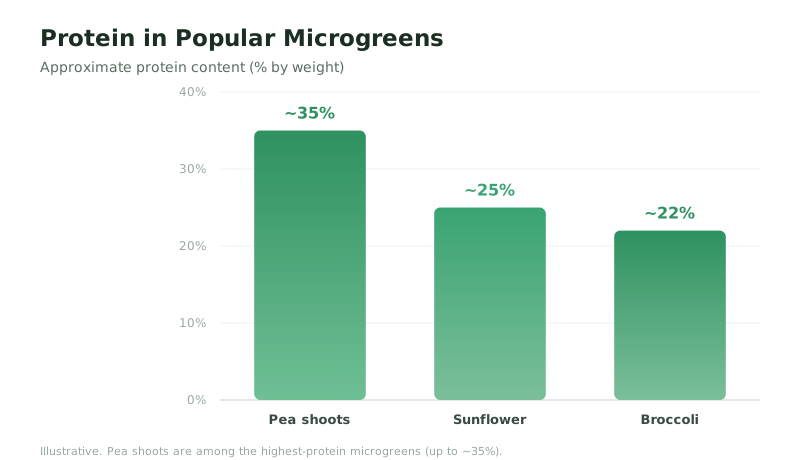
A quick note on context: each crop earns its keep differently. If protein is your priority, pea shoots lead. For the antioxidant and cellular-defense angle, broccoli microgreens carry far more of the precursor to sulforaphane than mature broccoli does; our explainer on what is sulforaphane covers why that compound gets so much research attention. The point is not that one green wins, but that pea shoots own the protein lane.
It is worth keeping expectations grounded. Pea shoots are a nutritious, protein-forward food, not a supplement or a cure. If you are curious about the science behind why young greens pack such a punch, our overview of microgreens nutrition breaks it down without the hype, and are microgreens good for you takes an honest look at what the evidence does and does not show.
How to Eat Pea Shoots
The good news: pea shoots need almost no preparation. Their tender stems and tendrils are fully edible raw, which also happens to preserve their nutrients and texture best. A few reliable ways to use them:
- Raw in salads. Use them as a base or a topper. They add real body and a fresh-pea sweetness that holds up against bold, acidic dressings instead of collapsing the way baby spinach can.
- In sandwiches and wraps. Treat them like sprouts or lettuce, for crunch and a quiet protein boost. They are sturdier than alfalfa and will not turn to slime in a packed lunch.
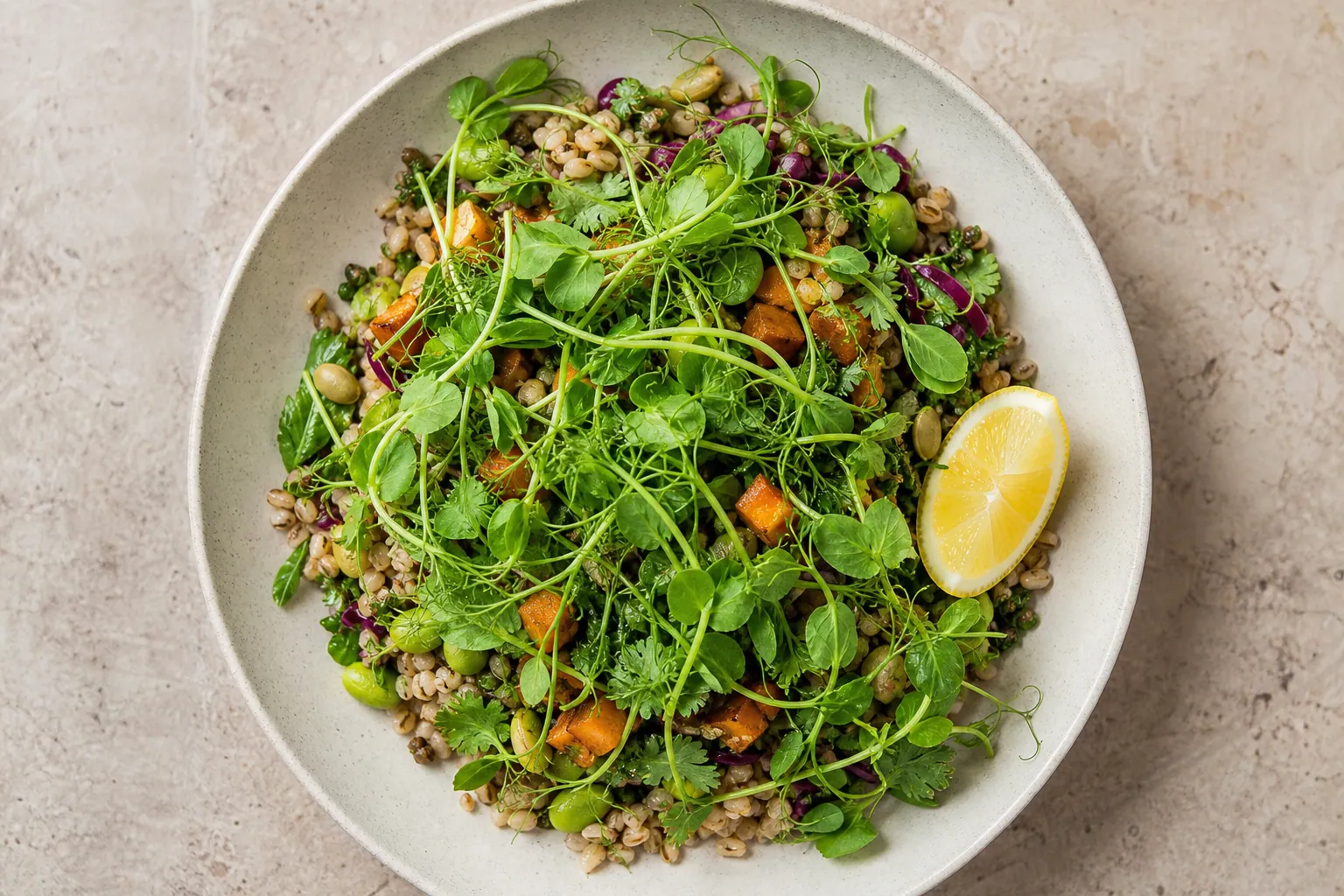
- Folded into bowls and noodles. Grain bowls, ramen, and stir-fries all welcome pea shoots stirred in at the very end, off the heat, so they stay bright and crisp.
- Blended into smoothies. Their mild, sweet flavor disappears into fruit-forward blends, an easy way to add greens without a grassy aftertaste.
One simple rule covers all of it: add them late and keep them raw whenever you can. Brief contact with residual heat is fine, but actually cooking pea shoots wilts them and dulls both the flavor and the nutrition. If you are new to working them into meals, how to eat microgreens is a good starting point, and our roundups of microgreens salad ideas and microgreens smoothie recipes give you a rotation. For building entire plant-based meals around them, the microgreens for a vegan diet guide goes deeper.
Getting Pea Shoots That Are Actually Fresh
Here is the catch with pea shoots, and it is the same one that quietly undermines most microgreens: freshness. The version most people meet comes in a plastic clamshell, often $4 to $6 for two ounces, which works out to roughly $30 to $50 per pound. At that price you are paying for delicate greens, and because they travel through a long farm-to-truck-to-warehouse-to-store supply chain, they are frequently days old by the time they reach your kitchen. Pea tendrils wilt fast, so a meaningful share of every clamshell ends up in the trash before you finish it.
Growing your own looks like the obvious fix, and pea shoots are forgiving enough to make it tempting. But manual trays carry their own headaches. The big three are mold (from too much moisture, poor airflow, and overcrowding in a warm spot), mess (soil, everywhere), and maintenance (the daily watering and attention that a roughly 10-day cycle demands). Miss a few days during a busy week or a trip, and the tray is gone. Manual growing has a real failure rate; it is less a gardening problem than a consistency problem. We cover the most common culprit in why microgreens keep molding, and weigh the full tradeoff in grow vs. buy microgreens.
So the honest situation is a squeeze: buying gets you convenience but stale, pricey greens, while growing gets you freshness but chores and the risk of losing a batch. That tradeoff is exactly why the bunch of pea shoots you meant to eat so often ends up wilting in the fridge.
This is the gap Luya was built to close. The Luya X is a countertop "food computer," about the size of a small appliance, that grows greens in a sealed, climate-controlled, ventilated chamber, the kind of environment that keeps mold out instead of inviting it in. You drop in a pre-seeded tray, and it handles temperature, watering, and nutrients automatically over a roughly 7 to 10 day cycle. You harvest only what you need, and the rest keeps growing, alive, on the counter. Think of it as a Nespresso, but for greens.
The payoff for pea shoots specifically: they are picked seconds before they hit your plate, at peak protein and peak crispness, with no clamshell markup and no soil to clean up. No long supply chain, no wilting drawer, no lost batches.
Ready to keep fresh pea shoots within arm's reach? See how it works to learn how Luya turns a countertop into a steady supply of protein-rich greens, with no soil, no daily chore, and no clamshell. And if you are building a plant-based plate, our guide to microgreens for a vegan diet is a great next read.
References
- Xiao Z, Lester GE, Luo Y, Wang Q. Assessment of Vitamin and Carotenoid Concentrations of Emerging Food Products: Edible Microgreens. J Agric Food Chem. 2012;60(31):7644–7651. https://doi.org/10.1021/jf300459b
- Kyriacou MC, Rouphael Y, Di Gioia F, et al. Micro-scale vegetable production and the rise of microgreens. Trends Food Sci Technol. 2016;57:103–115. https://doi.org/10.1016/j.tifs.2016.09.005