This article is for general education and is not medical advice. Talk to your doctor before changing your diet for a health condition or if you take medication.
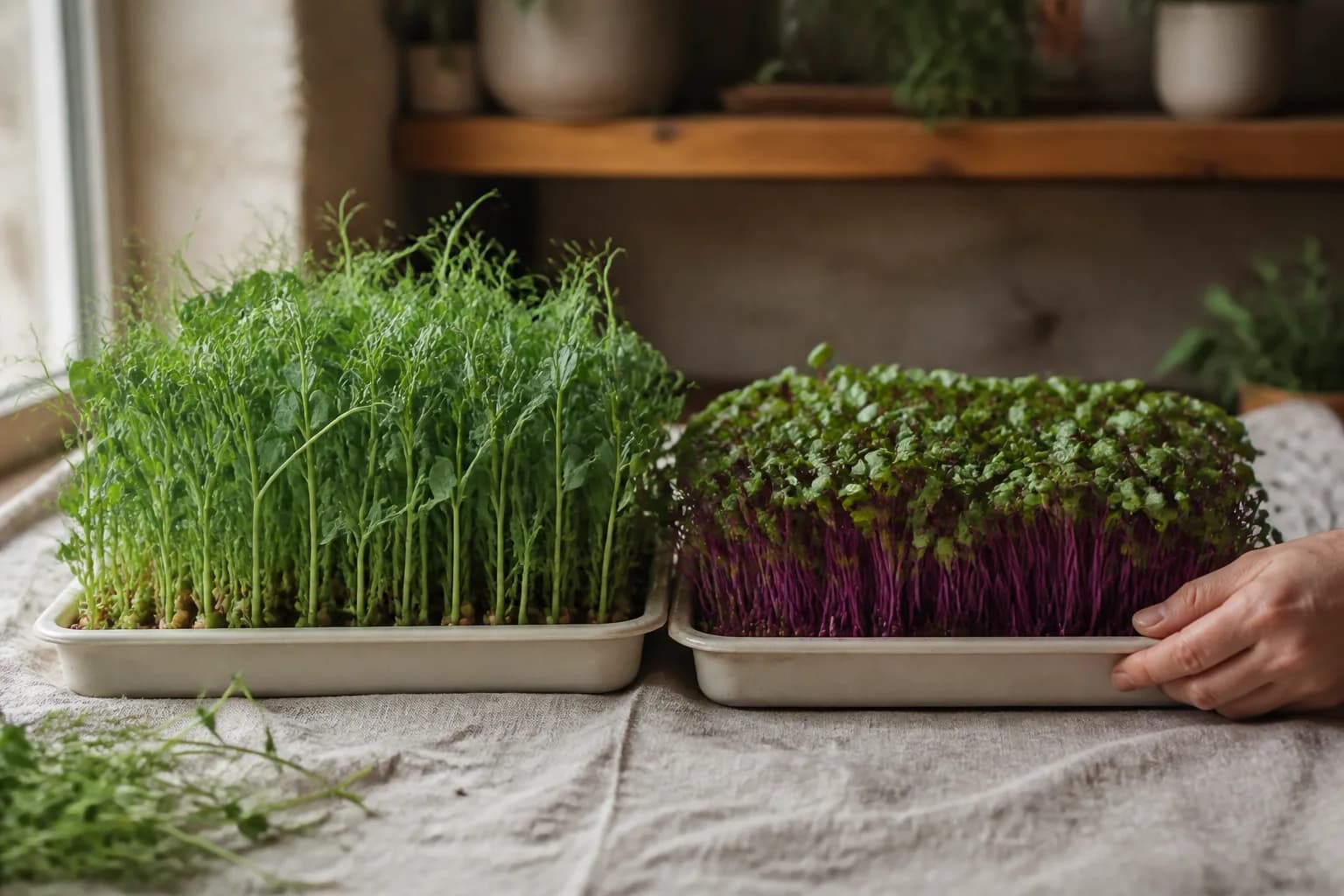
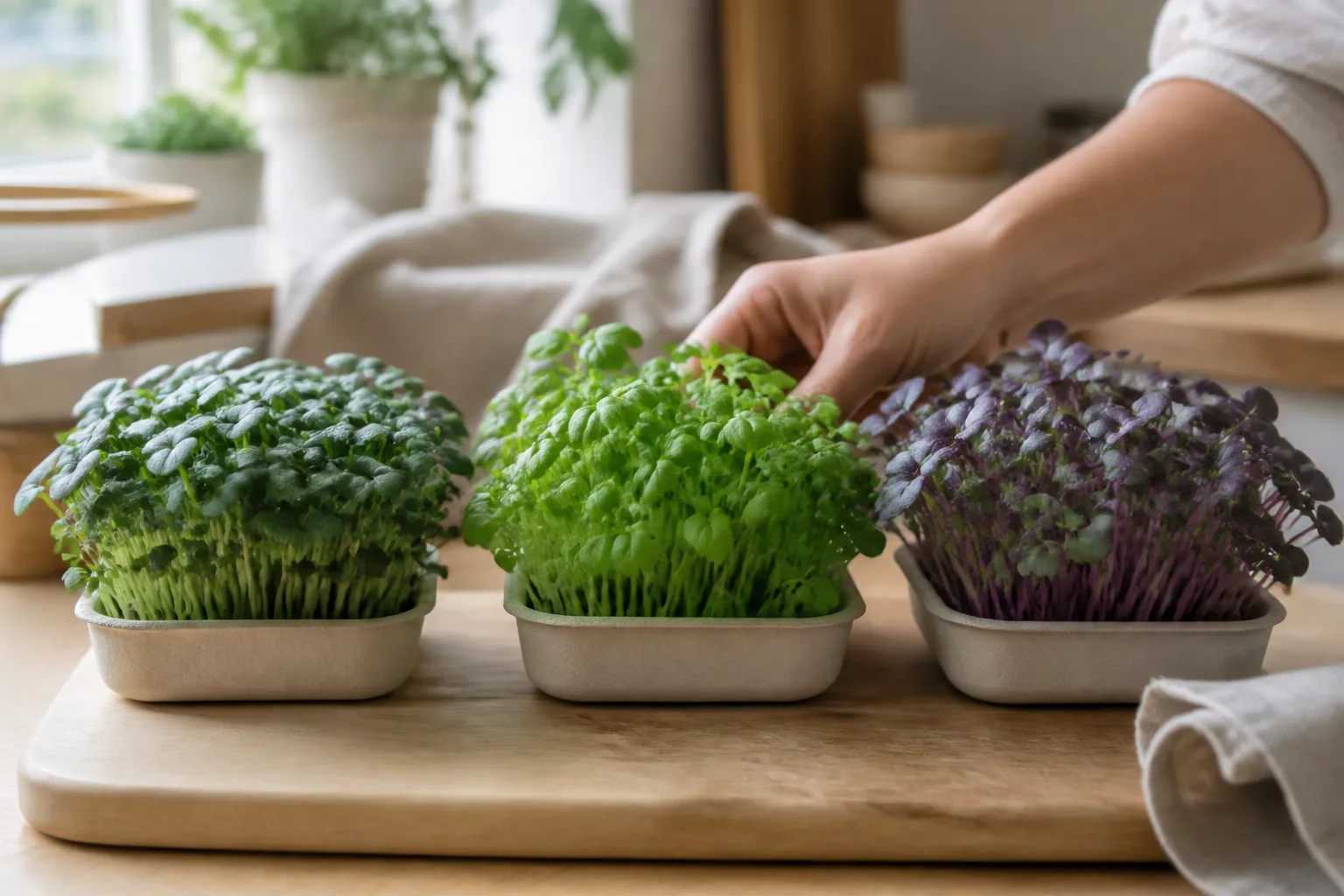
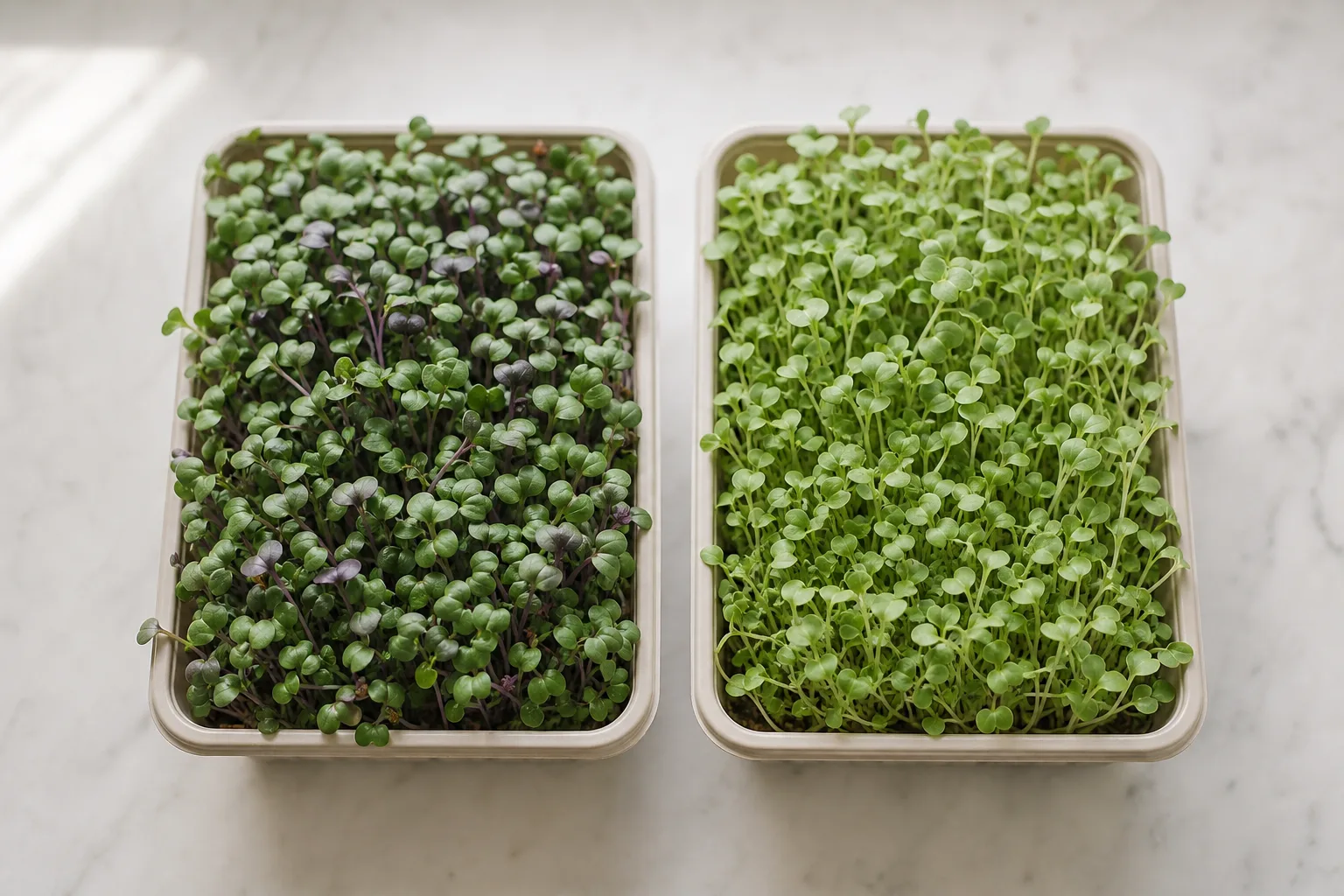
Two trays of the same broccoli seed, sown on the same day, can end up with strikingly different nutrition. One is a pale, leggy green; the other is compact, deeply colored, and packed with antioxidants. The seed didn't change. The light did.
We tend to think of light as the thing that simply keeps a plant alive — the fuel for photosynthesis. That's true, but it's only half the story. Light is also a signal. A young shoot reads the brightness, the color, and the daily rhythm of its light the way you'd read a weather report, and it adjusts its internal chemistry in response. Much of that chemistry is the very nutrition we eat microgreens for: the phenolics, flavonoids, vitamins, and pigments that make these tiny greens so dense. Once you understand how light steers those compounds, you can stop treating it as a background detail and start using it as a dial.
Two jobs light does at once
It helps to separate the two roles light plays inside a growing shoot.
The first is energy. Through photosynthesis, light powers the basic machinery of growth — building sugars, structure, and the chlorophyll that makes leaves green. Without enough of it, a plant runs short on carbon and energy, and everything else gets rationed.
The second is information. Plants carry specialized light sensors, called photoreceptors, that detect specific colors and trigger downstream changes in which genes switch on. These signals don't feed the plant; they tell it what kind of environment it's in and how to defend itself. A big share of microgreen nutrition comes from this defensive response.
The compounds in that second category are called secondary metabolites — substances a plant makes not to grow, but to protect itself. Flavonoids, anthocyanins, phenolic acids, and many vitamins fall here. They double as antioxidants on our plate, which is exactly why a shoot that has been prompted to build more of them tends to be more nutritious. Light, in its role as a signal, is one of the strongest levers we have for switching that production up or down.
Intensity: the Goldilocks curve
Brightness is the most intuitive lever, and it behaves a bit like a Goldilocks story.
When light is too dim, a shoot simply can't fix enough carbon. Energy gets routed to staying alive rather than building extra defensive compounds, so phenolics and flavonoids stay low. You'll often see this as pale, stretched, leggy growth — the plant reaching for light it isn't getting.
Within a comfortable range, photosynthesis runs efficiently. There's plenty of carbon and energy to spare, and the plant invests some of that surplus into antioxidant-rich secondary metabolites. This is the sweet spot for both yield and nutrition.
Push the light too high, though, and the plant flips into stress mode. Very intense light can overwhelm the photosynthetic system and generate reactive oxygen species — the plant's version of internal rust. In moderation, that mild stress actually prompts a protective surge of pigments like anthocyanins and carotenoids and a jump in defensive flavonoids, which is why some growers deliberately brighten the final days before harvest. But beyond a certain threshold the damage outpaces the benefit, photosynthesis stalls, and nutrient-building suffers. More is not always better.
The table below sketches how these zones tend to play out. Treat the numbers as general guideposts, not a prescription — every crop has its own tolerance.
| Light zone | Rough intensity (PPFD, µmol·m⁻²·s⁻¹) | What the shoot does | Effect on nutrition |
|---|---|---|---|
| Too low | Under ~100 | Conserves energy, stretches for light | Phenolics and flavonoids stay low |
| Comfortable | ~150–300 | Photosynthesizes efficiently, builds reserves | Strong antioxidant and vitamin levels |
| Mild stress | ~350–450 | Protective pigment surge | Anthocyanins and flavonoids climb |
| Excessive | Sustained very high | Photodamage, oxidative overload | Synthesis stalls, quality drops |
Color (spectrum): each wavelength sends a different message
Here's where light gets genuinely interesting. Different colors of light are read by different sensors, and each one nudges a different set of nutrients.
Blue light is one of the most reliable boosters of antioxidant content. It's picked up by sensors called cryptochromes, which activate the phenylpropanoid pathway — the plant's main production line for flavonoids and phenolics. Across many studies, adding blue light raises total flavonoids and phenolics and lifts overall antioxidant capacity. If you want denser, more colorful, more protective shoots, blue is a workhorse.
Red light drives photosynthesis efficiently and, working through sensors called phytochromes, can raise phenolic compounds and certain pigments. It's frequently paired with blue rather than used alone; a common, effective blend is something like 70% red with 30% blue, which tends to lift total phenolics meaningfully.
Ultraviolet (UV) light is the strong medicine. As a stress signal, a measured dose of UV-B can sharply increase flavonoids, anthocyanins, and phenolics as the plant builds its own "sunscreen." The catch is dose: too much UV damages tissue and stunts growth. It follows a classic low-dose-helps, high-dose-harms pattern, so it's used sparingly and carefully. You can read more in our deep dives on blue light for microgreens, red light, and UV light.
Green light, often dismissed because leaves reflect so much of it, still does useful work. It penetrates deeper into the canopy than red or blue and can fine-tune the balance of compounds the other colors set in motion.
| Light color | Main plant sensor | What it tends to boost |
|---|---|---|
| Blue | Cryptochromes | Flavonoids, phenolics, antioxidant capacity |
| Red | Phytochromes | Photosynthesis, phenolics, some pigments |
| UV (esp. UV-B) | UVR8 | Anthocyanins, flavonoids, phenolics (dose-sensitive) |
| Green | Cryptochromes (partly) | Canopy balance, fine-tuning |
The practical upshot is that blends usually beat any single color. A thoughtful mix of red and blue, sometimes with a touch of UV near harvest, tends to produce shoots that are both high-yielding and nutrient-dense — better than either color could manage alone.
Timing: how long the light stays on
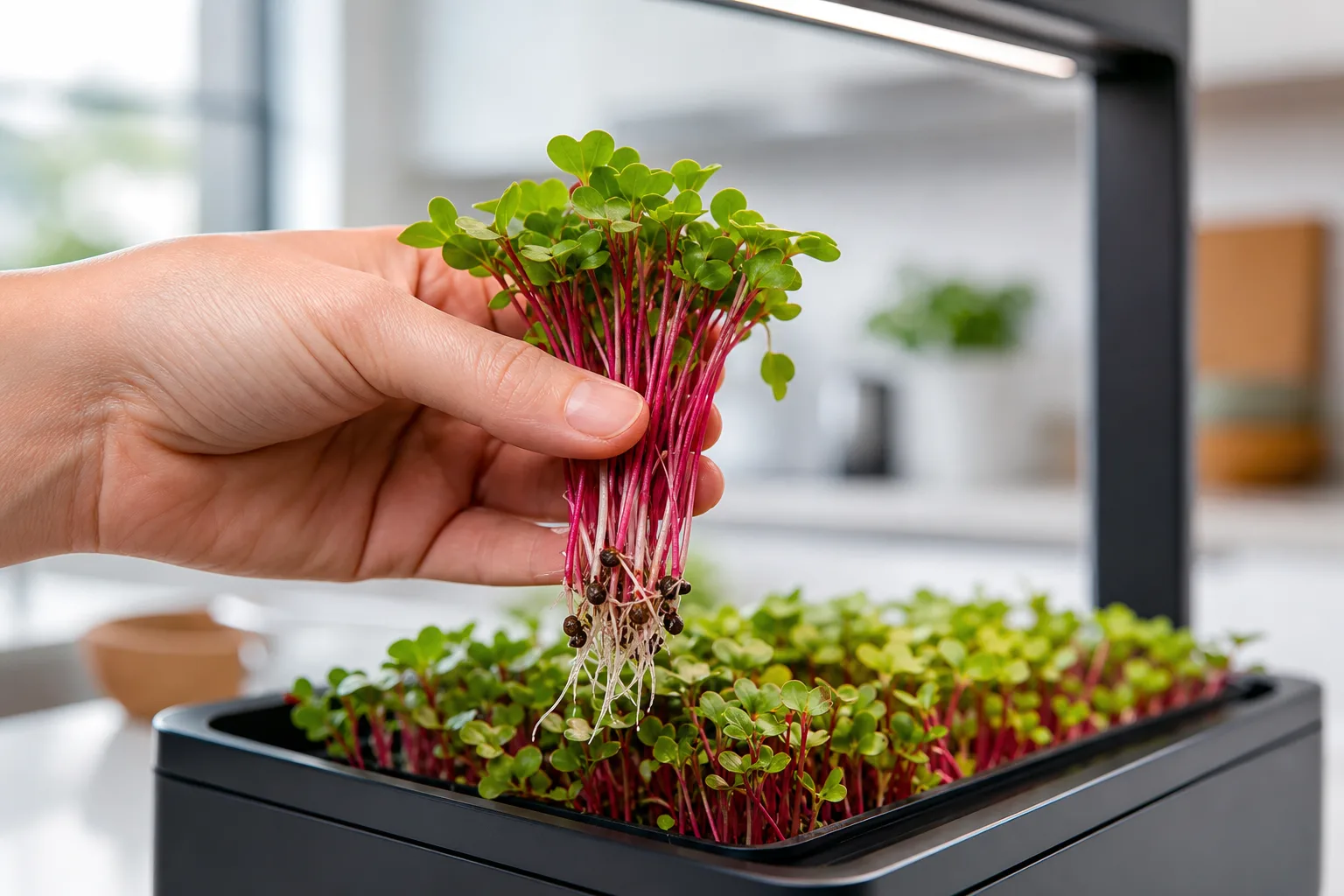
The third lever is the daily rhythm — how many hours of light a shoot gets, known as the photoperiod. Plants have an internal clock that times the production of many compounds to the day-night cycle, so when the lights are on matters, not just how bright they are.
Longer days generally give a shoot more total light energy, which can raise total phenolics and flavonoids. Some studies even find that very long or continuous lighting bumps up antioxidants further. But there are diminishing returns and real trade-offs: round-the-clock light can stress certain crops and burns more electricity for a shrinking nutritional payoff. For most home growers, a generous but not endless daily cycle hits the best balance of nutrition, plant health, and running cost.
A useful way to combine intensity and duration is the daily light integral — the total amount of light a plant receives over a full day. Two trays can land at the same daily total by trading brightness for hours, which gives you flexibility. If you'd like the full picture, see our guide to photoperiod and daily light integral.
Putting the dials together at home
Light intensity, color, and timing don't act in isolation — they stack. A bright tray under a good red-blue blend on a sensible daily cycle will out-perform a tray that gets only one of those things right. That's also why microgreens grown on a sunny-but-inconsistent windowsill can be hit-or-miss: the light shifts hour to hour and season to season, and the plant's chemistry wobbles with it.
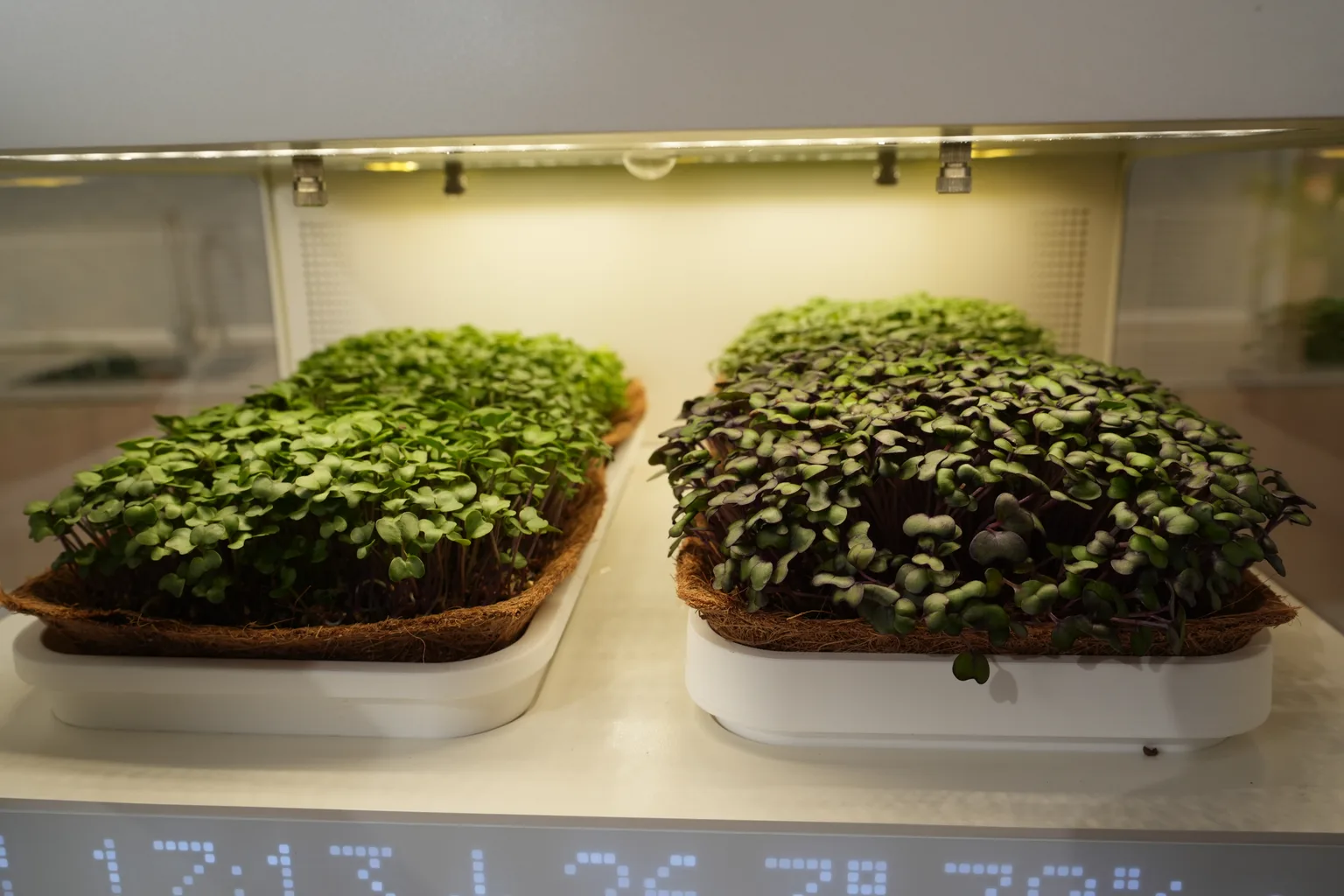
This is the quiet advantage of controlled-environment growing. When the spectrum, brightness, and schedule are held steady and tuned to the crop, the nutritional result becomes repeatable instead of lucky. A countertop grower like Luya manages these light variables for you automatically, so each harvest lands in that productive sweet spot rather than swinging between too-dim and too-harsh. The point isn't the gadget — it's that consistent, well-chosen light is what turns a tray of greens into a genuinely dense one. If you're weighing your options, our grow-vs-buy comparison walks through what that consistency is worth.
The takeaway
Light is far more than fuel. It's the instruction set that tells a microgreen how much of its antioxidant chemistry to build. Get the brightness into the comfortable-to-mildly-stressed range, lean on a red-blue blend with a careful touch of UV, and give the plants a steady daily rhythm, and you steer phenolics, flavonoids, and vitamins upward on purpose. The same seed can be ordinary or exceptional — and a surprising amount of that difference is decided by the light you grow it under. For the bigger nutritional picture, our overview of microgreen nutrition ties it all together.
References
- Effect of Different Ratios of Blue and Red LED Light on Brassicaceae Microgreens under a Controlled Environment. Plants (Basel). 2021;10(4):801. https://doi.org/10.3390/plants10040801
- Kyriacou MC, Rouphael Y, Di Gioia F, et al. Micro-scale vegetable production and the rise of microgreens. Trends Food Sci Technol. 2016;57:103–115. https://doi.org/10.1016/j.tifs.2016.09.005