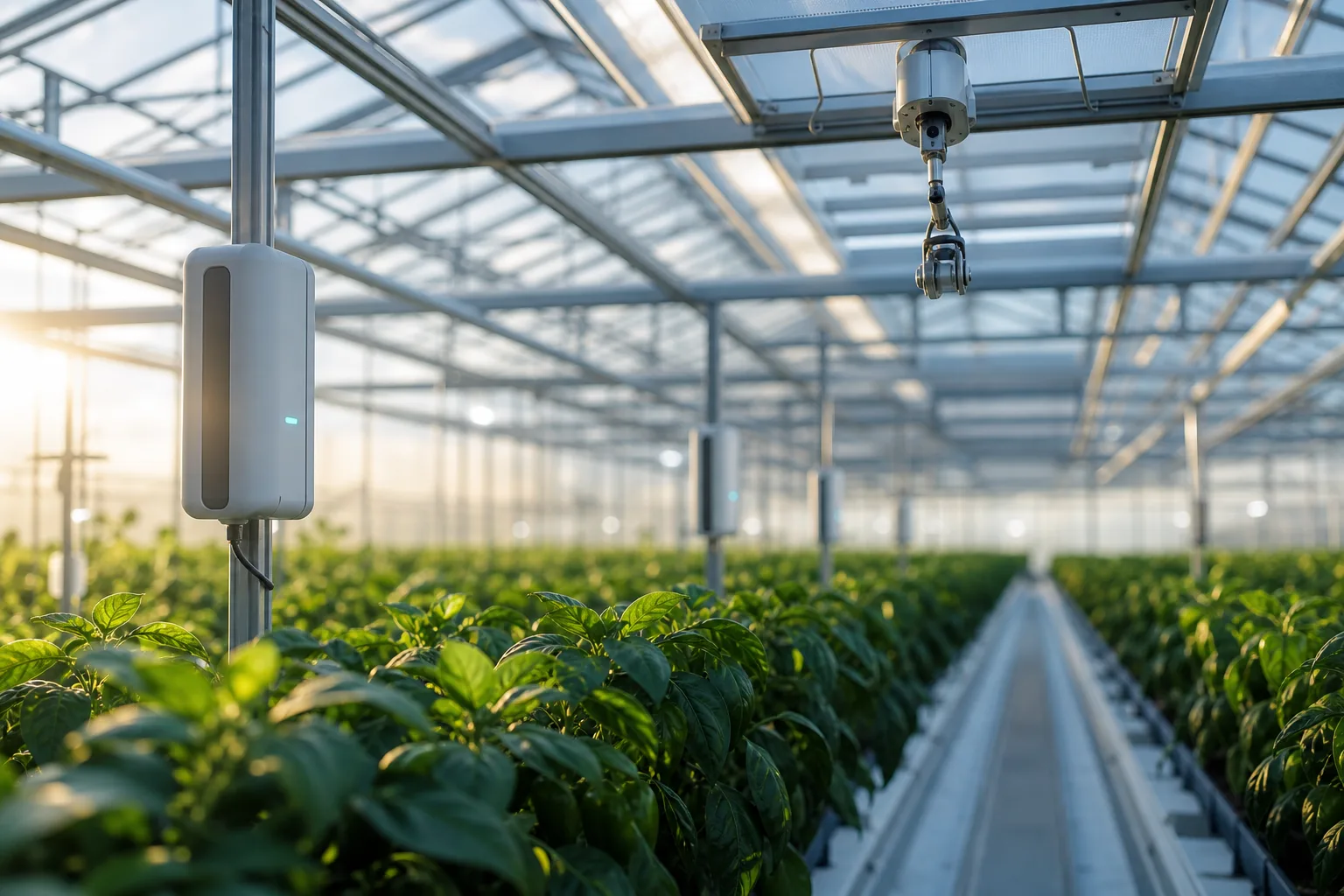
Picture a greenhouse that runs itself. The vents crack open the moment the air gets too warm. A valve drips water to the roots on a schedule no one set by hand. A burst of CO2 goes out when photosynthesis starts to slow. No grower stands there flipping switches. The building reads itself and reacts, minute by minute, day and night.
That is the idea behind an autonomous greenhouse. It is one of the quietly impressive corners of modern farming, and it shares a lot of DNA with the small grower that might be sitting on your kitchen counter. Let us walk through what it is, why people build these systems, and the surprisingly hard problems that come with handing the controls to a computer.
The simple definition
An autonomous greenhouse is a growing space where software, not a person, makes the moment-to-moment decisions about the crop's environment. Sensors measure what is happening. A control policy decides what to do. Actuators carry out the action. Then the sensors measure again, and the loop repeats.
That loop is the whole game. Engineers call it closed-loop control: the system's own measurements feed straight back into its next decision, with no human in the middle. A traditional high-tech greenhouse already has the hardware for this. It has heating, lighting, CO2 dosing, and irrigation, plus sensors for temperature, humidity, CO2, and light. What makes a greenhouse autonomous is that the brain choosing the setpoints is automated, and it can hold that job continuously for an entire growing season.
Here is the contrast in plain terms.
| Aspect | Traditional greenhouse | Autonomous greenhouse |
|---|---|---|
| Who sets the climate | A grower, by hand | Software, in a closed loop |
| Decision frequency | Coarse, a few times a day | Fine-grained, every few minutes |
| Hours of coverage | Working hours, plus checks | 24 hours, every day |
| Greenhouses per expert | A handful | Many at once |
| Tuning style | Experience and intuition | Data and continuous learning |
Why bother making it autonomous?
The honest answer is that growing food well by hand is brutally hard to scale.
A skilled grower running a high-tech greenhouse has to balance yield against resource use across a season that runs three to five months for a crop like tomatoes. Every day they juggle temperature, light timing, watering, and CO2, and each choice ripples into the others. The number of possible combinations over a season is, frankly, astronomical. No person can search all of it, so growers fall back on coarse rules of thumb. Those rules work, but they leave the greenhouse's rich, second-by-second data unused.
Then there is labor. Experts who can run these systems well are scarce, and even a great grower can watch only so many houses at once. Software does not get tired, does not go home at night, and can supervise many greenhouses in parallel.
Resources matter as much as the harvest. Natural inputs are finite and energy is expensive, so the goal is not just more crop. It is more crop per unit of electricity, heat, CO2, and water. In one research setup, the target the system maximized was literally net profit per square meter: the value of the harvest minus the cost of everything poured in to grow it. That single number captures the point. Autonomy pays off when it raises yield and trims waste at once.
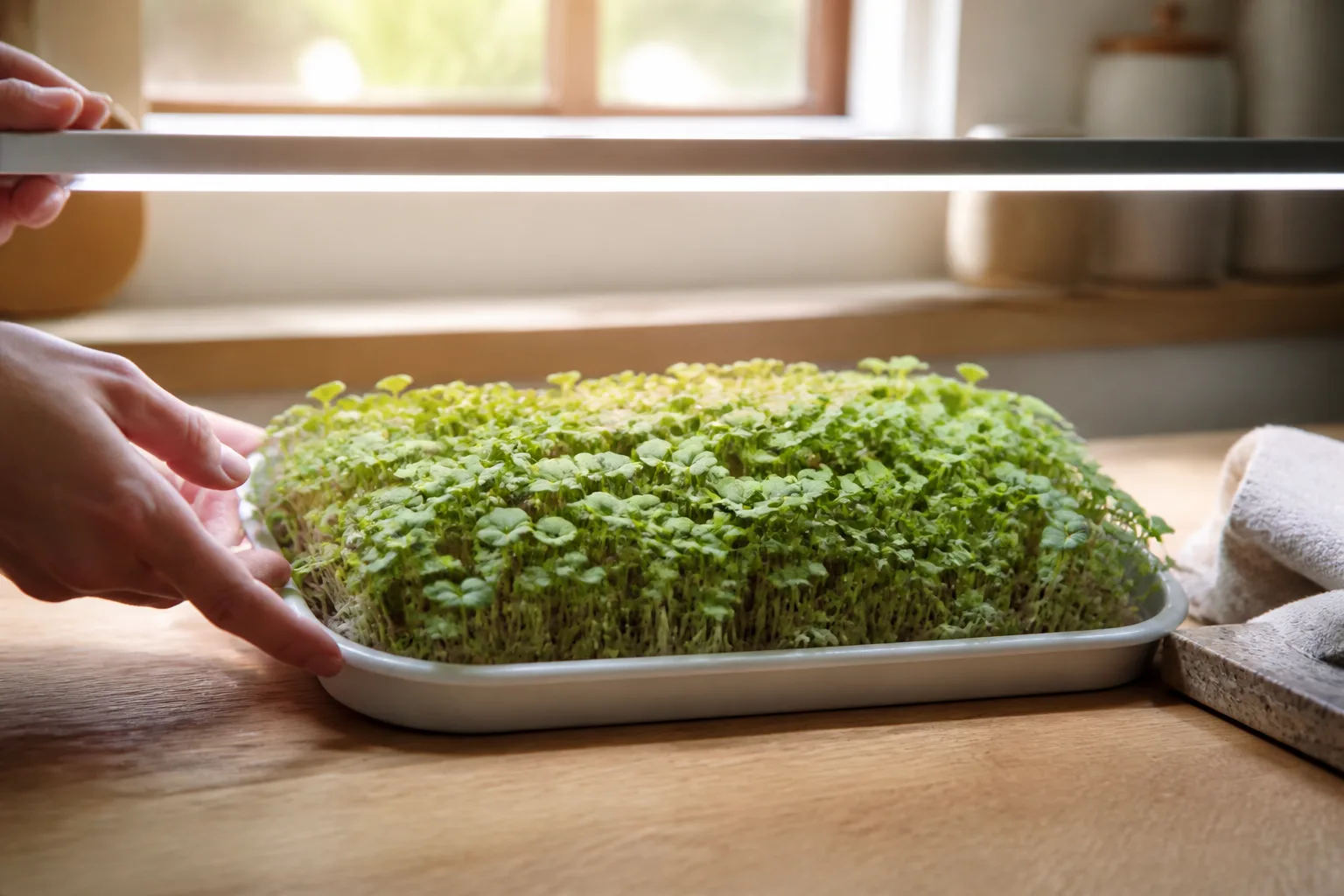
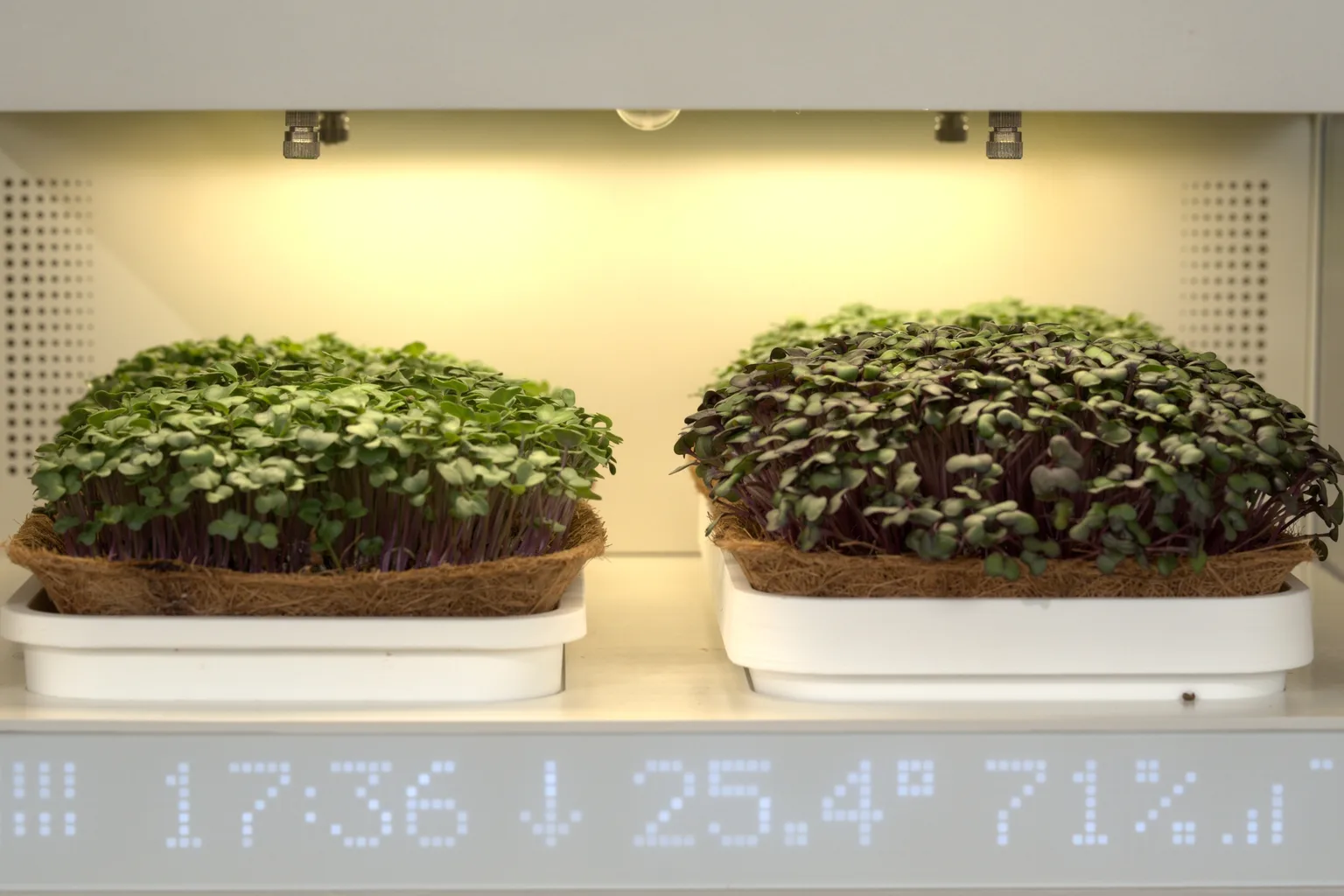
This logic scales all the way down. A countertop food computer like Luya is, in spirit, a tiny autonomous greenhouse: it senses, decides, and adjusts so you do not babysit a tray of greens. Controlled environment agriculture is the umbrella term for all of it, from industrial glasshouses to your kitchen.
What the system actually senses and controls
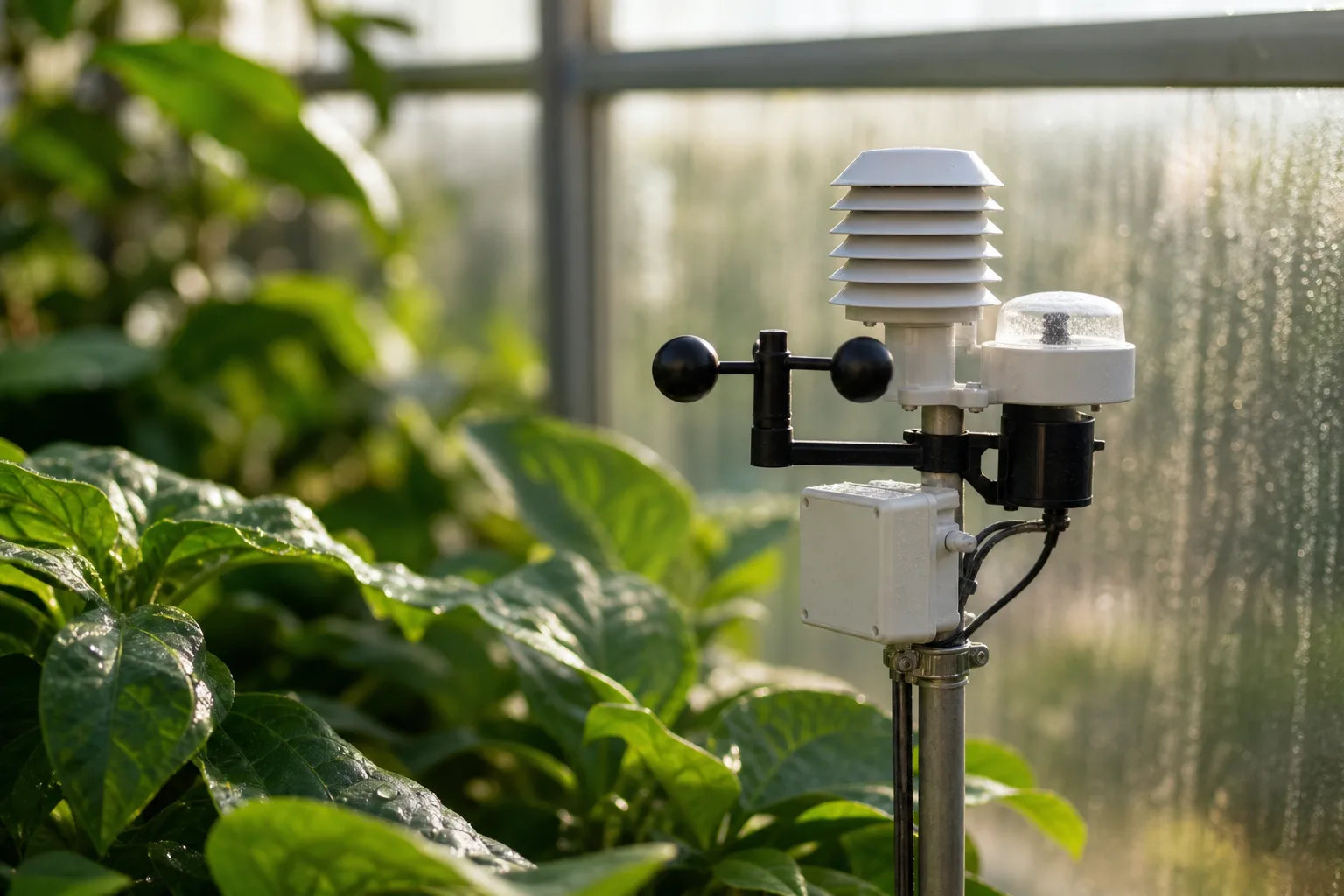
It helps to get concrete. In one real tomato greenhouse study, researchers tracked 22 observation variables, together making up a 275-dimensional view of the greenhouse state. On the control side, they had 6 levers to pull. That is a lot of information feeding a handful of decisions.
The sensors are the system's eyes. Boxes hung around the greenhouse measure temperature, humidity, and CO2, and their readings get averaged (sometimes weighted by location) into a single picture. A specialized PAR sensor tracks the photosynthetically active light reaching the canopy, the light the plant can actually use.
The actuators are the hands. A few common ones:
- Ventilation: when the air rises past a temperature setpoint, the vents open by a percentage tied to how far over the line things have drifted.
- CO2 dosing: when CO2 dips below its setpoint, a producer pipes more in to keep photosynthesis humming.
- Fertigation: drip irrigation delivers water and nutrients on timing and volume setpoints.
Notice how much of this echoes home growing. Light timing, water, airflow, and humidity are the same dials that decide whether your shoots thrive, which is exactly why microgreens keep molding when airflow and moisture get out of balance. The greenhouse just manages them on a far bigger, faster scale.
The hard part: control under uncertainty
Here is where it gets interesting, because automating a greenhouse is not as simple as wiring sensors to switches.
The plant-and-climate system is deeply nonlinear and messy. Temperature, humidity, CO2, and growth all push on each other. The weather outside is never perfectly predictable, and any model of how the greenhouse behaves is, at best, an educated approximation. Two big challenges fall out of this.
The first is safety and constraint-keeping. Some conditions are dangerous: humidity that invites disease, temperatures that stress the crop, CO2 that climbs too high. A good controller respects those limits even when its model is a little wrong. One MPC study made the point vividly: a naive controller that ignores limits can post huge yield numbers on paper, but only because it let CO2 and humidity run to unrealistic, crop-damaging levels. Impressive math, dead plants.
The second is learning without breaking things. In a video game, an AI can fail a million times for free. In a greenhouse, every failed experiment costs real weeks and real crops. So researchers lean on simulators. A good crop-growth simulator can play out an entire season in seconds, letting the controller practice millions of times in software before it ever touches a real plant.
How researchers are teaching greenhouses to think
Two families of approaches show up again and again in the research, and they make a nice pair.
The first is reinforcement learning (RL), the same broad technique behind computers that beat humans at Go. You frame the greenhouse as a decision problem, let the system try strategies, and reward good outcomes like profit per square meter. The catch is sample efficiency and safety. One Tencent and Tsinghua team tackled both: they trained an ensemble of simulator models to squeeze more learning out of limited real data, then added a "sample dropout" trick that forces the policy to focus on worst-case situations. Tuned to keep the toughest 80% of scenarios in view, their robust policy stayed healthier under stress, holding a higher crop fresh weight and retention rate than a version without the safeguard when hit with a heat spike or humidity surge.
The second is model predictive control (MPC), a classic optimization method that plans a few steps ahead and can bake hard limits right into the math. A Delft and Wageningen team blended the two: they let MPC do the planning while RL tuned its parameters online from real data. The payoff was the best of both. Their controller drove constraint violations down toward the level of an ideal, perfect-knowledge controller while still growing the crop efficiently, and without the conservative yield penalty older robust methods suffer from.
Both stories rhyme. Give the system a model, let it learn from data, and force it to respect the lines it must not cross. If you want to go deeper on these methods, see our pieces on reinforcement learning in agriculture and model predictive control for growing, and the bigger picture in data-driven growing.
What it means for the food on your plate
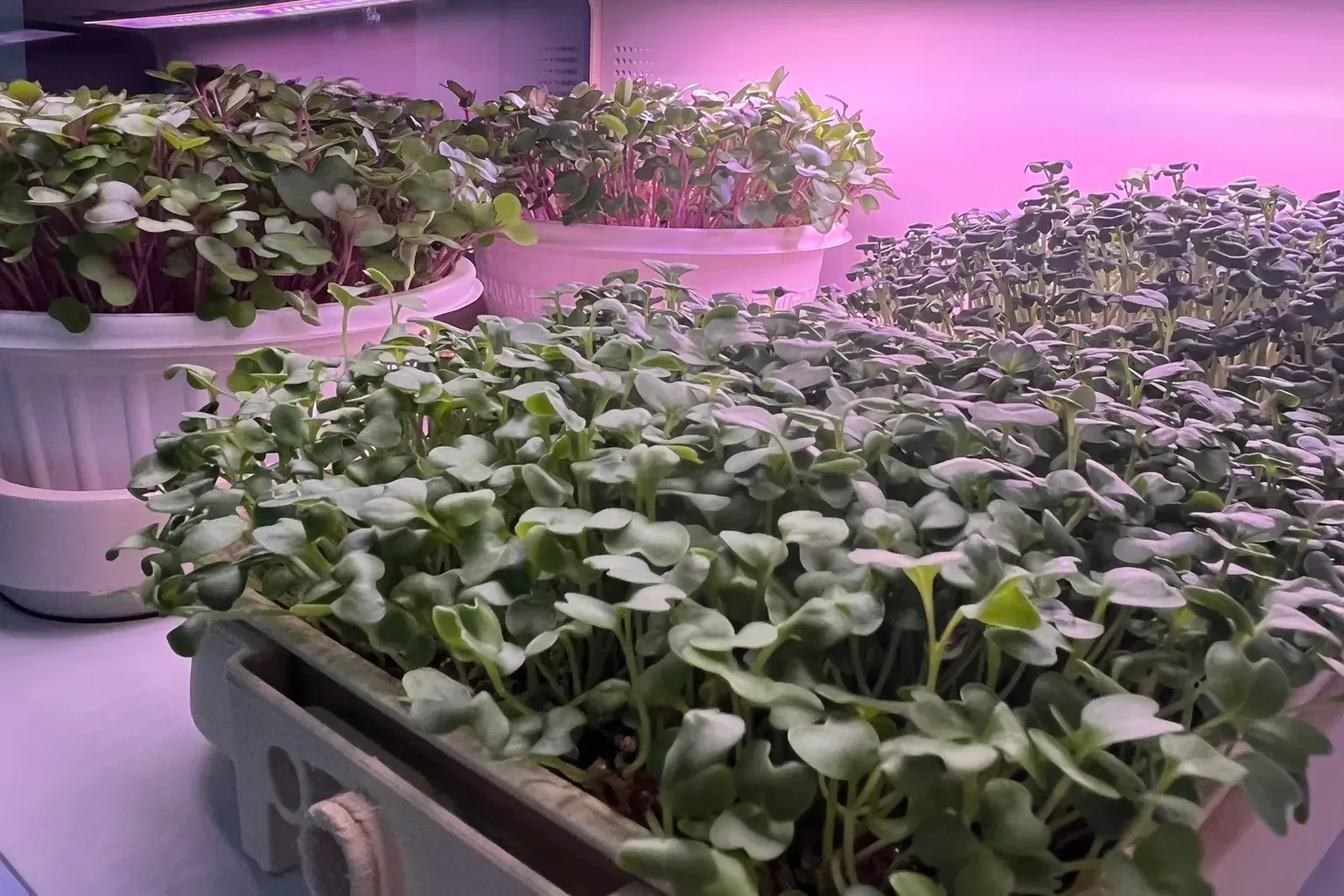
You do not need a glasshouse to feel the benefits. The same closed-loop logic, sense, decide, adjust, repeat, is what lets a small device grow fresh greens without a green thumb. It is a big part of how Luya works and where the future of home farming is heading: the expertise moves into the software, so the food can grow anywhere.
A closed-loop grower takes the guesswork out of the basics.
| Crop | Typical days to harvest | What automation handles |
|---|---|---|
| Radish | 5 to 7 | Watering, light timing, airflow |
| Broccoli | 8 to 12 | Humidity, light, even moisture |
| Pea shoots | 8 to 14 | Drainage, light, gentle airflow |
| Sunflower | 8 to 12 | Watering schedule, light, ventilation |
Curious where to start? Our guide to the easiest microgreens to grow pairs nicely with a hands-off setup.
The takeaway
An autonomous greenhouse is, at its heart, a feedback loop with good judgment. Sensors watch, software decides, actuators act, and the cycle never stops. The reason to build one is economics meeting good sense: more harvest, less waste, fewer expert hours, around the clock. The reason it is hard is that plants and weather refuse to behave, so the real research is about controlling messy systems safely while still learning from data.
The encouraging part is that this is no longer just a topic for industrial growers. The same ideas now fit on a countertop, quietly handling light, water, and air so you can pull fresh greens from your kitchen. The brain that used to live in a grower's head is moving into the machine, and that is good news for anyone who likes to eat well.