If you have ever nudged a thermostat up because the room felt chilly, then sweated ten minutes later because it overshot, you already understand the limits of simple control. A basic thermostat reacts to right now. It has no idea what is coming next, and it certainly does not weigh the cost of running the heater against the comfort it buys you.
Plants growing on your counter face a similar problem, only the stakes are leaves instead of comfort. Temperature, humidity, light, and CO2 all interact, and they all drift through the day. The smarter way to manage them is a technique borrowed from rockets, refineries, and self-driving cars: model predictive control, usually shortened to MPC. Let me walk you through what it actually is, why it fits a growing environment so well, and how it beats the humble thermostat without any hype.
What model predictive control actually does
Strip away the math and MPC comes down to one habit: look ahead before you act.
At every moment, an MPC controller does three things. First, it uses a model, a working description of how the system behaves, to predict what will happen over the next stretch of time. Second, it searches across many possible sequences of actions and picks the one that best satisfies your goals while respecting hard limits. Third, it applies only the first action, then discards the rest and repeats the whole process a moment later with fresh measurements.
That last step sounds wasteful, but it is the secret. Conditions change and small errors creep in. By constantly re-planning, MPC stays honest about the present while still planning for the future. Engineers call this a receding horizon: the planning window keeps sliding forward, always looking a few steps ahead.
Researchers studying greenhouse climate control describe the same loop precisely this way. The controller computes inputs at fixed time steps, often every 15 to 30 minutes, using a model of how heat, humidity, and CO2 evolve, then applies the first move and re-optimizes at the next step. Over a 40-day lettuce cycle, that can add up to thousands of small, deliberate decisions instead of one blunt rule.
A thermostat versus a planner
A thermostat is what control engineers call on-off, or sometimes PID control. It is reactive by design. The temperature crosses a line, the heater flips on or off, and that is the entire strategy. It works fine for a single variable that you do not mind bouncing around.
Growing is not that simple. Push the temperature up and humidity shifts. Add CO2 to feed photosynthesis and you have to think about ventilation, which also moves heat and moisture. These variables are tangled together, and a thermostat handles each one in isolation, blind to the others.
Here is the contrast laid out plainly.
| Question | Simple thermostat | Model predictive control |
|---|---|---|
| What does it react to? | The current reading only | A forecast of the next several hours |
| How many variables at once? | One, in isolation | Many, with their interactions |
| Does it respect hard limits? | No, it can overshoot | Yes, limits are built into the plan |
| Does it weigh cost? | No | Yes, energy and resources are part of the goal |
| Does it adapt to what is coming? | No | Yes, it re-plans every step |
The greenhouse studies make the gap concrete. Traditional on-off and PID methods are not rooted in optimal control and generally cannot handle complex constraints or deliver the best performance. MPC was proposed precisely because it naturally manages many inputs and outputs at once while keeping each variable inside safe bounds.
Why constraints are the whole point
When people first hear about MPC, they fixate on the prediction. The more important trick is how it handles limits.
Plants have ranges they tolerate and ranges that hurt them. Let indoor humidity run too high for too long and you invite mold and disease. Let CO2 climb past a sensible ceiling and you are wasting an expensive input for growth that may not even be real. In the lettuce research, the indoor climate is held inside explicit bounds, for example humidity capped around 70 to 80 percent and CO2 below a set ceiling, with temperature targets that even shift between day and night because greenhouses run cooler after dark.
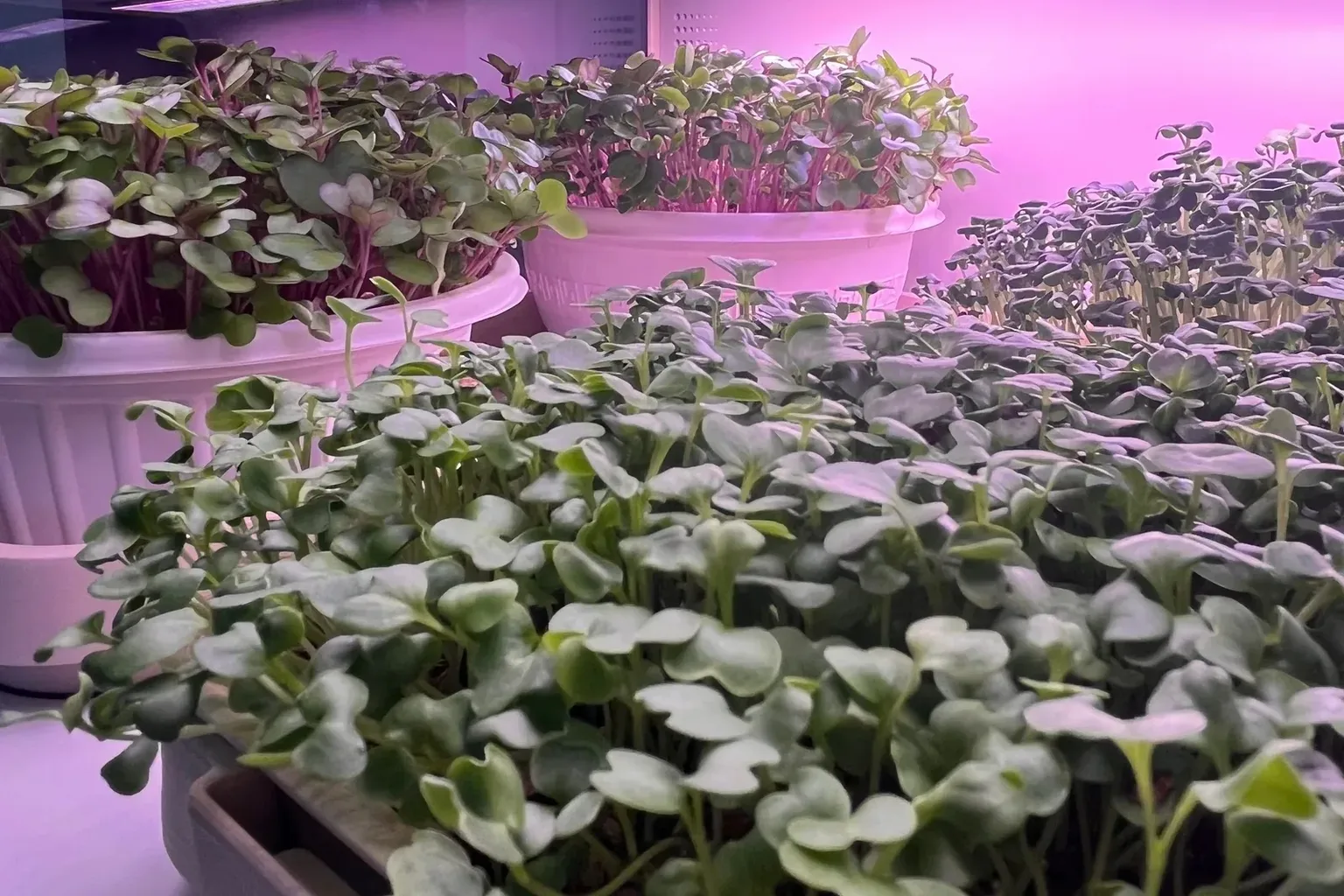
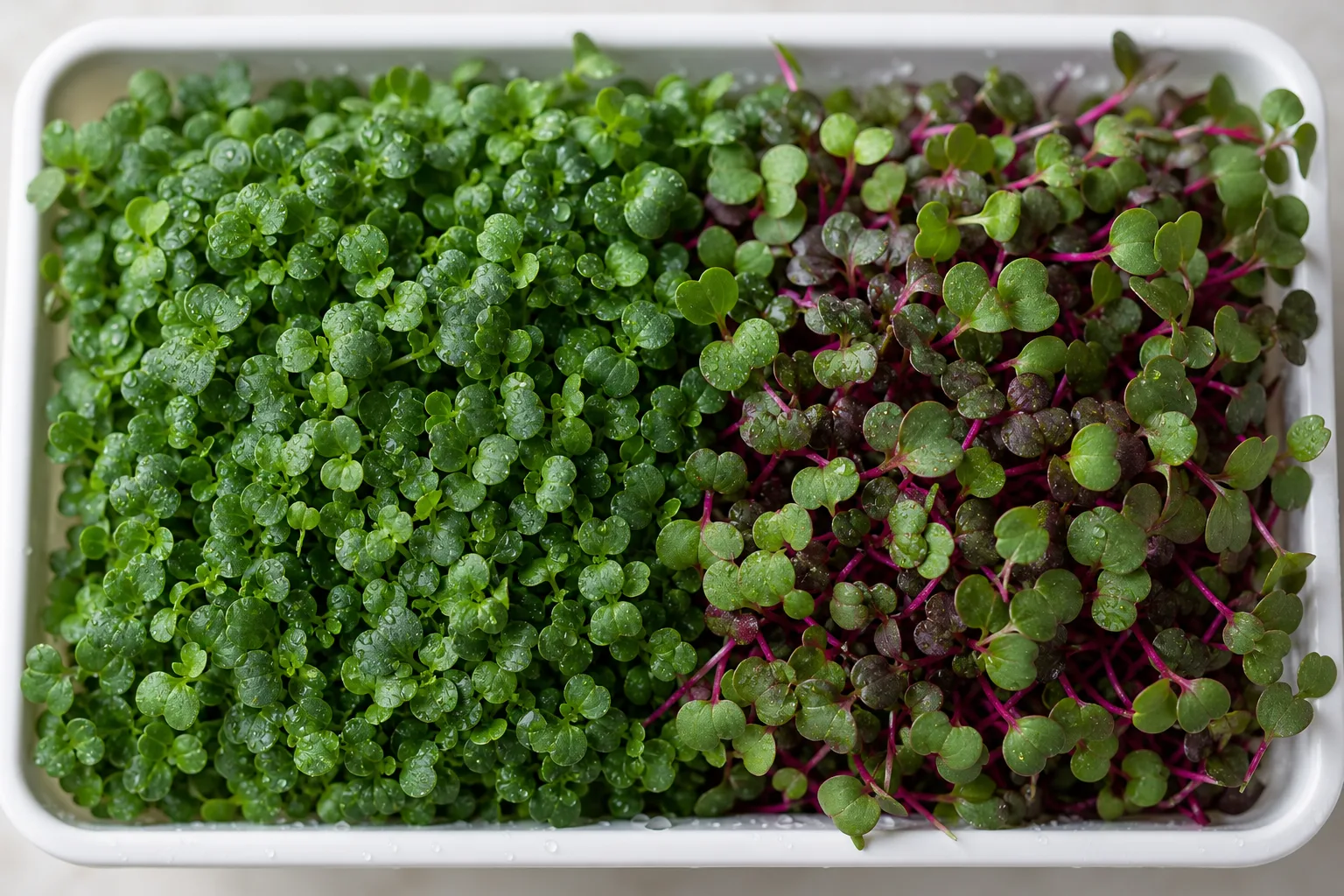
A thermostat cannot express any of this. MPC can, because constraints are written directly into the problem it solves. It does not just aim for a target; it refuses to cross the lines you draw. That matters enormously for quality. If you have ever wondered why microgreens keep molding, runaway humidity with no forward-looking control is often the culprit. Keeping climate variables inside safe ranges is exactly what a predictive controller is built to do, and it is a big reason controlled-environment agriculture produces such consistent results.
The catch: your model is never perfect
There is an honest weakness in MPC, and it is worth naming. The whole approach leans on its model. If the model is wrong, the predictions are wrong, and the controller may confidently steer you somewhere you did not want to go.
Greenhouse models are inherently imperfect. The biology is nonlinear and complex, and the weather forecasts feeding the model carry their own errors. The lettuce-greenhouse research captures all of this uncertainty as fuzziness in the model's parameters, then asks a pointed question: what happens when the controller's mental picture does not match reality? The answer is that performance degrades and constraints get violated, which on a real crop means damaged plants.
The traditional fixes are robust and stochastic MPC, which build in safety margins for the worst case. They work, but they are conservative. Play it too safe and you sacrifice yield, and the heavier math can slow everything down. One robust controller in the studies cut crop yield noticeably simply because it hedged so cautiously.
How learning makes prediction smarter
This is where the newest research gets genuinely interesting. Instead of bolting on conservative safety margins, scientists are pairing MPC with reinforcement learning, the same family of techniques that taught computers to master chess and Go.
The idea is elegant. The MPC controller still does the planning and still enforces the constraints, but a learning algorithm watches how the plants actually respond over many growth cycles and quietly tunes the controller's parameters. Over roughly 100 simulated lettuce cycles, one such system learned to drive constraint violations down toward zero while protecting yield, something the conservative robust methods could not match. In the first cycle the humidity ceiling was breached for almost the entire run; by the hundredth, violations were rare and brief.
A second line of work flips the roles. There, a learned policy hands the MPC controller a smart estimate of long-term payoff, so the controller can plan well even with a short prediction window. Both approaches share a theme worth holding onto:
| Approach | Strength | Trade-off |
|---|---|---|
| Plain MPC | Plans ahead, respects limits | Only as good as its model |
| Robust MPC | Safe under uncertainty | Conservative, lower yield |
| Learning-guided MPC | Adapts from real data, less conservative | More complex to build |
The appeal of keeping MPC at the core, rather than handing everything to a black-box neural network, is interpretability. A grower can inspect what the controller learned, and the constraints stay explicit and trustworthy. A pure deep-learning controller, by contrast, gives no guarantee it will keep your plants inside safe limits. This blend of planning and learning is the heart of AI-controlled growing, and it is closely tied to the broader story of reinforcement learning in agriculture.
What this means for your countertop
You do not run a research greenhouse, so why should any of this matter at home?
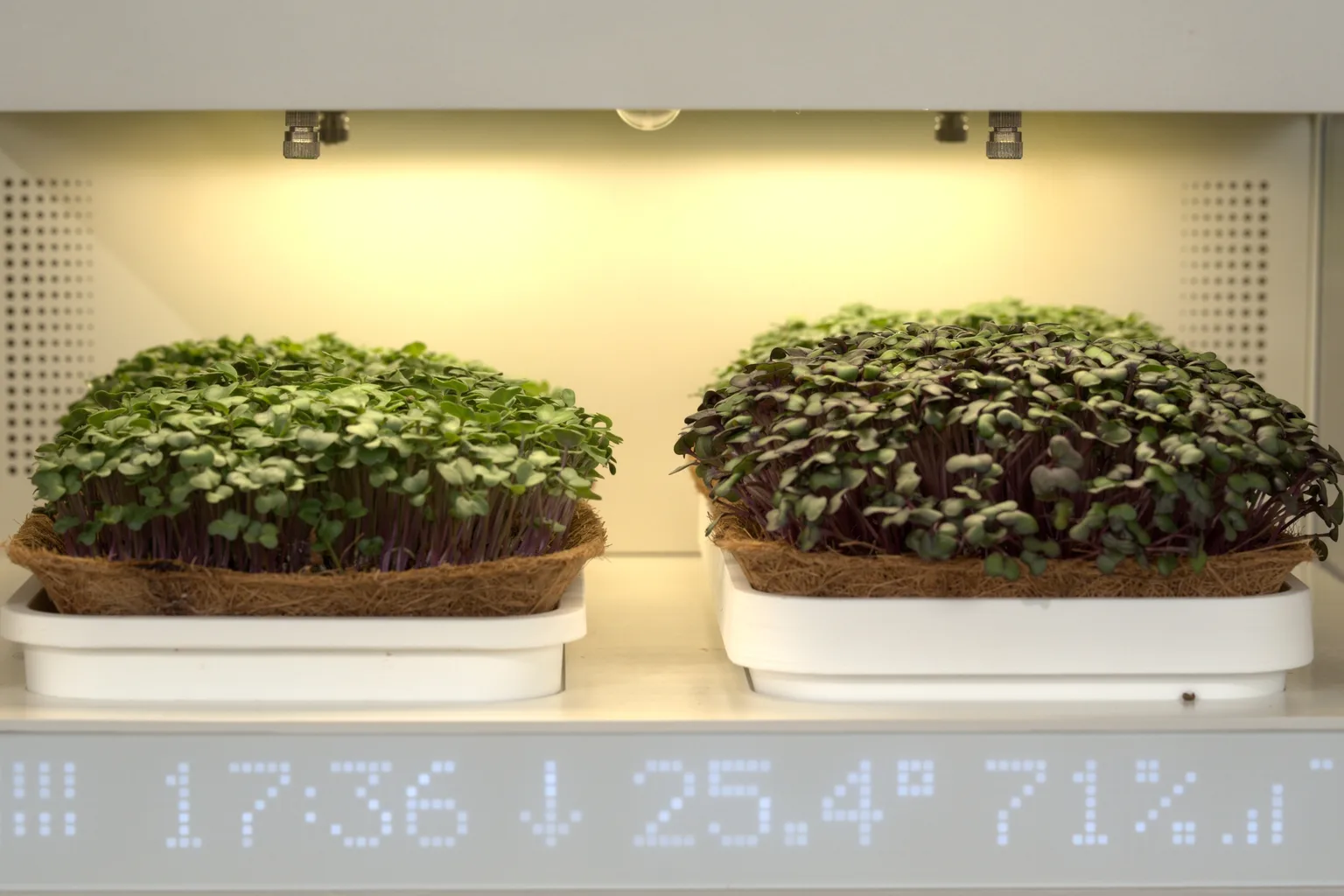
Because the same logic scales down. A countertop grower like Luya faces a miniature version of the greenhouse problem: keep humidity from spiking into mold territory, deliver the right light at the right time, and do it efficiently without you babysitting trays. Forward-looking, constraint-aware control is what turns a box with a light in it into something that reliably produces dense, clean greens. It is a meaningful part of how Luya works, and it is why predictive systems beat a simple timer-and-heater setup.
The practical payoff is consistency. When the controller plans ahead and refuses to cross dangerous lines, you get trays that look the same batch after batch, which is the quiet luxury of growing microgreens at home instead of gambling on store-bought greens that are rarely as fresh as they claim.
The takeaway
Model predictive control is not magic, and it is not marketing. It is a disciplined habit: predict the next few moves, choose the best one within your limits, act, then look again with fresh eyes. Compared with a thermostat that only reacts to the present, it juggles many variables at once, honors hard constraints, and weighs cost against benefit.
Its honest weakness is its dependence on a model, and the most exciting research right now is teaching these systems to learn from real data so they stay sharp even when the model is imperfect. That is the direction home growing is heading, and it is what makes a thoughtful countertop grower feel less like an appliance and more like a quiet gardener that simply happens to think a few steps ahead.