Ask ten growers what to plant your microgreens in and you'll get ten confident answers. Soil, they'll say. No, coco coir. No, hemp mats — way cleaner. Someone in the back will swear by a folded paper towel. The honest truth is that microgreens are forgiving enough to sprout in almost anything that holds a little moisture and gives roots something to grab. The medium you choose doesn't change whether you'll get greens. It changes the part you actually live with: how much it costs, how messy your kitchen gets, how often a tray rots on you, and how heavy the harvest is when you finally cut it.
So instead of crowning one universal winner, this guide walks through the real contenders the way you'd actually weigh them — by cost per tray, cleanliness, mold risk, and yield. By the end you'll know which medium fits your counter, and why a growing number of home setups skip loose media altogether.
What a growing medium actually does
A microgreen seed is a tiny, self-contained meal. It already carries the energy it needs to push out its first leaves, which is exactly why microgreens grow so fast and why they're so nutrient-dense — you're eating the plant at its most concentrated stage. (If that idea is new to you, our primer on what are microgreens is a good starting point.)
Because the seed brings its own fuel, the medium's job during that first week or two is narrow. It needs to do three things well: hold steady moisture without going swampy, give roots a surface to anchor into so the canopy stands up straight, and stay clean enough that it doesn't seed your tray with the very fungus you're trying to avoid. That last point matters more than most beginners expect. The medium is the single biggest variable in whether a tray molds — and mold is the number-one reason first trays fail.
Everything below is judged against those three jobs.
The contenders, head to head
Let's put real numbers on the table. The figures below are reasonable per-tray estimates for a standard 10x20 inch (1020) tray, the size most home growers use. Treat them as planning numbers, not laws of physics — brands and regions vary.
| Medium | Cost per 1020 tray | Cleanliness at harvest | Mold risk | Typical yield | Reusable? |
|---|---|---|---|---|---|
| Coco coir | $0.40–$0.80 | Low (loose, sheds) | Low–medium | High | No |
| Hemp mat | $0.60–$1.00 | High (lifts as one pad) | Low | Medium–high | No |
| Jute / burlap mat | $0.50–$0.90 | High | Medium | Medium | No |
| Paper towel | $0.05–$0.15 | Medium | High | Low–medium | No |
| Potting soil | $0.30–$0.70 | Very low (messy) | Medium–high | High | No |
| No loose medium (reusable tray/screen) | ~$0 ongoing | Very high | Very low | High | Yes |
A few patterns jump out. Nothing here is expensive on a per-tray basis — even the priciest mat is around a dollar. The bigger differences are in cleanliness and mold risk, which is where day-to-day frustration actually comes from. Let's go through each.
Coco coir: the dependable workhorse
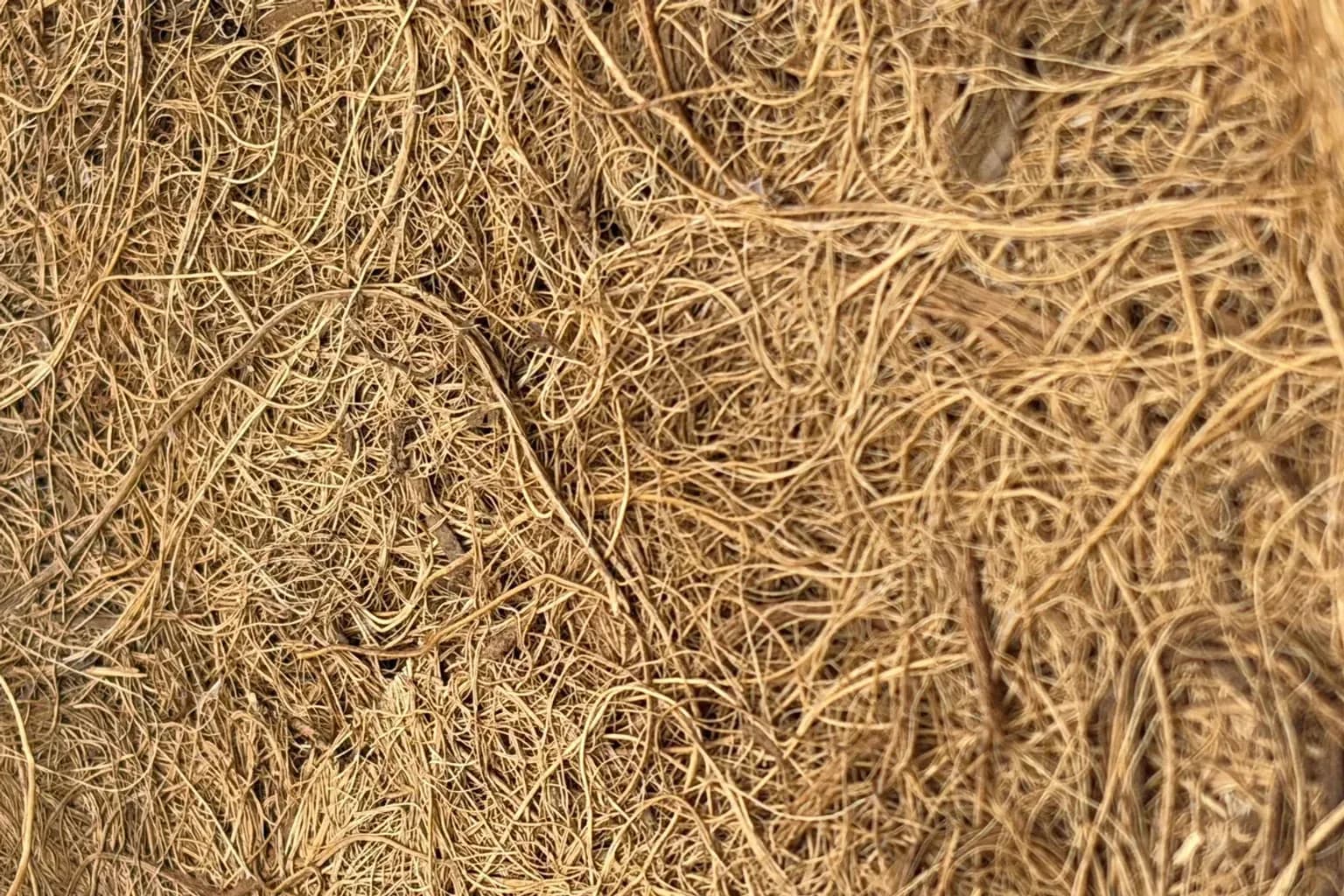
Coco coir is shredded coconut husk, and it's the default for good reason. It holds water beautifully, drains well enough to keep roots breathing, and is pH-neutral and naturally fairly resistant to fungus. Yields are consistently strong, and most crops are happy in it — from broccoli microgreens to spicy radish microgreens.
The catch is that it's loose. Coir sheds into your sink, clings to roots at harvest, and can leave gritty bits in the final greens if you cut too low. You'll also want to buy from a reputable source: cheap coir is sometimes high in salts and needs rinsing first. It's a great all-rounder, just not the tidiest.
Hemp and jute mats: cleaner, with a trade-off
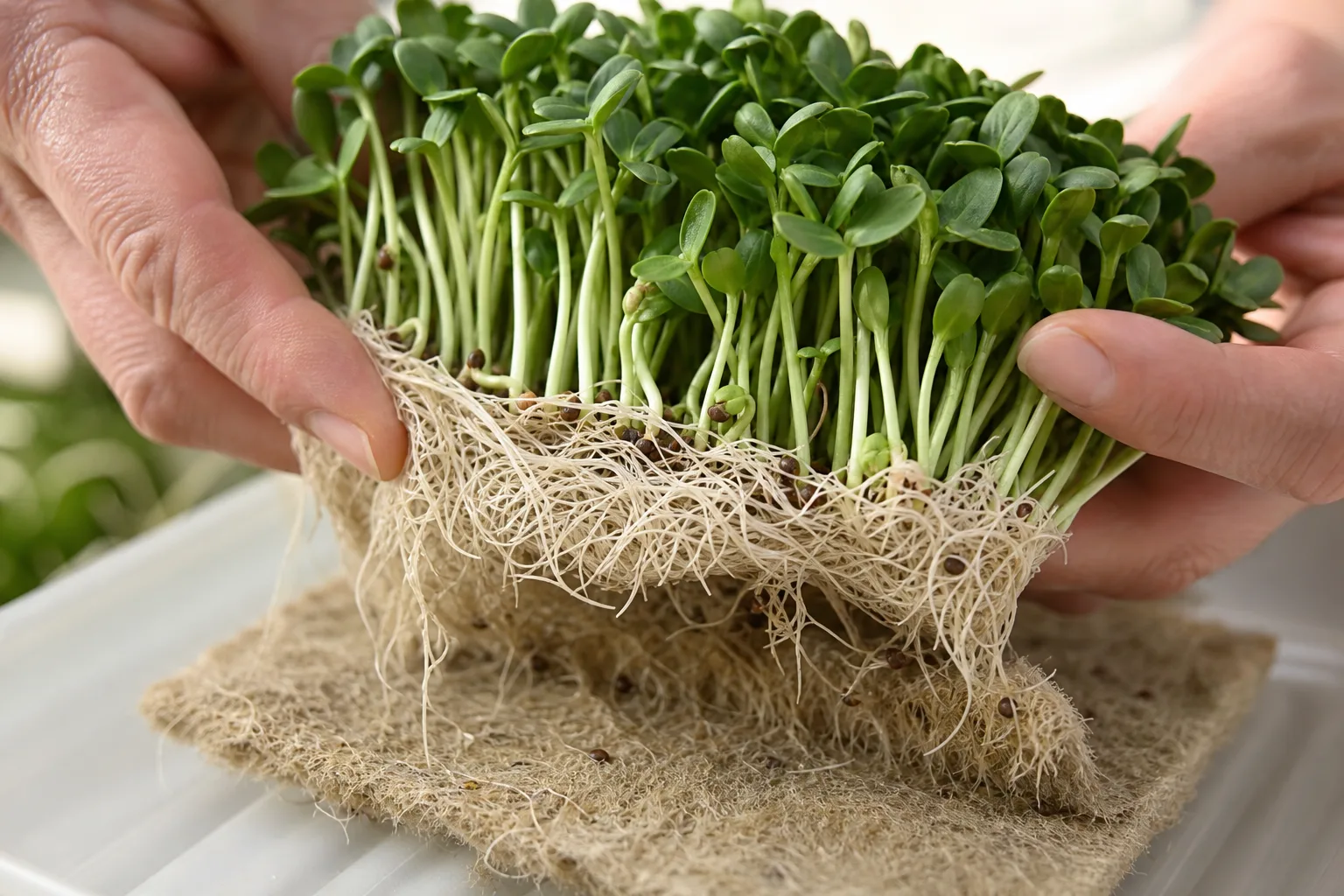
Fiber mats — hemp, jute, burlap, and similar pads — solve the mess problem in one move. The whole crop roots into the mat and lifts out as a single tidy slab, with no loose material to scatter and almost nothing to rinse out of your greens. For anyone who hates cleanup, that alone is worth the small premium.
Hemp tends to be the standout of the group: it's clean, holds moisture evenly, and pairs nicely with fast, hungry crops like sunflower microgreens and pea shoots. Jute and burlap work too but can run a touch higher on mold risk if they stay soggy. The shared downside is that these mats are single-use and biodegradable — you compost them after harvest rather than reuse them, so the per-tray cost is ongoing.
Paper towel: cheap, but only for a quick win
A folded paper towel is the cheapest entry point there is, and it genuinely works for a fast experiment — small-seeded, quick crops like cress or some brassicas will sprout on it in days. If you just want to see microgreens happen this week with zero shopping, it's a fine first try.
But paper towel is a poor long-term medium. It dries out fast, then swings to soggy if you overcorrect, and that moisture seesaw is exactly what fungus loves. It offers almost no structure, so taller crops flop. Experienced growers consistently report rot, off-smells, and damping-off when they lean on paper towel and other thin pads. Use it to learn; don't build a habit on it.
Potting soil: high yield, high mess
Soil is what most people picture, and it can produce big, lush trays. It holds water and nutrients well, and yields are excellent. If you already garden and don't mind dirt, it's a familiar choice.
The trade-offs are real, though. Soil is the messiest option by a wide margin — it ends up on your counter, your hands, and sometimes your greens. More importantly, organic media like soil and compost are rarely sterile. In a small, warm, contained tray, you're not just growing microgreens; you're potentially growing whatever bacteria and fungal spores came along for the ride. A tiny tray can't host the balanced microbial web that keeps soil healthy outdoors, which is part of why soil trays mold more often than clean alternatives. For a closer look at that dynamic, see why microgreens keep molding.
The option people forget: no loose medium at all
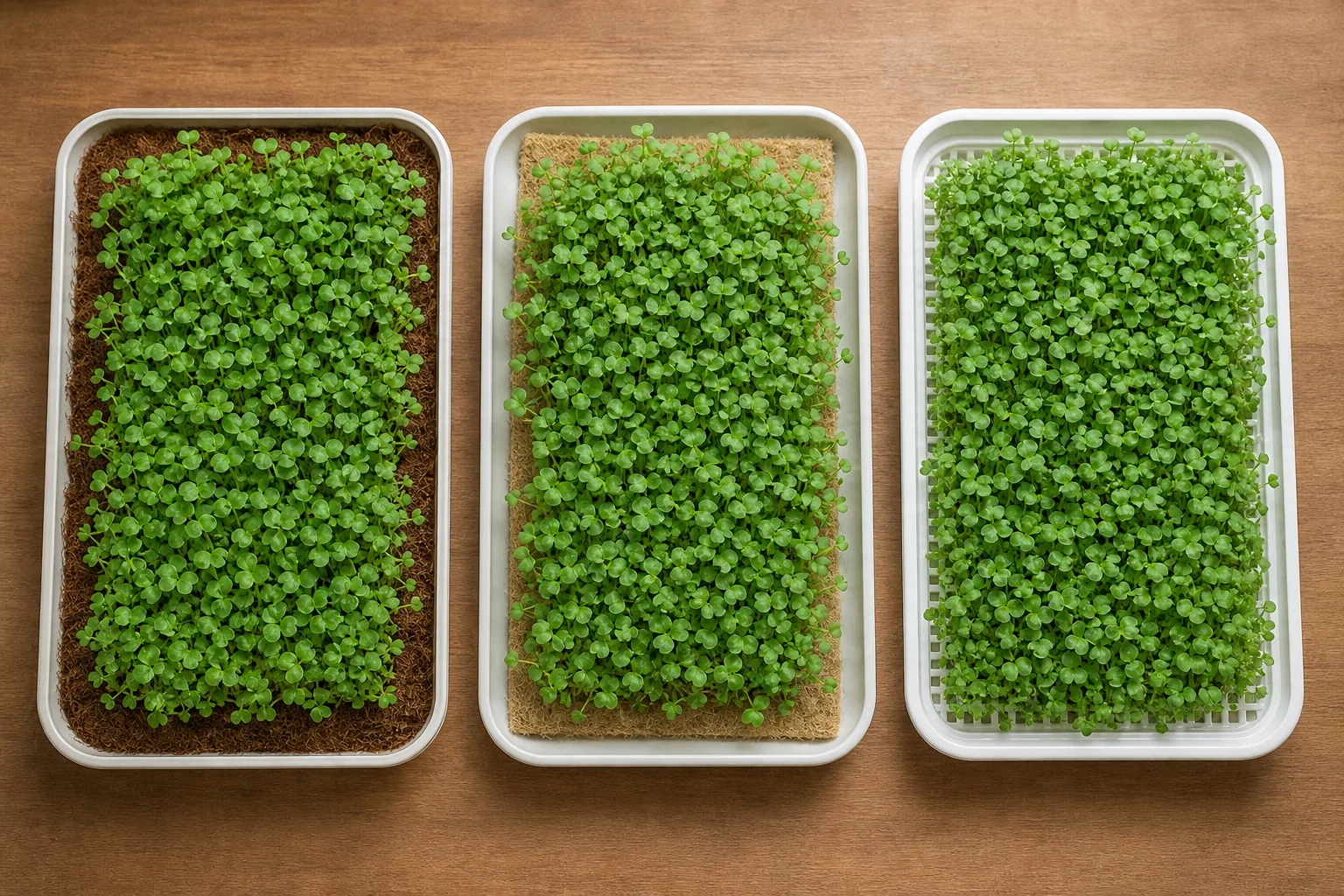
Here's the part that surprises newcomers. You don't strictly need any of the above. Many microgreens will grow on a reusable mesh or screen sitting over water, roots dangling down to drink — a hydroponic approach that uses no soil, no coir, and no mat. If you want the full method, our guide on growing microgreens without soil breaks it down.
The appeal is straightforward once you've fought a few moldy trays. There's no ongoing media cost, nothing to throw away or compost, and far less to clean. Crucially, removing organic media removes one of the biggest places fungus likes to hide, so disease problems tend to drop sharply. The honest trade-offs: the equipment costs a bit more up front, and you're now managing the water — keeping it oxygenated and roughly in the right pH and nutrient range, which our water pH and EC guide covers.
This is exactly the philosophy behind a countertop system like Luya. Instead of asking you to wrangle soil bags and moisture by feel, it grows on a clean, reusable tray and manages the environment for you — light, airflow, and water dialed in automatically, so the medium question mostly answers itself.
So which should you choose?
There's no single best medium — there's a best medium for your situation:
- Total beginner, want results this week: Start on coco coir for one solid tray, or a paper towel if you're impatient and just want to watch it sprout.
- You hate mess and cleanup: Go with a hemp mat. The lift-out-as-one-pad harvest is hard to beat.
- You want maximum yield and don't mind dirt: Soil delivers, with the understanding that you're accepting more mess and a bit more mold risk.
- You're tired of mold, throwaway media, and ongoing costs: Move to a soilless, reusable setup. Higher up-front cost, lowest day-to-day hassle.
The reassuring news is that microgreens make it genuinely hard to fail at the seed-and-water stage. Pick the medium whose trade-offs you can live with, keep things clean, watch your moisture, and you'll be harvesting within a couple of weeks. If you're still deciding whether to grow at all versus buying trays, our grow vs. buy microgreens breakdown is a good next read.