Ask anyone who grows microgreens at home which crop hooked them, and the answer is almost always sunflower. There is a reason. Sunflower microgreens are thick, juicy, and genuinely crunchy in a way most baby greens never manage, and they taste like fresh sunflower seeds turned green: nutty, mild, faintly sweet, with none of the bitterness that puts beginners off other crops. They are the friendliest greens you can grow, and they happen to be one of the most satisfying to eat.
They also forgive a lot of mistakes, which is why I steer new growers toward them before anything fussy. Below I will walk through what makes sunflower microgreens worth eating, how they taste and pair, the one preparation step that decides your whole grow, and a practical from-seed-to-plate guide you can actually follow this week.
What Sunflower Microgreens Actually Are
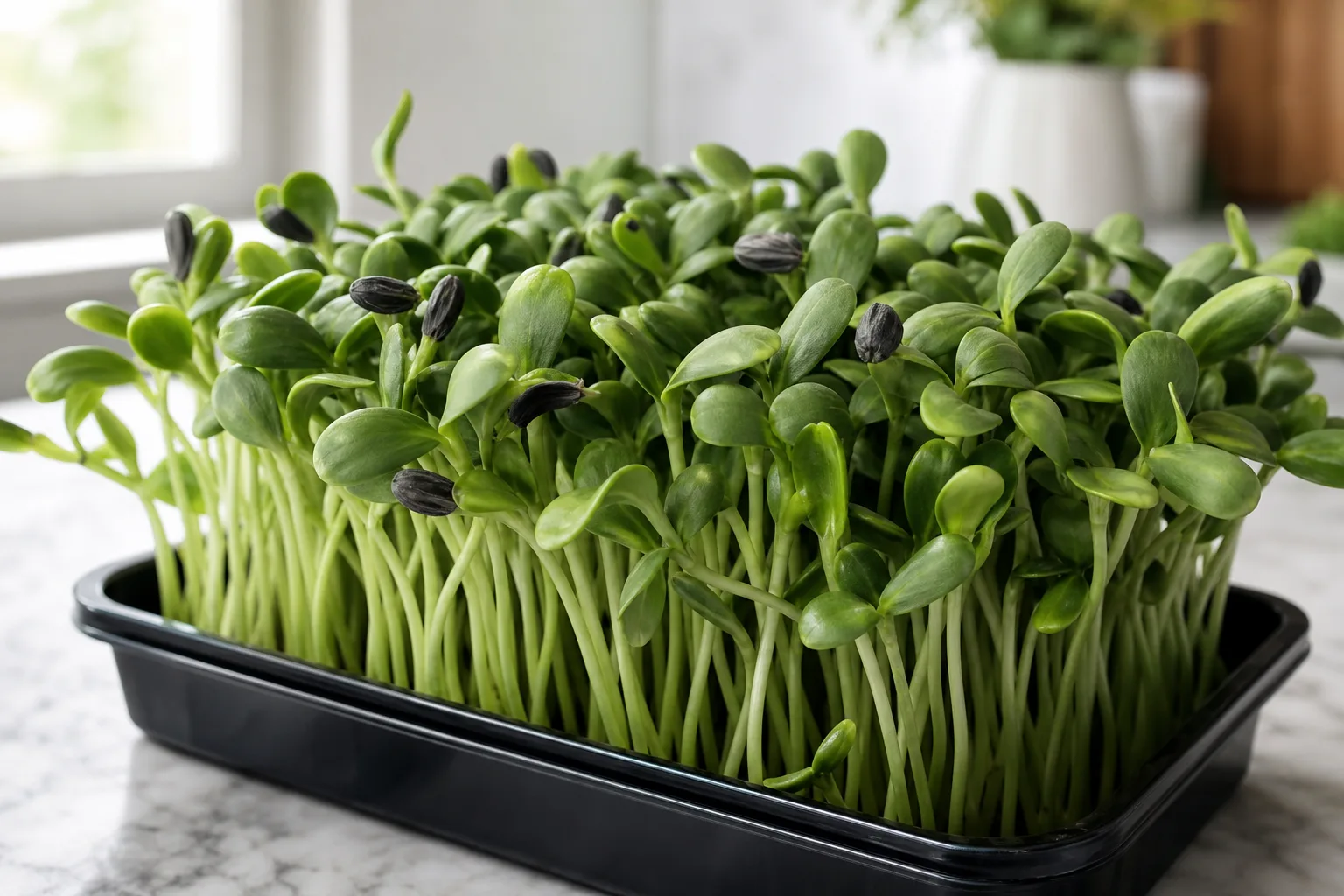
Sunflower microgreens are young sunflower plants harvested at the seed-leaf stage, usually around ten days after planting, long before they would ever become a flower. You eat the whole thing: stem, the two round cotyledon leaves, and sometimes the first hint of a true leaf. They grow from black oil sunflower seeds, the same plump, dark seeds birds love, not the striped snacking kind.
What sets them apart from leafier crops is sheer substance. Big seeds make big plants, and a full tray can weigh several pounds at harvest, with stems sturdy enough to stand on their own. That heft is why they feel like food rather than garnish, and why they sit alongside pea shoots on any list of rewarding crops to start with. If you are new to the category, what are microgreens is a good primer.
Nutrition: Small Greens, Real Substance
Sunflower microgreens punch above their size. As a category, microgreens are typically several times more nutrient-dense than the mature vegetables they would become, because you are eating the plant at its most concentrated early stage. Sunflower brings a particularly useful mix: plant protein, healthy fats, fiber, and a respectable spread of vitamins and minerals.
The standout is that they carry the building blocks of the seed itself. Sunflower seeds are known for vitamin E and minerals like magnesium and iron, and the young greens inherit that profile while adding the vitamins and chlorophyll that come with photosynthesis. The result is a green that contributes a little protein and a lot of antioxidant value in a small handful. For more on why these crops earn their counter space, see microgreens nutrition and are microgreens good for you.
Here is roughly how sunflower stacks up against a few other popular crops, so you can see where it earns its place:
| Microgreen | Standout trait | Best for |
|---|---|---|
| Sunflower | Plant protein, vitamin E, big crunchy texture | Everyday eating, salads, sandwiches |
| Pea shoots | One of the more protein-dense microgreens | Plant-based protein |
| Broccoli | High sulforaphane precursor | Antioxidant support |
| Radish | Among the most nutrient-dense, spicy kick | Flavor and nutrition density |
Sunflower's edge is not a single headline nutrient. It is that you will actually eat a lot of them, because they taste good and fill the fork, and the easiest nutrition to get is the kind you reach for without thinking. They are a natural fit in a vegan diet for that exact reason.
Flavor and Texture: Why They Win People Over
The flavor is the whole appeal. Sunflower microgreens taste clean and nutty with a touch of sweetness, closer to raw sunflower seed than to a leafy green. There is no peppery bite, no grassy sharpness, nothing to talk yourself into. That makes them the easy entry point in any honest microgreens flavor profiles breakdown, and a reliable bridge crop if you have only tried spicier greens and bounced off them.
Texture is where they truly separate from the pack. The stems are thick and water-crisp, almost like a tiny celery, and they hold that snap even after they are cut. Most baby greens go limp the moment they hit a warm plate; sunflower stands up. If you want to understand what gives different crops their bite, microgreen texture guide digs into it, and nutty microgreens: sunflower and pea covers the flavor family these two share.
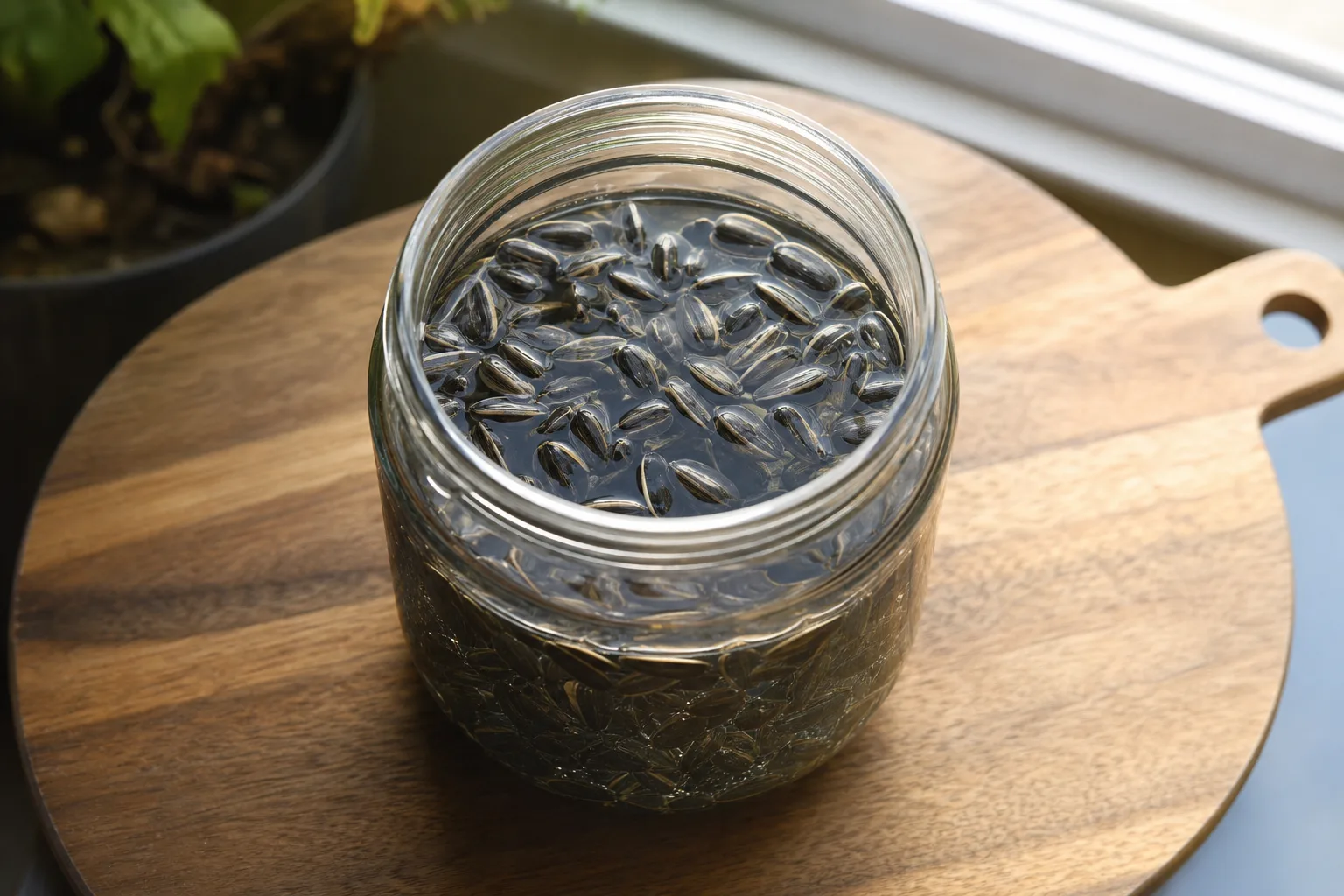
The Soak: The One Step You Cannot Skip
Sunflower seeds have a hard shell, and they need water to start germinating evenly. Spritzing the top of a tray is not enough for a seed this size; the water has to get inside the coating. This pre-soak is called priming, and for sunflower it is the difference between a thick, uniform tray and a patchy one.
The rule I follow is simple: soak for about 8 to 12 hours, and never much longer. Twelve hours is the most you ever need. Soak too briefly and germination lags; soak too long and you invite poor performance and rot. Drop the seeds in a jar of cool water overnight, give them room to swell, and they will be plump and ready by morning.
If you have battled mold on past grows, a short, optional bleach rinse after the soak is worth knowing about. A two-minute swish in a heavily diluted food-safe bleach solution (roughly one part bleach to five parts water), followed by thorough rinsing, wipes surface bacteria and fungal spores off the seed coat. It sounds drastic and is completely safe when done correctly, and it is a common fix in the grower community. For more on why grows go wrong, why microgreens keep molding is the place to start.
How to Grow Sunflower Microgreens at Home
Once the seeds are soaked, the grow itself is short and forgiving. Here is the cycle from start to plate:
- Soak. 8 to 12 hours in cool water until the seeds swell.
- Plant. Spread the soaked seeds densely and evenly across your tray or growing medium. They want to be shoulder to shoulder.
- Blackout. Cover them with a dome or weighted lid for the first few days. Darkness and a little pressure push the stems to grow tall, straight, and uniform before they ever see light.
- Light. Once stems lift the cover, move the tray into bright light. The pale shoots will green up fast.
- Harvest. Cut around day 10, at the seed-leaf stage.
A rough timeline for the home grower:
| Stage | Day | What to expect |
|---|---|---|
| Soak | Day 0 | Seeds plump up overnight |
| Germination (blackout) | Days 1-4 | Roots set, pale stems climb under the dome |
| Greening (light) | Days 5-9 | Stems straighten, leaves turn deep green |
| Harvest | Day 10 | Full, crunchy stems ready to cut |
Two crop-specific notes. Sunflower seeds are aggressive rooters that like a sturdy setup and don't enjoy a shallow tray, where taller plants flop sideways. And the famous nuisance is the hull: the black shell that clings to the cotyledon as it emerges. A little weight during blackout helps the plant shrug it loose. Resist yanking stubborn hulls by hand, since pulling them off can tear the leaves underneath; a clear dome and good light coax most off naturally.
This is also exactly the kind of crop where automation earns its keep. Sunflower rewards consistent moisture, airflow, and the right amount of light at the right time, and that is precisely what a countertop grower like Luya is built to manage for you: it handles the watering rhythm and climate so you skip the guesswork and the daily fiddling. If you would rather grow soil-free entirely, grow microgreens without soil covers the hydroponic approach that sunflower takes to easily. And for the full general method across every crop, how to grow microgreens at home is the complete walkthrough.
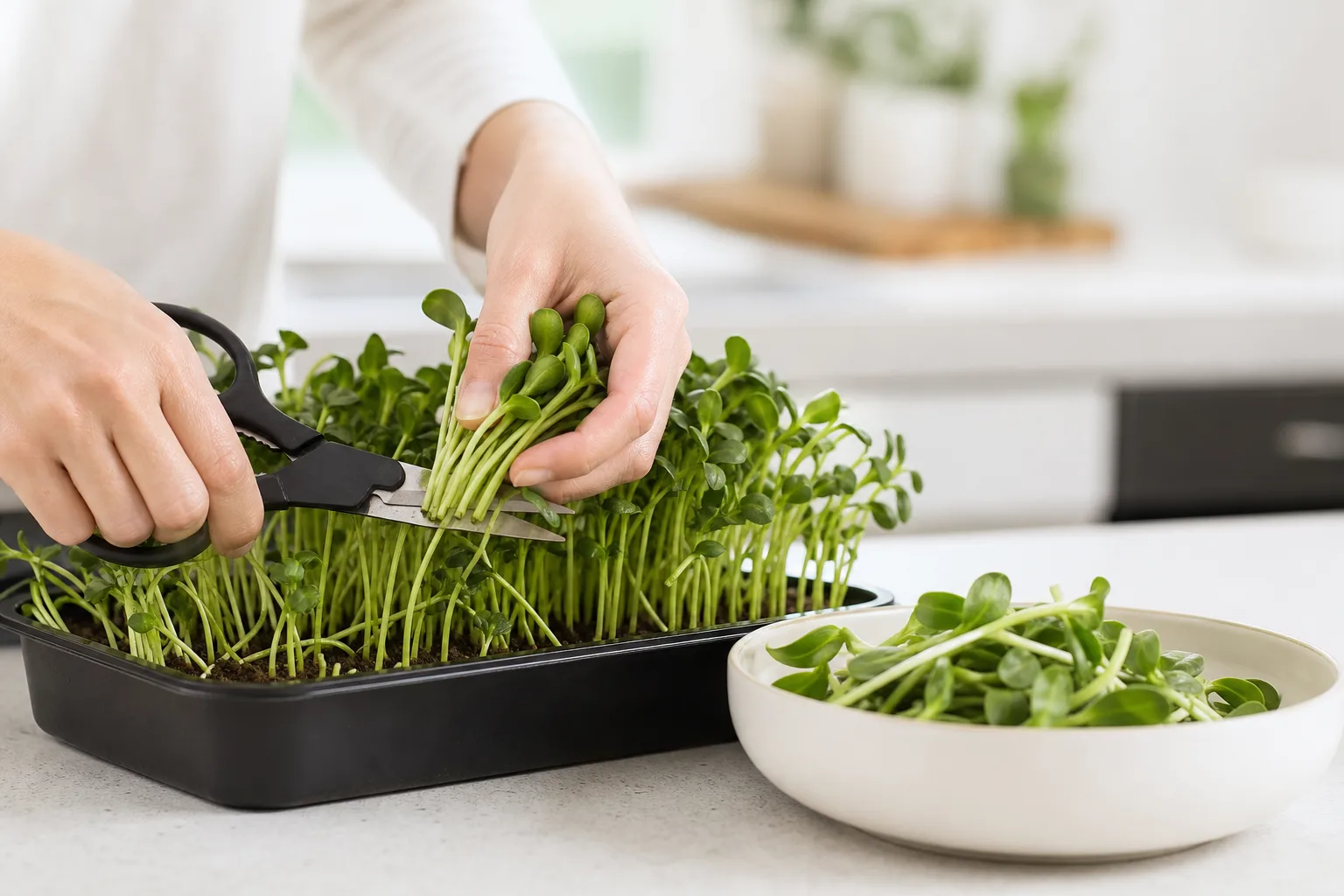
Harvesting, Storing, and Eating Them
Harvest by cutting the stems just above the base with clean scissors. Because sunflower roots so vigorously, many growers find it easiest to lift the whole mat, trim the root side, then cut clean handfuls of stem from the top. Give the cut greens a gentle rinse to dislodge any remaining hulls, spin or pat them dry, and they are ready.
Dried well and kept in a breathable container in the fridge, they hold their crunch for several days, which is far longer than the wilted clamshells you find at the store. That freshness gap is the quiet case for growing your own; store-bought microgreens: expensive, not fresh lays out the math.
Now the fun part. Sunflower's mild, nutty crunch makes it one of the most flexible crops in the kitchen:
- Pile a generous handful into a sandwich or wrap where lettuce would normally go limp.
- Toss them through a salad for body and bite; microgreens salad ideas has more.
- Scatter over avocado toast, grain bowls, or scrambled eggs at the last second.
- Blend a handful into a smoothie for nutrition you will not taste; see microgreens smoothie recipes.
For more ways to work them in across the day, how to eat microgreens is a solid reference.
The Bottom Line
Sunflower microgreens are the crop I recommend without hesitation. They taste like something you actually want to eat, they bring real protein, vitamin E, and minerals to the plate, and they are about as forgiving as a grow gets, as long as you respect the overnight soak. Start with sunflower, get a feel for the rhythm of a grow, and the rest of the microgreens world opens up from there. Few first crops give back this much for so little fuss.
References
- Xiao Z, Lester GE, Luo Y, Wang Q. Assessment of Vitamin and Carotenoid Concentrations of Emerging Food Products: Edible Microgreens. J Agric Food Chem. 2012;60(31):7644–7651. https://doi.org/10.1021/jf300459b